
The Unsung Heroes of Wall Stability
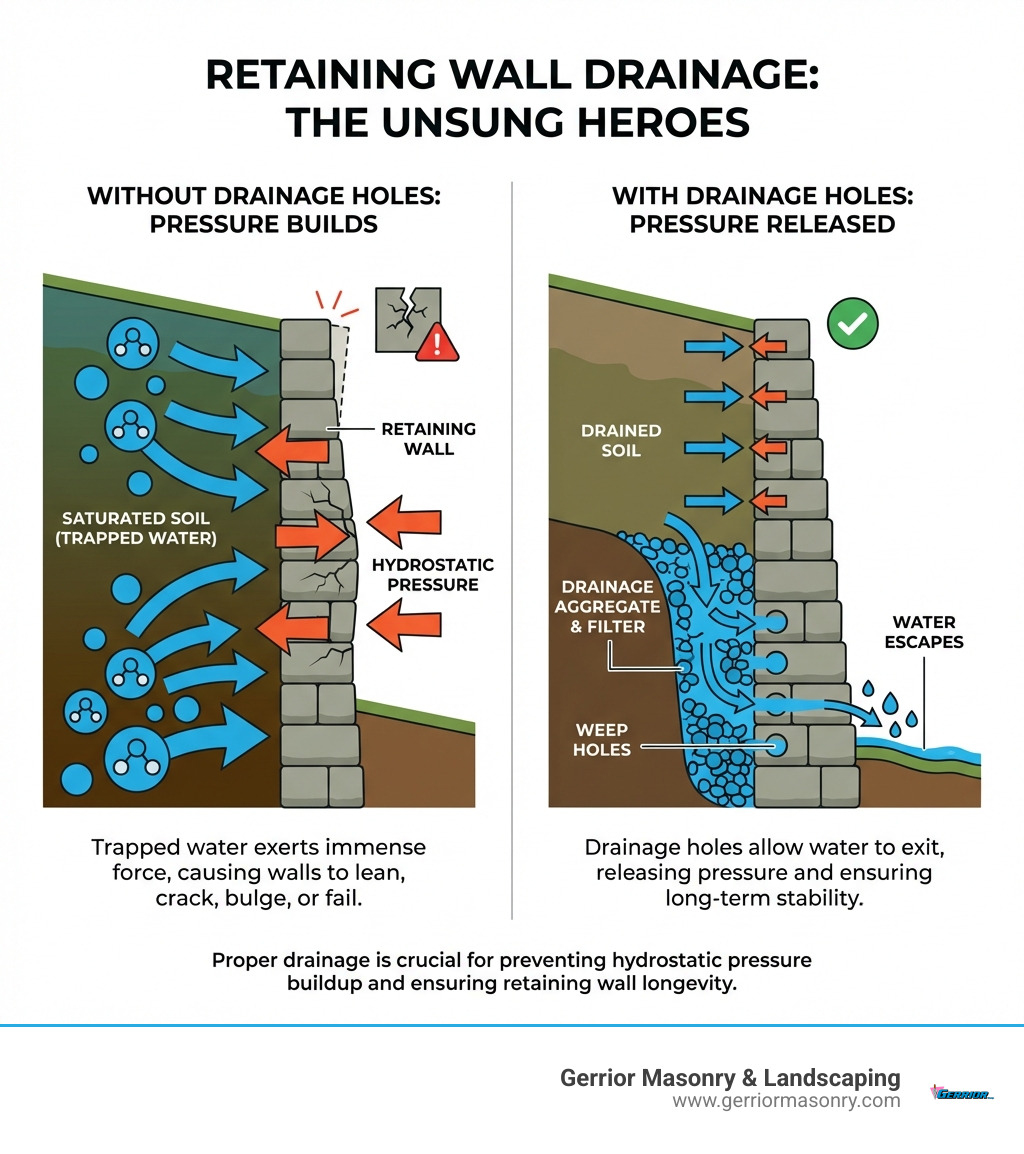
Drainage holes in retaining walls are small openings that allow water to escape from behind the wall, preventing dangerous pressure buildup that can cause structural failure. These outlets—also called weep holes—are critical for the longevity and stability of any retaining wall.
Quick Answer: What You Need to Know About Drainage Holes
- Purpose: Release water trapped behind retaining walls to prevent hydrostatic pressure
- Size: Typically 2-4 inches in diameter
- Spacing: Usually placed every 3-7 feet horizontally along the wall
- Location: Positioned near the bottom of the wall, sloped slightly downward
- Function: Work together with drainage aggregate and perforated pipes to manage water
- Why Critical: Without proper drainage, water pressure can cause walls to lean, crack, bulge, or completely fail
You’ve likely seen these small holes near the ground on concrete or masonry walls, sometimes with water trickling out. While most people don’t give them a second thought, these simple openings are doing the heavy lifting to keep the wall standing.
After heavy rain, soil absorbs water. With nowhere to go, this trapped water creates immense hydrostatic pressure, pushing against the wall. Over time, this force can cause a wall to lean, bulge, crack, or fail. In Massachusetts, this danger is amplified by freeze-thaw cycles, as freezing water expands and breaks down masonry.
I’m Joe Gerrior, owner of Gerrior Masonry & Landscape Construction Corp. With over 34 years of experience in Massachusetts, I’ve seen that proper drainage holes in retaining walls are the key to longevity. The importance of proper drainage in hardscaping and masonry projects cannot be overstated; it’s the foundation of a successful installation.
The Complete Guide to Drainage Holes in Retaining Walls
Why Water Is a Retaining Wall’s Worst Enemy
Water, while essential for life, can be a retaining wall’s most formidable foe. When not properly managed, water can exert immense pressure and cause significant damage, compromising the structural integrity and longevity of the wall. Understanding how water impacts retaining walls is the first step toward effective drainage solutions.
Hydrostatic Pressure: The Silent Destroyer
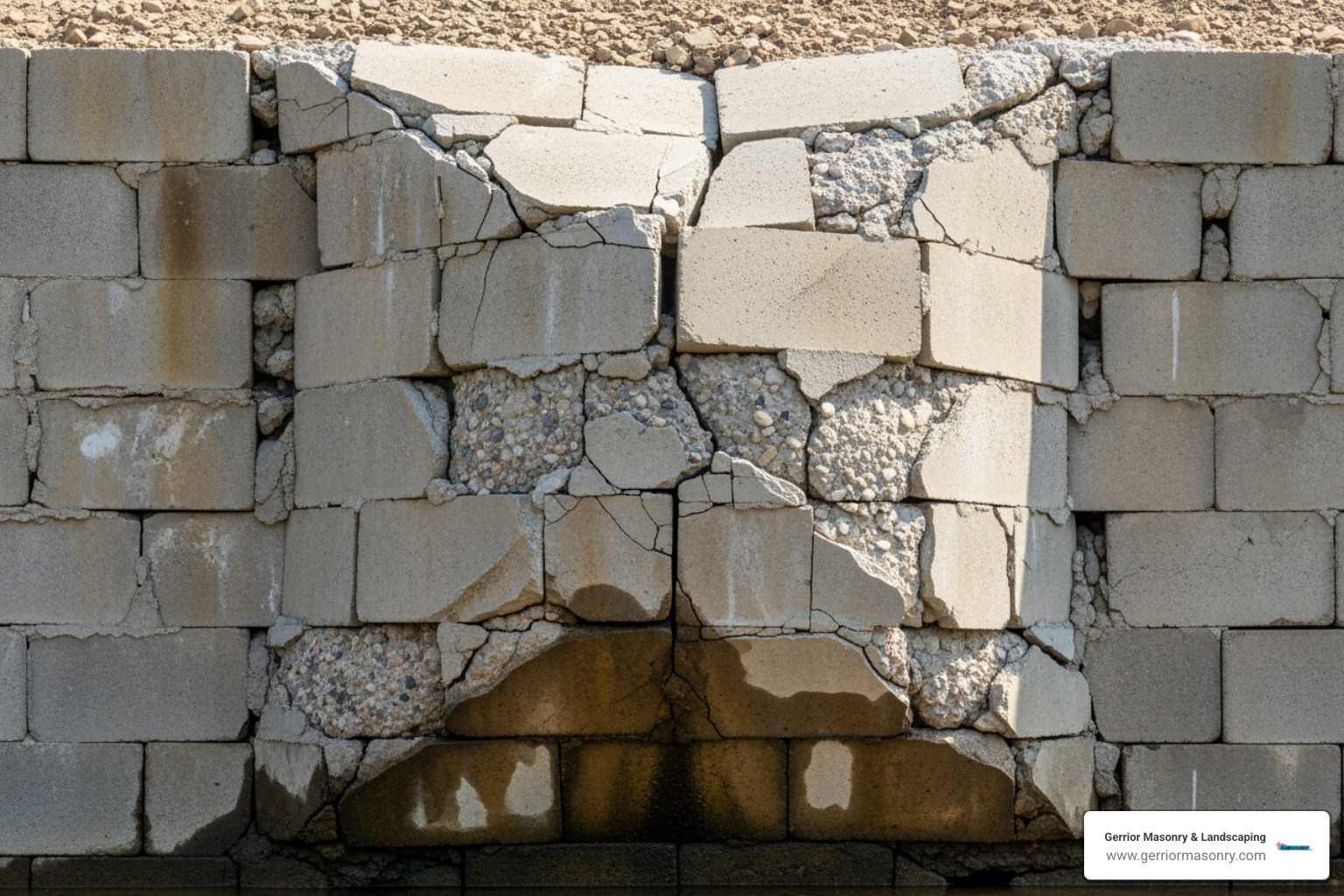
The main reason for drainage is to combat hydrostatic pressure. When soil behind a wall gets saturated, it becomes a heavy, fluid-like mass that exerts immense force. According to civil engineering principles, this pressure can cause a wall to lean, bulge, crack, or even collapse entirely. For a technical overview, you can read more about retaining wall drainage principles. Relieving this hidden force is key to a wall’s stability, which is why understanding more on pore water pressure and drainage is so important.
The Menace of Freeze-Thaw Cycles
In Massachusetts, freeze-thaw cycles pose an even greater threat. Trapped water expands when it freezes, creating incredible stress that can crack blocks, shift foundations, and weaken the entire wall over time. This damage often goes unnoticed until it’s severe. Proper drainage is the best defense, removing excess water before it can freeze.
Erosion and Soil Shifting: Weakening the Foundation
Poor drainage also causes soil erosion behind the wall. As water seeps through, it washes away fine soil particles, weakening the backfill. This can lead to soil washout, uneven settling, and a loss of the support the wall needs to stand. A complete drainage system, including drainage holes in retaining walls, prevents this by keeping the soil stable.
How Weep Holes and Drainage Systems Work Together
Weep holes are rarely a standalone solution. They are part of a larger, integrated drainage system designed to effectively manage water behind a retaining wall. Think of them as the final exit points for water that has been collected and channeled by other components.
The Components of an Effective Drainage System
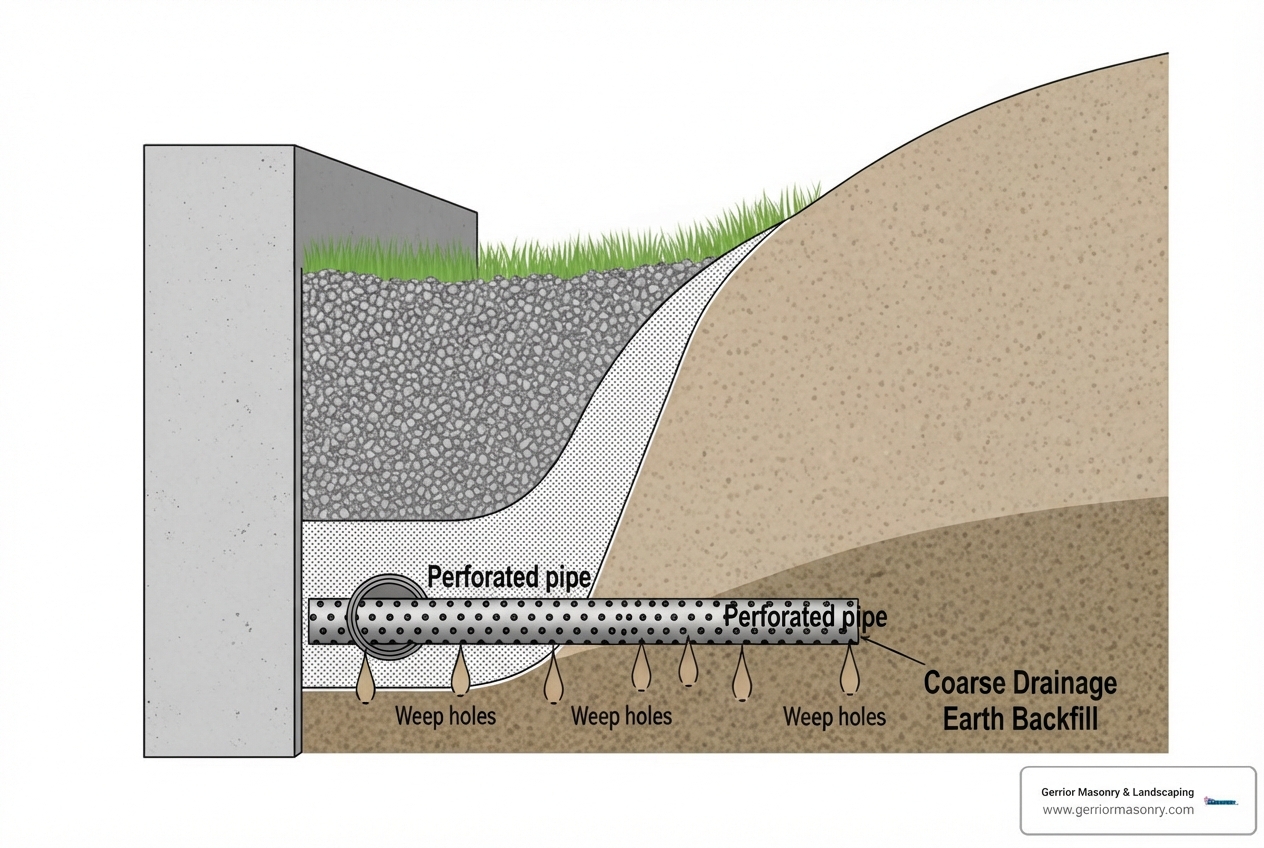
An effective retaining wall drainage system typically includes several key elements working in harmony:
- Weep Holes: These are the outlets that allow water to escape, acting as pressure relief valves.
- Drainage Aggregate: A layer of clean gravel or crushed stone (at least one foot thick) is placed behind the wall. It creates a permeable zone for water to flow down freely.
- Geotextile Fabric: This permeable fabric separates the aggregate from the soil, preventing fine particles from clogging the system.
- Perforated Pipes (French Drains): A pipe at the base of the aggregate collects water and channels it away from the wall, typically with a 1-2% slope for positive flow.
- Geocomposite Drainage Panels: These modern, prefabricated panels can be used instead of aggregate, combining a filter and drainage core into one product.
How They Work Together
In a complete system, water seeps into the soil behind the wall. The drainage aggregate collects this water, allowing it to flow down to the perforated pipe at the base. The pipe then carries the water horizontally, where it is safely discharged through the weep holes or into a larger storm drain system. This integrated approach is the most effective way to relieve hydrostatic pressure and protect the wall. Our Essential Guide: Installing Drain Pipes in Retaining Walls for Effective Water Management provides more detail on pipe installation.
Design and Installation of Drainage Holes in Retaining Walls
Proper design and meticulous installation are paramount for the effectiveness of drainage holes in retaining walls. The methods and specifications can vary depending on the wall material and site conditions.
Methods for Creating Weep Holes
- Open Joint: Simply leaving a vertical gap between blocks or stones.
- Tube Insert: Casting a short plastic pipe (2-4 inches) into a concrete or block wall during construction.
- Drill Method: Drilling holes into an existing wall that lacks proper drainage, often as part of a repair.
Dimensions and Spacing Recommendations
- Diameter: Typically 2-4 inches (50-100 mm).
- Spacing: Horizontally spaced every 3-7 feet (1-2 meters). Higher walls or wetter soils may require additional rows.
Integrating with Other Drainage Components
A successful installation integrates all components. The drainage aggregate (min. 1-foot thick) must be protected by geotextile fabric. The perforated pipe at the base needs a 1-2% slope to drain properly to daylight or a storm sewer. Finally, managing surface water with swales at the top of the wall is crucial to prevent saturation from above. For any complex project, consulting with an experienced masonry contractor is the best course of action. Our team ensures these details are handled correctly from the retaining wall installation phase, right down to the base for retaining wall construction.
Recognizing Problems and Exploring Alternatives
Even with the best intentions, drainage systems can sometimes falter. Recognizing the signs of inadequate drainage is crucial for timely intervention and preventing major structural damage.
Signs of Inadequate Drainage
Keep an eye out for these tell-tale signs of poor drainage:
- Water Staining (Efflorescence): White, powdery mineral deposits on the wall’s face.
- Damp Spots: Areas of the wall that stay wet long after rain.
- Soil Erosion: Soil washing away from the wall’s base.
- Bulging or Leaning: Any visible deformation is a red flag for high pressure.
- Cracks: Horizontal or vertical cracks indicate serious structural stress.
- Algae or Moss Growth: Constant growth suggests persistent moisture.
Disadvantages of Traditional Weep Holes
While essential, traditional weep holes can have drawbacks. They can become clogged with debris, and some find their appearance (especially with water stains) unsightly. In heavy clay soils, they may be less effective without a robust drainage aggregate layer.
Alternative and Complementary Drainage Solutions
Besides weep holes, other solutions can supplement or replace them:
- Pervious Backfill: Using highly permeable gravel for the entire backfill zone.
- Blanket and Chimney Drains: Extensive vertical or horizontal drainage layers to intercept groundwater.
- Geocomposite Drainage Systems: Efficient, prefabricated panels that channel water to a pipe.
- Gabion Walls: These rock-filled wire cages are naturally free-draining, eliminating the need for weep holes.
- Open-Jointed Wall Systems: Some modern block walls are designed to let water pass through the joints to an internal pipe system, offering a clean look.
Secure Your Landscape with Professional Drainage Solutions
The structural integrity and longevity of your retaining wall hinge on one critical factor: effective drainage. Drainage holes in retaining walls, often called weep holes, are not mere aesthetic features but crucial components in a comprehensive water management system. They work tirelessly, alongside drainage aggregate, geotextile fabric, and perforated pipes, to prevent the destructive forces of hydrostatic pressure, mitigate freeze-thaw damage, and reduce soil erosion.
Without proper drainage, even the most beautifully constructed retaining wall is vulnerable to leaning, bulging, cracking, and eventual failure. For property owners in Massachusetts, where seasonal weather can be particularly harsh, ignoring drainage is a recipe for expensive problems down the road.
At Gerrior Masonry & Landscaping, we understand that designing and installing a robust drainage system is as important as the wall itself. With over 30 years of experience in masonry and hardscaping, our skilled team, combined with direct owner oversight on every project, ensures that your retaining wall is not only aesthetically pleasing but also structurally sound and built to last. We specialize in creating durable and effective landscape solutions, from landscape retaining wall construction to complex drainage systems.
Don’t let water undermine your investment. Trust the experts to provide the right drainage solutions for your retaining wall needs. Gerrior Masonry & Landscape Construction is based in Woburn, MA, and services Middlesex and Essex County, Massachusetts. Contact us for your landscape retaining wall project and let us help you build a wall that stands the test of time, come rain or shine, or even snow!
