
Why Driveway Apron Pavers Transform Your Home’s First Impression
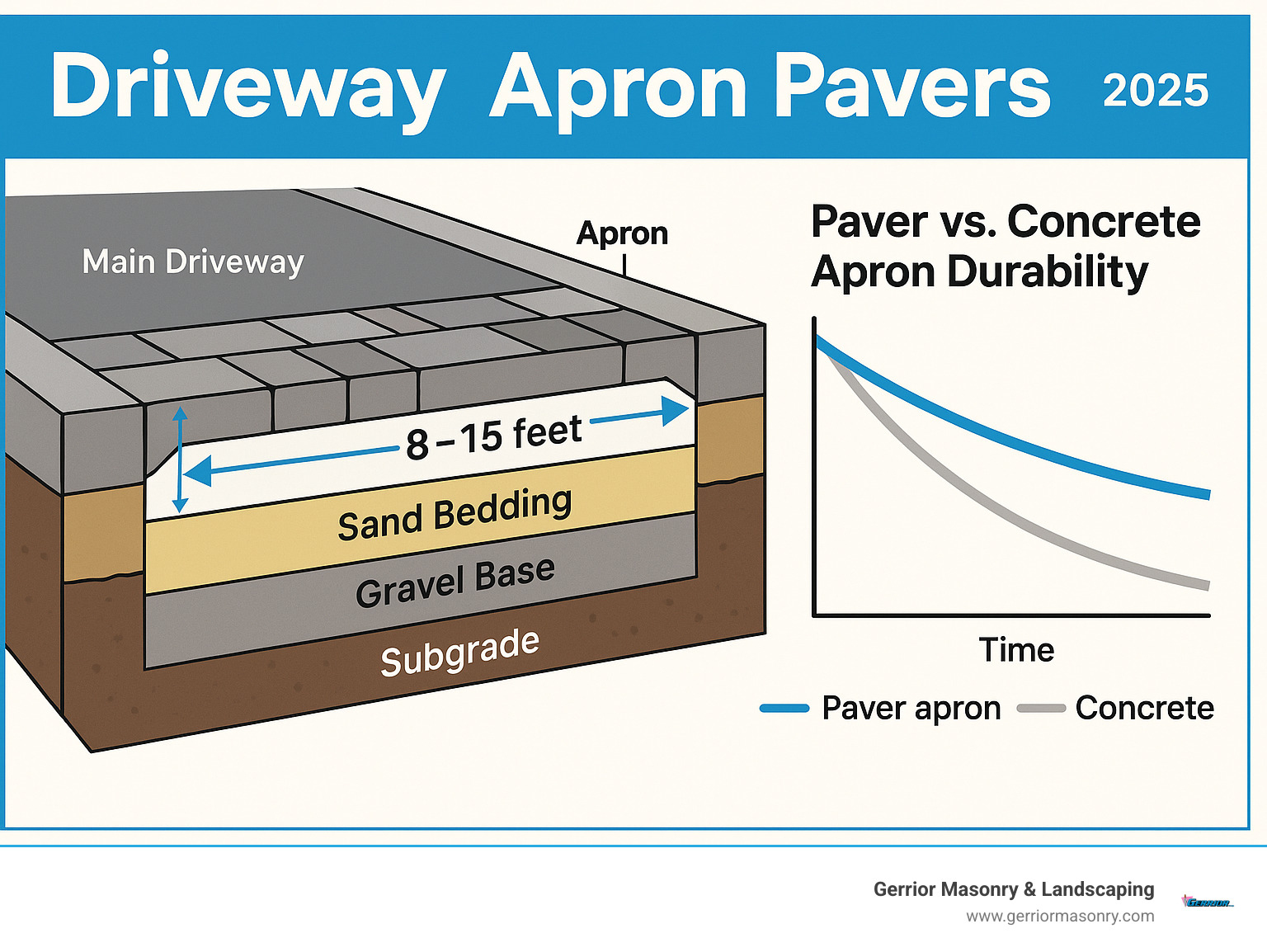
Driveway apron pavers create the perfect transition between your private driveway and the public street. This often-overlooked area, typically extending 8 to 15 feet from the curb, serves as your property’s welcome mat and can dramatically improve your home’s curb appeal.
Quick Answer: What You Need to Know About Driveway Apron Pavers
- Location: The section where your driveway meets the street
- Function: Provides smooth vehicle transition and protects main driveway
- Materials: Concrete pavers, brick, or stone offer superior durability
- Cost: $5-$15 per square foot (ranges based on internet data, not actual Gerrior pricing)
- Benefits: Improved aesthetics, easy repairs, and long-lasting performance
Your driveway apron takes the most abuse from heavy delivery trucks, snowplows, and daily traffic. Traditional concrete often cracks and settles in this high-stress zone. Paver aprons solve these problems while adding visual interest that makes your home stand out.
Many homeowners focus on their main driveway but ignore the apron, which is a missed opportunity. A well-designed paver apron can increase property value and create an impressive first impression.
This guide walks you through planning, designing, and installing a block paver driveway apron. You’ll learn about material options, installation steps, and maintenance.
I’m Joe Gerrior, owner of Gerrior Masonry & Landscape Construction Corp. With over 34 years of experience installing driveway apron pavers throughout Massachusetts, my team has helped hundreds of homeowners transform their entrances with durable, attractive paver solutions.
Understanding and Installing Driveway Apron Pavers
Getting to know driveway apron pavers starts with understanding what makes this small area of your property so important. Once you see how much impact it has on your home’s appearance and functionality, you’ll wonder why you waited so long to upgrade it.
What is a Driveway Apron and Why Upgrade?
Think of your driveway apron as the hardest-working part of your entire driveway. This transitional zone where your driveway meets the street takes a beating from delivery trucks, snowplows, and daily traffic. It’s your driveway’s bodyguard—absorbing punishment so your main driveway stays protected.
The apron does more than just look pretty. It creates a smooth transition for vehicles, supports heavy loads that would damage regular pavement, and helps manage stormwater runoff.
But traditional materials often lead to frustration. We see the same problems over and over with concrete and asphalt aprons:
- Cracking happens when the freeze-thaw cycle does its work. Water seeps into tiny cracks, freezes, expands, and creates bigger cracks.
- Spalling—when the surface flakes and pits—usually shows up thanks to road salt and harsh weather.
- Settlement and sinking occur when the base wasn’t properly prepared, creating an uneven and dangerous surface.
- Erosion around the edges happens when water doesn’t drain properly, washing away soil.
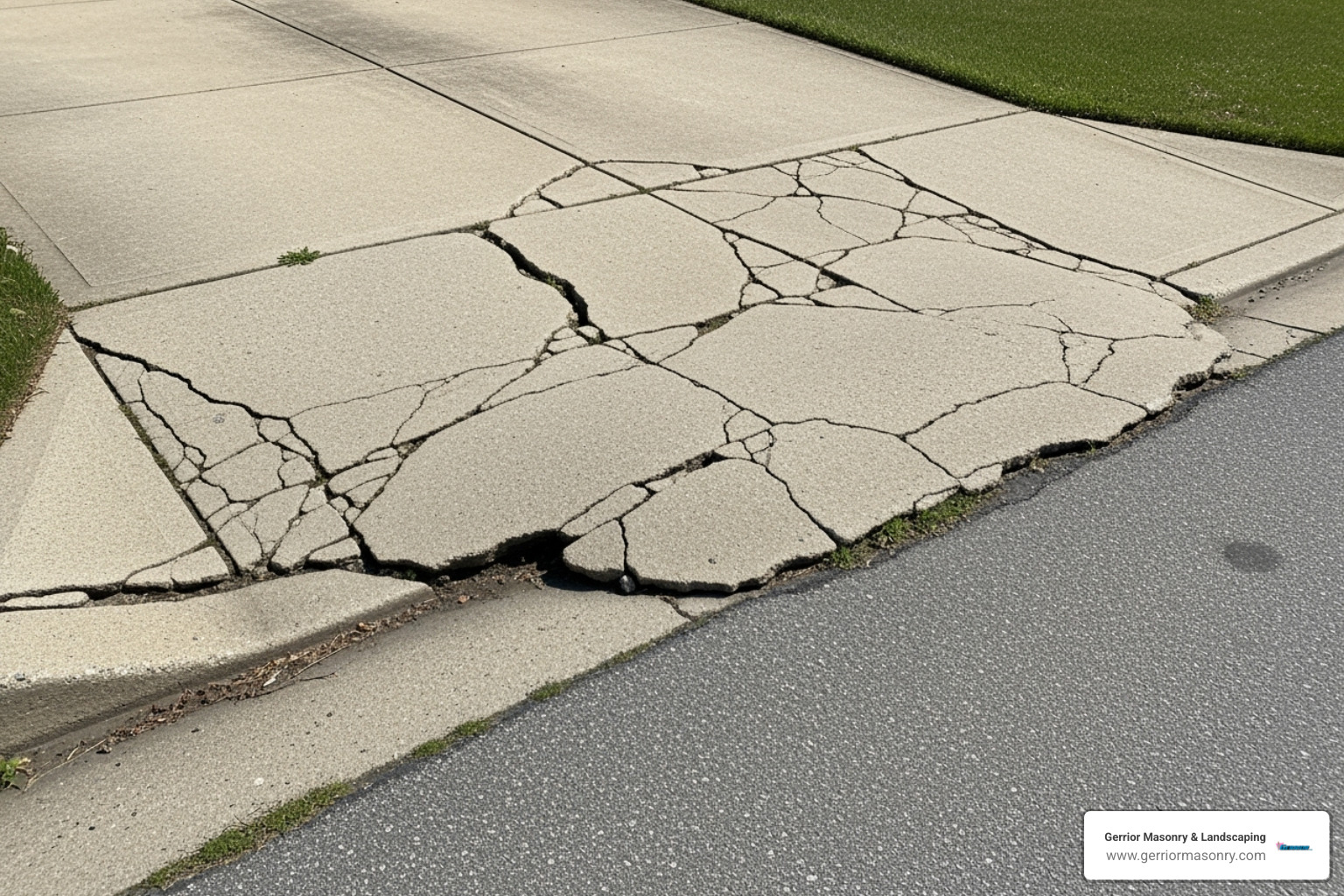
These aren’t just cosmetic issues; they’re expensive problems waiting to happen. A cracked, sunken apron doesn’t scream “welcome.” The good news? Driveway apron pavers solve all these problems while making your entrance look amazing, giving you a beautiful, durable surface that improves your property value.
Why Choose Paver Aprons Over Outdated Materials?
Let’s be honest about something – not all paving materials are created equal. While your neighbor might be patching their concrete apron for the third time this decade, you could be enjoying a maintenance-free driveway apron paver system that looks better every year.
Here’s how the materials stack up when you look at the big picture:
| Feature | Concrete | Asphalt | Gravel | Pavers |
|---|---|---|---|---|
| Lifespan | 25-50 years | 15-20 years | Decades (with maintenance) | Decades (superior durability) |
| Cost/sq ft | $3 – $10 | $2 – $5 | $0.50 – $3 (initial) | $5 – $15 |
| Durability | Good, but prone to cracking/spalling | Flexible, but shorter lifespan | Low, prone to shifting | Excellent, engineered for heavy loads |
| Aesthetics | Plain, can be stamped/colored | Basic, black | Rustic, prone to weeds | Highly versatile, wide design options |
| Repair | Difficult, large sections needed | Patching can be visible | Easy, just add more gravel | Easy, individual unit replacement |
| Maintenance | Sealing, crack repair, cleaning | Sealing, crack filling | Raking, weed control, refreshing | Sweeping, occasional re-sanding, sealing (optional) |
| Environmental | Impermeable, high runoff | Impermeable, high runoff | Permeable | Can be permeable, low runoff |
All pricing mentioned is based on internet data and not actual Gerrior Masonry & Landscaping service costs. The high end of the cost range is at least 3x the average to reflect the wide variability in project specifics and material choices.
What makes driveway apron pavers the smart choice comes down to four key advantages that our clients love:
Superior aesthetics and design versatility means you’re not stuck with boring gray concrete or basic black asphalt. We can create intricate herringbone patterns, add contrasting borders, or match your home’s architectural style perfectly. Whether you want classic cobblestone charm or modern large-format elegance, pavers deliver options that make your neighbors jealous.
Best durability comes from engineering. These aren’t your basic patio pavers – they’re manufactured specifically to handle heavy vehicle loads. Quality driveway apron pavers can be two to three times stronger than traditional concrete, and when installed over a properly compacted base, they’ll outlast and outperform other materials for decades.
Easy repairability is where pavers really shine. When a single paver gets damaged (which rarely happens), we can pop it out and replace just that one piece. Compare that to concrete, where fixing a crack means cutting out and patching a large, obvious section that never quite matches the original.
Long-term value and low maintenance make the initial investment worthwhile. While pavers might cost more upfront than basic concrete, their longevity and minimal maintenance requirements often make them more cost-effective over their lifetime. Plus, they boost your property value and give you that “wow factor” every time you come home.
Design and Planning for Your Paver Apron
This is where the fun begins – turning your vision into reality. Designing your driveway apron pavers is like choosing the perfect frame for a beautiful picture. Get it right, and everything looks intentional and neat.
Paver color and texture set the entire mood for your entrance. Do you want warm earth tones that complement your home’s natural materials, or bold contrasts that make a statement? Smooth finishes give a modern, clean look, while textured surfaces add character and provide better traction in wet conditions.
Shape and pattern choices can completely transform the feel of your space. Herringbone patterns are incredibly popular because they lock pavers together beautifully and handle heavy traffic like champs. Basketweave patterns offer a more relaxed, traditional feel, while running bond creates clean, contemporary lines. For wider driveways, we can even incorporate circular accents or custom designs that become true conversation pieces.
Creating borders and accents adds that professional finishing touch. A contrasting border using different colored pavers or a “soldier course” (pavers lined up like soldiers in formation) defines the space and adds visual depth. Belgian blocks make stunning edging that can extend along your entire driveway for a cohesive, upscale look.
Matching your home’s architecture ensures everything works together harmoniously. A rustic New England farmhouse calls for different paver choices than a sleek contemporary home. We help you find that sweet spot where your apron complements rather than competes with your home’s existing style.
Beyond the visual elements, smart planning involves understanding the practical requirements. Local building codes and permit requirements vary by municipality, and since aprons often extend into public right-of-way areas, checking with your town’s building department is essential before starting any work.
Municipal thickness rules typically require aprons to be thicker than regular driveways – often 6 inches instead of 4 – because they handle heavier loads from delivery trucks and emergency vehicles. This extra thickness, combined with proper base preparation, ensures your driveway apron pavers will handle whatever gets thrown at them.
Slope and drainage requirements ensure water flows away from your home toward the street gutters, preventing pooling and foundation issues. Getting this right during the design phase saves headaches later.
The Installation Process for Driveway Apron Pavers
Installing driveway apron pavers might look straightforward, but there’s serious science behind creating a system that will last for decades. The difference between a professional installation and a DIY attempt often comes down to the unseen foundation work.
- Excavation and removal starts the process by marking boundaries and removing existing materials. Old concrete or asphalt needs proper disposal at specialized facilities.
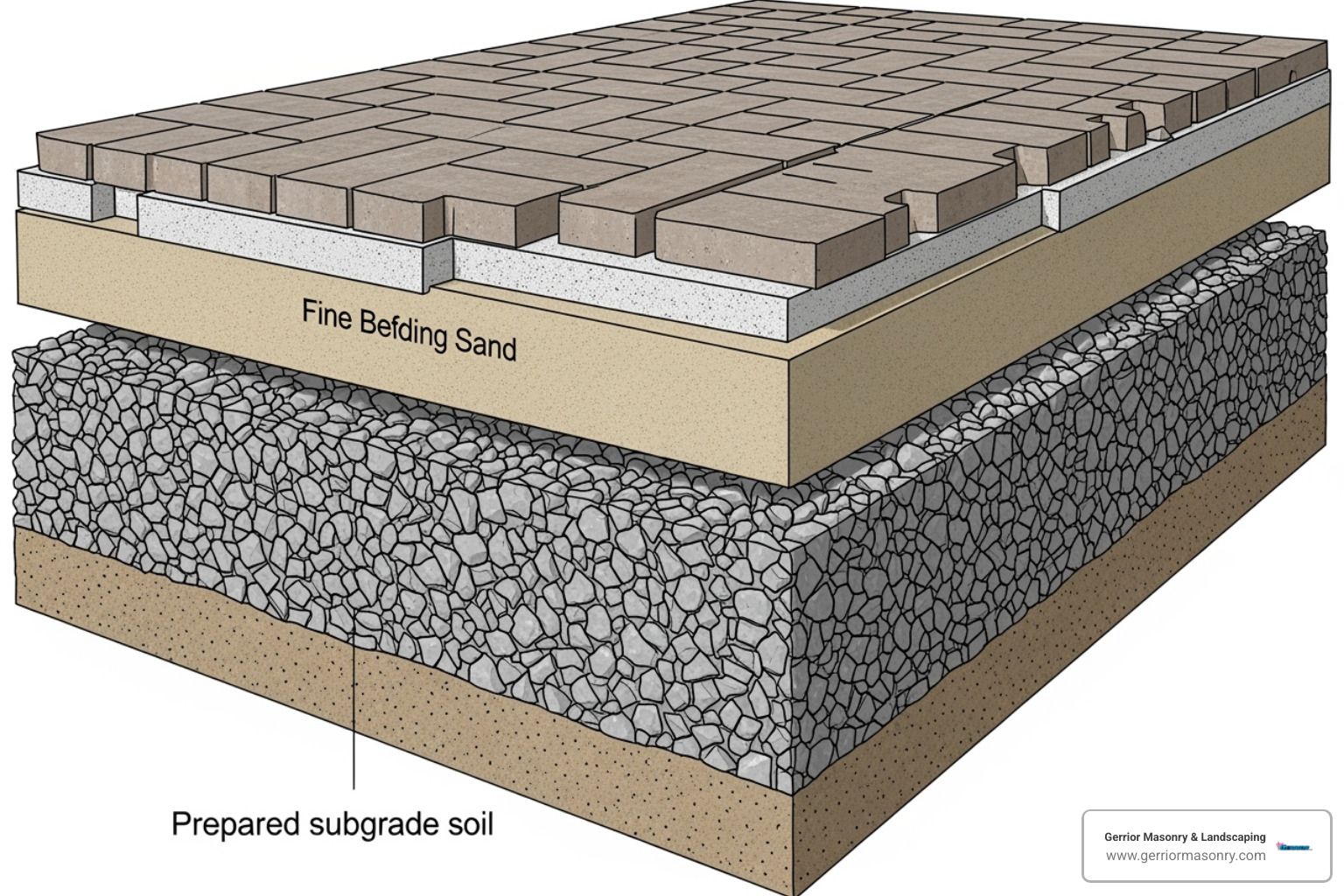
- Base material preparation is where the magic happens. We excavate deep enough for an 8 to 10-inch layer of compacted crushed stone aggregate. This robust foundation is critical for supporting heavy vehicles and preventing settlement.
- Compaction eliminates voids in the base material using professional plate compacters. Each layer gets thoroughly compacted to prevent future problems.
- Sand bedding layer provides the perfect surface. We spread a ¾-inch layer of leveling sand evenly over the compacted base.
- Laying pavers requires skill. Each paver is carefully placed, maintaining straight lines and consistent spacing for a strong interlock.
- Edge restraints prevent your paver system from spreading apart. These rigid barriers lock everything in place permanently.
- Compacting pavers happens once all pieces are laid. We use a plate compactor with protective padding to settle the pavers firmly into the sand.
- Jointing sand application completes the system. Polymeric sand is swept into the joints and hardens when wet to lock everything together and prevent weeds.
For more detailed information about our complete hardscaping installation processes, visit our hardscaping services page.
Maintenance and Sustainability of Driveway Apron Pavers
One of the best parts about choosing driveway apron pavers is how little maintenance they actually require. While your neighbors are dealing with crack repairs and resurfacing projects, you’ll be enjoying a beautiful entrance that takes care of itself.
Routine maintenance couldn’t be simpler. Regular sweeping keeps debris and leaves from accumulating, while an occasional rinse with your garden hose removes surface dirt and grime. Stain removal for tougher spots like oil or grease just requires specific paver cleaners – tackle stains quickly and they come right out.
Weed prevention happens automatically thanks to polymeric sand in the joints, though you might occasionally need to pull a stubborn weed or two. Snow removal works best with plastic or rubber-edged shovels to avoid scratches. If you need de-icing agents, choose concrete-friendly options like calcium magnesium acetate instead of harsh rock salt.
Long-term care involves re-sanding joints every few years as some sand naturally washes away over time. Sealing pavers every 3-5 years with quality sealer improves color, protects against stains, and makes cleaning even easier – especially valuable in our harsh Massachusetts winters.
The environmental benefits of driveway apron pavers make them an even smarter choice. Permeable pavers with wider joints allow rainwater to filter directly through the surface into the ground below, dramatically reducing stormwater runoff that contributes to urban flooding and waterway pollution.
Reduced runoff and puddles mean no more hazardous ice patches or standing water on your apron surface. Groundwater recharge happens naturally as water percolates through the system, replenishing local water supplies that benefit entire ecosystems.
Natural water filtration occurs as stormwater passes through the base layers, removing pollutants before reaching groundwater. Some municipalities even offer tax incentives for installing permeable surfaces because of their positive impact on local stormwater infrastructure.
By choosing driveway apron pavers, you’re making a responsible environmental choice while creating a stunning entrance that improves your property value. For more information about integrating drainage solutions into hardscaping projects, check out our drainage systems and dry wells services.
Your Driveway Apron Project with Professional Guidance
As we’ve covered, driveway apron pavers are a smart investment. They offer superior durability against heavy traffic and weather, endless aesthetic possibilities, and low maintenance compared to traditional materials. A simple paver replacement beats patching concrete any day. A well-designed paver apron transforms your home’s first impression and can increase its value.
While a DIY installation is tempting, the long-term success of a paver apron depends heavily on the foundation. Proper base preparation, excavation depth, compaction, and drainage are critical, especially with New England’s freeze-thaw cycles. A shortcut in the foundation can lead to settling or shifting pavers down the road.
This is where professional experience makes a difference. With 34 years of experience, we understand the local soil conditions, weather challenges, and municipal codes across Massachusetts. We provide owner oversight on every project, ensuring your driveway apron pavers get the attention to detail they deserve.
Ready to create a beautiful, durable entrance that welcomes you home? We can help you design and install the perfect paver apron for your property. Contact us for your hardscaping project to schedule a consultation.
Gerrior Masonry & Landscape Construction is based in Woburn, MA, and proudly serves the surrounding communities throughout Middlesex and Essex County, Massachusetts.
