
Dry Well for Lawn Drainage: #1 Expert Solution
Why Standing Water Threatens Your Property Investment
Does your backyard turn into a swamp after every rainstorm? A dry well for lawn drainage system is a proven solution for managing the excess water that can damage your landscape and home foundation.
Quick Answer: Dry Well for Lawn Drainage
- Purpose: Underground water collection system that stores and slowly releases stormwater
- Best for: Sandy to loamy soils that drain 0.5+ inches per hour
- Cost: $1,500-$4,500 DIY systems, $3,000-$9,000+ professional installation
- Lifespan: Up to 30 years with proper maintenance
- Placement: Minimum 10 feet from foundation, 2+ feet above water table
Standing water is more than an eyesore; it breeds mosquitoes, kills your grass, and can lead to expensive foundation damage. When grading isn’t enough, a dry well acts as a hidden reservoir, collecting stormwater and releasing it safely into the ground.
Success depends on your soil. Sandy and loamy soils that drain at least 0.5 inches per hour are ideal. Heavy clay soils that drain slower may require a different solution or professional modifications.
I’m Joe Gerrior, owner of Gerrior Masonry & Landscape Construction Corp. For over 34 years, my team has installed countless dry well for lawn drainage systems across Middlesex and Essex Counties, changing soggy yards into beautiful, functional outdoor spaces.
Understanding Dry Well for Lawn Drainage: Installation, Costs, and Alternatives
What is a Dry Well and How Does It Work?
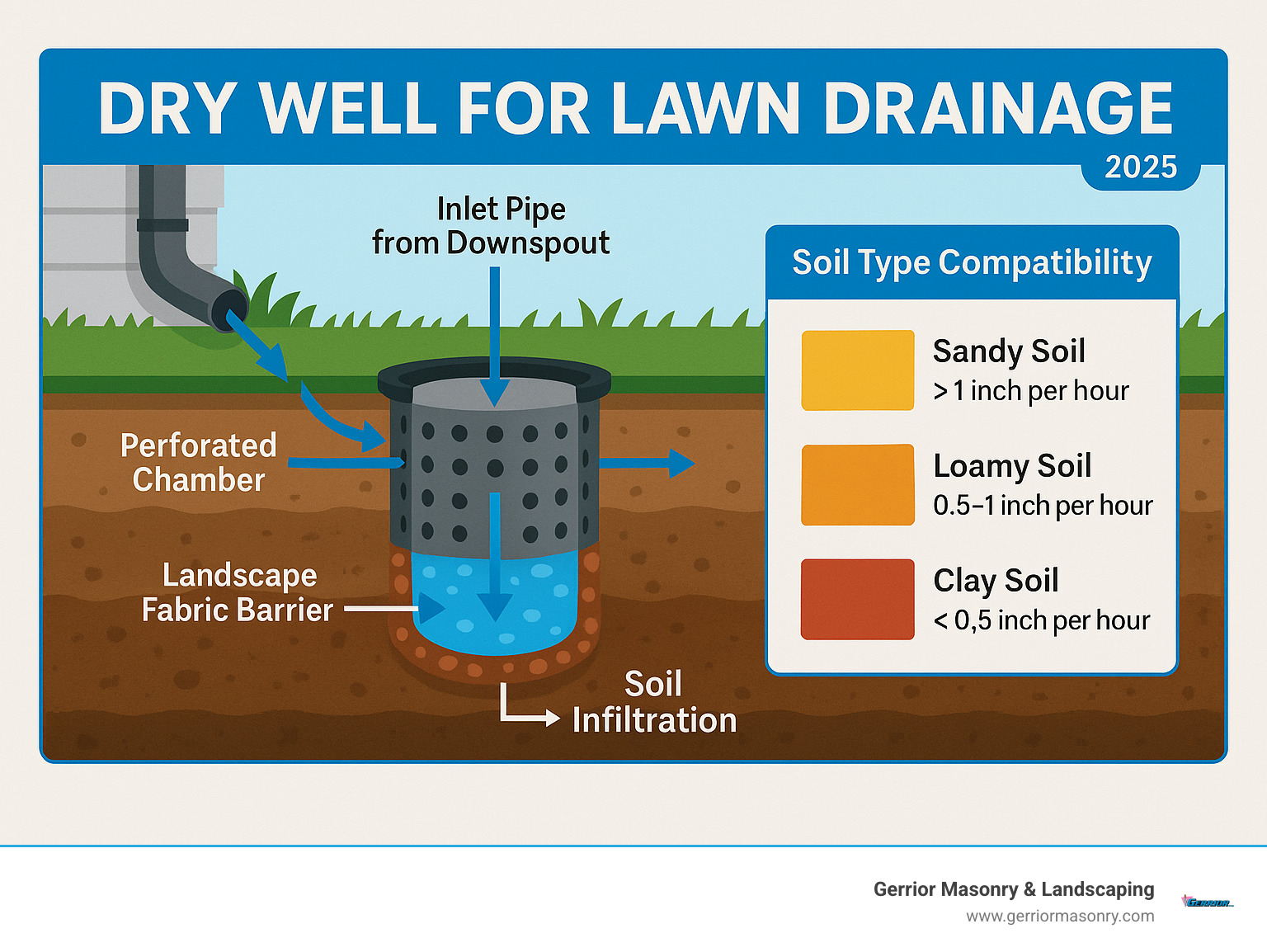
A dry well for lawn drainage is a passive, underground water storage system designed to manage excess stormwater. It functions like a buried reservoir, collecting runoff from your lawn, roof downspouts, and other impervious surfaces. Instead of letting water pool on the surface or run off into municipal storm drains, the dry well holds the water and allows it to slowly seep, or percolate, into the surrounding subsoil. This natural process not only resolves drainage issues but also helps recharge local groundwater, which is an environmentally beneficial practice.
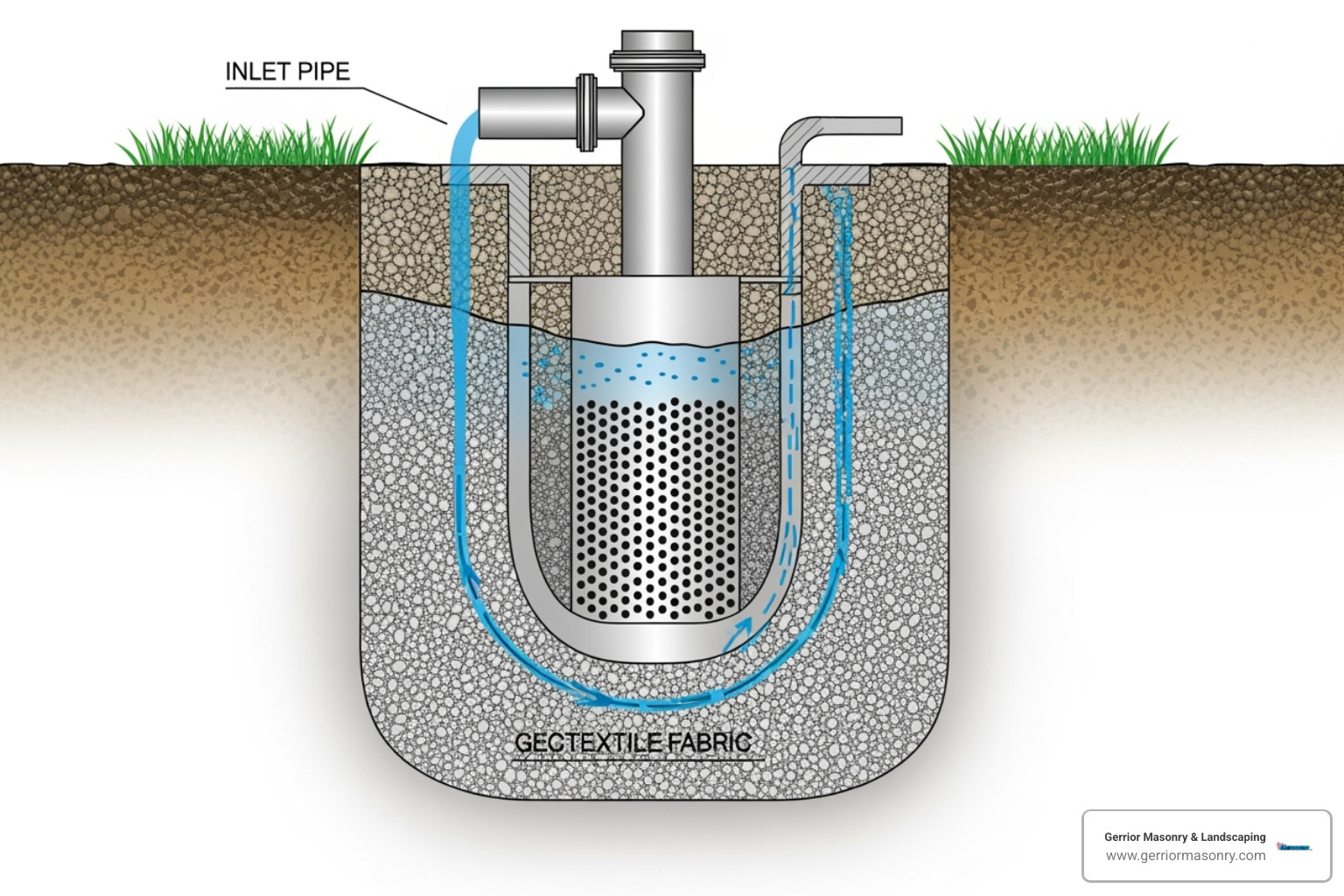
The core components of a dry well work in harmony. An inlet pipe, typically connected to a downspout or a series of catch basins, channels water into a large, perforated container. This container can be a prefabricated plastic chamber, a modular stackable unit, or a precast concrete galley.
To maximize storage capacity and aid infiltration, this container is surrounded by a layer of gravel or crushed stone backfill. The entire assembly—container and gravel—is then wrapped in a durable geotextile fabric. This non-woven fabric is crucial; it acts as a filter, allowing water to pass through while preventing soil, silt, and fine debris from clogging the system, which ensures its long-term effectiveness.
The success of a dry well is entirely dependent on the soil’s ability to absorb water, a property known as its percolation rate. Soil type is therefore a critical factor. Sandy soils, which can drain more than one inch per hour, and loamy soils (0.5-1 inch per hour) are ideal, as they allow water to dissipate efficiently. Conversely, heavy clay soils with a percolation rate of less than 0.5 inches per hour are problematic.
Clay particles are so fine and tightly packed that they can create an impermeable barrier, leading to a “bathtub effect” where the dry well fills with water but cannot drain. In these challenging soil conditions, a professional may need to design a modified system, such as digging deeper to reach a more permeable soil layer or incorporating an overflow outlet.
Modern systems like modular stackable units offer flexibility for various site constraints, while large concrete galley units can hold over 300 gallons each, making them ideal for managing significant runoff from large roofs or paved driveways.
Scientific research on dry well construction
Installation Process, Sizing, and Costs
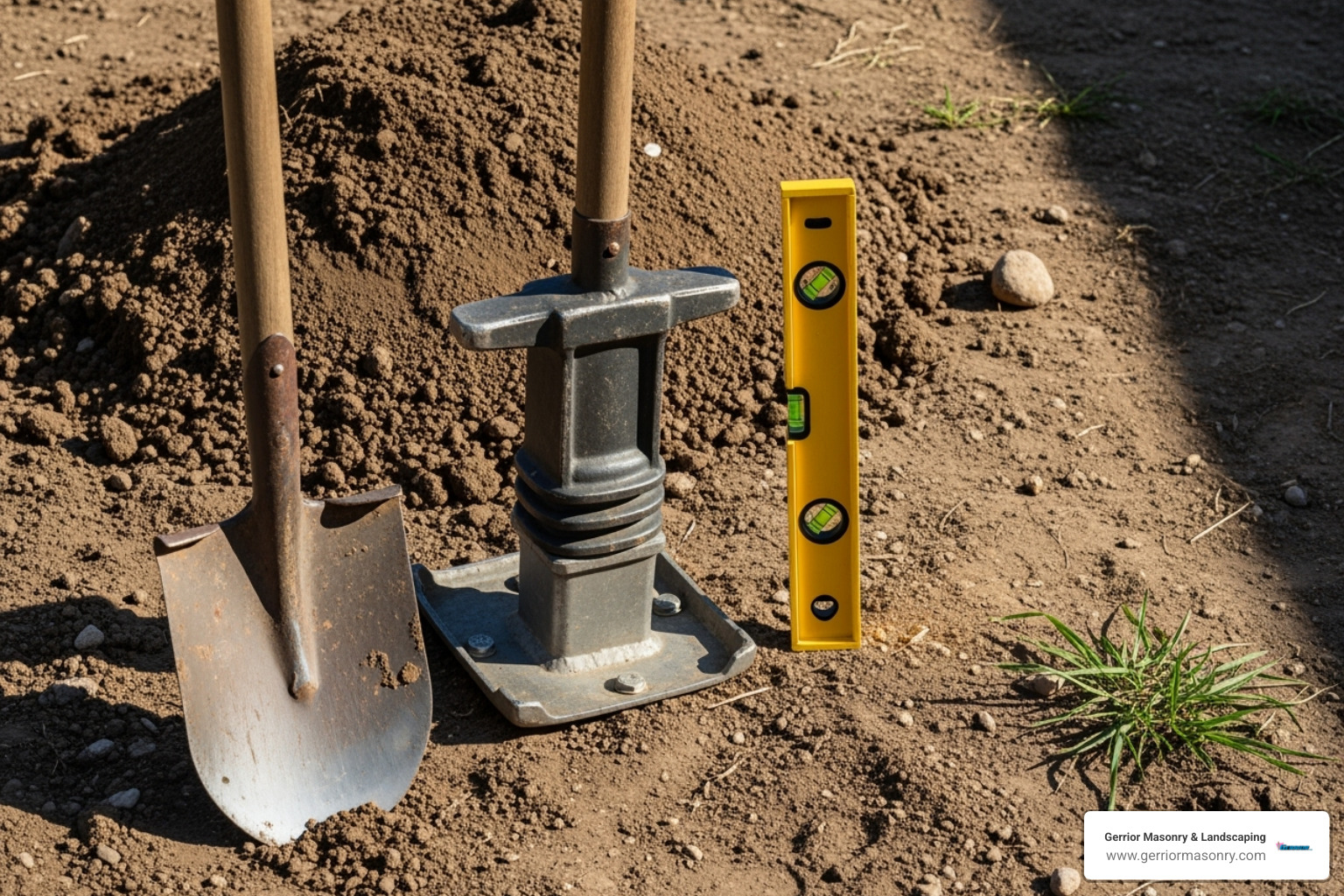
While some simple dry wells can be a DIY project, professional installation is recommended for complex situations to ensure proper sizing and long-term function.
Getting the Size Right
Proper sizing is not a guessing game; it’s a critical calculation to ensure your dry well doesn’t get overwhelmed during a heavy downpour. A professional will calculate the required capacity based on several factors: the square footage of the impervious surfaces draining into it (like roofs and driveways), the local rainfall intensity (e.g., designing for a 10-year storm event), and the soil’s percolation rate.
As a general rule, a dry well should be sized to handle at least one inch of rainfall from the connected surfaces. For example, a 500 sq. ft. roof section would generate approximately 311 gallons of runoff from one inch of rain. In a climate like Massachusetts, where intense storms are common, we often design systems with additional capacity to provide a buffer and prevent overflow.
The Installation Journey
A professional installation follows key steps:
- Site Evaluation & Perk Test to measure soil drainage.
- Calling DigSafe (811) to mark all underground utilities.
- Excavation of the hole and a sloped trench.
- Lining with fabric and adding a gravel base.
- Installing pipes and placing the dry well unit.
- Backfilling with crushed stone and covering with fabric and soil.
Investment and Cost Considerations
Please note: The following are average costs based on internet data and not actual costs for Gerrior Masonry & Landscaping services. Prices can vary significantly based on specific project requirements, site conditions, and material choices.
- DIY Gravel Pit: $500 to $1,500 for materials.
- Prefabricated Plastic System: $1,500 to $4,500 for materials.
- Professional Installation: $3,000 to $9,000+, with labor being a significant factor.
- Large Concrete System: $6,000 to $25,000+, depending on scale and complexity.
While DIY saves on labor, professional installation ensures the system is sized correctly, complies with regulations, and offers a lasting solution.
For complex excavation work, we encourage you to explore our comprehensive services.
More info about excavation services
Dry Well vs. Other Drainage Solutions
A dry well is a powerful tool, but it’s not the only one. Understanding the alternatives helps in choosing the best approach for your property. Sometimes, the best solution is a combination of systems.
| Feature | Dry Well for Lawn Drainage | French Drain | Rain Garden |
|---|---|---|---|
| Purpose | Underground water storage that slowly releases into deeper soil; perfect for localized pooling and runoff management | Redirects water away using perforated pipes in gravel trenches; excellent for foundation protection | Shallow planted areas that absorb and filter runoff while adding natural beauty |
| Longevity | Up to 30 years with proper maintenance | Typically 10-15 years | Long-lasting system with ongoing plant care needs |
| Cost | $1,500-$4,500 (DIY materials); $3,000-$9,000+ (professional installation) | Similar range, varies by length and complexity | Varies widely; can be cost-effective for smaller areas |
| Maintenance | Seasonal inspections and inlet cleaning; relatively low maintenance | Moderate maintenance including inlet cleaning and flow checks | Higher ongoing maintenance with regular plant care and weeding |
| Ideal Use | Localized soggy spots, downspout runoff, areas where gravity drainage is challenging | Foundation protection, intercepting subsurface water, sloped area management | Managing roof and driveway runoff while enhancing landscape beauty |
| Visibility | Completely invisible once installed and covered | Can be hidden under turf or visible as decorative gravel | Visible as attractive landscaped garden feature |
Creating Powerful Combinations
The most effective solutions often combine systems. A French drain can direct water to a dry well, managing both foundation moisture and surface pooling. For low-lying areas, a sump pump can lift water to a dry well. For patios, catch basins can channel runoff into the system. Pairing a rain garden with a dry well offers both a beautiful landscape feature and an overflow solution for heavy storms.
More info about drainage systems
Maximizing Your System: Maintenance, Safety, and Professional Help
Maintenance Requirements for a Dry Well for Lawn Drainage
A well-maintained dry well for lawn drainage can last up to 30 years. Regular care focuses on preventing the clogs that can shorten its lifespan and reduce its effectiveness.
Preventing Clogs at the Source
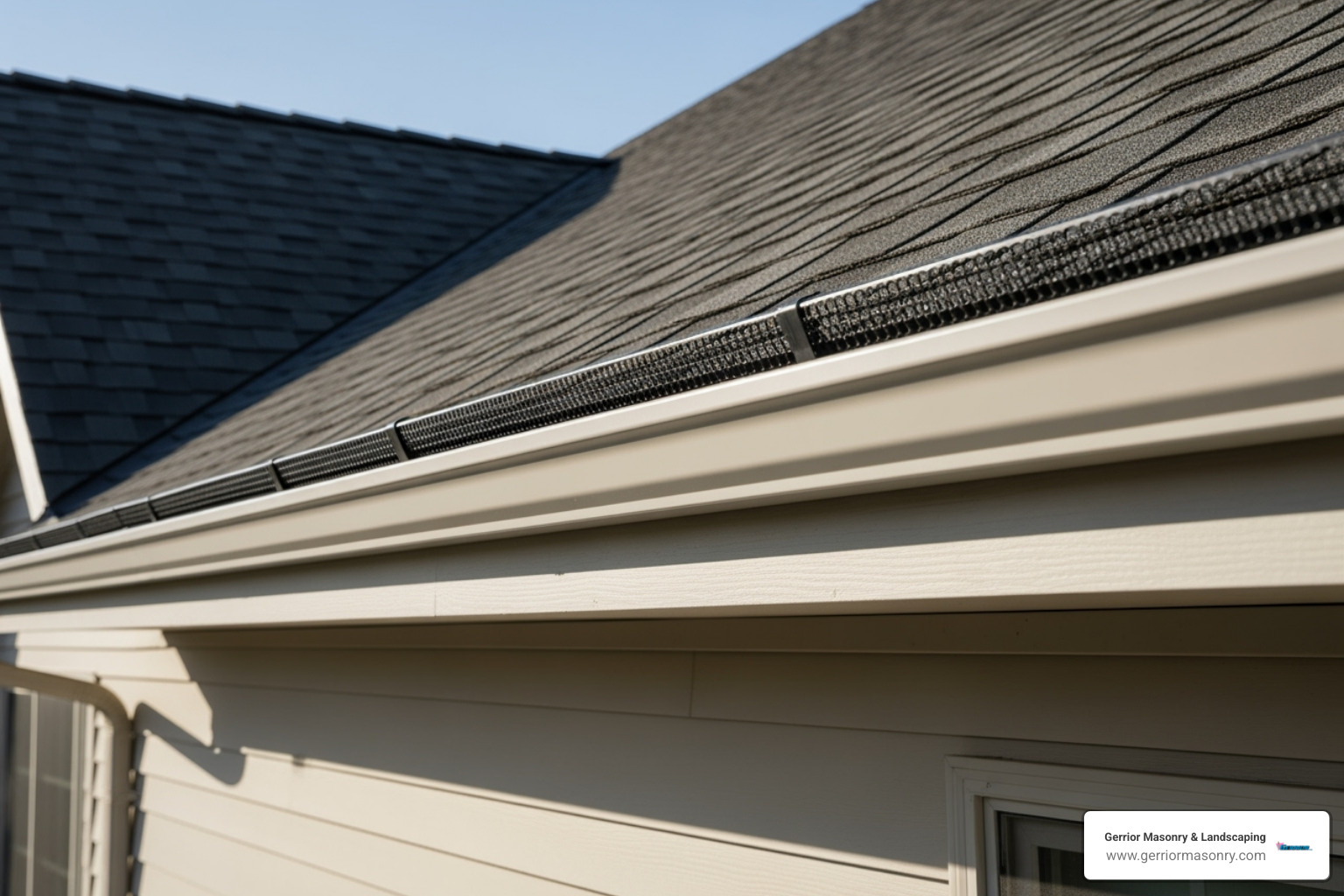
- Gutters and Downspouts: If your dry well is connected to your roof, keep gutters clean, especially in the fall. Installing gutter guards is a highly effective way to reduce debris entering the system.
- Inlets and Drains: Regularly clear leaves, grass clippings, and other debris from surface drains and catch basins to ensure water can flow freely.
Ongoing and Long-Term Care
Throughout the year, inspect your system for damage and watch for standing water, which can signal a clog. Be mindful of aggressive tree roots, which can seek out the water in your system and cause damage.
Over many years, fine silt may accumulate and slow drainage, eventually requiring a professional inspection and clean-out. Proper installation with quality geotextile fabric minimizes this issue.
Key Considerations for a Dry Well for Lawn Drainage
Before starting your dry well for lawn drainage project, it’s crucial to address safety, placement, and local rules.
Safety and Location
- Call 811 Before You Dig: This is non-negotiable. This free service marks all underground utilities, preventing a costly and potentially deadly accident.
- Proper Placement: Locate the dry well at least 10 feet from your foundation and property lines, and 50 feet from any septic system components. You are trying to move water away from your home, not toward it.
- Water Table Depth: The bottom of the dry well must sit at least 2 feet above the seasonal high water table. If the water table is too high, the well cannot drain effectively.
Permits and Regulations
Local rules for drainage systems vary significantly across Massachusetts. Some towns require a permit, which can range from $50 to $250. It is essential to check with your local building department. A dry well is designed for clean stormwater runoff only—never direct chemicals, oils, or other pollutants into it.
When to Call the Professionals
While the DIY spirit is admirable, certain situations demand professional expertise:
- Persistent flooding, soil erosion, or ground instability.
- Challenging site conditions like heavy clay soil, a high water table, or steep slopes.
- Sizing a system for heavy runoff from large roofs or extensive hardscaping.
- Integrating a dry well with a sump pump system.
An expert assessment prevents costly mistakes and ensures your investment solves your water problem for good.
Your Expert Drainage Solution in Massachusetts
For over three decades, Gerrior Masonry & Landscaping has provided expert drainage solutions across Massachusetts. We don’t just install systems; we solve water problems with a comprehensive, hands-on approach.
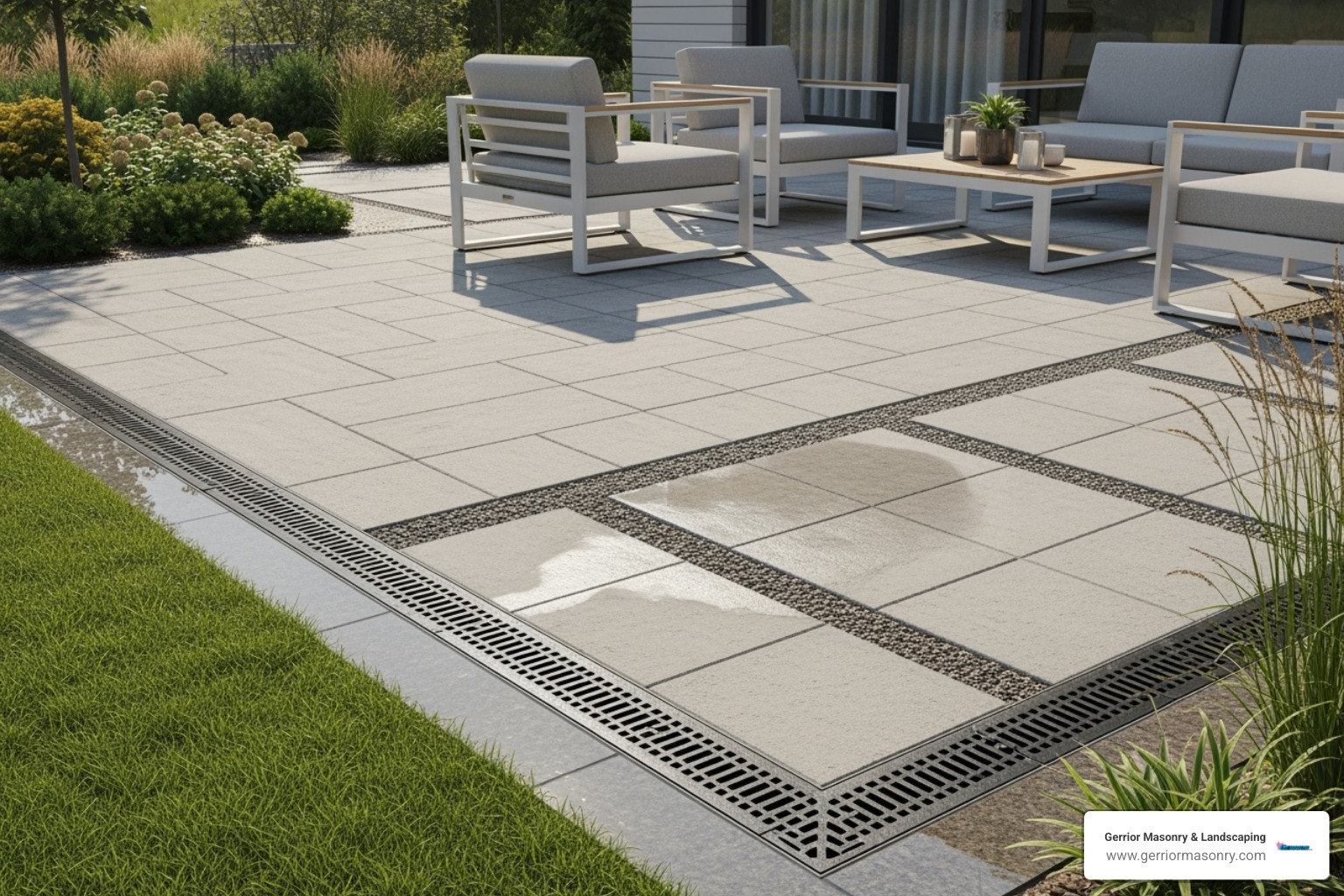
Our process begins with a thorough site assessment, analyzing your soil, water table, and landscape. This allows us to design a custom solution, whether it’s a standalone dry well or a system integrated with French drains, retaining walls, or a new patio. Joe Gerrior personally oversees every project, ensuring the high-quality results our company is known for.
This holistic approach means you get a solution that not only works effectively but also improves your property’s value and your enjoyment of your outdoor spaces.
Don’t let standing water rob you of the beautiful, functional yard you deserve. Contact us today and let’s talk about how we can transform your soggy lawn into the outdoor space you’ve always wanted.
Contact us for hardscaping services
Gerrior Masonry & Landscape Construction is based in Woburn, MA, and proudly services Middlesex and Essex County, Massachusetts.
