
Edge Stones for Gardens: 7 Powerful Benefits in 2025
Why Garden Edging Stones Transform Your Landscape
Edge stones for gardens are decorative borders that create clean lines between different landscape elements while serving practical purposes. Here’s what you need to know:
- Materials: Natural stone (granite, limestone, sandstone), concrete, brick, plastic
- Pricing: $1.75-$25 per stone depending on material ($500-$900 per pallet)
- Benefits: Contains soil/mulch, prevents grass invasion, reduces maintenance, adds visual appeal
- Popular types: Cobblestone, tumbled granite, natural boulders, decorative concrete
Creating beautiful, well-defined garden spaces isn’t just about the plants you choose—it’s also about how you frame them. Edge stones for gardens provide that perfect finishing touch that transforms an ordinary garden into a standout landscape feature. These borders do more than just look pretty; they serve as practical barriers that keep soil in place, prevent grass from invading your beds, and create clean lines that make maintenance easier.
I’m Joe Gerrior, owner of Gerrior Masonry & Landscape Construction, and I’ve installed thousands of linear feet of edge stones for gardens across Massachusetts over my 34-year career, changing ordinary yards into defined, neat outdoor spaces that stand the test of time.
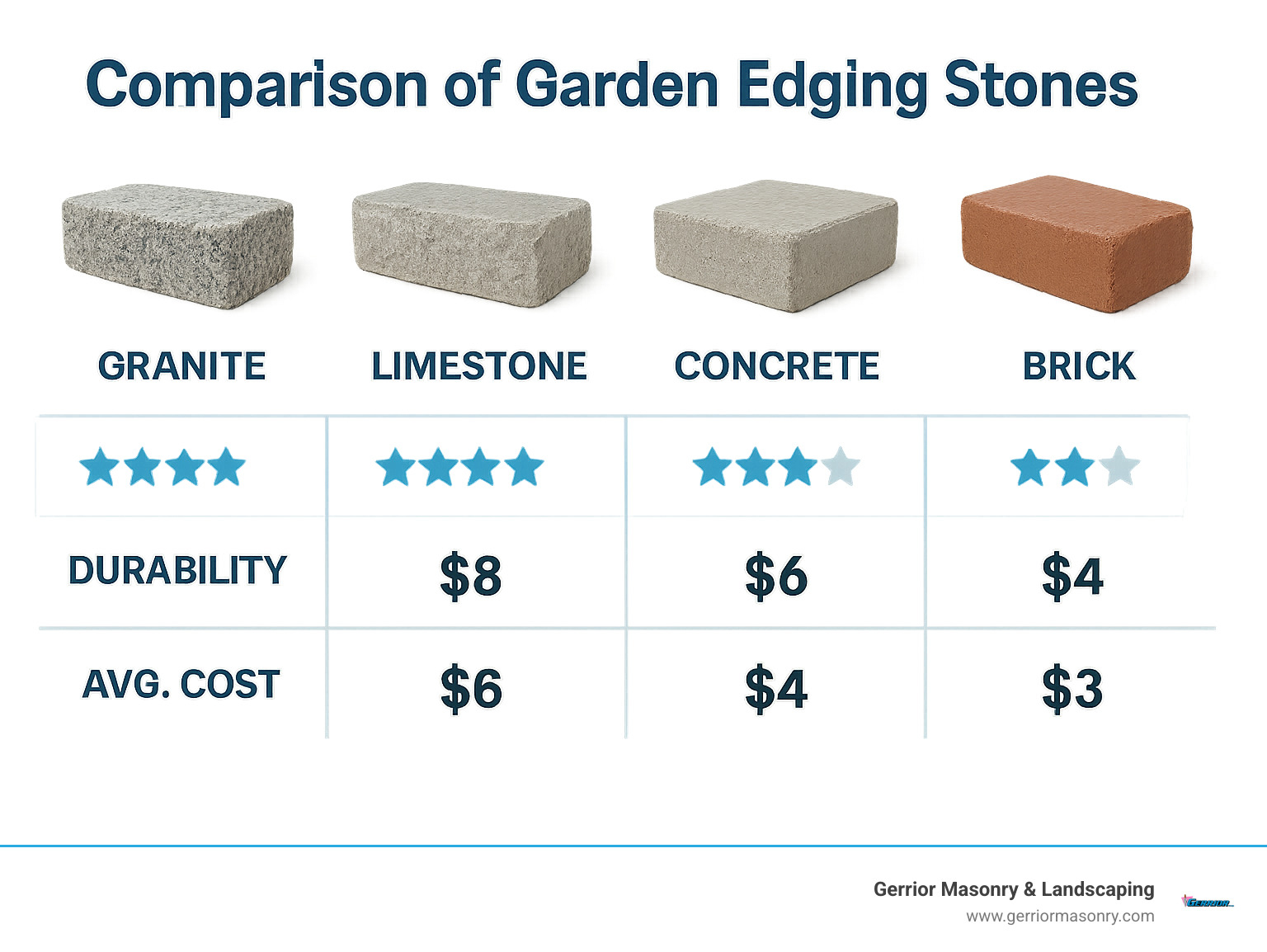
Simple guide to edge stones for gardens terms:
– decorative stone garden edging
– flower bed edger
Why Edging Stones Matter: Form, Function, Flair
When we install edge stones for gardens at properties throughout Middlesex and Essex Counties, our clients are often surprised by how dramatically these simple elements transform their outdoor spaces. Garden edging stones serve multiple crucial purposes that go far beyond mere decoration.
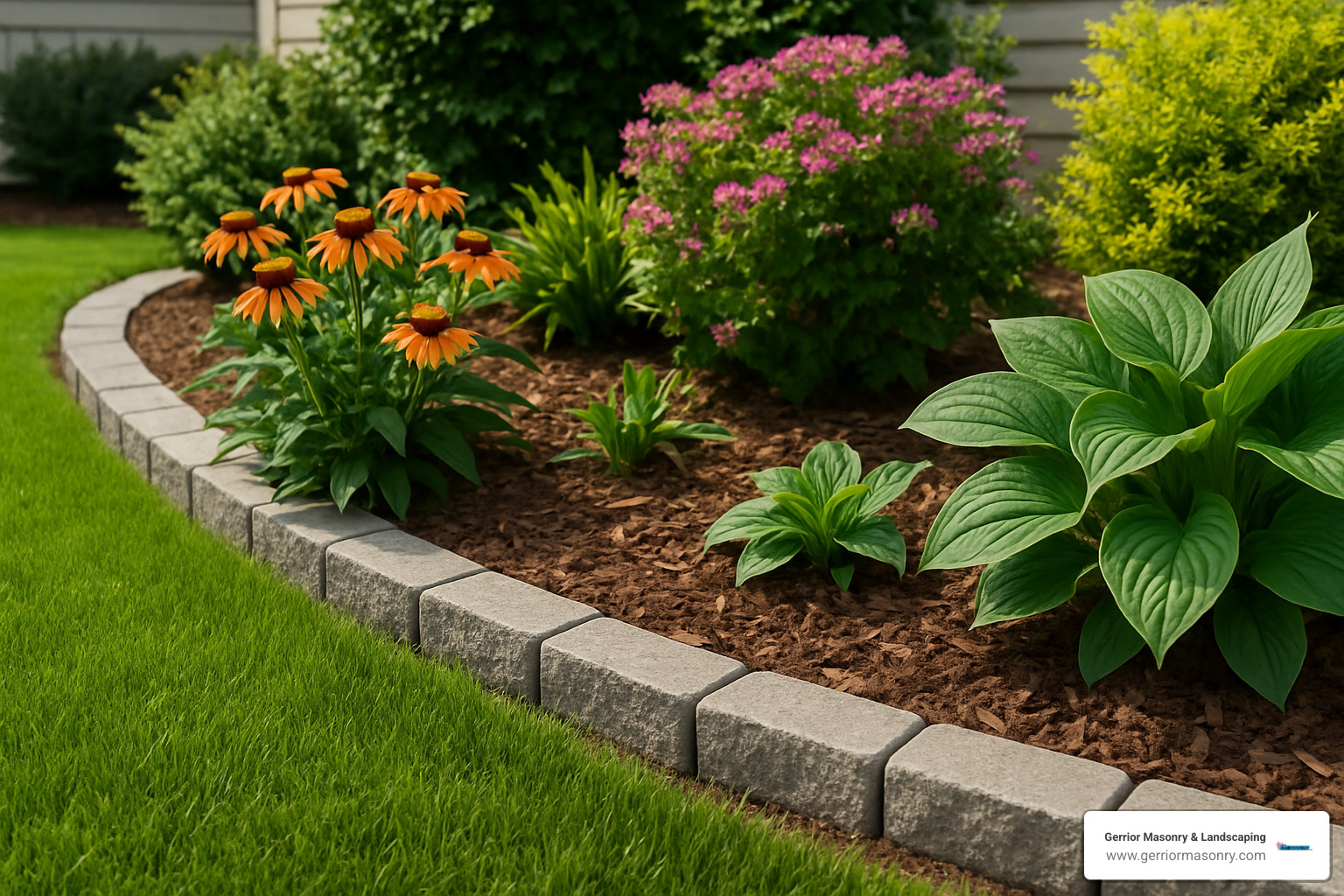
First and foremost, edging stones create a physical barrier that prevents grass from invading garden beds and keeps mulch and soil from spilling onto lawns or pathways. This separation significantly reduces maintenance time and effort—you’ll spend less time pulling grass from flower beds or raking mulch back into place.
Beyond the practical benefits, edge stones for gardens add structure and visual interest to your landscape. They create clean, defined lines that guide the eye and establish a sense of order in your garden design. This structure is particularly important in larger landscapes where the eye needs visual cues to make sense of the space.
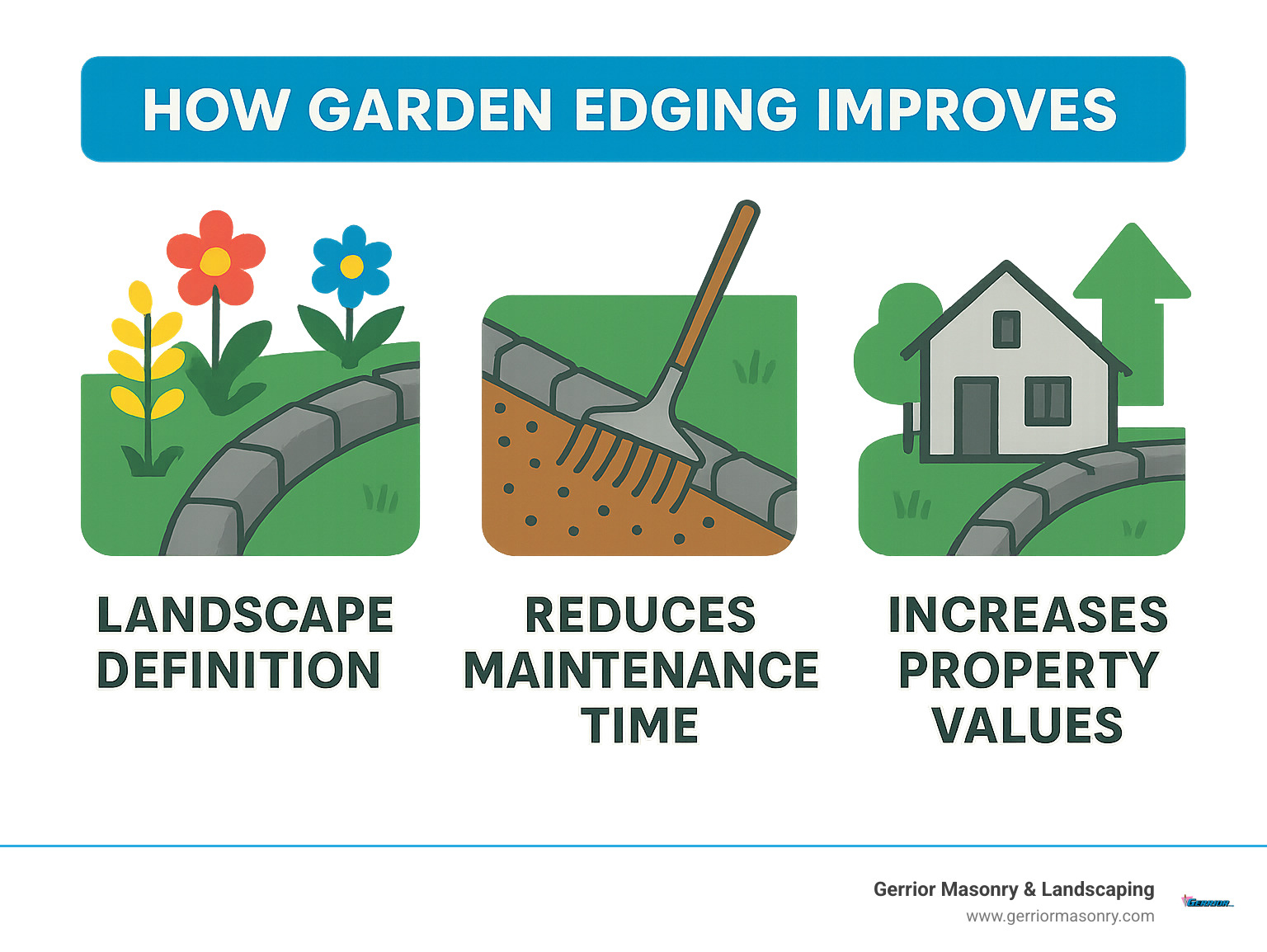
Key Purposes of Garden Edging
Edge stones for gardens serve several essential functions that make them worth every penny of your landscaping budget. They provide clear border separation between different landscape elements, creating visual harmony between lawns, garden beds, and pathways. They’re excellent for soil retention, preventing erosion especially on slopes where rain would otherwise wash away your topsoil.
When it comes to mulch containment, nothing beats a solid stone edge—keeping your mulch exactly where you want it during heavy New England downpours. They also create a perfect mower barrier, providing a clean line for lawn mowers to follow and eliminating the tedious need for string trimming every week.
Good edging improves irrigation efficiency by helping direct water flow and preventing runoff, ensuring your plants get the moisture they need. They even contribute to slope stability by reinforcing garden edges on inclines—something particularly important in our hilly Massachusetts landscapes.
Common Mistakes to Avoid
When installing garden edging stones, I’ve seen homeowners make the same mistakes time and again. Shallow installation is perhaps the most common error—edging stones need proper depth (typically 1/3 of the stone height should be below ground) to prevent shifting during our harsh New England freeze-thaw cycles.
Many DIYers end up ignoring drainage considerations, which can lead to water pooling, erosion, or even foundation damage. Another frequent misstep is choosing the wrong material for the application—lightweight plastic edging simply won’t hold up in high-traffic areas or where vehicles might cross.
According to research from the University of Minnesota Extension, proper edging installation can reduce garden maintenance by up to 30% while significantly extending the life of mulch applications.
Edge Stones for Gardens: Material, Color & Shape Guide
The world of garden edging stones offers remarkable variety in materials, colors, and shapes. Understanding your options is crucial for selecting the perfect edging for your landscape needs.
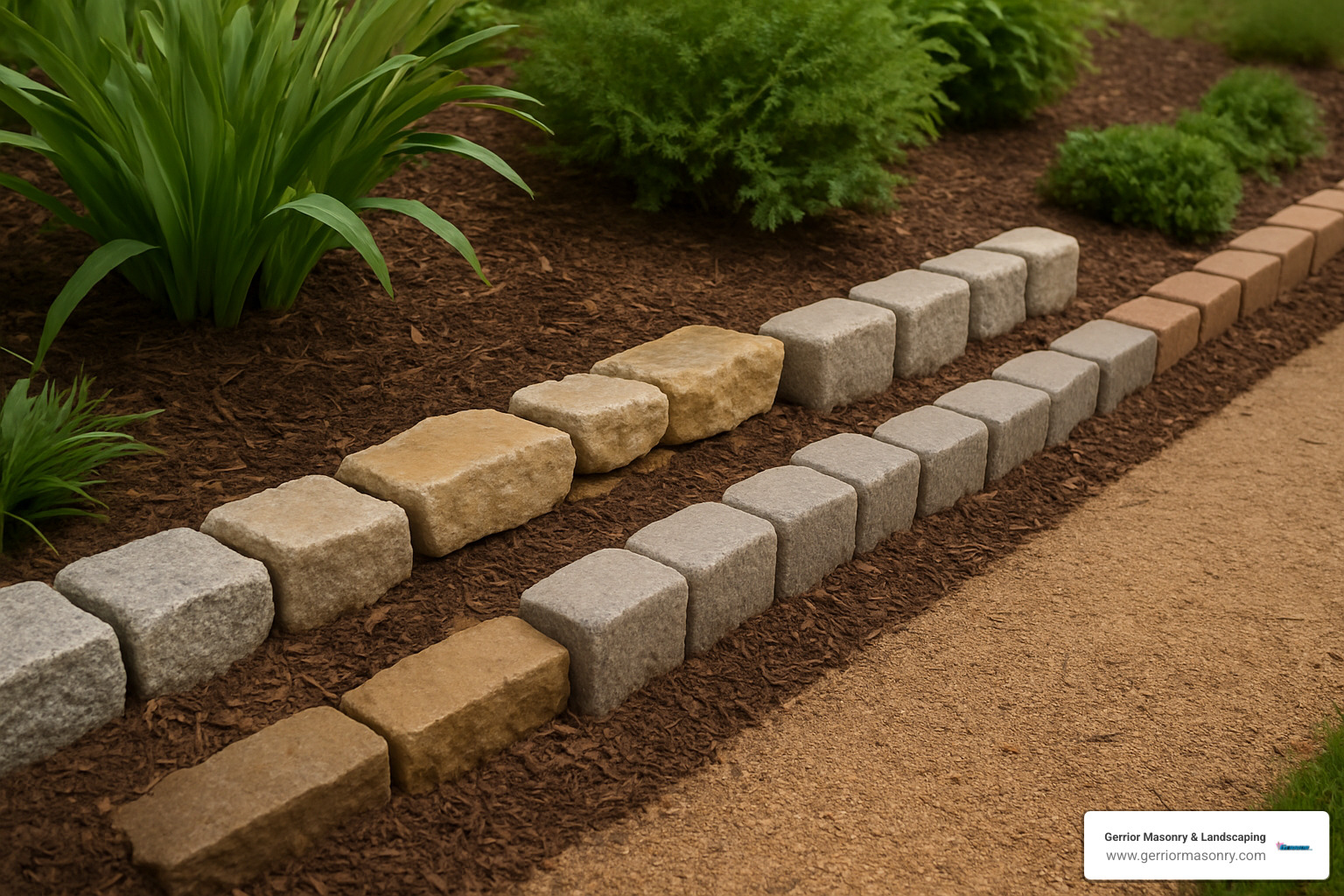
Natural Stone Options
When it comes to durability and timeless appeal, nothing beats natural stone edging. While these options typically come with higher price tags, their exceptional longevity and beauty make them worth considering for many homeowners.
Granite cobblestone is my personal favorite to recommend to our Massachusetts clients. These incredibly durable stones can literally last a century or more, developing a gorgeous patina while maintaining their structural integrity. Available in sophisticated grays, dramatic blacks, soft pinks, and warm buff colors, granite cobbles typically range from 4×4×4″ to 10×7×4″ in size. A standard pallet (covering 33-83 linear feet) runs about $500-$900.
For a warmer, more organic look, sandstone edging brings earthy tones of tan, buff, and reddish-brown to your landscape. It’s slightly softer than granite, which actually makes it easier to cut and shape for custom installations. At $6-$18 per linear foot, sandstone creates a natural, informal border that works beautifully in cottage-style gardens.
Limestone edging offers a more uniform appearance in light creams, grays, and buffs. Moderately durable and receptive to carving, limestone ($5-$15 per linear foot) adds a refined touch to formal gardens and Mediterranean-inspired landscapes.
Manufactured Stone & Concrete Blocks
If consistency, precision, and budget-friendliness matter to you, manufactured options deserve serious consideration.
Concrete paver edgers come in uniform sizes and colors with an impressive range of shapes and styles to match virtually any design aesthetic. With good durability (typically lasting 20-30 years) and prices ranging from $3-$10 per linear foot, these versatile edgers are perfect for modern landscapes and geometric designs where precision matters.
For DIY-friendly options, interlocking concrete curb systems offer mechanical stability without requiring mortar. Available in various colors and textures at $2-$8 per linear foot, these systems allow homeowners to create professional-looking edges without specialized masonry skills.
Emerging Eco Materials
As more Massachusetts homeowners accept sustainable landscaping, eco-friendly edging options are gaining well-deserved popularity.
Recycled rubber edging transforms old tires into flexible, frost-resistant garden borders that won’t crack even during our harsh New England winters. Typically available in black or dark brown at $2-$6 per linear foot, rubber edging offers practical benefits for children’s play areas and regions where frost heave is a constant concern.
For environmentally conscious homeowners, permeable composite edging made from recycled plastics and wood fibers allows water infiltration while resisting rot and insects. Priced between $3-$9 per linear foot, these innovative products are ideal for rain gardens and sustainable landscapes where water management matters.
According to research published in the Journal of Cleaner Production, using recycled materials in landscape construction can reduce carbon footprint by up to 45% compared to virgin materials.
While the average prices listed here reflect internet research data, they’re not actual costs for Gerrior Masonry services. Your specific project may vary based on site conditions, material availability, and design complexity.
Comparing Edging Choices: Stone vs Plastic, Metal & Wood
When it comes to framing your garden beds, you’ve got options beyond just stone. While edge stones for gardens remain our most requested edging material at Gerrior Masonry, I want to give you the full picture of what’s available so you can make the best choice for your particular landscape needs and budget.
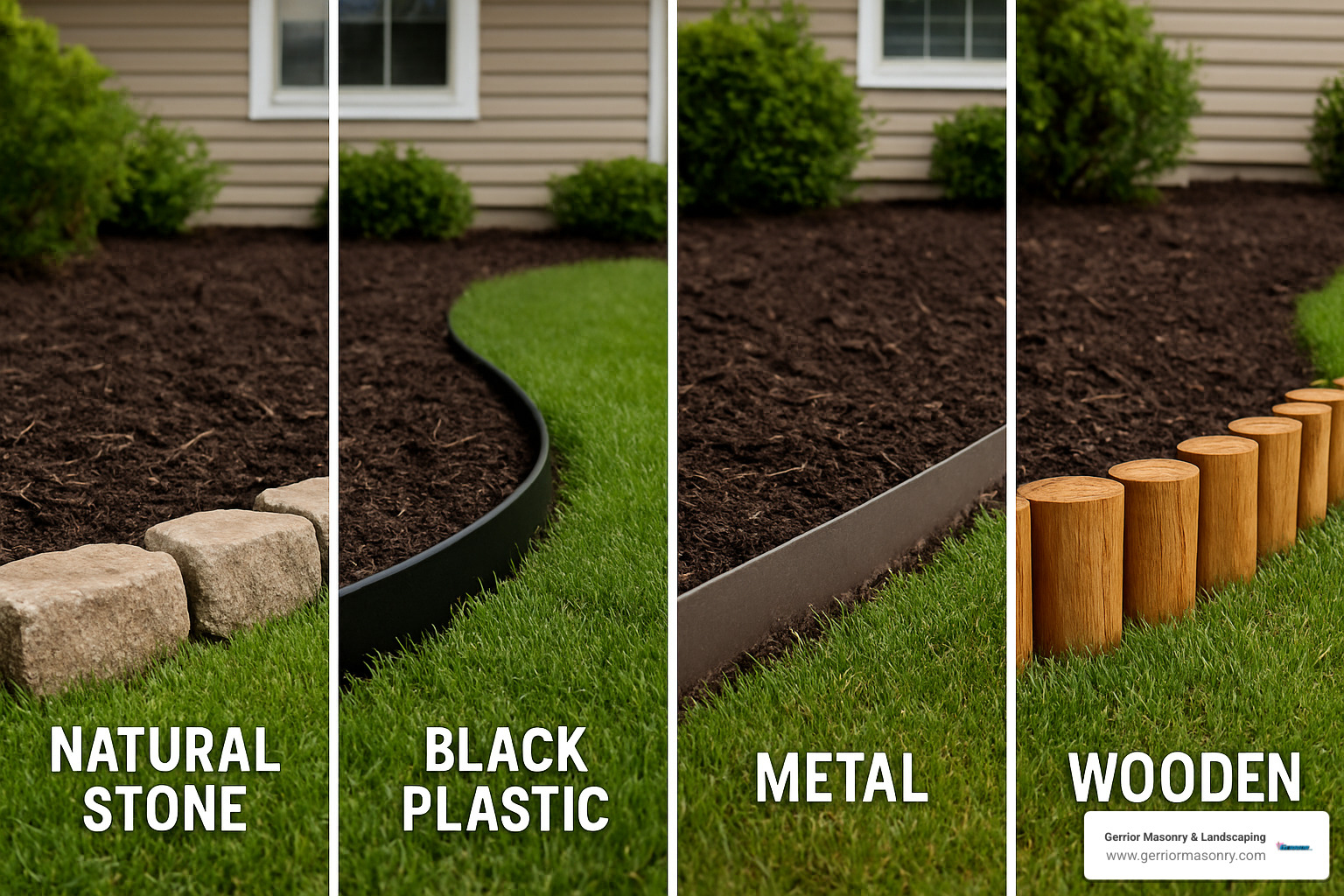
Stone Edging Pros and Cons
Nothing quite matches the timeless beauty of stone edging. When we install granite cobblestones or bluestone edgers for our Massachusetts clients, we know we’re creating something that will likely outlast us all. Edge stones for gardens typically last 50+ years with minimal maintenance, which explains why many historic properties still showcase their original stone borders.
The durability is best—stone stands firm against New England’s notorious freeze-thaw cycles that can wreak havoc on lesser materials. It also handles the weight of vehicles without complaint, perfect if your edging runs alongside a driveway.
The downside? Stone does represent a higher initial investment, typically $5-$25 per linear foot depending on the material. Installation requires some muscle and know-how, which is why many homeowners call us rather than tackle it themselves.
Plastic Edging Pros and Cons
I completely understand the appeal of plastic edging—it’s affordable at just $1-$4 per linear foot, lightweight enough for one person to handle, and those “no-dig” varieties can be installed in a single afternoon. For young families just starting out or those working with tight budgets, plastic can be a sensible starting point.
The tradeoff comes in longevity and appearance. Even the best plastic edging typically shows signs of UV damage within a few years, becoming brittle and prone to cracking. Here in Massachusetts, where winter temperatures regularly dip below freezing, plastic edging can snap during cold snaps or get damaged during snow removal.
Metal Edging Pros and Cons
Metal edging occupies a nice middle ground in both price ($3-$8 per linear foot) and durability. We’ve installed steel and aluminum edging for clients seeking a contemporary, minimalist look, and the crisp lines it creates can be quite striking, especially in modern landscape designs.
The flexibility of metal makes it ideal for creating perfect curves without the cutting required for stone. However, even with powder coating or galvanization, steel edging eventually shows signs of rust in our salt-heavy Massachusetts environment.
Wood Edging Pros and Cons
There’s something warmly organic about wooden garden edging that appeals to many homeowners, especially those with cottage-style or woodland gardens. Cedar and pressure-treated pine are relatively affordable options at $2-$6 per linear foot, and they’re easy to work with using basic carpentry tools.
Unfortunately, wood has the shortest lifespan of all edging materials. Even pressure-treated lumber begins to show signs of decay within 3-7 years in our humid Massachusetts climate.
According to This Old House, proper material selection based on your specific site conditions is the single most important factor in edging longevity.
Installing Edge Stones for Gardens Step-by-Step
Proper installation is crucial for ensuring your garden edging remains beautiful and functional for decades. While we recommend professional installation for larger projects or complex designs, many homeowners can successfully install simpler stone edging with the right guidance.
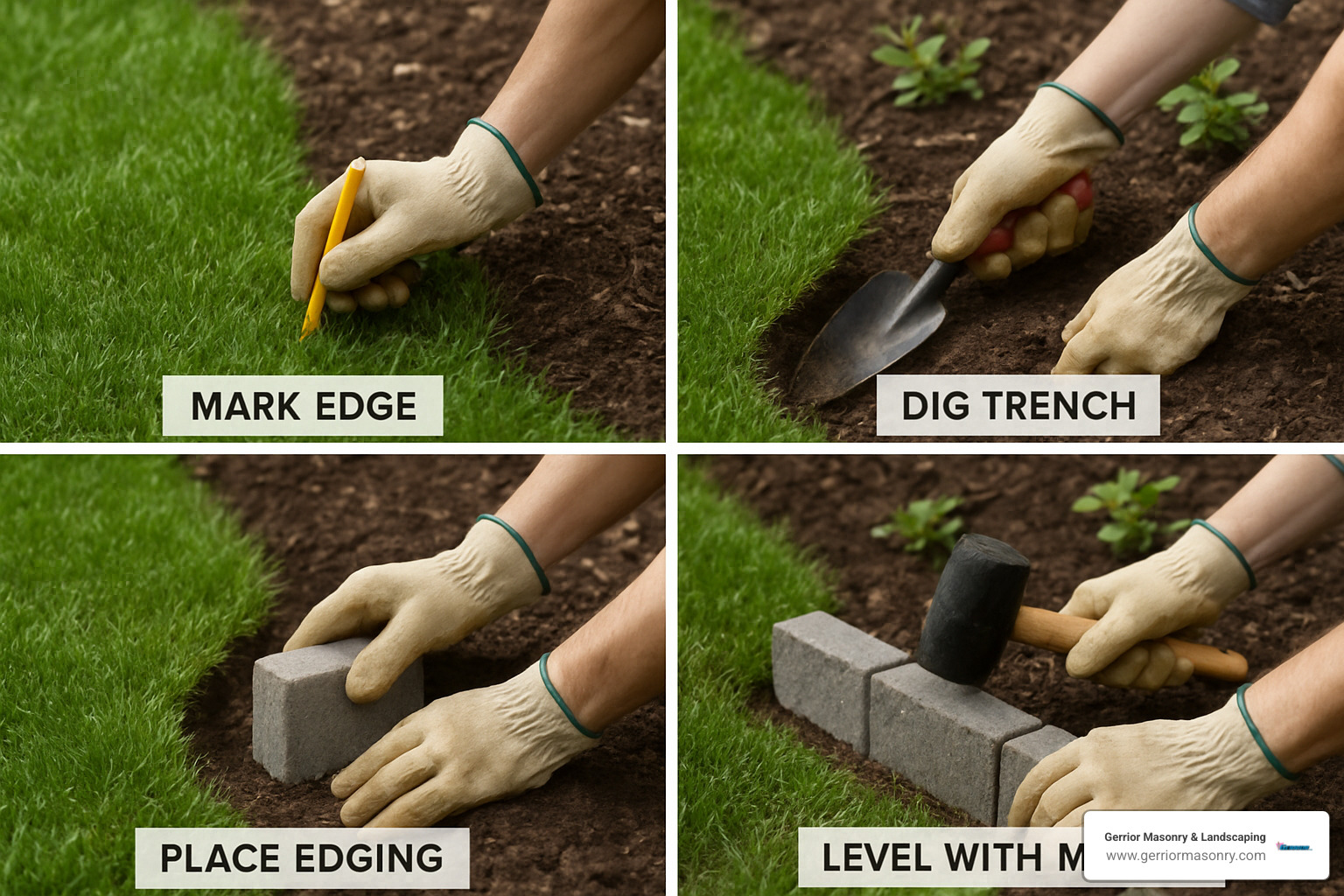
DIY Installation Walkthrough
I’ve installed thousands of feet of edge stones for gardens over my career, and I can tell you that preparation makes all the difference. Before you begin, gather your essential tools: a garden hose or marking paint, tape measure, string and stakes, a good shovel, level, rubber mallet, and safety gear. Don’t forget the materials: gravel for your base, sand for leveling, your chosen edging stones, and optional items like landscape fabric and polymer sand for joints.
Start by planning your border carefully. I always tell my Massachusetts clients to lay out a garden hose to visualize the edge before making any cuts. This simple step can save hours of rework later. For straight sections, use stakes and string as guides to ensure crisp, clean lines.
Next comes trench digging – the real workout! Aim for about 6 inches deep and slightly wider than your stones. Roughly one-third of your stone height should remain below ground level for stability through our New England freeze-thaw cycles.
The base preparation is where many DIYers cut corners, but it’s absolutely critical. Add 2-3 inches of gravel or crushed stone to your trench and compact it thoroughly. This stable foundation prevents settling and keeps your edging looking professional for years.
When setting your edge stones for gardens, start at a corner or endpoint. Place a thin layer of sand over your compacted gravel for fine-tuning the level. Position each stone snugly against its neighbor, using a rubber mallet to gently tap them into place. Check your level frequently both horizontally and vertically.
Once your stones are placed, backfill soil against both sides and compact it firmly. This eliminates air pockets that could cause shifting later. For extra stability, especially in our Massachusetts climate, consider adding polymer sand between the stones.
When to Hire a Pro
While I encourage DIY projects, certain situations really call for professional expertise. If your property has complex grades or significant slopes, professional installation ensures proper drainage and prevents erosion issues. Similarly, if your edging will function as a small retaining wall (over 12 inches), professional installation guarantees both safety and compliance with local building codes.
Existing irrigation systems can be expensive landmines for DIYers. Our crews know how to work around sprinkler lines and drip systems without causing damage. For larger projects exceeding 100 linear feet, our professional teams can complete the work more efficiently.
The National Association of Landscape Professionals recommends professional installation for any edging that requires structural engineering or involves complex drainage solutions.
Costs, Shopping Tips & Sustainability
Let’s talk dollars and sense when it comes to edge stones for gardens. Having installed countless garden borders throughout Massachusetts, I’ve seen how costs can vary widely depending on your material choices and project scope.
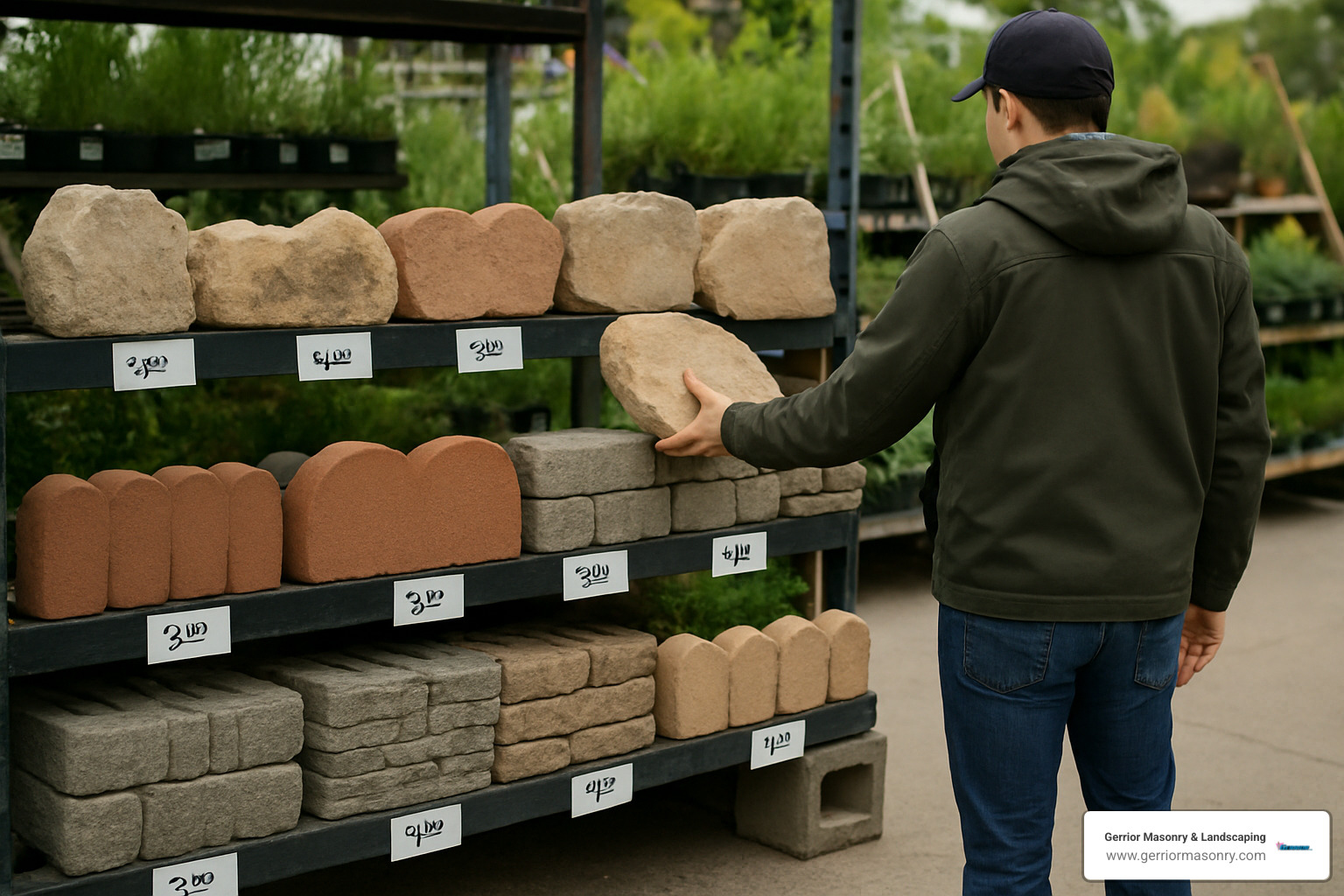
Natural stone typically commands the highest price point, with granite cobblestone ranging from $8-$25 per linear foot (or about $500-$900 per pallet). Other natural options like bluestone ($7-$21), limestone ($5-$15), sandstone ($6-$18), and fieldstone ($4-$12) offer varying price points while maintaining that authentic charm.
If your budget is a bit tighter, manufactured options like concrete pavers ($3-$10) or cast concrete edgers ($2-$8) provide durability at a more accessible price. Traditional brick edging falls somewhere in the middle at $4-$12 per linear foot.
For the truly budget-conscious, alternative materials like metal edging ($3-$8), plastic edging ($1-$4), wooden timbers ($2-$6), or recycled rubber ($2-$6) can get the job done, though they typically won’t last as long as stone options.
These are average market prices based on our research, not specific to Gerrior Masonry services. And don’t forget about installation costs! If you’re hiring professionals, expect to add $5-$15 per linear foot depending on the complexity of your project.
Where to Buy & What to Inspect
I’ve helped countless Massachusetts homeowners source the perfect edge stones for gardens, and I’ve found that landscape supply yards typically offer the best selection and bulk pricing for natural stone. Home improvement centers are convenient for manufactured options, while garden centers are great for smaller quantities and decorative pieces.
If you’re tackling a larger project, consider going directly to stone quarries where you’ll often find better pricing for bulk orders. Reclamation yards can be treasure troves for unique or antique edging materials that add character to your landscape.
When examining potential purchases, don’t just grab the first stones you see. Look for color consistency within the batch and check for structural integrity – no one wants cracked stones that’ll fail in our harsh New England winters. For manufactured products, verify the dimensions are consistent, and always inspect the finish quality.
According to Better Homes & Gardens, choosing the right edging material for your specific climate and garden style is crucial for long-term satisfaction.
Budget vs Premium Scenarios
Garden edging projects come in all shapes, sizes, and budgets. For those working with limited funds ($100-$300 total), consider a DIY installation using concrete edgers or plastic edging. Focus on high-visibility areas first and consider phasing your project over multiple seasons.
A mid-range approach ($300-$1,000) might combine DIY preparation with professional finishing touches. This budget allows for quality manufactured stone or mid-range natural stone options, complete installation for average-sized garden beds, and proper attention to base materials and drainage – crucial in our freeze-prone Massachusetts climate.
For those seeking the ultimate in durability and aesthetics, a premium approach ($1,000-$3,000+) includes professional installation of high-quality natural stone with custom cutting and fitting for perfect alignment.
Conclusion & Next Steps
As we’ve explored throughout this guide, edge stones for gardens truly transform ordinary landscapes into defined, polished outdoor spaces. These seemingly simple elements serve as the crucial framework that lifts your garden’s appearance while delivering practical benefits that reduce maintenance headaches and extend the life of your plantings and mulch.
When selecting the perfect edging for your Massachusetts property, take time to consider a few key factors:
First, think about your garden’s overall style. The edging materials you choose should complement both your home’s architectural character and your garden’s design aesthetic. A Victorian home might shine with formal bluestone edging, while a woodland cottage garden could be perfectly framed with natural fieldstone.
Next, carefully evaluate the functional requirements of each area. The casual garden border along your perennial bed has very different needs than the edging that separates your driveway from your lawn. Matching the right material to each specific location ensures long-lasting performance.
Consider the long-term value of your investment too. Quality materials and proper installation may cost more initially, but they provide edging that improves your property’s beauty and function for decades to come. This is especially important in New England, where our freeze-thaw cycles can quickly compromise poorly installed edging.
At Gerrior Masonry & Landscaping, we bring more than three decades of experience to every edging project we undertake. Our team understands the unique challenges of New England’s climate and soils, ensuring that your garden edging remains beautiful and functional through harsh winters, spring thaws, summer heat, and fall rains.
Whether you’re planning a complete landscape renovation or simply looking to improve your existing garden beds, we’re here to help you select and install the perfect edge stones for gardens that will transform your outdoor space for years to come.
Ready to define and refine your garden with beautiful, durable edging stones? Contact Gerrior Masonry & Landscape Construction today to schedule your consultation. We’re based in Woburn, MA, and proudly serve communities throughout Middlesex and Essex County, Massachusetts.
