
What Is Masonry Restoration — and Why Does It Matter?
Masonry restoration is the process of repairing, stabilizing, and preserving brick, stone, or mortar structures to bring them back to their original condition and function.
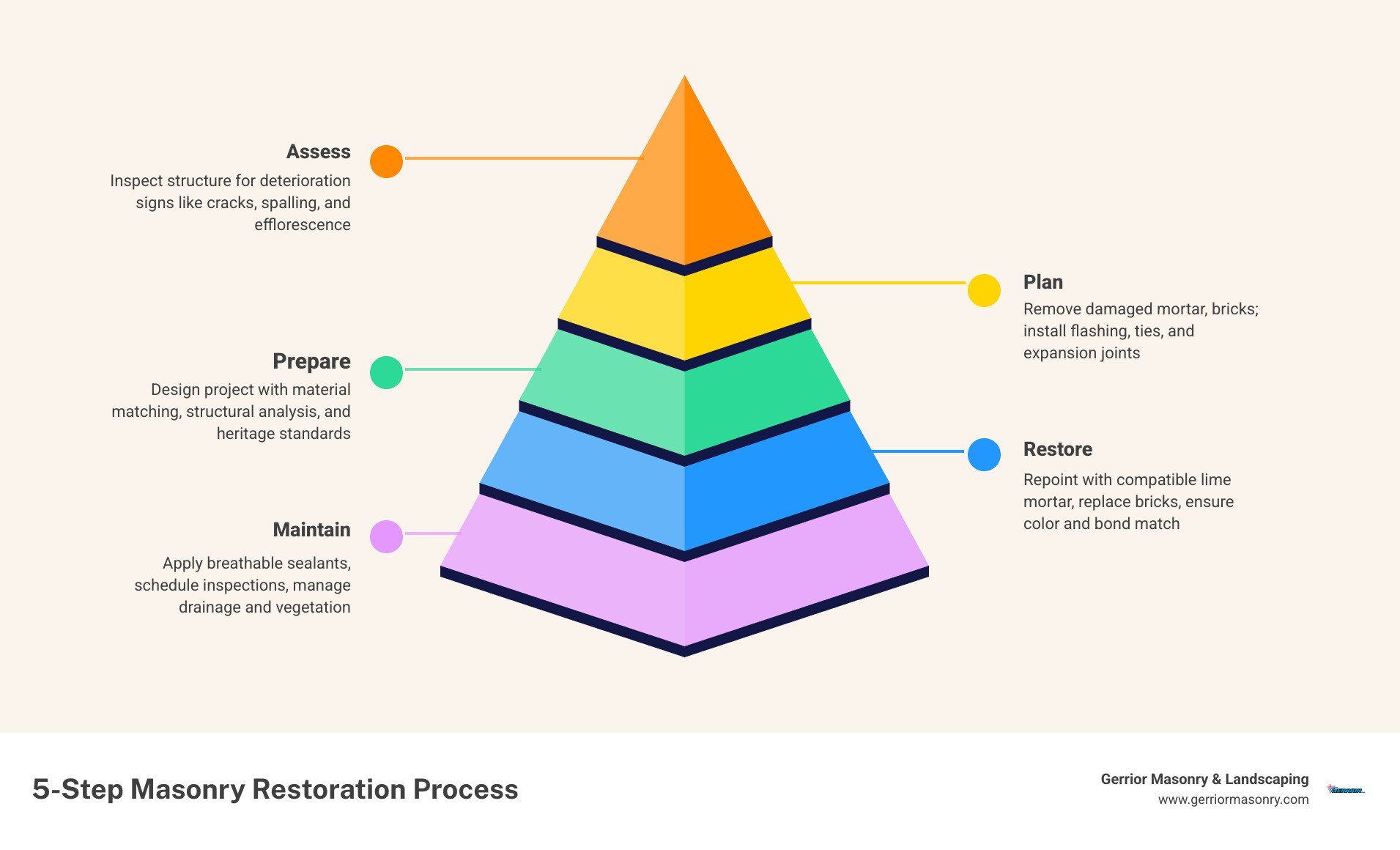
Here’s a quick summary of what it involves:
- What it is: Repairing or replacing deteriorated brick, stone, mortar, and related structural elements
- Why it matters: Protects structural integrity, prevents water damage, and preserves the historical and aesthetic value of a building
- When you need it: When you see cracks, spalling, crumbling mortar, staining, or bowing walls
- Who should do it: A qualified mason with experience in compatible materials and heritage techniques
- How long it lasts: Professional restoration can last 50 years or more — far longer than basic patch repairs
Masonry is one of the most durable building materials on earth. Brick walls can last around 100 years. But the mortar holding them together? That typically needs attention every 20 to 30 years. When that mortar fails — or when moisture, freeze-thaw cycles, or ground movement take their toll — the entire structure becomes vulnerable.
The difference between a quick fix and proper restoration can mean decades of added life for your building. Getting it wrong, especially on an older or historic structure, can cause irreversible damage.
I’m Joe Gerrior, owner of Gerrior Masonry & Landscape Construction Corp., a family-owned business based in Woburn, Massachusetts, with over 34 years of experience in masonry restoration for residential and commercial clients. Throughout that time, I’ve seen how the right restoration approach — using compatible materials and proven techniques — can protect a property for generations to come.
Masonry restoration helpful reading:
The Essential Role of Professional Masonry Restoration
When we talk about masonry restoration, we are talking about more than just a bucket of cement and a trowel. Many property owners in Middlesex and Essex County confuse restoration with basic repair or “tuckpointing,” but the differences are vital for the longevity of your home or business. Restoration is a proactive, comprehensive approach to building health.
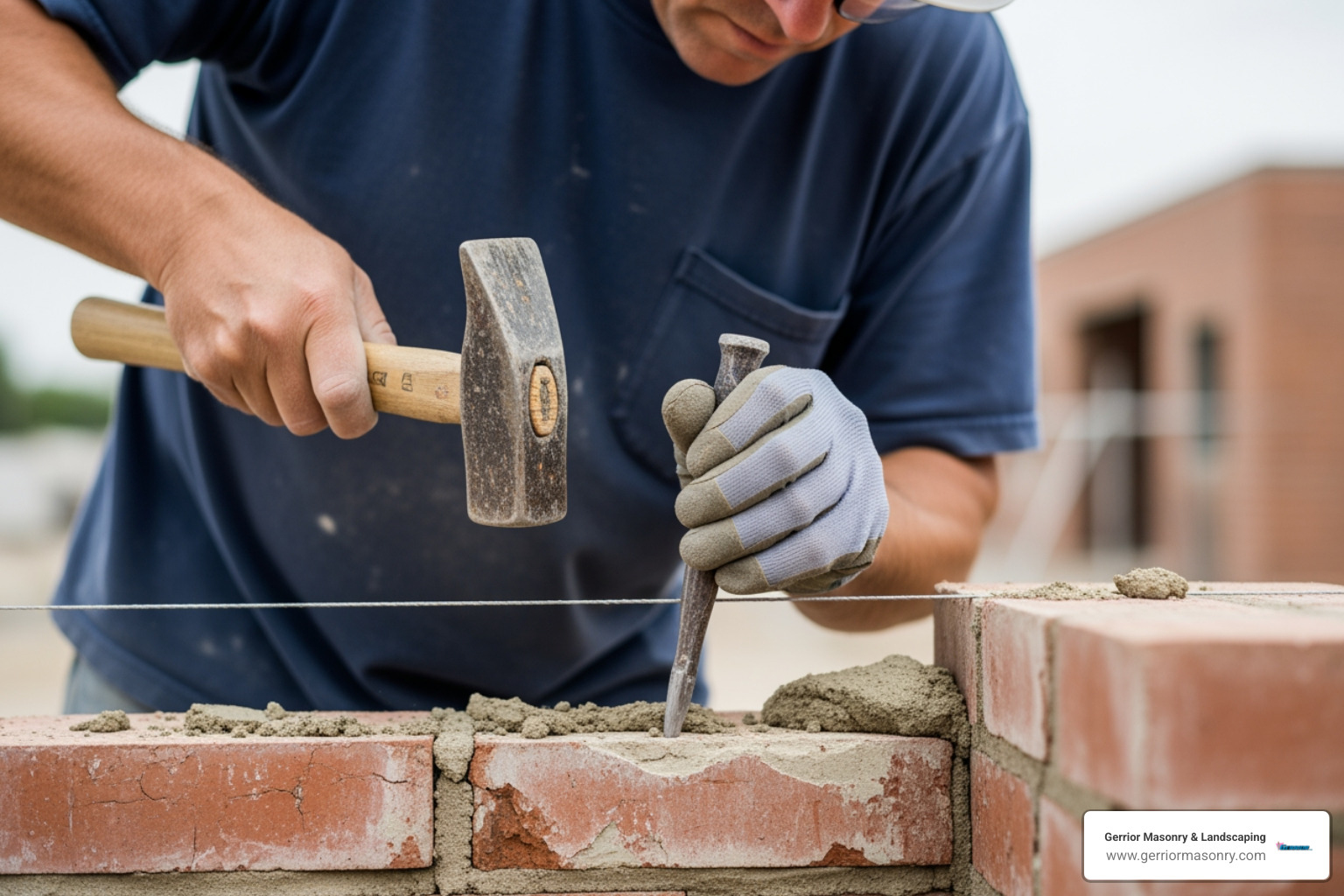
A “basic repair” is often a reactive measure—patching a visible hole or a single crack to stop a leak. Masonry restoration, however, is a holistic approach. It involves returning the entire facade or structure to its original design and functional state. This includes analyzing the original materials to ensure that any new mortar or replacement bricks match the physical properties of the old ones. Without this analysis, new repairs can actually cause more harm than good by creating stress points.
One of the most misunderstood terms in the industry is tuckpointing. While often used interchangeably with repointing, tuckpointing is actually an aesthetic technique where two different colors of mortar are used to create the illusion of very fine, perfectly straight joints. Repointing is the actual structural process of removing old, decayed mortar and replacing it. Following Best Practices is essential because using modern, high-strength materials on historic, softer bricks can actually accelerate the destruction of the wall.
Identifying Signs of Masonry Deterioration
How do you know when your building is crying out for help? Masonry is tough, but it isn’t invincible. In our region, the harsh New England winters are the primary catalyst for damage. Here are the most common signs that you need to look into brick restoration:
- Spalling: This is when the face of the brick or stone begins to peel, flake, or pop off. It usually happens because moisture has been trapped inside the unit and then freezes. As water turns to ice, it expands by 9%, creating internal pressure that breaks the surface.
- Efflorescence: Have you noticed a white, powdery substance on your walls? That’s salt. Moisture carries soluble salts to the surface, and as the water evaporates, the salt stays behind. While it can be cleaned, it’s a major red flag that water is moving through your masonry. If salts crystallize beneath the surface (sub-florescence), they can cause internal structural decay.
- Cracked Mortar: If the mortar is crumbling or missing in sections, the structural “glue” of your building is gone. Mortar joints make up about 20% of the masonry facade, so their failure is a significant issue for the building’s stability.
- Step Cracking: Cracks that follow the mortar joints in a “stair-step” pattern often indicate foundation settlement or structural shifting. These cracks suggest the building is under uneven stress.
- Bowing or Bulging Walls: If your brickwork looks like it’s “pregnant” or leaning, the internal ties holding the masonry to the frame have likely failed. This is a safety emergency.
The Science of Mortar Selection in Masonry Restoration
This is where many DIY attempts and general contractors go wrong. You can’t just pick up a bag of pre-mixed mortar from a big-box store and use it on a house built in 1900. Historic masonry was typically built using lime mortar, which is softer and more “breathable” than modern mortars. Modern mortars contain high amounts of Portland cement, which makes them very hard and impermeable.
If we put a hard, modern mortar into a wall of soft, historic bricks, the bricks will be the weakest point. When the wall shifts or expands, the bricks will crack instead of the mortar. Mortar should always be the “sacrificial” element of the wall. According to Scientific research on patching brick cracks, the new mortar must match the original in color, texture, and—most importantly—compressive strength and permeability. We often send samples of original mortar to a lab to ensure a perfect match.
Key Techniques: Repointing and Brick Replacement
A successful masonry restoration project relies on precision. The process of repointing begins with joint preparation. We carefully remove the old mortar to a specific depth (usually twice the width of the joint) using specialized hand tools or small pneumatic chisels to avoid damaging the edges of the bricks. Once the joints are clean, we apply the new, custom-matched mortar in layers. This ensures there are no air pockets and that the bond is solid. For units that are beyond repair, we perform brick replacement, matching the size, density, and color of the original clay to ensure the repair is invisible and the building remains a cohesive unit. By using masonry repair services that respect traditional heritage techniques, we ensure the building’s longevity.
Planning and Executing a Restoration Project
Restoring a building is a journey that requires careful planning. It’s not just about what you see on the outside; it’s about the hidden structural elements that keep the building standing and protected from the elements.
Structural Elements: The Hidden Heroes
During a masonry restoration, we often have to address the “bones” of the facade:
- Lintels: These are the horizontal beams (often steel or stone) that support the masonry over windows and doors. Steel lintels often rust, causing them to expand and lift the brickwork—a phenomenon known as “rust jacking.” This can exert thousands of pounds of pressure, causing diagonal cracks at the corners of openings.
- Wall Ties: In cavity walls, metal ties hold the outer brick layer to the inner structure. Over decades, these can corrode and snap, leading to bulging walls. Replacing these ties is critical for structural safety.
- Flashing and Weep Holes: Flashing is the internal waterproof membrane that directs water out of the wall through “weep holes.” If your flashing is cracked or your weep holes are blocked by paint or debris, water will sit inside your walls and rot the frame.
- Expansion Joints: Buildings need to breathe and move. We install or repair expansion joints to allow the masonry to expand and contract without cracking during the extreme temperature swings we see in Massachusetts.
The Cost of Doing It Right
It is important to understand that masonry restoration is an investment. While a quick patch job might cost a few hundred dollars, it usually fails within 2 to 5 years. A professional restoration is designed to last 50 years or more. The labor-intensive nature of hand-tooling and custom material matching accounts for the higher initial cost.
Note: The following table represents average internet costs based on general data and does not reflect actual pricing for Gerrior Masonry & Landscaping services.
| Service Type | Average Internet Cost (Low End) | Average Internet Cost (High End / Specialist) |
|---|---|---|
| Basic Spot Repointing | $500 | $2,500+ |
| Full Facade Repointing | $5,000 | $25,000+ |
| Lintel Replacement (per window) | $1,000 | $4,500+ |
| Historic Brick Restoration (per sq. ft.) | $15 | $60+ |
Protecting Structural Integrity and Heritage Value
For many of our clients in towns like Lexington, Concord, and Salem, their buildings are part of local history. We adhere to the Secretary of the Interior’s Standards for the Treatment of Historic Properties. These guidelines emphasize “repairing rather than replacing” and ensuring that any new work is physically and visually compatible with the original. This preservation isn’t just about looks; it’s about community value. A well-restored building maintains higher property values and contributes to the character of the neighborhood. Furthermore, identifying Unreinforced Masonry Buildings (UMBs) is a critical safety step. These older structures lack steel reinforcement and are at much higher risk during seismic events. Restoration allows us to retrofit these buildings, making them safe for modern occupancy. You can find more info about historic masonry repair on our dedicated guide page.
Long-Term Maintenance for Masonry Restoration Projects
Once the restoration is complete, the goal is to make sure you don’t need us again for a long time! Maintenance is key to protecting your investment:
- Gentle Cleaning: Avoid high-pressure power washing, which can strip the protective “crust” off old bricks and force water deep into the wall. We recommend low-pressure water or gentle chemical cleaners.
- Breathable Sealants: If you choose to seal your masonry, it must be a silane-siloxane based breathable water repellent. Never use “waterproof” paints or coatings that trap moisture inside the brick, leading to rapid decay.
- Annual Inspections: Check your gutters and downspouts. 90% of masonry damage starts with a leaky gutter dumping water down the side of the building. Ensure the ground slopes away from the foundation to prevent hydrostatic pressure issues.
- Vegetation Removal: Ivy looks charming, but its roots dig into mortar joints and hold moisture against the wall. Keep the vines off the brick to prevent accelerated mortar failure.
For those with landscape features, our guide on stone wall restoration offers specific tips for keeping your outdoor masonry in top shape.
Choosing the Right Contractor for Your Property
Choosing a mason is a big decision. You are trusting someone with the structural integrity and the “face” of your most valuable asset. At Gerrior Masonry & Landscaping, we’ve spent over 30 years perfecting the art of restoration.
Why does that matter? Because experience tells us things a textbook can’t. We know how the soil in Woburn behaves differently than the coastal air in Beverly or Marblehead. We know which local quarries provide the best stone matches for 19th-century foundations.
Every project we take on features owner oversight. Joe Gerrior is on-site, ensuring that the mortar is mixed correctly, the joints are cut to the right depth, and the site is kept clean. We don’t just “do a job”; we preserve a piece of Massachusetts history.
Whether you need a simple chimney repair or a full-scale historic facade restoration, we have the tools, the team, and the passion to do it right the first time.
If you’ve noticed any of the warning signs mentioned in this guide—cracks, peeling bricks, or white salt stains—don’t wait. Masonry issues are like a toothache; they never get better (or cheaper) on their own.
Gerrior Masonry & Landscape Construction is based in Woburn, MA, and services Middlesex and Essex County, Massachusetts.
