
Fire Brick Adhesive: Top 5 Powerful Choices for 2025 Success
Why Fire Brick Adhesive is Critical for High-Temperature Applications
Fire brick adhesive is a specialized high-temperature mortar designed to bond firebricks in fireplaces, wood stoves, pizza ovens, and other applications where regular cement would fail. Unlike standard masonry mortar, these adhesives can withstand extreme heat – typically 2000°F to 3000°F – without cracking or losing their bond strength.
Quick Reference Guide:
- Refractory Mortar: Clay-based, rated to 2700°F, best for laying new firebrick
- Furnace Cement: Pre-mixed, rated to 2000-3000°F, ideal for repairs and metal-to-masonry bonds
- High-Temp Silicone: Flexible, rated to 2300°F, perfect for expansion joints
- Coverage: Typically 45-150 standard firebricks per 50lb bag
- Curing: Air dry 24-48 hours, then gradual heat cure to 500°F
The key difference from regular mortar lies in the formulation. Fire brick adhesives use refractory clay and special aggregates instead of Portland cement, which breaks down under high heat. They also include fiber reinforcement and polymer modifiers to handle thermal shock – the rapid heating and cooling cycles that would destroy ordinary cement.
Temperature ratings matter significantly. A standard fireplace reaches 1000-1200°F, while wood stoves can hit 1400°F and pizza ovens exceed 900°F. Using the wrong adhesive means costly repairs when joints fail during the heating season.
I’m Joe Gerrior, owner of Gerrior Masonry & Landscape Construction, and over 34 years I’ve rebuilt countless fireboxes and repaired failed installations where homeowners used regular mortar instead of proper fire brick adhesive. The right adhesive choice makes the difference between a repair that lasts decades versus one that fails after the first winter.
What Is Fire Brick Adhesive & Why It Matters
Think of fire brick adhesive as the unsung hero of your fireplace or wood stove. While everyone admires the beautiful flames and cozy warmth, this specialized mortar is quietly doing the heavy lifting – literally holding everything together when temperatures soar beyond what would turn regular cement into powder.
Fire brick adhesive is essentially a high-temperature mortar that’s been specially engineered to bond refractory materials like firebricks. The magic happens in its unique formulation, which uses refractory clay and alumina-based compounds instead of the Portland cement found in regular mortar. These materials actually get stronger when exposed to extreme heat, rather than breaking down.
After three decades in this business, I’ve seen countless DIY projects where homeowners used regular mortar thinking “cement is cement.” Six months later, they’re calling me to rebuild their entire firebox because everything has crumbled. Fire brick adhesive isn’t just a fancy name – it’s chemistry specifically designed for the job.
The gold standard for these products is meeting ASTM C-199 specifications. This isn’t just industry jargon – it means the adhesive has passed rigorous testing for thermal cycling, bond strength at high temperatures, and water resistance.
Regular Mortar vs High-Heat Formulations
The difference between regular masonry mortar and fire brick adhesive is like comparing a paper airplane to a jet fighter – they might look similar, but they’re built for completely different missions.
Regular mortar depends on Portland cement as its binding agent, mixed with lime and sand. This works beautifully for building walls or laying patio stones, but it has a fatal flaw: when heated beyond 600°F, Portland cement begins to break down chemically. By 1200°F, it’s essentially turned to powder.
Fire brick adhesive takes a completely different approach. Instead of Portland cement, it uses fireclay – a natural clay that becomes stronger when fired, just like pottery in a kiln. Some formulations use alumina cement with high aluminum content, or silicate binders that create ceramic-like bonds when they cure.
Even the sand is different. While regular mortar uses standard construction sand, fire brick adhesives incorporate specialized aggregates like grog (ground, fired ceramic material), vermiculite for insulation, and high-purity silica sand that won’t break down under extreme heat.
Key Performance Metrics
When I’m selecting fire brick adhesive for a project, I look at several key performance numbers that tell the real story of how well the product will perform.
Compressive strength is where these products really shine. Quality refractory mortars achieve 2,000 to 4,000 PSI compressive strength after curing – and here’s the crucial part – they maintain this strength even at high temperatures. Regular mortar might start with similar numbers, but it loses strength rapidly as heat increases.
Bonding shear strength matters especially in vertical applications like fireplace walls. The adhesive needs to resist sliding forces, and premium fire brick adhesives maintain 200 to 400 PSI shear strength even after repeated heating and cooling cycles.
Water solubility is another critical factor. Once cured, quality fire brick adhesive becomes completely non-water soluble, meeting those ASTM C-199 requirements. This prevents your joints from slowly dissolving when moisture gets in.
The real test comes with thermal shock resistance – the ability to handle rapid temperature changes without cracking. These adhesives go through multiple heating and cooling cycles during testing to ensure they’ll handle real-world conditions.
Types of Fire Brick Adhesive (Primary Keyword Spotlight)
Choosing the right fire brick adhesive can feel overwhelming with so many options available. Let me break down the main types in a way that actually makes sense for your project.
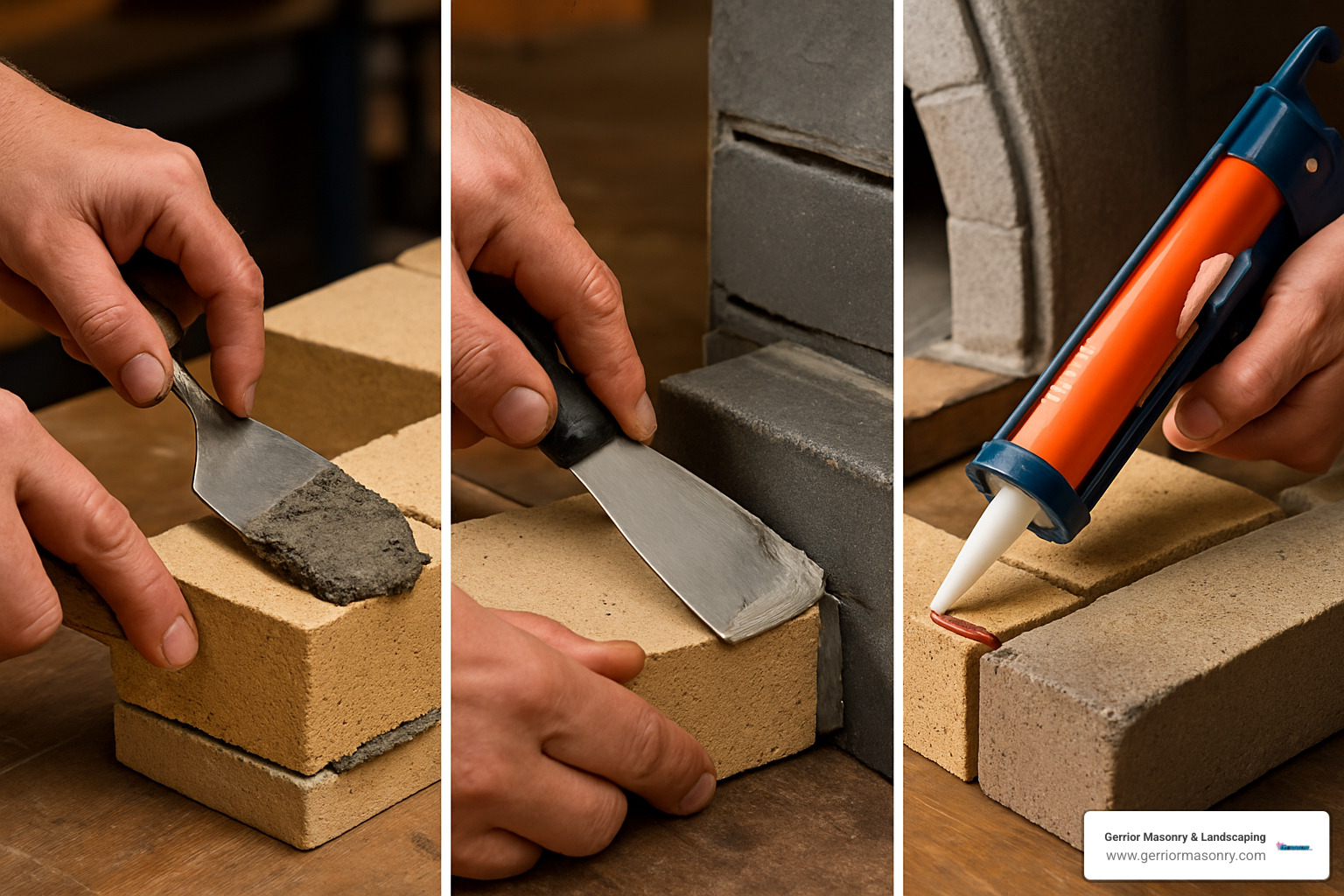
Think of these adhesives like tools in a toolbox – each one has its sweet spot. After three decades of masonry work, I’ve learned that using the wrong type is like trying to hammer a nail with a screwdriver. It might work temporarily, but you’ll regret it later.
Refractory Mortar
Refractory mortar is the workhorse of fire brick adhesives. This clay-based mortar handles like regular mortar during installation but transforms into something much stronger when heated.
Most refractory mortars are rated for continuous use up to 2700°F, which covers pretty much any residential application you’ll encounter. Your typical fireplace reaches about 1200°F, and even a hot-burning wood stove rarely exceeds 1400°F.
The beauty of refractory mortar lies in its medium-duty reliability. It’s strong enough for structural applications but forgiving enough for DIY installers. A 50-pound bag typically covers 100-150 standard firebricks, depending on your joint thickness.
I recommend refractory mortar when you’re laying new firebrick, rebuilding a firebox, or constructing a pizza oven. It creates permanent, structural joints that get stronger with each heating cycle.
High-Temp/Furnace Cement
Furnace cement is your go-to for repairs and specialty bonding. These pre-mixed products come ready to use and handle temperatures from 2200°F to 3000°F depending on the formulation.
What sets furnace cement apart is its ability to bond metal to masonry – something regular refractory mortar struggles with. Installing a wood stove? Sealing stove pipe connections? Furnace cement is your friend.
The thick consistency means it stays put when applied to vertical surfaces or overhead joints. No mixing means no mistakes, and the smaller containers (usually 8-32 ounces) are perfect for repair work without waste.
I keep furnace cement in my truck for quick repairs – sealing small cracks, filling gaps around dampers, or touching up joints that have developed hairline cracks after years of use.
Silicone & Polymer-Modified Options
High-temperature silicone represents the newest evolution in fire brick adhesive technology. These flexible sealants maintain their elasticity even at temperatures up to 2300°F.
The game-changer here is thermal movement. Pizza ovens and outdoor fireplaces expand and contract dramatically with temperature changes. Rigid mortars eventually crack from this constant movement, but high-temp silicone flexes with it.
Polymer-modified adhesives combine traditional refractory materials with modern chemistry. They offer improved workability and faster curing while maintaining the strength of conventional mortars.
These products shine in thin-bed installations where you need precise control, or in expansion joints where movement is expected. They’re also excellent for weatherproofing outdoor installations where moisture penetration could cause freeze-thaw damage.
The fiber-reinforced versions add extra strength for applications where vibration or thermal shock might stress the joints. I use these in commercial installations or anywhere the heating cycles are particularly severe.
Choosing the Best Fire Brick Adhesive for Your Project
Picking the right fire brick adhesive isn’t rocket science, but it does require understanding what you’re working with. After three decades of fixing failed installations, I can tell you that most problems start with choosing the wrong product for the job.
The biggest factor is temperature. Your basic fireplace runs around 1000-1200°F – pretty much any quality fire brick adhesive will handle that. But wood stoves can hit 1400°F, and pizza ovens can reach 1800°F or more. Here’s my rule: always pick an adhesive rated at least 500°F above what you expect.
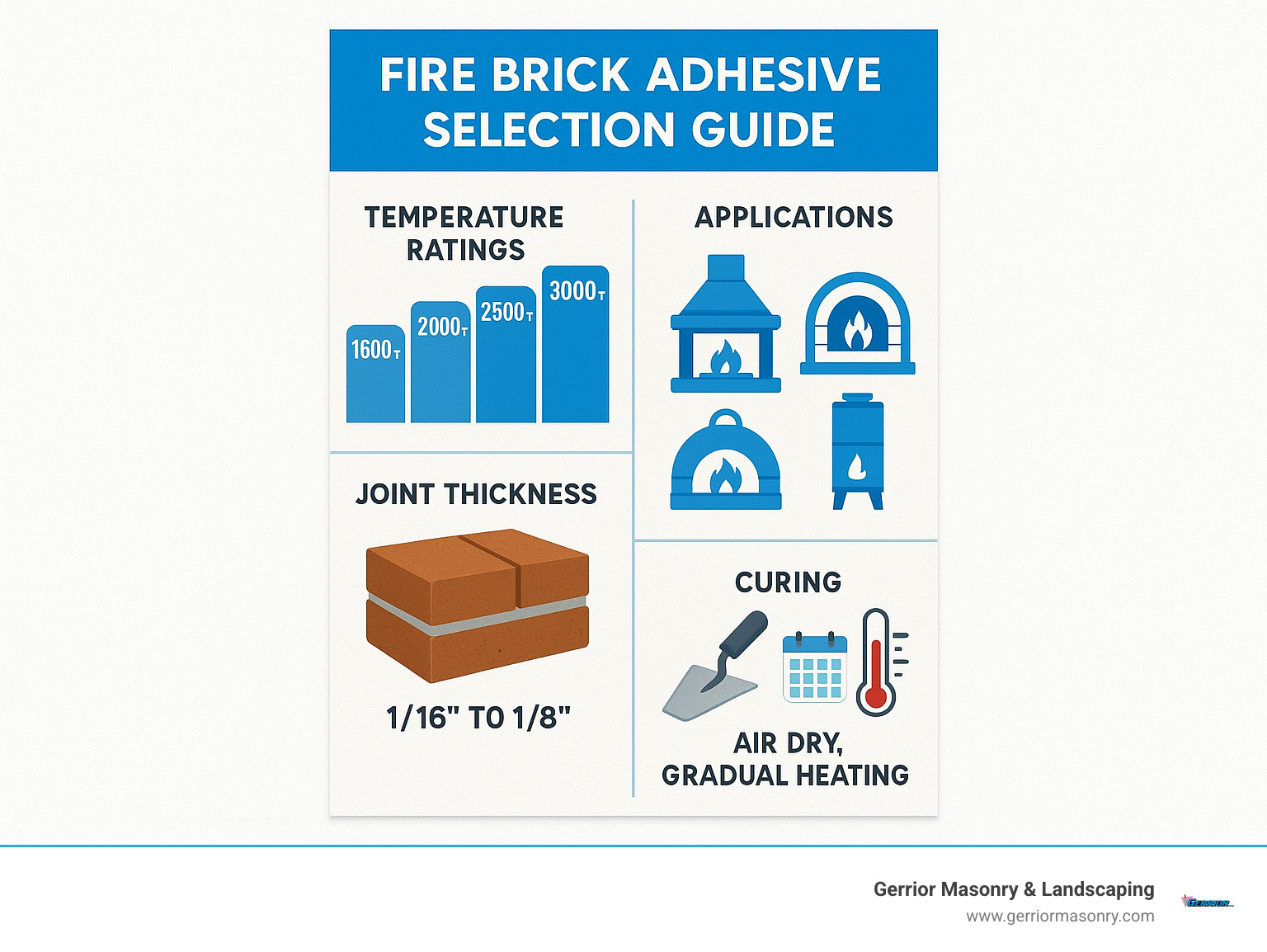
Joint thickness matters too. Traditional refractory mortars work best with joints between 1/16″ and 1/4″ thick. Try to go thinner and you won’t get good coverage. Go thicker and the joint becomes a weak point. Furnace cements are more forgiving – they’ll fill gaps up to 1/8″ without problems.
| Product Type | Temperature Rating | Best Joint Thickness | Ideal Application |
|---|---|---|---|
| Refractory Mortar | 2700°F | 1/16″ – 1/4″ | New construction, structural work |
| Furnace Cement | 2000-3000°F | Up to 1/8″ | Repairs, metal connections |
| High-Temp Silicone | 2300°F | Under 1/16″ | Expansion joints, sealing |
Fireplaces & Wood Stoves
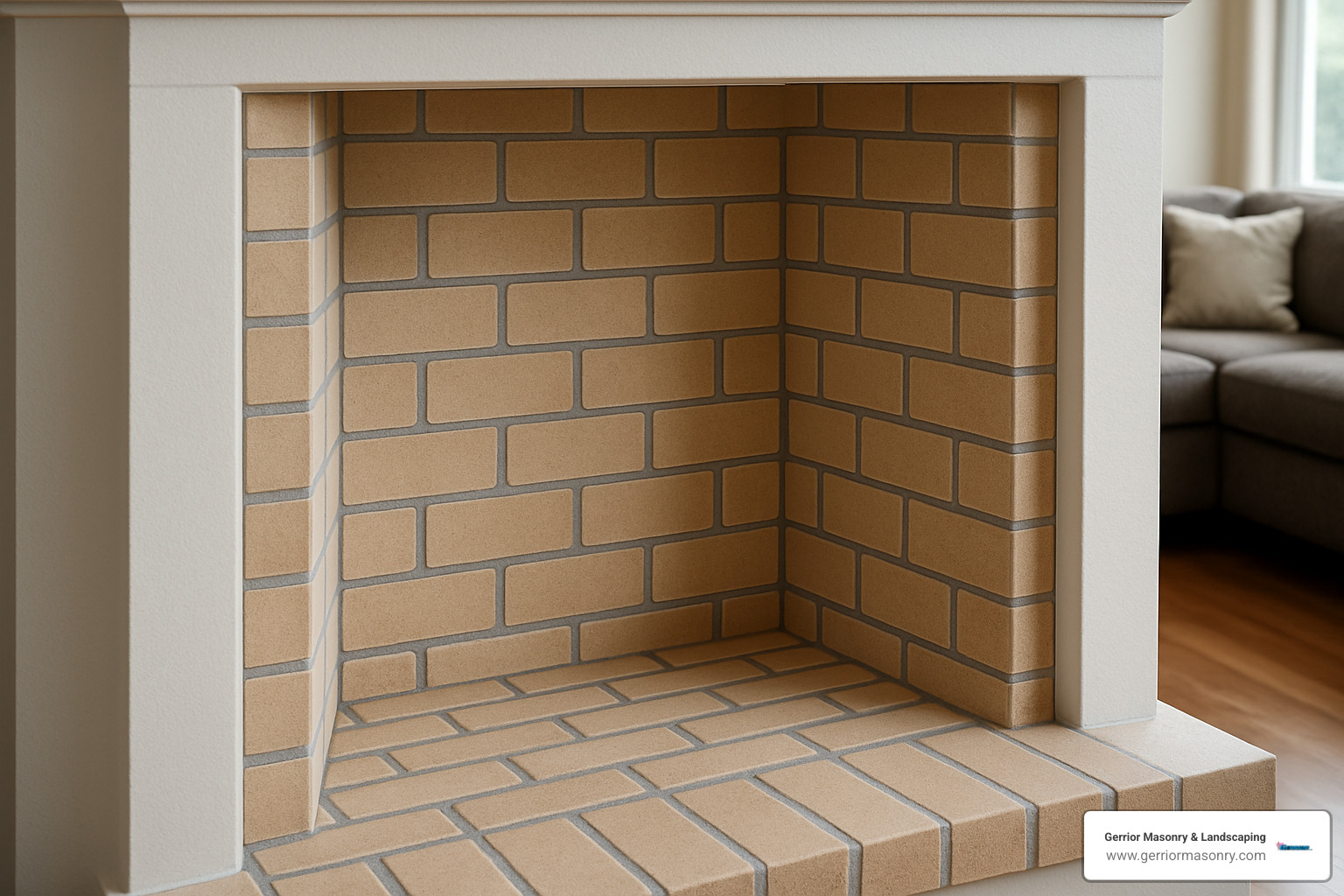
For fireplace work, I reach for refractory mortar when laying new firebricks. It creates the structural backbone that’ll last decades. The 2700°F rating handles anything a typical fireplace throws at it.
Repair work is different. When I’m doing brick fireplace repair, furnace cement often works better. It flows into irregular gaps and bonds well to existing materials that might not be perfectly clean.
Wood stoves create special challenges. That stove pipe connection where it passes through the firebox wall needs furnace cement designed for metal-to-masonry bonding. I’ve torn out too many failed installations where someone used regular fire brick adhesive for these connections.
The key is matching the product to the job. Structural joints get refractory mortar. Repairs and metal connections get furnace cement. Expansion points get flexible high-temp sealants.
Outdoor Ovens & Grills
Pizza ovens are tough customers. They go from cold to 900°F in under an hour, then back to cold again. That’s serious thermal shock, and it happens every time you cook.
For the main dome structure, I stick with refractory mortars that meet ASTM standards and are approved for outdoor use. The thermal mass of all that brick and mortar needs structural integrity that only traditional mortars provide.
But here’s the trick – expansion joints are crucial. Where the dome meets the hearth, where different materials connect, you need flexible high-temp silicone that can move without cracking.
Kilns & Furnaces
Industrial kilns push fire brick adhesive to its limits. These applications often run continuously at maximum temperatures – there’s no cooling down period to recover from thermal stress.
For kilns operating above 2200°F, you need specialized products that exceed normal residential standards. These high-performance adhesives cost more, but they’re engineered for extreme conditions that would destroy regular products.
The bottom line? Don’t guess. Know your operating temperature, understand your application, and choose accordingly.
Step-by-Step Guide: Applying Fire Brick Adhesive Like a Pro
Getting fire brick adhesive right isn’t rocket science, but it does require attention to detail. After three decades of fireplace and masonry work, I’ve learned that most failures happen during application, not because of product quality.
Surface preparation makes or breaks your project. You need absolutely clean surfaces. Remove every bit of loose mortar, dust, and debris from both your firebricks and the surface you’re bonding to. A wire brush works great for stubborn deposits. Then vacuum everything thoroughly.
Here’s something many DIYers miss: don’t make the surface too smooth. Some texture actually helps the adhesive grab better. Think “clean and slightly rough” rather than “polished and perfect.”
Moisture control is your secret weapon. Most fire brick adhesives perform best on slightly damp surfaces. Take a clean, damp sponge and lightly moisten both the substrate and your firebricks just before applying the adhesive. You want damp, not soaking wet.
For tools, stick with a notched trowel for large areas and a pointing trowel for detail work. The notch size matters – typically 1/8 inch notches work well for refractory mortar, while smaller notches suit furnace cement.
Mixing & Pot Life Tips
Mixing ratios aren’t suggestions – they’re requirements. When the manufacturer says add specific amounts of water, they mean it. Too much water creates a weak bond that’ll fail when things heat up. Too little water gives you a stiff, unworkable mess.
Always use clean water. For mixing technique, use a drill with a paddle mixer attachment. Mix slowly to avoid creating air bubbles – they weaken your final bond. The consistency should remind you of thick peanut butter when you’re done.
Most fire brick adhesives give you 30 to 60 minutes of working time after mixing. Hot weather cuts this time significantly. Mix only what you can use within that window.
Setting, Tooling & Curing
Joint thickness needs to stay consistent throughout your installation. We typically aim for 1/16 to 1/8 inch joints. Thicker joints look sloppy and crack easily. Thinner joints might not give you enough adhesive for a proper bond.
Always stagger your joints between courses, just like regular masonry work. This distributes stress and stops cracks from running straight up your wall.
Tooling happens while the adhesive is still workable but starting to firm up – usually 30 to 60 minutes after application. Use a proper jointing tool or even the back of a spoon to create smooth, slightly concave joints. Good tooling isn’t just about looks – it helps shed water and creates stronger joints.
The curing process has two critical phases. First comes air curing – give it 24 to 48 hours before any heat exposure. Keep the work protected from rain, freezing temperatures, and direct sun during this time.
Then comes heat curing, which transforms your fire brick adhesive into its final ceramic-like state. Start low – under 200°F for the first few hours. Then gradually work up to 500°F over several more hours. This gradual temperature increase prevents thermal shock that could crack your new joints.
For fireplace mortar repair projects, we build small fires initially, then gradually increase the heat over several burn cycles. This lets the adhesive cure properly while the surrounding masonry expands and contracts naturally.
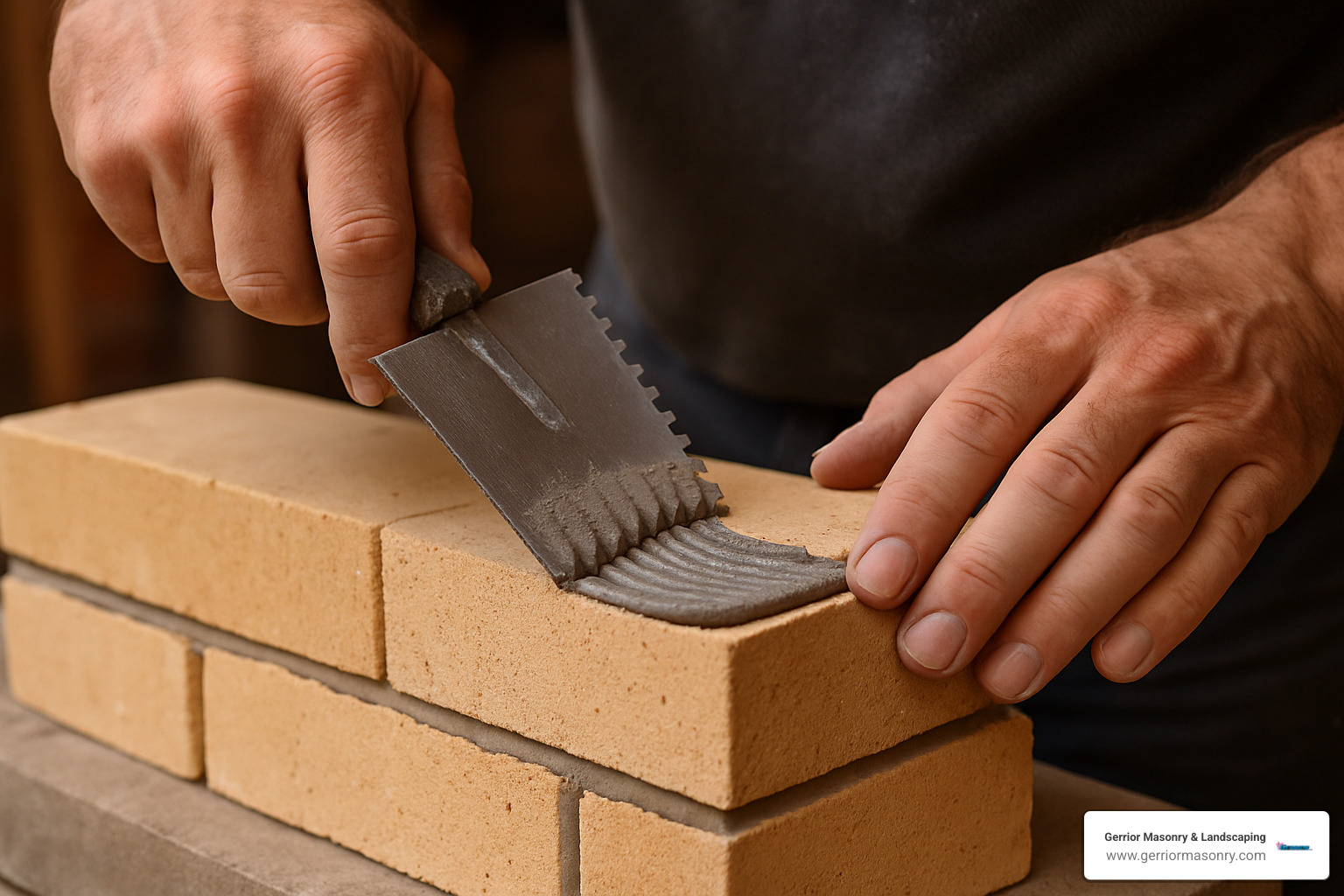
Patience during curing pays off with decades of reliable performance. Rush this step, and you’ll be doing the job again next season.
Safety, Color Options & Maintenance FAQs
Working with fire brick adhesive isn’t complicated, but it does require some common-sense safety precautions. The biggest concern is silica dust – that fine powder that gets everywhere when you’re mixing and applying these products.
Most refractory mortars contain crystalline silica, which you definitely don’t want to breathe. I always tell my crew to treat it like any other construction dust – respect it, but don’t fear it. Wear a good dust mask (N95 minimum), safety glasses, and work gloves.
Ventilation matters more than most people realize. If you’re working indoors, crack a window and run a fan. When we’re doing fireplace rebuilds, we often set up a small fan to pull dust away from the work area. Never use compressed air to clean up – that just puts all that silica dust right back in the air.
You’ll notice many products carry California Proposition 65 warnings about silica exposure. This isn’t meant to scare you off – it’s just important information to help you work safely.
Color matching used to be an afterthought, but it’s become much more important as homeowners pay more attention to details. Most fire brick adhesive products come in gray, which matches standard firebricks perfectly. Black has become popular for contemporary installations, while buff and tan colors work great with traditional yellow firebricks.
We always order a bit extra for future touch-ups. Color batches can vary slightly between production runs.
How Long Will the Bond Last?
This is probably the most common question I get, and the honest answer is: it depends on how well you do the job initially. Properly installed fire brick adhesive can easily last 20 to 30 years in a typical residential fireplace.
The installations I did in the 1990s are still going strong today. The key factors are pretty straightforward – good surface prep, proper mixing, adequate curing time, and reasonable operating conditions.
Heavy use obviously shortens the lifespan. A fireplace that gets lit a dozen times each winter will outlast a wood stove that runs continuously for four months. Commercial pizza ovens that fire up daily need more frequent maintenance than backyard ovens used on weekends.
The best insurance policy is an annual inspection during your off-season. Look for hairline cracks, loose joints, or any signs of water getting where it shouldn’t. Catching small problems early prevents major repairs later.
Can I Repair a Single Cracked Brick?
Absolutely, and it’s often the smart approach rather than tearing apart a whole section. I’ve replaced countless individual firebricks over the years – it’s one of those repairs that looks harder than it actually is.
The first step is figuring out why the brick cracked. Sometimes it’s just age and thermal cycling. Other times it indicates a bigger problem like structural settling or inadequate clearances. Address the cause, or you’ll be replacing the same brick again next year.
Removing the damaged brick takes patience more than skill. Use a cold chisel and work slowly – you don’t want to shock the surrounding bricks. Clean out all the old adhesive from the cavity and vacuum thoroughly.
Apply fresh fire brick adhesive to all contact surfaces of the replacement brick, not just the back. Slide it into place carefully, maintaining proper joint thickness on all sides. Clean up any squeeze-out immediately and tool the joints to match the surrounding work.
The curing process is the same as any new installation – 24 to 48 hours of air drying, then gradual heat introduction.
Common Mistakes to Avoid
After 34 years in this business, I’ve seen the same mistakes over and over. The biggest one is using regular masonry mortar instead of proper fire brick adhesive. I can’t tell you how many failed fireboxes I’ve rebuilt because someone thought regular mortar would work fine.
Thick joints seem stronger, but they’re actually weaker. Some folks think if a little adhesive is good, more must be better. Joints over 1/4 inch are prone to cracking and don’t distribute stress properly. Aim for 1/16 to 1/8 inch consistently.
Skipping the heat cure process is another common shortcut that always backfires. The gradual temperature ramp isn’t just a suggestion – it’s what transforms the adhesive into its final ceramic-like state.
Poor surface preparation causes more adhesion failures than anything else. Those few minutes spent properly cleaning surfaces save hours of repair work later. Dusty, oily, or contaminated surfaces simply won’t bond properly, no matter how good your adhesive is.
Conclusion & Next Steps
Choosing the right fire brick adhesive is crucial for any high-temperature masonry project. Whether you’re repairing a single cracked brick in your fireplace or building a complete pizza oven, understanding the different types of adhesives and their proper application ensures long-lasting, safe results.
The key takeaways for successful fire brick adhesive selection and application:
- Match the adhesive to your application: Refractory mortar for structural work, furnace cement for repairs, and silicone sealants for expansion joints
- Temperature ratings matter: Always choose products rated well above your expected operating temperatures
- Proper application is critical: Surface preparation, correct mixing, and gradual heat curing determine long-term success
- Safety first: Always use appropriate PPE and follow manufacturer safety guidelines
For homeowners comfortable with DIY projects, fire brick adhesive work is achievable with proper preparation and patience. However, structural repairs, complex installations, or work involving gas appliances should be handled by experienced professionals.
The investment in quality fire brick adhesive and proper installation pays dividends in safety, performance, and longevity. A properly installed system can provide decades of reliable service with minimal maintenance.
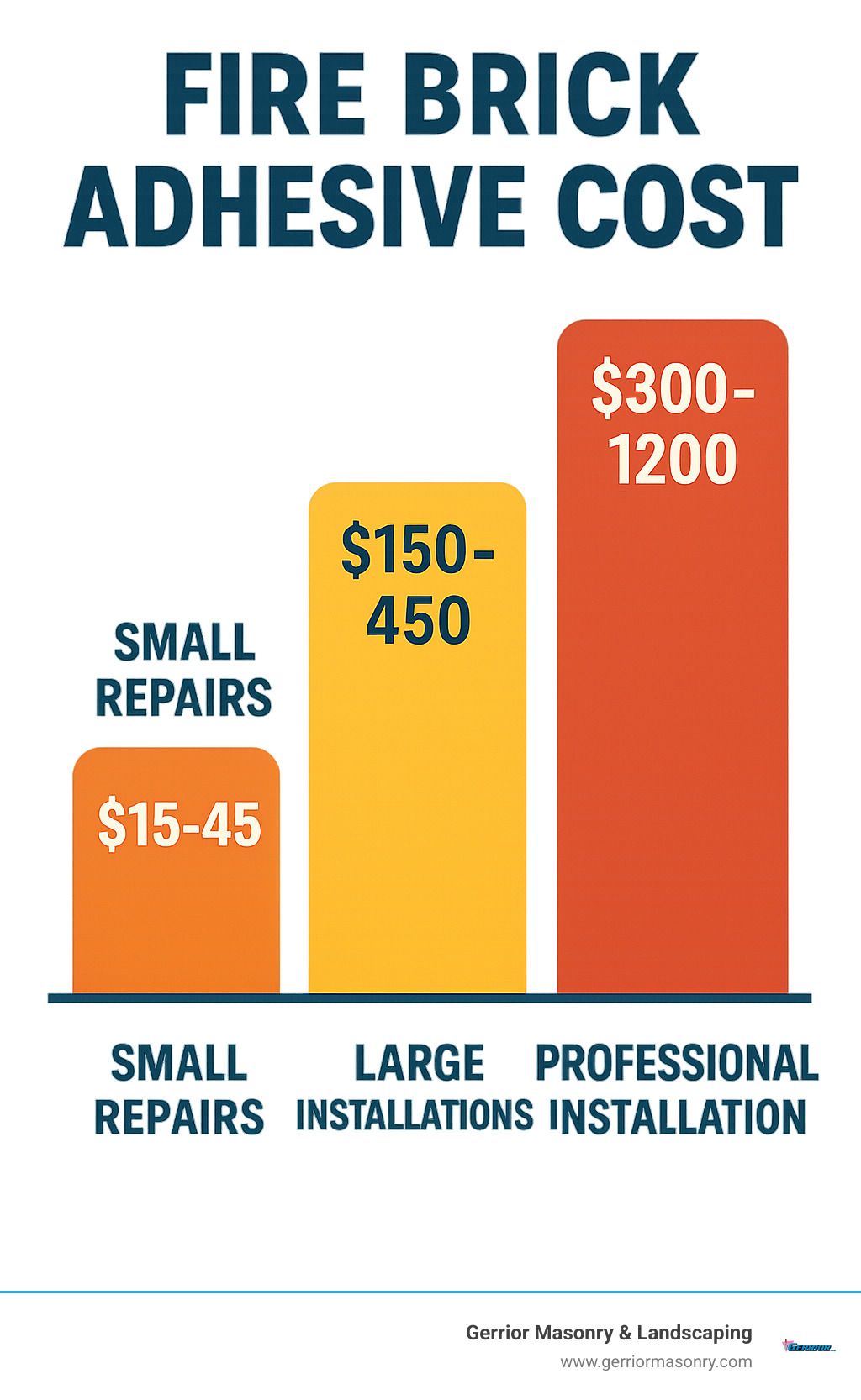
Note: These are average costs based on internet data and not actual costs for Gerrior Masonry services.
Regular maintenance and annual inspections help identify small issues before they become major problems. During the off-season, check for loose joints, hairline cracks, or signs of water infiltration. Address problems promptly to prevent costly repairs later.
For complex installations or when you’re unsure about product selection, consulting with experienced masonry professionals ensures optimal results. Our team has seen every type of high-temperature application and can recommend the best adhesive and installation approach for your specific project.
For more information about our comprehensive masonry services, including fireplace repair, chimney work, and high-temperature installations, visit our masonry services page.
Gerrior Masonry & Landscape Construction, based in Woburn, MA, proudly serves homeowners and businesses across Middlesex and Essex County, Massachusetts, with expert fireplace, chimney, and high-temperature masonry repairs.
