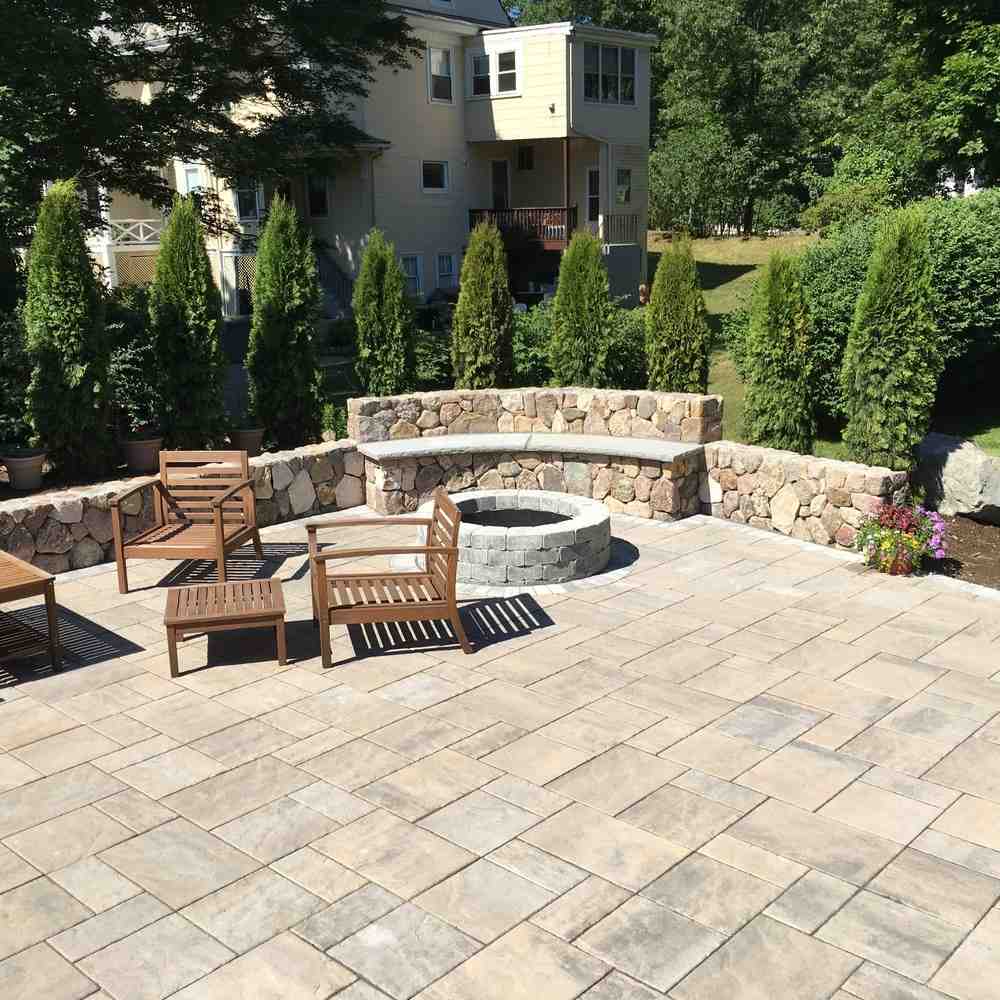
Why Fire Pit Mortar Matters for Your Outdoor Project
Fire pit mortar is a specialized, heat-resistant mortar designed to withstand extreme temperatures (2,500°F or higher) without failing. Unlike regular masonry mortar, which contains Portland cement that crumbles under high heat, fire pit mortar uses refractory materials like calcium aluminate cement to maintain structural integrity. Using the wrong mortar is a safety hazard that can lead to cracks and structural collapse.
Quick Reference: Fire Pit Mortar Essentials
- Temperature Rating: Must withstand 2,500°F minimum
- Key Ingredient: Calcium aluminate cement (NOT Portland cement)
- Common Types: Dry mix, pre-mixed cartridges, castable cement
- Application Thickness: 1/8″ to 1/4″ joints
- Cure Time: 24-72 hours air dry, then gradual heat curing
- Cost Range: $8-$70 per container (varies by type and quantity)
As Joe Gerrior, owner of Gerrior Masonry & Landscape Construction Corp., I’ve spent over 34 years helping homeowners in Massachusetts build safe, durable outdoor features. Using proper fire pit mortar and masonry techniques is the first step toward a fire pit that will serve your family safely for decades.
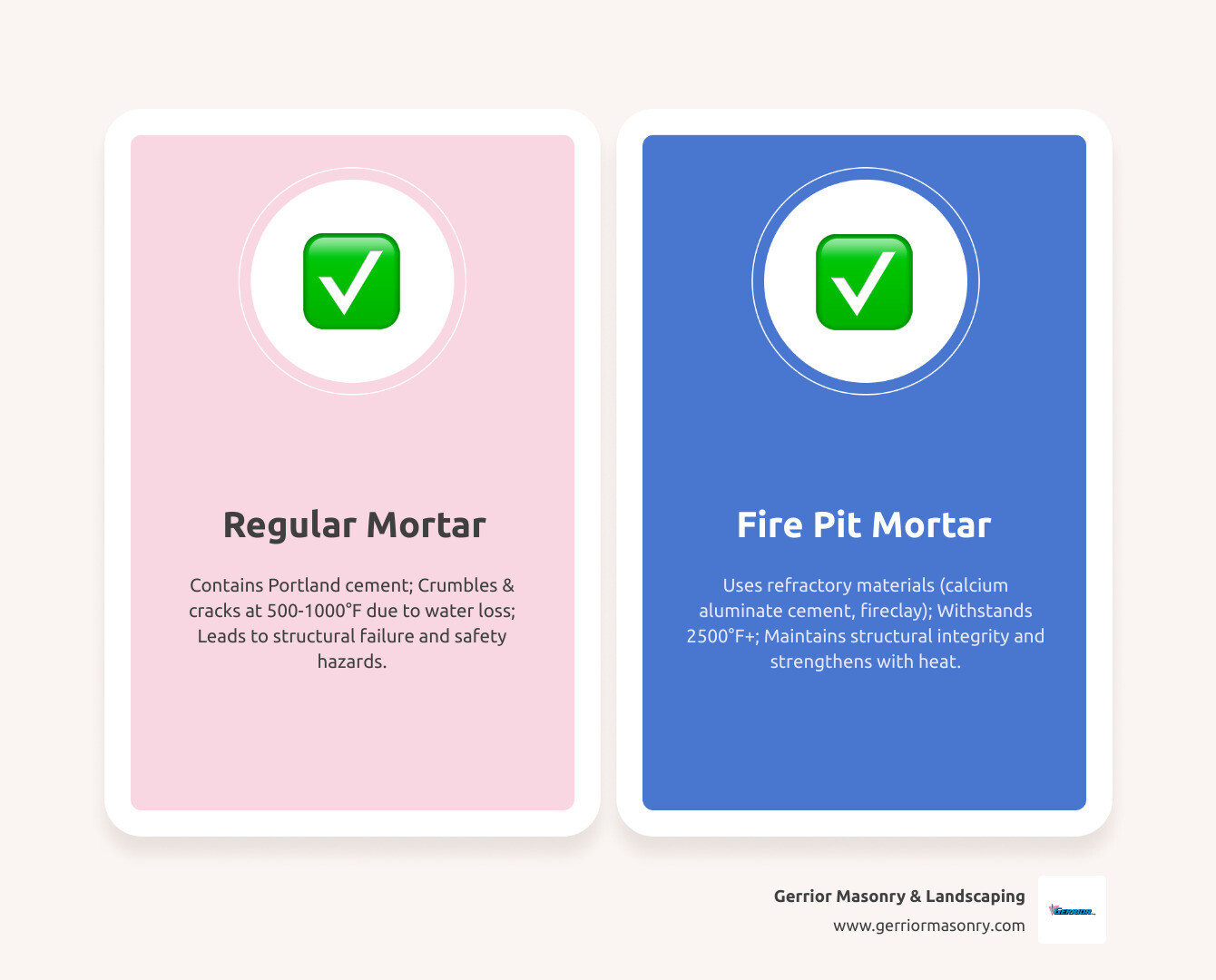
Quick fire pit mortar terms:
The Ultimate Guide to Fire Pit Mortar
What is Refractory Mortar and Why Is It Essential?
When building anything that involves fire, you can’t use standard mortar. You need refractory mortar, a high-performance material designed for extreme heat.
The key difference is how it reacts to high temperatures. Regular mortar relies on Portland cement, which cures through a chemical reaction with water (hydration) to form calcium silicate hydrates. This works perfectly for general construction, but when exposed to temperatures above 500°F, this chemical bond breaks down. The water bound within its structure is driven off, causing the mortar to dehydrate, crumble, and lose all binding strength. This can lead to catastrophic structural failure in your fire pit.
Refractory mortar is engineered to prevent this. Instead of a water-based bond, it forms a ceramic bond when fired. Its resilience comes from specialized ingredients:
- Calcium Aluminate Cement (CAC): This replaces Portland cement. It forms stable hydraulic bonds that are resistant to high temperatures and can actually gain strength when heated, maintaining its integrity.
- Fireclay: A heat-resistant clay that acts as a binder and helps the mortar resist thermal shock (sudden temperature changes).
- Silica Aggregates: Specially selected sands that are stable at high temperatures and won’t expand or contract excessively, which prevents cracking.
In short, refractory mortar’s ingredients are chosen for their thermal stability, ensuring your fire pit remains strong, safe, and durable for years.
Understanding Different Types of Fire Pit Mortar
Fire pit mortar comes in several types, each suited for different needs. The main categories are dry mix, pre-mixed (cartridge), and castable refractory cement.
| Mortar Type | Ease of Use | Cost (Average) | Application | Best Use Case |
|---|---|---|---|---|
| Dry Mix | Moderate (requires precise mixing) | $30 – $80 per 10-50 lb bag | Laying firebrick, new construction | Large projects, building from scratch, experienced DIYers |
| Pre-Mixed (Cartridge) | High (ready-to-use) | $5 – $20 per 10.3 oz cartridge | Small repairs, sealing, tuck-pointing | Quick fixes, minor cracks, sealing gaps, beginners |
| Castable Refractory | Moderate to High (can be molded, poured) | $40 – $200 per 12.5-55 lb tub/bag | Custom shapes, liners, large repairs, casting | Custom fireboxes, pizza oven domes, refractory panels |
(Note: The cost ranges provided are average costs based on internet data from various manufacturers and retailers and are not actual costs for Gerrior Masonry services. Prices can vary significantly based on brand, quantity, and supplier.)
Dry Mix Mortar
Dry mix refractory mortar (e.g., Rutland or Tenon) comes in a bag and requires you to add water. It’s cost-effective for large projects and offers flexibility in consistency, but requires accurate mixing. Always use clean, cold, potable water, as impurities can compromise the mortar’s performance.
Pre-Mixed (Cartridge) Mortar
Pre-mixed mortars come in caulk-gun cartridges (e.g., Rutland or MEECO’S RED DEVIL) and are ready to use. They are extremely convenient for small repairs, sealing minor cracks, and tuck-pointing old joints. However, they are not intended for structural applications like laying a full course of firebrick and are more expensive per ounce, making them unsuitable for large construction.
Castable Refractory Cement
Castable refractory cement (e.g., Rutland or GIRtech) can be poured or molded into custom shapes. It’s ideal for creating monolithic (single-piece) structures like pizza oven domes, custom fireboxes, or even the entire floor of a fire pit. This eliminates joints, which are often the weakest points in a high-heat structure. While incredibly durable, it can be more challenging to work with and is often the most expensive option.
Key Specifications: Temperature Ratings and Durability
The most critical specification for fire pit mortar is its temperature resistance rating. A wood fire can easily exceed 1,000°F, with embers reaching up to 2,000°F, so the mortar must be up to the task. While gas fire pits typically burn at lower, more consistent temperatures, using refractory mortar is still recommended for safety and longevity.
Look for mortars rated for 2500°F+ resistance. Products like Sakrete High-Heat Mortar (2550°F) and Tenon Refractory Mortar (2,550°F) are designed for these conditions. The ASTM C199 standard is a key industry benchmark that verifies a mortar’s ability to perform under sustained high temperatures without significant shrinkage or cracking.
Beyond heat resistance, the mortar must have excellent thermal shock resistance—the ability to handle rapid heating and cooling cycles without cracking. Imagine your fire pit is blazing hot and a sudden downpour of cold rain begins; this extreme temperature change can cause inferior materials to crack or spall. A quality refractory mortar is formulated to withstand this stress, which is essential for long-term durability in an outdoor environment.
A properly installed refractory mortar can last for many years. Key factors influencing its lifespan include the quality of the mortar, proper mixing and application, and correct curing.
How to Properly Apply Your Mortar
Applying fire pit mortar correctly is just as important as choosing the right type. Follow these steps for a durable, long-lasting build.
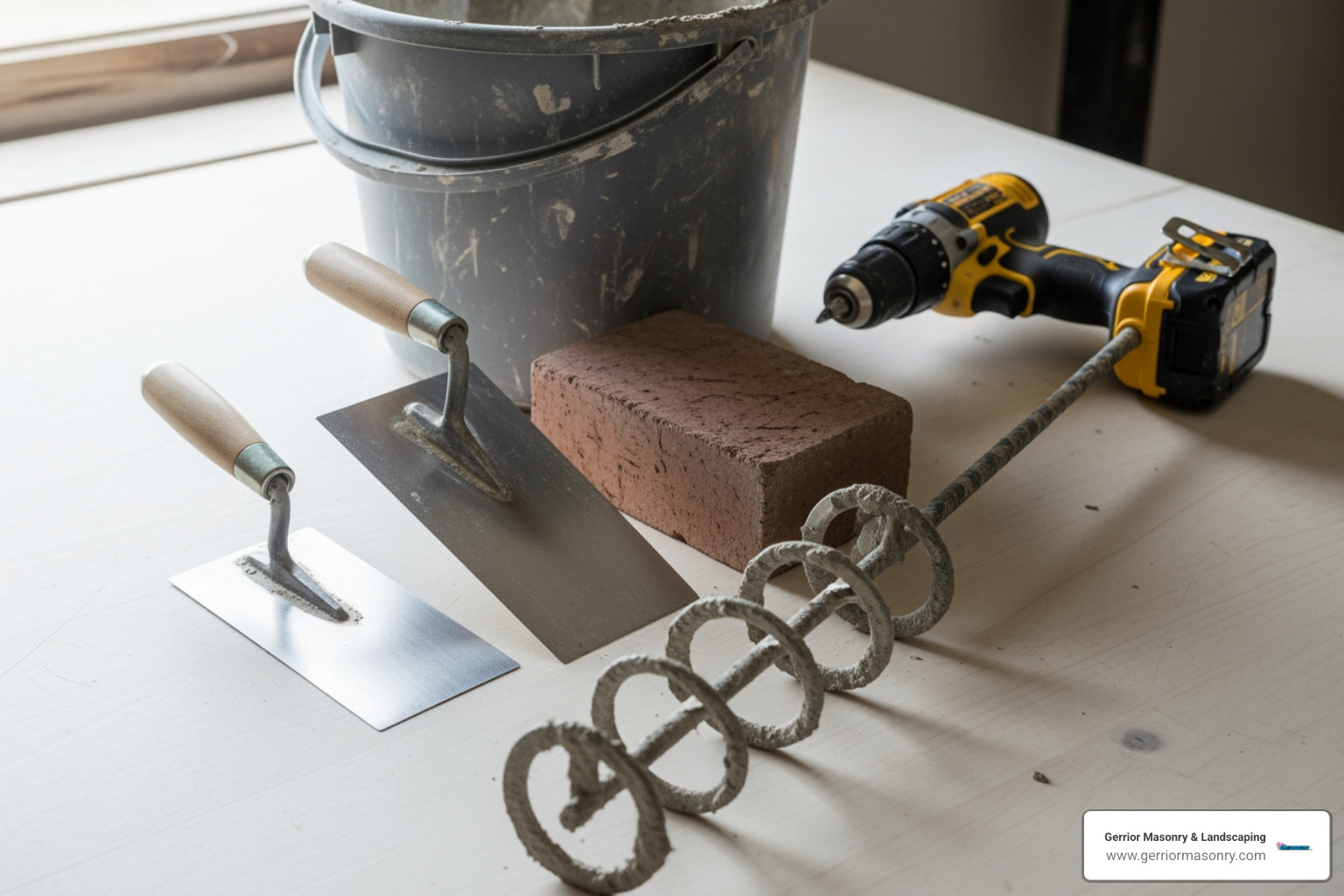
Tools and Safety Equipment:
Gather a trowel, mixing bucket, drill with mixing paddle, stiff brush, spray bottle, safety glasses, heavy-duty gloves, and a dust mask.
1. Surface Preparation:
Clean your fire bricks of all dust, soot, and loose particles with a wire brush. A clean surface is essential for proper adhesion.
2. Dampening Fire Bricks:
Lightly mist the fire bricks with water before applying mortar. If the bricks are too dry, they will pull moisture from the mortar too quickly, weakening the bond.
3. Mixing (for Dry Mix Mortar):
Follow the manufacturer’s instructions, aiming for a consistency like thick peanut butter. Add the dry mix to cold water gradually while mixing. Never use warm water or remix mortar once it begins to stiffen.
4. Application:
Use a trowel to apply the mortar in thin joints, typically between 1/8″ and 1/4″ thick. Thicker joints are weaker and more prone to cracking. Press bricks firmly into the mortar bed and scrape off any excess immediately.
For a visual guide, we often refer to resources like this: How to Apply Refractory Mortar.
Curing Process and Common Mistakes to Avoid
Once your fire pit mortar is applied, the curing process is vital for its long-term performance. Do not rush this step, as it is crucial for developing the mortar’s final strength and heat resistance.
1. Air Drying Period:
Let the mortar air dry for at least 24-72 hours, depending on humidity and temperature. This allows excess moisture to evaporate naturally. Protect the new masonry from rain during this time with a tarp, ensuring there is still airflow.
2. Heat Curing Process:
Refractory mortar is strengthened by a gradual heat cure, which drives out the remaining chemical water and forms a ceramic bond. A sample curing schedule might look like this (always defer to the manufacturer’s specific instructions):
- First Fire: After air drying, build a very small kindling fire for about 1-2 hours. The goal is to keep the temperature of the masonry below 212°F (the boiling point of water). You should be able to comfortably hold your hand near the outside of the fire pit.
- Second Fire: 24 hours later, build a slightly larger fire and maintain it for 2-3 hours, allowing the temperature to rise to around 500°F.
- Third Fire: After another 24 hours, you can build a normal-sized fire. This gradual process prevents the trapped moisture from turning to steam too quickly, which would create pressure and cause cracks or spalling.
Common Mistakes to Avoid:
- Improper Mixing: Using warm water or re-tempering (adding more water to mortar that has started to set) will ruin the chemical bonding process and weaken the final bond.
- Curing Too Quickly: Skipping the air-dry period or building a large, roaring fire too soon is the most common cause of failure. This will cause thermal shock and crack the new mortar.
- Using the Wrong Mortar: Regular Portland cement-based mortar will fail under high heat. Always use a genuine refractory mortar for any surface exposed to flames.
- Applying Joints That Are Too Thick: Stick to the recommended 1/8″ to 1/4″ joint thickness. Mortar is designed to bond masonry units, not to be a filler. Thick joints shrink more as they dry, creating internal stress that leads to cracking. They also create a weak point in the structure that is more susceptible to heat damage than the dense firebrick itself.
Choosing the Right Mortar and Other Applications
Selecting the right fire pit mortar depends on your project. For new construction, a high-quality dry mix or castable refractory cement is ideal. For small repairs, a pre-mixed cartridge is a convenient solution.
While refractory mortar is more expensive than regular mortar, it should be viewed as a crucial safety investment. The specialized engineering that allows it to withstand extreme temperatures is what ensures the safety and longevity of your fire feature. The higher material cost is a small price to pay for peace of mind.
Beyond fire pits, refractory mortar is essential for other high-heat applications:
- Fireplaces and Chimneys: Used for setting firebricks in the firebox and for general chimney repairs.
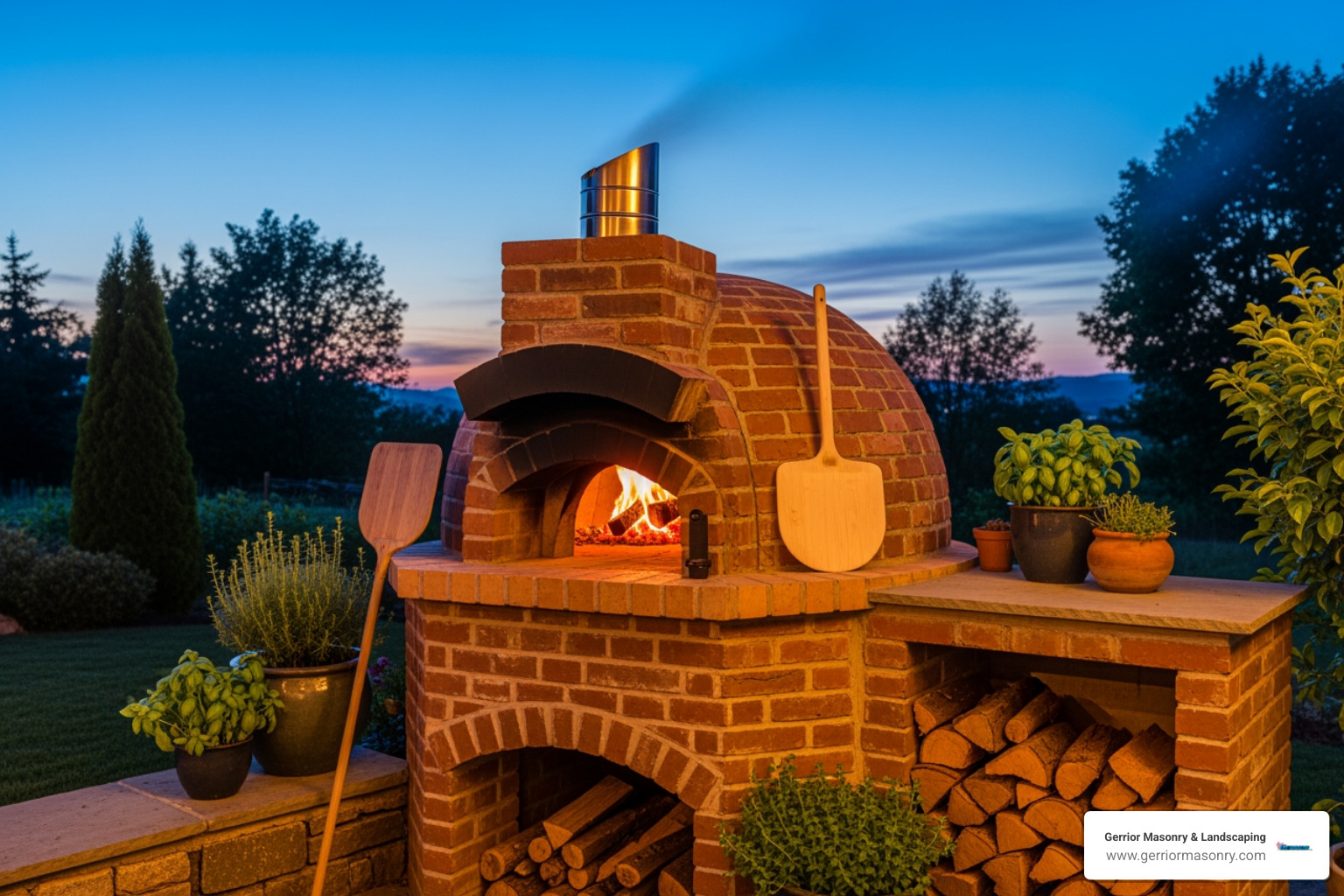
- Pizza Ovens: Required for building the dome and hearth to withstand high cooking temperatures.
- Forges and Kilns: Used to construct and repair industrial or hobbyist forges and kilns.
- Wood-burning Stoves: Seals and secures internal components and flue connections.
Safety Warnings:
Always wear a dust mask or respirator when mixing dry mortar, as many products contain silica. Read product labels for any safety warnings, such as the P65 Cancer & Reproductive Harm Warning, and follow all manufacturer instructions.
Conclusion: Build Your Fire Pit with Confidence
We’ve covered what makes fire pit mortar unique, the different types available, and the correct methods for application and curing. The key takeaway is clear: for any high-heat masonry project, using a specialized refractory mortar is essential for safety and durability. This investment protects your property and ensures your fire pit will be a source of enjoyment for years to come.
For those in Massachusetts seeking professional masonry and hardscaping, our team at Gerrior Masonry & Landscaping brings over 34 years of experience to every project, including custom fire pits, patios, and chimney repairs.
If you’re planning an outdoor project that demands precision and heat resistance, we’re here to help. Contact us for your outdoor fire pit project and let us build something beautiful and enduring. Gerrior Masonry & Landscape Construction is based in Woburn, MA, and services Middlesex and Essex County, Massachusetts.