
French Drain Under Sidewalk: Bypass Water 2025
Why Installing a French Drain Under Your Sidewalk Solves Persistent Water Problems
A french drain under sidewalk is a subsurface drainage system that intercepts and redirects groundwater before it can pool on your walkway or damage your foundation. If you’re tired of soggy lawns, icy winter walkways, or water seeping toward your home, this is a permanent solution.
Key Steps to Install a French Drain Under a Sidewalk:
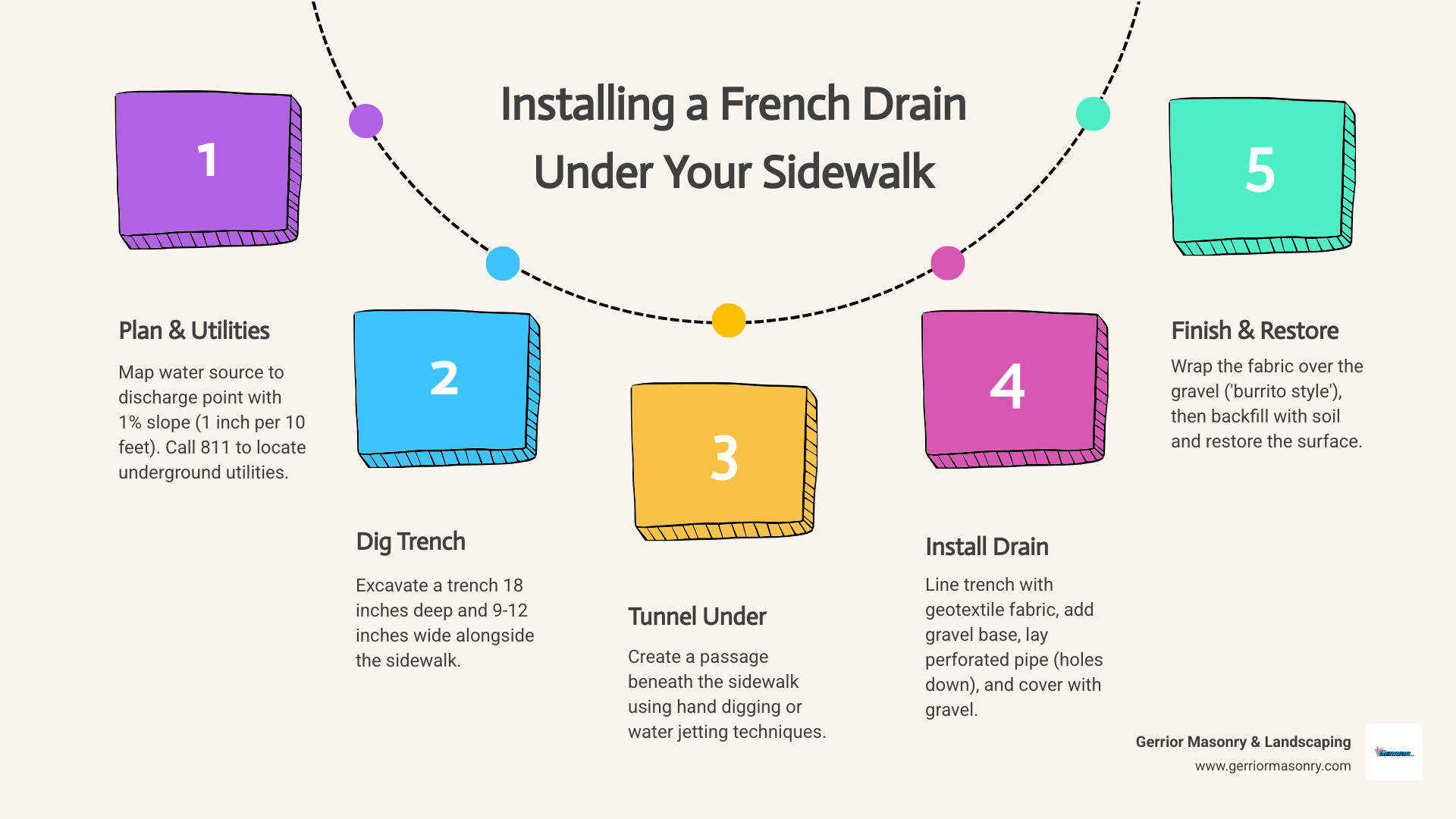
- Plan the route – Map the water source to a discharge point with a 1% slope (1 inch per 10 feet).
- Call 811 – Locate underground utilities before digging.
- Dig the trench – Aim for 18 inches deep and 9-12 inches wide on both sides of the sidewalk.
- Tunnel under sidewalk – Use water jetting or hand digging to create a passage.
- Install drainage system – Line the trench with geotextile fabric, add gravel, lay perforated pipe (holes down), cover with more gravel, and wrap the fabric over the top.
- Backfill and finish – Cover with topsoil and restore the surface.
A French drain works by creating an easy path for water. Instead of saturating the soil, water flows into a gravel-filled trench and enters a perforated pipe that carries it away using gravity. The most challenging part for a DIY project is tunneling under the concrete without causing damage.
I’m Joe Gerrior, owner of Gerrior Masonry & Landscape Construction Corp. With over 34 years of experience, I’ve designed and installed hundreds of drainage systems across the region. A properly installed french drain under a sidewalk requires understanding water movement and construction techniques to ensure it functions for decades.
A Homeowner’s Guide to Installing a French Drain Under a Sidewalk
First, Do You Need a French Drain for Your Walkway?
Not every puddle requires a French drain, but persistent water problems are a clear sign. You likely need a drainage solution if you notice:
- Pooling Water: Water stands along your walkway for hours or days after rain.
- Icy Patches: Your sidewalk becomes a hazard in winter from trapped, freezing water.
- Spongy Lawn: The ground next to your walkway feels perpetually waterlogged.
- Basement Moisture: You see water stains, smell mustiness, or find mildew in your basement.
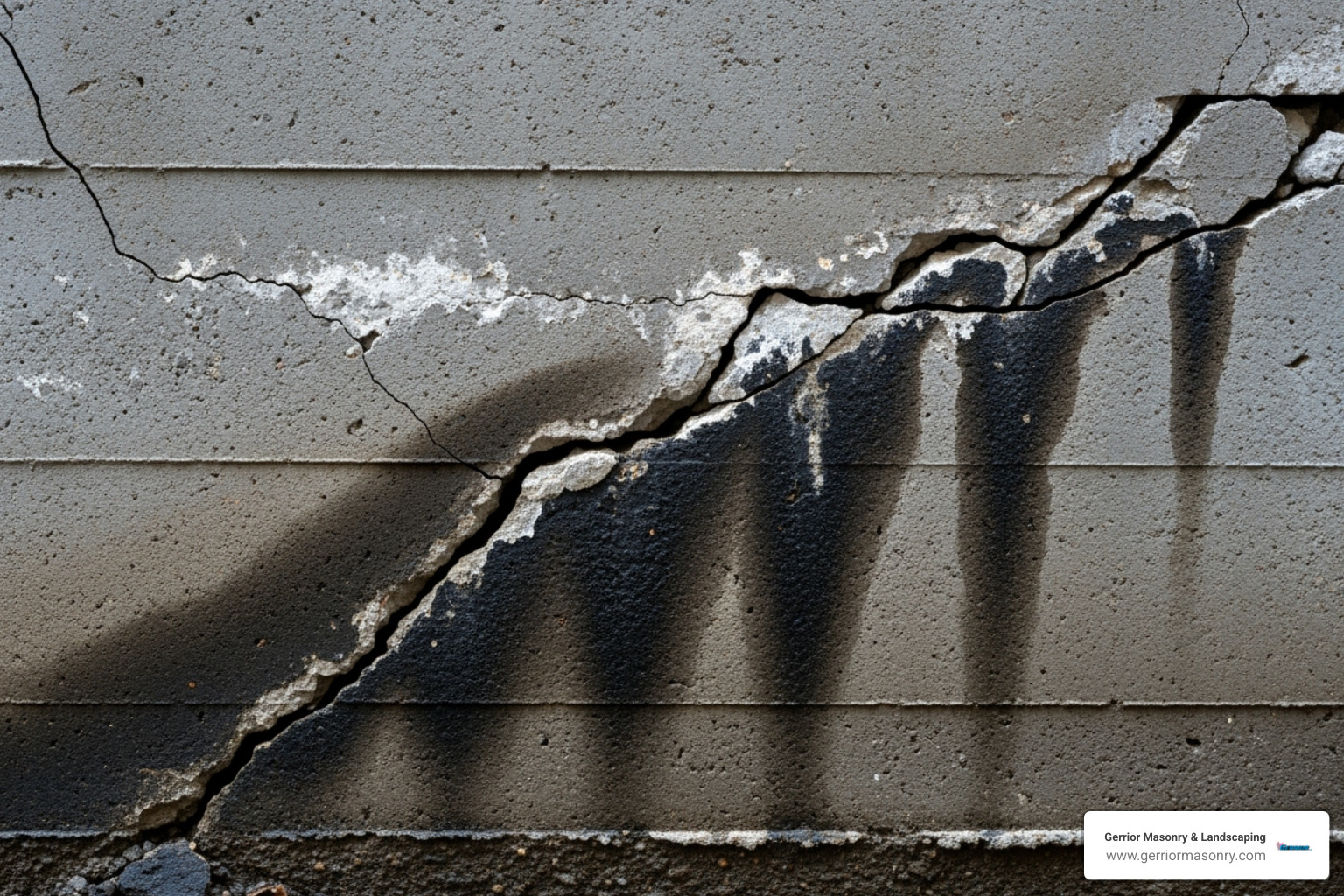
The last sign is the most serious. Saturated soil creates immense hydrostatic pressure against your foundation, leading to cracks, leaks, and costly structural repairs. A french drain under sidewalk intercepts this water before it can damage your home or hardscaping. A properly drained property also means more usable outdoor space and fewer mosquitoes. For more on protecting your foundation, see our guide on Drainage Around House Foundation.
Understanding The Importance of Proper Drainage in Hardscaping and Masonry Projects is key to protecting your investment.
Planning Your Drain: Location, Layout, and Slope
Success depends on careful planning. First, observe your property during or after a rainstorm to see where water flows and pools. This will determine the best path for your trench, which should run parallel to the sidewalk to intercept water.
Next, identify a discharge point. The best option is a daylight exit, where the pipe ends at a low point on your property and drains onto the surface, like a wooded area or street gutter (check local regulations). Never drain water onto a neighbor’s property. If a daylight exit isn’t feasible, a dry well or connection to an existing storm drain may be necessary.
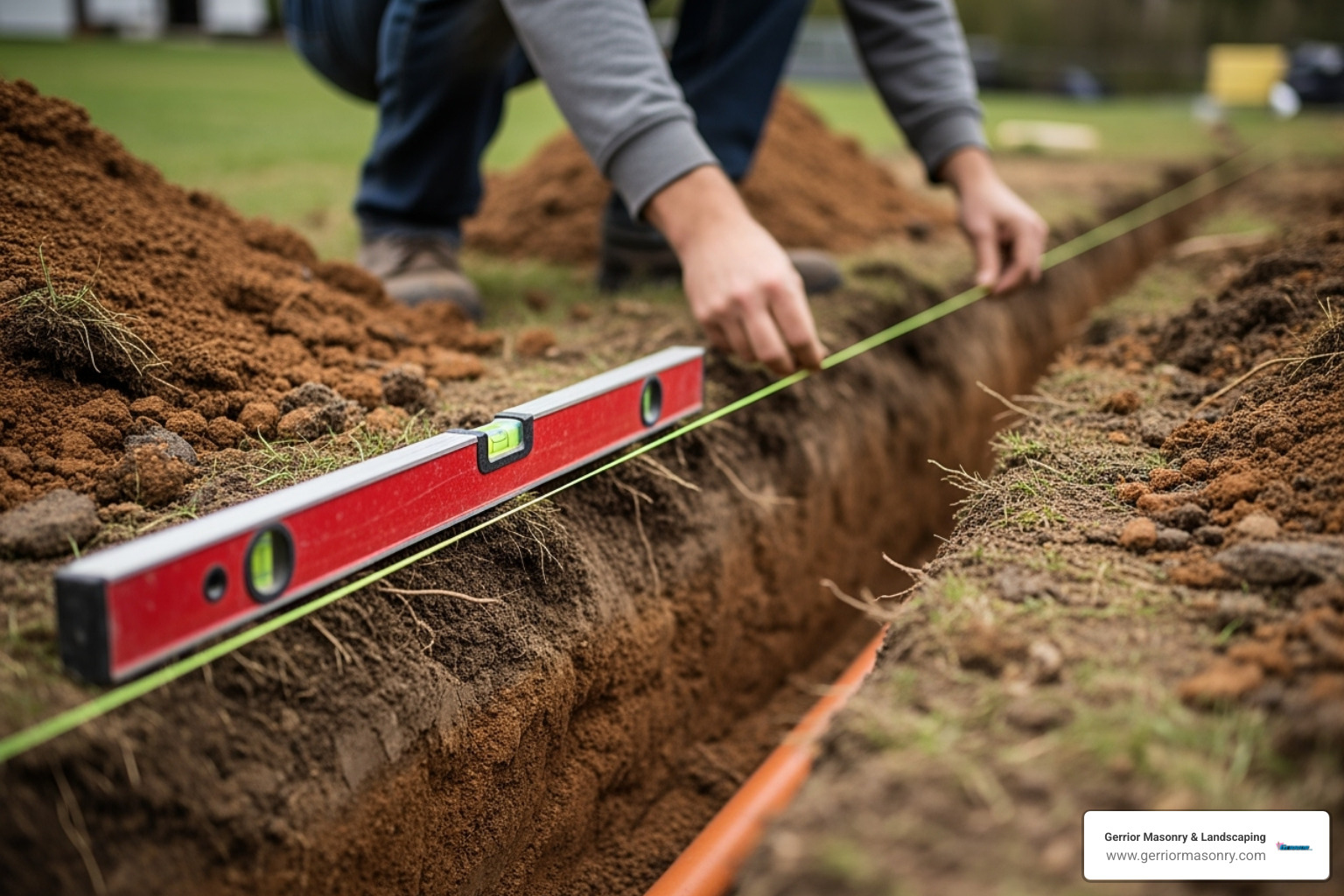
Finally, ensure the correct slope. A French drain relies on gravity, so it must have a minimum 1% grade, meaning it drops at least 1 inch for every 10 feet of length. Use a builder’s level or laser level to maintain this slope consistently along the entire trench.
Before you dig, call 811. This is a mandatory safety step. Utility companies will mark the location of underground gas, electric, and water lines, preventing a dangerous and expensive accident.
The Installation Process: Installing Your French Drain Under the Sidewalk
With your plan in place, it’s time to gather materials and start digging. You’ll need 4-inch perforated PVC pipe, non-woven geotextile filter fabric, and washed 1-inch drainage gravel (#57 stone). For tools, you’ll need a shovel, wheelbarrow, and level. A trenching machine can save significant time and effort on longer runs.
- Dig the Trench: Excavate a trench about 18 inches deep and 9-12 inches wide. Continuously check the bottom of the trench with your level to ensure you maintain the 1% slope.
- Line the Trench: Lay the geotextile fabric along the bottom and up the sides of the trench, leaving plenty of excess on both sides.
- Create a Gravel Base: Add a 3-inch layer of washed gravel on top of the fabric.
- Tunnel Under the Sidewalk: This is the trickiest step. You can either hand-dig a tunnel or use a high-pressure water jetting technique. Work carefully to avoid undermining the sidewalk’s support structure. Ensure the tunnel continues the slope from your trench.
- Lay the Pipe: Place the perforated pipe in the trench with the holes facing down. This allows water accumulating at the bottom to enter the pipe efficiently.
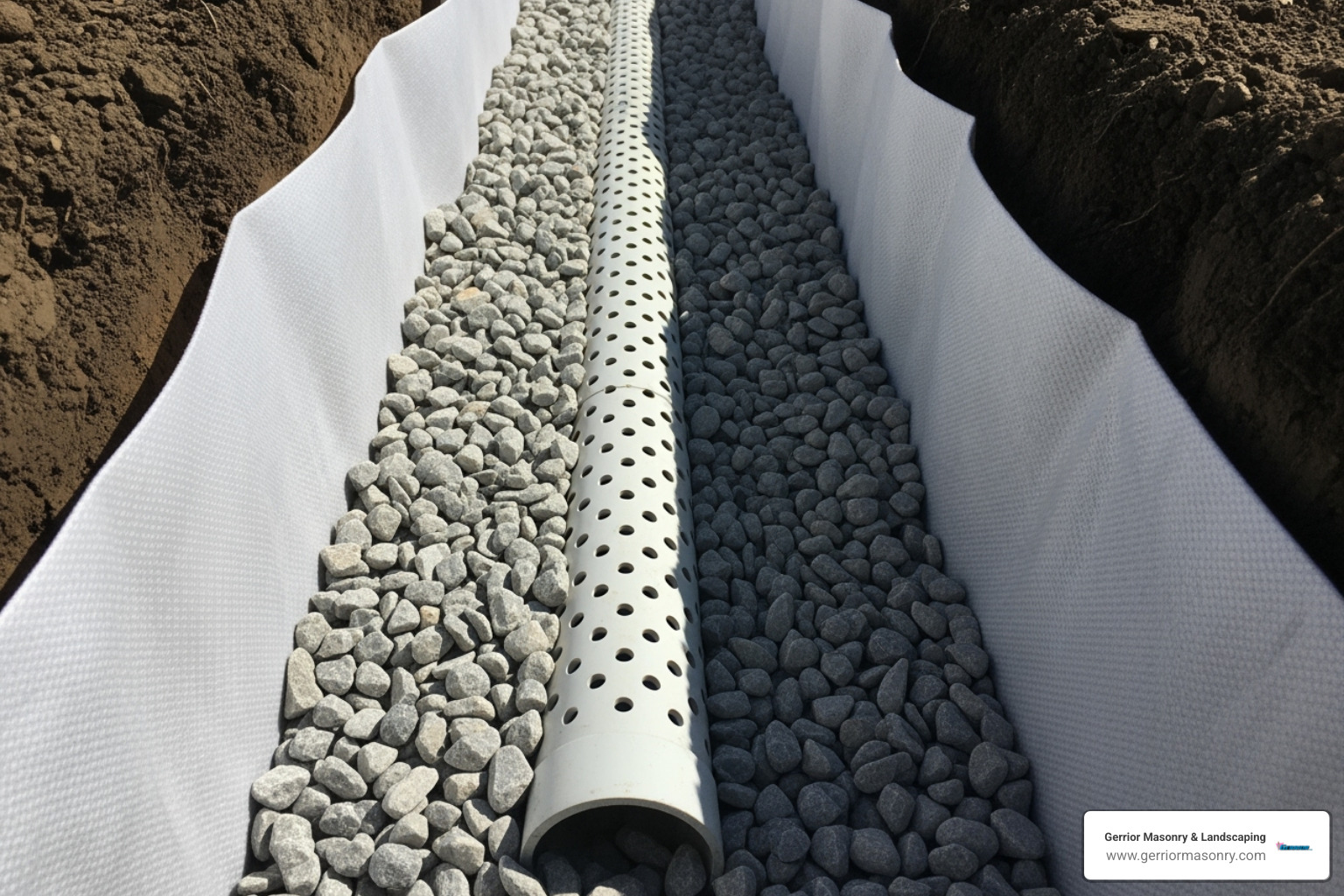
- Cover and Wrap: Fill the trench with gravel to within a few inches of the surface. Then, fold the excess geotextile fabric over the top of the gravel, creating a “burrito” that completely encloses the pipe and gravel. This is crucial for preventing clogs from soil and roots.
- Backfill: Cover the wrapped drain with topsoil and replace the sod or reseed the area.
Connecting, Finishing, and Common Challenges
To create a comprehensive solution, consider connecting your French drain to other water sources. Tying in downspouts with proper adapters is a smart way to manage significant roof runoff. You can also integrate channel drains from driveways or patios using Y-connectors, directing all water to a single discharge point. Ensure all connections are secure to prevent underground leaks.
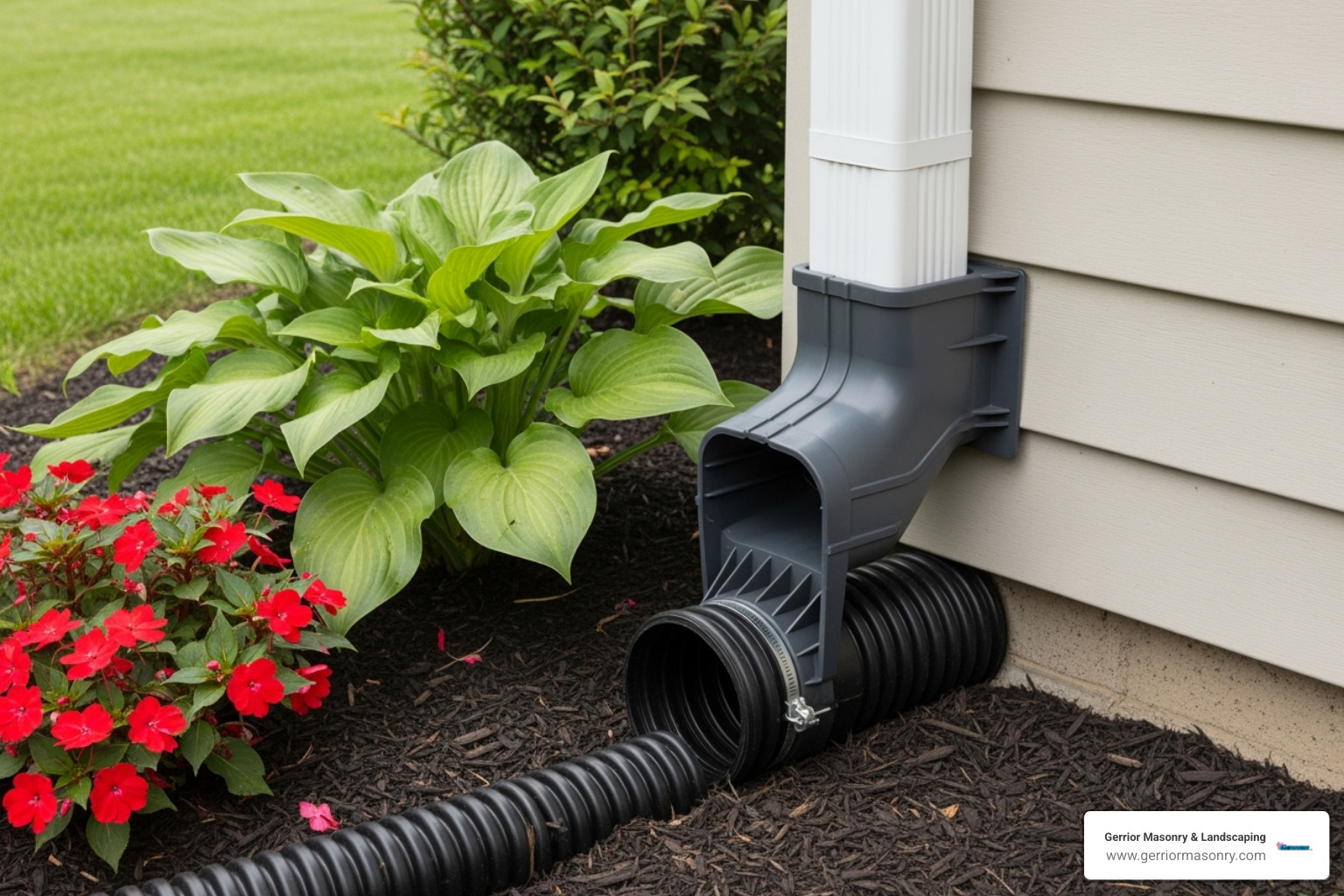
Be aware of potential challenges. Even after calling 811, dig carefully to avoid hitting mismarked utility lines. In loose or sandy soil, the tunnel under the sidewalk can collapse. The biggest risk is undermining the sidewalk, which can cause it to crack or settle. If you’re unsure, this is a good time to call a professional. For more on solving water issues, see our guide on Fixing Pooling Water in Yard.
French Drain Solutions for Walkways: What to Consider
A french drain under sidewalk is essentially an underground gutter. It excels at intercepting subsurface groundwater—water moving through the soil—and is completely invisible once installed. This makes it an ideal aesthetic choice for protecting foundations and drying out soggy areas.
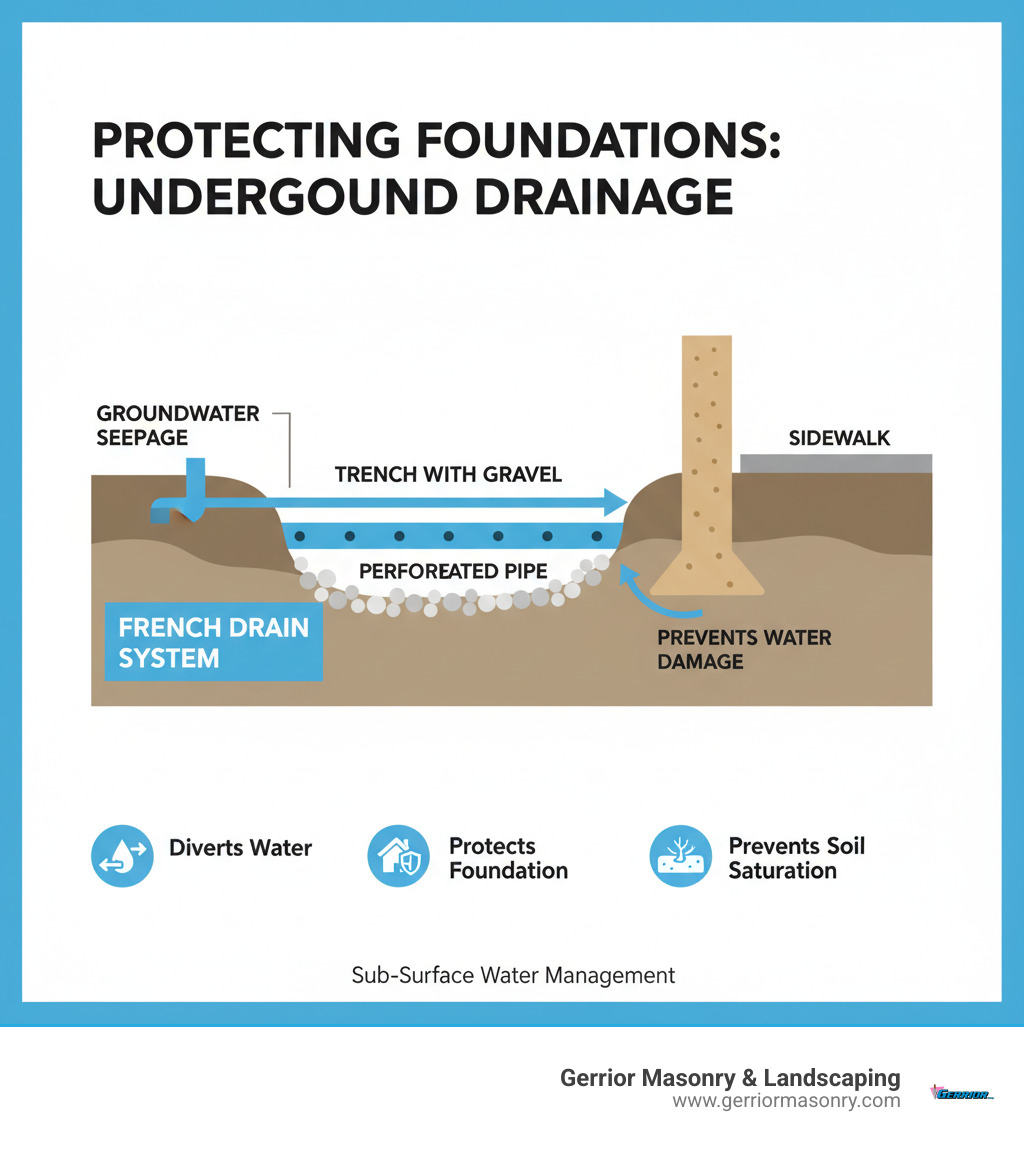
However, it’s not a solution for all problems. For heavy surface runoff, a channel drain (a grate-covered trench) may be more effective. Sometimes, simply regrading the yard or installing a dry well is a better fit. The right solution depends on your soil, water volume, and landscape. You can learn more about options here: Dry Well vs. French Drain.
Long-Term Maintenance and Drainage Best Practices
A well-built french drain under sidewalk is very low-maintenance and can last for 30 years or more. The key is the geotextile fabric wrap, which prevents clogging. To ensure longevity:
- Inspect the discharge point a few times a year to ensure it’s clear of leaves and debris.
- Keep gutters clean and ensure downspouts direct water at least 6 feet from the foundation, or connect them directly to your drain system.
- Maintain a positive grade of at least 2% sloping away from your house foundation.
For more on drainage design, you can review this guide on Typical French Drain Design for Soggy Yards. For a look at other solutions, visit our page on Residential Drainage Systems.
When to Call the Pros for Your Drainage Project
While a simple French drain in an open yard can be a DIY project, installing one under a sidewalk adds significant complexity and risk. Before you start digging, consider when it’s best to call in professionals.
Why Hire a Pro for This Project?
- Avoiding Sidewalk Damage: Tunneling under concrete is a delicate process. One mistake can undermine the sidewalk’s support, leading to cracks, settling, and expensive masonry repairs.
- Ensuring Proper Function: A French drain only works if the slope is perfect. We use laser levels to guarantee a consistent 1% grade, ensuring water flows out instead of sitting in the pipe and creating a clog. An improperly sloped drain is a failed drain.
- Safety and Utility Lines: Even with 811 markings, digging near gas, water, and electrical lines is risky. Our experienced crews know how to excavate safely, preventing dangerous and costly accidents.
- Experience and Efficiency: With over 30 years of experience in Middlesex and Essex County, we understand the local soil conditions and how to design a system that will last. Our skilled team and owner oversight on projects ensure your drainage problem is solved correctly the first time.
For a comprehensive and lasting solution to your water problems, trust our team of experts to design and install the perfect drainage system. We’ll ensure your french drain under sidewalk is installed efficiently and built to last for decades.
Gerrior Masonry & Landscape Construction is based in Woburn, MA, and proudly serves the communities of Middlesex and Essex County, Massachusetts.
