Why a Brick Paver Patio Is Worth Exploring
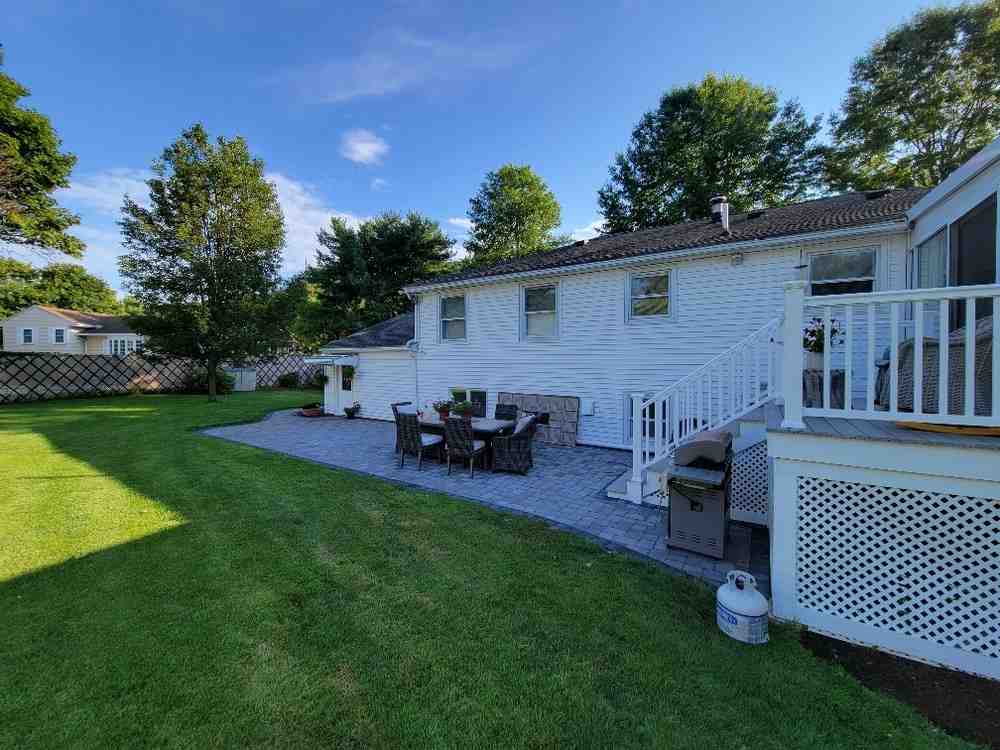
A brick paver patio is a highly sought-after outdoor living feature, prized for being a durable, attractive, and versatile surface. It is constructed from individual clay or concrete bricks laid on a meticulously prepared base of compacted gravel and sand. This modular construction is not just for looks; it provides a flexible surface that is ideal for everything from quiet morning coffees to lively backyard barbecues. The timeless curb appeal of brick adds significant value and character to any home. Furthermore, unlike monolithic poured concrete slabs that are prone to cracking, individual pavers are engineered to excel in regions with dramatic freeze-thaw cycles, making them a superior and long-lasting choice for homeowners in Massachusetts.
Quick Overview: What You Need to Know About Brick Paver Patios
- Cost: $14–$24 per square foot on average (materials + labor); DIY materials run $9–$11/sq ft
- Lifespan: Nearly a century with proper installation and maintenance
- Best Use: Patios, walkways, pool surrounds, entertaining areas
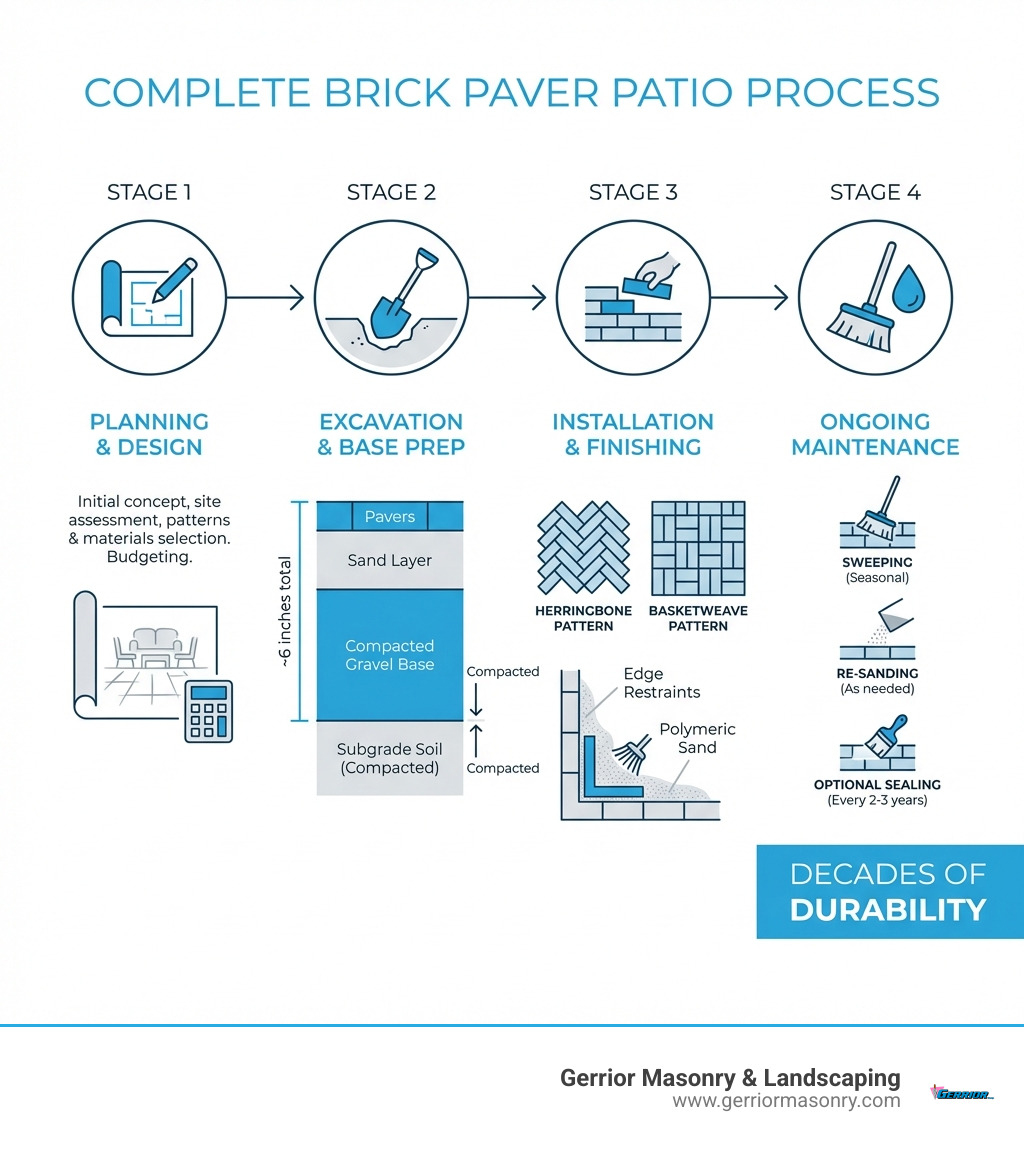
- Installation Depth: ~6 inches total (gravel base + sand + pavers)
- Key Advantage: Individual bricks can be lifted and reset if settling occurs
- Maintenance: Sweep, re-sand joints, optional sealing every 2–3 years
Brick paver patios outperform poured concrete in cold climates because they flex instead of cracking. They are more affordable than natural stone and offer modular repairability that a slab can’t match. Whether you’re planning a small nook or a large entertaining zone, understanding the process is key to a smart investment.
I’m Joe Gerrior, owner of Gerrior Masonry & Landscape Construction Corp. in Woburn, Massachusetts. With over 34 years of experience, my team has installed countless brick paver patios across Middlesex and Essex Counties that stand up to New England weather. In this guide, I’ll walk you through the essentials so you can decide if a brick paver patio is right for your home.
Planning, Costs, and Value of a Brick Paver Patio
Careful planning is the cornerstone of a successful brick paver patio project. Before starting, it’s important to set realistic expectations for your budget, timeline, and scope. An average patio is about 280 square feet, a good size for envisioning your own outdoor space.
When planning, consider these key aspects:
- Budgeting: How much will you invest? This affects material choices and whether you hire a pro.
- Size and Use: How will you use the patio? The intended function dictates the size and cost.
- Site Access: Can equipment easily reach the site? Difficult access can increase labor costs.
- Drainage: Proper drainage is critical in New England to prevent frost heave. The site’s slope and soil must be assessed.
- Timeline: When do you want the project done? Factor in weather, material delivery, and design complexity.
Brick Paver Patio Cost: What to Expect in 2026
The cost of a brick paver patio varies. On average, expect to pay $14 to $24 per square foot for professional installation. For intricate designs or high-end materials, the price can climb to $75 or more per square foot. It’s important to note that these figures are average costs based on internet data and do not reflect actual pricing from Gerrior Masonry & Landscape Construction. We provide detailed, customized quotes for every project.
Here’s a quick cost breakdown:
- Professional Labor: Typically $5 to $13 per square foot, covering excavation, base prep, and installation.
- DIY Materials: Pavers, gravel, and sand usually cost between $9 and $11 per square foot.
- DIY Tool Rental: A plate compactor, wet saw, and other tools can add $500 to $1,500 to a DIY budget.
- Average Project Cost: For a 280-square-foot patio, the national average for professional installation is around $3,800, with a range of $2,400 to $7,000.
Factors that influence your final cost include location, project size, design complexity (simple patterns are cheaper than intricate ones), site preparation needs, and material choice. Permits may also be required in many Massachusetts towns, typically costing $0 to $250+.
Pro Install vs DIY: Time, Tools, and True Cost
Deciding between DIY and professional installation is a major choice. While the allure of saving on labor costs makes the DIY route tempting, it’s crucial to weigh the true costs in terms of time, effort, and potential for error.
The DIY Approach is a major undertaking that involves more than just laying bricks. It demands a significant time commitment, often spanning multiple weekends. You’ll need to rent or purchase specialized tools like a heavy-duty plate compactor and a masonry wet saw, which adds to the budget. The work itself is physically strenuous, involving heavy lifting, digging, and precise leveling. Achieving a perfectly level, long-lasting patio requires meticulous attention to detail, especially during the base preparation phase. Even minor errors here can lead to uneven settling, poor drainage, and a patio that fails prematurely. Furthermore, DIYers must account for hidden costs like material delivery fees and waste disposal, as well as potential safety risks associated with handling heavy equipment and materials.
The Professional Advantage of hiring a team like ours includes:
- Expertise and Efficiency: We have the experience and tools to complete the job correctly and quickly.
- Proper Foundation: We ensure critical base compaction to prevent settling in our region’s freeze-thaw cycles.
- Guaranteed Results: Professional installation often comes with a warranty for peace of mind.
- Flawless Design: We can execute complex patterns that bring your vision to life.
For many, the durability and aesthetic appeal of a professional installation are a worthwhile investment. For more on patio construction basics, see the University of Missouri Extension’s guide.
Brick Paver Patio vs Concrete and Stone: Pros and Cons
Brick paver patios offer a compelling blend of benefits that often make them the superior choice in our climate.
Brick Paver Advantages:
- Timeless Aesthetic: The classic look of brick adds warmth and character.
- Superior Durability: Clay pavers are incredibly strong and resist cracking from freeze-thaw cycles better than concrete.
- Modular Repairability: Individual bricks can be easily lifted and reset, unlike a concrete slab that requires patching or replacement.
- Good Drainage: Sand-filled joints allow water to permeate, reducing runoff.
- Low Maintenance: Pavers are colorfast and require minimal upkeep.
Comparisons to Other Materials:
- Poured Concrete: While a poured concrete slab is often cheaper upfront, it is a rigid surface highly susceptible to cracking under the stress of our region’s freeze-thaw cycles. Once a crack appears, it is nearly impossible to repair invisibly, leading to unsightly patches that detract from the patio’s appearance. Over time, significant cracking may necessitate a complete and costly replacement.
- Natural Stone: Flagstone or other natural stone patios provide a beautiful, high-end look with unique, organic shapes. However, this premium aesthetic comes at a significantly higher price point for both materials and the skilled labor required for installation. Like pavers, individual stones can be repaired, but sourcing matching stone and performing the repair can be more complex and expensive.
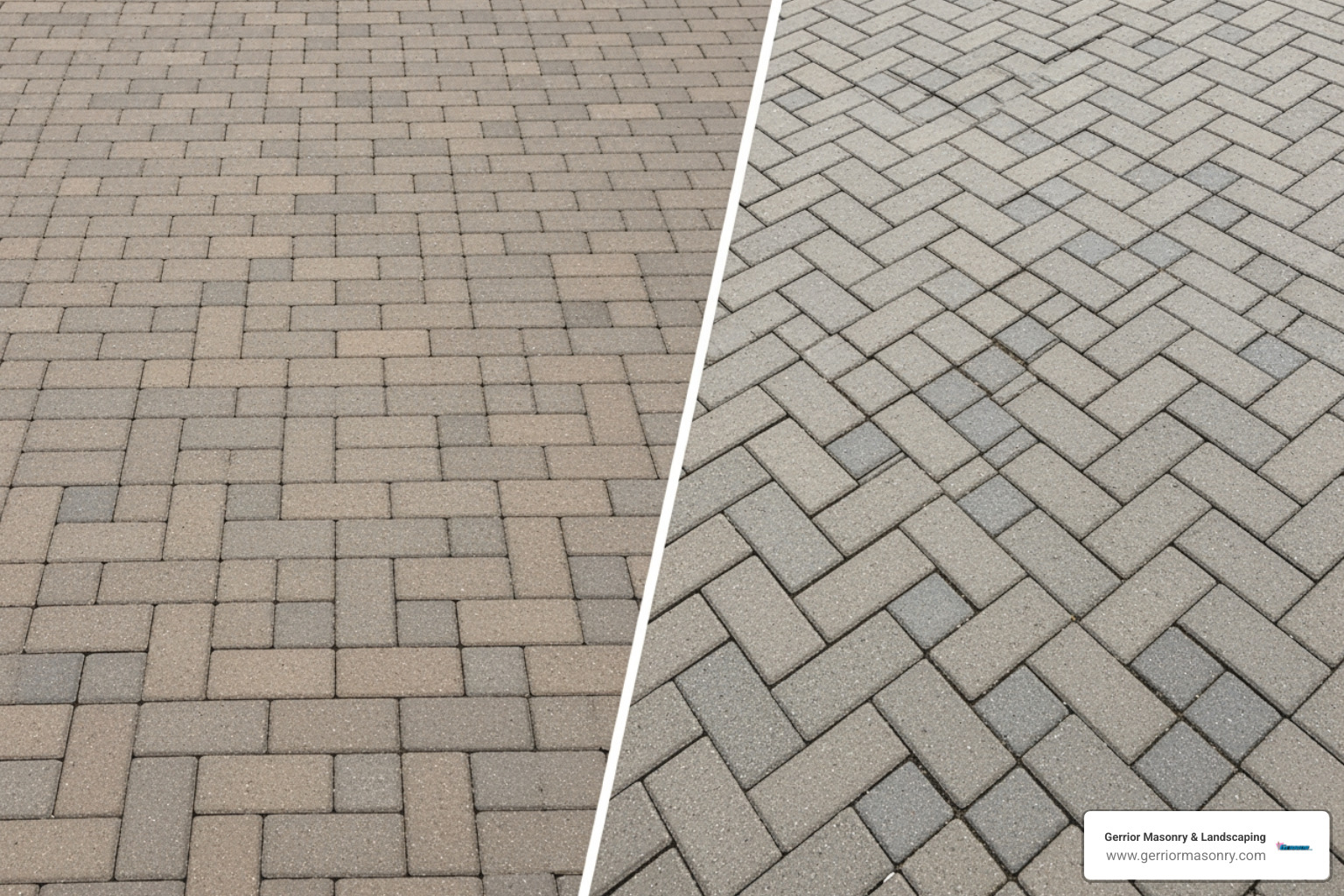
A well-installed brick paver patio can significantly increase your home’s resale value. Popular patterns we install include Herringbone, Basketweave, and Running Bond, each offering a unique look.
Design, Installation, and Maintenance Essentials
A beautiful brick paver patio relies on a complete system, from design and installation to ongoing maintenance. Each step is crucial for a patio that withstands New England weather.
Install Steps That Make It Last: Base to Borders
The secret to a long-lasting brick paver patio is a proper foundation. Here is our streamlined process for ensuring durability:
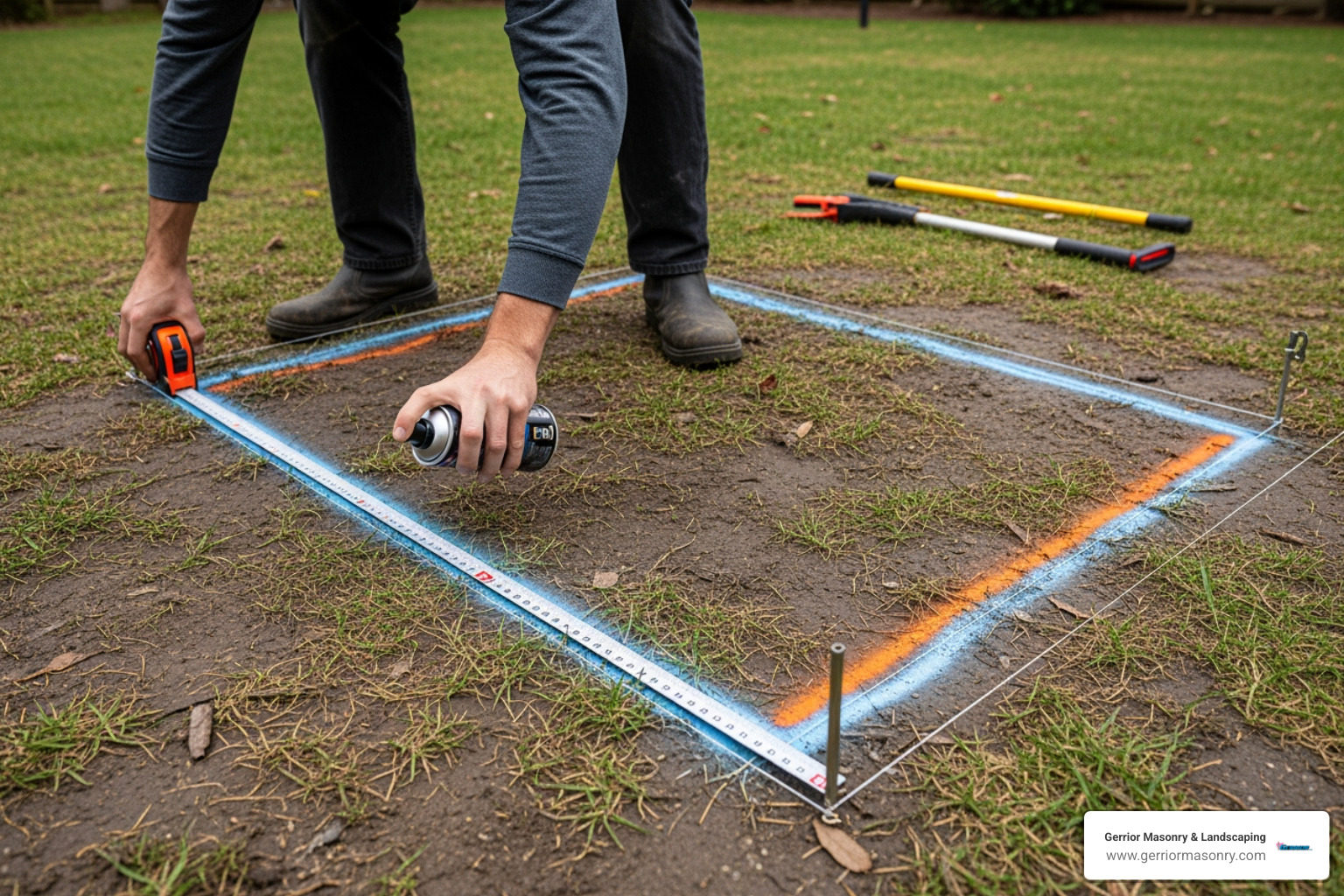
- Layout and Excavation: We mark the patio area and excavate 6 to 7 inches deep. We establish a slope of about 1 inch per 8 feet away from the house for drainage. Before digging, call 811 to mark underground utilities.
- Sub-Base Preparation: We compact the soil, then lay landscape fabric to stabilize it and prevent mixing with the gravel base.
- Compacted Gravel Base: We add a 3.5 to 4-inch layer of crushed stone, moisten it, and compact it with a plate compactor to create a dense, stable foundation.
- Bedding Sand Layer: A 1-inch layer of coarse sand is spread and leveled (screeded) to create a smooth bed for the pavers.
- Edge Restraints: We install sturdy plastic, metal, or timber edging around the perimeter to lock the pavers in place and prevent shifting.
- Laying the Pavers: We lay the pavers in the desired pattern, starting from a corner and working across the sand bed. We use a wet saw for any necessary cuts.
- Joint Stabilization: We sweep polymeric sand into the joints. When activated with water, it hardens to lock pavers together and resist weeds.
- Sealing (Optional): Applying a sealer every 2-3 years can protect against stains and improve color.
For walkways, we follow a similar process, ensuring a width of at least 3 feet for comfort. For a detailed DIY guide, you can refer to resources like This Old House on laying a brick patio.
Flexible (Sand-Set) vs Mortared Brick: Which System to Choose?
One critical choice is between a flexible (sand-set) system and a rigid (mortared) one. For most residential brick paver patios in Massachusetts, we strongly recommend the flexible system. Its ability to move with freeze-thaw cycles prevents cracking, and its permeable joints improve drainage. A mortared system, set on a concrete slab, is rigid and prone to cracking in our climate, leading to difficult and costly repairs.
| Feature | Flexible (Sand-Set) Brick Paver Patio | Mortared Brick Paver Patio |
|---|---|---|
| Cost | Lower | Higher |
| Durability | Very durable, especially against freeze-thaw; modular repairs | Very durable, rigid; prone to cracking in freeze-thaw |
| Drainage | Permeable; allows water to seep through joints | Impermeable; requires surface runoff management |
| Repairability | Easy to replace individual pavers | Difficult and costly; cracks affect entire sections |
| Climate Suitability | Excellent for freeze-thaw climates (like MA) | Less suitable for freeze-thaw climates due to cracking risk |
| DIY Feasibility | More DIY-friendly | Requires professional masonry skills |
For most homeowners in Middlesex and Essex Counties, the flexible, sand-set system is the most practical and long-lasting choice.
Caring for Your Patio: Seasonal Maintenance and Quick Fixes
A brick paver patio can last for decades with simple, ongoing care. Here are our best practices:
- Regular Cleaning: Sweep or blow leaves and debris off the patio to prevent staining and weed growth. Occasionally rinse with a garden hose.
- Joint Maintenance: If you notice gaps in the joints, sweep in more polymeric sand to keep pavers locked and prevent weeds.
- Sealing (Optional): Apply a masonry sealer every 2-3 years to guard against stains and improve the paver’s natural color.
- Weed and Moss Control: Polymeric sand is the best defense. If weeds or moss appear, pull them or use a hardscape-safe cleaner.
- Spot-Level Repairs: If a paver sinks, simply lift it, adjust the sand base, and reset it. This is a key advantage of paver systems.
- Winter Care: Use plastic shovels and paver-safe de-icers. Avoid rock salt, which can damage the surface.
- Protect Your Investment: Use pads under furniture legs and direct downspouts away from the patio to prevent erosion.
With proper installation and a little seasonal attention, your brick paver patio will provide a beautiful outdoor space for decades.
At Gerrior Masonry & Landscape Construction, we understand the importance of quality and longevity. Based in Woburn, MA, our team has over 30 years of experience designing and installing beautiful hardscapes across Middlesex and Essex County. We believe in owner oversight on every project, ensuring our skilled team delivers the highest quality results that stand up to our demanding climate. If you’re considering a brick paver patio, we’re here to help you create a blissful outdoor space. For more information, please visit our page on patio contractors.