
Hardscapes Landscaping: Top 10 Stunning Ideas for 2024

Hardscapes landscaping is an essential element of outdoor design that can transform your space into a functional and aesthetically pleasing outdoor oasis. This involves the incorporation of non-living elements like stone, concrete, and wood to create patios, pathways, and walls. Here’s what makes hardscapes crucial in landscaping:
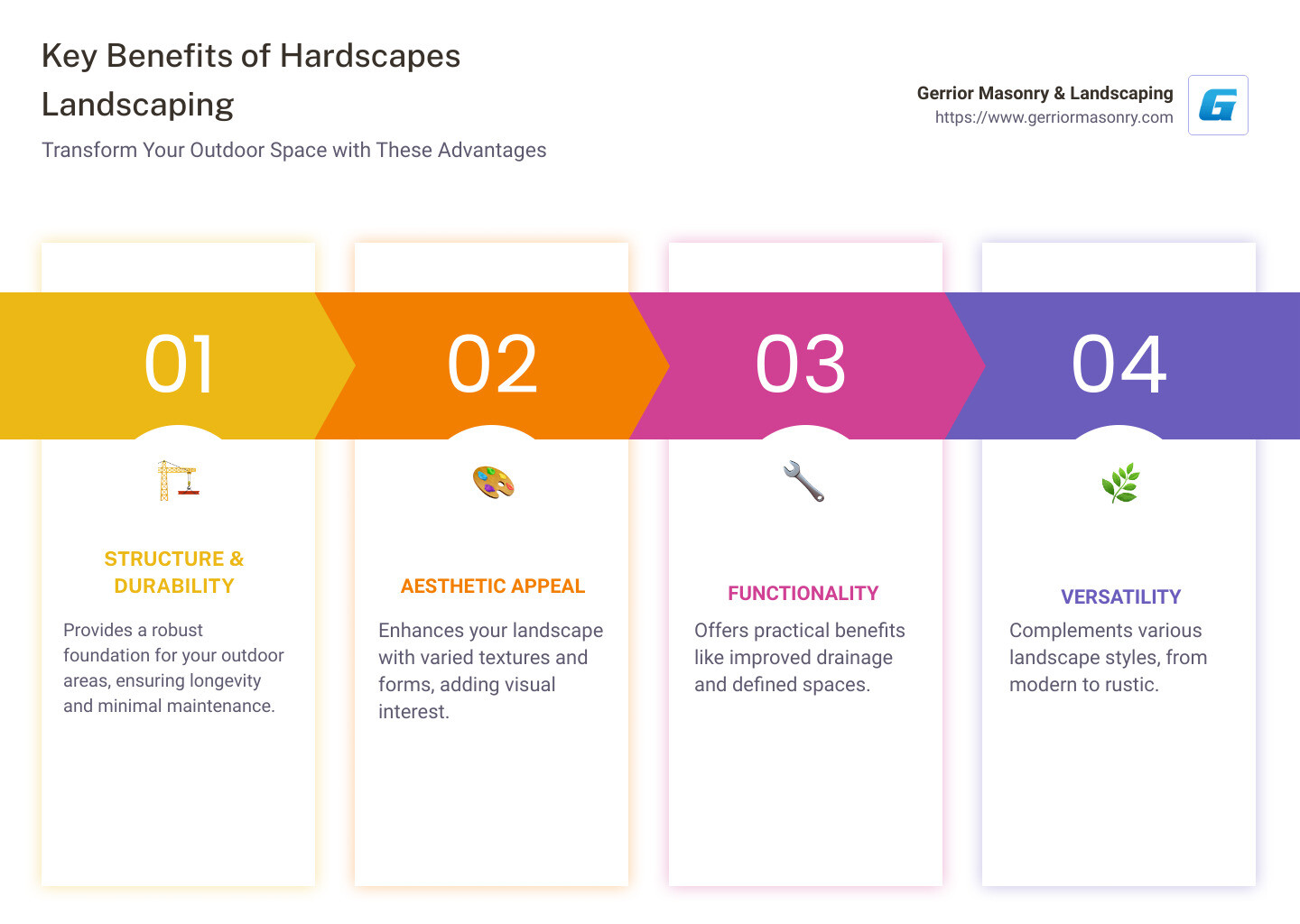
- Structure & Durability: Provides a solid foundation for outdoor areas.
- Aesthetic Appeal: Improves visual interest with varied textures and forms.
- Functionality: Offers practical benefits like improved drainage and defined spaces.
- Versatility: Complements any landscape style, from modern to rustic.
Hardscapes are as much about functionality as they are beauty. They not only improve the visual appeal of your property but also increase usability and value. Incorporating hardscapes allows you to create defined spaces for family gatherings, outdoor cooking, or quiet relaxation.
As Joe Gerrior, with over 34 years in hardscapes landscaping, I can attest to the transformative power of well-designed outdoor spaces. My experience in Massachusetts has shown me how thoughtful hardscapes can lift a property’s beauty and utility. Let’s dive deeper into this subject to open up your outdoor space’s full potential.
Hardscapes landscaping terms to remember:
– hardscape construction service
– hardscape design services
– hardscape company
Understanding Hardscapes Landscaping
What is Hardscape?
At its core, hardscape refers to the non-living elements in your outdoor design. Think of it as the backbone of your landscape. This includes materials like concrete, stone, and wood that form the solid structures in your yard. Hardscapes add definition and durability, making your outdoor space both functional and beautiful.
- Concrete: Known for its strength and versatility, concrete is a popular choice for patios and driveways. It offers a clean, modern look and can be customized with various finishes and colors.
- Stone: Stone brings a natural and timeless appeal to your landscape. Whether used for walkways or retaining walls, its durability and variety make it a favorite in many designs.
- Wood: Often used for decks and pergolas, wood adds warmth and a rustic charm. While it requires more maintenance, its aesthetic appeal is undeniable.
Examples of Hardscape
Hardscapes landscaping can include a wide range of structures, each serving a unique purpose:
- Patios: These provide a perfect spot for outdoor dining and relaxation. Using materials like pavers or concrete, patios extend your living space into the outdoors.
- Walkways: A well-designed walkway not only connects different areas of your yard but also adds a sense of flow and continuity. Materials like stone or gravel can make these paths both functional and attractive.
- Retaining Walls: These structures are essential for managing slopes and preventing erosion. Retaining walls can also create distinct levels in your garden, adding depth and interest to your landscape.

Hardscapes bring order and elegance to your outdoor area. By using a mix of materials like concrete, stone, and wood, you can create a cohesive and inviting environment. Each element, from patios to walkways, plays a role in enhancing both the functionality and aesthetics of your space.
Next, we’ll explore how to design your hardscape step by step, ensuring your outdoor area is both beautiful and practical.
Designing Your Hardscape: A Step-by-Step Guide
Creating a stunning outdoor space involves more than just planting flowers or shrubs. It’s about integrating hardscapes landscaping to improve both the look and function of your yard. Let’s explore a step-by-step guide to help you design your dream hardscape.
Step 1: Dream and Plan
Start by letting your imagination run wild. Picture everything you want in your outdoor space, even if it feels like a mile-long list. Do you envision a cozy patio, a serene water feature, or perhaps an outdoor kitchen?
Once you have your dream list, it’s time to use design guides. These resources can help you separate the must-haves from the nice-to-haves. Look for inspiration from projects that match your style and budget. This is the stage to determine what you truly want and how it will fit into your overall landscape design.
Next, set a realistic budget. It’s crucial to have a clear understanding of what you can afford before moving forward. Some elements, like a master plan or quality materials, are worth the investment. Others, like mix-and-match furniture or smaller plants, can be areas to save.
Step 2: Material Selection
Choosing the right materials is key to a successful hardscape. Here’s a quick rundown of popular options:
- Gravel: It’s one of the most budget-friendly materials. Ideal for paths and driveways, gravel is easy to install and maintain.
- Concrete: Known for its durability, concrete suits patios and walkways. It offers a clean look and can be customized with colors or patterns.
- Stone: For a natural and timeless appeal, stone is a top choice. Use it for retaining walls or as pavers to add elegance and resilience.
- Recycled Materials: Consider using reclaimed bricks or stones. Not only are they eco-friendly, but they also add unique character to your design.
Selecting the right materials involves balancing aesthetics, functionality, and budget. Think about how each material complements your home’s style and how it will withstand the elements.
Step 3: Implementing the Design
With your plan and materials in place, it’s time to bring your vision to life. Here are some key aspects to focus on:
- Masonry: Quality workmanship is essential. Skilled masonry can transform your hardscape into a masterpiece, providing both beauty and stability.
- Privacy Features: Incorporate elements like fences or hedges to create a sense of seclusion. These features not only improve privacy but also add structure to your space.
- Craftsmanship: Attention to detail is vital. Whether it’s the alignment of pavers or the finish on a wall, craftsmanship makes a significant difference.
- DIY Options: If you’re handy, consider tackling some projects yourself. Simple installations like gravel paths or small patios can be DIY-friendly, saving you money.
Implementing your design requires careful planning and execution. Whether you’re hiring professionals or doing it yourself, focus on quality and durability to ensure your hardscape stands the test of time.
By following these steps, you’ll create a hardscape that not only improves your outdoor space but also adds value to your home. Next, we’ll explore cost-effective ideas to make the most of your hardscaping budget.
Cost-Effective Hardscaping Ideas
Creating a beautiful outdoor space doesn’t have to break the bank. With some smart choices, you can design a stunning hardscapes landscaping without sacrificing quality or style. Let’s explore some affordable options and tips to help you save.
Cheapest Hardscape Options
Concrete and Gravel
When it comes to affordability, concrete and gravel are top contenders. Concrete is versatile and durable, making it a great choice for patios and walkways. It provides a clean, uniform look and can be improved with colors or textures for added visual interest. Plus, it’s relatively easy to maintain.
Gravel is another budget-friendly option. It’s perfect for driveways and pathways. Gravel is not only cost-effective but also easy to install and offers natural drainage, which reduces water runoff. Though, that you’ll need to periodically add more gravel to maintain its appearance.
Splurge vs Save
Where to Invest
While it’s tempting to save on everything, some elements are worth the splurge. Investing in a master plan ensures a cohesive design that maximizes your space’s potential. High-quality materials for key areas, like patios or retaining walls, provide longevity and improve your home’s value.
Craftsmanship is another area where spending a bit more can pay off. Skilled masonry work ensures durability and improves the overall look of your hardscape. A well-constructed patio or walkway not only looks great but also withstands the test of time.
Cost-Saving Tips
- DIY Projects: Consider tackling simple projects yourself. Installing a gravel path or building a small patio can be manageable DIY tasks that save on labor costs.
- Recycled Materials: Using reclaimed bricks or stones adds character to your design while being eco-friendly and cost-effective.
- Mix-and-Match Furniture: Instead of buying a complete set, mix pieces for a unique look. This approach can save money and add personality to your outdoor space.
- Smaller Plants: Opt for smaller plants that will grow over time. They’re less expensive initially and allow you to watch your garden evolve.
By carefully selecting where to invest and where to save, you can create a hardscape that fits your budget and improves your outdoor living experience. Next, we’ll discuss how to make the most of small spaces with hardscaping.
Hardscapes Landscaping for Small Spaces
Designing hardscapes landscaping for small spaces requires creativity and smart planning. By maximizing vertical spaces and incorporating multi-functional features, you can transform even the tiniest area into a functional and beautiful outdoor retreat.
Utilizing Vertical Spaces
Walls and Fences
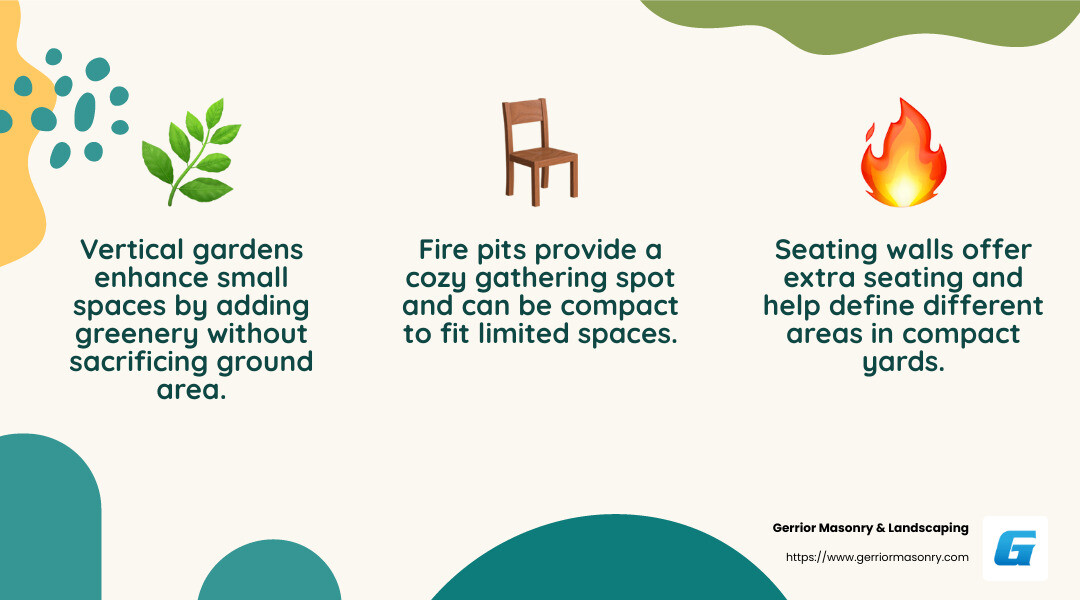
When space is limited, think vertical! Using walls and fences can help you make the most of your yard. Vertical gardens are a great way to add greenery without taking up precious ground space. Consider installing a living wall with pockets for plants. This not only adds a lush look but also improves air quality.
Fences can do more than just mark boundaries. Choose a fence design that complements your home and adds privacy. Vertical slats or latticework can support climbing plants, creating a green backdrop that improves visual appeal.
Multi-functional Features
Seating Walls and Fire Pits
In small spaces, every element should serve multiple purposes. Seating walls are a great example. These low walls provide extra seating for guests and can also define different areas in your yard. Use materials like stone or brick for durability and style.
Fire pits are another versatile feature. They create a cozy gathering spot and can be used for cooking or just enjoying a cool evening outdoors. Opt for a compact design that fits your space, and consider a built-in seating arrangement to maximize functionality.
These creative solutions not only maximize space but also add value and enjoyment to your outdoor area. By thinking vertically and choosing features that serve multiple purposes, you can design a small space that feels much larger.
Next, we’ll explore how to maintain your hardscape to ensure it lasts for years to come.
Maintaining Your Hardscape
Keeping your hardscape in top shape is crucial for its longevity and appeal. Regular maintenance and addressing weather challenges head-on can prevent costly repairs and ensure your outdoor space remains beautiful and functional.
Regular Maintenance Tips
Sealing and Cleaning
Sealing your hardscape surfaces, like stone and concrete, protects them from moisture, stains, and sun damage. Follow the manufacturer’s recommendations for the best sealing schedule. Regular cleaning is equally important. Use a mild detergent and water or a specialized cleaner. Avoid harsh chemicals that might damage your surfaces.
Weed Prevention
Weeds can sneak through the gaps in pavers and bricks, damaging your hardscape over time. Regularly check for and remove weeds to keep them from compromising the integrity of your design. Consider adding a weed barrier or using polymeric sand in the joints to block unwanted growth.
Addressing Weather Challenges
Drainage Solutions
Proper drainage is key to protecting your hardscape from water damage. Poor drainage can lead to erosion and pooling, which may harm your materials. Inspect and clean your drainage systems regularly to keep them working effectively. Incorporate features like retaining walls and stone steps to guide water away from your hardscape.
Protective Measures
Weather can be tough on hardscapes. In cold climates, prepare for winter by clearing debris and sealing porous surfaces. Avoid harsh de-icing chemicals, as they can damage materials. Instead, use products designed for hardscaping surfaces. For hot climates, consider adding shade elements like pergolas or umbrellas to protect surfaces from sun damage.
Taking these steps ensures your hardscape remains durable and visually appealing throughout the seasons. Regular maintenance and smart weatherproofing can save you time and money in the long run.
By keeping your hardscape well-maintained, you improve its value and longevity. Next, let’s explore how adding hardscape elements can boost your property’s curb appeal and value.
Adding Value and Curb Appeal with Hardscapes Landscaping
Incorporating hardscapes landscaping into your outdoor space can significantly boost your home’s curb appeal and overall value. Thoughtfully designed hardscape features not only improve aesthetics but also provide functional benefits, increasing your property’s return on investment (ROI).
Key Features That Boost Appeal
Outdoor Kitchens
Outdoor kitchens are a top choice for homeowners looking to add luxury and functionality to their yard. They create a perfect space for entertaining and can include features like grills, sinks, and even pizza ovens. An outdoor kitchen can transform your backyard into a culinary haven, making it a major selling point for potential buyers.
Stone Pathways
Stone pathways add a touch of elegance and guide visitors through your garden or yard. They can be crafted from various materials like cobblestone or flagstone, offering both durability and charm. A well-designed stone pathway not only improves the visual appeal but also provides practical navigation through your landscape.
Water Features
Water features, such as fountains or small ponds, add tranquility and a soothing ambiance to any outdoor space. They can serve as focal points, drawing attention and creating a serene environment. Water features also contribute to a cooling effect, which can be beneficial in warmer climates.
Integrating Softscapes and Hardscapes
A balanced design that integrates both hardscapes and softscapes can significantly improve the visual appeal and environmental benefits of your outdoor area.
Balanced Design
Combining hard elements like patios and pathways with soft elements such as plants and flowers creates a harmonious look. This blend ensures that your outdoor space feels both structured and natural. Greenery softens the hard edges of stone and concrete, creating an inviting and cohesive environment.
Visual Appeal and Environmental Benefits
Integrating plants and trees with hardscape features not only lifts the aesthetic appeal but also provides environmental benefits. Trees and shrubs can offer shade, improve air quality, and support local wildlife. Additionally, using permeable materials for hardscapes can help manage stormwater runoff, reducing erosion and promoting groundwater recharge.
By thoughtfully combining hardscapes landscaping with natural elements, you can create an outdoor space that’s not only beautiful but also adds significant value to your property. This approach ensures your yard is both functional and visually pleasing, making it a standout feature of your home.
Conclusion
Incorporating hardscapes landscaping into your outdoor design not only improves your home’s aesthetic appeal but also increases its overall value. From neat stone pathways to luxurious outdoor kitchens, well-planned hardscapes offer both beauty and functionality. By integrating these features with natural elements like plants and trees, you can create a harmonious outdoor space that stands out.
Now is the perfect time to start planning your hardscape project. Whether you’re dreaming of a serene garden path or a vibrant outdoor entertainment area, the possibilities are endless. Begin by envisioning your ideal space, setting a budget, and choosing materials that suit your style and needs.
For those ready to transform their outdoor areas, we at Gerrior Masonry & Landscaping are here to help. With over 30 years of experience, our skilled team ensures high-quality results and customer satisfaction. Contact us today to turn your hardscape dreams into reality. Let us show you how our expertise can improve your outdoor living experience.
