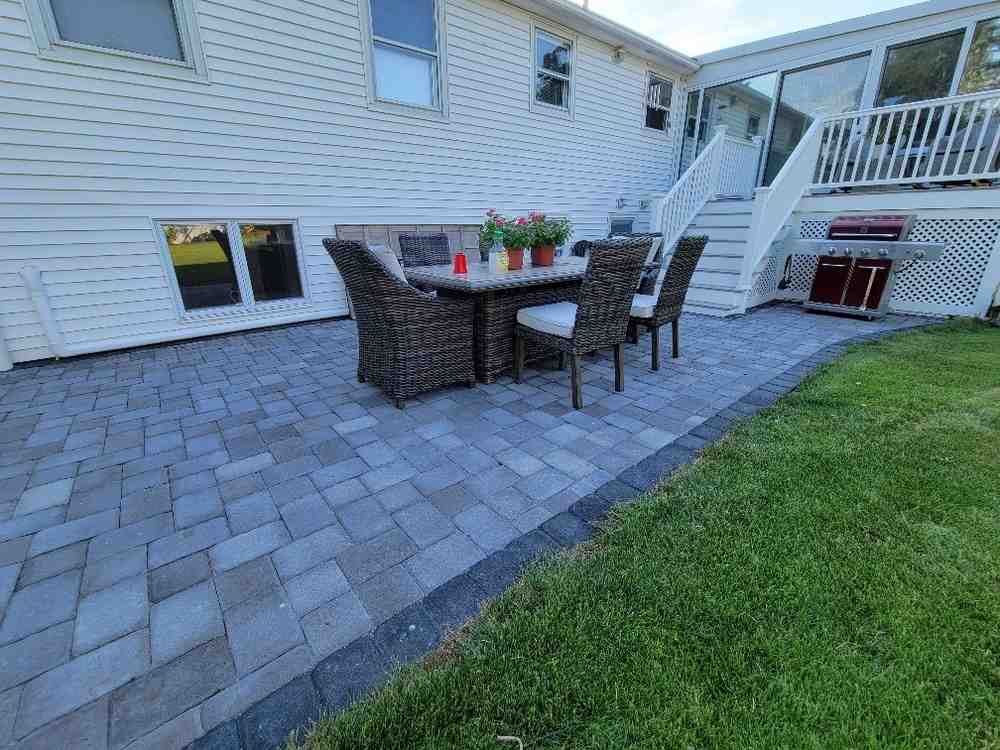
Why Patio Paver Installation Transforms Your Outdoor Space
Patio paver installation is the process of creating a durable, attractive outdoor surface using individual paving stones. The process involves excavating the area, preparing a multi-layer base of gravel and sand, laying the pavers in a chosen pattern, and filling the joints to lock them in place.
A well-executed paver patio offers significant benefits. Unlike concrete slabs that crack, pavers flex with ground movement and allow for easy individual replacement. They can last up to 50 years, add substantial value to your property, and create an inviting outdoor living space.
The success of any paver patio depends entirely on its foundation. Rushing base preparation will lead to uneven, sunken, or shifted pavers within just a few years.
While some homeowners consider a DIY approach, the physical labor is demanding and mistakes are costly. Professional installation ensures proper drainage, a solid base, and expert-level results—especially for larger or more complex projects.
I’m Joe Gerrior, owner of Gerrior Masonry & Landscape Construction Corp. in Woburn, Massachusetts. Over the past 34 years, I’ve overseen hundreds of patio paver installation projects, learning what separates patios that last generations from those that fail prematurely.
The Ultimate Guide to Patio Paver Installation
This section walks you through the entire process, from gathering your supplies to laying the final paver. A proper patio paver installation ensures your outdoor space will last for decades.
Essential Tools, Materials, and Pre-Installation Checks
Before starting, gather the right tools and materials. Meticulous planning is the first step to a successful patio paver installation.
Tools of the Trade
- Shovel, Wheelbarrow, Tape Measure, and Level
- Rubber Mallet, Hand Tamp, and Plate Compactor (essential for base)
- Masonry Saw or Paver Breaker (for cuts)
- Stakes, String Line, Rake, and Broom
- Screed boards (e.g., 2x4s, PVC pipes)
- Safety Glasses and Gloves
For detailed tutorials, you can explore resources like Granite Rock’s website.
Essential Materials
- Pavers: Choose from concrete, brick, or natural stone. Concrete pavers are versatile and cost-effective, while natural stone offers a unique, high-end finish. Purchase 5-10% extra for cuts.
- Geotextile Fabric: This separates the subsoil from the gravel base, preventing the stone from sinking into the dirt over time and compromising the foundation’s stability.
- Base Material: Crushed stone aggregate (e.g., “3/4 minus”) is the patio’s backbone. The mix of different-sized stones and dust locks together tightly when compacted.
- Bedding Sand: A 1-1.5 inch layer of coarse concrete sand (like ASTM C33) is used for leveling. Avoid fine masonry or play sand, as it retains water and can cause pavers to shift.
- Joint Sand: Regular or polymeric sand to fill gaps and lock pavers.
- Edge Restraints: Plastic, metal, or concrete restraints are essential to prevent pavers from shifting and spreading apart over time.
Pre-Installation Checks
- Local Permits: Check with your local municipal office for any required building permits.
- Call 811: Before you dig, call 811 to have underground utility lines marked. This is a critical safety step.
- Plan Your Design: Map out your patio’s shape, size, and pattern to calculate material needs accurately. For more on site preparation, visit our page on excavation services.
Step-by-Step: Preparing the Base and Laying Pavers
This is the most critical phase of patio paver installation. A solid base ensures a long-lasting patio.
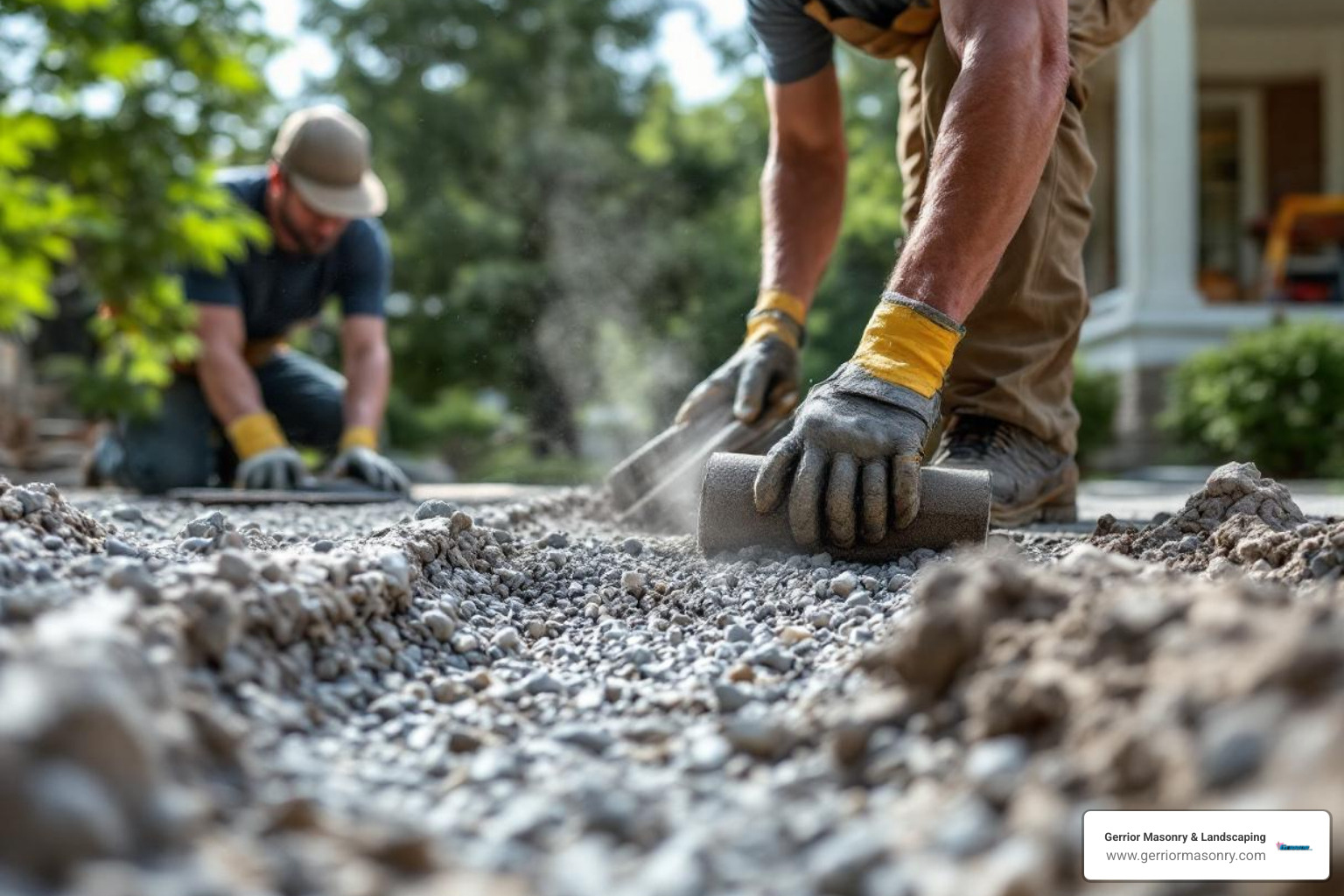
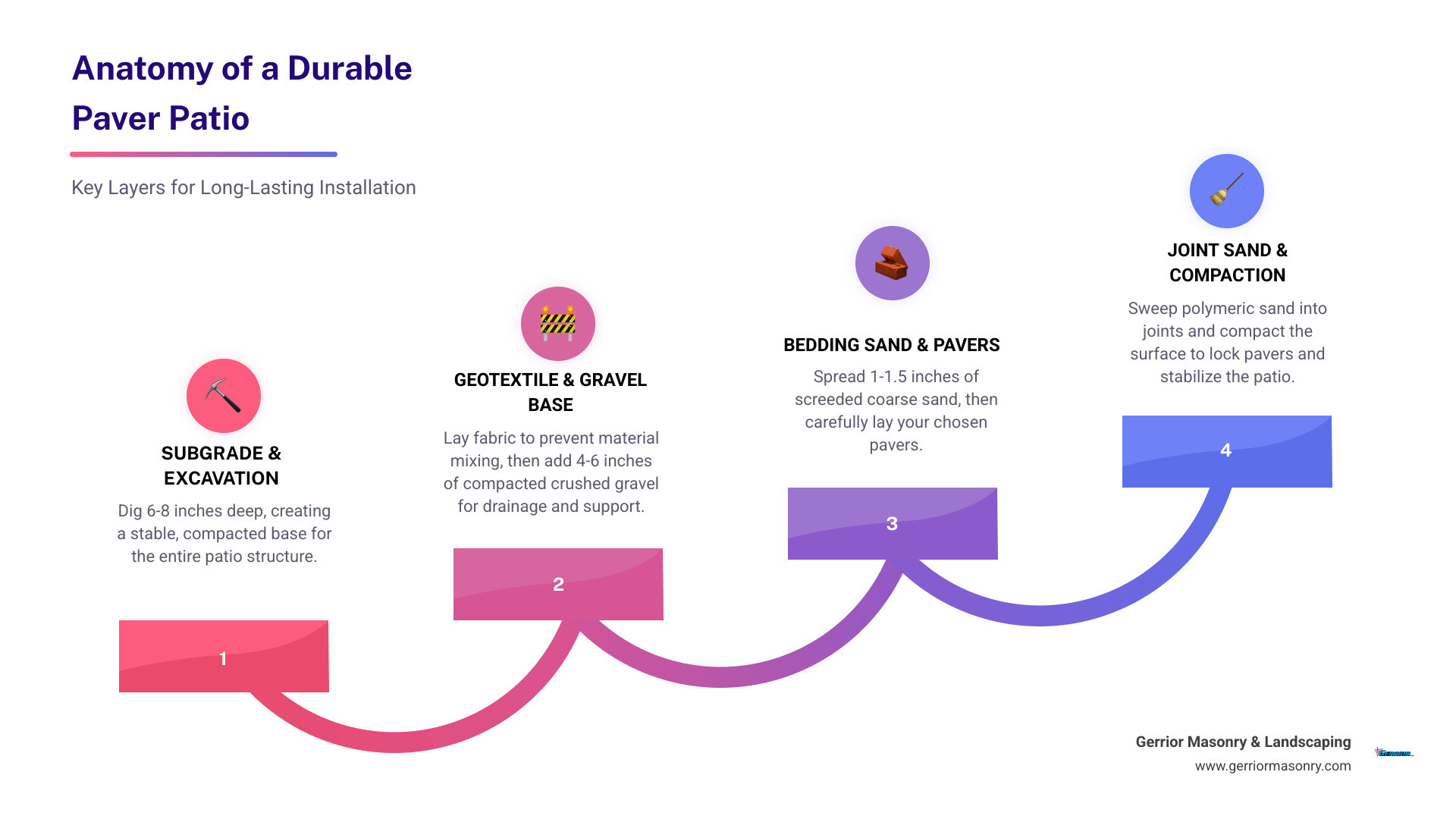
1. Excavation and Slope: Outline your patio area. Excavate 6-8 inches deep for walkways (10-12 inches for driveways). Ensure the area has a slope of 1-2% (about 1/4 inch per foot) directing water away from your home’s foundation to prevent water damage and ice buildup. Compact the exposed subsoil.
2. Geotextile Fabric and Base: Lay geotextile fabric over the compacted subsoil. Add a 4-6 inch layer of crushed gravel base. Compact the gravel in 2-3 inch lifts (layers) with a plate compactor. This method ensures uniform density throughout the base, which is the key to preventing future sinking.
3. Bedding Sand: Spread a 1-1.5 inch layer of coarse sand. Use screed pipes and a board to create a perfectly flat surface for setting the pavers. Do not compact this layer.
4. Edge Restraints: Install edge restraints around the perimeter, securing them into the gravel base with spikes.
5. Laying Pavers: Start from a straight edge (like your house) and place pavers directly onto the sand. Don’t drag them. Keep joints tight and consistent. Use a string line to keep rows straight and check for levelness periodically.
For more guidance on creating your perfect outdoor space, explore our patio design and installation services.
Finishing Touches for Your Patio Paver Installation
The final steps lock everything into place for a professional, stable finish.
1. Cutting Pavers: Use a masonry saw or paver breaker to cut pavers for edges and corners. Always wear safety glasses and gloves.
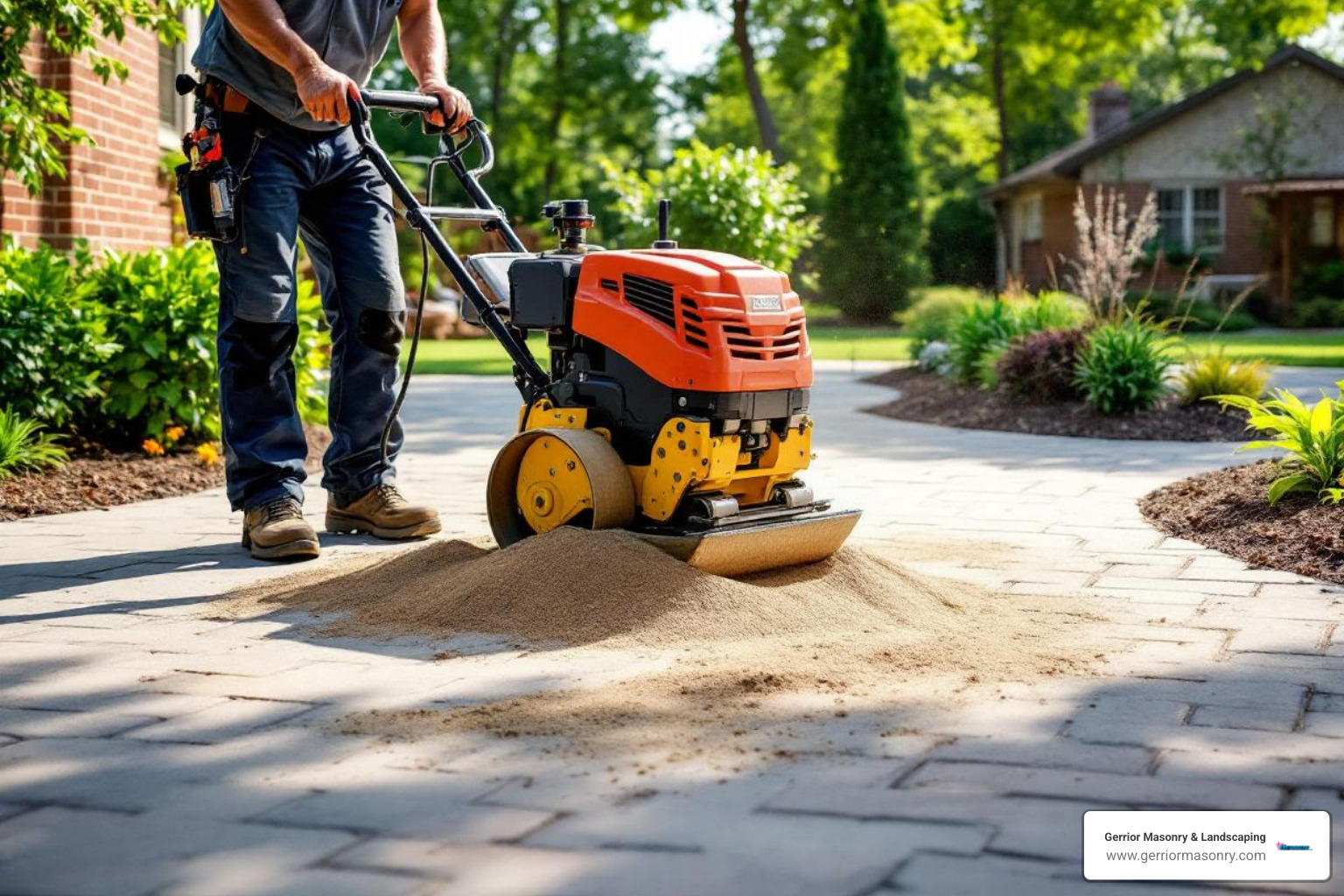
2. Compacting Pavers: Run a plate compactor (with a protective pad) over the entire patio. This settles the pavers into the sand bed and interlocks them.
3. Filling the Joints: Spread joint sand over the dry patio and sweep it into the gaps. Run the compactor over the patio again to settle the sand, then sweep more sand until the joints are full.
4. Regular vs. Polymeric Sand: Polymeric sand is a popular choice because it hardens when wet, which helps resist weeds, insects, and erosion.
| Feature | Regular Sand | Polymeric Sand |
|---|---|---|
| Composition | Fine-grained, washed sand | Fine sand mixed with polymer additives |
| Function | Fills joints, provides flexibility | Fills joints, hardens to create a semi-rigid bond |
| Weed Growth | Prone to weed growth | Significantly inhibits weed growth |
| Erosion | Can wash out with heavy rain/power washing | Highly resistant to erosion |
| Cost | Less expensive | More expensive |
If using polymeric sand, blow all excess dust off the paver surfaces before lightly misting with water to activate it. Any remaining dust can create a permanent haze on the pavers. Allow it to cure for 24-48 hours.
Common Mistakes to Avoid:
- Improper base compaction.
- Incorrect slope or no slope for drainage.
- Forgetting edge restraints.
- Using the wrong type of sand for the bedding layer.
- Leaving polymeric sand residue on paver surfaces before watering.
Beyond the Build: Maintenance, Benefits, and Professional Help
With your patio installed, it’s crucial to understand how to care for it and why it was a great choice. We’ll also explore when a project is best left to the professionals.
Why Choose Pavers? Benefits and Longevity
Pavers are a superior choice for outdoor living spaces compared to materials like poured concrete.
- Durability & Flexibility: Pavers are incredibly strong and can flex with ground movement, preventing the large cracks common in concrete slabs.
- Easy Repairs: If a paver is damaged, it can be easily removed and replaced, unlike concrete which requires costly patching.
- Aesthetic Variety: With countless shapes, colors, and patterns like herringbone, basketweave, or running bond, pavers offer unmatched design versatility to complement any home’s style.
- Increased Home Value: A professional paver patio is a significant upgrade that boosts curb appeal and property value.
When installed correctly on a solid foundation, a paver patio can last up to 50 years. The initial cost is an investment in long-term beauty and function. Based on internet data, the average cost of a professional paver patio installation is around $3,400, but projects can range from $2,000 to over $10,000 depending on size, materials, and complexity. These are industry averages and not a quote for Gerrior Masonry services.
Maintaining Your Paver Patio for Lasting Beauty
Simple, consistent maintenance will keep your paver patio looking great for decades.
- Routine Cleaning: Regularly sweep away debris. Periodically rinse with a garden hose to remove dust. Use caution with power washers, as they can dislodge joint sand.
- Weed Prevention: Using polymeric sand is the best defense. If weeds appear, pull them by hand. Top up regular joint sand as needed.
- Paver Sealing: Sealing your pavers every 3-5 years is optional but recommended. It improves color, protects against stains, and helps stabilize the joint sand.
- Long-Term Repairs: One of the biggest advantages of pavers is their repairability. Individual pavers can be replaced, and sunken areas can be re-leveled by lifting the pavers and adjusting the base.
For more information on our hardscaping solutions, explore our hardscaping services.
DIY vs. Hiring a Pro for Your Project
While a DIY patio paver installation can seem appealing as a way to save money, it’s a challenging, physically demanding project where mistakes in the crucial base preparation stage can lead to premature failure and wasted investment.
The Challenges of a DIY Installation
A DIY project often involves hidden costs and difficulties. Consider the expense of renting a plate compactor and masonry saw, the logistics of having tons of gravel and sand delivered, and the sheer physical labor of excavation and material handling. A small mistake in calculating the slope for drainage or failing to compact the base properly can result in a patio that sinks, shifts, or holds water, requiring a complete and costly redo.
When to Hire a Professional
Hiring a professional is the wisest choice for most homeowners, especially for:
- Large or complex designs with curves, multiple levels, or integrated features like fire pits.
- Properties with steep slopes or poor drainage that require expert grading and water management.
- Ensuring quality and longevity with a properly installed base that meets or exceeds industry standards, often backed by a workmanship warranty.
- Saving time and avoiding strenuous physical labor; a professional crew can complete a project in days that might take a homeowner weeks or months.
At Gerrior Masonry & Landscaping, we bring over 30 years of experience to every patio paver installation. Our unique selling point is our skilled team, combined with owner oversight on every project. This ensures the highest standards of craftsmanship for our clients in Woburn, MA, and throughout Middlesex and Essex County.
If you want a patio built with precision and care, we invite you to contact our masonry contractors near you for a professional consultation. Let us help you bring your outdoor vision to life.
Gerrior Masonry & Landscape Construction is based in Woburn, MA, and proudly services Middlesex and Essex County, Massachusetts.