
Why Fireplace Concrete is the Smart Choice for Modern Homes
Fireplace concrete is the go-to material for homeowners wanting a blend of style, durability, and value. From pre-cast surrounds to custom designs, here’s what you need to know.
Best Concrete Options for Fireplace Projects:
- GFRC (Glass Fiber Reinforced Concrete): Lightweight, seamless pre-cast options.
- Concrete Overlays: DIY-friendly systems for updating existing brick.
- Custom Poured-in-Place: Site-built designs with unlimited possibilities.
- Pre-Cast Modular Systems: Quick-install kits for fast project completion.
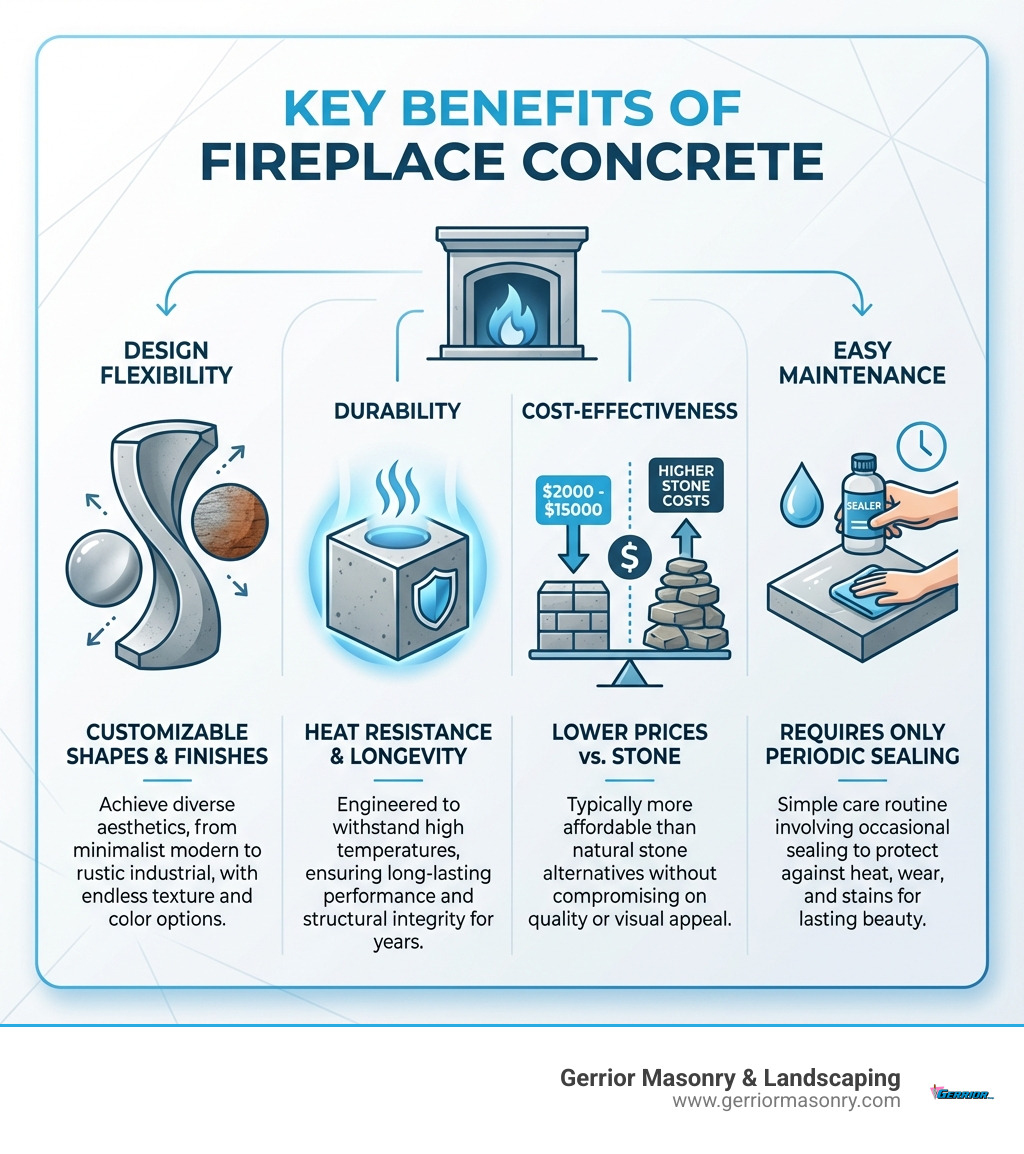
Concrete fireplaces offer best versatility in design, from minimalist to industrial. They are heat-resistant, durable, and can be customized with various colors and textures. Unlike stone or brick, concrete can be cast into seamless, contemporary shapes while ensuring a safe, long-lasting hearth. The material is also typically more affordable than natural stone and easier to maintain than brick. Whether you’re working with a pro or tackling a DIY project, concrete delivers impressive results.
I’m Joe Gerrior, owner of Gerrior Masonry & Landscape Construction Corp. With over 34 years of experience in Massachusetts, I’ve helped countless homeowners with custom masonry, including fireplace concrete installations that combine safety, beauty, and value.
Simple fireplace concrete word guide:
The Modern Appeal of Concrete Fireplaces
The modern appeal of fireplace concrete is undeniable, driven by the industrial-chic aesthetic that favors raw, refined textures. Concrete makes a bold architectural statement that is both modern and timeless.
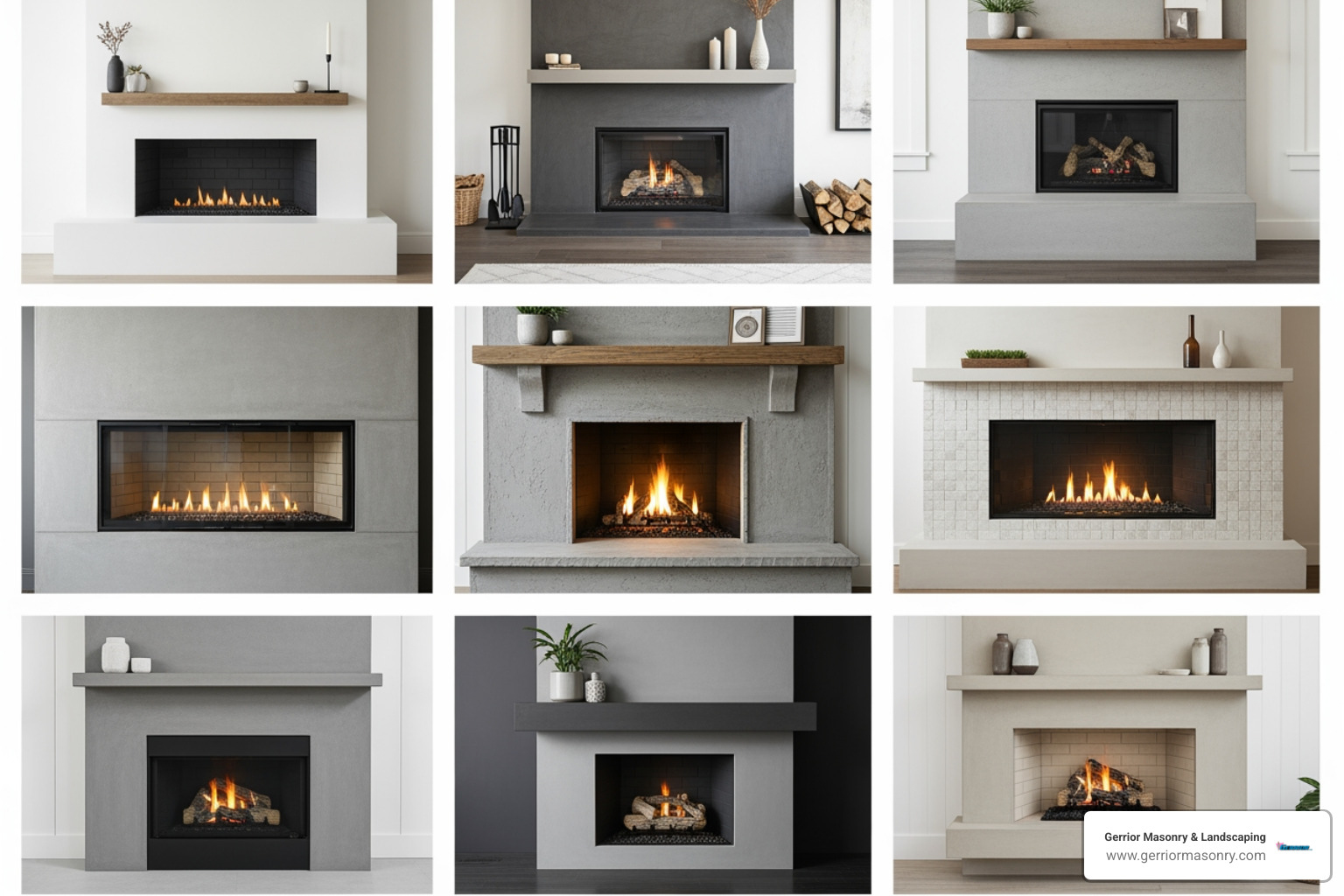
Beyond trends, it offers incredible versatility. It can be molded into any shape, from sleek and minimalist surrounds to grand, sculptural forms, suiting styles from urban lofts to modern farmhouses.
Durability is another key factor. Concrete is a robust material that resists heat and wear. When properly installed and sealed, a fireplace concrete surround will last for decades with minimal maintenance, making it a smart choice for any hearth.
A Comprehensive Guide to Selecting Your Fireplace Concrete
Choosing the right fireplace concrete for your home means understanding the available types and their unique benefits. Here’s a breakdown of the primary options.
Choosing Your Type: Pre-Cast vs. Custom vs. Overlay
You generally have three main approaches for a fireplace concrete project: pre-cast, custom poured-in-place, and concrete overlays. Each offers distinct advantages.
-
Pre-Cast Concrete Surrounds: These are manufactured in a controlled factory environment, ensuring consistent quality and precision. A popular choice is Glass Fiber Reinforced Concrete (GFRC), which incorporates alkali-resistant glass fibers into the concrete mix. This reinforcement allows for thinner, lighter panels without sacrificing strength, making it ideal for upper-floor installations or homes where structural load is a concern. Some pre-cast modular systems are up to 50% lighter and less expensive than hand-built masonry and can be installed by a professional team in as little as two hours, minimizing disruption to your home.
-
Custom Poured-in-Place: This on-site method offers unparalleled creative freedom. It involves building custom forms or molds directly around your fireplace, into which the concrete is poured. This allows for unique shapes, massive sizes, and the seamless integration of elements like hearths, benches, or wood storage cubbies. It’s the ultimate choice for a one-of-a-kind architectural feature, but it is a labor-intensive process that requires significant expertise in form-building, concrete mixing, and finishing to avoid cracks and ensure a perfect result.
-
Concrete Overlays: An excellent DIY-friendly option for refreshing an existing fireplace without a messy demolition. Products like Flex-C-Ment or other cementitious coatings are designed to be applied in thin layers directly over old brick, tile, or stone. This method can create a modern concrete finish, cover imperfections, and completely update a dated look with minimal cost and effort compared to a full replacement.
Here’s a quick comparison:
- Speed of Installation: Pre-cast modular systems are fastest. Overlays are also quick. Custom poured-in-place is the most time-intensive.
- Customization Level: Custom poured-in-place offers maximum freedom. Pre-cast offers good options. Overlays allow for surface-level changes.
- Cost Implications: Lightweight pre-cast systems and overlays are often the most budget-friendly. Custom work varies widely.
For those interested in efficient construction methods, you can learn more here: Information on efficient fireplace construction.
Key Features to Consider When Selecting
Once you’ve chosen a type of fireplace concrete, these features will influence the final look.
-
Material Composition (GFRC vs. Traditional): GFRC contains glass fibers for strength, allowing for thinner, lighter designs ideal for pre-cast surrounds. Traditional concrete is heavier but perfect for robust, custom poured-in-place applications.
-
Finish (Polished, Textured, Raw): The finish defines the aesthetic and tactile quality of your fireplace. A Polished finish is achieved by grinding the surface with progressively finer diamond pads to create a smooth, reflective look that highlights the aggregate within. A Textured finish can be created using form liners to mimic materials like wood (board-form), stone, or fabric. It can also be hand-troweled for a more organic, plaster-like appearance. A Raw or “as-cast” finish celebrates the material’s natural, industrial character, often leaving behind the subtle imperfections and air pockets (bug holes) from the pouring process for an authentic look.
-
Color Options: Fireplace concrete isn’t just gray. Integral pigments are powders mixed into the concrete before pouring, ensuring the color is consistent all the way through the slab. This means any future chips or scratches will be less noticeable. Alternatively, the surface can be treated with acid stains or water-based dyes after curing to create variegated, translucent tones that mimic natural stone. For the most precise color matching, the cured and sealed concrete can be painted with a high-quality, heat-resistant paint.
-
Sealing for Longevity: Proper sealing is crucial. A quality sealer protects the surface from stains and wear, ensuring longevity.
-
Size and Scale: Consider the proportions of your room and firebox. Pre-cast surrounds come in standard sizes, while custom designs are limited only by structural constraints and your imagination.
-
Hearth Requirements: A concrete hearth can be poured as a solid slab or included in a pre-cast system. We can customize dimensions to meet code and complete your design.
-
Mantel Integration: A mantel can be seamlessly integrated as a floating shelf or a more substantial architectural element, either as part of a pre-cast kit or a custom design.
For more information on how we integrate these features into our projects, explore our services here: More info about masonry services.
Comparing Durability, Maintenance, and Cost
When evaluating fireplace concrete against other materials, consider these long-term factors.
-
Durability and Longevity: Concrete is exceptionally durable and heat-resistant. A properly installed and sealed concrete surround, especially GFRC, can last a lifetime, often outperforming brick or stone.
-
Maintenance Needs: Concrete is low-maintenance. A sealed surface is easy to clean, and periodic resealing every few years is all that’s needed. This is often less work than scrubbing grout on brick or stone.
-
Cost: The cost of a fireplace concrete project varies based on type, size, and complexity. Pre-cast systems and DIY overlays are often more budget-friendly than custom work. While national data suggests average project costs can range from $2,000 to over $15,000, this is a wide estimate. For an accurate quote, consult a professional.
Here’s a comparative overview:
| Feature | Concrete | Brick | Stone |
|---|---|---|---|
| Average Cost | $2,000 – $15,000+ | $3,000 – $20,000+ | $5,000 – $30,000+ |
| Maintenance | Low (periodic sealing, easy cleaning) | Medium (grout cleaning, occasional repointing) | Low to Medium (depends on type, sealing) |
| Design Flexibility | High (castable, textured, colored, custom shapes) | Medium (traditional, limited shapes/colors) | Medium (natural variations, cut to size) |
Popular Design Styles for Your Fireplace Concrete Project
The versatility of fireplace concrete suits numerous design styles.
-
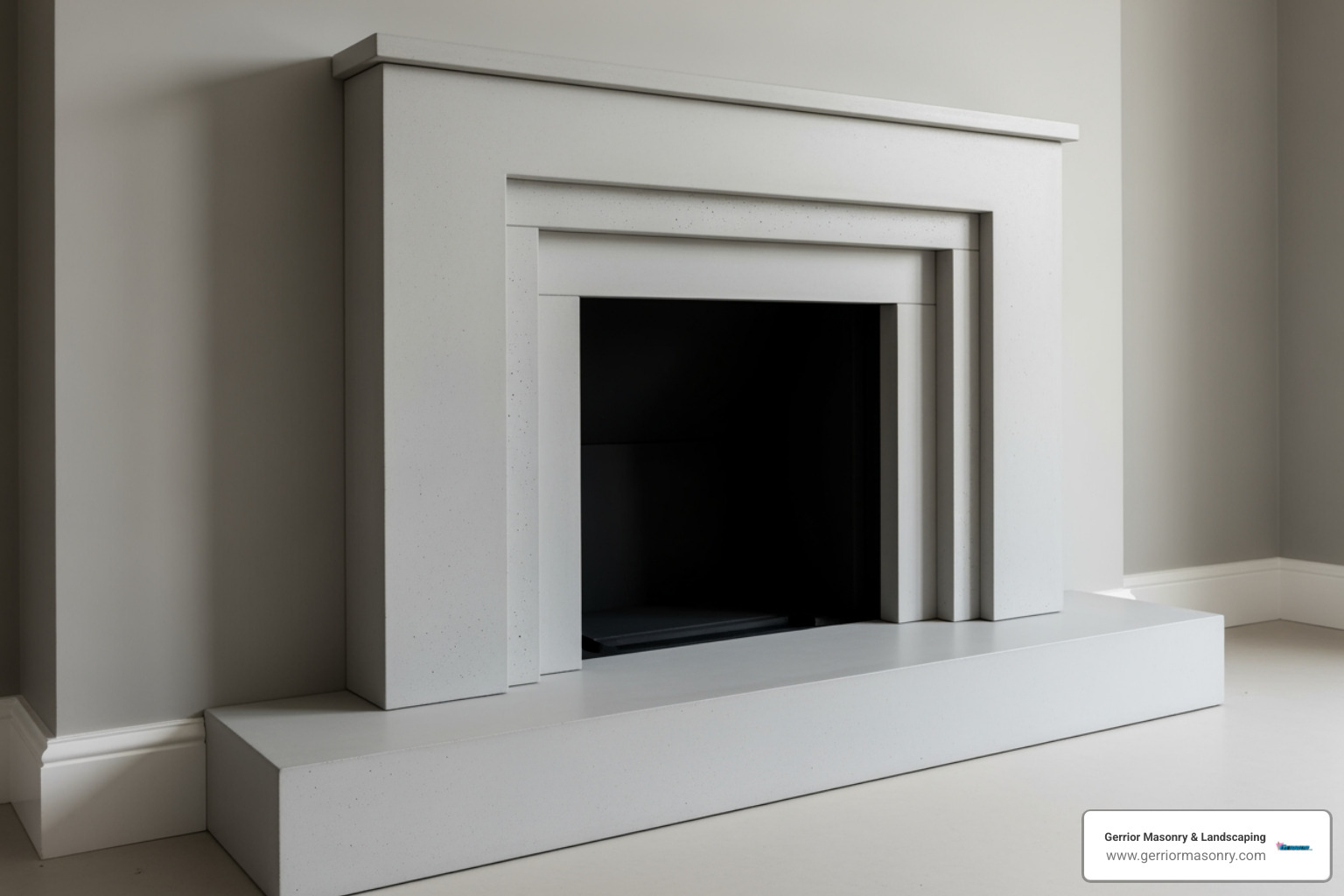
Minimalist: This style uses clean lines and simple forms. The smooth, monolithic look of concrete, especially in seamless GFRC surrounds, creates a serene and uncluttered focal point.
-
Industrial: This style accepts the raw beauty of concrete, often featuring an unpolished finish with natural variations in color and texture to create an urban, factory-inspired aesthetic.
-
Modern Farmhouse: Concrete can be softened for this style. A board-form texture that mimics wood grain or a warmer gray tone blends perfectly with natural wood elements for a cozy yet contemporary feel.
Key techniques include ensuring clean lines for modern designs, using board-form texture for rustic warmth, and adding integrated shelving or seating for a functional, cohesive look. For more inspiration, you might find valuable insights from this resource: Design inspiration for modern interiors.
The DIY Approach: Is a Concrete Overlay Right for You?
For the hands-on homeowner, a fireplace concrete overlay is a rewarding DIY project to update an old brick fireplace without a full demolition.
-
Is it for you? This project is suitable for those with basic home improvement skills. It’s a great way to cover dated brick, fill minor cracks, and achieve a modern look on a budget.
-
The Process in Brief: The project typically involves thoroughly cleaning and degreasing the existing surface, followed by applying a special bonding primer to ensure the overlay adheres properly. The overlay mix is then prepared according to the manufacturer’s instructions and applied with a trowel in one or more thin coats to build up the desired thickness and texture. After the concrete cures (which can take 24-72 hours), it should be lightly sanded if needed and then sealed with a matte or satin sealer for protection and a finished look. The entire application can often be completed in a weekend, with additional time for curing.
-
Materials Needed: Key materials include a concrete overlay mix, primer, a concrete sealer, and basic tools like a bucket, mixing drill attachment, and trowel.
Safety and Building Code Essentials for Fireplace Concrete
Safety is paramount with any fireplace project. Adhering to codes is critical for a safe and functional hearth.
-
Non-Combustible Materials: Concrete is non-combustible, a key safety advantage. Any other finishing materials used on the fireplace must also be non-combustible.
-
Clearances: It is critical to maintain proper clearance between the firebox opening and any combustible materials (like wood trim or walls), as specified by building codes.
-
Local Building Codes: Always consult your local building department in Middlesex and Essex County, Massachusetts, before starting. Codes for fireplace construction and clearances vary by location.
-
Hearth Dimensions: Codes mandate minimum hearth sizes to protect flooring from embers. Ensure your design complies.
-
Professional Installation: While overlays can be a DIY project, we strongly recommend professional installation for any structural fireplace concrete work. A trained technician ensures your fireplace is beautiful, safe, and up to code.
For more detailed information on maintaining the safety of your fireplace, please visit our page: More info about fireplace mortar repair.
Partner with a Masonry Expert for a Flawless Finish
As we’ve explored, fireplace concrete offers a superb combination of style, durability, and value. From its design flexibility to its low maintenance, it’s a smart choice for any modern hearth.
However, achieving a flawless finish while ensuring structural integrity and safety requires professional expertise. Partnering with an experienced masonry contractor is the best way to guarantee a high-end result that adheres to all building codes. Our team understands the nuances of working with concrete and can handle everything from complex custom pours to precise pre-cast installations.
Ready to transform your living space with a stunning concrete fireplace? Our expert masons can bring your vision to life safely and beautifully. Explore our custom masonry and chimney services.
Gerrior Masonry & Landscape Construction is based in Woburn, MA, and proudly services communities throughout Middlesex and Essex County, Massachusetts.
