
Pavers Patios: Top Guide to Stunning Designs 2024
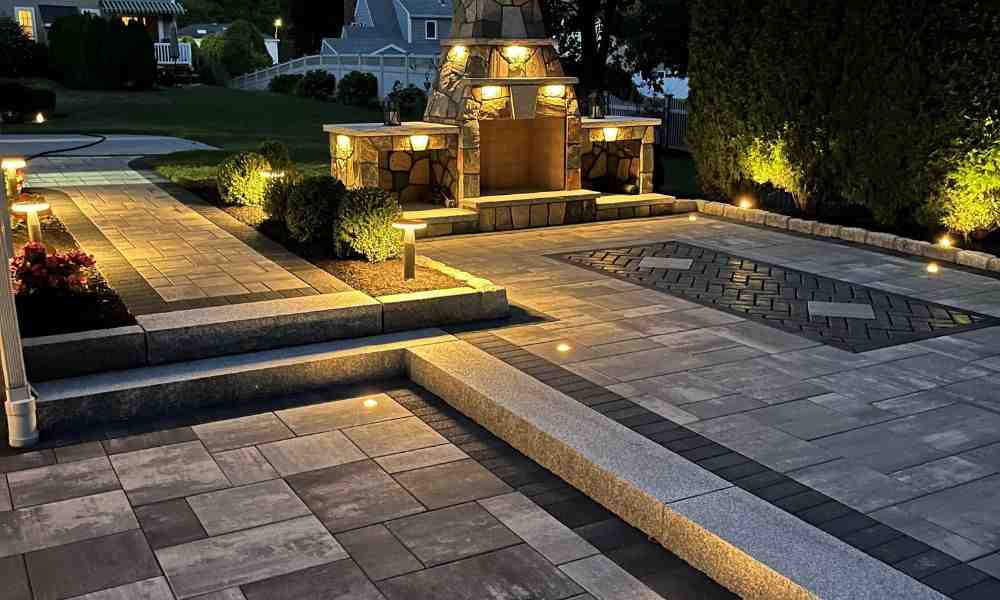
Pavers patios are more than just a practical addition to your outdoor space; they transform it into a haven of beauty and functionality. Here’s why they’re an ideal choice for homeowners:
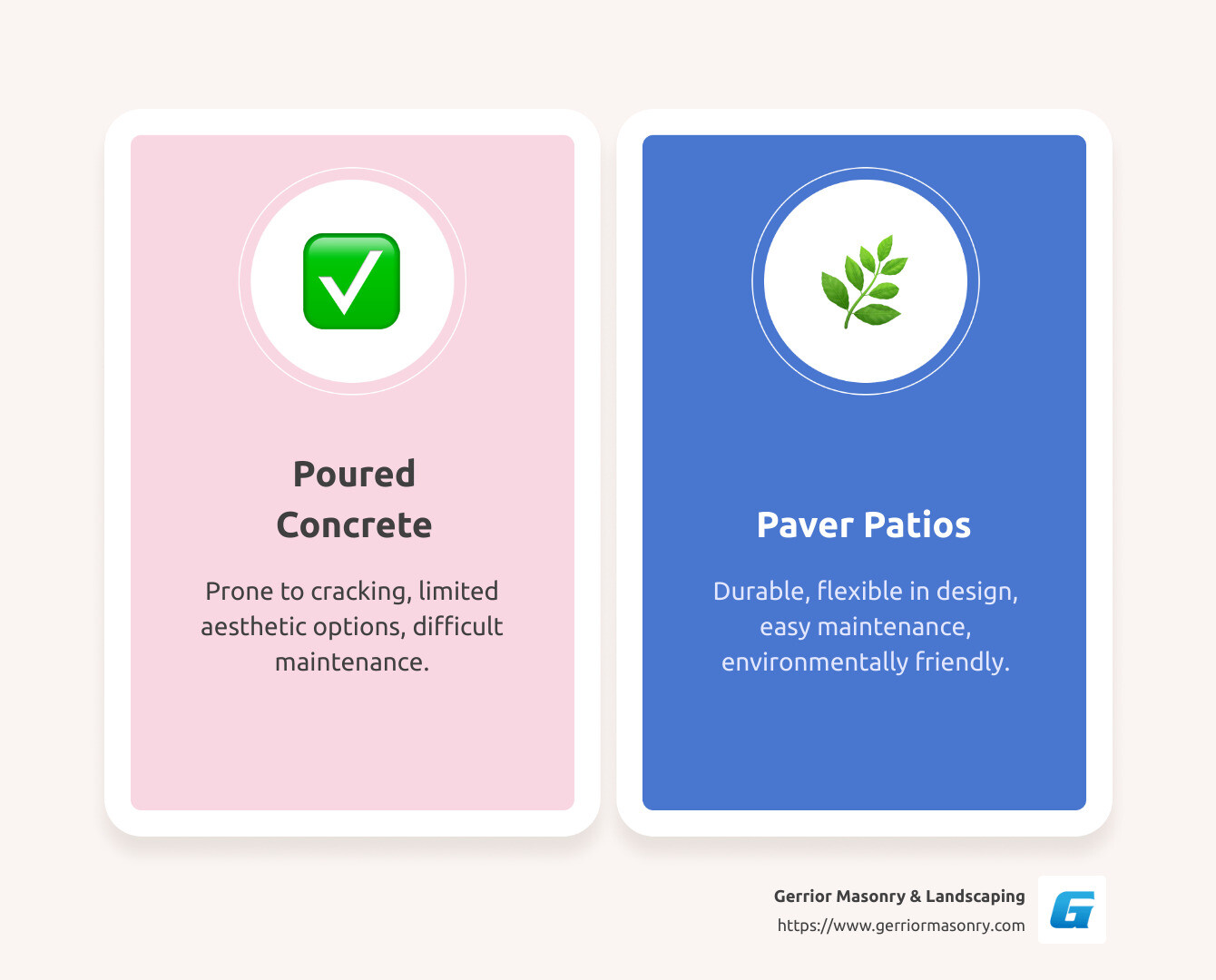
- Durability: Unlike poured concrete, pavers offer robust and long-lasting surfaces that resist cracking.
- Aesthetic Flexibility: With numerous colors, shapes, and textures available, pavers allow you to create a patio that perfectly matches your home’s style.
- Easy Maintenance: Individual pavers can be replaced easily, making maintenance hassle-free.
- Environmental Benefits: Permeable pavers help manage stormwater by allowing water to seep into the ground.
Choosing pavers patios is about enhancing the beauty and usability of your home, changing a simple yard into an neat and rewarding living space.
As Joe Gerrior, the owner of Gerrior Masonry & Landscaping in Massachusetts, I bring over 34 years of experience in creating stunning paver patios. Rest assured, our expertise ensures a patio that complements your home and stands the test of time.
Basic pavers patios glossary:
Choosing the Right Materials for Your Paver Patio
Selecting the right materials is crucial when designing your dream paver patio. The choice will affect the patio’s durability, look, and feel. Let’s explore some of the most popular options:
Concrete Pavers
Concrete pavers are a versatile and durable choice for any patio. They come in a wide range of colors, shapes, and sizes, allowing for limitless design possibilities. Concrete pavers are known for their strength and ability to withstand harsh weather conditions, making them a reliable option for long-lasting patios.
- Advantages: Affordable, durable, and available in many styles.
- Considerations: Regular sealing can help maintain their appearance over time.
Brick Pavers
Brick pavers bring a classic and timeless look to any outdoor space. They are made from clay and offer a warm, earthy appearance that complements traditional and contemporary homes alike. Brick pavers are durable and can withstand heavy foot traffic, making them ideal for high-use areas.
- Advantages: Timeless aesthetic, strong, and easy to maintain.
- Considerations: Limited color options compared to other materials.
Natural Stone
For those seeking a more luxurious look, natural stone pavers are an excellent choice. Materials like granite, limestone, and sandstone offer unique textures and colors that can’t be replicated. Each stone is distinct, adding a touch of elegance and sophistication to your patio.
- Advantages: Unique appearance, high aesthetic value, and long-lasting.
- Considerations: Higher cost and may require more maintenance.
Belgard
Belgard is a renowned brand in pavers, known for its high-quality products that emulate the look of natural stone. Their offerings include concrete pavers and paving stones with rich color blends and various textures. Belgard pavers are designed to interlock, reducing the risk of cracks and enhancing curb appeal.
- Advantages: High-quality, aesthetically pleasing, and durable.
- Considerations: Slightly higher price point due to premium quality.
Choosing the right material for your paver patio involves balancing aesthetics, durability, and budget. Whether you opt for the versatility of concrete, the classic charm of brick, the luxury of natural stone, or the premium quality of Belgard, ensure your choice aligns with your vision and lifestyle.
Planning and Designing Your Paver Patio
Designing your paver patio is an exciting step, but it requires careful planning to ensure it meets your needs and fits your space perfectly. Here’s how to get started:
Patio Size, Sight Lines, and Furniture Space
Patio Size: Start by considering how you plan to use your outdoor space. Will you host large gatherings or prefer a cozy nook for relaxation? Your patio should be large enough to accommodate furniture and allow for comfortable movement.
Sight Lines: Think about the view from your windows and doors. Your patio should improve the visual appeal of your home, not obstruct it. A well-placed patio can create a seamless transition between indoor and outdoor spaces.
Furniture Space: Ensure there’s enough room for all your outdoor furniture. Arrange your pieces in a way that allows for easy access and flow. Leave some open spaces for walking and additional features like planters or a fire pit.
Heavy Objects: If you plan to add heavy items like a grill or hot tub, opt for thicker pavers to support the weight. This will prevent shifting and maintain the integrity of your patio.
Paver Patterns and Designs
Choosing a pattern can transform the look of your patio. Here are a few popular options:
- Jack-on-jack: A simple, grid-like pattern that’s easy to install and perfect for beginners.
- Running Bond: Similar to brick walls, this pattern offers a classic look and is simple to execute.
- Herringbone: A more complex design that requires precise cuts but adds a dynamic visual interest.
- Pinwheel: A playful pattern that combines different shapes and sizes for a unique effect.
Preparing the Base for Paver Patios
The base is critical for a durable and long-lasting patio. Here’s how to prepare it:
- Gravel Paver Base: Start with a 6-inch layer of gravel. This provides stability and helps with drainage. Compact the gravel using a plate compactor for a solid foundation.
- Sand Layer: Add a 1-inch layer of sand over the gravel. This layer helps level the pavers and provides a cushion for them to sit on. Use a hand tamper or plate compactor to ensure it’s even.
- Compaction: Proper compaction prevents shifting and settling. Compact each layer thoroughly before moving to the next.
- Weed Barrier: Lay down landscape fabric to prevent weed growth. This barrier will keep your patio looking neat and reduce maintenance.
By thoughtfully planning your paver patio and preparing a strong base, you’ll create a beautiful and functional outdoor space that stands the test of time.
How to Lay Pavers for Your Patio
Installing the Patio Foundation
Building a strong foundation is the key to a durable paver patio. Here’s how to do it right:
- Base Material: Begin with a solid base of crushed gravel, about 4-6 inches deep. This provides stability and aids in drainage. Use a plate compactor to compact the gravel, ensuring a firm foundation.
- Leveling: After compacting the gravel, add a 1-inch layer of coarse sand over the top. This sand layer helps level the pavers and provides a smooth surface for them to sit on. Use a straight board to screed the sand evenly across the area.
- Compaction: Compact the sand layer gently with a hand tamper. Proper compaction prevents the pavers from shifting over time and ensures a level surface.
Laying Patio Pavers
Once your foundation is ready, it’s time to lay the pavers:
- Placement: Start laying the pavers from one corner, working your way out. Place each paver tightly against the adjacent ones to keep them aligned. Use a rubber mallet to gently tap them into place, ensuring they are level.
- Interlocking: For added strength, use an interlocking pattern like a running bond or herringbone. These patterns lock the pavers together, providing stability and reducing movement.
- Cutting Pavers: If you need to fit pavers into specific spaces or around curves, use a masonry saw or guillotine-style splitter for clean cuts. This ensures a neat finish and maintains the integrity of the design.
- Edge Restraints: Install edge restraints around the perimeter of your patio. These keep the pavers from spreading and maintain the shape of your patio.
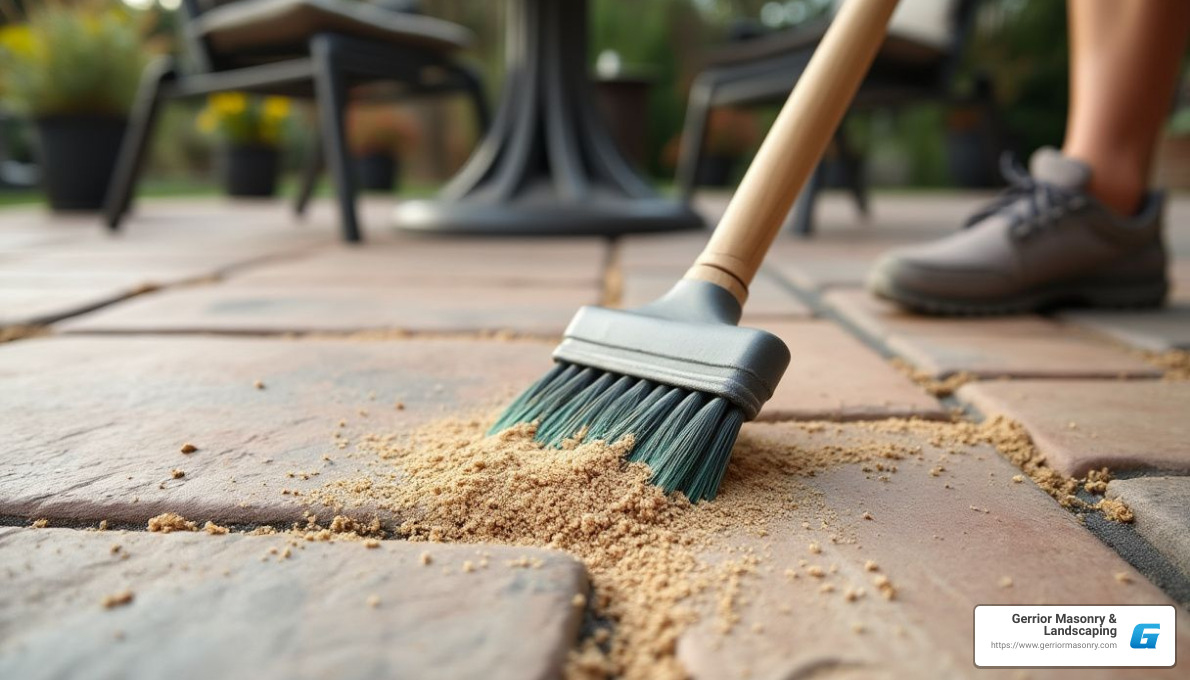
- Polymeric Sand: Finally, fill the joints with polymeric sand. Sweep the sand into the gaps between the pavers, then mist with water to activate the binding agents. This locks the pavers in place and prevents weeds from growing.
By following these steps, you’ll create a paver patio that not only looks great but also stands the test of time.
Now, let’s move on to adding those finishing touches that will make your patio truly shine.
Finishing Touches to Improve Your Paver Patio
Adding a Fire Pit to Your Paver Patio
Once your paver patio is laid, it’s time to add those personal touches that make it a cozy and inviting space. One popular addition is a fire pit, perfect for extending the use of your patio into cooler evenings.
Fire-Resistant Pavers
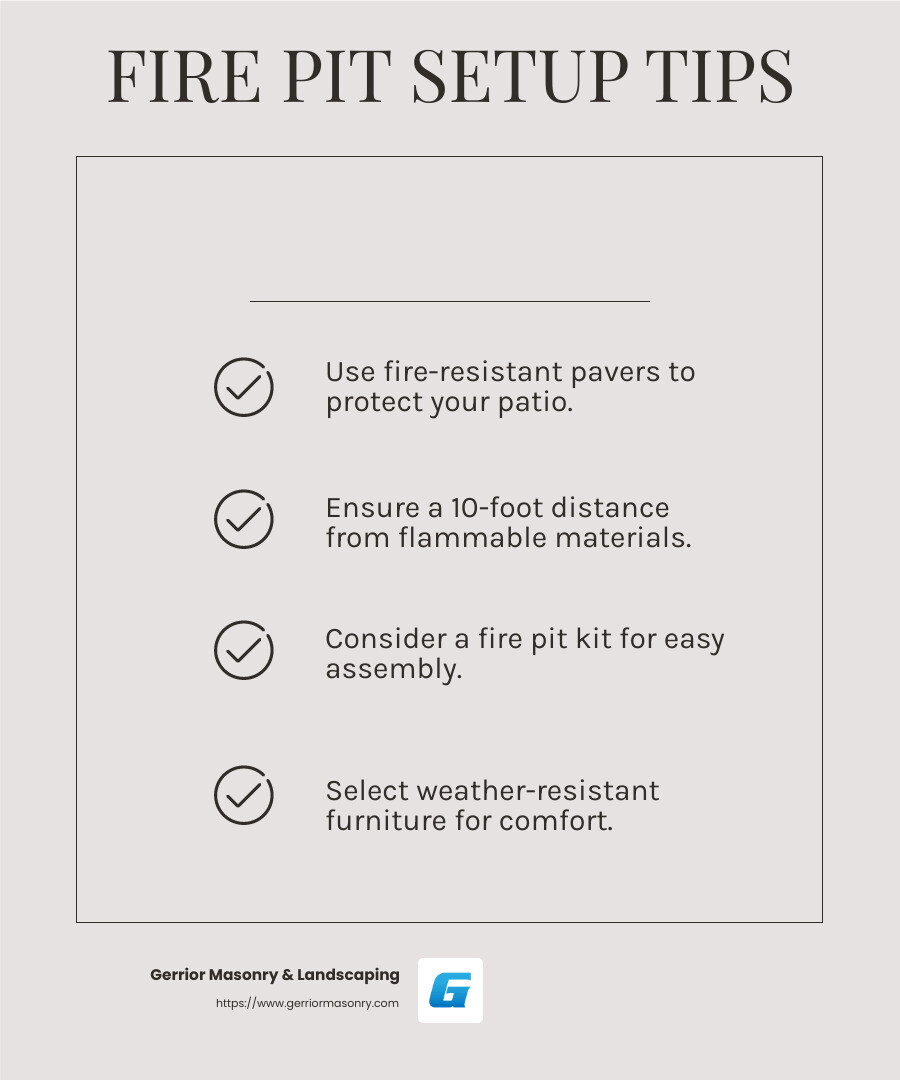
When planning a fire pit, safety is key. Ensure the pavers under and around your fire pit are fire-resistant. This not only protects your patio but also ensures a safe environment for gatherings. Fire-resistant pavers are designed to withstand high temperatures and prevent damage to your patio surface.
Safe Distance
Position your fire pit a safe distance from your home, outdoor furniture, and any nearby plants or trees. This reduces the risk of accidental fires and makes your patio a safer place. As a rule of thumb, maintain at least a 10-foot distance from any structure or flammable materials.
Fire Pit Kits
For a straightforward installation, consider using a fire pit kit. These kits come with everything you need, including fire-resistant blocks and a metal insert, and they are designed for easy assembly. They also offer various styles and colors to match your patio’s design.
Outdoor Furniture
Select weather-resistant furniture to create a comfortable seating area around your fire pit. This improves your patio’s functionality and makes it a perfect spot for relaxation or entertaining guests. Choose materials like teak, aluminum, or resin wicker for durability.
Garden Beds and Mulch
Add garden beds around your patio to introduce color and life. Use mulch to separate these beds from your lawn, which helps retain moisture and suppress weeds. This simple addition can transform the look of your patio, making it more vibrant and inviting.
Outdoor Lighting
Incorporate outdoor lighting to extend the usability of your patio into the night. Consider string lights for a cozy ambiance, or path lights for safety. Proper lighting can highlight your patio’s features and create a welcoming atmosphere.
Garden Décor
Improve your patio with garden décor such as bird feeders, wind chimes, or fountains. These elements add personality and can attract wildlife, making your outdoor space more lively and engaging.
By adding these elements, you not only improve the aesthetics of your paver patio but also increase its functionality, making it a central hub for outdoor activities.
Frequently Asked Questions about Paver Patios
Is it cheaper to lay concrete or pavers?
When deciding between concrete and pavers patios, cost is a big factor. Initially, pouring concrete might seem cheaper because of lower material costs and simpler installation. However, pavers offer long-term benefits that can offset the initial expense. They are more durable, easier to maintain, and can boost property value due to their aesthetic appeal. Concrete, while cost-effective upfront, can crack and require costly repairs over time. So, if you’re thinking about longevity and value, pavers might be the smarter investment.
What do you put under pavers?
The foundation under your paver patio is crucial for its stability and durability. Start with a 6-inch layer of gravel paver base. This provides a solid foundation and aids in drainage. On top of the gravel, add a 1-inch layer of sand. This sand layer helps to level the pavers and allows for slight adjustments during installation. Some people opt for interlocking base panels instead of gravel. These are easier to install and require less digging. Whichever method you choose, compact each layer thoroughly to prevent shifting and settling.
What is the best paver to use for a patio?
Choosing the best paver for your patio depends on your style and budget. Concrete pavers are versatile and come in many shapes and colors, making them a popular choice. Brick pavers offer a classic look and are very durable. Natural stone pavers provide a unique and upscale appearance but can be more expensive. Consider the overall design of your outdoor space and how your choice will fit in. For ease of installation and a unique look, stamped pavers that mimic stone can be a great option, as they require less cutting and fitting.
Conclusion
Designing and installing a paver patio is not just about enhancing the beauty of your outdoor space; it’s about ensuring durability and ease of maintenance for years to come. With over 30 years of experience, we at Gerrior Masonry & Landscaping understand the importance of selecting the right materials and techniques for lasting results.
Durability is key when it comes to outdoor patios. Unlike poured concrete, which can crack under pressure and weather changes, pavers offer a flexible and resilient solution. The interlocking design of pavers allows for natural expansion and contraction, reducing the risk of unsightly cracks. This means your patio will maintain its beauty and functionality through the seasons.
Maintenance is another crucial factor. Paver patios require minimal upkeep compared to other materials. Regular sweeping and occasional power washing can keep your patio looking new. Additionally, if a paver gets damaged, it’s easy to replace just that piece without disturbing the rest of the patio. This makes pavers an economical choice in the long run.
At Gerrior Masonry & Landscaping, we prioritize your satisfaction and the longevity of your outdoor space. Our team is dedicated to providing high-quality service and expert guidance throughout your patio project. From choosing the perfect paver to ensuring a flawless installation, we’re here to help you every step of the way.
Ready to transform your outdoor area into a stunning and durable retreat? Explore our patio contractor services and let us help you create a space you’ll love for years to come.
