
Residential Drainage Systems: Top 5 Expert Solutions
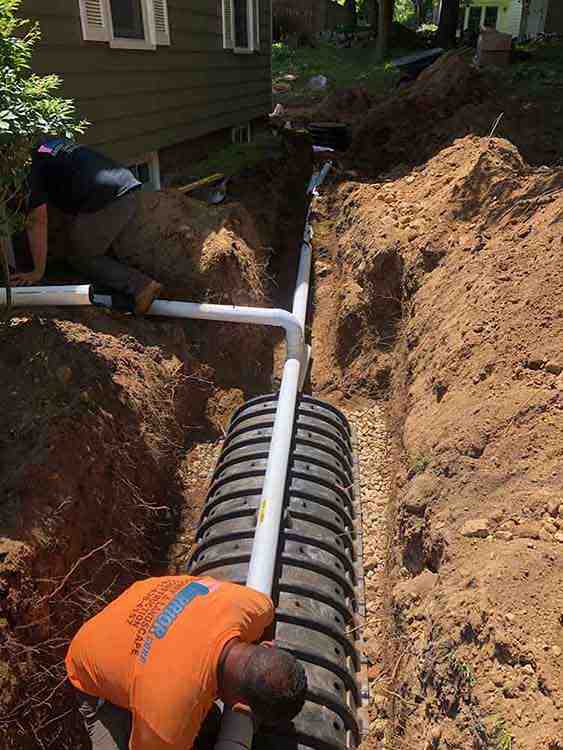
Residential drainage systems are vital for protecting your home from water damage and managing excess water effectively. Whether you’re dealing with rainwater runoff or trying to prevent basement flooding, choosing the right drainage system can make a big difference. Here’s a quick overview:
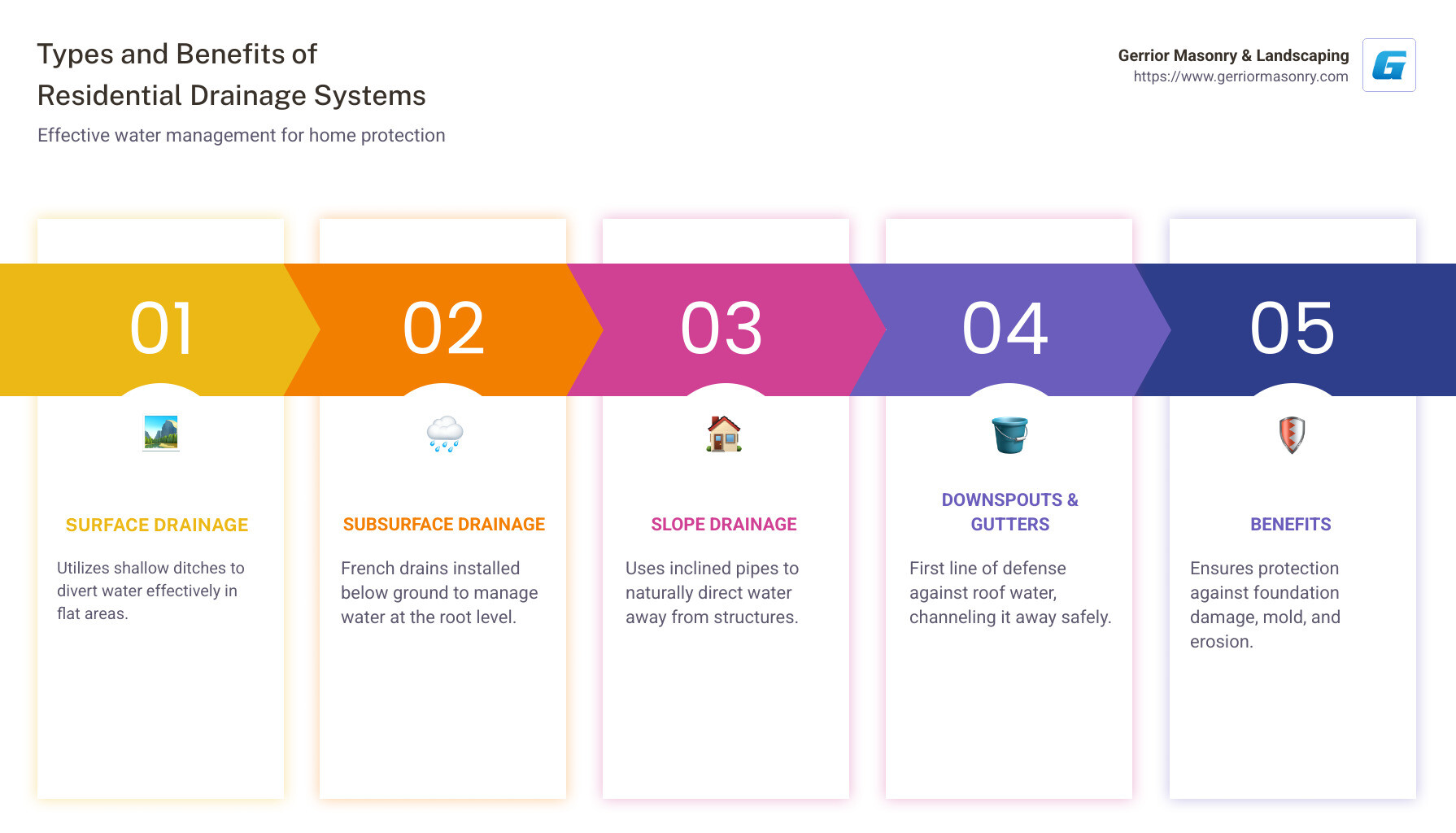
- Surface Drainage: Ideal for flat areas, it uses shallow ditches to divert water.
- Subsurface Drainage: Known as French drains, these are installed below ground to tackle water at the root level.
- Slope Drainage: Uses inclined pipes to naturally direct water away from your home.
- Downspouts and Gutters: First line of defense against roof water, channeling it safely away.
Why is this important?
A well-designed drainage system prevents costly problems like foundation damage, mold, and erosion. It ensures that your property remains safe, healthy, and functional, enhancing both its aesthetic value and usability.
As Joe Gerrior, owner of Gerrior Masonry & Landscaping with over 34 years of experience, I’ve dedicated much of my career to understanding and perfecting residential drainage systems. My team’s commitment to excellence means we tailor solutions to meet your specific needs and safeguard your home effectively.
Essential residential drainage systems terms:
– basement foundation drain
– drainage around house foundation
– drain on side of house
Understanding Residential Drainage Systems
When it comes to protecting your home from water damage, understanding the basics of residential drainage systems is key. These systems are designed to manage excess water and prevent issues like flooding, erosion, and mold.
Surface Drains
Surface drainage systems are your first line of defense against water pooling on flat surfaces. They use shallow ditches or channels, often called trench drains or channel drains, to guide excess water away from your property. Imagine your yard as a mini river system, where these drains act like streams directing water to a larger body, such as a municipal drain.
- Aesthetic Options: Surface drains can be designed to blend with your landscape, using materials like decorative grates. This ensures functionality without sacrificing curb appeal.
Subsurface Drains
Known as French drains, subsurface drainage systems tackle water at the root level. They consist of perforated pipes buried underground, surrounded by gravel. This setup allows water to seep into the pipes and be redirected away from your home.
- Versatility: French drains are incredibly versatile and can be used in various settings, from gardens to basements. They’re particularly useful in areas with heavy clay soil that doesn’t drain well.
Downspout Systems
Downspouts and gutters are crucial in managing roof water. Gutters collect rainwater and channel it to downspouts, which then direct it safely away from your home’s foundation. This system prevents water from pooling around your house, reducing the risk of basement flooding.
- Pro Tip: Ensure your downspouts extend at least five feet away from your foundation to prevent water damage.
Sump Pumps
For homes with basements, sump pumps are a critical component of a drainage system. These pumps are installed in sump pits, which collect water that seeps into your basement. When the water level rises, the pump activates, removing water and directing it away from your home.
- Peace of Mind: A well-maintained sump pump acts as an insurance policy against basement flooding, especially in areas prone to heavy rainfall.
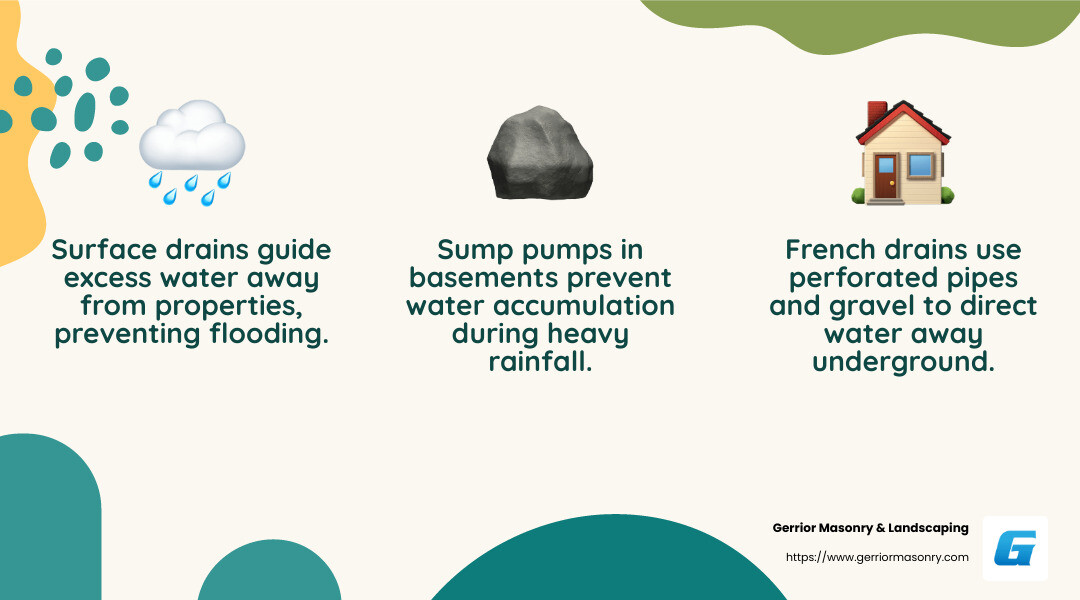
Understanding these components is essential for maintaining a dry, safe, and healthy home environment. The right combination of drainage systems can protect your property from water-related issues, ensuring its longevity and your peace of mind.
Types of Residential Drainage Systems
When it comes to managing water on your property, choosing the right residential drainage systems is crucial. Each system has unique features that cater to different needs and environments. Let’s explore some of the most effective types.
Surface Drainage Systems
Surface drainage systems, including channel drains and trench drains, are designed to remove water from flat surfaces like driveways and patios.
- Channel Drains: These are narrow, linear drains that efficiently collect and move water. They are often used in driveways or pool decks where water needs to be quickly redirected.
- Trench Drains: Similar in purpose to channel drains but typically wider and deeper, trench drains can handle larger volumes of water. They’re perfect for areas prone to heavy rainfall.
- Aesthetic Options: Both channel and trench drains can be fitted with decorative grates. This means you can maintain your property’s aesthetic appeal while ensuring effective water management.
French Drains
French drains offer a versatile solution for areas with poor drainage. These systems consist of a trench filled with gravel and a perforated pipe.
- Versatility: French drains can be adapted to various landscapes, from gardens to large commercial areas. They are especially useful in regions with heavy clay soil that retains water.
- Water Management: By capturing and redirecting water underground, French drains prevent surface erosion and protect your home’s foundation.
- Low Maintenance: Once installed, these systems require minimal upkeep, making them a long-lasting solution.
Dry Wells
Dry wells are underground structures designed to manage excess water by allowing it to seep into the ground slowly.
- Flood Control: These systems are highly effective in areas prone to heavy rainfall. By providing a controlled outlet for water, dry wells help prevent surface flooding.
- Environmental Impact: Dry wells promote groundwater recharge, benefiting local aquifers and supporting the natural water cycle.
- Space Efficiency: Installed below ground, dry wells free up surface space for other uses, like landscaping or recreational areas.
Bioswales
Bioswales are shallow, vegetated channels that manage stormwater runoff.
- Natural Appearance: These systems blend seamlessly with the natural landscape, often featuring native plants that improve the beauty of your yard.
- Erosion Control: By slowing down water flow, bioswales reduce erosion and allow sediment to settle, protecting your soil.
- Biodiversity: The plants in bioswales attract local wildlife, promoting a healthy ecosystem.
Catch Basins
Catch basins are essential for collecting and managing rainwater runoff.
- Water Collection: These underground structures efficiently capture surface water, preventing it from pooling in low-lying areas.
- Flooding Prevention: By redirecting water into drainage pipes, catch basins help protect your property from flooding.
- Customizable Design: Catch basins come in various sizes and materials, allowing them to be customized to your specific needs and landscape.
Choosing the right drainage system involves understanding your property’s unique requirements and the local environment. Each system offers distinct benefits, from aesthetic appeal to environmental sustainability. By selecting the appropriate system, you can protect your home from water damage and maintain a beautiful landscape.
Benefits of Proper Drainage
Proper drainage is not just about keeping water away from your home. It’s about safeguarding your property’s foundation, preventing ground erosion, and ensuring the health and safety of your household.
Foundation Protection
Water pooling around your foundation can lead to severe structural damage. Residential drainage systems like surface drains and French drains help divert water away from the base of your home. This prevents moisture from seeping into your foundation, which can cause cracks and weaken the structure over time.
A well-installed drainage system is an investment in your home’s longevity. It keeps your foundation dry and stable, reducing the need for costly repairs down the line.
Ground Erosion Prevention
Erosion is a silent but relentless force that can reshape your landscape and undermine your property’s integrity. When water flows unchecked, it can wash away topsoil, leaving unsightly gullies and bare patches. Bioswales and catch basins are effective in controlling surface runoff, spreading water out and allowing sediment to settle.
By managing erosion, these systems maintain your yard’s beauty and usability. They also prevent soil from being washed away, which can lead to more significant landscaping issues.
Health and Safety
Standing water is more than just an inconvenience—it’s a health hazard. Pools of water can become breeding grounds for mosquitoes and other pests, posing health risks to your family. Efficient drainage systems like dry wells and catch basins ensure water is quickly and effectively removed from your property.
Moreover, proper drainage reduces the risk of slips and falls by preventing ice patches and slippery surfaces. It also protects your home from mold and mildew, which thrive in damp environments and can cause respiratory issues.
In summary, investing in a robust drainage system is crucial for protecting your home’s foundation, preserving your landscape, and ensuring a safe and healthy environment for your family. By understanding and implementing the right drainage solutions, you can enjoy peace of mind knowing your property is well-protected against water-related issues.
Frequently Asked Questions about Residential Drainage Systems
What is the most effective drainage system?
When it comes to effectiveness, French drains and surface drains often top the list. French drains are highly versatile and efficient in diverting water away from areas where it can cause damage. They consist of a perforated pipe buried in a trench filled with gravel, allowing water to seep through and be carried away from your home. This setup is excellent for preventing soil erosion and protecting your foundation.
Surface drains, like trench drains, are ideal for areas prone to heavy rainfall. They collect water at the ground level and channel it away quickly. These systems are particularly useful in high-traffic areas or where aesthetics matter, as they can be integrated seamlessly into your landscape.
How much does a drainage system cost around a house?
The cost of installing a residential drainage system can vary widely based on several factors:
- Type of system: French drains are generally more expensive than surface drains due to the complexity of installation.
- Property size and slope: Larger properties or those with challenging slopes may require more extensive work, increasing costs.
- Material and labor: High-quality materials and skilled labor come at a premium, but they ensure durability and effectiveness.
On average, homeowners might spend anywhere from $1,000 to $5,000 for a comprehensive drainage system, but this can vary depending on the specifics of your property and needs.
What is best for drainage in a yard?
For yard drainage, a combination of yard drains and dry wells can be highly effective. Yard drains, often referred to as catch basins, collect surface water and direct it away from problem areas. They are customizable and can be placed strategically to manage water flow efficiently.
Dry wells offer an environmentally friendly solution by allowing water to percolate into the ground, replenishing local aquifers. They are particularly useful in areas with heavy rainfall or poor drainage, as they manage large volumes of water without taking up much space.
Choosing the best system for your yard depends on your specific conditions, such as soil type, rainfall patterns, and landscaping goals. Consulting with a professional, like those at Gerrior Masonry & Landscaping, can help tailor a solution that meets your unique needs.
Conclusion
At Gerrior Masonry & Landscaping, we know that a well-designed residential drainage system is crucial to protecting your property. Whether you’re dealing with heavy rainfall or just looking to prevent water damage, our expert team is here to help.
With over 30 years of experience, we specialize in creating custom drainage solutions that blend seamlessly with your landscape. Our skilled professionals oversee every project, ensuring high-quality results that not only solve your drainage issues but also improve the beauty and functionality of your outdoor space.
From French drains to dry wells and beyond, we offer a wide range of options custom to your specific needs. We understand that every property is unique, and our personalized approach ensures that you get the best solution for your home.
Don’t let water issues compromise your property’s integrity. Contact Gerrior Masonry & Landscaping today to explore our expert services and find how we can help protect and improve your home.
