
Retaining Wall Builders Near Me: Top 5 Best Choices 2024
Retaining wall builders near me are essential for homeowners looking to improve their property’s landscape while preventing soil erosion. Whether you’re dealing with a slight hill or a steep slope, retaining walls provide a practical and aesthetically pleasing solution. Here’s what to focus on to find the right local experts:
- Expertise: Look for builders with experience in constructing different types of retaining walls like gravity or reinforced walls.
- Reputation: Check customer reviews and testimonials to ensure satisfaction and quality.
- Compliance: Ensure they follow local building codes and standards, like the International Building Code (IBC).
- Design Capability: Choose builders who seamlessly blend functionality with aesthetics in their designs.
- Free Consultation: Opt for teams that provide initial site visits and estimates at no cost.
Incorporating retaining walls into your landscape design not only adds beauty but also crucially helps in managing soil erosion. These walls act as sturdy barriers against the natural downward movement of soil and water, providing stability to your property.
My name is Joe Gerrior, and I’ve spent over 34 years helping Massachusetts homeowners improve their outdoor spaces through reliable and high-quality retaining wall solutions. Retaining wall builders near me have been a cornerstone of my experience, ensuring functionality and craftsmanship go hand in hand for lasting results.
Types of Retaining Walls
Retaining walls come in various types, each designed to handle different landscape needs and soil pressures. Here’s a look at the most common types:
Gravity Walls
Gravity walls rely on their own weight to hold back soil. They’re often made from heavy materials like stone or concrete blocks. These walls are suitable for small-scale projects and can be built up to a few feet tall. Their straightforward design makes them a popular choice for homeowners looking for a simple solution.
Cantilever Walls
Cantilever walls feature a unique T-shaped design. This allows them to support more weight with less material. They are often used in larger projects where significant soil pressure is present. While these walls are cost-effective, they do require professional engineering and construction expertise to ensure stability.
Reinforced Soil Walls
Reinforced soil walls use steel bars or mesh to strengthen the structure. This type of wall is ideal for areas with high soil pressure or where taller walls are needed. The reinforcement provides extra support, making these walls robust and durable. They are a great choice for projects requiring a strong and stable solution.
Embedded Walls
Embedded walls, such as sheet piling walls, are constructed by driving materials like metal, wood, or vinyl sheets into the ground. These are best suited for areas with limited space and soft soil conditions. They provide a practical solution when space is tight but soil retention is still necessary.
Understanding the different types of retaining walls can help you make an informed decision about which is best for your property. Each type has its own strengths and is designed to handle specific challenges, ensuring your landscape remains both beautiful and secure.
Materials for Retaining Walls
When it comes to building sturdy and attractive retaining walls, choosing the right materials is crucial. Each material offers unique benefits and can impact the wall’s durability, appearance, and cost. Let’s explore the most common options: concrete, stone, wood, and brick.
Concrete
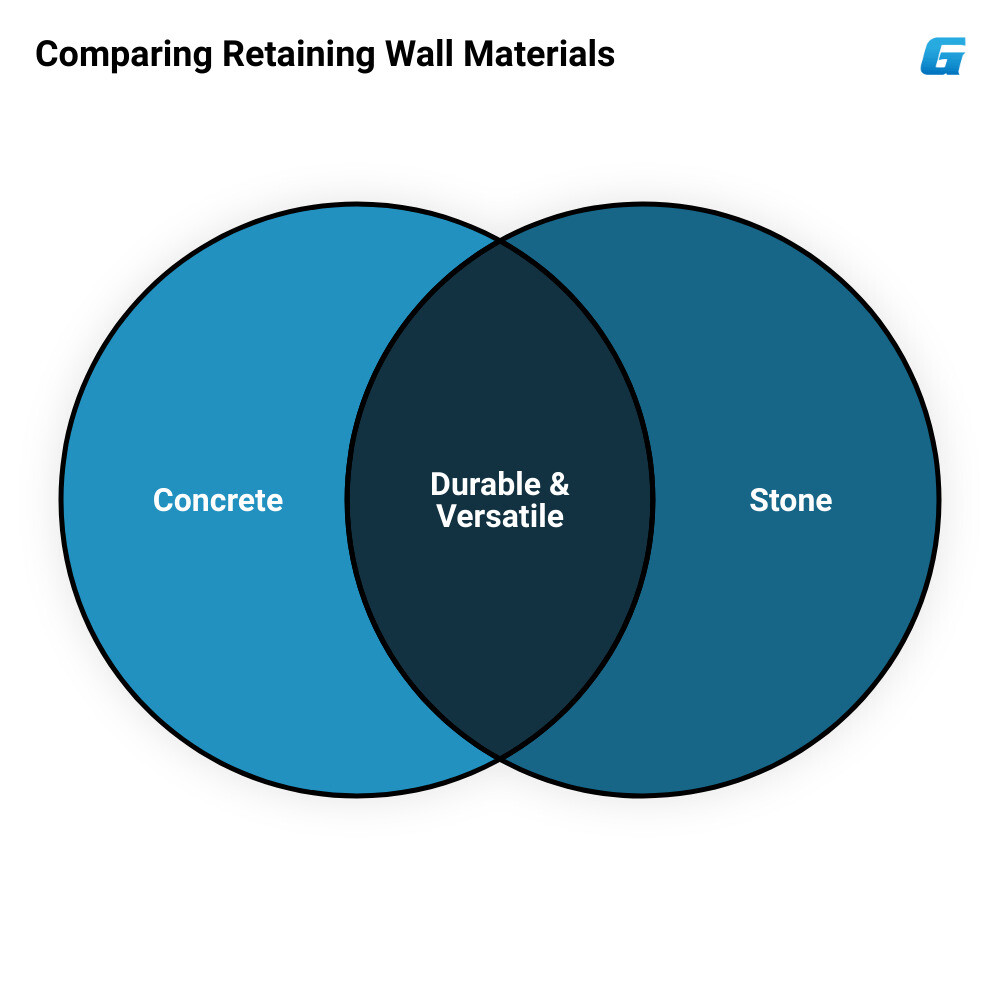
Concrete is a popular choice for retaining walls due to its strength and versatility. It can be molded into various shapes and sizes, making it suitable for both gravity and reinforced soil walls. Stamped concrete can also mimic the appearance of stone or brick, offering a stylish look at a lower cost. However, it’s important to note that concrete can crack over time, especially in extreme weather conditions.
Stone
Stone provides a natural and timeless look, perfect for blending into the landscape. It’s commonly used in gravity walls, where its weight helps hold back soil. Stone walls are highly durable and require minimal maintenance, making them a long-lasting option. The main downside is the higher cost, both in materials and labor, as stone walls can be labor-intensive to construct.
Wood
Wooden retaining walls offer a rustic charm and are often used for smaller projects. They are typically made from pressure-treated pine or other durable woods to withstand moisture and insect damage. While wood is usually less expensive than stone or concrete, it may require more maintenance over time, such as sealing or replacing damaged sections.
Brick
Brick retaining walls are known for their classic appearance and durability. They are often used in residential settings where aesthetics are a priority. Like stone, brick provides excellent strength and stability. However, the cost of brick can be higher than other materials, and professional installation is recommended to ensure structural integrity.
Choosing the right material for your retaining wall depends on your budget, design preferences, and the specific requirements of your landscape. Each material has its own strengths, so consider what fits best with your overall project goals.
Cost Considerations
Understanding the costs involved in building a retaining wall is crucial for effective budgeting. Let’s explore the key factors: cost estimation, material costs, and installation costs.
Cost Estimation
The first step in planning a retaining wall project is to estimate the total cost. This involves considering the size of the wall, the materials chosen, and the complexity of the design. A basic retaining wall, like a simple gravity wall, will generally cost less than a reinforced wall due to the materials and labor involved.
Tip: To get an accurate estimate, consider reaching out to retaining wall builders near me for a free consultation. Local experts can provide insights custom to your specific landscape needs.
Material Costs
Different materials come with varying price tags. Here’s a quick rundown:
- Concrete: Generally cost-effective, especially when opting for basic poured concrete. However, adding decorative elements like stamping can increase the price.
- Stone: Offers a natural look but is often more expensive due to the material and labor required for installation.
- Wood: Typically the least expensive option upfront, but keep in mind the potential for higher maintenance costs over time.
- Brick: Provides a classic aesthetic but can be pricier than concrete and wood due to the cost of bricks and the skilled labor needed for installation.
Installation Costs
Labor is a significant part of the budget. The complexity of the wall design, the slope of the land, and the need for special equipment can all impact installation costs. For example, a wall that requires a drainage system or reinforcement will likely cost more than a simple structure.
Pro Tip: Hiring experienced and licensed professionals can help ensure the wall is built to last, potentially saving money on repairs down the line. Check for customer reviews and project portfolios to choose the right team.
By considering these cost factors, you can plan your retaining wall project more effectively and avoid unexpected expenses. This way, you can achieve a durable and aesthetically pleasing wall that fits your budget.
How to Choose the Right Retaining Wall Builders Near Me
Selecting the right team to build your retaining wall is pivotal for a successful project. Here’s what to look for:
Experience
Start by checking the experience level of the retaining wall builders near me. Builders with years of experience are likely to have encountered a variety of challenges and know how to handle them efficiently. Experienced contractors can offer valuable insights and suggestions that can improve the durability and aesthetic of your retaining wall.
Licensing
Always verify that your chosen builders are properly licensed. A valid license ensures that the contractors meet local building codes and standards. This is crucial for the safety and longevity of your retaining wall. Licensed builders are also more likely to be insured, which protects you from potential liabilities during the construction process.
Project Portfolio
A strong project portfolio showcases the builder’s capability and style. Ask to see examples of previous work to ensure their design aligns with your vision. A diverse portfolio indicates a builder who can handle different types of retaining walls, whether they are gravity walls, cantilever walls, or reinforced soil walls.
Customer Reviews
Customer reviews provide honest feedback about the builder’s reliability and quality of work. Look for reviews that mention the builder’s attention to detail, timeliness, and communication. Positive testimonials can give you confidence in your choice, while negative reviews can be a red flag.
Tip: Don’t just rely on online reviews. Ask the builder for references you can contact directly for more detailed feedback.
By focusing on these key areas, you can find the right retaining wall builder who will deliver quality results and a wall that stands the test of time.
Frequently Asked Questions about Retaining Walls
What is the cheapest retaining wall to build?
When it comes to building a retaining wall, cost is often a major concern. Poured concrete is a popular choice due to its affordability and durability. It’s generally cheaper than other materials like stone or brick. Pressure-treated pine is another cost-effective option, especially for smaller walls or garden beds. It’s less expensive than concrete but requires regular maintenance to prevent rot.
For a more natural look, granite can be used. Although it’s more costly upfront, granite is incredibly durable and requires little maintenance over time, which can save money in the long run.
How to calculate retaining wall cost?
Calculating the cost of a retaining wall involves several factors:
- Square footage: Measure the length and height of the wall to determine the total square footage. This will help in estimating the amount of material needed.
- Length and width: The dimensions of the wall will directly affect the cost. Longer and taller walls require more materials and labor.
- Cost per square foot: This varies based on the materials used. For example, concrete might cost less per square foot than natural stone.
To get an accurate estimate, multiply the total square footage by the cost per square foot of your chosen material. Don’t forget to include labor costs and any additional features like drainage systems or decorative elements.
Are retaining walls expensive to build?
The average cost of building a retaining wall can vary widely depending on several project factors. Materials, labor, and design complexity all play a role. For instance, a simple concrete wall will generally be less expensive than a complex stone wall with intricate designs.
Factors like soil conditions, wall height, and accessibility can also impact costs. Steeper slopes may require more reinforcement, leading to higher expenses.
In general, while retaining walls can be a significant investment, they add value by preventing soil erosion, improving drainage, and enhancing the landscape’s aesthetics. Considering these benefits, many homeowners find them worth the cost.
Conclusion
Choosing the right team for your retaining wall project is crucial for ensuring quality results and long-lasting structures. At Gerrior Masonry & Landscaping, we pride ourselves on delivering exceptional masonry and hardscaping services. With over 30 years of experience, our skilled team, led by dedicated owner oversight, ensures that every project meets our high standards.
Our expertise spans various services, from patio installations to foundation repairs. This extensive experience allows us to tackle complex retaining wall projects with confidence and precision. Our focus is always on delivering durable and beautiful results that improve your property’s value and aesthetics.
Whether you’re dealing with a sloped yard or looking to add a striking landscape feature, our team is equipped to handle it all. We understand that each project is unique, and we work closely with you to tailor solutions that fit your needs and budget.
For homeowners looking for reliable retaining wall builders near me, we offer a combination of craftsmanship, attention to detail, and customer satisfaction. Our commitment to quality ensures that your retaining wall not only serves its functional purpose but also adds charm to your outdoor space.
To learn more about how we can transform your landscape with our expert retaining wall services, visit our Landscape Design & Installation page. Let us help you create a stunning and functional outdoor area that you’ll enjoy for years to come.
