
Retaining Wall Drain Pipe Installation: 7 Powerful Tips 2025
Why Drainage Is Essential for Retaining Wall Success
Retaining wall drain pipe installation is crucial for preventing wall failure and ensuring the long-term stability of your landscape. Without proper drainage, water pressure can build up behind your wall and cause catastrophic damage.
Quick Guide to Retaining Wall Drainage Installation:
- When it’s needed: Required for walls 4+ feet tall or in clay soils
- Key components: 4-inch perforated pipe, drainage stone, filter fabric
- Installation depth: Place at the lowest point behind the wall base
- Backfill material: 12-24 inches of clean 3/4″ angular gravel
- Pipe slope: Minimum 2% slope (approximately 1/4″ per foot)
- Outlet spacing: Every 30-50 feet along the wall
Water is the leading cause of retaining wall failure. When water saturates the soil behind a wall, it creates immense pressure—up to 60 pounds per cubic foot—pushing against the structure. This hydrostatic pressure can cause walls to crack, bow, or completely collapse, especially during freeze-thaw cycles or after heavy rainfall.
Most homeowners don’t realize that a properly installed drainage system can extend a retaining wall’s lifespan by decades. The drainage pipe serves as the foundation of this system, creating a path for water to follow rather than allowing it to pool behind your wall.
I’m Joe Gerrior, owner of Gerrior Masonry & Landscape Construction Corp., and I’ve been designing and installing effective retaining wall drainage systems for over 34 years, making retaining wall drain pipe installation a cornerstone of our reputation for long-lasting landscape structures throughout Massachusetts.
Why Proper Drainage Makes or Breaks a Retaining Wall
Have you ever noticed a retaining wall that looks like it’s taking a bow? That forward lean at the top isn’t a design feature—it’s the telltale sign of drainage problems. After three decades of building and repairing retaining walls throughout Massachusetts, I’ve seen how proper drainage can be the difference between a wall that lasts generations and one that fails within years.
The Destructive Power of Water Pressure
Water might seem harmless, but when it saturates the soil behind your retaining wall, it becomes a powerful force of nature. This hydrostatic pressure builds up silently until it’s strong enough to push against even substantial walls.
Retaining wall drain pipe installation becomes essential when you consider that wet soil can exert up to twice the pressure of dry soil. That’s like having an invisible bulldozer constantly pushing against your wall—24 hours a day, 365 days a year.
Freeze-Thaw Cycles: The Silent Wall Killer
Here in Massachusetts, we deal with something that Florida homeowners never worry about—freeze-thaw cycles. When trapped water behind your wall freezes, it expands by about 9%, creating additional pressure. Then it thaws, only to freeze again days later.
This winter dance repeats dozens of times each season, gradually shifting your wall forward bit by bit. It’s like having thousands of tiny hands pushing on your wall each winter—not enough to knock it over immediately, but certainly enough to cause problems over time.
Soil Type Matters
The ground behind your wall plays a huge role in how much drainage you’ll need:
Clay soils act like a sponge, holding water and becoming slippery and weak when wet. If you’ve got clay, you’ll need serious drainage solutions.
Sandy soils drain quickly but can wash away if water flow isn’t managed properly, potentially creating voids behind your wall.
Loam soils offer middle-ground drainage but still benefit tremendously from proper drainage systems.
Special Considerations for Tiered Walls
Tiered retaining walls are beautiful but face unique challenges. Each tier collects water that cascades down to the next level. Without proper drainage between tiers, lower walls get hit with water from above and behind—a double whammy that often leads to premature failure.
For these stepped designs, we always recommend horizontal separation of at least twice the height of the lower wall, with each tier having its own complete drainage system.
Surface Runoff Management
It’s not just groundwater you need to worry about. Surface runoff from rain, lawn sprinklers, or downspouts can quickly saturate the soil behind your wall. A comprehensive drainage system needs to handle both what comes from below and what flows from above.
As noted in the Tips for Adding Drainage To Your Retaining Wall article from Family Handyman, “Installation of a retaining wall’s drainage features is not the place to cut corners or scrimp.” After repairing hundreds of failed walls throughout my career, I couldn’t agree more—proper retaining wall drain pipe installation isn’t just a good idea, it’s essential insurance for the life of your investment.
Core Components of a Drainage System
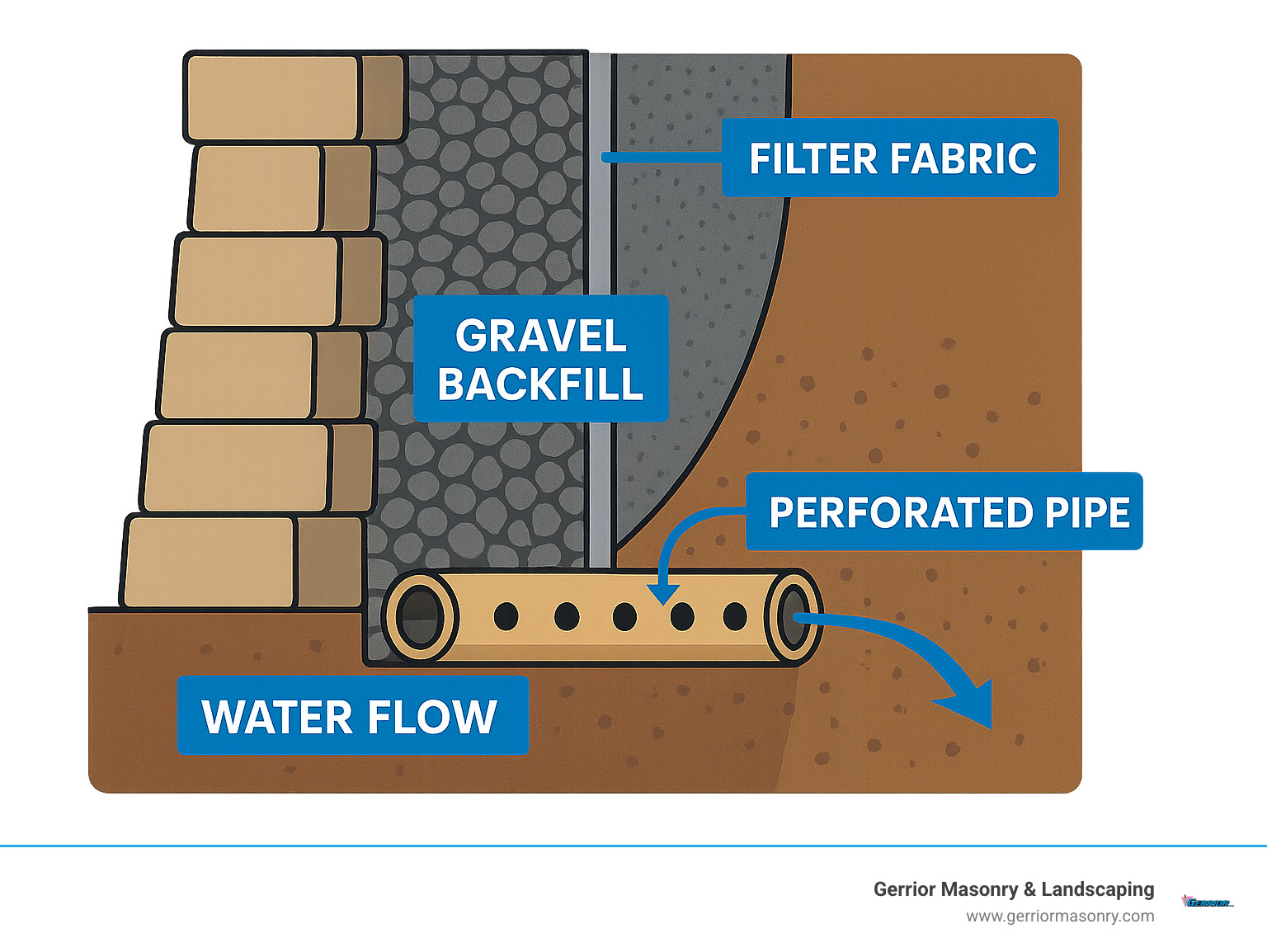
A properly designed retaining wall drainage system consists of several key components working together to manage water effectively. Understanding each element helps ensure your retaining wall drain pipe installation provides maximum protection against water damage.
Drainage Stone (Aggregate)
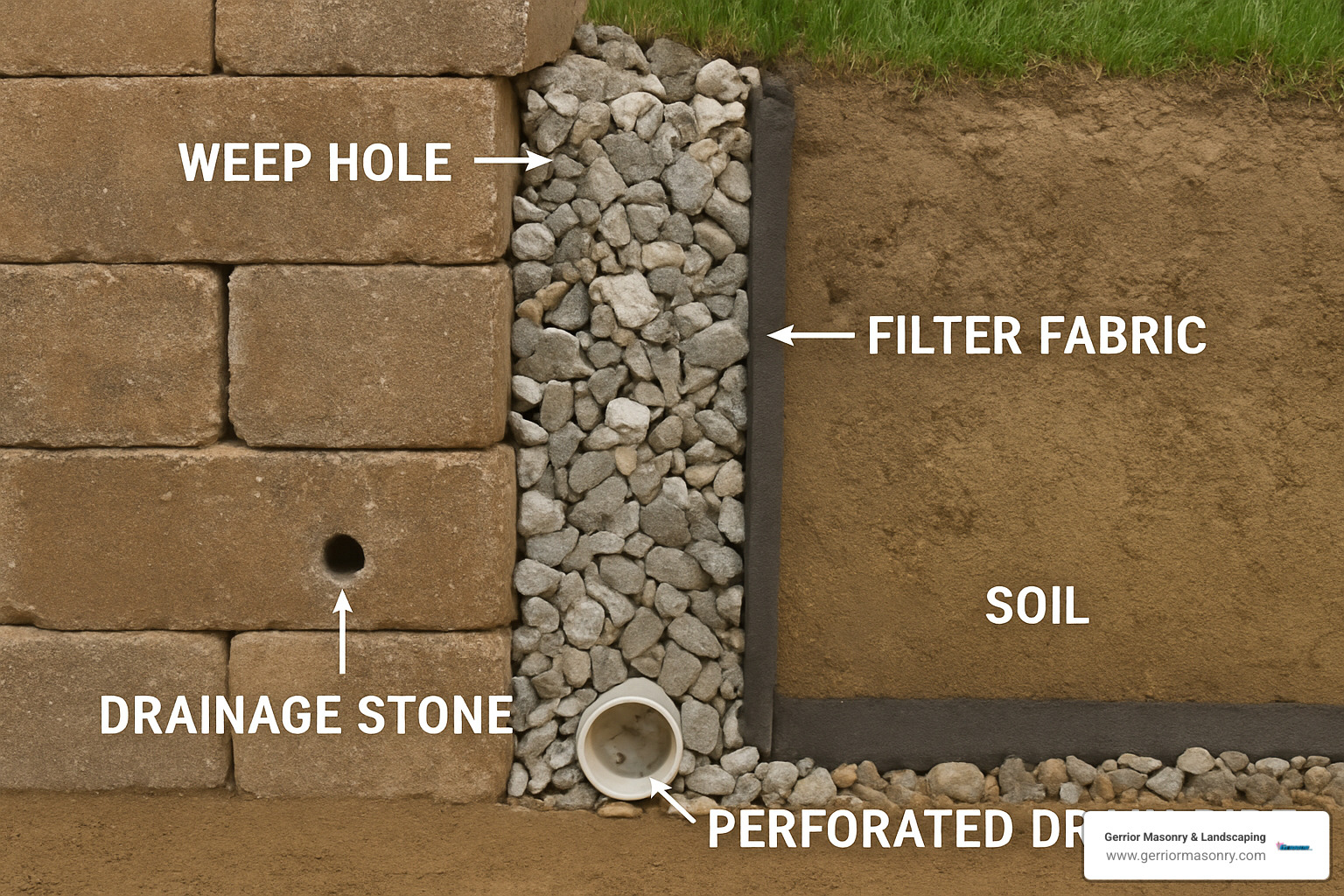
The unsung hero of any drainage system is the drainage stone or aggregate. After 34 years of building retaining walls, I’ve found that clean, crushed angular stone (typically 3/4″ or #57 stone) works best. We recommend a minimum coverage of 12 inches behind the wall, though for optimal drainage, going up to 24 inches provides excellent insurance against water problems.
This stone should extend from the base of your wall to within about 6 inches of the top. The angular shape is critical—unlike rounded stones such as pea gravel, these jagged pieces lock together while still maintaining plenty of void spaces where water can flow freely. Think of it as creating a highway for water to travel downward instead of pushing against your wall.
One common mistake I see in DIY projects is using stone with too many “fines” (small particles). These can wash into the drainage system over time, eventually clogging it completely. Always ask for “clean” stone when purchasing your materials.
Perforated Pipe vs. Solid Pipe
Both pipe types serve distinct purposes in your drainage system, and understanding their differences helps ensure proper installation:
| Pipe Type | Best Used For | Typical Size | Key Features |
|---|---|---|---|
| Perforated | Behind the wall | 4-inch diameter | Slots/holes allow water entry; should have holes all around |
| Solid | Outlet runs | 4-inch diameter | Carries collected water away from wall to daylight or drain |
Here in Massachusetts, where ground movement from freeze-thaw cycles is common, we typically use corrugated flexible pipe with perforations all around. This flexibility allows the pipe to follow curves in your wall design and adapt to seasonal ground movement without cracking or separating at joints.
As explained in our guide on Perforated Drain Pipe Retaining Wall, the perforated section collects the water, while the solid sections safely channel it away from your wall’s foundation.
Filter Fabric (Geotextile)
I like to think of filter fabric as the bouncer at a club—it decides who gets in and who stays out. This non-woven geotextile material allows water to pass through while preventing soil particles from migrating into your drainage system.
For most residential applications, a 4 to 6-ounce fabric works perfectly. Interestingly, heavier isn’t always better, as overly dense fabric can actually restrict water flow. When installing, overlap seams by at least 6 inches and leave a 6-inch overhang at the top that you can fold over the drainage stone before backfilling with soil.
Quality filter fabric like geotextile underlayment fabric is well worth the investment, as it prevents your drainage system from becoming clogged with soil—a common cause of wall failure.
Outlets and Drainage Paths
All that collected water needs somewhere to go! Your drainage system requires properly designed outlets, which typically come in two varieties:
Through-wall outlets punch directly through the face of the wall, while under-wall outlets run beneath the wall footing. Both styles work well when properly installed, though through-wall outlets are easier to access for maintenance.
The key is “daylighting”—bringing the pipe out to an exposed area where water can safely discharge away from the wall. Sometimes, especially in urban settings, we’ll connect these outlets to existing storm drains or other drainage systems.
Weep Holes
Think of weep holes as your drainage system’s backup plan. These openings through the wall itself provide secondary drainage paths if your primary system becomes overwhelmed during heavy rainfall.
For walls 6 feet or taller, we typically install 3-4 inch diameter holes spaced every 3-4 feet. Smaller walls can use 1.5-inch diameter holes spaced about every 8 feet. These simple openings have saved countless walls during extreme weather events, providing immediate pressure relief when needed most.
Modern Solutions: Universal Wall Drain
If you’re concerned about the aesthetics of drainage outlets, newer products like the Universal Wall Drain offer attractive alternatives. These specialized fittings integrate seamlessly with the wall face for a cleaner appearance while still providing effective drainage.
As shown in the srwroducts.com illustration, these modern solutions can dramatically improve the look of your finished wall while maintaining full functionality.
Reinforcement: Geogrid
While not strictly part of the drainage system, geogrid reinforcement works hand-in-hand with good drainage to ensure wall stability. These synthetic mesh materials distribute pressure over a wider area behind the wall, dramatically increasing its load-bearing capacity.
When we install layers of geogrid at specific heights within the backfill, we’re essentially creating a unified mass that resists movement. Proper drainage reduces pressure on this reinforcement system, extending both the geogrid’s effective lifespan and your wall’s longevity.
At Gerrior Masonry & Landscaping, we’ve found that investing in quality materials for each component of your drainage system pays dividends in the longevity of your retaining wall. We’ve seen how cutting corners on drainage can lead to premature wall failure—a costly mistake we help our clients avoid.
Step-by-Step Retaining Wall Drain Pipe Installation
Now let’s walk through the actual process of retaining wall drain pipe installation. Following these steps will help ensure your drainage system functions properly for years to come.
Planning Your Retaining Wall Drain Pipe Installation
Before you grab that shovel, take some time to plan your drainage system properly. I can’t tell you how many emergency calls we’ve received from homeowners who skipped this crucial step!
First things first—call 811 before digging anything. I’ve seen plenty of DIYers accidentally hit gas or electric lines, turning a weekend project into a costly disaster. Trust me, this free service is worth the short wait.
Check your local building codes too. Here in Woburn and surrounding Massachusetts communities, walls over 4 feet typically require permits, but even smaller walls might need approval depending on your town. When in doubt, a quick call to your building department can save headaches later.
Understanding your soil type makes a huge difference. Clay soils are like sponges that hold water, while sandy soils drain quickly but can wash away. Not sure what you’re working with? Grab a handful of damp soil and squeeze it. If it forms a ball that holds together, you’re dealing with clay-heavy soil that will need extra drainage attention.
Planning where water will exit your system is critical. We always identify discharge points that won’t create problems for neighbors or other parts of your property. Water always follows the path of least resistance—so make sure you’re directing it somewhere appropriate!
For walls on challenging terrain, check out our guide on How to Build a Retaining Wall on a Slope for additional considerations.
Placing and Bedding the Pipe
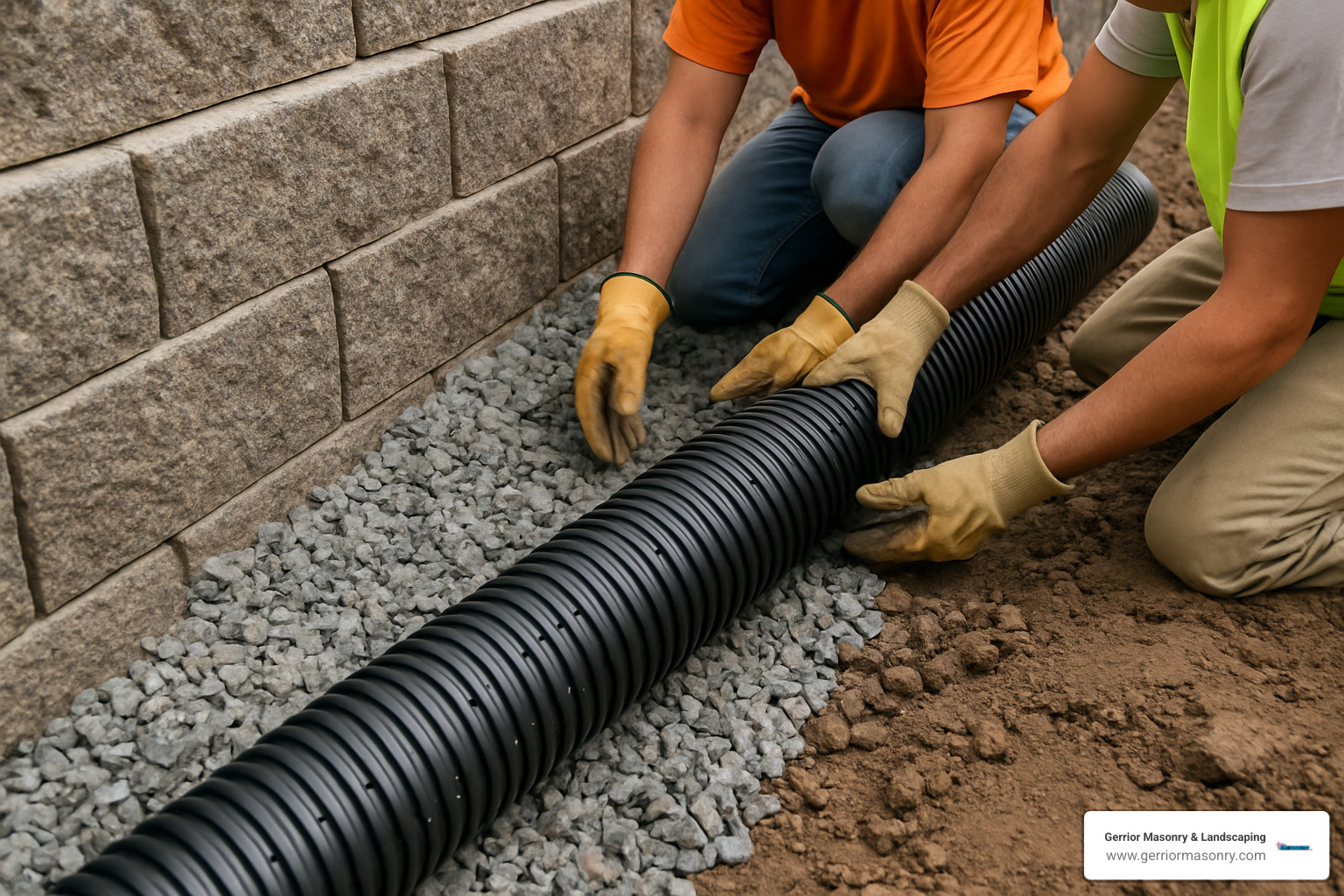
Now for the fun part—getting your hands dirty! Start by digging a trench at the lowest point behind your wall. This is typically right at the base of your first course of blocks or stones.
Create a nice bed for your pipe using 2-3 inches of clean, angular 3/4-inch stone. Think of it as making a comfortable mattress for your drainage pipe to rest on.
Here’s a tip that surprises many homeowners: place your perforated pipe with the holes facing down, not up. I know it seems counterintuitive, but this actually allows water to enter more efficiently from below while preventing the pipe from floating when water flows heavily. It’s a trick we’ve been using for decades with great success.
Maintaining proper slope is absolutely critical. Your pipe needs at least a 2% slope (about 1/4 inch drop per foot) toward the outlet. For a 30-foot section, you’ll need a 7-inch drop from start to finish. A slight slope is all gravity needs to work its magic.
When you reach planned outlet locations, install tee connectors to direct water through or under the wall. These connection points need to be secure and properly aligned to prevent future leaks or blockages.
Some contractors use pipe socks around perforated pipes to prevent clogging. While these can work, we’ve found they sometimes silt up over time. At Gerrior Masonry, we often prefer using filter fabric between the soil and gravel instead, which allows the pipe to remain free-flowing for longer.
Backfilling With Drainage Stone & Filter Fabric
Proper backfilling is where many DIYers cut corners—but this step is essential for long-term performance. Start by installing non-woven geotextile fabric against the native soil. This fabric acts like a coffee filter, allowing water through while keeping soil particles out of your drainage system.
Cover your drain pipe with clean 3/4-inch angular stone (ASTM #57 or similar). I always tell clients to avoid rounded stones like pea gravel or river rock. They might look pretty, but they roll against each other instead of locking together, creating less stable drainage zones.
Backfill in 6-inch layers, compacting each layer before adding the next. This prevents future settlement that could compromise your wall. The drainage stone should extend at least 12 inches behind the wall, though we prefer 24 inches for maximum drainage capacity whenever possible.
Once you’ve reached within 6 inches of the wall top, fold the filter fabric overhang over the drainage stone, creating a complete envelope. This prevents soil from migrating into your drainage system from above. Finish with a layer of topsoil sloped away from the wall to direct surface water away.
For quality materials, we recommend using commercial-grade non-woven filter fabric similar to geotextile underlayment fabric.
Creating and Spacing Outlets & Weep Holes
Water needs a way out of your drainage system, which is where outlets come in. For through-wall outlets, you’ll need to cut blocks or create openings for the pipe to exit through the wall face. Always install rodent screens or decorative grates—I’ve seen entire drainage systems compromised by small animals making homes in unprotected pipes!
Under-wall outlets run beneath the wall footing and are less visible but require careful installation to prevent crushing. Whichever method you choose, maintain proper slope throughout the entire run.
Space your outlets every 30-50 feet along the wall. For clay soils or areas with groundwater issues, err on the side of caution with 30-foot spacing. Always place outlets at the lowest points of the wall where water naturally collects.
Weep holes provide a secondary drainage path and are especially important for taller walls. For walls 6 feet or taller, install 3-4 inch diameter weep holes every 3-4 feet. Smaller walls can use 1.5-inch diameter holes every 8 feet. Position these just above grade level for optimal drainage.
For a more attractive finish, consider using a Universal Wall Drain that integrates seamlessly with the wall face. These modern solutions offer the perfect blend of function and aesthetics.
Testing the Retaining Wall Drain Pipe Installation
Never skip testing! Before completing your wall, verify your drainage system works properly with a simple flow test. Pour water at the highest point of the drain pipe and confirm it exits at the outlet. It’s much easier to fix problems now than after everything is buried.
For longer runs, consider using a drain camera to verify there are no kinks or collapses in the pipe. This small investment can save massive headaches later. For walls over 50 feet long, install clean-out access points for future maintenance—your future self will thank you.
Take photos and measurements of your drainage system before backfilling completely. I can’t tell you how many times these records have saved the day when troubleshooting issues years later. A simple smartphone photo of your drainage layout can be worth its weight in gold.
Finally, use a level to confirm your pipe maintains that crucial 2% slope throughout its run. Even small dips or flat sections can become problem areas where sediment collects and blocks water flow.
At Gerrior Masonry & Landscaping, based in Woburn, MA, we’ve installed countless drainage systems throughout Middlesex and Essex County. We’ve learned that attention to detail during installation means fewer problems down the road—and that’s something every homeowner can appreciate!
Advanced Design Tips & Common Pitfalls
After installing hundreds of drainage systems throughout Middlesex and Essex Counties, I’ve learned that proper drainage is part science, part art. Let me share some advanced techniques we’ve developed at Gerrior Masonry & Landscaping, along with the pitfalls we’ve seen homeowners encounter.
Terraced Wall Drainage Considerations
Terraced walls create beautiful landscapes, but they require special drainage attention. When we build multiple tiers, we need to think about how water moves through the entire system.
For independent walls (those separated by a distance at least twice the height of the lower wall), we typically install separate drainage systems for each tier. This prevents the upper wall from overwhelming the lower wall’s drainage capacity.
With dependent walls that are closer together, we create an integrated drainage approach. Water collected from upper tiers needs to be carefully channeled down to lower tiers without causing erosion or overwhelming the system.
Sometimes we’ll install both heel drains (at the back of the footing) and toe drains (at the front of the footing) for taller walls with geogrid reinforcement. This dual-drain approach provides maximum protection against water pressure buildup, especially important for walls over 6 feet tall.
Climate-Specific Adaptations
Massachusetts weather can be brutal on retaining walls. Our freezing winters and sometimes torrential rains demand specific drainage considerations.
In areas with heavy rainfall or properties at the bottom of slopes, we’ll increase outlet frequency to every 30 feet instead of the standard 50 feet. For particularly challenging sites, we sometimes use 6-inch diameter pipe instead of the standard 4-inch to handle larger water volumes.
Freeze-thaw cycle protection is crucial in our New England climate. We prefer flexible corrugated pipe over rigid PVC in freeze-prone areas because it can flex slightly without cracking as the ground shifts during freeze-thaw cycles. We’re also careful to maintain adequate slope throughout the pipe run to prevent water from pooling and freezing within the drainage system.
Pipe Sock Considerations
The “pipe sock” debate is ongoing among contractors. These fabric sleeves that wrap around perforated pipes have their pros and cons.
Pipe socks prevent fine particles from entering your drainage pipe, which sounds great in theory. However, they can actually clog over time, reducing drainage capacity. At Gerrior Masonry, we typically prefer using filter fabric between the soil and gravel instead of pipe socks. This approach still prevents silt migration while allowing the pipe to remain free-flowing.
That said, in extremely silty soils, we sometimes use both methods for maximum protection. Every site is different, and we adjust our approach accordingly.
Clay Soil Adaptations
Clay soils are common in parts of Middlesex County, and they require special attention for proper drainage. Clay holds water and expands when wet, creating tremendous pressure against retaining walls.
For clay soil sites, we always use the full 24 inches of drainage stone behind the wall rather than the minimum 12 inches. We’ll also sometimes install chimney drains – vertical columns of drainage stone extending further into the backfill – to intercept water before it reaches the wall.
With clay soils, we use heavier-weight filter fabric (6 oz) and ensure complete coverage between the clay and drainage stone. We’re also more generous with weep holes to provide additional drainage pathways.
Top 5 Installation Errors to Avoid
After repairing countless failing retaining walls over the years, I’ve identified these common retaining wall drain pipe installation mistakes:
- Insufficient slope – Many DIYers forget to maintain the minimum 2% slope throughout the pipe run, resulting in standing water and eventual failure.
- Inadequate gravel – Skimping on drainage stone is penny-wise and pound-foolish. Those few saved dollars will cost thousands in wall repair later.
- Missing filter fabric – Omitting the geotextile barrier between soil and drainage stone allows soil to migrate into your drainage system, clogging it over time.
- Poor outlet design – Unprotected outlets get crushed, clogged, or blocked by landscaping. Always protect outlets with proper grates and keep them visible.
- Improper pipe orientation – It seems counterintuitive, but perforated pipe should be installed with holes facing downward, not upward. This actually improves water collection while preventing pipe flotation.
By avoiding these common mistakes and implementing the right techniques for your specific site conditions, you’ll maximize the effectiveness and longevity of your retaining wall drainage system. The drainage system you install today will determine whether your wall stands strong for decades or fails prematurely.
Maintaining & Troubleshooting Your Drainage System
Even the best-installed drainage systems need some TLC to keep performing year after year. At Gerrior Masonry & Landscaping, we’ve seen how a little preventive maintenance can save homeowners from costly repairs down the road.
Annual Inspection and Maintenance
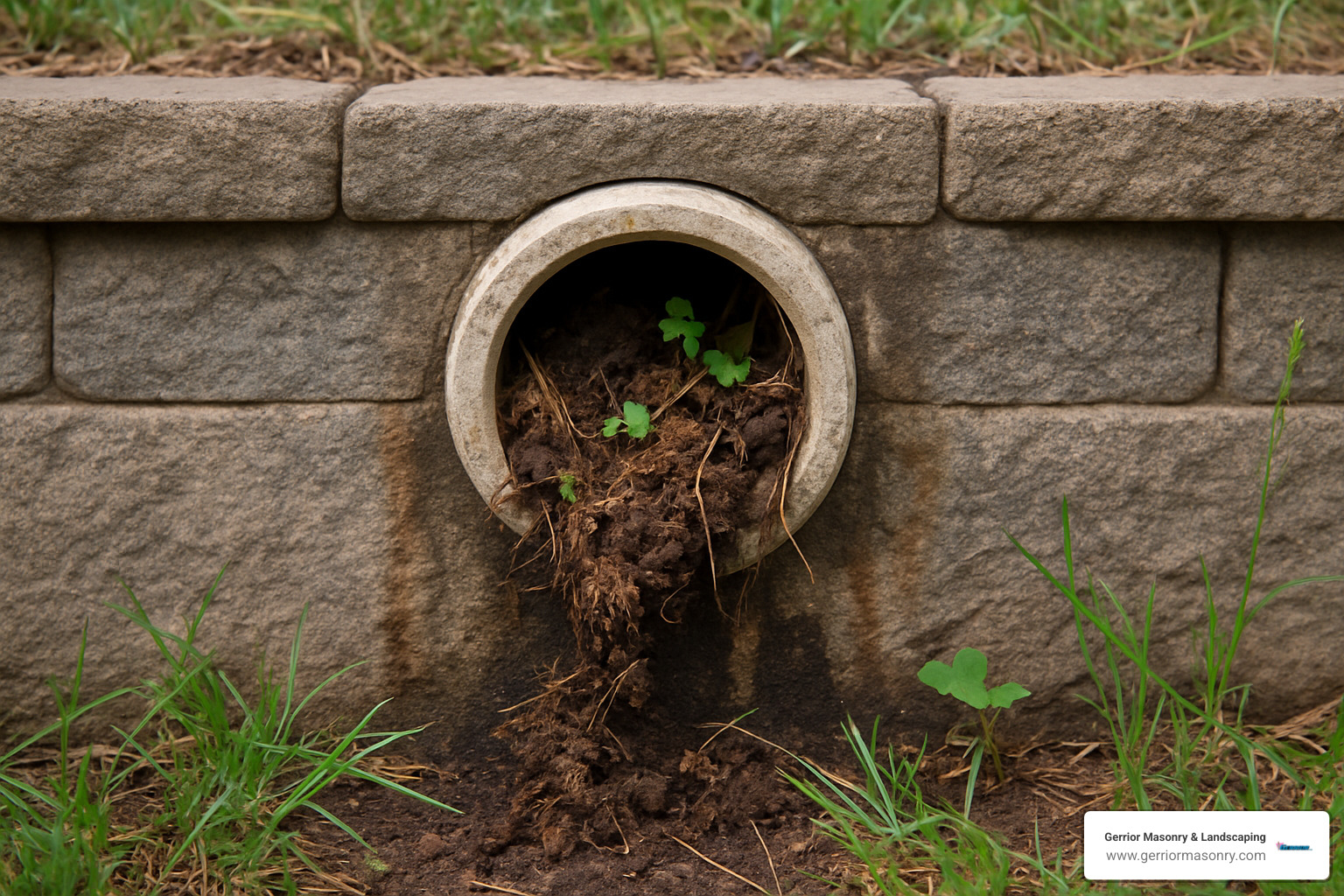
Spring cleaning isn’t just for your garage—it’s also the perfect time to check on your retaining wall drain pipe installation. When the snow melts and before the heavy rains arrive, take a walk along your wall and look for anything unusual. Check those drainage outlets for leaves, dirt, or even the occasional curious critter that might have made a home there over winter.
Water staining on the face of your wall is nature’s way of telling you something’s not quite right with your drainage. These telltale marks often appear before serious problems develop, giving you a chance to address issues early.
Got a garden hose? Once a year, insert it into your drainage outlets or clean-out ports and give the system a good flush. Think of it as a spring shower for your pipes—washing away any sediment that’s starting to build up before it becomes a problem.
Be vigilant about vegetation too. Those pretty volunteer plants growing right next to your wall might look innocent, but their roots can be drainage system saboteurs, working their way into your pipes and causing blockages. We recommend keeping a 3-foot plant-free zone around your wall.
Don’t forget to check the grading above your wall each year. After a Massachusetts winter, soil can shift, potentially directing water toward your wall instead of away from it. A little regrading in spring can prevent big headaches later.
Signs of Drainage Problems
Your retaining wall will tell you when it’s unhappy—you just need to know what to look for. A wall that’s starting to lean forward, especially at the top, is waving a red flag about drainage issues. Similarly, if sections of your wall are bulging outward, water pressure is likely the culprit.
After rainfall, take note of how quickly the area dries out. Persistent wet spots near your wall suggest water isn’t draining properly. Soil washing out from under or through the wall is another clear indicator that water is finding unwanted paths.
Those white, chalky deposits on your wall (what pros call “efflorescence”) aren’t just cosmetic—they’re evidence of water moving through masonry. And of course, any cracking in mortar joints or blocks deserves immediate attention.
When the soil behind or at the base of your wall stays soggy even during dry spells, your drainage system is likely underperforming. This saturated soil is exactly what creates the hydrostatic pressure that can eventually damage or destroy your wall.
Troubleshooting Common Issues
Found a clogged outlet? Don’t panic. Often, a garden hose with good pressure or an inexpensive plumber’s snake can clear minor blockages. For outlets that stubbornly refuse to clear, it might be time to call in professionals with specialized equipment.
If your wall seems to be struggling with water volume despite clear outlets, you might need additional drainage capacity. Adding weep holes to existing walls can provide relief valves for water pressure. For serious cases, installing a secondary drainage system like a French drain behind the wall might be necessary.
Pipe damage happens—especially in our freeze-thaw New England climate. The good news is that localized repairs are often possible without dismantling your entire wall. A professional camera inspection can pinpoint exactly where problems exist, allowing for targeted fixes.
Even if your wall was built without proper drainage (a common issue with older walls), retrofitting solutions exist. Core-drilling weep holes can provide emergency pressure relief, while surface drainage solutions can help manage water before it becomes a problem. For more comprehensive information about home drainage systems, our guide on Drainage Systems Around the House offers additional insights.
When to Call a Professional
While we’re all for DIY maintenance, some situations call for experienced hands. Any noticeable leaning or bulging of your wall warrants professional attention before the problem worsens. Similarly, standing water or flooding behind your wall indicates a drainage emergency that needs immediate expert intervention.
Structural cracks, especially in concrete or block walls, can quickly escalate from minor issues to major problems. And while adding drainage to existing walls is possible, it’s a complex operation that’s usually best left to those with specialized equipment and experience.
At Gerrior Masonry & Landscaping, we’ve been diagnosing and solving retaining wall drainage problems throughout Middlesex and Essex Counties for decades. Sometimes what looks like a drainage issue might actually be something else entirely—and having experienced eyes evaluate the situation can save you time, money, and stress in the long run.
Frequently Asked Questions about Retaining Wall Drain Pipes
When is a drain pipe mandatory behind a retaining wall?
“An ounce of prevention is worth a pound of cure” couldn’t be more true when it comes to retaining wall drain pipe installation. Through my three decades of experience building walls throughout Massachusetts, I’ve seen when drainage isn’t optional:
A drain pipe is absolutely essential when:
- Your wall stands 4 feet or taller
- You’re building with solid materials like concrete or cinder blocks that don’t allow natural water movement
- Your property has clay or poorly draining soils
- The wall sits at the bottom of a slope where water naturally collects
- There are water sources nearby (including sprinkler systems)
- You live in an area with significant rainfall or high groundwater
- You’re constructing a tiered or terraced wall system
Even for smaller garden walls, I strongly recommend installing proper drainage. The few hundred dollars it costs during initial construction is minimal compared to the thousands you might spend repairing or rebuilding a failed wall. Think of it as cheap insurance for your investment.
How much gravel do I really need for good drainage?
“How much gravel is enough?” is a question I hear constantly from homeowners. While you’ll often hear recommendations for a minimum of 12 inches of drainage stone behind a wall, our experience with New England’s challenging freeze-thaw cycles and heavy rains suggests more is better:
For truly effective drainage, aim for 24 inches of clean, angular 3/4-inch stone behind your wall. This drainage zone should extend from the base all the way up to within 6 inches of the top. The angular stone creates stable interlocking pieces while maintaining void spaces for water movement.
When calculating materials, one cubic yard covers about 10-12 square feet at a 24-inch depth. To convert cubic feet to tons, divide by 21.6, or to cubic yards by dividing by 27.
One mistake I often see is using rounded stones like pea gravel or river rock. While they might look pretty, they simply don’t provide the same stability and drainage capacity as angular crushed stone. The round shapes allow shifting and don’t create the stable drainage column your wall needs for long-term performance.
What’s the best way to clean a clogged outlet?
Finding water backing up behind your wall because of a clogged drainage outlet? Don’t panic. Most clogs can be addressed with some simple maintenance:
Start by removing any visible debris—leaves, soil, and vegetation—from the outlet opening. Sometimes this alone solves the problem. Next, grab your garden hose and flush water through the outlet, working from the outside inward. The water pressure often dislodges minor blockages.
For more stubborn clogs, a manual drain snake can be your best friend. Insert it into the outlet and gently work it through to break up and remove whatever’s causing the blockage. In some situations, a gentle pressure washer can clear clogged outlets, but be careful not to damage the pipe with excessive pressure.
Prevention is your best strategy. Install rodent screens or decorative grates over your outlets to prevent future clogging while maintaining water flow. I recommend checking and cleaning your outlets each spring and after particularly heavy storms.
If you’re dealing with a severely clogged system that doesn’t respond to these methods, it might be time to call in professionals. At Gerrior Masonry & Landscaping, we use specialized equipment like camera inspection tools and high-pressure water jets to restore proper drainage function when DIY methods fall short.
Your drainage system is only as good as its maintenance. A little attention each year can prevent major headaches down the road.
Gerrior Masonry & Landscape Construction is based in Woburn, MA, and proudly services communities throughout Middlesex and Essex County, Massachusetts.
Conclusion
Installing a proper retaining wall drain pipe installation isn’t just checking a box on your construction checklist—it’s the hidden guardian that protects your landscape investment for decades to come. Throughout this guide, we’ve shown why drainage is the unsung hero behind every successful retaining wall.
Water may be essential for your garden, but it’s the silent enemy of your retaining wall. Without proper drainage, even the most beautifully constructed wall can fail prematurely, leading to costly repairs and landscape damage. By following the guidelines we’ve outlined, you’re not just building a wall—you’re creating a complete system designed to work with nature rather than against it.
The small additional investment in quality drainage components pays enormous dividends over time. Using the right perforated pipe, clean angular stone, proper filter fabric, and correctly designed outlets creates a defense system that quietly does its job year after year, through rainstorms, snowmelt, and seasonal changes.
Maintenance isn’t optional—it’s essential. Just like changing your car’s oil prevents engine failure, those annual drainage inspections and occasional cleanings prevent water pressure from building up behind your wall. A few minutes checking outlets each spring can save thousands in potential repairs.
For DIY enthusiasts, we hope this guide provides the confidence and knowledge to tackle your drainage project correctly. For those with more complex situations—walls over 4 feet tall, challenging soil conditions, or significant water issues—consulting with professionals who understand local conditions is always a wise investment.
At Gerrior Masonry & Landscaping, we’ve spent over three decades perfecting the art and science of retaining wall drain pipe installation throughout Massachusetts. We understand the unique challenges our New England climate presents—from heavy spring rains to deep winter freezes—and design drainage systems built to last through it all.
If you’re planning a new retaining wall project or experiencing issues with an existing wall, we invite you to learn more about our landscape retaining wall services or reach out for a personalized consultation.
Gerrior Masonry & Landscape Construction is based in Woburn, MA, and services Middlesex and Essex County, Massachusetts, including Arlington, Lexington, Winchester, Burlington, Bedford, and surrounding communities.
