
Stonework Repairs: 6 Best Tips for Stunning Results

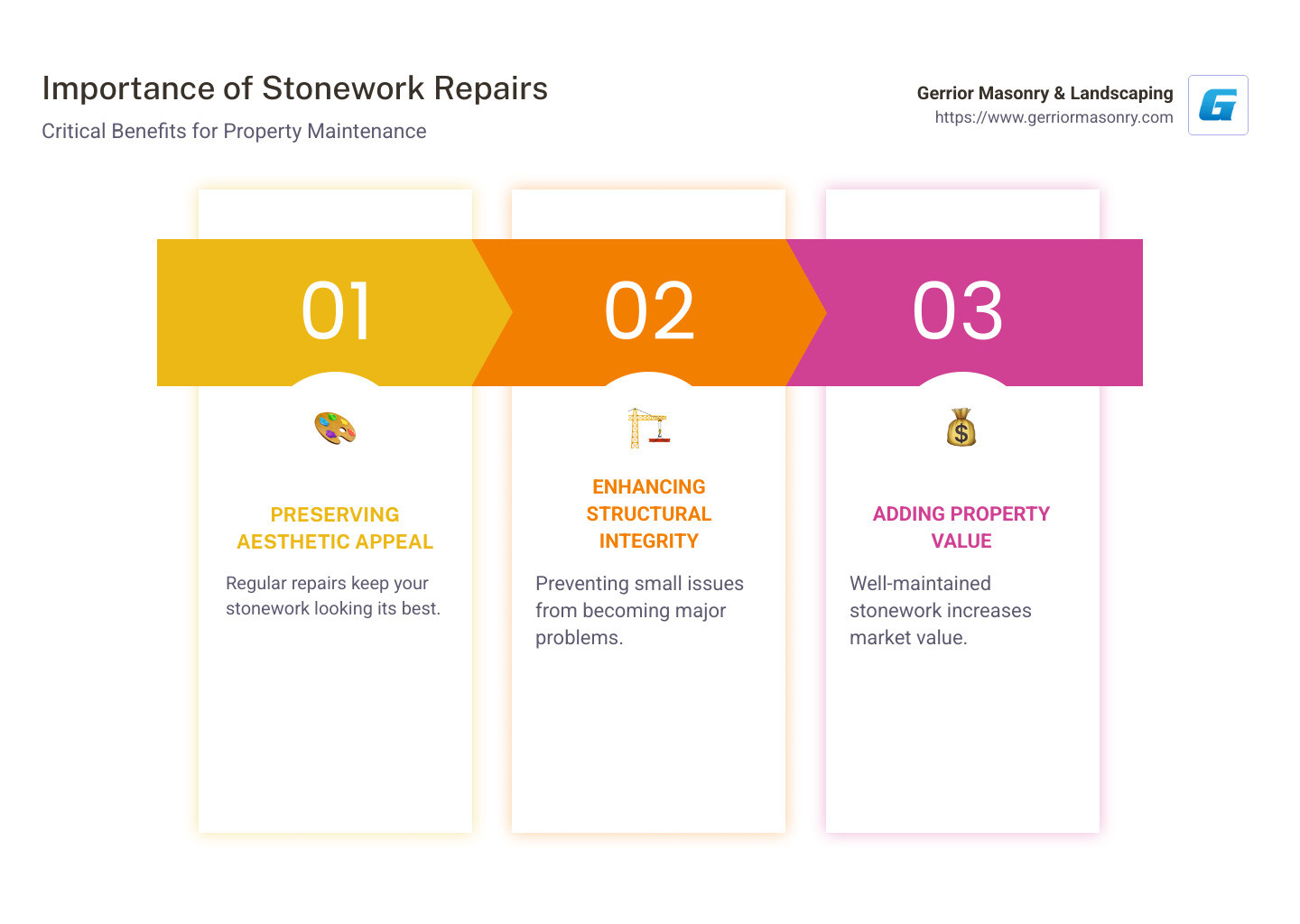
Stonework repairs are essential for maintaining the beauty and structural integrity of your property. Whether it’s fixing cracks, addressing discoloration, or replacing damaged stones, effective repairs can extend the lifespan of your masonry structures. Here’s a quick look at why these repairs are important:
- Preserves Aesthetic Appeal: Regular repairs keep your stonework looking its best.
- Improves Structural Integrity: Preventing small problems from becoming major issues ensures your structures remain safe and secure.
- Adds Value to Your Property: Well-maintained stonework can increase your home’s market value.
Hi there, I’m Joe Gerrior. With over 34 years in masonry and landscaping, I’m committed to sharing what you need to know about stonework repairs. Let’s dig deeper into the nuances to help you make informed decisions.
Simple guide to stonework repairs:
– brick and masonry repair
– brick restoration
– masonry woburn ma
Understanding Stonework Repairs
When it comes to stonework repairs, understanding the different methods and materials is key. Let’s break down the essentials to help you make the right choices for your property.
Natural Stone Replacement
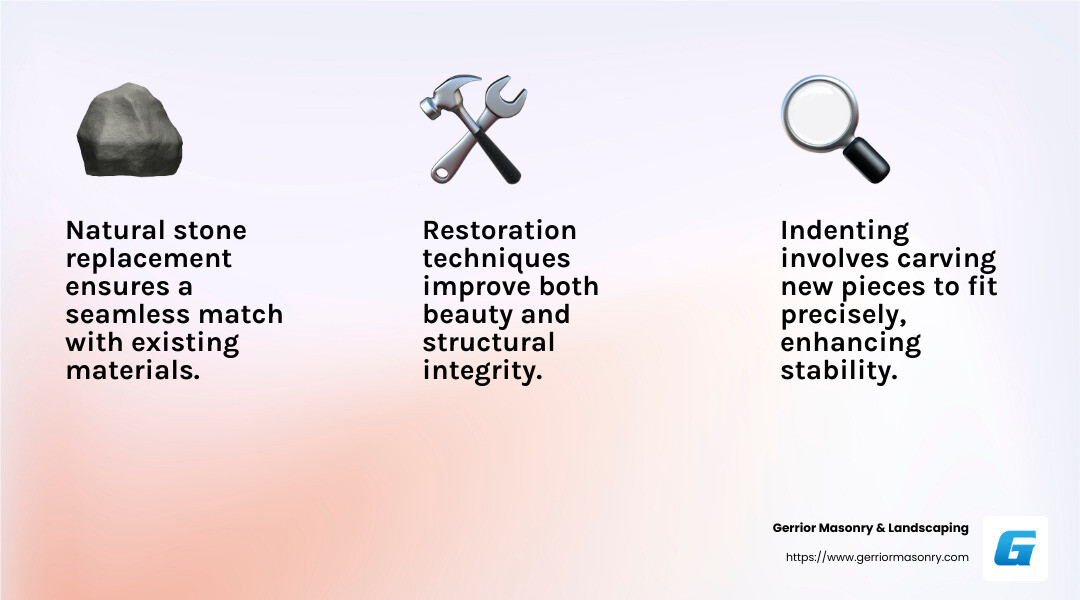
One of the most common methods in stonework repair is natural stone replacement. This involves removing the damaged stones and replacing them with new ones that match the existing material. It’s a straightforward process that ensures the new stone blends seamlessly with the old.
Indenting and Piecing In
Sometimes, removing entire stones isn’t practical, especially if it could affect the building’s stability. In such cases, stone indenting, also known as piecing in, is used. This technique involves removing only the damaged portion of the stone and replacing it with a new piece carved to fit perfectly.
Restoration Techniques
Restoration goes beyond just replacing damaged stones. It involves a variety of methods to return stonework to its original beauty and strength. Techniques can include cleaning, re-dressing, and even chemical treatments to revive and protect the stone surface. For example, resurfacing can restore stone flooring with severe scratches to its original shine, as noted in the research.
Why Restoration Matters
Restoration is important not only for aesthetic reasons but also for maintaining the structural integrity of your stonework. Regular maintenance and timely repairs prevent minor issues from turning into major problems.
By understanding these different methods, you can choose the best approach for your stonework repair needs. Whether it’s a simple replacement or a more complex restoration, knowing your options helps ensure your property remains beautiful and structurally sound.
Let’s move on to explore some common techniques used in stonework repairs.
Common Stonework Repair Techniques
When it comes to stonework repairs, there are several techniques that can help restore your stone surfaces to their former glory. Let’s explore some of the most common methods used by professionals.
Complete Replacement
Complete replacement is often the go-to solution for stonework that’s too damaged to repair. This involves removing the entire stone unit and replacing it with a new one that matches the original. It’s crucial to ensure the new stone is compatible in terms of color, texture, and durability. This method is effective for large areas of damage that can’t be fixed with other techniques.
Plastic Repairs
Plastic repairs are a less invasive option that involves filling in damaged areas with a composite material. These materials are designed to mimic the appearance, strength, and porosity of the original stone. This technique is ideal for repairing small chips or cracks without the need for complete replacement. It provides a quick and cost-effective solution that blends well with the existing stonework.
Chemical Treatments
For stones that have been weathered or stained, chemical treatments can be used to clean and protect the surface. These treatments involve the application of specific chemicals that remove dirt and stains without damaging the stone. However, it’s important to choose the right products, as some chemicals can be too harsh and cause further damage. Always test a small area first or consult with a professional.
Re-Dressing
Re-dressing is a technique used to restore the surface of a stone by removing a thin layer to expose a fresh surface underneath. This method is particularly useful for stones that have become dull or uneven over time. By carefully grinding and polishing the surface, re-dressing can bring back the stone’s original luster and smoothness.
Stone Cleaning
Regular stone cleaning is essential to maintain the beauty and longevity of your stonework. This process involves removing dirt, grime, and biological growths like moss or algae. Depending on the type of stone and the level of soiling, different cleaning methods may be used, including water washing, steam cleaning, or gentle abrasive techniques. It’s important to use non-damaging cleaning products to avoid compromising the stone’s integrity.
By understanding and utilizing these common stonework repair techniques, you can ensure your property remains both beautiful and structurally sound. Whether you need a complete replacement or a simple cleaning, knowing your options allows you to choose the best approach for your specific needs.
Next, we’ll dig into the cost considerations for these repair techniques.
Cost Considerations for Stonework Repairs
When planning for stonework repairs, understanding the costs involved helps you make informed decisions. Here’s a breakdown of what to expect:
Cost per Square Meter
The cost of stonework repairs can vary widely depending on the type of stone and the extent of the damage. On average, prices may range from $50 to $100 per square meter for basic repairs. More complex repairs, like complete replacements or intricate detailing, can be significantly higher. Always get a detailed estimate from a professional to understand the full scope of the costs involved.
Cleaning and Polishing
Regular cleaning and polishing are key to maintaining the longevity and appearance of your stone surfaces. Professional cleaning services can cost between $5 and $10 per square meter. Polishing, which restores the stone’s shine, might add an extra $5 to $15 per square meter. These costs can add up, but they are essential for preventing more costly repairs down the line.
Professional Intervention
While some minor repairs can be DIY projects, professional intervention is often necessary for more extensive damage. Hiring skilled professionals ensures that the repairs are done correctly and safely. This may seem costly upfront, but it saves money in the long run by reducing the risk of further damage. For instance, using the wrong cleaning agents can damage the stone, leading to more expensive repairs.
Balancing Costs and Benefits
Investing in quality repairs not only improves the aesthetic value of your property but also increases its longevity. Consider the long-term benefits of professional repairs over quick fixes. Proper maintenance and timely interventions can significantly extend the life of your stonework, making it a worthwhile investment.
By understanding these cost considerations, you can budget effectively for your stonework repairs, ensuring you get the best value for your investment. Up next, we’ll explore how different materials impact repair strategies.
Stonework Repairs for Different Materials
Different materials require different approaches when it comes to stonework repairs. Let’s explore some common types, and how they should be handled.
Marble
Marble is known for its elegance and beauty, but it’s also quite porous. This means it’s prone to staining and scratching. Repairs often involve cleaning and polishing to restore its natural shine. For deeper scratches or cracks, professional indent repairs might be needed. These involve filling in the damaged areas with a matching material to blend seamlessly with the original marble.
Limestone
Limestone is a softer stone, making it more susceptible to weathering and erosion. Chemical treatments can help protect it from further damage. If pieces of limestone are missing, piecing in new sections can restore the stone’s original look. Regular maintenance, including cleaning and sealing, is crucial to keep limestone in good condition.
Travertine
Travertine is a type of limestone that often features unique patterns and holes. These natural holes can become larger over time, requiring plastic repairs to fill them. This involves using a matching compound to fill the gaps and then polishing to ensure a smooth finish. Regular sealing is recommended to prevent further deterioration.
Granite
Granite is one of the hardest natural stones, making it resistant to damage. However, when repairs are needed, they often involve re-dressing the stone to remove any surface imperfections. This process smooths out the stone and restores its appearance. Due to its durability, granite rarely requires complete replacement, making it a cost-effective option in the long run.
Terrazzo
Terrazzo is a composite material made from chips of marble, quartz, granite, or glass. It is often used for flooring and countertops. Stone cleaning is essential to maintain its vibrant appearance. For repairs, matching the chips and binding material is crucial to ensure uniformity. Polishing terrazzo can bring back its original luster and make it look brand new.
Slate
Slate is a fine-grained stone often used for roofing and flooring. It can flake or crack over time. Complete replacement might be necessary if the slate is extensively damaged. For minor issues, plastic repairs can fill in cracks and chips. Regular cleaning and sealing help maintain its natural beauty and prevent further damage.
Each type of stone has its unique characteristics and repair needs. By understanding these differences, you can ensure your stonework remains in top condition for years to come. Now, let’s move on to some common questions about stonework repairs.
Frequently Asked Questions about Stonework Repairs
How do you repair damaged stonework?
Repairing damaged stonework can involve several techniques, depending on the extent and type of damage.
- Complete Replacement: This is often necessary when the stone is too damaged to repair. It involves removing the old stone and installing a new one that matches the original in color and texture.
- Indenting: Also known as piecing in, this technique is used when removing the entire stone might compromise the structure. Only the damaged part is removed and replaced with a new piece that fits perfectly.
- Plastic Repairs: This involves filling cracks or chips with a material that matches the original stone. It’s a great option for minor repairs that don’t require full replacement.
Each method ensures the stonework is restored to its former glory while maintaining structural integrity.
Can you repair natural stone?
Yes, natural stone repairs are possible and often necessary to maintain the beauty and functionality of stone surfaces.
- Cleaning and Polishing: Regular cleaning and polishing can remove surface stains and scratches, restoring the stone’s natural shine. This is often enough for minor wear and tear.
- Professional Intervention: For more significant damage, professional services may be needed. Experts can assess the stone’s condition and recommend the best repair methods, whether it’s filling, sealing, or more extensive restoration work.
Natural stone is durable, but it requires proper care and maintenance to keep it looking its best.
How much does it cost to repair stonework?
The cost of stonework repairs can vary widely based on several factors:
- Cost per m²: Repair costs are often calculated per square meter. This includes the materials and labor needed for the job.
- Cleaning and Polishing: Basic maintenance like cleaning and polishing is generally less expensive than structural repairs. This routine upkeep can prevent more costly damage in the future.
- Professional Intervention: Hiring professionals might increase initial costs, but their expertise ensures high-quality results that can save money in the long run by preventing further issues.
Understanding these costs can help you budget for repairs and maintain your stonework effectively.
Next, we’ll dive into more advanced techniques and considerations for maintaining your stonework.
Conclusion
At Gerrior Masonry & Landscaping, we pride ourselves on delivering high-quality results for all your stonework repair needs. Whether you’re restoring a historic facade or maintaining a modern structure, our team is equipped to handle projects of any size with precision and care.
With over 30 years of experience, we understand the nuances of working with different stone materials, ensuring that each repair improves both the appearance and durability of your property. Our expertise covers everything from complete stone replacement to intricate repairs and cleaning, custom to meet your specific requirements.
Our commitment to excellence means we oversee every project with meticulous attention, ensuring that the finished work not only meets but exceeds your expectations. The skilled professionals at Gerrior Masonry & Landscaping are dedicated to maintaining the timeless beauty and structural integrity of your stonework through innovative techniques and trusted craftsmanship.
If you’re located in Woburn, MA, or the surrounding areas, and need reliable stonework repairs, trust us to deliver outstanding service. Explore our comprehensive range of masonry services by visiting our masonry services page. Let us help you preserve and improve your stonework, ensuring it stands the test of time.
