
Why the Best Garage Floor Drain System Matters More Than You Think
Choosing the best garage floor drain system for your slab is one of the most important decisions you’ll make when building or upgrading a garage especially as part of a larger hardscaping, masonry, or landscaping project in Massachusetts.
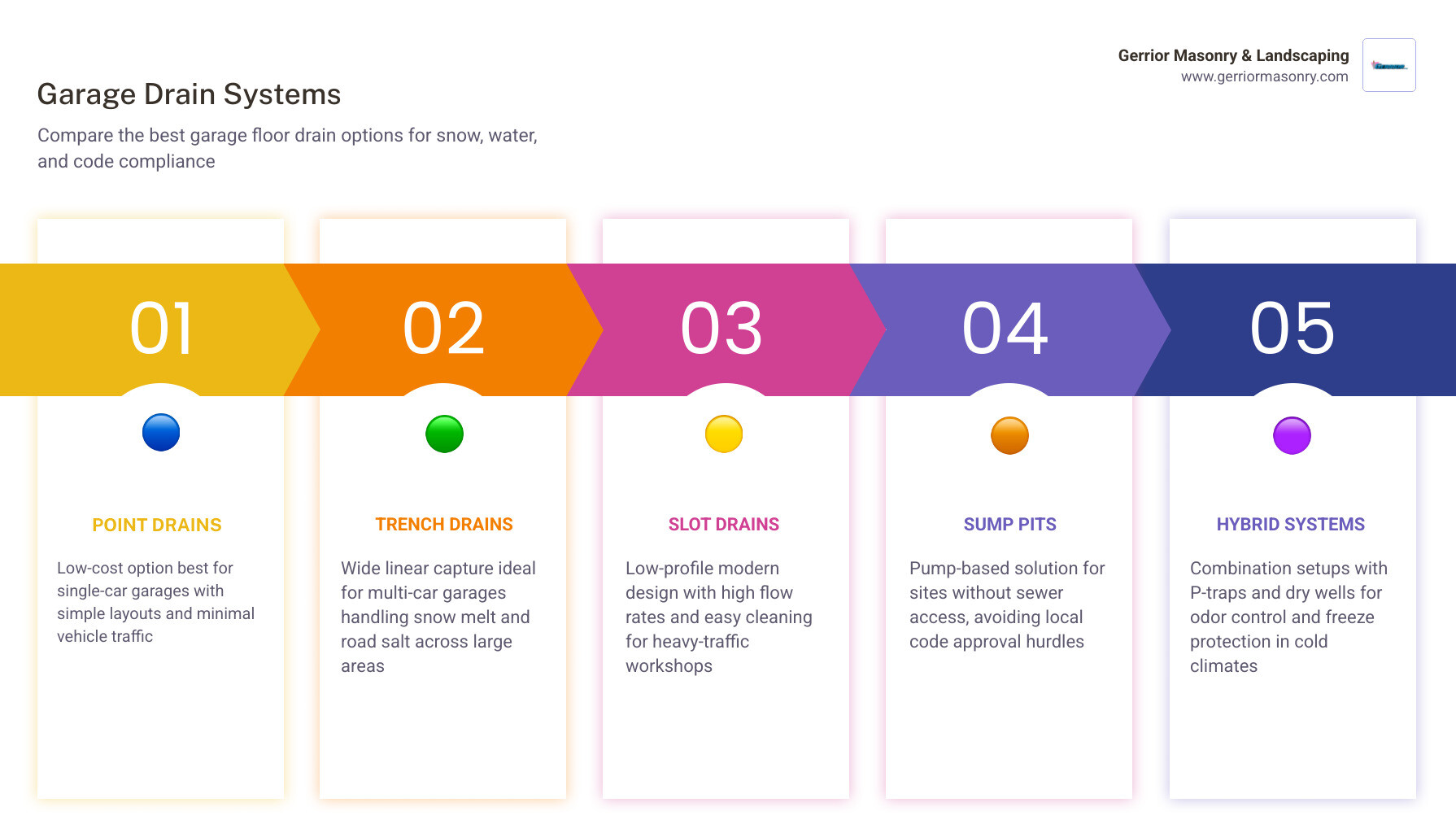
Here’s a quick look at the top options so you can compare at a glance:
| Drain Type | Best For | Key Advantage |
|---|---|---|
| Point drain | Single-car garages, simple layouts | Low cost, easy install |
| Trench drain | Multi-car garages, snow melt | Captures water across a wide area |
| Slot drain | Modern shops, heavy traffic | Low profile, easy to clean, high flow |
| Sump pit | No sewer access | Pumps water out without code hurdles |
Snow and ice are a real problem in Massachusetts. Whether you’re in Woburn, Winchester, Belmont, Lexington, or Burlington, every vehicle that pulls into a garage in winter brings in melting snow and road salt. Without a proper drain, that water pools on your slab, seeps under your walls, and causes long-term damage.
A poor drain setup can also mean sewer gas odors, clogged pipes, and a floor that’s never quite dry. And in some Massachusetts towns, getting a garage drain approved by a local building inspector is genuinely difficult many builders skip drains entirely just to avoid the code hurdles.
Getting it right from the start saves money, avoids callbacks, and helps keep garages, shops, and service spaces dry and functional through every season.
I’m Joe Gerrior, owner of Gerrior Masonry & Landscaping, and over 34 years of masonry, drainage, landscaping, and hardscaping work across Massachusetts has shown me exactly what works and what doesn’t when it comes to the best garage floor drain system for our climate. In the sections below, I’ll walk through the main options so you can make the right call for your property in Woburn, Winchester, Belmont, Lexington, and nearby Massachusetts communities.
For related site and exterior services, explore our Residential Drainage Solutions, Basement Foundation Drain, and Drainage Around House Foundation services.
Best garage floor drain system vocabulary:
Choosing the Best Garage Floor Drain System for Your Slab
To select the best garage floor drain system, you must first understand how water behaves on a concrete slab. Concrete isn’t perfectly flat; it must be sloped to guide water toward your chosen collection point.
The standard recommended floor slope is 1/8 inch to 1/4 inch per foot. If you create an excessive pitch, you risk interfering with vehicle lifts, rolling toolboxes, and equipment placement. If you keep the floor too flat, standing water becomes a constant maintenance issue.
In Massachusetts towns like Belmont, Lexington, Woburn, and Winchester, where winter weather brings constant freeze-thaw cycles, a smart slope design is critical. Let’s look at the three main physical drain profiles to see how they handle your floor’s pitch.
Point Drains vs. Trench Drains: Which is the Best Garage Floor Drain System?
A point drain is a single, circular or square grate located at a low point in the center of your garage floor.
- The Catch: Point drains require a “bowl-shaped” slope. The concrete must pitch downward from all four corners toward that single center point. This makes the floor uneven, which is problematic if you plan to install a vehicle lift or want a level workspace.
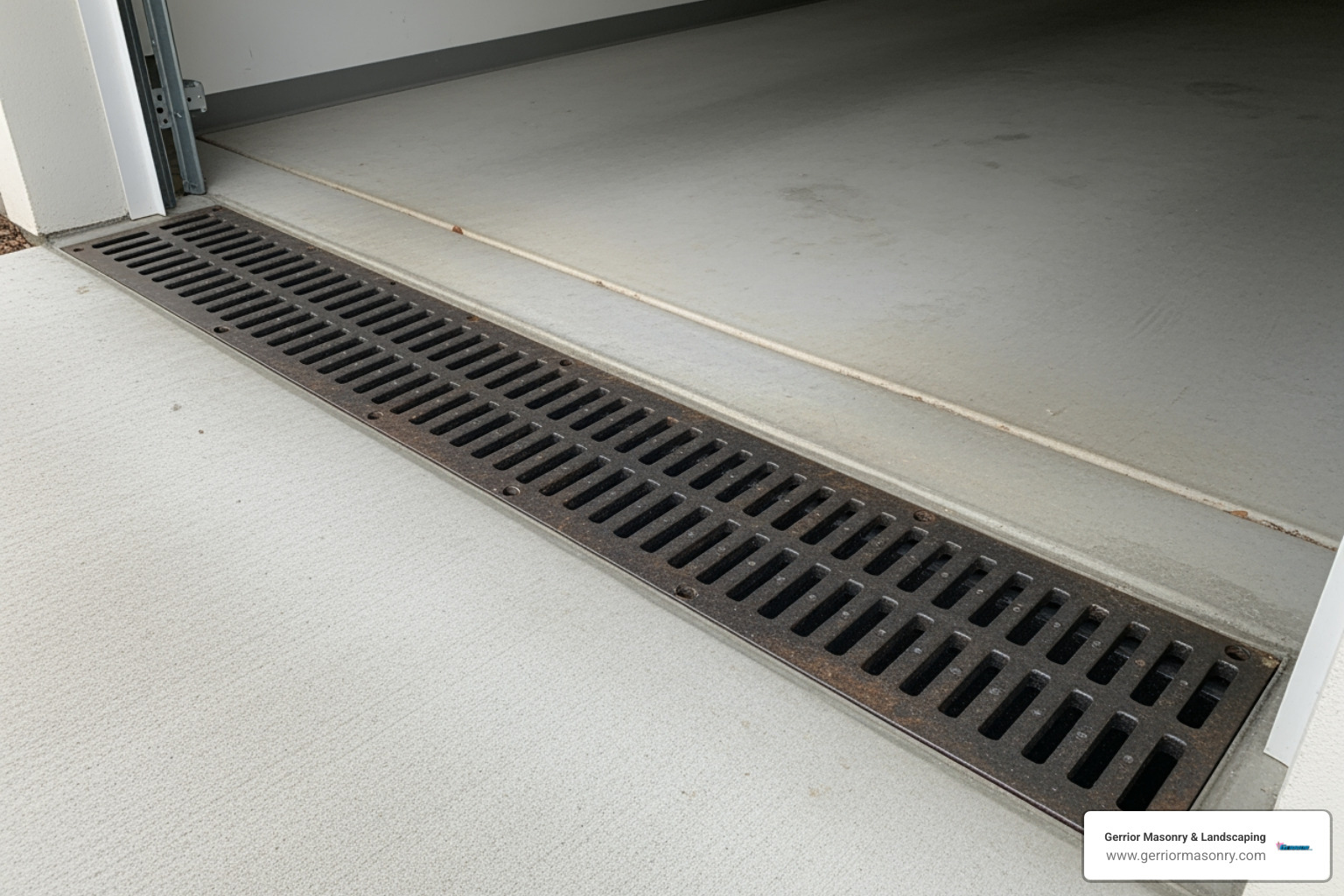
- Trench drains, on the other hand, require a simple, single-slope pitch. The concrete slopes in one direction toward a long, narrow channel. Trench drains intercept melted snow from vehicles as soon as they pull in, helping keep the rest of the slab dry and minimizing cleanup.
For a visual example of how center drains are laid out during a concrete pour, see this helpful video: Building The PERFECT 50×30 Garage Floor With 4 Center Drains!
Slot Drains: A Modern, Low-Profile Best Garage Floor Drain System
If you want a highly durable, grate-free aesthetic, a slot drain is a premium alternative. Unlike trench drains that use wide, removable grates, slot drains feature a slim, continuous opening at the surface level that integrates structurally with the surrounding concrete.
Slot drains offer impressive, reliable flow rates depending on the width of the slot:
- 1/2-inch slot: Handles 11 GPM (gallons per minute) per foot.
- 1-inch slot: Handles 18 GPM per foot.
- 1-1/4-inch slot: Handles 27 GPM per foot.
High-quality stainless systems are often chosen for their corrosion resistance and clean appearance, especially in garages and workspaces that see regular washdown, snowmelt, and vehicle traffic. You can learn more about slot drain specifications from Slot Drain Systems.
Sump Pits, Dry Wells, and Routing Options
Once water enters your drain, it has to go somewhere. You have three primary routing options:
- City Sewer: This is the most regulated option. Many municipalities in Belmont, Lexington, Winchester, and Woburn require an oil-water separator and a sediment trap to prevent fuel, chemicals, and mud from entering the public water system.
- Daylight (Draining Outside): Routing the pipe to dump out on a sloped area is simple, but it carries risks. In cold Massachusetts climates, the exit point can freeze shut, and open terminations can create maintenance issues.
- Sump Pits and Dry Wells: If you cannot gravity-feed to daylight or tie into a sewer, you can route the water to an underground sump pit or a dry well.
A Dry Well Yard Drainage system collects the water and allows it to slowly dissipate into the surrounding soil. This is often paired with a Basement Sump Pump system inside the garage to lift water out of a low-lying pit and push it safely away from the foundation. In Massachusetts, soil composition can vary wildly from sandy loam to heavy clay. When installing a dry well in towns like Winchester or Lexington, we must test the soil’s percolation rate. If the soil has high clay content, the dry well must be sized larger or placed deeper to ensure it can handle the volume of sudden snowmelt without backing up into your garage.
Preventing Sewer Gas Odors and Freezing
If your garage floor drain is connected to a sewer line or a shared home drainage system, you must prevent sewer gases from backing up into your workspace.
Every standard drain uses a P-trap to trap water and block gases. However, in an unheated garage or a space that sees infrequent water use, that water seal will eventually evaporate.
- The Solution: A 2-inch water seal in a deep seal P-trap holds more water, so it takes longer to evaporate, providing insurance against sewer smells in cold climates.
- Additional Protection: You can install an automatic trap primer or a waterless silicone mechanical seal that allows water to flow down but snaps shut to keep odors from rising.
- Freezing Prevention: In Massachusetts, unheated garages routinely drop below freezing. If your P-trap freezes, the expanding ice can crack the PVC or cast iron pipe, leading to costly underground leaks. To prevent this, we often recommend installing the P-trap below the local frost line (which is typically 4 feet deep in Massachusetts) or using non-toxic RV antifreeze during winter storage months if the garage is left unheated.
In Massachusetts, winter road maintenance relies heavily on aggressive chemical de-icers, including sodium chloride and calcium chloride. When your vehicle enters the garage, the melting slush carries these highly corrosive salts directly onto your concrete slab. Without the best garage floor drain system to quickly channel this salty runoff away, the brine will penetrate the porous concrete. Over time, this leads to sub-surface crystallization, causing the concrete to spall, crack, and weaken structurally. A properly sloped floor combined with a high-capacity trench or slot drain ensures that corrosive winter runoff is evacuated immediately, preserving the structural integrity of your garage floor for decades.
Load Ratings, Grate Materials, and Threshold Installation
Your drain grates must be tough enough to handle vehicle traffic, heavy toolboxes, and future vehicle lifts. Look closely at load ratings:
- Class A: Pedestrian traffic only.
- Class B: Light vehicles and residential driveways.
- Class C: Commercial vehicles and heavy equipment.
For residential shops, we recommend Class B or C cast iron or heavy-duty stainless steel grates. Avoid low-grade plastic grates that may crack under heavier vehicle loads. When selecting grates, it is also vital to consider the dynamic load. A vehicle rolling over a grate exerts significantly more force than a stationary vehicle. In residential garages where homeowners park heavy SUVs, trucks, or utilize floor jacks for maintenance, choosing a Class C load-rated grate provides an extra margin of safety. Cast iron grates are highly recommended for their exceptional durability and ability to withstand these heavy dynamic loads without bending or fracturing over time.
Installing a trench drain directly at your garage door threshold is an outstanding best practice. It captures snow melt and wash water immediately as vehicles pull in, helping keep the rest of the garage slab dry.
For Massachusetts properties that also need exterior water management and site improvements, Gerrior Corp also provides drainage, masonry, and landscaping support tied to larger hardscaping projects.
Professional Drainage Installation and Code Compliance
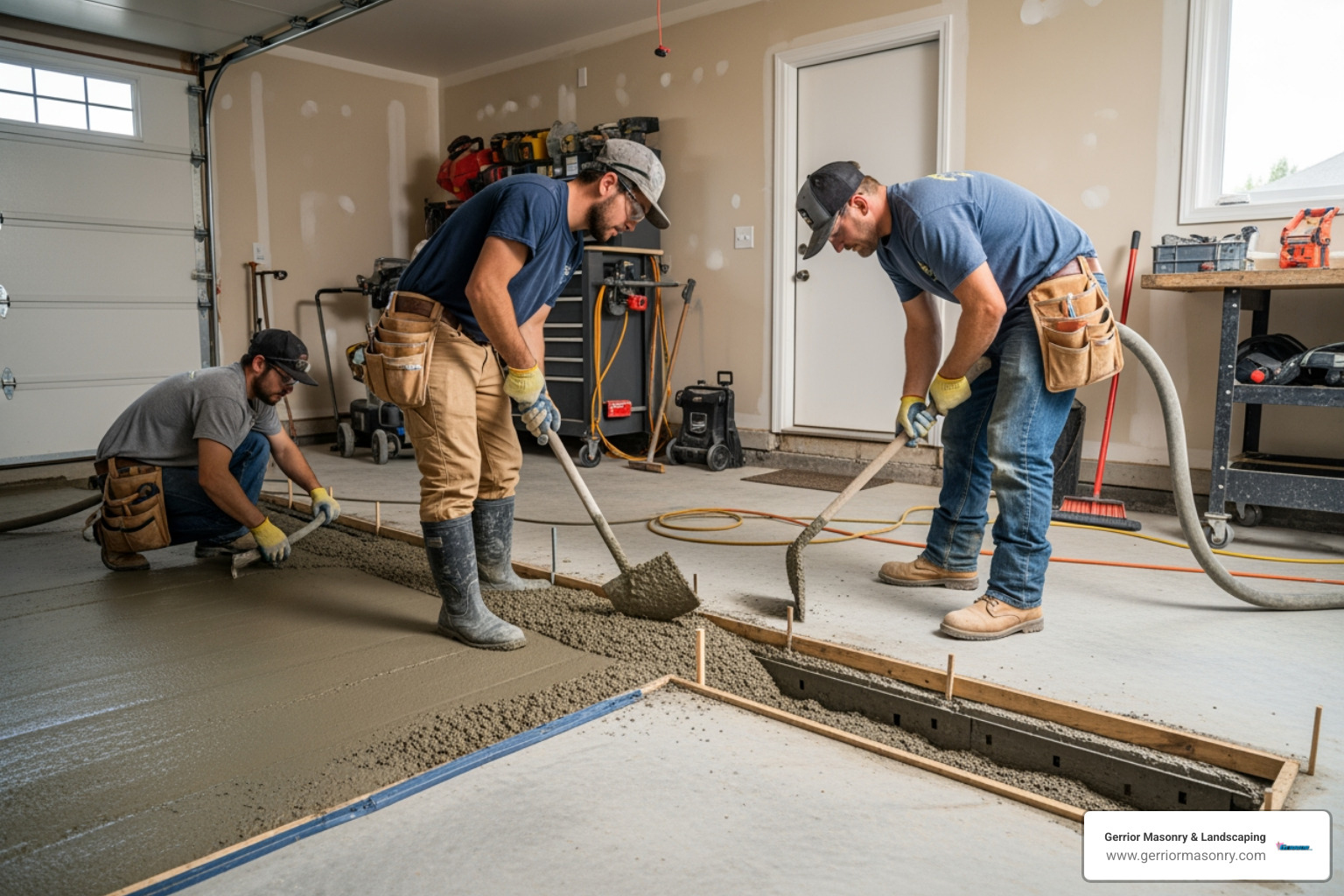
Installing the best garage floor drain system is not a simple weekend DIY project. It requires precise excavation, structural reinforcement, accurate concrete pitching, and strict adherence to Massachusetts plumbing codes. In nearly all cases, professional installation is the right approach.
In many Massachusetts municipalities, garage floor drains are difficult to get accepted by code enforcement. Working with an experienced professional team helps ensure that your system includes the correct sediment traps, venting, and routing to pass inspection. For instance, the Massachusetts State Plumbing Code (248 CMR) has strict regulations regarding where garage wastewater can discharge. In many residential zones, you cannot simply run a garage drain directly into the municipal storm sewer due to potential oil and fuel runoff. Navigating these local board of health and building department rules requires detailed site plans and professional engineering, which is why DIY installations often face costly stop-work orders.
Navigating the local permitting process in Massachusetts requires a clear understanding of environmental and plumbing regulations. For example, in towns like Winchester, Belmont, and Lexington, local conservation commissions and building departments closely monitor runoff management to protect local watersheds. A professional installer must design the system to comply with these local bylaws, which often dictate the specific distance a dry well must be set back from property lines and foundation walls. Attempting a DIY installation without these permits can result in significant fines, delayed projects, and issues when trying to sell your home in the future. Hiring a licensed professional ensures that all engineering plans, soil percolation tests, and plumbing permits are filed correctly and approved by local inspectors before any concrete is poured.
What Does Garage Drain Installation Cost?
Based on industry averages and publicly available online data, the cost to professionally install a complete garage floor drainage system in Massachusetts can vary widely, often ranging from $10,000 to $50,000+ depending on slab size, excavation needs, drainage routing, code requirements, and site conditions.
Please note that these are average estimated costs sourced from publicly available internet data and industry averages and do not represent the actual pricing of Gerrior Corp. Every garage slab and local code requirement is unique, and Gerrior Corp provides custom, project-specific estimates.
At Gerrior Masonry & Landscaping, we bring over 30 years of hands-on masonry, drainage, landscaping, and hardscaping experience to projects across Woburn, Winchester, Belmont, Lexington, and Burlington. Our owner-supervised projects are designed to deliver durable drainage performance and clean, well-finished concrete work built for Massachusetts conditions.
If your project also involves site improvements beyond the garage, our team can help with Residential Drainage Solutions, Dry Well Yard Drainage, French Drain Channel, and Basement Foundation Drain.
Ready to discuss a garage drainage project in Massachusetts? Request a quote to get started:
- Get a Free Estimate: Request a Quote Online
