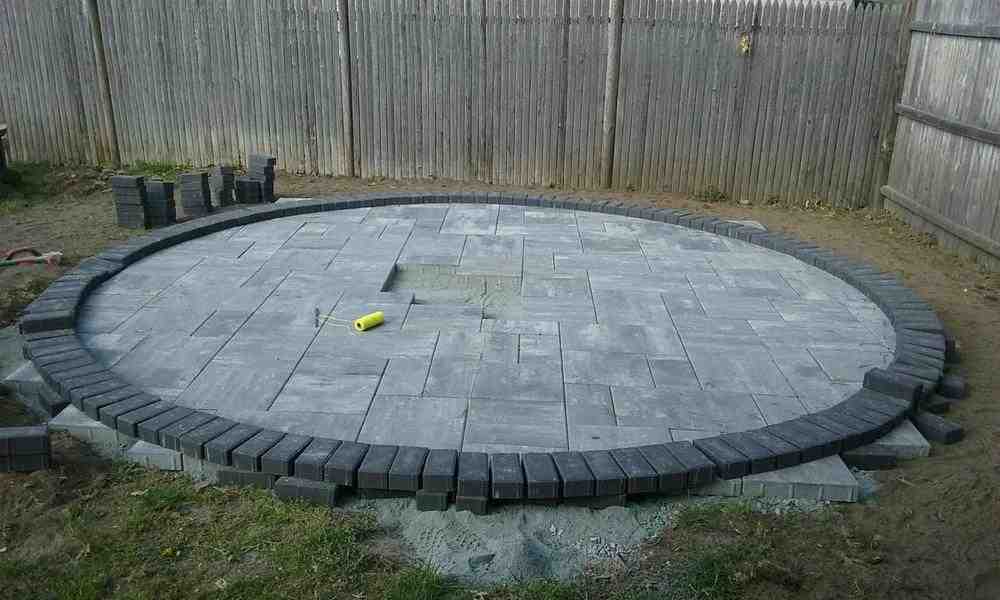
What Does a Paver Patio Cost in Massachusetts?
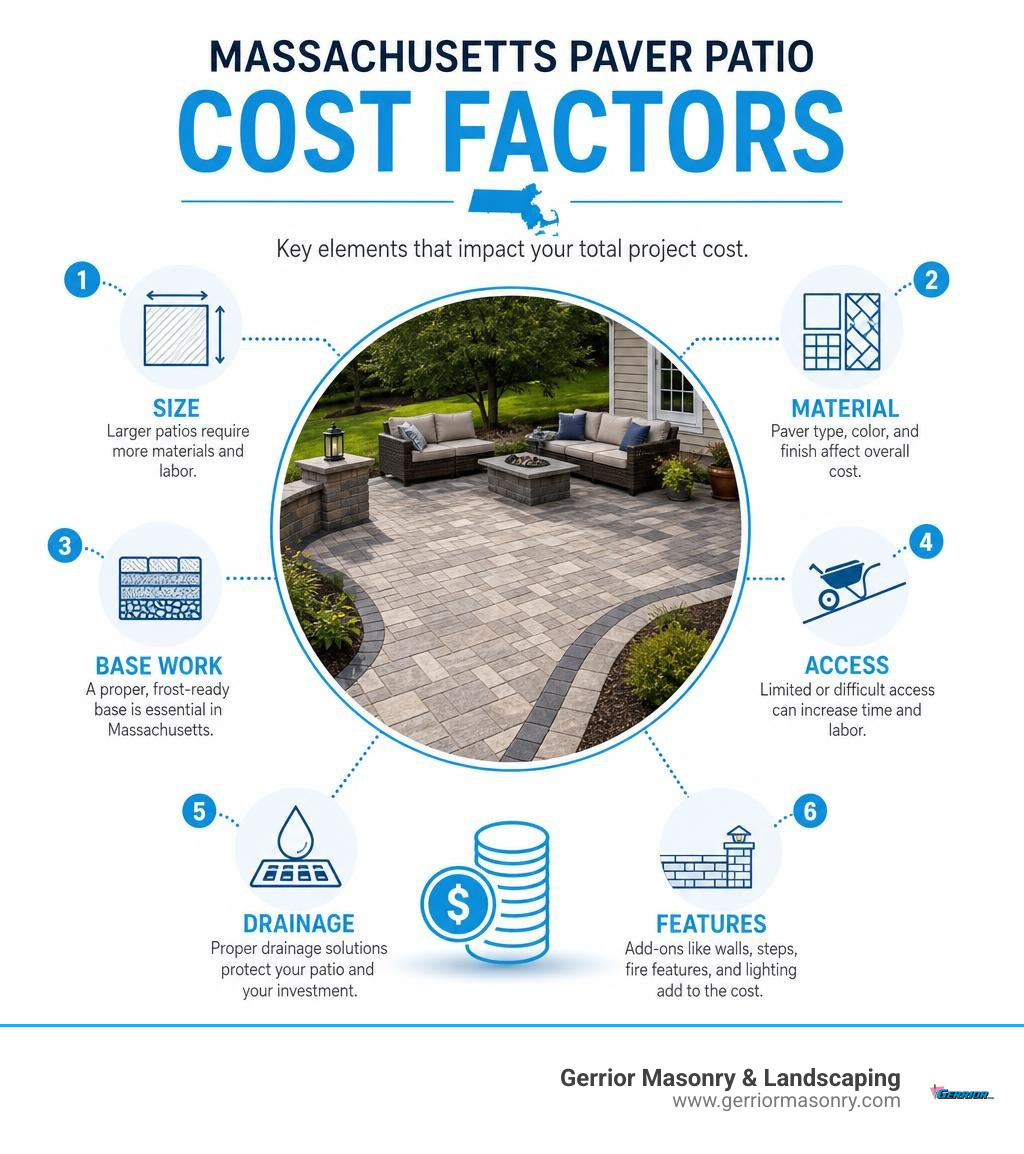
The cost of paver patio installation in Massachusetts typically ranges from $15,600 to $39,000, with an average project near $7,800. Most professionally installed patios cost about $12 to $35 per square foot, but local labor rates, frost-ready base work, material choice, access, drainage, and layout can move the final price up or down depending on specific property conditions across the Commonwealth.
| Massachusetts paver patio estimate | Typical cost |
|---|---|
| Small, simple patio | $15,600 to $20,000 |
| Standard project baseline | Around $7,800 |
| Large or feature-rich patio | $25,000 to $39,000+ |
| Typical installed price | $12 to $35 per sq. ft. |
Pricing can differ noticeably between Woburn, Winchester, Burlington, Lexington, and nearby communities because every site features unique soil composition, elevation changes, machinery access limits, and surface drainage challenges. In Massachusetts, a long-lasting outdoor living surface requires a deep, heavily compacted foundation engineered specifically to withstand rigorous annual freeze-thaw weather patterns. Consequently, the subterranean structural preparation is just as critical to your overall project budget as the surface pavers you select for your outdoor space.
Gerrior Masonry & Landscaping is a family-owned masonry and hardscaping company serving Massachusetts property owners with more than 30 years of hands-on experience in patio installation, walkways, walls, foundation repair, bulkhead replacement, chimney repair, and commercial snow removal. Our team’s owner oversight and local construction experience help provide clear, realistic transparency regarding the actual cost of paver patio construction long before any excavation work commences on your property.
Understanding the true investment involved in a custom outdoor living project means evaluating how base preparation, excavation depth, paver style, and hardscape features work together. Whether you are adding a functional gathering space or expanding your property grounds, thorough planning ensures your investment delivers lasting beauty, functional value, and exceptional structural durability for years to come.
Cost of paver patio helpful reading:
- Paver Patio Contractor
- brick paver patio
- outdoor paver patio
- Massachusetts home improvement contract guidance
Understanding Key Factors that Drive the Cost of Paver Patio Construction
Calculating the overall cost of paver patio installations requires looking far beyond basic surface square footage. In local Massachusetts communities, detailed site conditions dictate a significant portion of the total financial investment.
(Please note: All financial figures and pricing estimations mentioned throughout this guide represent general average costs sourced from publicly available internet data and historical industry benchmarks. They do not represent actual fixed quotes or rate guarantees from Gerrior Masonry & Landscaping.)
A thorough professional site evaluation includes assessing native soil types, property line setbacks, slope adjustments, underground utility lines, municipal permit requirements, and heavy machinery accessibility. A level site featuring loose, well-draining dirt permits quick and straightforward excavation. Conversely, properties encumbered by heavy blue clay, large subsurface glacial boulders, high water tables, or steep grade changes require extensive excavation, customized retaining structures, and structural soil stabilization. Property decision-makers evaluating initial preliminary figures often consult online industry cost calculators to establish basic square-footage baseline ranges prior to scheduling an in-person site consultation.
Material Selection and the Cost of Paver Patio Materials per Square Foot
The specific unit material you select directly influences both the initial aesthetic character and base material pricing. Publicly available local industry datasets outline typical installed material ranges per square foot across Massachusetts properties:
| Paver Material Type | Average Installed Cost Range (per sq. ft.) | Primary Characteristics & Benefits |
|---|---|---|
| Concrete Interlocking Pavers | $12 – $20 | Exceptional freeze-thaw resistance, wide variety of colors/shapes |
| Clay Brick Pavers | $14 – $25 | Kiln-fired color retention, classic Massachusetts traditional aesthetic |
| Architectural Porcelain Pavers | $18 – $30 | Extremely low water absorption (<0.5%), highly stain-resistant |
| Natural Bluestone & Granite | $20 – $50 | Premium durability, elegant natural character, lifetime longevity |
Material selection typically represents approximately 20% to 30% of the total hardscaping project budget. Sub-surface excavation, crushed stone aggregate base installation, geotextile fabric installation, edge restraints, and skilled trade labor constitute the remaining 70% to 80% of total expenses.
Size, Layout Complexity, and Base Excavation Rates
Square footage dictates raw material quantities, but geometric complexity directly controls overall labor density. Larger, open patio layouts benefit from modest economies of scale regarding crew mobilization and equipment transportation. However, intricate geometric shapes, curved soldier courses, embedded border highlights, inlaid patterns, or diagonal herringbone laying patterns increase diamond-blade saw cutting labor and elevate overall material waste factors from a standard 5% up to 15% or 25%.
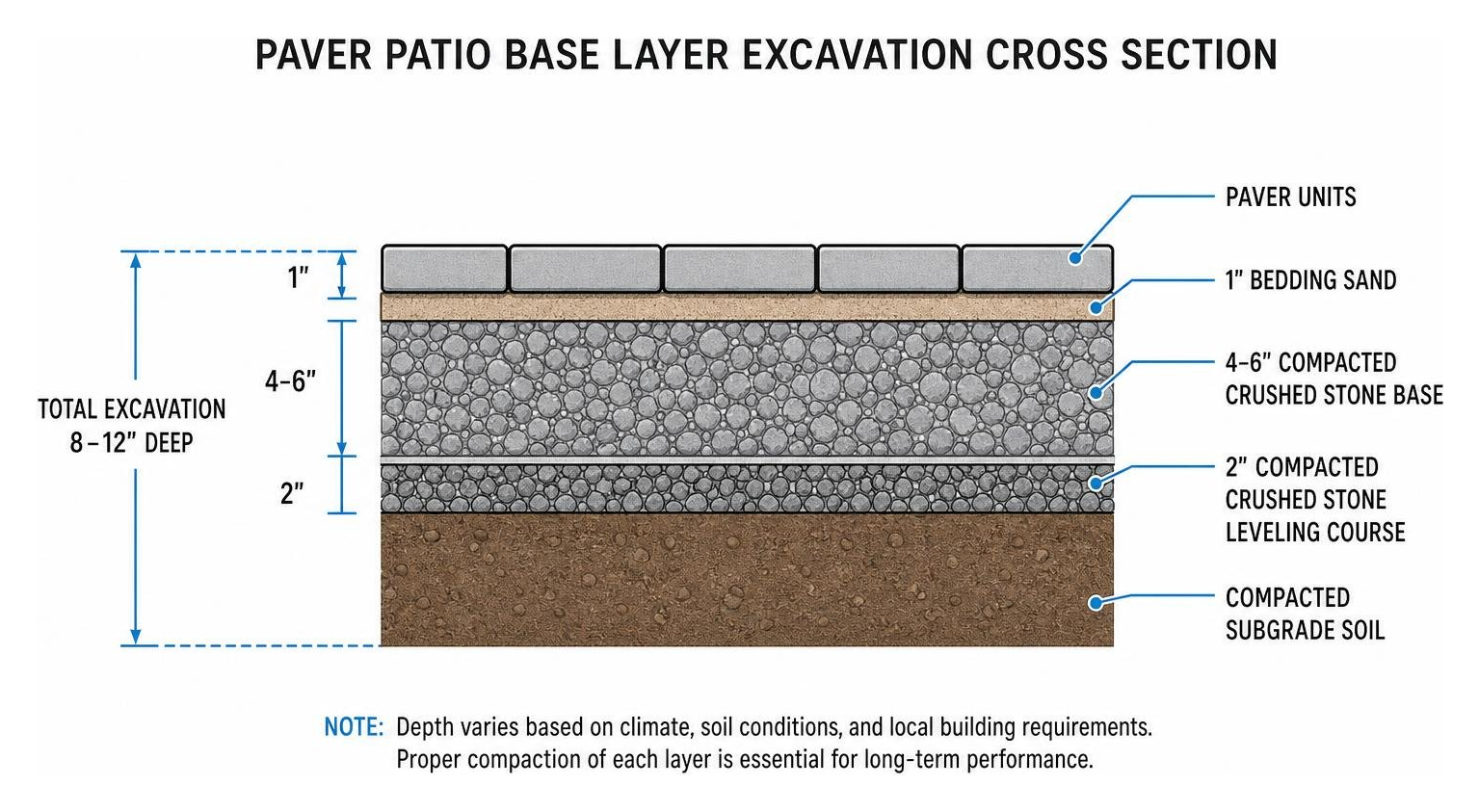
In Massachusetts, proper excavation depth is absolutely non-negotiable due to severe winter frost cycles. To safeguard long-term structural integrity against severe winter frost heave cycles, native sub-grade soil must be excavated 8 to 12 inches deep, or even deeper in areas with heavy clay or moisture retention. This creates space for a thick, thoroughly compacted layer of dense, crushed-stone dense-grade aggregate base beneath a smooth 1-inch coarse bedding sand layer.
Labor Rates and Regional Site Prep in MA Towns
Local skilled labor rates in Massachusetts reflect strict regional trade licensing standards, comprehensive equipment insurance, fuel requirements, local permit fees, and specialized heavy machinery operational expenses.
In historic or established properties throughout Woburn, Winchester, Burlington, and Lexington, narrow lot lines, mature tree root systems, and restricted side access frequently prohibit standard full-sized excavation machinery. When crews must transport bulk aggregates manually with motorized wheelbarrows or compact mini-track loaders, active labor hours increase. Comprehensive local resources like our Backyard Patio Cost Guide explore these site-access dynamics and equipment logistics in extensive detail.
How Added Features Impact the Total Cost of Paver Patio Buildouts
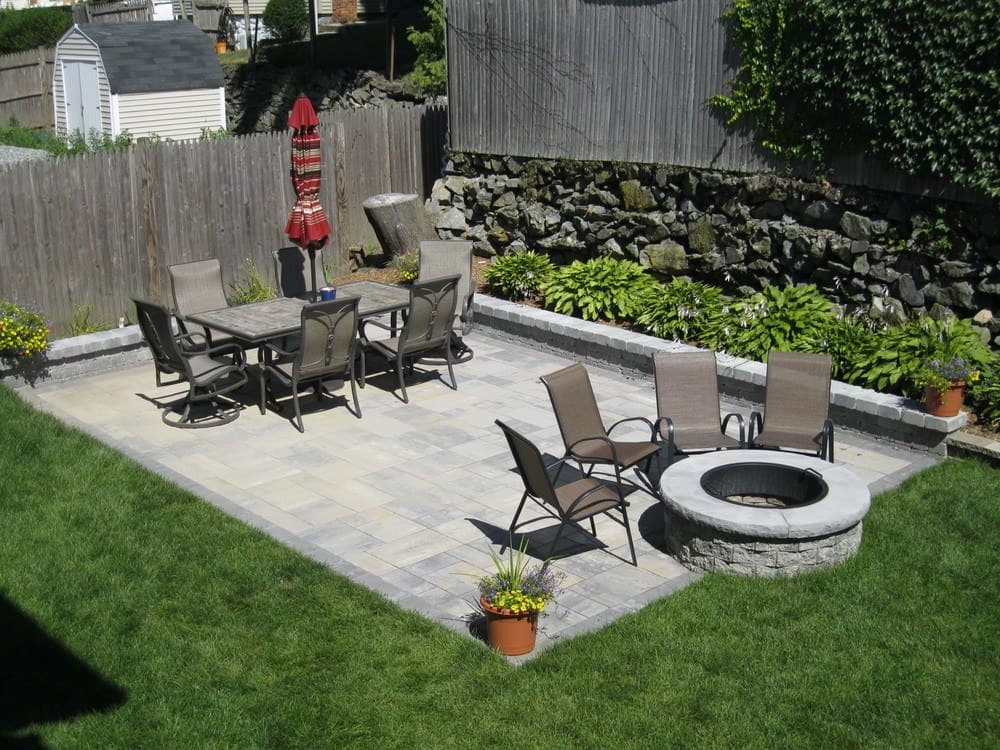
Integrating functional custom elements transforms a standard flat surface into a multi-use outdoor living environment, though each addition adjusts the final project scope. According to publicly available industry averages, typical add-on cost ranges include:
- Built-in Fire Pits: $2,000 to $5,000+ depending on stone veneer choice and gas plumbing vs. classic wood-burning setup.
- Seat Walls & Retaining Structures: $3,000 to $8,000+ addition, essential for managing sloped elevation transitions or establishing permanent perimeter seating.
- Integrated Stone Steps & Transitions: $1,000 to $4,000+ per riser set, seamlessly connecting patio surfaces to building doorways or elevated lawn sections.
- Low-Voltage LED Landscape Lighting: $1,500 to $3,500+ for accentuating steps, seat walls, and perimeter borders for nighttime ambiance and safety.
Custom hardscape features and material options are further detailed in our specialized Brick Patio Installation Cost Guide.
Long-Term Value, Maintenance, and Choosing a Local Hardscape Partner
Investing in a professionally designed hardscape structure enhances daily outdoor functionality while providing robust long-term asset value for your property. Real estate statistics across Massachusetts indicate that professionally installed stone and paver hardscapes routinely recover 40% to 60% of their initial installation cost upon property resale. Property decision-makers evaluating multi-year investments against alternative patio materials frequently utilize publicly available online cost estimator tools to project clear long-term financial comparisons.
Structural Base Integrity and Common Costly Mistakes

Structural hardscaping demands rigorous physical exertion, specialized heavy machinery, and precise technical engineering. Skipping proper sub-grade excavation depth or utilizing lightweight, inadequate plate compaction equipment remains the single most common cause of premature hardscape failure in Massachusetts.
Without a minimum 8-inch heavily compacted gravel crushed-stone sub-base paired with non-woven geotextile soil stabilization fabric, severe annual freeze-thaw cycles cause subsoils to expand and shift. This leads to deep surface rutting, hazardous uneven pavers, low spots, and standing water pooling within 1 to 3 years. Correcting a collapsed foundation requires a complete, costly structural tear-out that far exceeds the initial investment. Reviewing core construction principles in our Paver Patio Perfection Handbook illustrates the exact engineering rigor needed beneath the surface.
Lifetime Maintenance, Sealing, and Hiring Local Experts
Maintaining a high-quality paver hardscape is remarkably manageable compared to repairing cracked poured concrete slabs:
- Polymeric Sand Joint Stabilization: Locks individual units together, preventing invasive weed growth and insect tunneling between joint gaps while remaining flexible during thermal expansion.
- Periodic Power Washing & Sealing: Based on publicly available industry averages, applying a high-grade breathable protective sealer every 2 to 3 years ($2 to $6 per sq. ft.) safeguards concrete and natural stone pavers against harsh winter de-icing salts, oil leaks, leaf tannins, and stubborn organic staining.
- Drainage Management & Grading Checks: Ensuring downspouts and surrounding turf grades divert runoff away from the hardscape foundation prolongs subterranean base stability.
At Gerrior Masonry & Landscaping, our skilled masonry and hardscaping team brings more than three decades of hands-on expertise serving property owners across Woburn, Winchester, Burlington, and Lexington. We manage every critical phase, from initial site excavation and subterranean drainage routing to precise paver placement and final joint stabilization, with direct owner supervision on every project.
To discuss your outdoor project goals and receive an accurate, itemized cost estimate tailored specifically to your Massachusetts property, call Gerrior Masonry & Landscaping directly at +781-713-1225 or submit an online quote request via our Request an Estimate form. You can also explore our complete scope of specialized outdoor construction services by visiting our dedicated Paver Patio Contractor Services page.