
Stone Walkway Edging: 7 Best Proven Tips for 2025 Success
Why Stone Walkway Edging Transforms Your Property
Stone walkway edging creates clean lines between your walkway and surrounding landscape while preventing soil and mulch from spilling onto your path. Here’s what you need to know:
Quick Installation Overview:
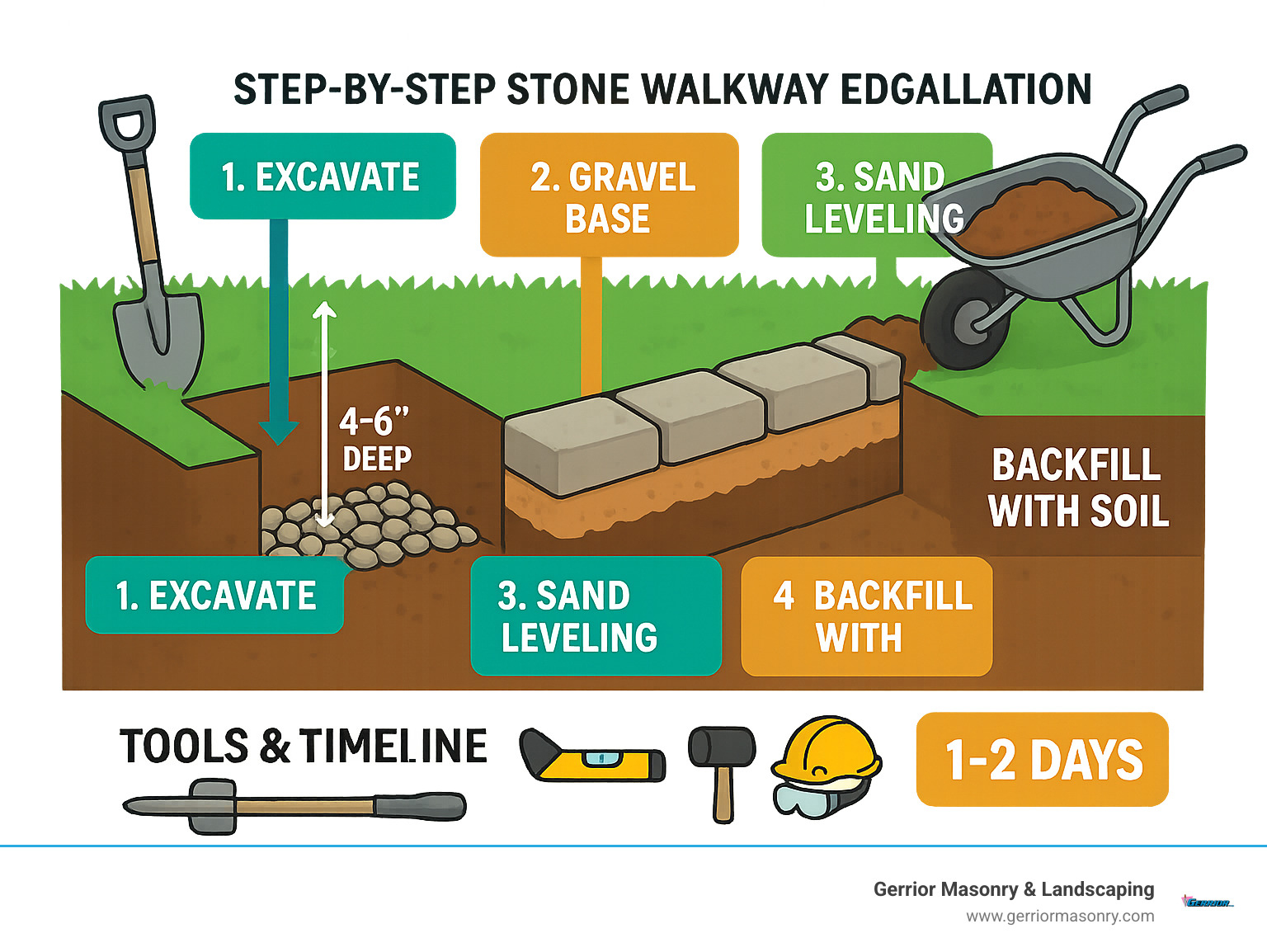
1. Excavate a 4-6 inch deep trench along your walkway
2. Prepare base with compacted gravel and leveling sand
3. Set stones using butt joints or mortar, ensuring proper alignment
4. Secure with spikes or anchors and backfill with soil
5. Finish with polymeric sand and plantings
Popular Stone Options:
– Natural granite – durable, classic appearance
– Bluestone – neat, weather-resistant
– Limestone – affordable, versatile colors
– Concrete pavers – consistent sizing, easy installation
Most homeowners can complete a basic stone edging project in one weekend using standard tools. The key is proper base preparation and taking time to ensure each stone sits level and secure.
Stone edging serves dual purposes: it provides structural support by buttressing the walkway while offering aesthetic improvement through color and design choices. Unlike plastic or metal alternatives, stone edging withstands New England’s freeze-thaw cycles and actually improves with age.
I’m Joe Gerrior, owner of Gerrior Masonry & Landscape Construction Corp, and over 34 years I’ve installed countless stone walkway edging projects throughout Massachusetts. My experience has taught me that proper installation techniques make the difference between edging that lasts decades versus repairs needed within just a few seasons.
Common stone walkway edging vocab:
– decorative stone garden edging
– flower bed edger
What Is Stone Walkway Edging & Why It Matters
Stone walkway edging is a border system made from natural or manufactured stone that frames your walkway, creating a clear boundary between your walkway and surrounding areas – lawn, flower beds, and mulch areas. This isn’t just about looks; it’s about keeping everything in its proper place.
You’ve got several stone options: Natural stone varieties like granite, bluestone, and limestone each bring their own character and durability. Manufactured pavers offer more consistent sizing and often cost less. All these options handle New England’s weather better than plastic or metal alternatives.
Key Functions of Stone Walkway Edging
Edge definition creates crisp, clean lines that separate your walkway from surrounding areas. Soil retention prevents rain and foot traffic from pushing soil and mulch onto your walkway. The mower barrier function lets your lawn mower wheels ride against the stone edge for perfectly trimmed grass lines.
Stone Walkway Edging vs. Plastic, Metal & Wood
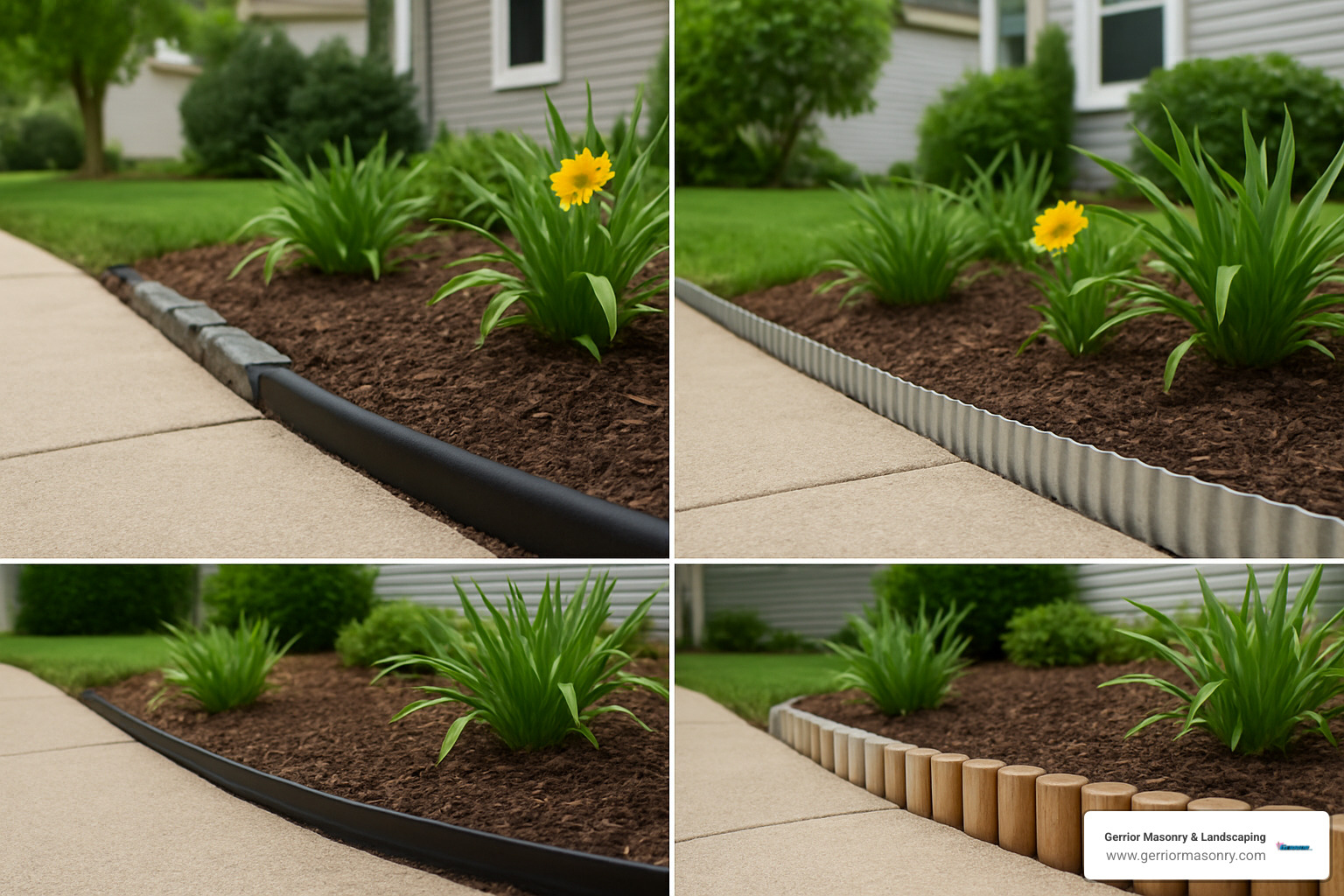
Stone edging is the premium option that gets better looking as it ages, handling freeze-thaw cycles without cracking. Higher upfront cost but minimal maintenance. Plastic edging wins on affordability but gets brittle over time, requiring replacement every 5-10 years. Metal edging gives clean lines and solid durability with a modern look. Wood edging offers natural beauty but needs regular maintenance and fights rot and insects.
| Material | Durability | Cost | Maintenance | Climate Resistance |
|---|---|---|---|---|
| Stone | Excellent (50+ years) | High | Low | Excellent |
| Plastic | Fair (5-10 years) | Low | Low | Good |
| Metal | Good (20-30 years) | Moderate | Low | Good |
| Wood | Fair (10-15 years) | Moderate | High | Poor |
For more information about Natural Stone Garden Edging, you can explore different options that work well in our Massachusetts climate.
Choosing the Right Stone Edging for Your Walkway
The perfect stone walkway edging should feel like it’s always belonged in your landscape. Style harmony starts with looking at what you already have. Formal brick walkways pair well with crisp granite or bluestone edging, while rustic flagstone paths work better with weathered limestone or fieldstone.
Granite is the “buy once, enjoy forever” option. Yes, it costs more upfront, but granite edging from the 1980s still looks fantastic. Colors range from light gray to deep charcoal, and it handles New England winters perfectly.
Bluestone brings beautiful blue-gray tones that work with almost everything. This natural sandstone develops character over time, showing subtle variations that add personality.
Limestone offers the most bang for your buck in natural stone. The warm, neutral tones from cream to gray work well for creating a relaxed feel. While not as hard as granite, limestone handles our climate fine when properly installed.
Concrete curb units have improved dramatically, with tumbled-edge varieties that can fool most people into thinking they’re natural stone. They’re consistent in size and replacement is straightforward if needed.
Climate, Budget & Eco-Friendly Options
Recycled content options now contain over 50% recycled materials while maintaining performance. Look for GreenCircle certification if environmental impact matters. No-dig kits solve installation challenges using flexible restraints and anchoring spikes without deep trenching.
Budget planning gets tricky because upfront costs don’t tell the whole story. Natural stone typically costs two to three times more initially, but factor in longevity – that “expensive” granite might cost less per year than cheaper options you’ll replace multiple times.
Measuring & Ordering Materials
Linear-foot math requires following the actual path your edging will take, not straight-line distances. 10% overage prevents project delays when stone breaks or cuts don’t go perfectly. Check local setback codes – some municipalities have requirements for hardscape installations near property lines.
DIY Stone Walkway Edging Installation Step-by-Step
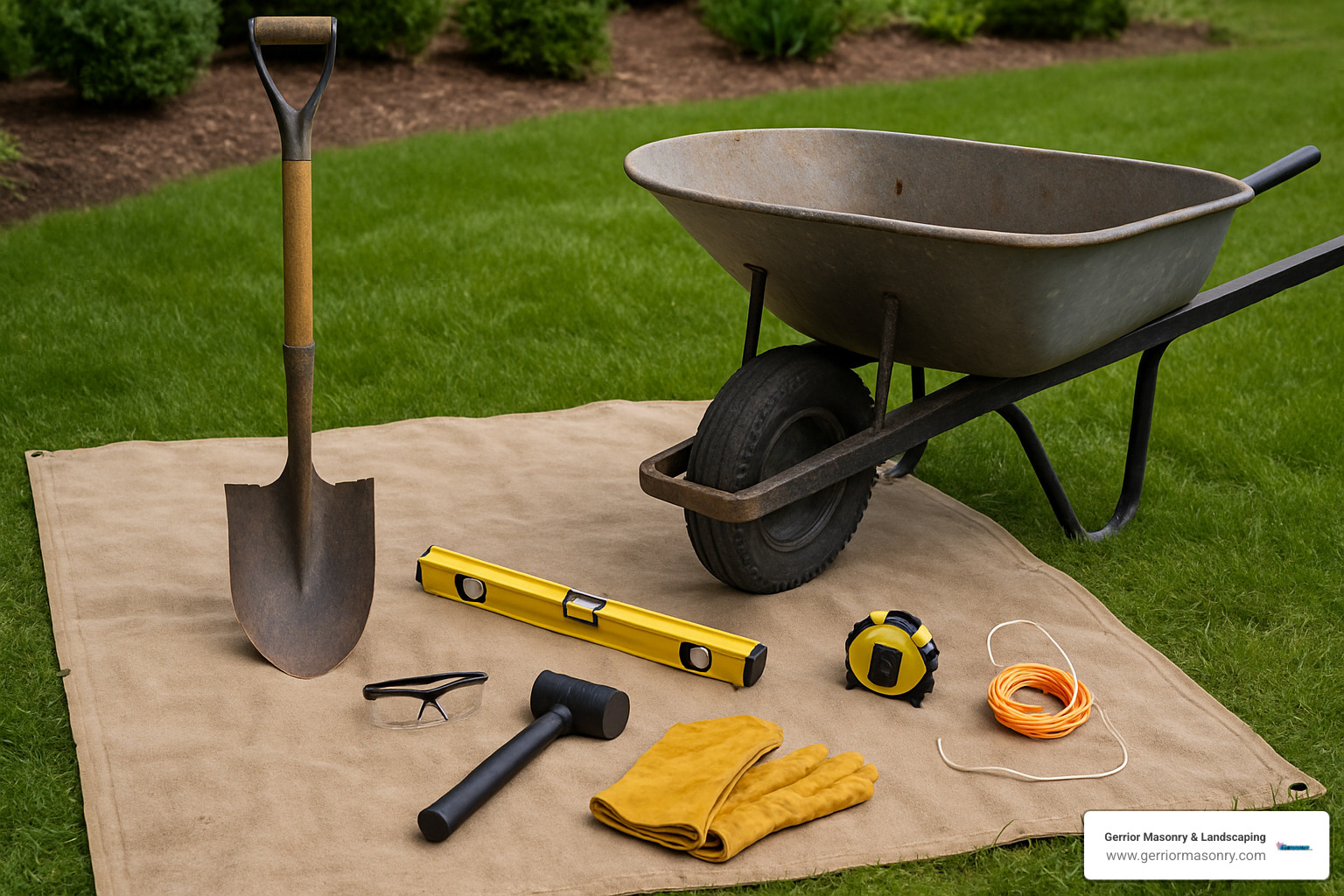
Essential Tools:
– Spade shovel for precise trenching
– Rubber mallet for setting stones
– 4-foot level for checking alignment
– Wheelbarrow for moving materials
– String line and stakes for layout
– Safety glasses and work gloves
Materials List:
– Stone edging units (with 10% overage)
– 3/4-inch crushed gravel for base
– Leveling sand (coarse concrete sand)
– Landscape spikes or anchoring system
– Polymeric sand for joints
For detailed guidance on professional techniques, see our Stone Garden Edging Installation resource.
1. Layout & Excavation
Mark your lines using spray paint or stakes with string. Position the edging about 1-2 inches from the walkway surface for clean visual separation. Mark both inner and outer edges of your planned trench for consistent width.
Dig your trench 4-6 inches deep – this isn’t negotiable for lasting results. The trench should be wide enough for your edging material plus about 2 inches on each side for backfill. Keep checking depth with a measuring stick for consistency.
Remove all roots, grass, and weeds from the trench area. Even small root systems can cause settling issues or create pathways for weeds. Use a mattock or root saw for stubborn roots – it’s worth the extra effort.
2. Base Preparation
Compacted 3/4-inch gravel forms your foundation. Spread 2-3 inches of crushed gravel evenly and compact thoroughly with a hand tamper. The gravel should feel rock-solid and provides drainage plus a stable platform.
Two inches of leveling sand goes on top. Use coarse concrete sand, not fine sand that washes away. Screed level with a straight board but don’t over-compact – you want it firm enough to support stones but adjustable.
A 1% slope for runoff means about 1 inch of drop per 10 feet away from your walkway. This gentle slope prevents water pooling and ice dam formation.
3. Setting & Securing Stones
Start by placing your first stone at one end. Set it gently and use your rubber mallet to tap into position. The stone should sit firmly with about one-third of its height below ground level.
Butt joints work perfectly for most projects – place each stone snugly against the previous one. Stagger the seams like laying bricks to avoid weak spots. Check each stone with your level and adjust the sand base until everything sits perfectly.
Landscape spikes or anchors prevent shifting over time. Drive these every 3-4 feet along straight sections, more frequently on curves. Backfill with soil behind the edging, working it gently around each stone and tamping lightly to eliminate air pockets.
4. Finishing Touches
Polymeric sand creates professional joints that get stronger over time. Sweep into all gaps between stones, filling completely while brushing excess off surfaces. Activate with water using gentle hose mist – too much water creates mess, too little leaves loose sand.
Watch for the sand to firm up in 15-30 minutes. This creates weather-resistant joints that resist weeds and insects. Fresh mulch and plantings complete the change – choose mulch colors that complement your stone selection.
Allow 24-48 hours for polymeric sand to fully cure before heavy use.
Design Ideas, Maintenance & Common Mistakes
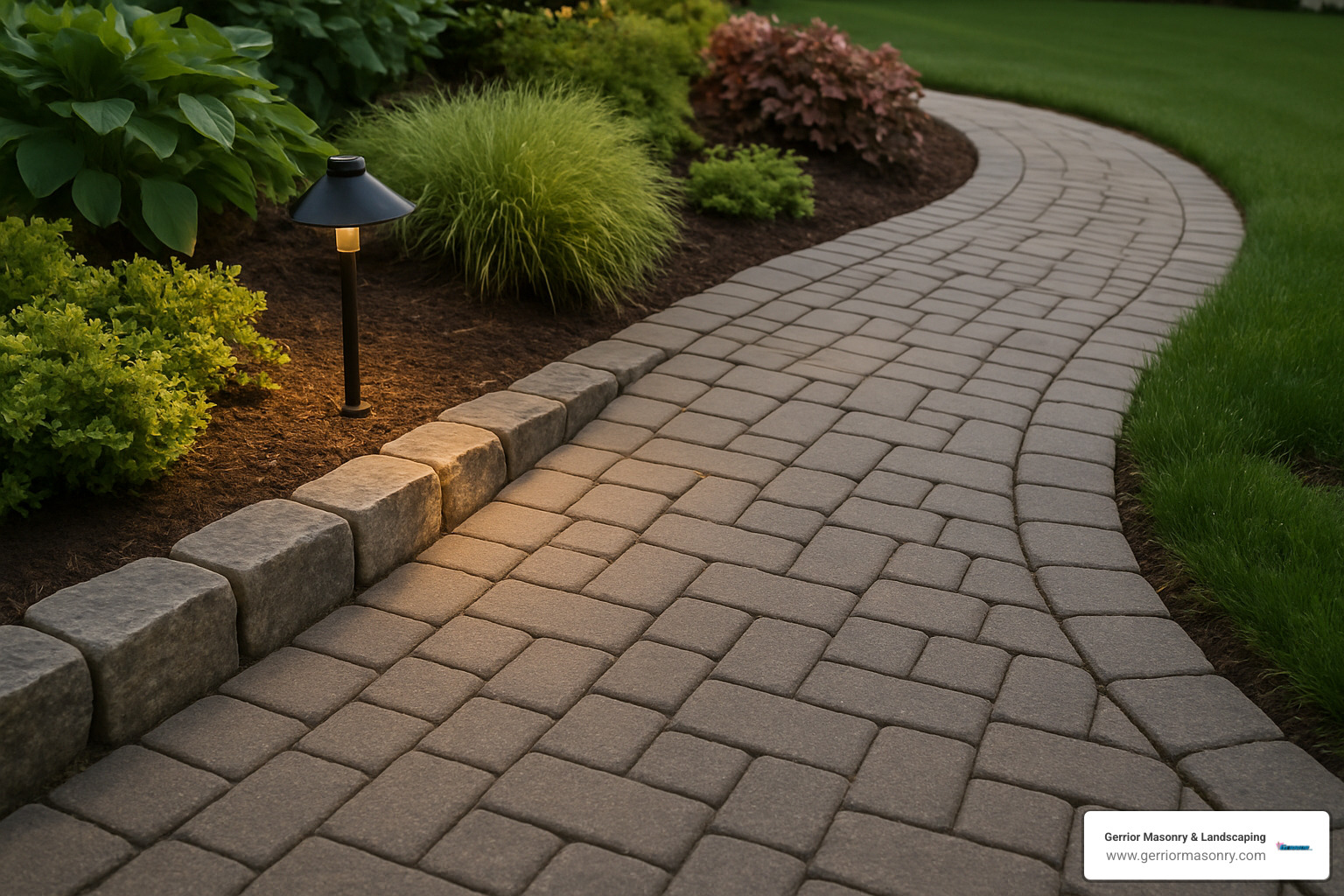
Curved soldier course installations create stunning impact by standing stones vertically rather than laying flat. Herringbone borders using smaller units add sophisticated patterns at walkway intersections. Lighting integration with low-voltage LED strips creates evening ambiance and safety.
For additional creative approaches, check out our Paver Walkway Ideas for inspiration.
Maintenance & Care
Annual power-washing removes accumulated dirt and algae. Resealing every 3-5 years protects natural stone from stains. Joint sand replacement becomes necessary when polymeric sand wears away. Spring frost-heave inspections help catch small problems before major repairs.
Installation Errors to Avoid
Shallow trenching tops the list – your trench must accommodate full stone height plus base layers. Skimping on base preparation creates settling and alignment issues. Skipping landscape fabric allows weeds to penetrate from below. Ignoring expansion gaps causes problems when stone expands and contracts with temperature changes.
Cost & Value of Stone Walkway Edging

DIY material costs typically range from $12-$45 per linear foot, with premium custom installations reaching $90+ per linear foot. Labor costs add 40-60% to material expenses but often prevent costly mistakes.
Yearly maintenance costs average less than $1 per linear foot. The curb appeal return on investment typically ranges from 60-80% of initial cost in increased property value, with quality stone edging potentially increasing home worth by 5-15%.
Please note: These prices are broad internet averages based on national data and not actual costs for Gerrior Masonry services. Contact us for accurate local pricing.
Properly installed stone edging can last 50+ years with minimal care – decades of improved curb appeal for a one-time investment.
For specific guidance on material selection and costs, see our Edge Stones for Gardens resource.
Frequently Asked Questions about Stone Walkway Edging
How deep should my edging trench be?
Your stone walkway edging trench should be 4-6 inches deep for most residential projects. Plan for 2-3 inches of base materials plus your stone height. For high-traffic areas, go deeper – 6-8 inches provides extra stability against New England’s freeze-thaw cycles.
Will stone edging eliminate weeds entirely?
Stone walkway edging dramatically reduces weed problems by about 90%, but won’t eliminate them completely. Proper installation with landscape fabric and polymeric sand blocks most weed seeds. Surface weeds from blown-in seeds are easily managed with string trimmers that work right against the stone edge.
Can I install stone edging in freezing New England winters?
Don’t do it. Frozen ground makes excavation extremely difficult, and polymeric sand needs consistent above-freezing temperatures to cure properly. Plan installation for late spring through early fall when soil conditions cooperate and temperatures stay reliably above freezing.
Conclusion
Stone walkway edging transforms ordinary paths into polished landscape features while providing essential benefits like soil retention, weed control, and manageable maintenance.
The decision comes down to DIY versus professional installation. Simple straight-run edging makes a rewarding weekend project for handy homeowners. However, curved designs, tricky slopes, or challenging soil conditions often require experienced hands.
Success lies in proper base preparation – don’t rush excavation and gravel compacting. Quality materials matter, but even basic limestone edging properly installed outperforms expensive stones set incorrectly.
At Gerrior Masonry & Landscaping, we’ve perfected stone walkway edging installations for over three decades throughout Massachusetts. We understand New England’s brutal freeze-thaw cycles and build edging that improves with age.
Whether you need design guidance, material selection help, or complete installation, our experienced team and hands-on owner oversight ensure lasting performance and curb appeal.
Ready to explore your options? Check out our Stone Garden Edging resource for additional design possibilities.
Gerrior Masonry & Landscape Construction is based in Woburn, MA, and proudly serves homeowners throughout Middlesex and Essex County, Massachusetts.
