
Stone Garden Edging: Top 7 Essential Tips for Success
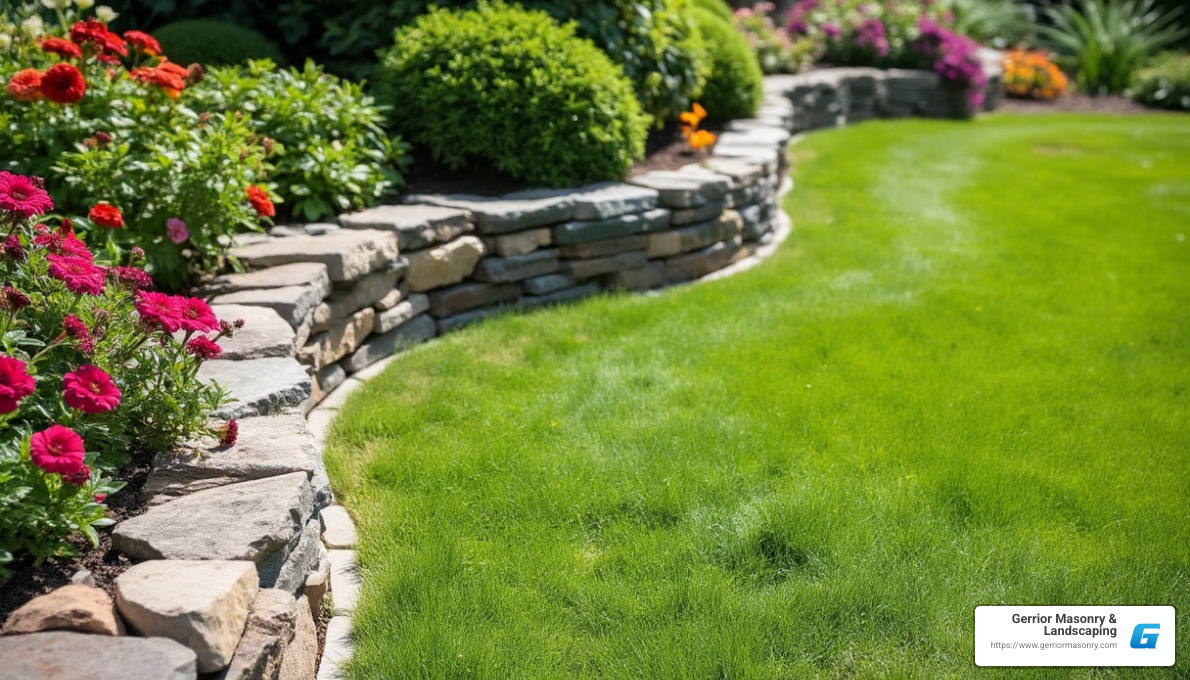
Stone garden edging is a fantastic way to lift the aesthetics and practicality of your outdoor space. It offers a clean line between your lawn and garden beds, increasing your landscape’s visual appeal. For those looking to improve curb appeal effortlessly, a well-installed stone garden edging is an ideal solution. Here’s a quick rundown:
- Definition: Stone garden edging consists of stones lining the borders of your gardens or pathways.
- Purpose: It creates a neat separation between different areas, preventing soil erosion and keeping mulch and soil in place.
- Benefit: Adds a touch of elegance and increases your property’s aesthetics and value.
Looking for a quick answer? Stone garden edging involves placing stones along garden borders to create clean, defined lines that improve both aesthetics and functionality.
My name is Joe Gerrior, and with over 34 years of experience in masonry and landscaping, I’m passionate about changing yards into stunning spaces using techniques like Stone garden edging. Our goal at Gerrior Masonry and Landscaping is to deliver beautiful, lasting results that you can enjoy in your outdoor living areas.
We will explore the essential steps and benefits associated with this process in the following sections.
Stone garden edging terms made easy:
– Garden wall installation
– Stone wall design ideas
– Stone wall restoration
Understanding Stone Garden Edging
Stone garden edging is more than just a decorative element; it’s a functional feature that defines and improves the beauty of your landscape. Let’s explore what makes this technique so effective and appealing.
Natural Stone Border
Natural stone borders are a classic choice for garden edging. They offer a timeless look that complements any garden style. Unlike synthetic materials, natural stones have unique textures and colors that add character to your landscape. They are also highly durable, making them perfect for withstanding harsh weather conditions.
Benefits of Natural Stone:
- Durability: Natural stones can last for decades, resisting fading and erosion.
- Variety: Available in a range of colors and textures, from warm sandstone to cool blue granite.
- Low Maintenance: Requires minimal upkeep compared to other materials.
Landscape Edging
Landscape edging with stone creates a clear and attractive boundary between different areas of your yard. This not only improves the visual appeal but also helps in maintaining the integrity of your garden beds by keeping mulch and soil in place.
Key Features of Landscape Edging:
- Clean Lines: Defines paths and borders, giving your garden a polished look.
- Erosion Control: Helps prevent soil erosion by keeping mulch and soil contained.
- Versatility: Suitable for various landscape designs, whether modern or traditional.
Garden Borders
Using stone for garden borders is an effective way to highlight specific areas of your garden. It creates a focal point and guides the eye through your landscape design. Garden borders can be customized to fit any shape or size, allowing for creativity in your design.
Why Choose Stone for Garden Borders?
- Aesthetic Appeal: Adds a natural and sophisticated look to your garden.
- Functional Separation: Keeps grass from invading flower beds and prevents mulch from spilling onto pathways.
- Increased Property Value: Improves curb appeal, making your property more attractive to potential buyers.
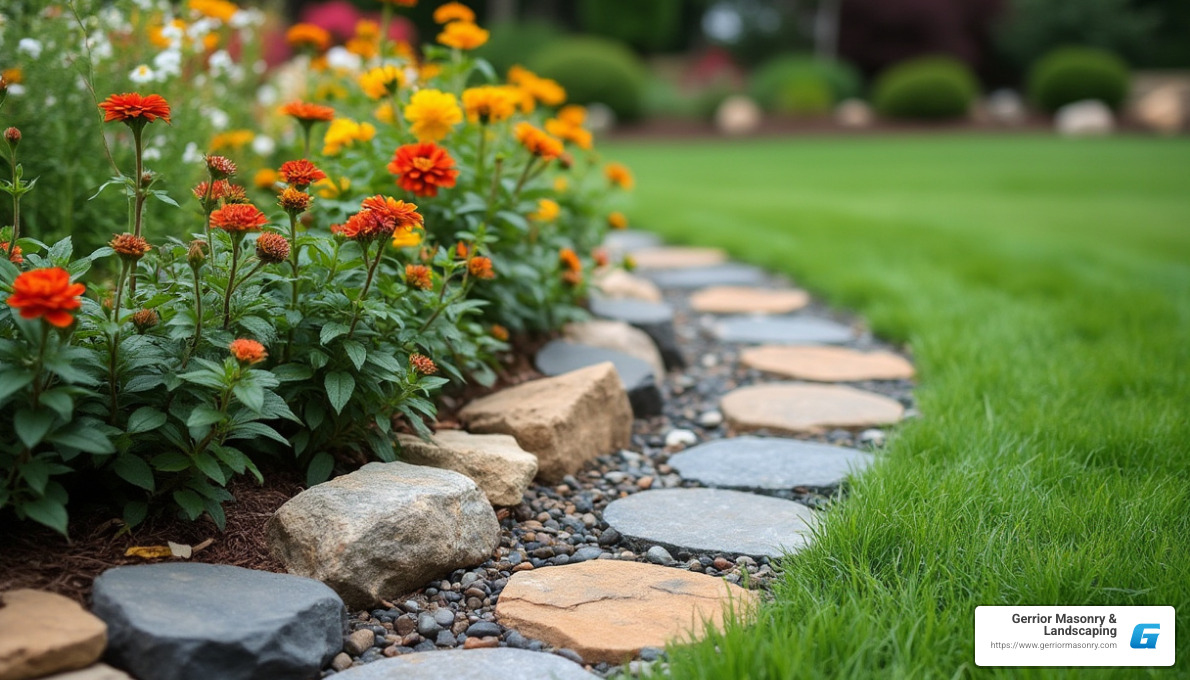
Incorporating stone garden edging into your landscape offers both aesthetic and practical benefits. Whether you’re aiming for a rustic charm or a modern edge, natural stone provides the versatility and durability needed to achieve your vision.
In the next section, we will guide you through the steps to install stone garden edging, ensuring a professional and lasting finish.
How to Install Stone Garden Edging
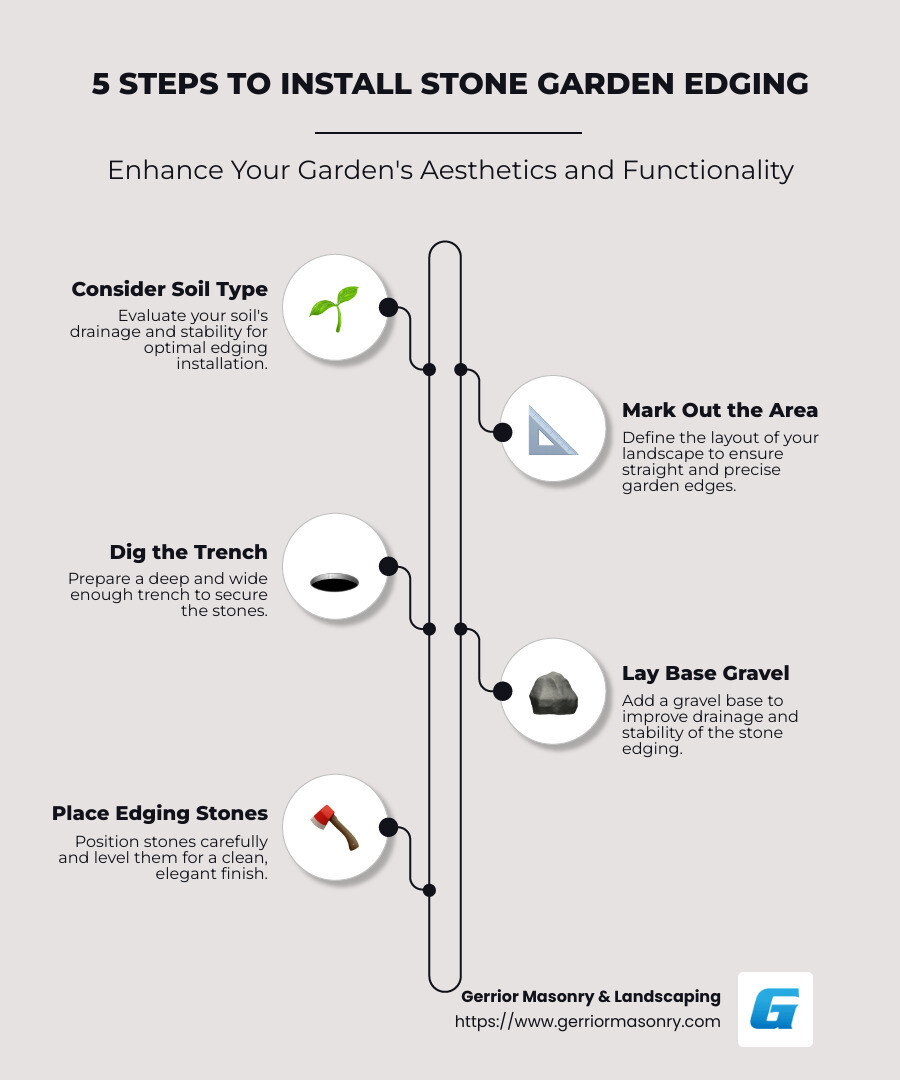
Step 1: Consider Your Soil Type
Before you start, it’s crucial to understand your soil type. Different soils have different drainage and stability characteristics. Sandy soils drain well but might not hold stones firmly. Clay soils are stable but can retain too much water. Loamy soils are ideal as they balance drainage and stability. If your soil isn’t perfect, don’t worry. You can adjust by adding materials like sand for better drainage or compacting the soil for stability.
Step 2: Mark Out the Area
Next, plan your landscape area. Use a garden hose or string to outline where you want your stone garden edging. This helps visualize the layout and ensures you have the right dimensions. A clear layout prevents mistakes and makes the installation smoother.
Step 3: Dig the Trench
Now, it’s time to dig. The trench should be about 4-6 inches deep and wide enough to fit your stones comfortably. The depth depends on the size of your stones and the soil type. A well-dug trench ensures the stones sit firmly and level.
Step 4: Lay the Base Gravel
Add a layer of base gravel to the trench. This layer is crucial for drainage and stability. A 2-inch layer of gravel is usually sufficient. It helps water drain away and provides a stable base for the stones. Compact the gravel to keep it in place.
Step 5: Place the Weed Membrane
Lay a weed membrane over the gravel. This helps prevent weeds from growing between your stones, reducing maintenance. Cut the membrane to fit the trench and secure it in place. This step is key for a clean, long-lasting finish.
Step 6: Add the Edging Stones
Now, place your edging stones. Start at one end and work your way to the other. Use a rubber mallet to gently tap each stone into place. Ensure they are level and snug against each other. The mallet helps set the stones without damaging them.
Step 7: Fill in the Gaps
Finally, fill any gaps with loose earth or mulch. This not only secures the stones but also gives a polished look. Mulch adds a natural finish and helps with moisture retention.
By following these steps, you can achieve a professional and lasting stone garden edging. This method not only improves aesthetics but also provides functional benefits like erosion control and clear garden boundaries. In the next section, we’ll explore the many benefits of incorporating stone edging into your garden design.
Benefits of Stone Garden Edging
Stone garden edging offers a multitude of benefits that go beyond just defining your garden’s borders. Let’s explore why this choice is both practical and visually appealing.
Aesthetic Appeal
Natural stone adds a timeless beauty to any garden. The variety of colors and textures available allows you to match your garden’s style perfectly. Whether you prefer the warm tones of sandstone or the cool hues of blue granite, there’s a stone for every taste.
Stone edging creates clean, defined lines that improve the overall design of your landscape. It highlights the most beautiful areas of your garden, making flowers and plants stand out more vividly. This touch of elegance can significantly boost your home’s curb appeal.
Durability
One of the standout features of stone is its durability. Unlike man-made materials, natural stone can withstand extreme weather conditions without fading or cracking. Many ancient structures still stand today, a testament to stone’s long-lasting nature.
This durability means that once your stone edging is installed, it requires minimal maintenance. You won’t have to worry about replacing it every few years, saving you time and money in the long run.
Functionality
Stone garden edging is not just about looks; it’s also highly functional. It creates a clear barrier between your lawn and planting beds, eliminating the need for constant trimming. This separation helps retain mulch and decorative gravel, keeping your garden neat and tidy.
Additionally, stone edging helps with erosion control. By holding soil and mulch in place, it prevents washouts and keeps your garden looking pristine. The added stability also means your plants are less likely to be disturbed by heavy rain or wind.
Incorporating stone into your garden design offers both aesthetic and practical benefits. Its timeless appeal, combined with best durability and functionality, makes it an excellent choice for any landscape. Next, we’ll address some common questions about stone garden edging to help you make the most of this versatile material.
Frequently Asked Questions about Stone Garden Edging
What do you put under stone edging?
When installing stone garden edging, the base layer is crucial for stability and drainage. Start with base gravel. This layer provides a solid foundation and ensures proper drainage, preventing water from pooling around the stones.
A well-compacted gravel base helps keep the edging stones from shifting over time. This stability is essential for maintaining a neat and tidy garden edge. A gravel layer not only supports the stones but also allows water to drain away efficiently, protecting your garden from erosion.
How do you keep stone edging in place?
To keep your stone edging firmly in place, begin with careful leveling. Use a mallet to gently tap the stones into the ground, ensuring they are secure and level with each other. This helps prevent them from moving or tilting over time.
Filling in the gaps with loose earth or mulch can also help stabilize the stones. This additional support keeps the stones in place and provides a clean, finished look to your garden border.
How do you use rocks as landscape edging?
The process of using rocks as landscape edging starts with trench digging. Dig a trench that is deep and wide enough to accommodate your chosen stones comfortably. This trench will guide the placement of the stones and ensure they sit at the desired height.
Once the trench is ready, place the stones in position, checking for alignment and height. Use leveling sand to create a smooth surface for the stones to rest on. This sand acts as a cushion, allowing for slight adjustments and ensuring the stones remain level over time.
By following these steps, you can create a stable and visually appealing stone border that improves your garden’s design. This method not only adds a natural touch to your landscape but also provides practical benefits like improved drainage and reduced maintenance.
Conclusion
At Gerrior Masonry & Landscaping, we believe that stone garden edging is more than just a boundary for your garden—it’s a way to define and improve your outdoor space. With over 30 years of experience, our team is equipped with the expertise and dedication to bring your landscaping vision to life.
Our approach to stone edging combines expert advice with high-quality materials to ensure long-lasting results. Whether you’re looking to create a new garden border or refresh an existing one, our skilled team will guide you through every step of the process. We focus on the details, from selecting the right stones to ensuring proper installation, so you can enjoy a beautiful and functional garden edge for years to come.
Choosing Gerrior Masonry & Landscaping means choosing a partner committed to excellence. Our owner oversight on projects ensures that each installation meets our high standards and exceeds your expectations. We stand behind our work with a satisfaction guarantee and offer comprehensive follow-up services to keep your garden looking its best.
Ready to transform your outdoor space with professional stone garden edging? Let us help you create a garden that not only looks stunning but also stands the test of time. For more information on how we can improve your landscape, visit our Landscape Design & Installation Services.
Trust us to deliver high-quality results and expert advice custom to your unique needs. Your dream garden is just a call away.
