
Basement Hatch Replacement: 5 Powerful Tips for Success 2025
Why Basement Hatch Replacement Matters for Your Home
Basement hatch replacement is a critical home improvement project that addresses water intrusion, energy loss, and safety concerns while improving your property’s value and functionality.
Quick Basement Hatch Replacement Options:
- Steel doors – Most durable, 30+ year lifespan, $800-2,400
- Fiberglass/composite – Lightweight, rot-proof, $600-1,800
- Custom masonry – Historic homes, integrated design, $1,500-4,500
- Electric lift systems – Push-button convenience, $2,000-5,000
Note: These are average costs based on internet data and not actual costs for Gerrior Masonry services.
If you’ve noticed flaking paint, soft or rotting wood, water puddles after rain, or difficulty opening your basement hatch, it’s time for a replacement. Old bulkhead doors can let in moisture, pests, and cold air while creating safety hazards.
Modern basement hatches solve these problems with weather-sealed construction, insulated panels, and tamper-resistant locks. Homeowners report up to 80% reduction in water intrusion and 30-50% improvement in basement humidity after upgrading to quality replacement hatches.
The replacement process involves careful measurement, proper demolition, foundation assessment, and professional installation with weatherproof sealing. Most projects take 1-2 days and require permits in many Massachusetts communities.
I’m Joe Gerrior, owner of Gerrior Masonry & Landscape Construction Corp, and I’ve been helping Massachusetts homeowners with basement hatch replacement projects for over 34 years. My team specializes in both standard installations and custom masonry solutions that match your home’s architectural style.
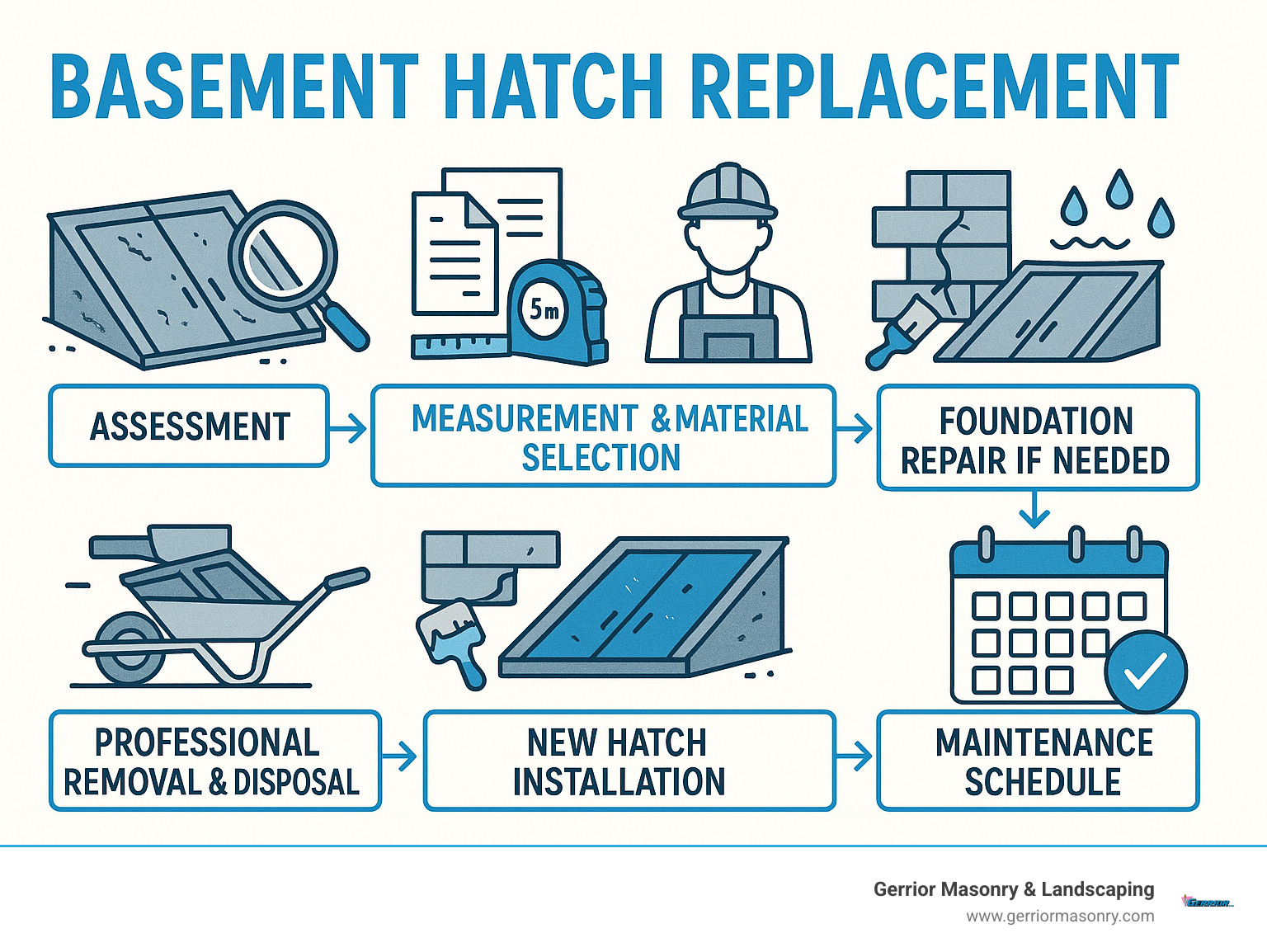
Basement hatch replacement terminology:
– basement door replacement cost
– basement door replacement near me
Basement Hatch Replacement 101: When, Why and How
Your basement hatch might not be glamorous, but it works hard. Also called a bulkhead or cellar door, it covers the stairs leading to your basement entrance and must keep weather out, provide secure access, and offer emergency egress.
When we discuss basement hatch replacement, we are talking about safety, moisture control, energy savings, and pest exclusion—not just appearance.
Safety first: Modern codes require a clear, reliable exit for all finished basements. A failing hatch can block that exit.
Water damage: Scientific research on moisture control proves a tight hatch is essential. Once seals fail, leaks only worsen.
Energy loss & pests: Drafts raise heating bills and invite rodents and insects.
After hundreds of bulkhead replacements throughout Massachusetts, we’ve learned that most hatches built before 1990 need replacement within 20-30 years. The good news? Today’s materials outperform anything that was available a decade ago.
Signs It’s Time for Basement Hatch Replacement
Know the warning signs so you can act before damage spreads:
- Flaking paint & rust on metal surfaces.
- Soft, spongy wood or cracked masonry around the frame.
- Sticking or sagging doors that no longer open freely.
- Puddles or ice inside the hatch after storms.
- Visible gaps or missing weatherstripping.
Can I DIY a Basement Hatch Replacement?
It’s tempting, but basement hatch replacement is rarely a weekend project. Precise measurement, concrete cutting, waterproofing, and code compliance require professional tools and experience. Small errors can cause ongoing leaks or foundation damage, and most warranties exclude DIY installs.
Permit requirements in Massachusetts add another layer—drawings, inspections, and egress verification. Our bulkhead door replacement near me service rolls permits, installation, and warranty into one package so you don’t have to juggle paperwork or heavy lifting.
Top Basement Hatch Replacement Options Compared
Choosing the right basement hatch replacement can feel overwhelming with so many options available. After helping Massachusetts homeowners for over 34 years, I’ve learned that the best choice depends on your specific needs, budget, and home style. Let me walk you through the most popular options we install and what makes each one special.

The three main categories we work with are weather-sealed steel doors, composite and fiberglass options, and custom concrete and masonry caps. Each has its sweet spot depending on what you’re trying to accomplish. Steel doors dominate our installations because they handle New England weather like champs, while composite materials appeal to homeowners who want low maintenance.
When it comes to operation, you’ll also need to decide between manual and electric lift systems. Manual doors work great for most situations, but if you have mobility concerns or just love convenience, electric lifts with push-button operation are worth considering.
Note: All pricing mentioned reflects average costs based on internet data and not actual costs for Gerrior Masonry services.
Weather-Sealed Steel
Steel basement hatches are the workhorses of the industry, and there’s a good reason why we install more of these than any other type. In Massachusetts, where we get everything from nor’easters to scorching summer heat, steel doors just keep performing year after year.
Galvanized construction forms the foundation of quality steel doors. The hot-dip galvanization process creates a zinc coating that bonds directly to the steel, providing rust resistance that lasts decades. I’ve seen properly maintained galvanized doors still looking great after 30 years of New England weather.
The powder coat finish takes durability even further. Unlike regular paint that can chip and peel, powder coating is baked on at high temperatures, creating a finish that resists scratches, fading, and weather damage.
Modern steel doors also come with excellent insulation options. Foam-filled panels can dramatically reduce heat loss through your basement hatch, which is especially important if you use your basement as living space.
Based on internet data, steel doors typically range from $800 to $2,400, with premium insulated models reaching $3,600 or more. The 30-year lifespan makes them one of the most cost-effective long-term investments you can make for your home.
Composite & Fiberglass
If you’re tired of dealing with rust, rot, and constant maintenance, composite and fiberglass doors might be exactly what you need. These materials have revolutionized basement hatch replacement for homeowners who want to install it and forget about it.
The rot-proof construction means you’ll never have to worry about water damage destroying your door. Unlike wood that swells, warps, and eventually rots, or steel that can rust if the coating gets damaged, composite materials maintain their integrity regardless of moisture exposure.
Lightweight design is another huge advantage, especially for homeowners who struggle with heavy doors. A typical steel door can weigh 150 pounds or more, while composite doors often weigh half that.
The color options available in composite materials are impressive. You can choose from earth tones, bold colors, or classic neutrals, and most won’t fade or require repainting for many years.
Composite and fiberglass options typically cost $600 to $1,800 based on internet data, with high-end models reaching $2,700 or more.
Custom Concrete & Masonry Caps
When you own a historic home or want something truly unique, custom masonry solutions create basement hatches that look like they were always part of your home’s original design. These aren’t just functional—they’re architectural features that add real character and value.
Integrated stairs are one of our most popular custom features. Instead of separate concrete steps leading down to a standard door, we can build beautiful stone or concrete stairs that flow seamlessly into the hatch design.
Working with architect specifications allows us to match existing materials, proportions, and design elements. Whether your home features fieldstone, brick, or specific concrete finishes, we can create a hatch that looks like it was part of the original construction plan.
The durability of custom masonry is best. While steel and composite doors might last 20-30 years, properly built masonry installations can easily last 50+ years with minimal maintenance.
Based on internet data, custom masonry solutions typically range from $1,500 to $4,500, with elaborate designs reaching $6,750 or more.
At Gerrior Masonry, our basement bulkhead replacement service includes custom masonry options that we design specifically for your home and needs.
Cost & Installation Process Breakdown
Understanding the complete cost structure and installation process helps homeowners budget appropriately and set realistic expectations for their basement hatch replacement project.
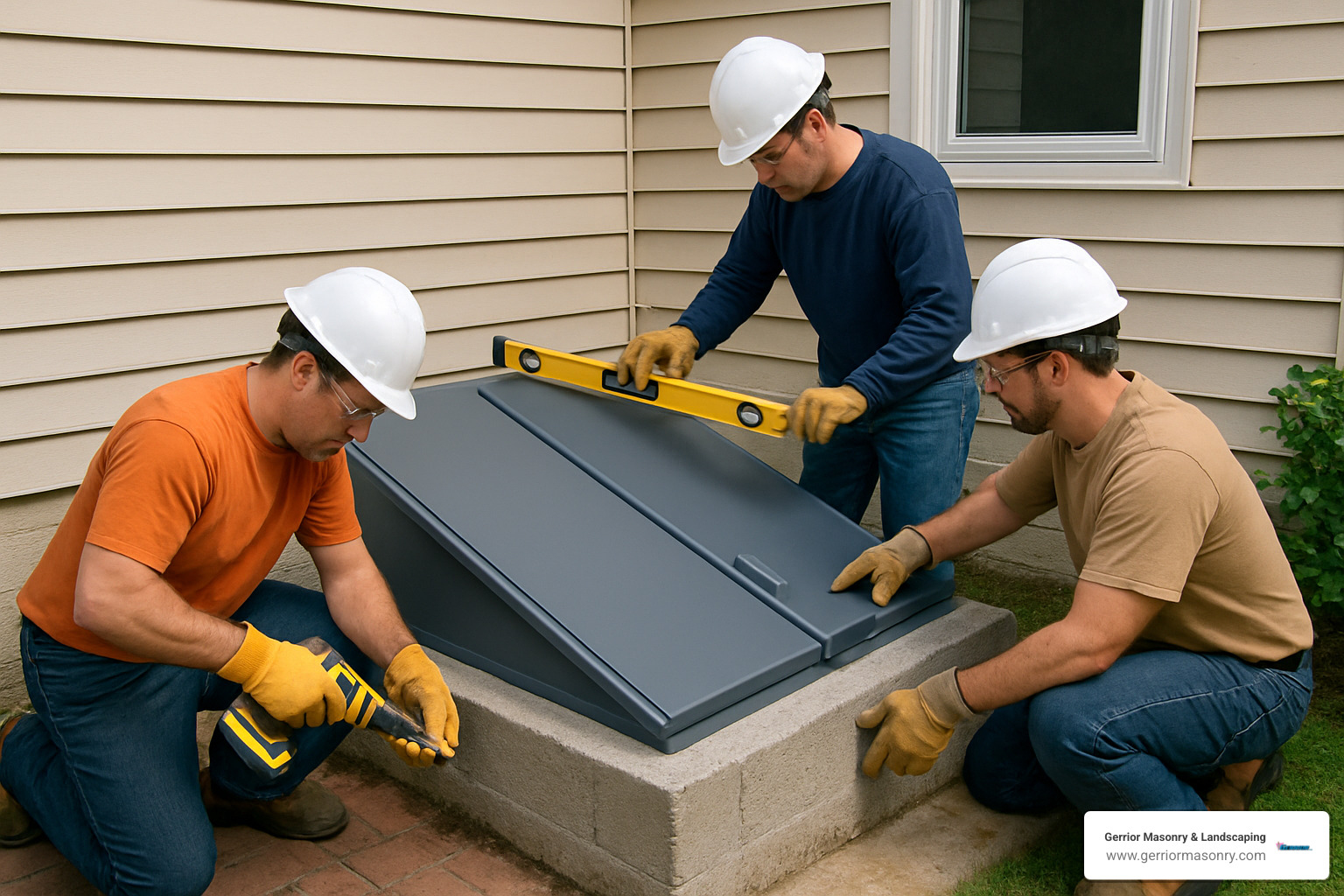
Complete Cost Breakdown (based on internet data):
– Basic steel door: $800-1,200
– Mid-range fiberglass: $1,000-1,800
– Premium steel with insulation: $1,200-2,400
– Custom masonry solution: $1,500-4,500
– Electric lift systems: $2,000-5,000
Note: These are average costs based on internet data and not actual costs for Gerrior Masonry services.
Additional Project Costs:
– Permit fees: $50-200
– Foundation repairs: $200-800
– Demolition and disposal: $150-400
– Crane rental (if needed): $300-600
– Waterproofing upgrades: $200-500
Factors Influencing Final Cost:
– Site Access: Difficult access requiring special equipment increases labor costs
– Foundation Condition: Existing damage requiring repair before installation
– Custom Sizing: Non-standard dimensions requiring fabrication
– Upgrade Features: Insulation, security locks, or electric operators
Our basement door replacement cost guide provides detailed information about pricing factors specific to Massachusetts installations.
Step-by-Step Professional Installation
Professional basement hatch replacement follows a systematic process that ensures proper fit, weatherproofing, and long-term performance:
Day 1: Assessment and Preparation
1. Precise Measurement: We measure the existing opening and assess foundation condition
2. Material Ordering: Custom fabrication begins based on exact specifications
3. Permit Application: We handle all required permits and inspections
4. Site Preparation: Protect landscaping and establish safe work areas
Day 2: Removal and Installation
1. Careful Demolition: Remove old hatch while preserving foundation integrity
2. Foundation Assessment: Inspect and repair any structural issues
3. Curb Preparation: Level and square the foundation opening
4. Frame Installation: Set new frame with proper alignment and support
Day 3: Finishing and Testing
1. Weatherproofing: Install flashing, gaskets, and sealants
2. Hardware Installation: Mount hinges, springs, and locking mechanisms
3. Operation Testing: Verify smooth door operation and proper sealing
4. Final Inspection: Complete permit inspection and cleanup
Most installations take 1-2 days, depending on complexity and weather conditions. Our team coordinates all aspects to minimize disruption to your daily routine.
Making It Weatherproof & Secure
Proper weatherproofing separates professional installations from DIY attempts. Our weatherproofing system includes:
Primary Water Barriers:
– EPDM Rubber Gaskets: Compression seals that maintain flexibility in temperature extremes
– Butyl Flashing Tape: Self-adhering membrane that creates permanent water barriers
– Overlapping Flanges: Design that sheds water away from foundation walls
Security Features:
– Tamper-Resistant Locks: Heavy-duty mechanisms that resist forced entry
– Reinforced Hinges: Stainless steel hardware rated for high-cycle use
– Smart Sensors: Optional monitoring systems that alert homeowners to unauthorized access
Drainage Improvements:
– Proper Slope: Ensure water flows away from the foundation
– Drain Installation: Add drainage systems where needed
– Waterproof Coatings: Apply foundation sealers during installation
Our bulkhead repair service addresses these weatherproofing elements to prevent future problems.
Maintenance, Upgrades & Prevention Tips
A little annual care keeps your new hatch performing for decades.
- Spring – Rinse off winter salt, inspect for rust, and touch up paint early.
- Summer – Repaint steel doors every 5-7 years while weather is dry.
- Fall – Clear leaves and make sure drains stay open.
- Winter – Brush off snow so weight and ice don’t strain hinges.
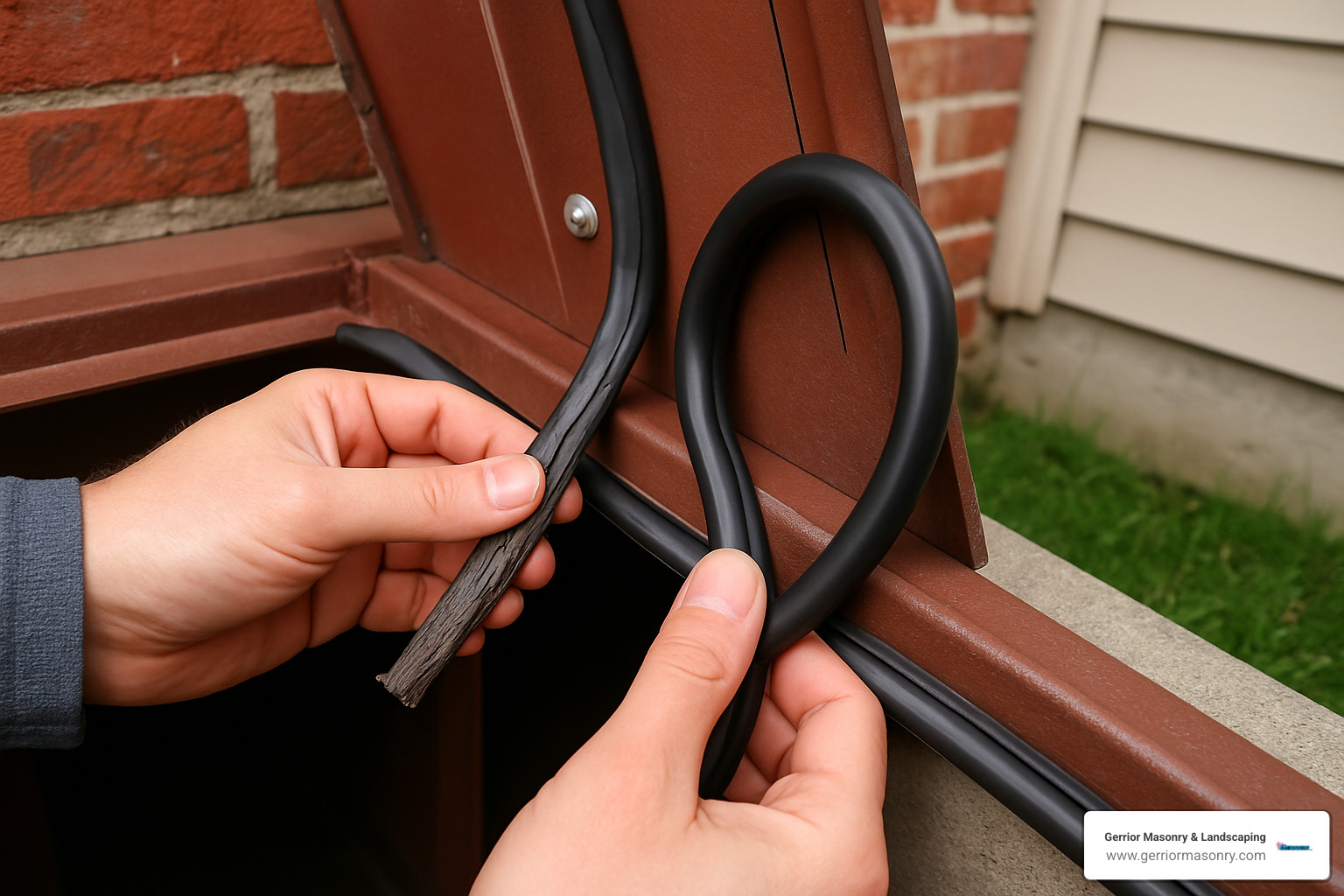
Quick checks:
- Inspect gaskets & weatherstripping; replace if brittle.
- Lubricate hinges and springs once a year.
- Upgrade gas struts or add ventilation grates when needed.
Our average cost of bulkhead replacement research shows that homeowners who stay on top of maintenance get 40-50 % more life out of their doors.
Boosting Energy Efficiency & Air Quality
Modern, well-sealed hatches with insulated panels and proper vapor barriers can cut basement heat loss by up to 60 % and drop humidity 30-50 %. Less moisture means less mold, fewer odors, and lower heating bills. For best results, choose doors with R-values of 8 or higher and keep the area ventilated.
Gerrior Masonry & Landscape Construction is based in Woburn, MA, and services Middlesex and Essex County, Massachusetts.
Frequently Asked Questions about basement hatch replacement
Do I need a permit to replace a basement hatch?
Yes, most Massachusetts communities require permits for basement hatch replacement projects, and honestly, this catches a lot of homeowners by surprise. I’ve seen too many DIY projects get shut down halfway through because the homeowner didn’t realize they needed official approval.
Building codes are pretty specific about basement hatches, especially since they often serve as emergency exits. Your new hatch needs to meet egress width requirements – that’s a minimum of 32 inches for emergency exit purposes. The local inspector will also want to see that your installation can handle structural load calculations and meets current waterproofing standards for below-grade construction.
The inspection process typically involves an initial permit application with basic project drawings, a foundation inspection before we start the installation, and a final inspection once everything’s complete. Some communities even require certificate of occupancy updates if your basement is used as living space.
Here’s the good news: at Gerrior Masonry, we handle all the permit paperwork and coordinate inspections as part of our service. You don’t have to figure out which forms to fill out or schedule inspector visits – we take care of all that bureaucratic stuff so you can focus on picking out your new hatch.
How long does a new hatch last?
This is probably the question I get asked most often, and the answer depends on what you choose and how well you take care of it. Think of it like buying a car – a basic model with no maintenance won’t last as long as a premium model that gets regular tune-ups.
Steel doors are the marathon runners of basement hatches, typically lasting 30+ years with proper maintenance. I’ve seen some well-maintained steel hatches from the 1980s that are still going strong. Fiberglass and composite doors usually give you a solid 20-25 years in our New England climate, while custom masonry solutions can easily hit 50+ years with minimal fussing.
Here’s what really makes the difference: regular maintenance can extend your hatch’s life by 40-50%. That means annual inspections, keeping up with repainting, and addressing small issues before they become big problems. On the flip side, I’ve seen expensive hatches fail in half their expected time because they were completely ignored.
Massachusetts weather is tough on everything, so climate exposure plays a huge role. The quality of the initial installation matters too – a properly installed basic hatch will outlast a premium hatch that wasn’t installed correctly.
What size hatch do I order?
Getting the size right is absolutely critical, and measuring for a basement hatch replacement is trickier than most people think. I’ve seen homeowners confidently order a hatch based on a quick measurement, only to find it doesn’t fit when delivery day arrives.
We start by measuring the foundation opening – width and length – but that’s just the beginning. We also need to evaluate your existing curb condition and dimensions, make sure there’s adequate clearance for the doors to open properly, and determine whether standard sizes will work or if you need custom fabrication.
Most residential installations use standard sizes like 32″ x 54″ (the smallest code-compliant size), 42″ x 60″ (the most common size we install), or 48″ x 72″ for larger openings where you need to move equipment in and out. Custom sizes are definitely available, but expect a 2-4 week lead time and a 20-40% premium over standard pricing.
The tricky part is the overlap – your new hatch needs to overlap the curb by typically 2-4 inches all around for proper weatherproofing. You also need to consider door swing clearance and factor in any foundation repairs that might be needed.
That’s why we always do our own measurements before ordering. It saves everyone the headache of returns, delays, and frustrated phone calls.
Conclusion
Your basement hatch replacement project is more than just swapping out an old door—it’s an investment in your home’s safety, comfort, and value. After helping Massachusetts homeowners with these projects for over 34 years, I’ve seen how the right replacement can transform a problematic basement entrance into a reliable, weatherproof access point.
Safety should always come first in any basement hatch project. Modern hatches provide proper emergency egress while meeting current building codes, giving you peace of mind that your family has safe exit routes when needed. Old, failing hatches can become safety hazards during emergencies, making replacement a critical home improvement priority.
The cost ranges we’ve discussed—from $800 to $5,000 based on internet data—reflect the variety of options available to fit different budgets and needs. These are average costs based on internet research and not actual pricing for our services. The wide range exists because every home is different, and factors like custom sizing, foundation repairs, and material choices significantly impact final costs.
Quality materials make all the difference in New England’s harsh climate. Whether you choose galvanized steel for maximum durability, composite materials for low maintenance, or custom masonry for architectural appeal, investing in proven materials saves money over time. I’ve seen too many homeowners regret choosing the cheapest option when winter weather tests their decision.
Professional installation protects your investment in ways that DIY approaches simply can’t match. Proper weatherproofing, foundation assessment, and code compliance require specialized knowledge and tools. We handle all permits, coordinate inspections, and provide warranties that give you confidence in your investment.
Regular maintenance extends your hatch’s lifespan significantly. Simple tasks like annual rust checks, gasket inspections, and proper lubrication can add decades to your door’s life. We always provide maintenance schedules custom to your specific installation.
At Gerrior Masonry & Landscape Construction, our bulkhead replacement service combines decades of experience with modern materials and techniques. We understand that every home is unique, and we take pride in providing solutions that match your specific needs and budget.
Ready to eliminate those water problems, drafts, and security concerns? Let’s discuss your basement hatch replacement project and create a solution that protects your home for decades to come.
Gerrior Masonry & Landscape Construction is based in Woburn, MA, and services Middlesex and Essex County, Massachusetts.
