
Why Water Management is Critical for Commercial Properties
Downspout drainage systems are essential for commercial properties, channeling rainwater from the roof safely away from the building’s foundation. A complete system includes gutters, downspouts, extensions, and a safe discharge point. Without proper management, the thousands of gallons of runoff from a single storm can cause catastrophic damage.
When water pools near a building, it saturates the soil, exerting immense pressure on the foundation. This leads to cracks, basement flooding, mold growth, and compromised structural integrity. In Massachusetts, where expansive soils are common, this pressure can cause walls to crack and structures to shift. Beyond structural issues, poor drainage erodes landscaping and creates safety hazards like standing water or ice, leading to costly repairs and potential liability.
A professional drainage system prevents these issues by using properly sized components, ensuring correct slope for water flow, and directing water to a safe discharge location at least 5-10 feet from the foundation. This protects your investment, prevents business disruptions, and maintains a safe property.
I’m Joe Gerrior, owner of Gerrior Masonry & Landscape Construction Corp. With over 34 years of experience, we’ve protected countless Massachusetts properties with expertly designed downspout drainage systems. This guide will help you understand your options for safeguarding your commercial building.
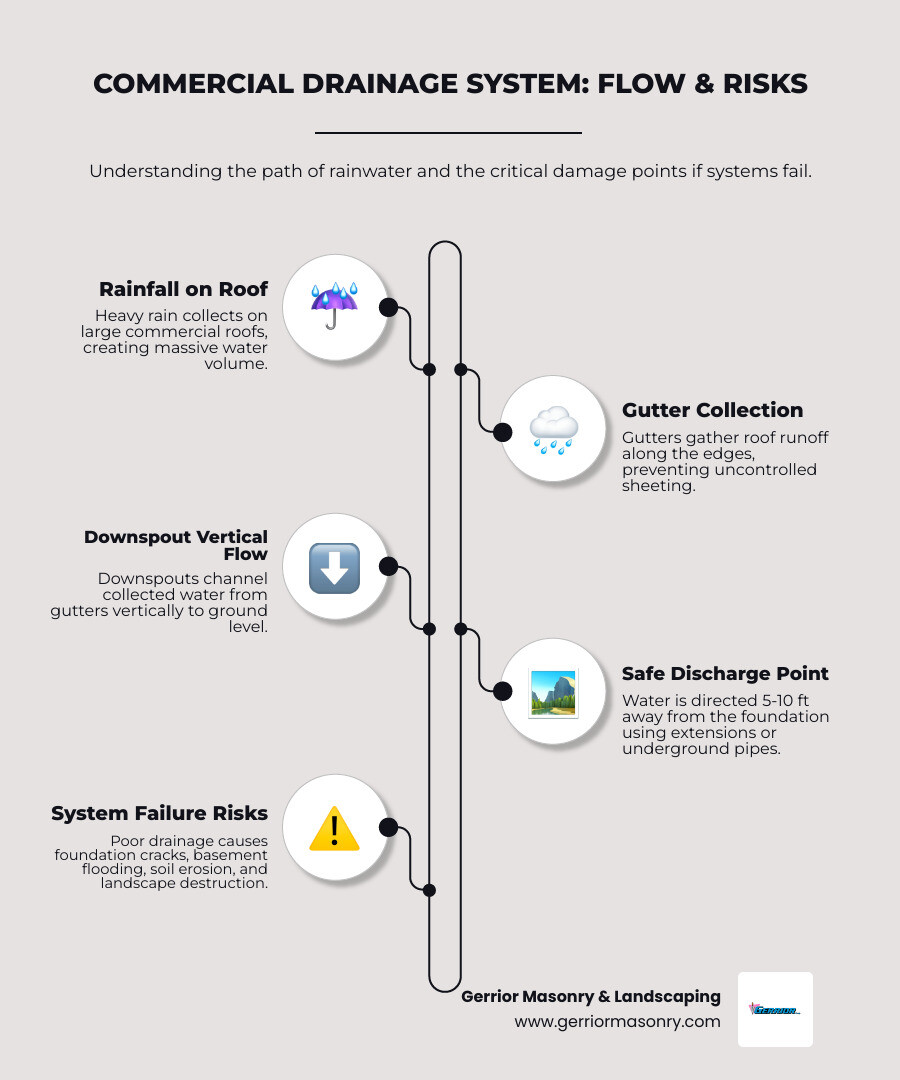
Downspout drainage systems definitions:
Choosing the Right Downspout Drainage Systems for Your Building
Selecting the right downspout drainage systems is critical for protecting your commercial property’s structure and value. This involves choosing the right materials, deciding between above-ground and underground solutions, and ensuring the system is properly designed for your building’s specific needs.
Common Materials and Above-Ground Solutions
The visible parts of your drainage system must be durable and effective. Here are common material choices:
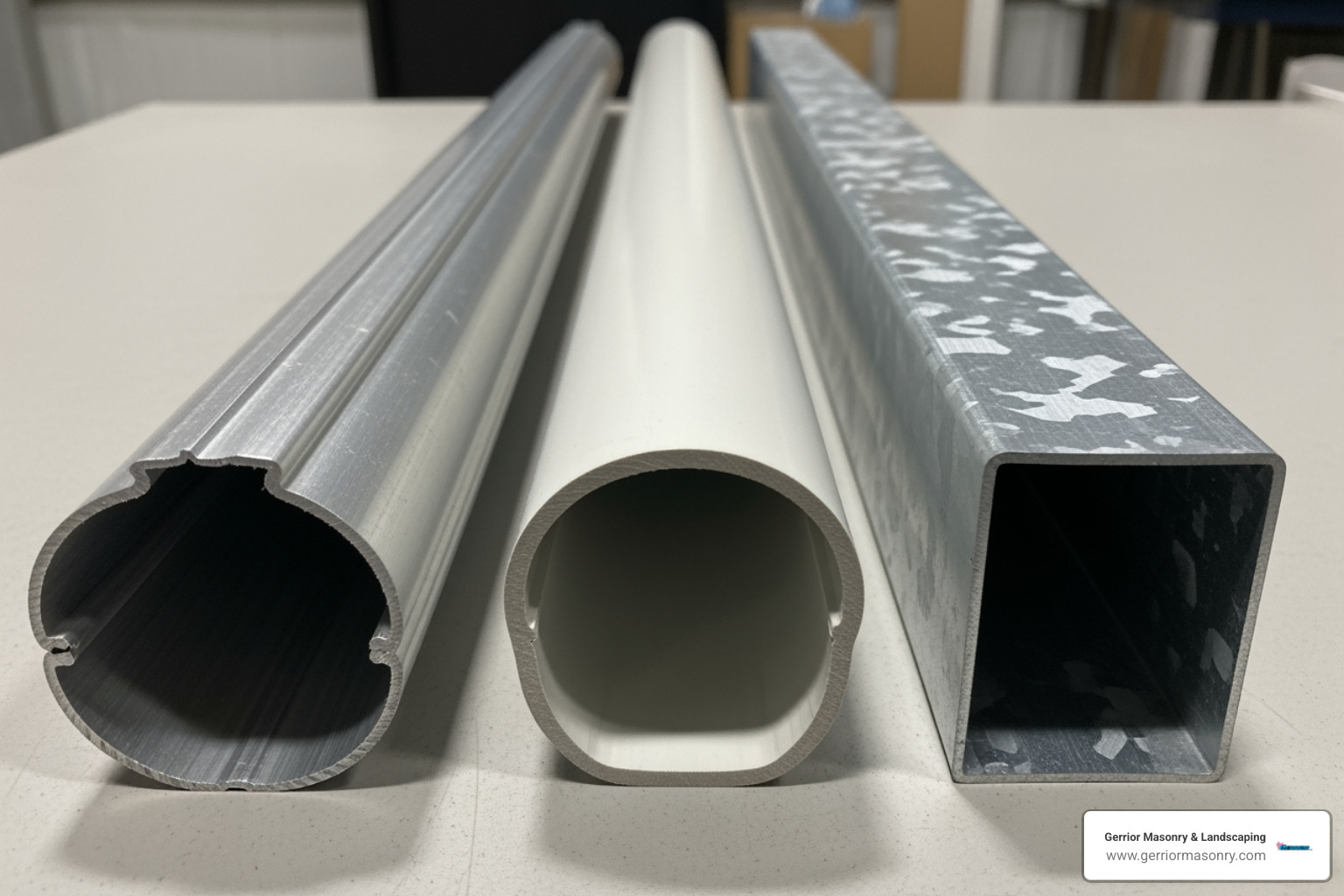
- Aluminum: Lightweight, rust-resistant, and affordable, making it a popular, cost-effective choice.
- Vinyl: Completely rust-proof and available in many colors to match your building’s exterior.
- Steel (Galvanized): Offers superior strength and impact resistance, ideal for high-traffic areas or harsh weather.
- Copper: Provides exceptional longevity and a distinguished look. It’s highly corrosion-resistant and develops a classic patina over time.
Simple, above-ground extensions are often used to carry water away from the foundation:
- Downspout Extensions: Basic attachments that direct water further from the building.
- Splash Blocks: Concrete or plastic blocks placed under the downspout to disperse water and prevent erosion.
These solutions help meet the crucial “discharge distance rule”—ensuring water is released at least 5 feet from the foundation to prevent soil saturation and water damage. For more complex projects, we offer a range of masonry services.
Underground Downspout Drainage Systems: Types and Benefits
For a more robust and aesthetically pleasing solution, underground downspout drainage systems are ideal for commercial properties. They offer superior protection by moving large volumes of water far from the building.
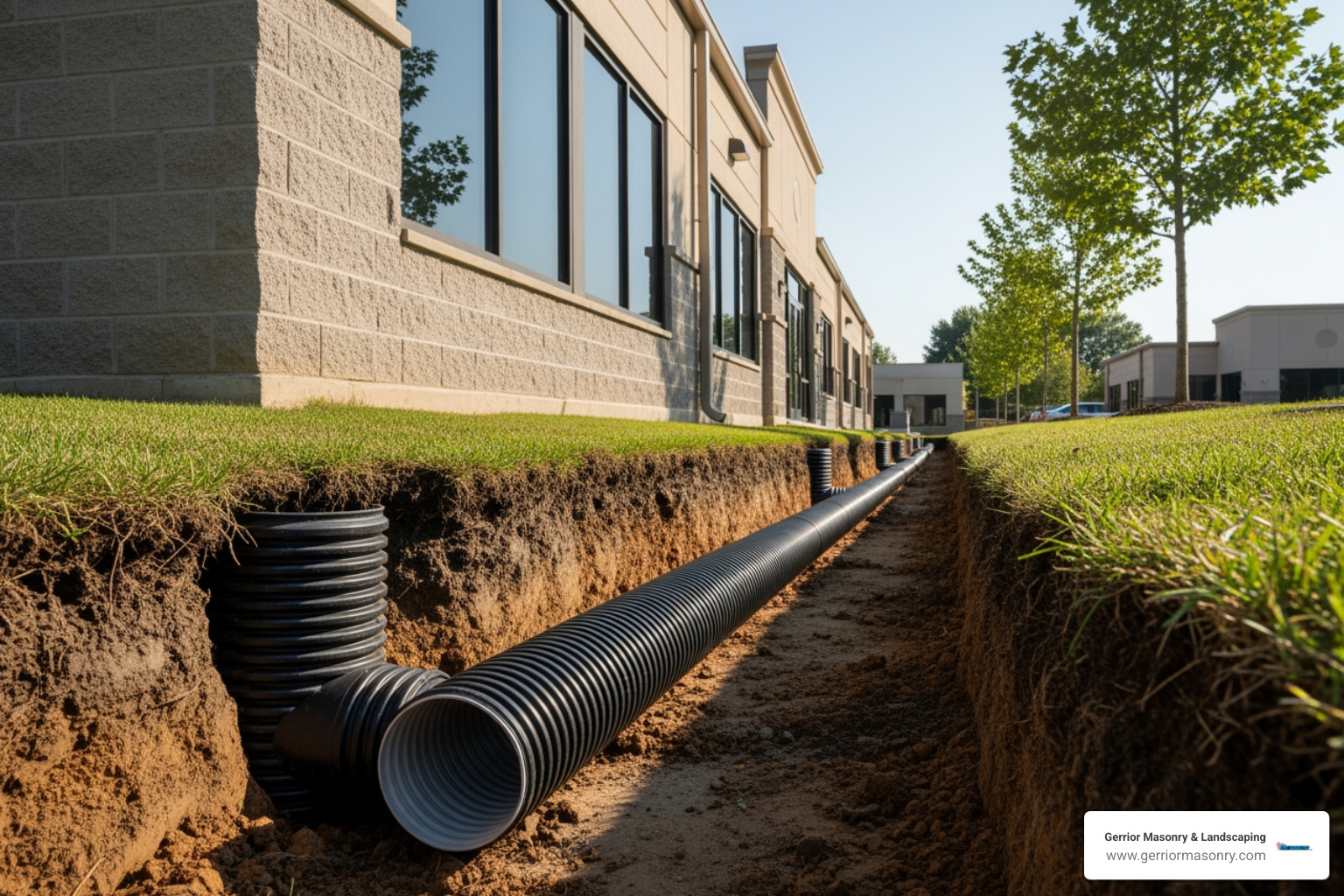
Key benefits include protecting the foundation from water damage, preventing soil erosion, and eliminating waterlogged landscaping. Common underground options include:
- French Drains: A perforated pipe in a gravel-filled trench that collects and redirects groundwater away from problem areas. Learn more here: Dry Well vs French Drain.
- Dry Wells: An underground chamber filled with gravel that collects runoff and allows it to slowly seep into the soil. This is a great option when a storm drain connection isn’t possible. See how they can help your property: Dry Well for Lawn Drainage.
- Catch Basins: Grated inlets that collect surface water and debris from large areas like parking lots, channeling clean water into underground pipes.
- Pop-Up Emitters: Discreet discharge points that pop up under water pressure to release water safely onto a landscaped area, then retract when dry.
Sizing and Design Principles for Effective Drainage
Proper design is crucial for an effective drainage system. We base our designs on proven engineering principles to ensure your property is protected.
- Rainfall and Roof Area: We calculate the total water volume your system must handle by analyzing local rainfall intensity data for Middlesex and Essex County and measuring your roof’s total surface area and pitch.
- Gutter and Downspout Sizing: Gutters must be sized and sloped (min. 1/16 inch per foot) to handle the calculated water flow. Downspouts are spaced no more than 50 feet apart and should have a cross-sectional area of at least 7 square inches to prevent bottlenecks.
- Proper Slope for Pipes: All underground piping requires a minimum slope of 1/4 inch per foot to ensure positive drainage and prevent standing water, which can lead to clogs or freezing. We use resources like the Gutter and Downspout Design Guide to ensure every detail is correct.
A well-designed system is the first step in comprehensive water management. For solutions custom to your property, learn about our work with Drainage Around House Foundation.
Installation, Maintenance, and Advanced Solutions
A well-designed downspout drainage system is only as good as its installation and maintenance. Following best practices is key to ensuring long-term performance and protecting your commercial property.
Installation Best Practices and Common Mistakes
Proper installation prevents future failures. Our team focuses on key details to avoid common, costly errors.
Installation Best Practices:
- Proper Slope: We ensure all underground pipes have a minimum slope of 1/4 inch per foot to guarantee positive water flow and prevent blockages.
- Secure Connections: All joints are securely fastened, with upper sections fitting inside lower ones to prevent leaks.
- Safe Discharge: Water must be discharged at least 5 feet from the foundation, or 10 feet for underground systems, to prevent water from returning to the structure.
Common Mistakes to Avoid:
- Incorrect Slope: The most common error, leading to standing water, clogs, and pipe damage from freezing.
- Discharging Too Close to the Foundation: This defeats the purpose of the system and causes the very water damage it’s meant to prevent.
- Using the Wrong Materials: Choosing cheaper, less durable pipes like corrugated plastic over stronger PVC can lead to premature failure, especially in commercial settings.
Avoiding these mistakes is crucial for a reliable system. If you’re already facing issues, we can help with Fixing Pooling Water in Yard.
Year-Round Maintenance and Climate Considerations
Regular maintenance is essential, especially with Massachusetts’ four-season climate. A simple routine can prevent major problems.
Maintenance Checklist:
- Clean Gutters Twice a Year: Clear leaves and debris in late spring and late fall to prevent clogs.
- Inspect the System: Regularly check for leaks, loose connections, or signs of damage, especially after storms or winter freeze-thaw cycles.
- Flush the Pipes: Use a hose to flush the downspouts and underground pipes to ensure water flows freely.
Winter Challenges in Massachusetts:
Freezing temperatures pose a significant threat to downspout drainage systems.
- Prevent Freezing: Disconnect underground extensions during winter to prevent water from freezing, expanding, and cracking the pipes. Reconnect them in the spring.
- Ensure Proper Slope: A continuous slope is vital to drain water completely before it can freeze.
- Keep Discharge Points Clear: Ensure pop-up emitters and other outlets are free of snow and ice so water can escape.
For comprehensive winter property management, we also offer Commercial Snow Removal Services.
Eco-Friendly and Integrated Drainage Solutions
Modern drainage can be both effective and environmentally friendly, adding value and sustainability to your commercial property.
- Rainwater Harvesting: Collect and store roof runoff in large cisterns for non-potable uses like landscape irrigation, reducing municipal water consumption.
- Rain Gardens (Bioretention Areas): Landscaped depressions that use soil and plants to filter pollutants from stormwater while adding aesthetic appeal. They are an EPA-recommended Best Management Practice (BMP).
- Permeable Pavers: An alternative to traditional pavement for walkways and patios that allows rainwater to soak into the ground, reducing runoff. We can integrate these into your Patio Design & Installation.
Here’s a quick comparison of two popular eco-friendly options:
| Feature | Rain Gardens (Bioretention Areas) | Dry Wells |
|---|---|---|
| Pros | – Excellent pollutant removal – Improves aesthetics – Reduces stormwater volume |
– Hidden underground – Low maintenance – Effective for concentrated runoff |
| Cons | – Requires more space and specific soil – Needs occasional plant maintenance |
– No pollutant removal – Can clog over time – Limited capacity |
| Best Use Case | – Managing runoff from large surfaces like parking lots where aesthetics are a priority. | – Managing downspout runoff in areas with limited space or where a hidden solution is preferred. |
These advanced solutions offer a sustainable approach to protecting your commercial building and the surrounding environment.
Secure Your Investment with Professional Drainage Solutions
A properly designed and installed downspout drainage system is not an expense but a crucial investment in protecting your commercial building’s structural integrity and value. From selecting the right materials and underground options to ensuring correct sizing and year-round maintenance, a professional approach is key to preventing costly water damage. For expert assessment and installation of comprehensive drainage solutions, trust the experienced team at Gerrior Masonry & Landscaping. With over 30 years of experience, we ensure high-quality results for every project. Gerrior Masonry & Landscape Construction is based in Woburn, MA, and proudly services Middlesex and Essex County, Massachusetts. Contact us today to learn more about our dry well drainage services.
