
Brick Pavers Installation: Top Tips for Flawless Results

Brick pavers installation is a great way to transform your backyard into a stunning outdoor entertainment space. Here’s a quick guide to get you started:
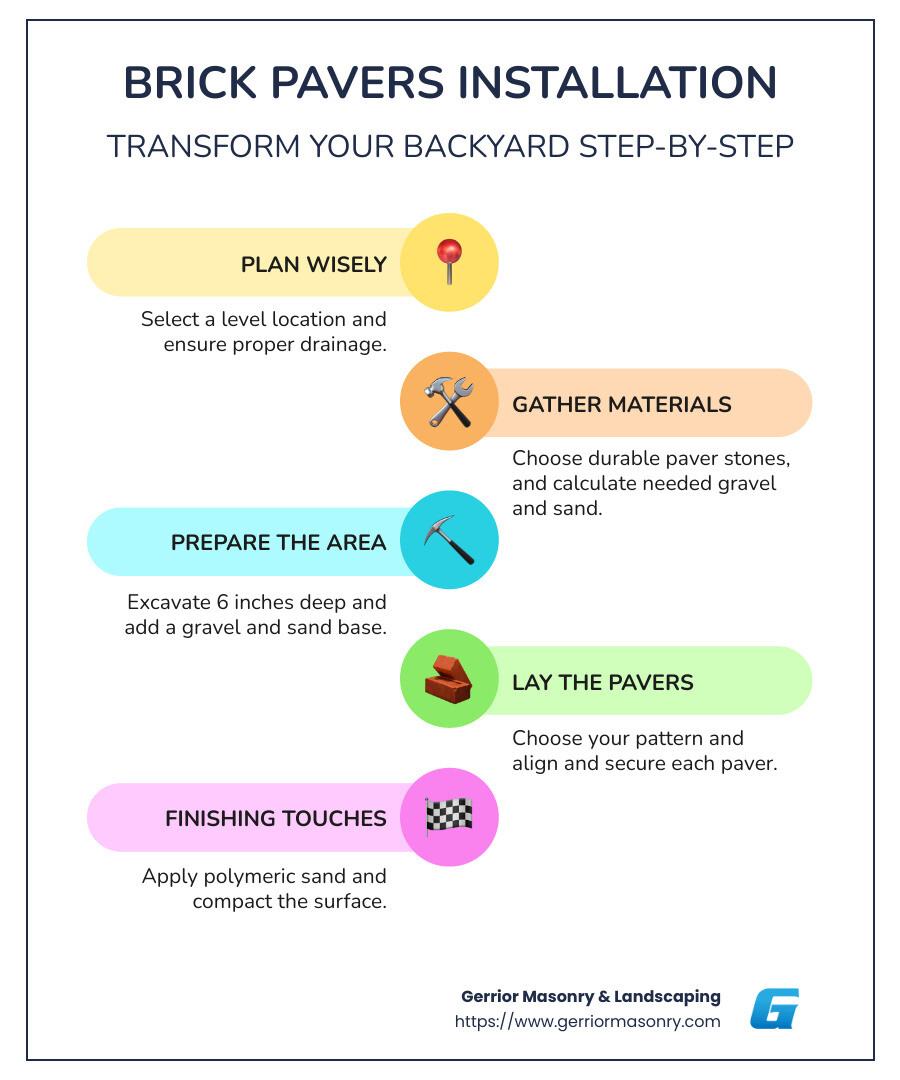
- Plan wisely:
- Select a level location.
- Ensure proper drainage.
- Avoid tree roots and utility lines.
- Gather materials:
- Choose durable paver stones.
- Calculate needed gravel and sand.
- Prepare the area:
- Dig 6 inches deep.
- Add a gravel and sand base.
- Lay the pavers:
- Choose your pattern.
- Align and secure each paver.
Revamping your backyard doesn’t have to be a daunting task. With a DIY approach, you can create a welcoming patio that not only adds value to your home but also improves your outdoor living experience. Think of your backyard as a blank canvas—it can become your family’s new favorite gathering spot or a cozy nook for quiet afternoons.
I’m Joe Gerrior, the owner of Gerrior Masonry & Landscape Construction Corp., with over 34 years of experience in the industry. Our company has built a reputation for delivering high-quality, personalized brick pavers installation services across Massachusetts. Let’s explore the process and make your patio dream a reality!
Brick pavers installation terms to remember:
– backyard patio pavers
– concrete patio installation contractors
– find contractors to install patio doors
Planning Your Brick Pavers Installation
When starting on a brick pavers installation project, careful planning is crucial. It lays the groundwork for a successful and long-lasting patio. Let’s break down the essentials.
Choosing the Right Location
Selecting the perfect spot is the first step. You want a level area that complements your home’s style. This ensures stability and ease of use. Also, think about how you’ll use the space and its connection to your house.
Drainage is key. Avoid low-lying areas where water collects. Your patio should slope away from your home to prevent water damage. A slope of 1 inch every 8 feet is recommended for effective drainage. This helps water flow away from your home’s foundation, protecting it from potential damage.
Consider sun and shade. Choose a location that balances both. Some shade is ideal for hot days, while sun exposure is great for cooler times. Think about how the sun moves over your yard throughout the day.
Calculating Materials Needed
Accurate material calculation is essential to avoid waste and extra trips to the store. Start by measuring the area you want to pave. Use marking paint and stakes to outline it. A mason’s line can help ensure straight edges.
Paver stones: For a 60-square-foot patio, you’ll need about 60 paver stones sized 12 inches by 12 inches. Always buy 10% more to allow for cutting and potential breakage.
Gravel and sand: The base requires 4 inches of gravel. For a 60-square-foot area, this translates to 20 cubic feet or 3/4 cubic yards of gravel. The sand layer should be 1 inch thick. Use a paver calculator to double-check your math and ensure you have enough materials.
Remember: “Measure twice, cut once.” As expert landscaper Roger Cook emphasizes, getting these numbers right is vital for a smooth installation process.
By carefully choosing your location and calculating materials, you’re setting the stage for a successful brick pavers installation. Next, we’ll dive into preparing the site to ensure your patio stands the test of time.
Preparing the Site for Installation
Before you start laying those beautiful brick pavers, it’s crucial to prepare the site properly. This step ensures a stable foundation and a long-lasting patio. Let’s explore the details.
Excavating the Area
Start with clearing the space. Remove any grass, plants, or debris from the area where you plan to install the pavers. This helps prevent future issues like weeds growing through your patio.
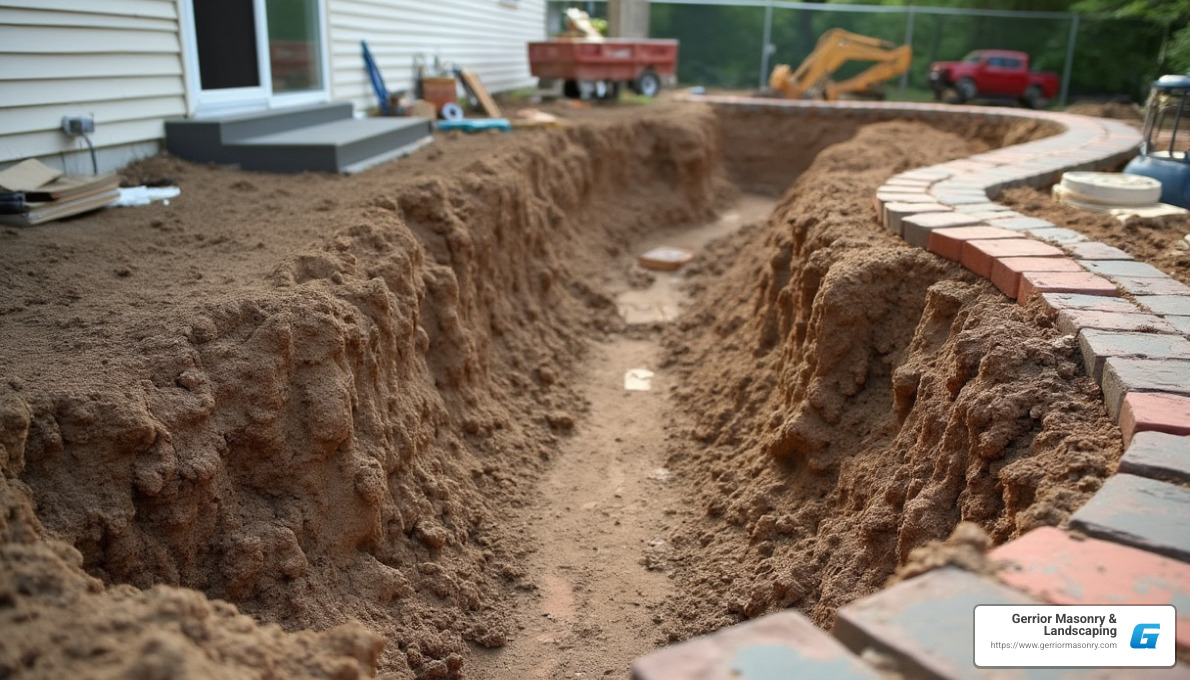
Digging is next. Excavate the soil to a depth of about 6 inches. This depth allows room for the base layers that will support your pavers. Be sure to maintain an even depth throughout the area.
Slope for drainage. It’s important to create a slight slope away from your house. This prevents water from pooling and potentially damaging your home’s foundation. Aim for a slope of 1/4 inch per foot.
Laying the Base Material
Once the area is excavated, it’s time to lay the base material. This step is critical for the stability of your patio.
Gravel layer: Spread a 4-inch layer of compactible gravel across the excavated area. This layer acts as a solid foundation for the pavers, helping to distribute weight evenly.
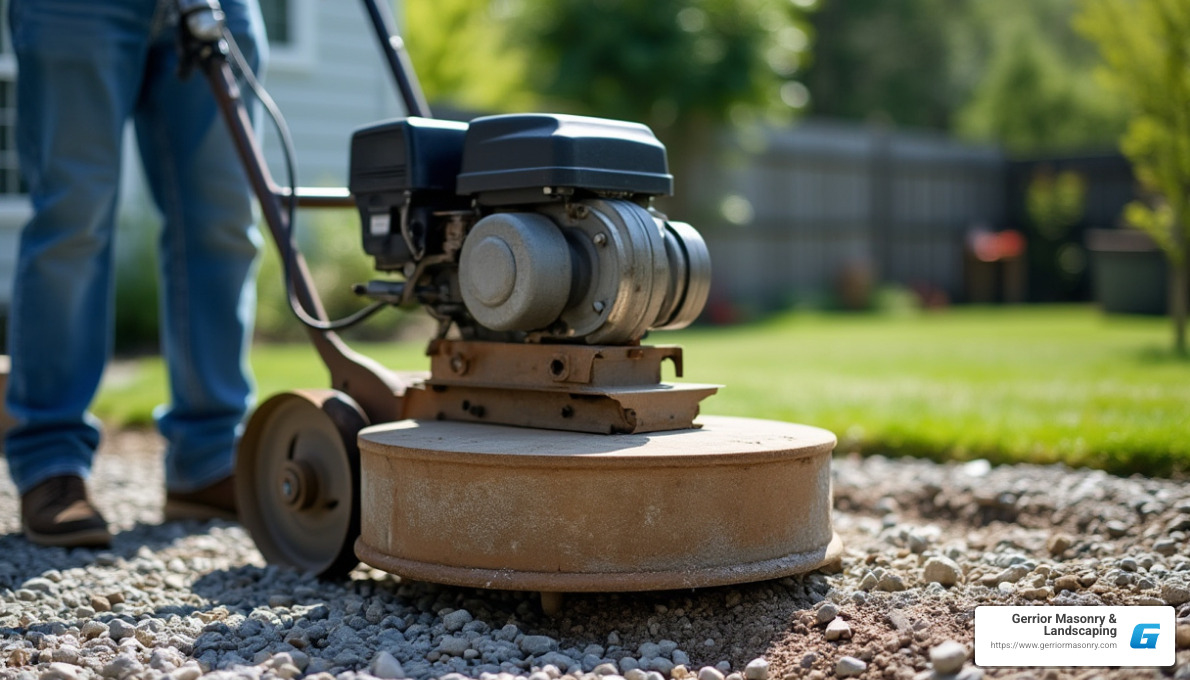
Compaction is key. Use a plate compactor to tamp down the gravel. This process increases density and prevents future shifting or settling. Make sure the gravel is slightly damp during compaction for the best results.
Level the surface. After compacting the gravel, check the surface with a long, straight 2×4 board and a level. The base should be even and smooth, providing a stable platform for the next layer.
By taking the time to excavate properly and lay a well-compacted gravel base, you’re setting the stage for a successful brick pavers installation. A solid foundation ensures your patio will remain beautiful and functional for years to come.
Next, we’ll explore how to install the pavers themselves, focusing on pattern selection and alignment.
Installing Brick Pavers
Now that you have a solid base, it’s time to bring your patio to life with brick pavers installation. This step involves laying the pavers in your chosen pattern and ensuring everything fits perfectly.
Laying Pavers in Desired Pattern
Choose Your Pattern. Start by deciding on a pattern that complements your space. Popular choices include herringbone, basket weave, and running bond. Each pattern has a different visual impact, so choose what suits your style.
Begin at a Corner. Start laying pavers at a fixed edge, like your house or a sidewalk. This helps maintain alignment. Place the pavers directly onto the sand base without pressing them in too hard.
Use a Rubber Mallet. Gently tap each paver into place with a rubber mallet. This ensures they are snugly fit without damaging them. Maintain a small gap (about 3/16” to 1/2”) between each paver to allow for natural expansion and contraction.
Align and Check. As you lay each row, check the alignment frequently. Use a string line or a straightedge to keep your rows straight. This prevents the pattern from wandering and ensures a professional finish.
Cutting Pavers to Fit
Sometimes, you’ll need to cut pavers to fit around edges or curves.
Safety First. Always wear safety gear, including gloves and protective eyewear, when cutting pavers. This keeps you safe from flying debris.
Mark Your Cuts. Place a paver over the space it needs to fill and use a straight edge and marker to trace the cutting line. This ensures precision.
Use a Masonry Saw. A masonry saw is the best tool for clean cuts. Follow the marked line carefully to achieve a perfect fit. If a saw isn’t available, a guillotine-style splitter can also work.
With these steps, you’re well on your way to creating a stunning patio. The next section will cover the finishing touches to ensure your pavers stay in place and look great for years.
Finishing Touches for a Professional Look
Now that your brick pavers are in place, it’s time to secure them for the long haul. This section will guide you through applying polymeric sand and compacting the pavers to achieve a professional finish.
Applying Polymeric Sand
Fill the Joints. Start by spreading polymeric sand over the entire surface of your pavers. Use a push broom to sweep the sand into the gaps between the bricks. Make sure every joint is filled completely.
Multiple Directions. Sweep the sand in multiple directions to ensure it reaches all the cracks. This step is crucial for locking the pavers in place and preventing weed growth.
Water Activation. Once the joints are filled, gently mist the entire patio with a garden hose. This activates the polymeric sand, causing it to harden and lock the pavers together. Be careful not to wash the sand out of the joints.
Repeat if Necessary. Check the joints after the sand has settled. If there are any low spots, add more sand and repeat the misting process.
Compacting the Pavers
Use a Plate Compactor. After the sand is set, use a plate compactor to vibrate the pavers into place. This tool helps create a stable, even surface and ensures the pavers won’t shift over time.
Several Passes. Run the compactor over the entire patio surface several times, moving in different directions. This ensures thorough compaction and stability.
Check for Stability. After compacting, inspect your work. Look for any uneven areas or loose pavers and address these issues immediately to prevent future problems.
Edge Backfill. Finally, backfill the edges of your patio with soil or sod. This not only hides the edging but also helps keep everything in place.
With these finishing touches, your brick paver patio will be secure, stable, and ready for years of enjoyment. Next, we’ll dive into some frequently asked questions to address any lingering concerns.
Frequently Asked Questions about Brick Pavers Installation
What tools do I need for a DIY patio paver installation?
To successfully install a brick paver patio, you’ll need a few essential tools. Start with a flat shovel for excavation and a wheelbarrow to move materials around. A hard garden rake will help level the surface, while a carpenter’s level ensures everything is even. For cutting pavers to fit, use a broad-blade chisel, brick splitter, or masonry saw. A wood “screed” strip (a 2×4 piece) is perfect for creating a uniform sand bed. Don’t forget a trowel for detailed work, and a broom for sweeping sand into joints. Finally, a plate compactor is crucial for stabilizing the pavers. Most of these tools can be rented if you don’t have them on hand.
How do I prepare the ground for laying brick pavers?
Preparing the ground is a critical step in brick pavers installation. Begin by excavating the area to a depth of about 6 inches to remove grass and topsoil. Ensure the ground slopes slightly away from your house to aid drainage and prevent water damage. After excavation, lay a 4-inch layer of gravel as a base and compact it thoroughly using a plate compactor. This provides a stable foundation. Then, add a 1-inch layer of sand on top of the gravel and level it using your screed strip. This sand layer will help in adjusting the height and alignment of the pavers during installation.
What’s the process for laying the pavers?
Laying the pavers is where your patio starts taking shape. Choose a pattern that suits your style; herringbone, basketweave, or running bond are popular choices. Begin placing pavers from a corner, using a rubber mallet to tap them gently into the sand. This ensures they are snug and aligned. Maintain consistent spacing between pavers for a uniform look. As you lay the pavers, periodically check for levelness and adjust as needed. Once all pavers are in place, add edge restraints to keep them from shifting. Finally, fill the joints with sand and compact the surface to lock everything in place. With careful attention to detail, your patio will have a professional finish.
These FAQs should help clear up any uncertainties and guide you through the process of installing your own brick paver patio. Up next, we’ll wrap up with some key takeaways and insights from our experts.
Conclusion
At Gerrior Masonry & Landscaping, we believe that a well-installed brick paver patio can transform your outdoor space into a haven of relaxation and entertainment. Our commitment to high-quality results and exceptional service is what sets us apart. With over 30 years of experience serving communities like Woburn, MA, and surrounding areas, we have honed our skills to deliver projects that not only meet but exceed expectations.
Our skilled team is our greatest asset. Each member brings expertise and dedication to every project, ensuring that every detail is carefully handled. From the initial consultation to the final touches, we provide personalized service custom to your specific needs. Our owner oversees each project, guaranteeing that the highest standards of craftsmanship are maintained throughout the installation process.
If you’re ready to improve your outdoor living space with a stunning brick paver patio, we invite you to explore our Patio Installation Services. Let us help you turn your vision into reality, with the assurance of quality and professionalism that only Gerrior Masonry & Landscaping can provide.
Contact us today to start your journey towards a beautiful and enduring outdoor space.
