
Transform Your Hearth: An Introduction to Stone Veneer
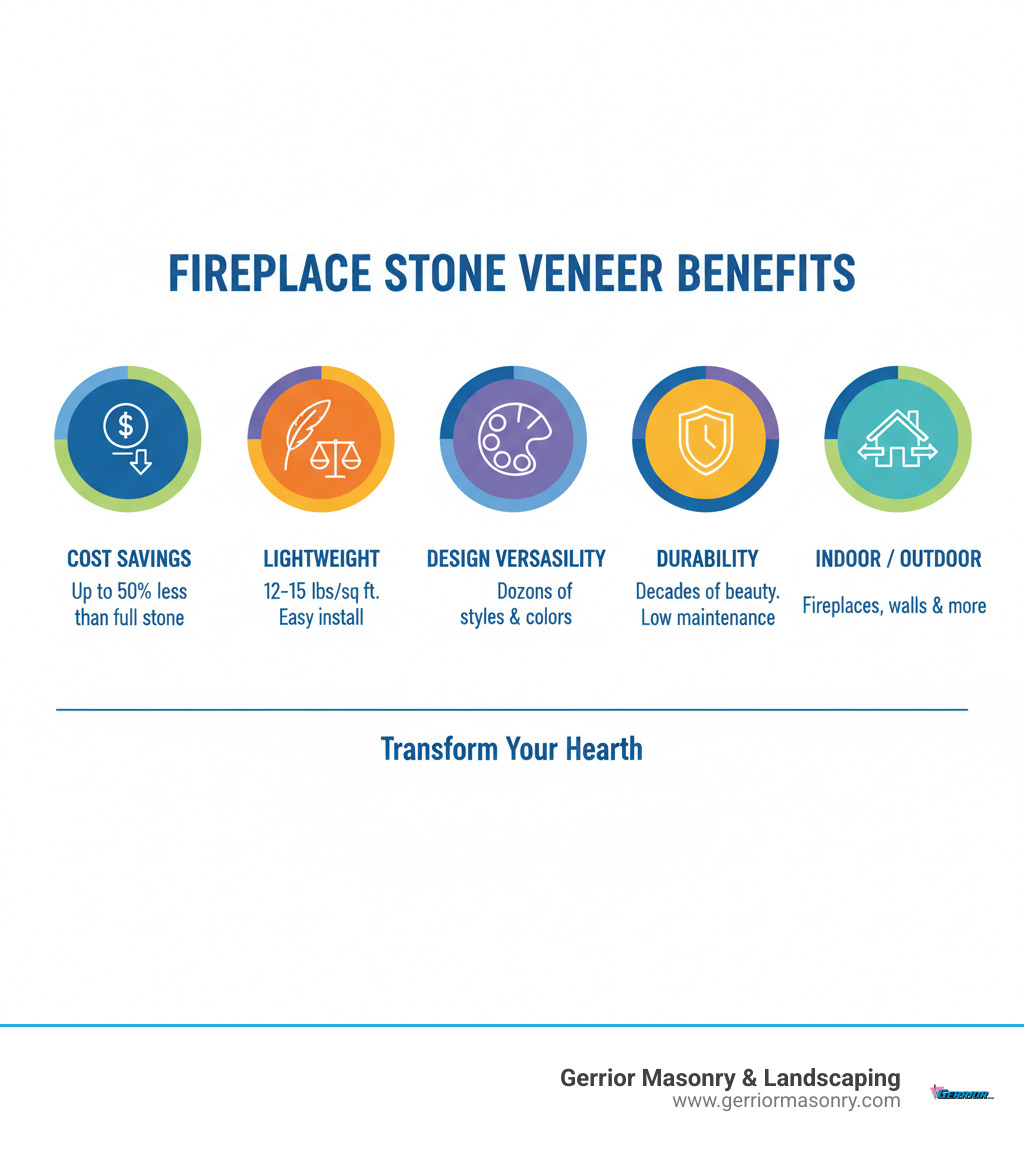
Fireplace stone veneer is a thin layer of natural or manufactured stone applied to a fireplace surface to create the look of full-thickness masonry without the weight, cost, or complex structural needs. Here’s a quick overview:
- Types: Natural (real stone cut thin), manufactured (concrete-based), and faux panels (polyurethane).
- Thickness: Typically 1″ to 2″, far lighter than full-bed stone.
- Uses: Interior and outdoor fireplaces, accent walls, and chimneys.
- Benefits: Cost-effective, easier to install, and offers a wide variety of styles.
- Popular Styles: Ledgestone, fieldstone, stacked stone, and river rock.
Stone veneer offers incredible design flexibility, allowing you to achieve anything from a rustic, Old-World hearth to a sleek, contemporary focal point. While natural stone offers best authenticity, manufactured stone provides consistency, and faux panels are a budget-friendly DIY option.
Proper installation is critical for safety and longevity, requiring a stable substrate, the right mortar, and strict adherence to building codes regarding heat clearances. Professional installation is recommended to ensure your fireplace is both beautiful and safe.
I’m Joe Gerrior, owner of Gerrior Masonry & Landscape Construction Corp. With over 34 years of experience, my team has transformed countless Massachusetts homes with expert fireplace stone veneer installations. This guide draws from our decades of hands-on work to help you make the best choice for your project.
Choosing the Perfect Fireplace Stone Veneer
Changing your fireplace can transform your entire living space. The right fireplace stone veneer turns an ordinary hearth into a stunning centerpiece. Whether you want a cozy rustic retreat or a sleek modern statement, stone veneer has a solution. Let’s explore the types, styles, and design choices to find the perfect match for your home.
Types of Veneer: Natural, Manufactured, and Faux Stone
You have three main options for stone veneer, each with distinct advantages in cost, durability, and installation.
| Feature | Natural Stone Veneer | Manufactured Stone Veneer | Faux Stone (Panel) |
|---|---|---|---|
| Cost | Higher end, reflects natural sourcing and cutting | Mid-range, more affordable than natural | Most budget-friendly |
| Durability | Extremely durable, weather-resistant | Very durable, engineered for longevity | Durable, but can be less impact-resistant than real stone |
| Weight | Moderate (12-15 lbs PSF for thin veneer) | Moderate (similar to natural thin veneer) | Very lightweight |
| Installation | Requires skilled masonry, pieces vary in shape | Easier due to uniform sizes, flat backs, and sometimes panels | Simplest, often DIY-friendly with interlocking panels |
| Aesthetic Authenticity | Best, unique patterns and colors from nature | Highly realistic, molded from natural stone | Can look convincing, but sometimes less depth |
| Composition | Real stone, quarried and cut thin | Cement, aggregates, and pigments | Polyurethane, sometimes with foam backing |
Natural stone veneer is real stone cut thin (around 1 inch). Each piece is unique, offering unparalleled authenticity and character. While it’s at the higher end of the price spectrum and requires skilled installation, its natural beauty is a worthy investment for many.
Manufactured stone veneer (or cultured stone) is a concrete-based product molded from real stones. It provides a highly realistic look with the practical benefits of consistent size and shape, making installation simpler. Many quality products are certified by the National Concrete Masonry Association (NCMA) and compliant with standards from The IAPMO Group, making them a versatile choice for both interior and exterior projects.
Faux stone panels are made from lightweight polyurethane, making them the most budget-friendly and DIY-friendly option. While they may lack the texture and impact resistance of real or manufactured stone, modern panels can be visually convincing and are resistant to moisture and pests.
Popular Fireplace Stone Veneer Styles to Match Your Home
After choosing a material, select a style that defines your fireplace’s personality.
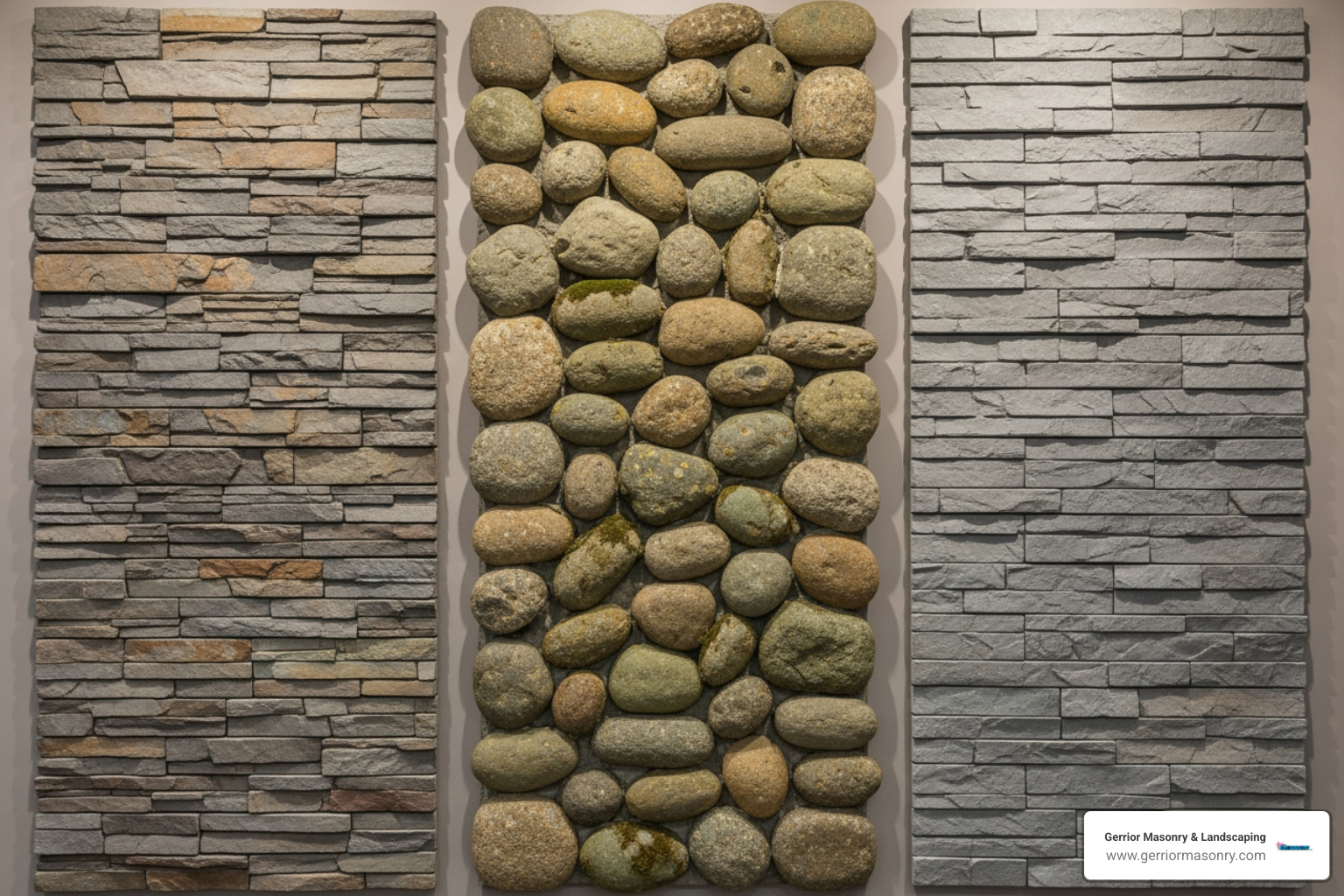
- Ledgestone: Features long, narrow pieces stacked horizontally with tight joints (a dry-stack look). Its clean lines are perfect for modern and transitional homes.
- Fieldstone: Irregularly shaped stones create a classic, rustic charm ideal for farmhouse or traditional styles.
- Stacked Stone: Emphasizes a tight, interlocking appearance with varied depths, creating rich texture that suits both contemporary and traditional designs.
- River Rock: Smooth, rounded stones bring a calming, natural quality, perfect for a cabin-like feel.
- Limestone: Uniform, slab-shaped pieces offer a refined, orderly appearance for more formal or classic interiors.
- Granite: A less common but highly durable option with a unique crystalline structure for a luxurious statement.
For more inspiration, see our Fireplace Design Ideas.
Selecting the Ideal Color and Texture
Color and texture set the mood of your fireplace.
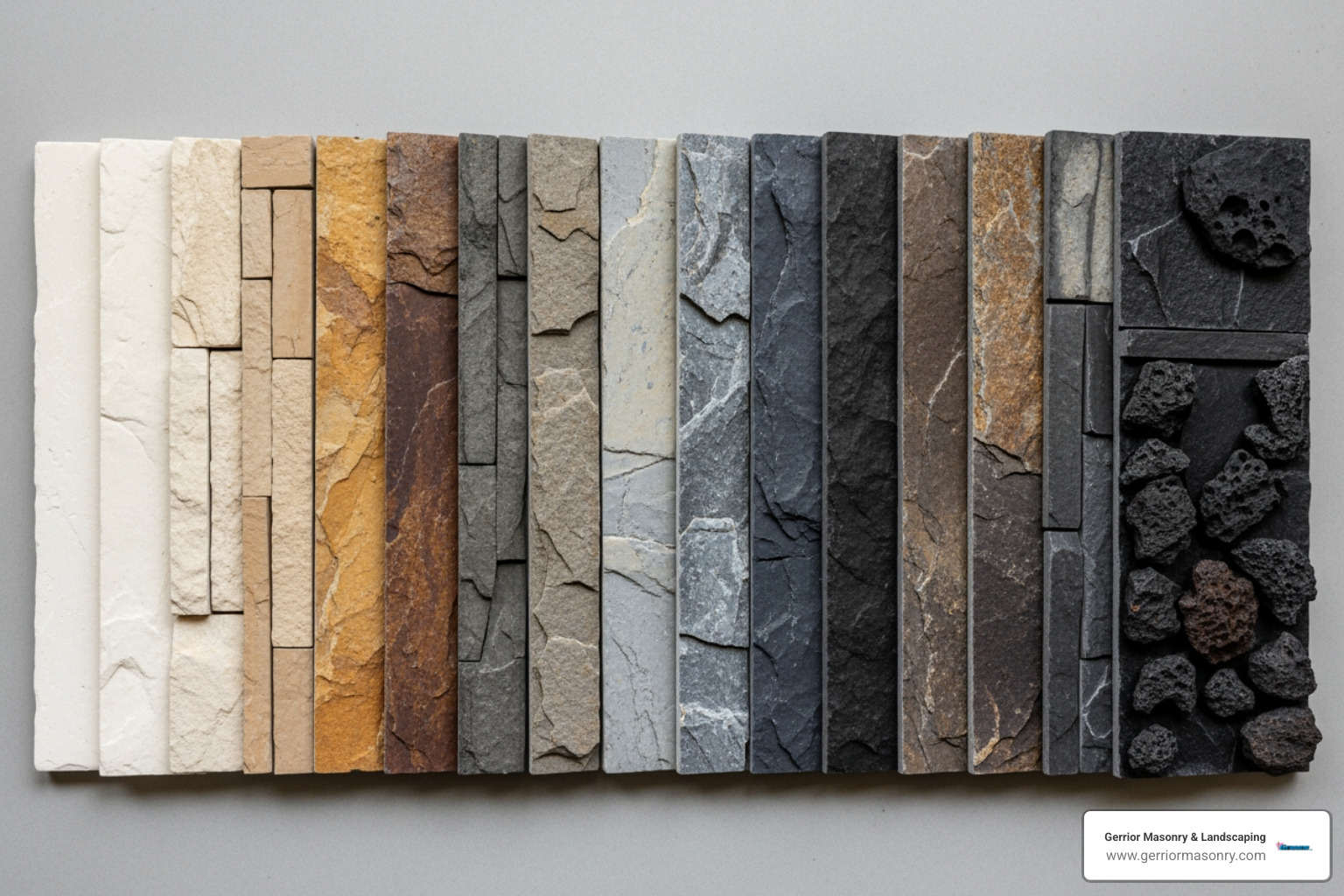
Color is key. Warm tones (browns, reds, golds) create a cozy, inviting atmosphere, while cool tones (grays, blues, whites) feel fresh and contemporary. Mixed tones are versatile and can tie different room elements together. Always view physical samples in your home’s lighting before making a final decision.
Texture adds depth. Rough, rugged textures like fieldstone feel earthy and authentic. Smooth or honed textures found in limestone offer a more refined, neat look. Many stacked and ledgestone styles feature varied depths for captivating shadow play.
Don’t forget grout. A matching grout creates a seamless look, while contrasting grout highlights the individual stones. The popular dry-stack look uses minimal or no visible grout for a clean, modern finish.
From Installation to Upkeep: What You Need to Know
Proper installation and care are essential for a safe, durable, and beautiful fireplace stone veneer. This section covers the practical side of your project, from safety codes and budgeting to simple maintenance.
Fireplace Stone Veneer Installation and Safety Essentials
Safe, professional installation is non-negotiable for fireplaces. The process begins with preparing the wall surface by applying a moisture barrier and metal lath, which gives the mortar a surface to grip. A “scratch coat” of mortar is applied over the lath, creating the ideal foundation for the stone.
Each stone is then set in place with specialized mortar. However, the most critical aspect is adhering to building codes.
- Firebox Clearance: Codes mandate a minimum distance between the firebox opening and any combustible materials (like wood framing behind the veneer). This is a crucial fire safety requirement.
- Hearth Extension: The non-combustible floor area in front of the fireplace must meet minimum size requirements to catch embers.
- Ventilation: The veneer must not block any air intakes or vents essential for your fireplace’s operation.
Given these critical safety factors, professional installation is strongly recommended. A skilled Masonry Contractor understands the correct materials for heat exposure and all local building codes, ensuring the project is done right. Our team has spent over 30 years perfecting The Different Types of Masonry Work and Their Applications, and we never compromise on safety. For more details, see our Fireplace Veneer Installation Complete Guide.
Budgeting for Your Stone Veneer Fireplace
Project costs for fireplace stone veneer vary based on materials, complexity, and labor. The prices shared here are average estimates based on internet data and are not actual costs for Gerrior Masonry & Landscaping services. For a precise quote, please contact us directly.
Material Costs (per square foot):
- Faux Stone Panels: $7 – $30+
- Manufactured Stone Veneer: $10 – $40+
- Natural Stone Veneer: $15 – $70+
Professional Installation Labor typically ranges from $15 to $50+ per square foot. This cost is influenced by regional rates, project complexity, and the type of stone being installed. When combining materials and professional labor, most projects fall between $25 and $120+ per square foot.
While a DIY approach can save on labor, the safety risks associated with fireplace installations make it a job best left to professionals who can guarantee compliance with fire codes.
Maintaining Your Beautiful Stone Fireplace
Fireplace stone veneer is remarkably low-maintenance.
- Cleaning: For interior fireplaces, regular dusting with a soft brush or vacuum attachment is usually sufficient. For smudges, use a soft bristle brush with a mild, pH-neutral cleaner and water. Avoid harsh or acidic chemicals. For exterior stone, a gentle rinse with a garden hose will often suffice.
- Mortar Joints: Periodically inspect mortar for cracks or crumbling. Minor issues can be addressed with fresh mortar. We offer guides on How to Repair Fireplace Mortar and using the correct Fireplace Cement. For high-heat areas inside the firebox, use specialized Fire Brick Mortar.
- Sealing: A breathable, penetrating sealer can offer extra protection against stains, especially for natural stone. This is optional but can make cleaning easier.
With proper installation and simple care, your stone veneer fireplace will last for decades. Both natural and high-quality manufactured stone are built for longevity, often coming with lifetime limited warranties.
Your Dream Fireplace Awaits
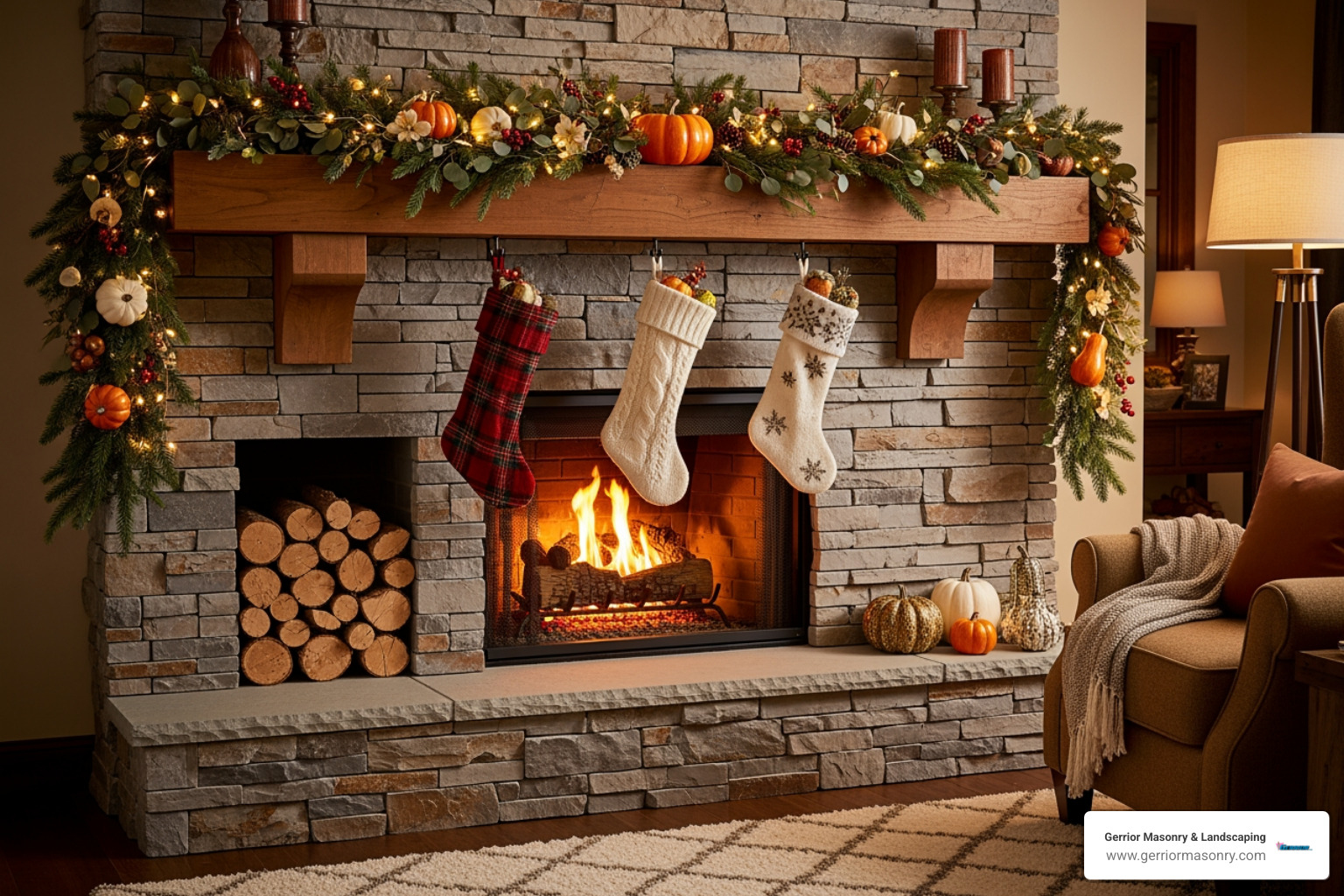
Changing your hearth with fireplace stone veneer is an achievable goal. We’ve covered the key decisions, from choosing between natural, manufactured, and faux stone to selecting a style like ledgestone or fieldstone that reflects your taste. We’ve also highlighted the importance of color, texture, and safe, professional installation that adheres to all building codes.
A stone veneer fireplace adds more than just monetary value; it creates a warm, inviting gathering place where memories are made. It’s an investment in timeless beauty and lasting durability.
At Gerrior Masonry & Landscape Construction, we have spent over 30 years perfecting the art of stone veneer installation. My team and I are committed to skilled craftsmanship and owner oversight on every project, ensuring your vision becomes a reality with the highest standards of quality and safety.
If you’re ready to take the next step, we invite you to explore our expert masonry services and contact us for a consultation. Let’s work together to build the heart of your home.
Gerrior Masonry & Landscape Construction is based in Woburn, MA, and proudly serves Middlesex and Essex County, Massachusetts.
