On this page
Masonry work is building with individual units, such as brick, stone or concrete block, that are laid by hand and usually bound with mortar. The main types of masonry are brick, stone, concrete block and veneer, and each one does a different job around a house: chimneys and steps, foundations, retaining walls, garden walls, and the facing on a wall.
This guide explains each type, what it is used for on a Massachusetts home, the advantages of masonry, and what a mason actually does. If you already know what you need built or repaired, our masonry services page covers the work Gerrior Masonry does in Woburn and nearby towns.
Brick masonry
Brick is fired clay, made in standard sizes and laid in courses with mortar joints. Because every unit is the same, brick suits straight walls, crisp corners and patterns.
Common uses: chimneys, front steps, garden and screen walls, walkways and patios, older foundations, and the brick facing on many homes.
Brick lasts a very long time when water is kept out, but the mortar joints wear and need repointing from time to time. On older homes the mortar was softer, and repairs should match it. Our brick masonry repair post covers the common problems.

Stone masonry
Stone masonry uses natural stone, either as found or cut and split. Around here the common stones are New England fieldstone, granite, bluestone and flagstone.
- Fieldstone: rounded and irregular stone, the material of the old farm walls across New England. Used for retaining walls, garden walls and older foundations.
- Granite: very hard and frost-resistant. Used for step treads, curbing, caps and posts.
- Bluestone: a dense sandstone that splits into flat slabs. Used for patios, walkways, treads and wall caps.
- Flagstone: any flat, split stone used for paving and stepping stones.
Stone can be dry-laid, fitted together without mortar, or mortared. Dry-laid walls drain freely and can flex a little with frost. Mortared walls give a tighter, more formal look but need a solid base below the frost line and a way for water to get out.

Concrete block masonry
Concrete block, often called cinder block or CMU (concrete masonry unit), is a hollow, molded block. The hollow cells can be filled with steel and grout, which makes block the strong, plain workhorse behind a lot of masonry.
Common uses: foundations, structural and retaining walls, and the hidden core behind brick or stone facing. A separate family, segmental retaining wall block from makers such as Unilock and Techo-Bloc, is stacked without mortar and made to look finished. Our post on the cinder block wall explains how block walls are built.
Veneer masonry
Veneer is a thin layer of brick or stone that faces a wall but does not hold it up. It gives the look of solid stone or brick on a house, a chimney, step risers or a block wall. Anchored veneer is tied to the wall with an air space behind it. Adhered veneer is thinner and bonded to a mortar base over metal lath. Veneer only lasts when water can drain out from behind it; our post on stone veneer installation covers how that is done.

Where each type shows up on a Massachusetts home
- Chimneys: brick, sometimes stone or a stone veneer. See chimney repair.
- Foundations: fieldstone and brick on older homes, block or poured concrete on newer ones. See foundation and bulkhead repair.
- Front steps and stoops: brick, granite, bluestone, or stone veneer with granite treads. See our stairs and steps projects.
- Retaining and garden walls: fieldstone, natural stone, segmental block, or block faced with stone. See retaining walls and our landscape wall projects.
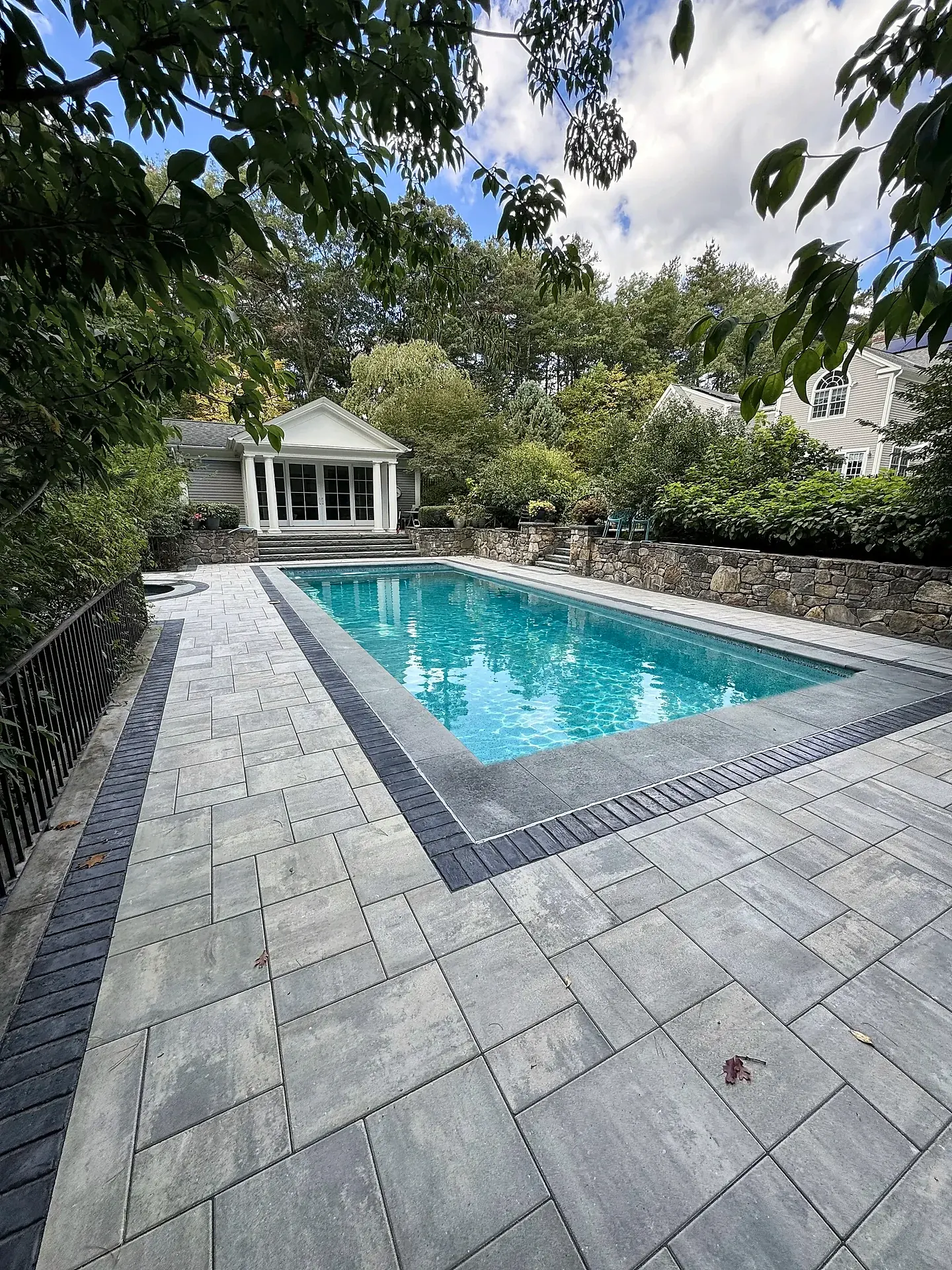
- Patios, walkways and pool decks: pavers, bluestone, flagstone and brick, which is often called hardscaping. See hardscaping services.
Advantages of masonry
- Fire resistance. Brick, stone and concrete do not burn, which is why chimneys and hearths are masonry.
- No rot. Masonry does not rot and is not food for termites or carpenter ants the way wood is.
- Weather. Properly built masonry stands up to rain, sun and wind with little upkeep.
- Weight and mass. Heavy walls hold back soil and hold heat.
The honest limits: masonry is heavy and needs a sound base, water and freeze-thaw are its main enemies, and repairs need the right materials and skill. Most masonry problems we see start with water.
A short history of masonry in New England
Masonry is one of the oldest ways to build. In New England you can read its history on any drive: fieldstone walls left from clearing farm fields, fieldstone and brick foundations under older houses, brick chimneys and mill buildings, and granite curbs and steps. Many homes around Woburn still stand on those older foundations, which is why repair work needs materials that suit old masonry.
What a mason does, and the kinds of masons
A mason lays and repairs brick, stone and block. The work includes reading the site, building a base that will not heave, laying units plumb and level, mixing the right mortar, and managing water so the work lasts. Masons often specialize:
- Brick masons build and repair chimneys, brick steps, walls and facing.
- Stonemasons work with natural stone: fieldstone walls, granite steps, bluestone and veneer.
- Block masons lay concrete block for foundations and structural walls.
- Hardscape installers build patios, walkways and segmental block walls.
- Restoration masons repair older masonry with matching soft mortars and methods.
A masonry contractor such as Gerrior Masonry covers several of these. Kristine B. wrote on Yelp about her job with us: "I hired Gerrior Masonry & Landscape of Woburn this past Spring (2015) to rebuild my crumbling front steps and walkway. … They showed up every day and did amazing work."
When to call a mason
Call a mason when masonry is cracking, leaning, letting water in, or when you are planning something new such as steps, a wall or a patio. A good first visit should explain what is causing the problem and what the options are. Our post on how to hire a masonry service lists questions worth asking.
Common questions
What counts as masonry work?
Anything built from individual units laid by hand, usually with mortar: brick, stone and concrete block walls, chimneys, steps, foundations and veneer. Patios and walkways of pavers or stone are usually called hardscaping, and many masons do both.
What is the difference between masonry and concrete work?
Concrete is poured into forms as one mass. Masonry is built unit by unit. Concrete block sits in between: it is made of concrete, but it is laid like masonry.
How long does masonry last?
Brick and stone themselves can last for generations when water is kept out. The mortar joints wear faster and are meant to be repointed over time. How long any piece lasts depends mostly on its base and on keeping water out.
Which type of masonry is best for my project?
It depends on the job. Brick suits chimneys and formal steps, granite and bluestone suit treads and caps, fieldstone suits walls with a New England look, and block suits foundations and structural walls. A mason can show you options for your site.
Planning a masonry project or seeing damage you are not sure about? Gerrior Masonry is a family-owned company in Woburn, MA with over 30 years in masonry and hardscaping. We are fully insured, our work is guaranteed, and owner Joseph Gerrior oversees projects. Request a free estimate or call (781) 933-4157.

A family-owned masonry and hardscape company at 245 Salem St, Woburn, MA, in business for over 30 years. See our recent work.