
Cinder Block Wall: Your #1 Ultimate Guide
The Versatility of Cinder Block Construction
A cinder block wall offers homeowners an affordable and durable solution for retaining walls, garden borders, and structural foundations. Here’s what you need to know:
Key Benefits:
- Strength: 1,900+ pounds per square inch compressive strength
- Durability: Can last up to 80 years with proper maintenance
- Cost-effective: $60-$240 per linear foot installed
- Fire-resistant: Won’t burn or rot like wood alternatives
- Versatile: Works for retaining walls, foundations, and decorative features
Basic Construction Process:
- Excavate and pour a concrete footing below the frost line
- Mix mortar and lay the first course level
- Stack blocks in a running bond pattern
- Fill cores with concrete and rebar for reinforcement
- Apply a finish (stucco, paint, or stone veneer)
Whether for a simple garden wall or a complex structural project, cinder blocks offer a great balance of strength and workability. What we call “cinder blocks” today are actually Concrete Masonry Units (CMUs), made from cement, sand, and aggregates—not coal cinders.
The beauty of cinder block construction lies in its flexibility. You can create everything from basic utility walls to neat landscaped features with the right finishing techniques. While DIY installation is possible for smaller projects, proper foundation work and reinforcement are critical for long-term success.
I’m Joe Gerrior, owner of Gerrior Masonry & Landscape Construction Corp. With over 34 years of experience building cinder block walls in Massachusetts, my team ensures your project meets all building codes while delivering the durability and appearance you desire.
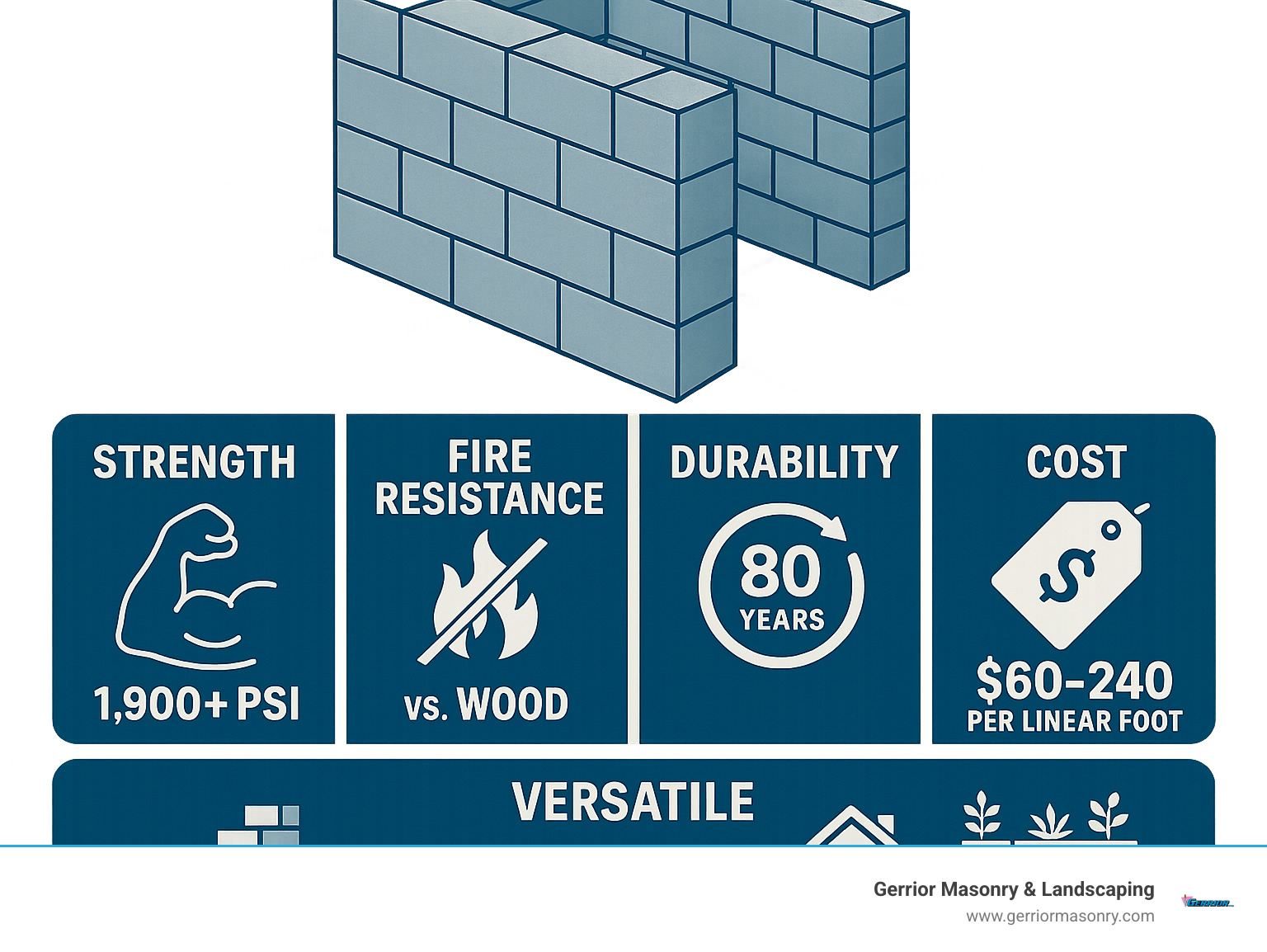
Cinder block wall terminology:
Your Complete Guide to Building a Cinder Block Wall
Building a cinder block wall can seem intimidating, but it’s a rewarding masonry project. Whether you want a garden retaining wall or a sturdy foundation, understanding the process helps you make informed decisions.
After three decades in masonry, I’ve seen countless homeowners transform their properties with well-built cinder block walls. The key is understanding materials, careful planning, and respecting construction fundamentals.
Cinder vs. Concrete: Understanding Your Materials
Contrary to their name, modern “cinder blocks” aren’t made from cinders. True cinder blocks, made with coal ash over 50 years ago, were lighter but also weaker and prone to moisture issues.
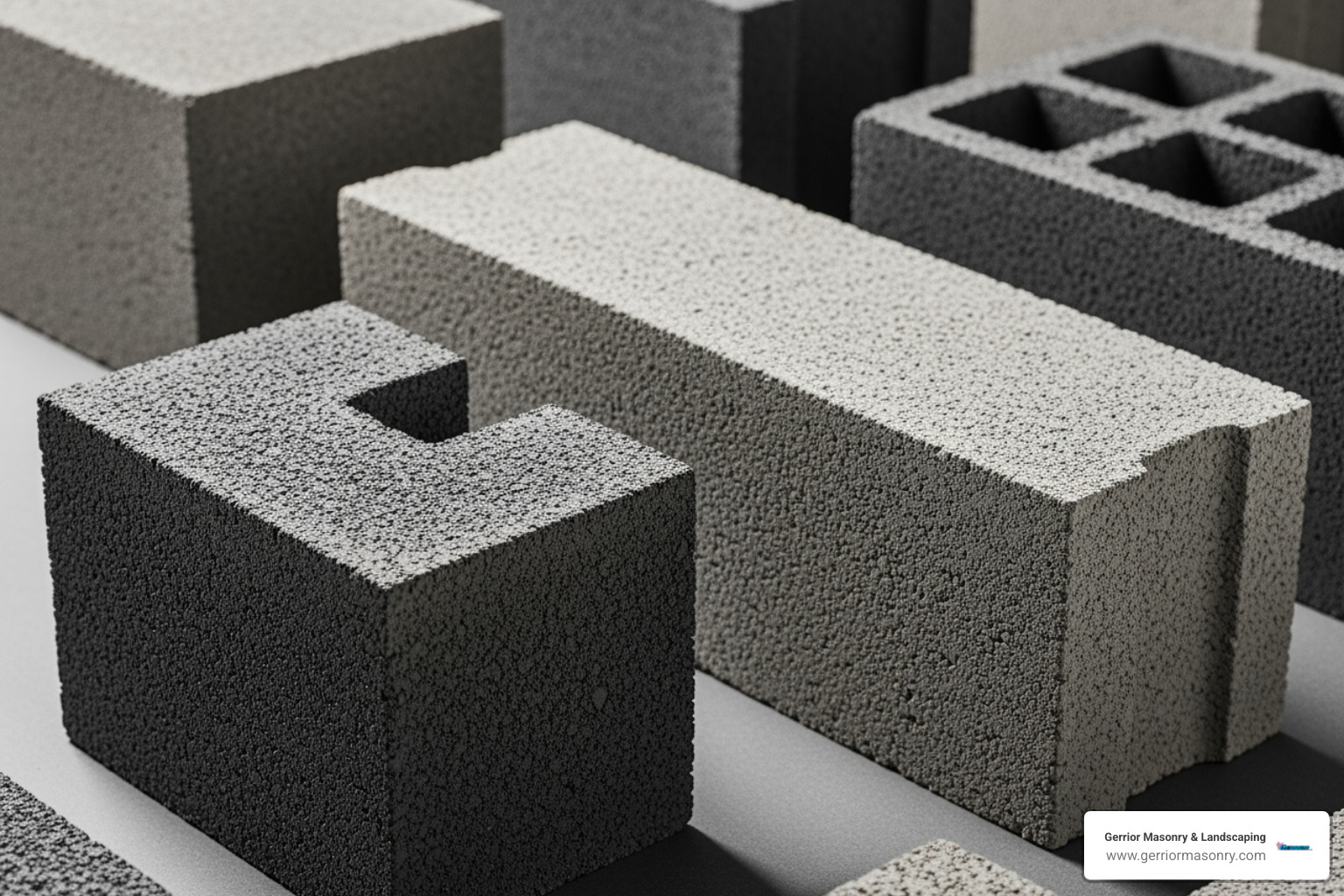
Today’s blocks are Concrete Masonry Units (CMUs), made from cement, sand, water, and aggregates like gravel. This results in a much stronger, more durable product.
Understanding block types prevents headaches. Standard stretcher blocks (typically 8″x8″x16″) are the workhorses for most of the wall. Half-blocks or corner blocks are used to maintain the running bond pattern and create clean ends.
Hollow blocks are most common, as their cores can be filled with concrete and rebar for strength. Solid blocks offer maximum density for special structural needs. Cap blocks provide a finished look at the top of a wall and protect cores from water.
For decorative projects, breeze blocks or screen blocks create beautiful patterns. Bond beams are U-shaped blocks that allow for continuous horizontal reinforcement, essential for load-bearing walls.
Choosing the wrong block is like using a screwdriver as a hammer. If you’re dealing with foundation work, we also offer foundation repointing services to complement your new construction.
Cost and Planning for Your Cinder Block Wall Project
Cinder block wall costs vary based on height, length, reinforcement, and whether it’s a DIY or professional job.
Important note: These costs are average estimates based on internet data and general industry trends – not actual quotes for Gerrior Masonry services. Every project is unique and deserves a personalized estimate.
Individual blocks typically run $1 to $5 each. Material costs usually work out to $15 to $45 per square foot when you factor in mortar, rebar, and concrete fill.
Professional labor adds $5 to $15 per block or $10 to $30 per square foot. The bottom line? Expect $60 to $240 per linear foot for a completed cinder block wall. A 10-foot garden retaining wall could run from $600 to $2,400 installed.
You can find blocks at home improvement stores or local masonry suppliers. Shopping around pays off, as prices can vary.
Planning is more than cost. In Massachusetts, walls over 3-4 feet usually require building permits. These codes dictate foundation depth, reinforcement, and drainage. Getting permits upfront is far cheaper than facing code violations.
Safety gear is non-negotiable: heavy-duty gloves for cuts and burns, safety glasses for debris, a dust mask for mixing/cutting, and steel-toed boots to protect your feet.
We help steer building codes and permit requirements throughout Middlesex and Essex County. Professional guidance upfront can save thousands in corrections later.
Foundation and Site Preparation: The Key to Stability
I can’t stress this enough: your foundation is everything. Many walls fail due to poor foundation work. It’s like building a house on quicksand.
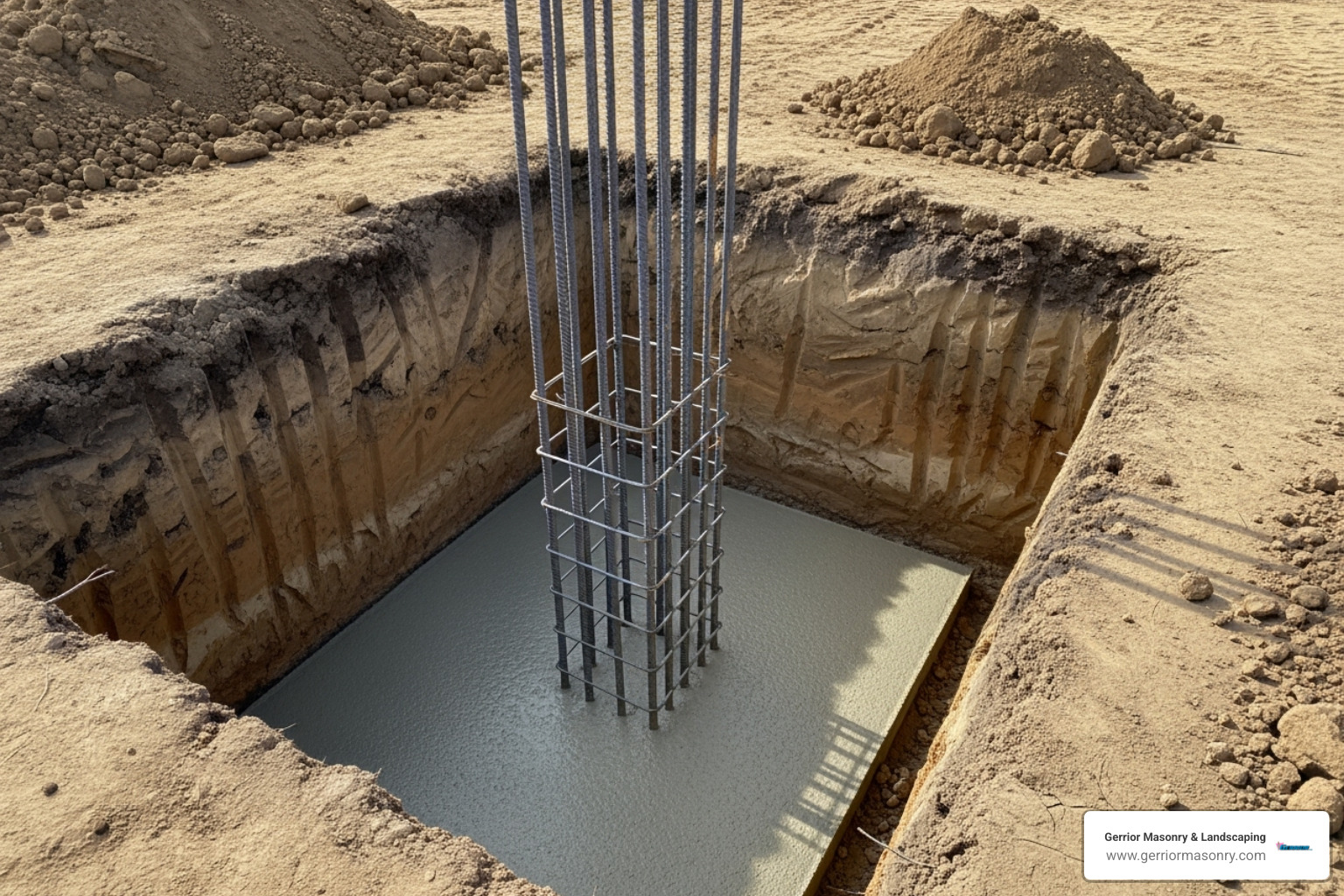
Site layout and marking with stakes and string lines defines the exact wall location, preventing problems that compound later.
Excavation depth is non-negotiable in Massachusetts. Footings must be below the frost line (typically 3-4 feet deep) to prevent cracking from freeze-thaw cycles.
The concrete footing distributes the wall’s weight. For an 8-inch wall, we pour a footing at least 16 inches wide and 8 inches thick. We use high-strength, level concrete.
Rebar reinforcement makes a wall a structural powerhouse. Vertical rebar runs from the footing up through block cores. For retaining or tall walls, horizontal rebar ties the system together.
Proper drainage is critical for retaining walls. Water buildup creates hydrostatic pressure that can topple a wall. We install perforated drain pipes in gravel at the footing level to direct water away.
Our excavation services ensure your foundation meets all local requirements while creating proper drainage to protect your investment.
Laying the Blocks: A Step-by-Step Guide
Now for the fun part: building the wall. Precision and patience are key here; rushing leads to long-term problems.
Mortar consistency is crucial. It should hang on a trowel at a 90-degree angle. We use Type S mortar for the structural strength needed in permanent walls.
The first course is absolutely critical as it sets the stage for the entire wall. We lay a 1-inch mortar bed, furrow it, and “butter” the block ends before setting each one. Every block is checked for level and plumb.
Consistent 3/8-inch mortar joints are for both looks and strength, ensuring proper bonding.
The staggered running bond pattern, achieved by starting alternate courses with half-blocks, maximizes wall strength by offsetting vertical joints.
Checking level and plumb is done constantly. A mason’s string line keeps walls straight. Every course is verified before moving on.
Cutting blocks is done by scoring a line with a chisel and striking it sharply for a clean break. Power saws are faster but create more dust.
This is skilled work that looks easier than it is. Our masonry services deliver the precision needed for walls that last generations.
Reinforcement, Insulation, and Finishing Touches
Proper reinforcement, insulation, and finishes lift a cinder block wall from good to great.
Vertical rebar reinforcement extends from footings through block cores, creating a steel skeleton. For retaining walls, horizontal rebar integrates the structure.
Filling cores with concrete transforms hollow blocks into solid structural elements, achieving a compressive strength over 1,900 PSI (often reaching 3,000 PSI).
Reinforced cinder block walls excel at vertical loads, while poured concrete is slightly better for horizontal pressure. Block walls often cost $15 to $45 per square foot, comparable to poured concrete’s $15 to $35, depending on local factors.
Insulation options improve energy efficiency. These include foam inserts in cores, spray foam on interior surfaces, or rigid foam boards on either side.
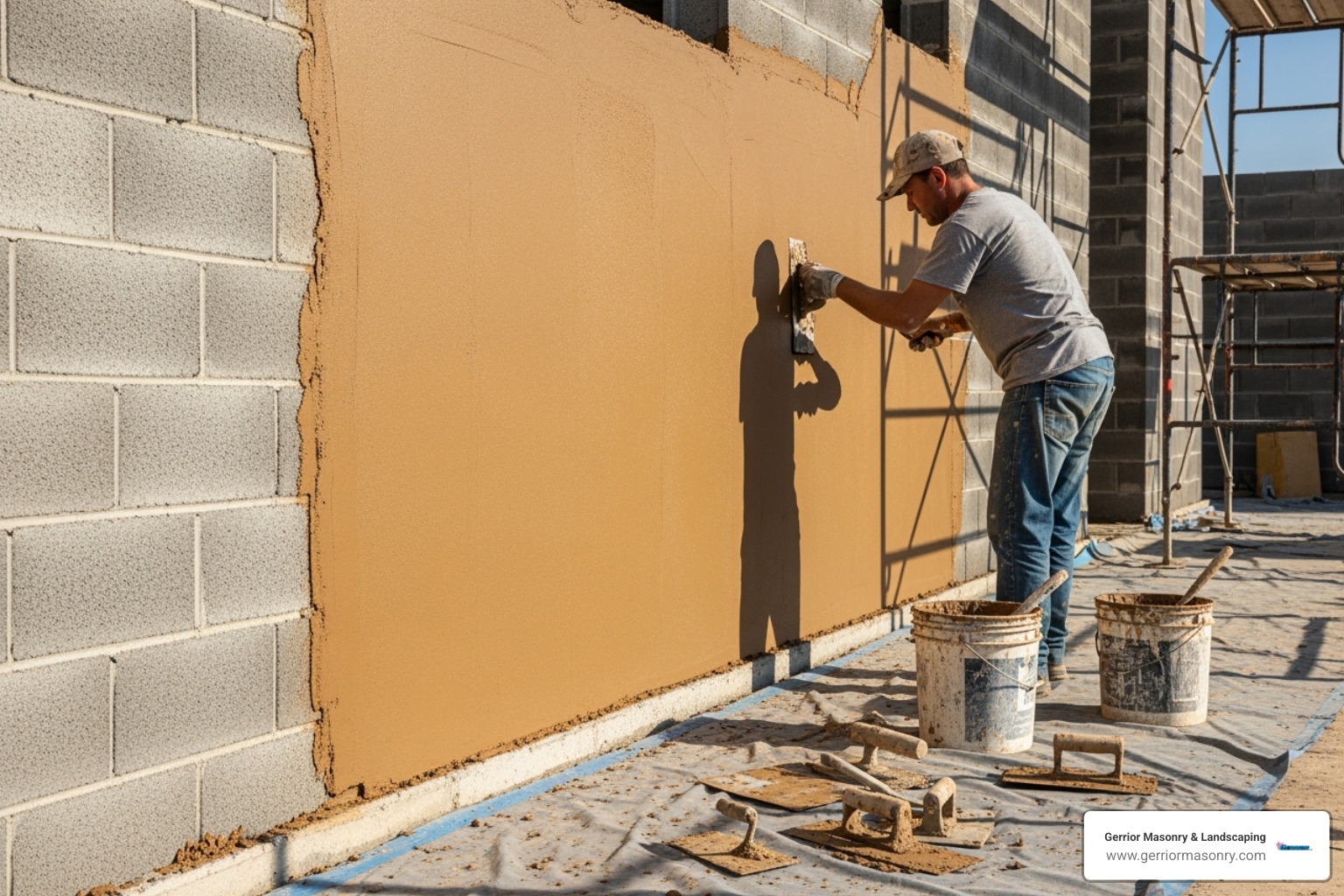
Aesthetic finishes transform utilitarian blocks. Paint requires a masonry-specific primer. Elastomeric coatings waterproof and fill minor flaws. Stucco creates a durable, attractive surface, while stone veneer offers a high-end look.
Attaching items requires proper hardware. Use concrete screws or expansion bolts for medium to heavy items.
Our hardscaping services can give your cinder block wall project that polished, professional finish.
Preventing Common Problems and Ensuring Longevity
A well-built cinder block wall can last 80 years, but common, preventable mistakes can shorten its lifespan.
Cracks often trace back to inadequate footings below the frost line, missing rebar, or poor drainage.
Bowing or bulging occurs in retaining walls from water buildup. Hydrostatic pressure, worsened by poor reinforcement, pushes the wall over.
Water damage and efflorescence (white, powdery salt deposits) signal moisture penetrating the porous blocks, which can lead to mold.
Foundation problems from shallow or undersized footings can cause the entire wall to shift or settle.
Prevention through proper construction is key. This means deep footings, adequate rebar and concrete fill, and effective drainage and waterproofing.
Quality materials and workmanship are non-negotiable. Using the right materials with skilled installation ensures a wall built to last.
Regular maintenance, like cleaning and re-sealing, extends wall life. Address small cracks promptly to prevent major issues.
For critical applications like basements, professional waterproofing is essential. Our basement waterproofing services ensure foundations stay dry and sound for decades.
The difference between a 20-year and an 80-year wall is doing it right the first time. That’s where professional expertise pays off.
Trust the Experts for a Flawless Finish
Building a cinder block wall is more complex than it looks. Understanding the process is one thing, but executing it correctly is another.
Project complexity can be deceptive. A simple garden wall can become overwhelming when dealing with permits, frost lines, and ensuring perfect leveling. Many DIY projects end up costing more to fix than they would have to build professionally from the start.
When should you hire a professional? If your wall will be over 4 feet tall, retain soil, or serve a structural purpose, it’s time to call the experts. Load-bearing walls, complex drainage, and projects needing building permits are not for on-the-job learning.
The benefits of expert installation are significant. Experienced masons bring decades of problem-solving knowledge. We understand how Massachusetts soil behaves in freeze-thaw cycles, what local inspectors require, and how to manage unexpected challenges.
At Gerrior Masonry & Landscaping, we bring over 30 years of experience to every cinder block wall project. Our team has built everything from simple garden borders to complex retaining walls that withstand New England weather. Our commitment to high-quality craftsmanship sets us apart, with direct owner oversight on every project to guarantee it meets our high standards.
We believe the best projects happen when homeowners understand quality work, which is why we explain our process. Whether you need a decorative garden wall or a structural foundation, we’ll build it to last.
Gerrior Masonry & Landscape Construction is based in Woburn, MA, and proudly serves Middlesex and Essex County, Massachusetts. Ready to discuss your wall project? Contact us for your landscape wall installation and let’s build something that will still look great decades from now.
