
Reclaiming Your Basement from Water Damage
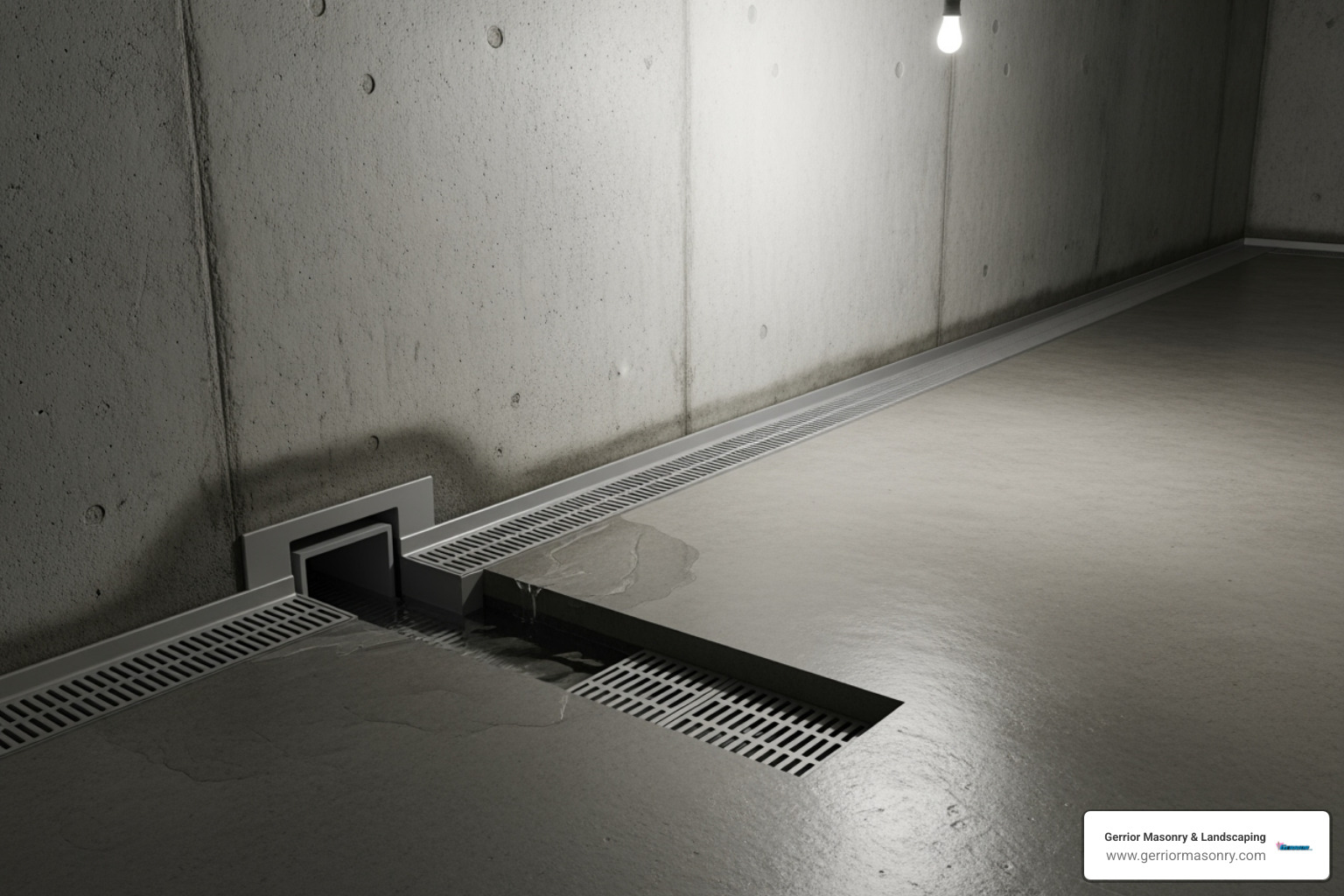
A basement wall drain channel is an interior waterproofing system installed along the perimeter of basement walls to collect and redirect water away from your foundation. Here’s what you need to know:
How Basement Wall Drain Channels Work:
- Intercept water at the critical wall-floor joint where most leaks occur
- Relieve hydrostatic pressure that pushes groundwater into your basement
- Channel collected water to a sump pump system for removal
- Sit above the foundation footing to prevent clogging with silt and debris
- Create a capillary break to stop water’s natural movement through concrete
Main Types Available:
- Sub-floor perimeter channels (most effective, hidden installation)
- Above-floor baseboard systems (ideal for monolithic slabs)
- Thin-slab low-profile channels (for shallow concrete floors)
- Cross-floor interceptor channels (for mid-floor water issues)
Finding water in your basement is a frustrating sign that hydrostatic pressure is forcing groundwater into your home, usually at the vulnerable joint where the walls meet the floor.
Interior drainage channels are the gold standard for solving this problem. Unlike exterior solutions that can clog within 10-15 years, a professionally installed interior system can last 20+ years. It works by creating a controlled path for water, relieving pressure and directing moisture safely away.
I’m Joe Gerrior, and with 34 years of experience in masonry and foundation work in Massachusetts, I’ve seen these systems consistently prove to be the most reliable long-term solution for changing damp basements into dry, usable spaces.
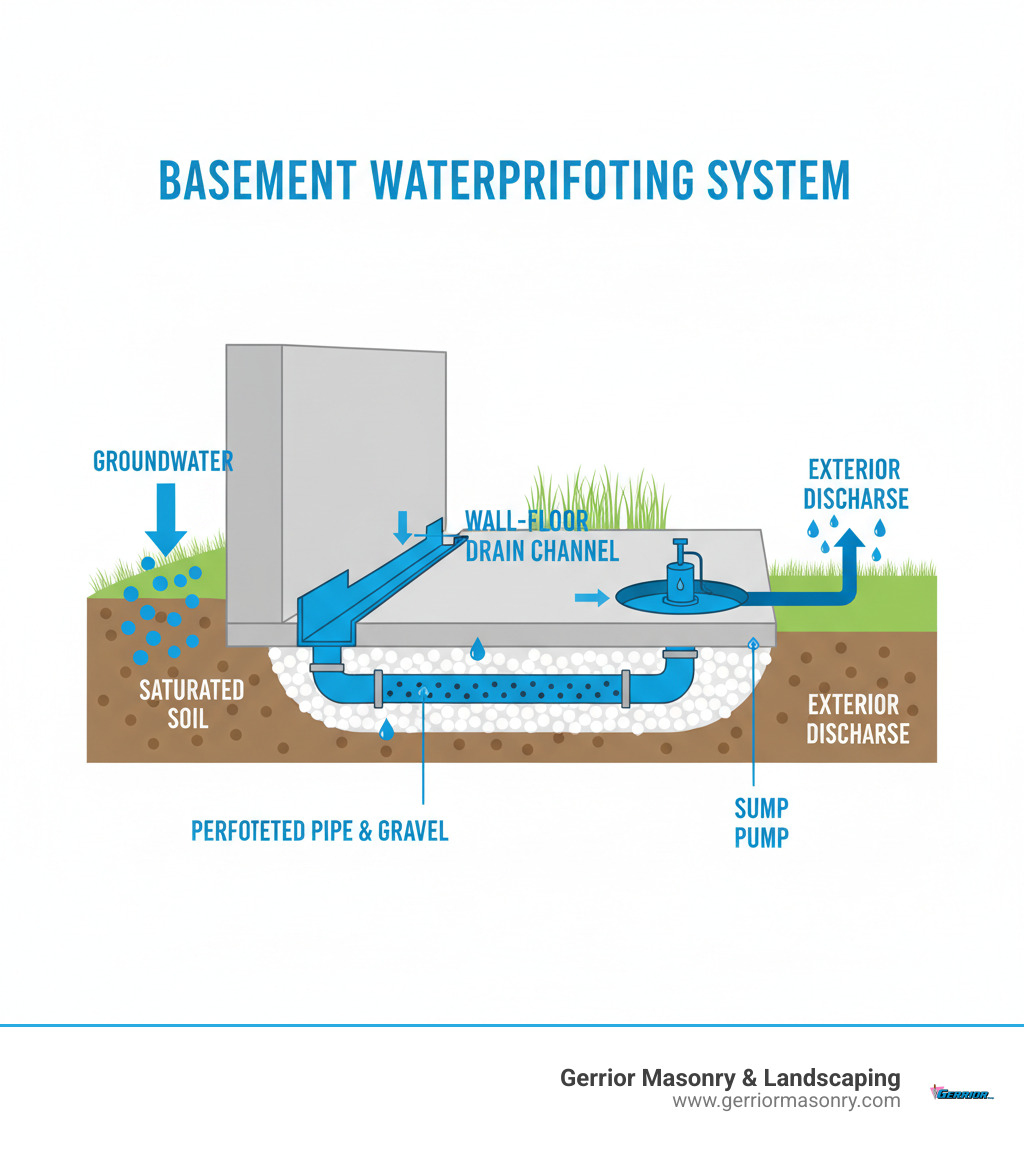
Quick look at basement wall drain channel:
Your Comprehensive Guide to Basement Wall Drain Channel Systems
Finding water in your basement can damage your home’s value and create health concerns. A properly installed basement wall drain channel system solves the root cause of water problems, working around the clock to keep your basement dry.
Signs of Water Problems
Learning to read your basement’s warning signals can save you thousands in damage:
- Water stains on walls: Discolored patches, especially near the floor, show where water has repeatedly intruded.
- Damp, musty smell: This odor indicates mold and mildew growth from excess moisture, often appearing before you see visible water.
- Efflorescence: White, chalky deposits on concrete or masonry, left behind as water seeps through and evaporates.
- Puddles on the floor: The most obvious sign that hydrostatic pressure is overwhelming your foundation.
- Peeling paint or wallpaper: Moisture trapped behind wall coverings causes them to bubble, crack, and detach.
When these signs appear, a basement wall drain channel is often the most effective long-term solution. For comprehensive issues, our basement waterproofing services can help, and if structural damage has occurred, our foundation repair expertise ensures your home is stable.
Understanding How a Basement Drainage Channel Works
A basement wall drain channel system’s power lies in its simple, smart design that works with natural forces.
- Perforated drain pipe: The system’s core, this engineered pipe allows water in while keeping debris out.
- Clean gravel/stone backfill: Surrounds the pipe, acting as a natural filter to prevent clogging and ensure excellent water flow.
- Vapor barrier or dimple board: Placed against the foundation wall, it creates an air gap for water to flow down to the channel and blocks moisture vapor from entering the basement air.
- Sump pit and pump: The command center. The pump automatically activates to remove collected water through a discharge line, carrying it safely away from your home.
The system’s genius is in relieving hydrostatic pressure. It gives water an easy escape route before it can force its way through your foundation. By capturing water at the cove joint (where the floor meets the wall), it addresses the most common entry point. Its clog-resistant design, placed above the foundation footing and using clean stone, avoids the “mud zone,” ensuring long-term reliability. Our guide to sump pump systems provides more detail on this critical component.
Choosing the Right Type of Drainage Channel
Selecting the right basement wall drain channel depends on your basement’s construction and water issues.
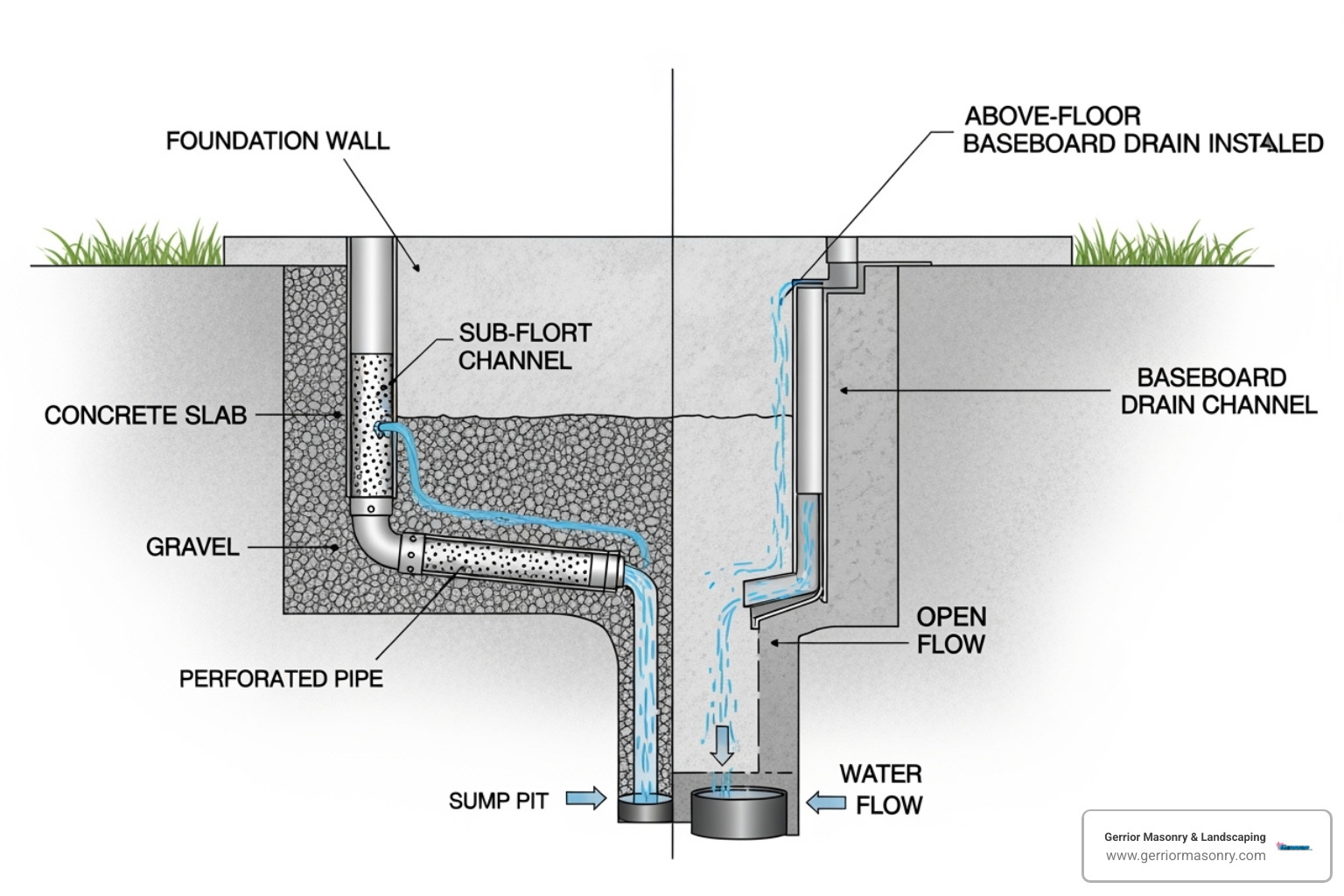
- Sub-floor perimeter channels: Considered the gold standard for most basements with poured concrete or block foundations. A trench is created around the interior perimeter, the system is installed below the floor level, and the floor is re-concreted. Pros: Completely hidden, highly effective at capturing water at the wall-floor joint, and directly relieves hydrostatic pressure. Cons: More labor-intensive installation and higher initial cost compared to above-floor options.
- Above-floor baseboard systems: A practical solution for monolithic slabs (where the floor and footing are poured as a single piece), making a sub-floor system impossible. A hollow channel is epoxied to the top of the floor against the wall. Pros: Less disruptive and faster installation, lower cost. Cons: Visible in the basement, may be less effective at relieving sub-slab pressure, and can be an obstacle.
- Thin-slab low-profile channels: Specifically engineered for basements with thin concrete floors (typically 2-3 inches), common in older homes. These systems require less depth than standard sub-floor channels. Pros: Allows for a sub-floor solution in challenging situations. Cons: May have slightly lower water volume capacity than full-sized channels.
- Cross-floor interceptor channels: These are not for perimeter leaks but are used when water is seeping up through cracks in the middle of the basement floor. These channels are installed in trenches cut across the floor to intercept the water and direct it to the perimeter system or sump pit. Pros: Directly addresses mid-floor water problems. Cons: Adds to the complexity and cost of the overall system.
- Surface trench drains: Primarily an exterior or entryway solution. These grate-covered channels are installed flush with the concrete surface at the entrance to a walkout basement or garage to catch surface water before it can flow inside. Pros: Excellent for preventing water from entering through doorways. Cons: Only addresses surface water, not hydrostatic pressure from below.
The Installation Process Step-by-Step
Our streamlined process minimizes disruption while ensuring lasting results.
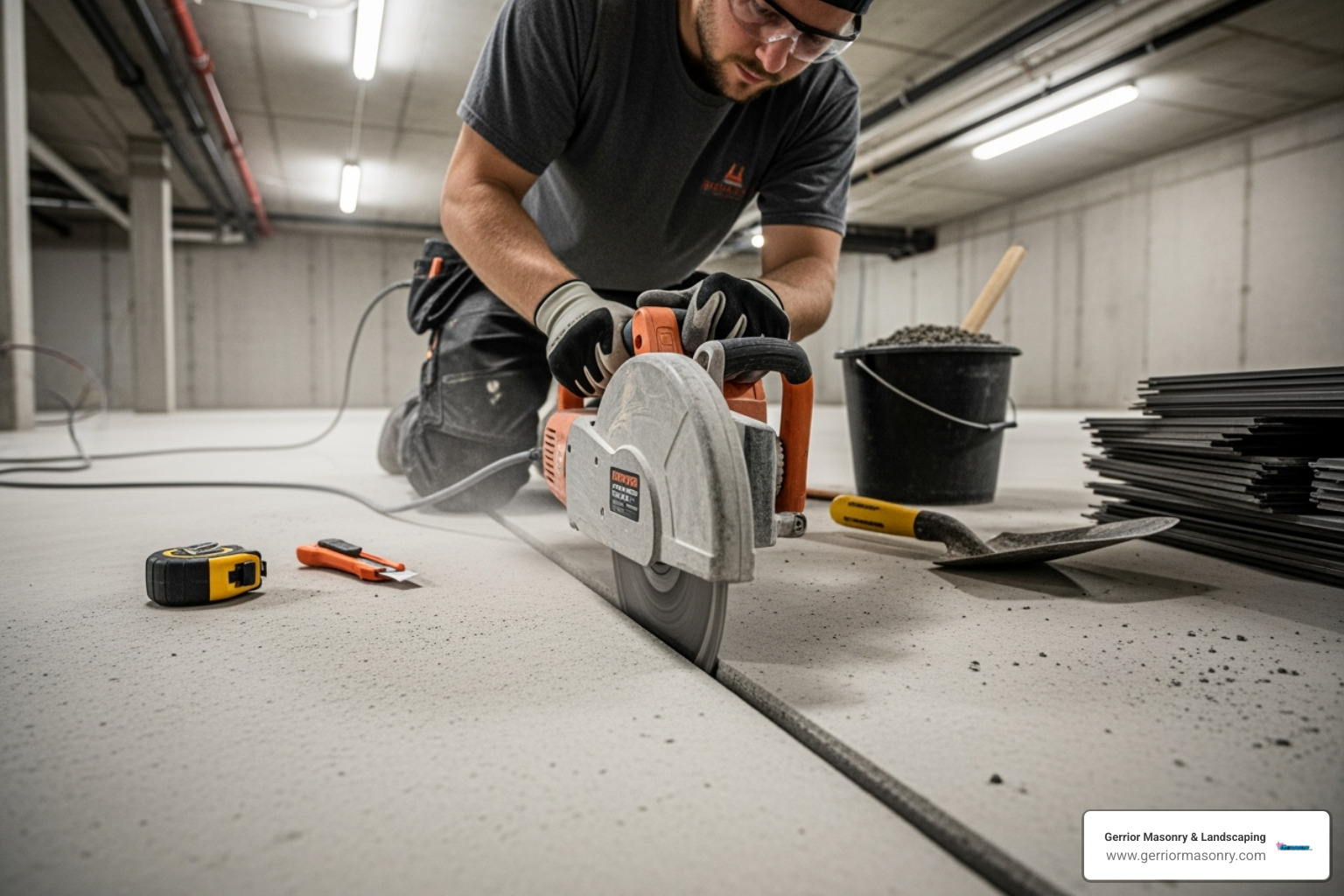
- Preparation: We protect your property by covering items and using plastic sheeting to control dust.
- Trenching: Using specialized saws, we create a clean, precise trench along the interior perimeter.
- Excavation: We dig out soil to the proper depth to expose the foundation footing.
- Gravel Bed: A layer of clean drainage stone provides a stable, filtering base for the pipe.
- Placing the Drain Channel: The perforated pipe is carefully positioned with the correct slope to guide water toward the sump pump.
- Connecting to Sump Pump: We ensure a seamless connection with the proper slope for efficient gravity-fed drainage.
- Backfilling with Gravel: More clean stone surrounds the pipe, promoting water flow and filtration.
- Vapor Barrier Installation: If needed, a barrier is installed to direct wall seepage into the channel.
- Pouring New Concrete: We restore the floor, matching the existing level for a professional finish that hides the system.
Proper slope is critical for the system to function correctly, preventing backups. This is where professional experience is invaluable.
Key Advantages Over Other Waterproofing Methods
When evaluating options, basement wall drain channel systems offer compelling advantages over exterior methods like the traditional French drain.
| Feature | Interior Drain Channel System | Exterior French Drain System |
|---|---|---|
| Installation | Less invasive; minimal landscaping disruption. Often done in 1-2 days. | Highly invasive; requires major excavation. Can take days or weeks. |
| Longevity | Typically lasts 20+ years. Protected from exterior elements. | Often clogs in 10-15 years from silt, mud, and roots. |
| Clogging | Clog-resistant design sits above the “mud zone.” | Prone to clogging from soil and roots. Difficult to access. |
| Maintenance | Easy to access for sump pump checks and flushing. | Difficult and costly to maintain due to buried location. |
| Cost | More cost-effective long-term. Competitive initial investment. | Higher initial and long-term costs from excavation and repairs. |
| Hydrostatic Pressure | Directly relieves pressure at the vulnerable wall-floor joint. | Addresses soil water but doesn’t directly relieve pressure under the slab. |
In summary, interior systems offer superior longevity and reliability because they are protected from outdoor elements that cause clogs. The installation is far less invasive, preserving your landscaping and making them more cost-effective over the life of the system.
Maintenance, Costs, and Long-Term Considerations for a Basement Wall Drain Channel
Investing in a basement wall drain channel is a long-term commitment to a dry basement. It benefits from proper care and has several cost factors to consider.

Maintenance:
- Annual Sump Pump Testing: This is the most critical task. Before the wet season, pour water into the pit to ensure the pump and its battery backup activate correctly.
- System Flushing: We recommend inspecting clean-out ports annually and flushing the system every 2-3 years to remove any sediment and ensure peak performance.
- Warranty: Reputable installations come with comprehensive warranties. We stand behind our systems, giving you confidence that your investment is protected.
Cost Considerations: Costs vary based on system type, basement size, and complexity. The following are general market estimates based on internet research and not actual pricing for our services. We provide personalized quotes after a thorough evaluation.
- Sub-floor perimeter channels: Average costs typically range from $4,000 to $24,000+.
- Baseboard or above-floor systems: Generally range from $3,500 to $15,000+.
- Thin-slab low-profile channels: Commonly cost between $4,000 and $18,000+.
- Cross-floor interceptor channels: Typically range from $2,500 to $12,000+.
- Surface trench drains: Generally cost between $1,500 and $9,000+.
Professional installation is invaluable due to the complexities of ensuring proper slope and material selection. A properly installed system strengthens your home’s water management and protects your property value.
Secure Your Foundation with Expert Drainage Solutions
Imagine a basement that smells fresh, where you can store items without worry or even create new living space. A professionally installed basement wall drain channel system transforms your relationship with your basement.
The benefits extend beyond just staying dry. By eliminating water intrusion, you protect your home’s structural integrity and preserve its value. A dry basement is valuable square footage; a wet one is a red flag for potential buyers.
Professional installation is critical. DIY attempts can go wrong with improper slope or connections, making problems worse and leading to costly repairs. At Gerrior Masonry & Landscaping, we have over 30 years of experience doing it right the first time, with owner oversight on every project.
A permanent solution brings peace of mind. No more worrying during storms or dealing with “that basement smell.” You get a dry, healthy, and usable space.
Ready to reclaim your basement? Contact us for drainage system solutions to discuss how a basement wall drain channel can protect your home.
Gerrior Masonry & Landscaping is based in Woburn, MA, and proudly services Middlesex and Essex County, Massachusetts. We bring decades of experience and owner oversight to every project, ensuring your basement stays dry for years to come.
