
Bulkhead and Walkout Repairs: Top 5 Expert Solutions

Bulkhead and walkout repairs are crucial for maintaining the safety and functionality of your home. Whether you’re dealing with water leaks, structural damage, or outdated designs, addressing these issues promptly can prevent more severe problems down the line. Here’s a quick guide if you’re looking for an immediate answer:
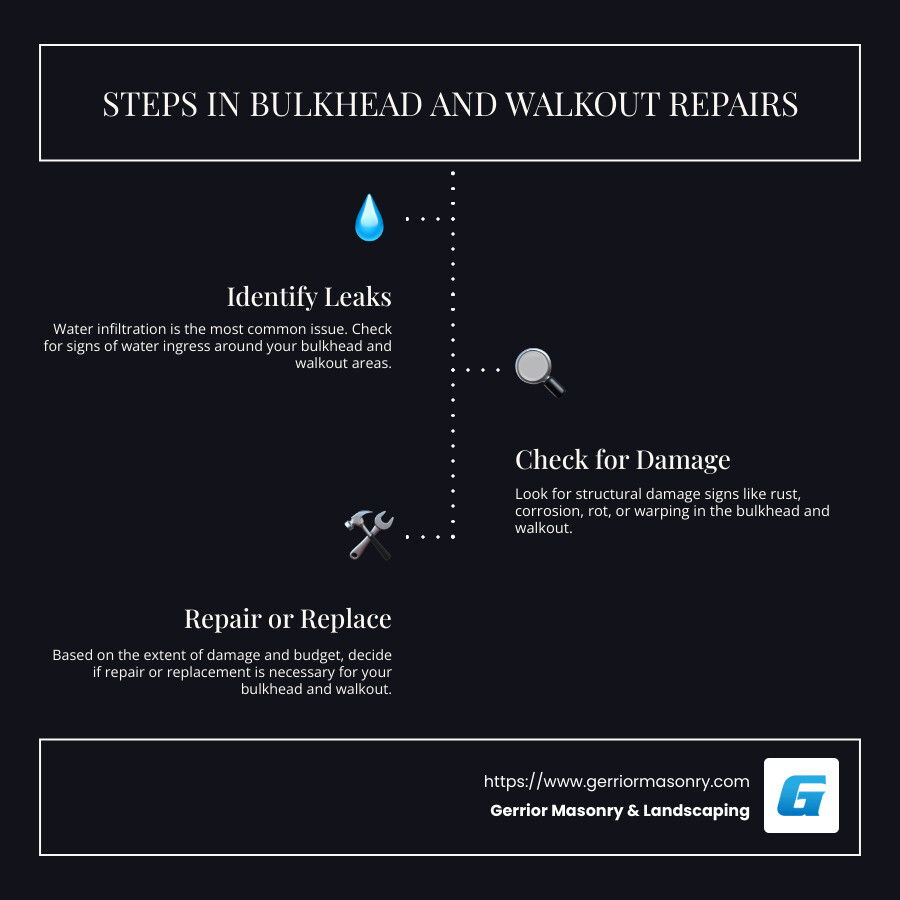
- Identify Leaks: Water infiltration is the most common issue with bulkheads and walkouts.
- Check for Damage: Look for signs of rust, corrosion, rot, or warping.
- Repair or Replace: Decide based on the extent of damage and your budget.
As we explore these repairs, I’ll be sharing insights drawn from over 34 years in the industry. I’m Joe Gerrior, and I’ve dedicated my career to mastering excellence in the field of bulkhead and walkout repairs. My team and I are committed to bringing high-quality craftsmanship and reliability to each project we undertake.
Simple guide to bulkhead and walkout repairs terms:
– bulkhead structural integrity
– repairing bulkhead washouts
– should a bulkhead be repaired prior to home sale
Understanding Bulkheads and Walkouts
Bulkhead doors, often referred to as cellar doors, are essential components for many homes, especially in the Northeast. These doors provide direct basement access from outside, allowing homeowners to easily move large items, like furniture or appliances, into the basement without having to steer through the main living spaces. This convenience is just one of the many benefits that bulkhead doors offer.
What Are Bulkhead Doors?
In simple terms, a bulkhead door is an exterior door that leads to your basement. It typically consists of a set of angled doors that open outward, revealing a staircase leading down to the basement. The design and material of these doors can vary, with options ranging from metal to wood, and each type has its own set of maintenance needs.
Metal bulkhead doors are durable but can suffer from rust and corrosion over time. On the other hand, wooden doors may warp or rot if not properly maintained. Identifying the type of bulkhead door you have is the first step in understanding how to care for it.
The Role of Bulkhead Doors in Basement Access
Having a bulkhead door means you have a quick and direct route to your basement. This is particularly valuable in emergency situations, such as floods, where you might need to move items quickly. Moreover, it serves as an essential second exit, improving the overall safety of your home.
For homes in flood-prone areas, a well-maintained bulkhead door can be a lifesaver. It provides a convenient way to transport belongings to safety, potentially saving you money and stress during natural disasters.
Maintaining Your Bulkhead Door
Keeping your bulkhead door in good condition is crucial. Regular inspections can help you spot early signs of damage like rust, corrosion, or warping. Addressing these issues promptly can prevent costly repairs or replacements down the line.
If you’re unsure about the condition of your bulkhead door or need help with repairs, professional services are available. Companies like Gerrior Masonry & Landscaping specialize in bulkhead and walkout repairs, ensuring your cellar door remains functional and secure.
In the next section, we’ll dig into the signs that indicate your bulkhead might need repair or replacement. Stay tuned to learn more!
Signs Your Bulkhead Needs Repair or Replacement
Spotting early signs of damage in your bulkhead doors can save you from expensive repairs later. Here are some key indicators that your bulkhead might need attention:
Structural Damage
Structural issues are a major red flag. If you notice any cracks or misalignment in your bulkhead or surrounding concrete, it’s time to take action. These issues can compromise the integrity of your basement access and might lead to water leakage or even collapse.
Rust and Corrosion
Metal bulkhead doors are prone to rust and corrosion, especially in humid or wet environments. Look for reddish-brown spots or flaking metal around hinges and edges. These are clear signs that the metal is deteriorating, which can weaken the door and its frame.
Tip: Regularly applying rust-resistant paint can help prevent these issues.
Rot and Warping
For wooden bulkhead doors, rot and warping are common problems. If the wood feels soft, looks discolored, or has a musty smell, it might be rotting. Warping, on the other hand, can cause the door to no longer fit properly, leading to gaps and potential leaks.
Tip: Ensure your wooden doors are sealed and painted to protect against moisture.
When to Call a Professional
If you observe any of these signs, it’s wise to consult a professional. Companies like Gerrior Masonry & Landscaping have the expertise to assess the damage and recommend the best course of action, whether it’s repair or replacement.
By addressing these issues early, you can ensure your bulkhead and walkout repairs are effective and long-lasting.
In the next section, we’ll explore step-by-step solutions for repairing different types of bulkheads. Stay with us to learn more about maintaining the safety and functionality of your home!
Step-by-Step Solutions for Bulkhead Repairs
When it comes to bulkhead and walkout repairs, understanding the type of bulkhead you have is crucial. Different materials require different approaches. Let’s explore the specific solutions for each type.
Precast Bulkhead
Precast bulkheads are made from concrete sections that are manufactured off-site and then installed. They are durable but can develop issues over time, especially at the seams.
Repair Steps:
1. Inspect for Cracks: Examine the joints between sections for cracks or gaps.
2. Clean and Prepare: Remove any loose debris or old sealant with a wire brush.
3. Seal the Joints: Use a high-quality waterproof sealant to fill any gaps. This prevents water from seeping through.
4. Check the Doors: Ensure the doors are aligned properly to maintain a tight seal.
Poured in Place Bulkhead
Poured in place bulkheads are constructed directly on site. They are generally more robust but can still face water intrusion issues.
Repair Steps:
1. Check for Structural Issues: Look for any cracks or signs of settling in the concrete.
2. Reinforce Weak Spots: Use hydraulic cement to patch any cracks. This material expands as it sets, providing a strong seal.
3. Waterproofing: Apply a waterproof coating to the entire surface to prevent moisture penetration.
Metal Bulkhead
Metal bulkheads, often referred to as Bilco doors, are susceptible to rust and corrosion.
Repair Steps:
1. Rust Removal: Sand down any rust spots to bare metal.
2. Apply Rust Inhibitor: Coat the cleaned areas with a rust-inhibiting primer.
3. Seal and Paint: Use a weather-resistant paint to protect the metal from future corrosion. Ensure all seams and edges are sealed properly.
Waterproofing
Regardless of the bulkhead type, waterproofing is a critical step in ensuring longevity and functionality.
General Waterproofing Tips:
– Interior and Exterior Sealing: Apply waterproof sealant on both sides of the bulkhead to prevent water ingress.
– Drainage Solutions: Ensure proper drainage around the bulkhead to direct water away from the structure.
– Regular Maintenance: Regularly inspect and maintain the waterproofing layers to address any wear and tear promptly.
By following these steps, you can effectively manage bulkhead and walkout repairs, ensuring your basement remains dry and secure. In our next section, we’ll discuss the role of professional services in bulkhead repair and how they can provide advanced solutions for complex issues.
Bulkhead and Walkout Repairs: Professional Services
When it comes to bulkhead and walkout repairs, professional services can make a significant difference. Let’s explore some advanced techniques used by experts to ensure long-lasting results.
Soil Stabilization
One critical aspect of repairing bulkheads is stabilizing the soil around them. Unstable soil can lead to shifting and further damage.
- Assessment: Professionals begin by assessing the soil conditions. This helps in identifying areas prone to erosion or instability.
- Techniques: They may use various techniques like compacting the soil or installing retaining structures to prevent movement.
- Benefits: Proper soil stabilization not only supports the bulkhead but also prevents future erosion, ensuring the structure remains intact.
Eco-Friendly Polymers
Incorporating eco-friendly materials is becoming increasingly important in construction and repair work.
- Polyurethane Injections: One popular method involves injecting polyurethane foam behind bulkheads. This material expands to fill voids, stabilizing the structure.
- Advantages: Polyurethane is durable and environmentally friendly. It provides excellent waterproofing and doesn’t leach harmful chemicals into the soil.
- Long-Term Impact: Using eco-friendly polymers ensures that repairs are sustainable and safe for the environment.
Sealing Leaks
Water intrusion is a common issue with bulkheads and walkouts. Proper sealing is essential to keep your basement dry.
- Leak Detection: Experts use advanced tools to detect leaks, even those not visible to the naked eye.
- Sealing Solutions: They apply high-quality sealants that are designed to withstand harsh weather conditions. These sealants are applied both internally and externally for maximum protection.
- Maintenance: Regular inspections and maintenance ensure that seals remain effective over time, preventing any future leaks.
By utilizing these professional services, you can ensure your bulkhead and walkout repairs are not only effective but also environmentally responsible. In the following section, we’ll address some frequently asked questions about bulkhead and walkout repairs to further clarify the process.
Frequently Asked Questions about Bulkhead and Walkout Repairs
What is bulkhead repair?
Bulkhead repair involves fixing or restoring the structure that provides access to your basement. This can include addressing issues like leaks, rust, and structural damage. Repairs often involve resealing the transition between the bulkhead cap and concrete, replacing corroded parts, and applying waterproof coatings.
Regular maintenance is crucial to extend the lifespan of your bulkhead. This includes inspecting for signs of wear and tear, such as rust or corrosion, and addressing them promptly. Keeping the bulkhead in good condition ensures that water doesn’t seep into your basement, protecting your home’s foundation.
When should I replace my bulkhead?
Knowing when to replace a bulkhead can save you from more significant issues down the line. Here are some indicators that it might be time for a replacement:
- Structural Damage: If you notice visible damage, such as cracks or warping, it’s a sign that repairs may no longer suffice.
- Rust and Corrosion: Extensive rust or corrosion, especially on metal bulkheads, can compromise the structure’s integrity. If these issues are widespread, replacement is often the best solution.
- Frequent Repairs: If you’re constantly repairing the same issues, it might be more cost-effective to replace the bulkhead entirely.
Consulting with a professional can provide clarity on whether a repair or replacement is the best course of action.
How long does a concrete bulkhead last?
The lifespan of a concrete bulkhead depends on several factors, including maintenance and environmental conditions. On average, a well-maintained concrete bulkhead can last 20 to 30 years.
To maximize the lifespan of your concrete bulkhead:
- Regular Inspections: Conduct periodic inspections to catch any signs of wear early. Look for cracks, leaks, and any deterioration in the concrete.
- Proper Maintenance: Address minor issues promptly. This includes resealing joints and applying waterproof coatings as needed.
- Environmental Considerations: Protect the bulkhead from harsh weather conditions by ensuring proper drainage around the structure.
By following these maintenance steps, you can ensure your concrete bulkhead remains strong and functional for many years.
In the next section, we’ll dig deeper into how Gerrior Masonry & Landscaping ensures high-quality results with their skilled team and comprehensive services.
Conclusion
At Gerrior Masonry & Landscaping, we pride ourselves on delivering high-quality results for all your bulkhead and walkout repair needs. With over 30 years of experience, our skilled team ensures that each project is handled with precision and care, from start to finish.
Our Expertise
We specialize in a wide range of masonry and hardscaping services, including bulkhead replacements and repairs. Our team is well-versed in the latest techniques and materials, ensuring that your repairs are not only effective but also durable. We understand the importance of maintaining the integrity of your home, and we’re committed to using the best practices to achieve that.
Why Choose Us?
– Skilled Team: Our team is made up of experienced professionals who are dedicated to providing exceptional service. Each project benefits from hands-on owner oversight, ensuring that every detail meets our high standards.
– Comprehensive Services: From foundation repairs to waterproofing, we offer a full spectrum of services to keep your home safe and dry. Our expertise extends beyond bulkheads, covering all aspects of masonry work to improve your property.
– Customer Satisfaction: We believe in open communication and transparency throughout every project. Our goal is to not only meet but exceed your expectations, ensuring your complete satisfaction with the final results.
If you’re facing issues with your bulkhead or walkout, don’t hesitate to reach out to us. Our team is ready to assist you with professional repairs that stand the test of time. For more information on our bulkhead services, visit our Bulkhead Replacement page. Let us help protect your home with our expert solutions.
