
Chimney Repair Contractor: Best 2025 Expert
Why Professional Chimney Repair Contractors Are Essential for Your Home
Your chimney is a hardworking safety system, not just a decorative stack of bricks. It must stand up to fire, drastic temperature swings, and harsh New England weather—all while venting dangerous gases like carbon monoxide away from your living space. Because its role is so critical, hiring the right chimney repair contractor is one of the most important decisions you can make for your home’s safety and structural integrity.
Quick Answer: What to Look for in a Chimney Repair Contractor:
- Licensed & insured professionals only. This is non-negotiable. A license proves they meet state standards, while insurance protects you from liability in case of accidents on your property.
- Experience with the exact materials and design of your chimney. Whether you have a historic brick chimney or a modern prefab system, your contractor needs hands-on experience with that specific type.
- Detailed written estimate. A professional quote breaks down all anticipated costs (labor, materials, permits, timeline) to prevent surprise charges later.
- Local references & reviews you can verify. Ask for a list of recent, local projects and check online reviews to gauge their reputation in communities like Woburn, Andover, or Lexington.
- Workmanship and material warranties in writing. A confident contractor stands behind their work with a solid warranty, giving you long-term peace of mind.
- Knowledge of local codes and permit requirements. Building codes vary across Middlesex and Essex County. A knowledgeable contractor ensures all work is compliant, safe, and won’t cause issues during a future home sale.
Cost is always a concern, but safety should come first. Based on internet research, minor chimney repairs often start around $200–$700, larger masonry or crown repairs run $1,000–$3,500, and full replacements can range $4,000–$15,000+. These are average figures, not actual Gerrior Masonry pricing.
Ignoring early warning signs can multiply those numbers—or worse, lead to devastating house fires or carbon-monoxide exposure. Common red flags include:
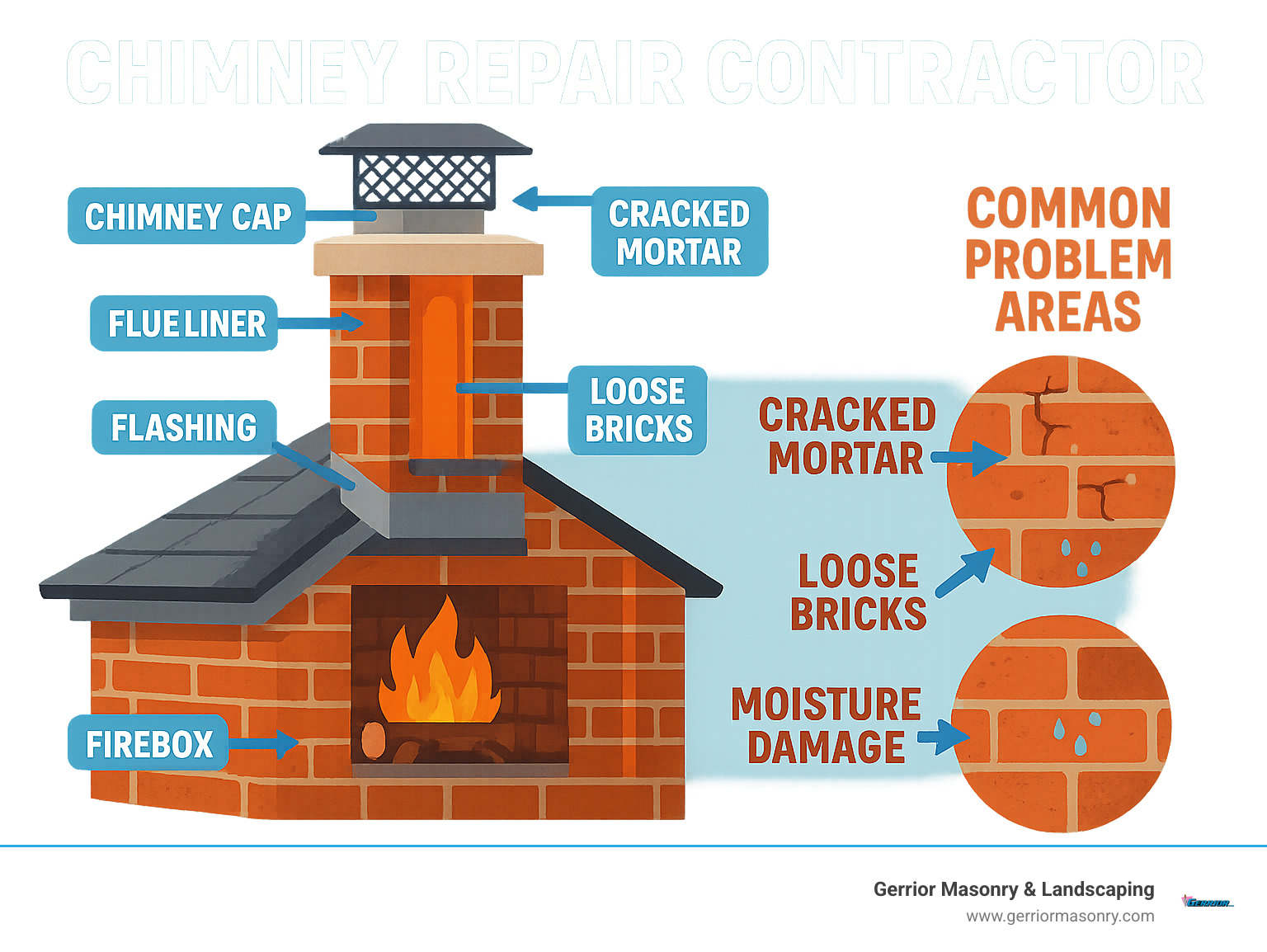
- Cracked or crumbling mortar joints, which can allow water and dangerous gases to escape.
- White staining (efflorescence) on brick faces, a clear sign that water is penetrating the masonry.
- Rusted dampers or firebox parts, indicating a moisture problem inside the system.
- Water stains on walls or ceilings near the fireplace.
- Smoke backing up into rooms instead of rising properly up the flue.
I’m Joe Gerrior, owner of Gerrior Masonry & Landscape Construction Corp., and for 34+ years I’ve seen how prompt, professional repairs save homeowners from expensive disasters and keep their families safe.
Quick look at chimney repair contractor resources:
Recognizing the Red Flags: When to Call a Chimney Professional
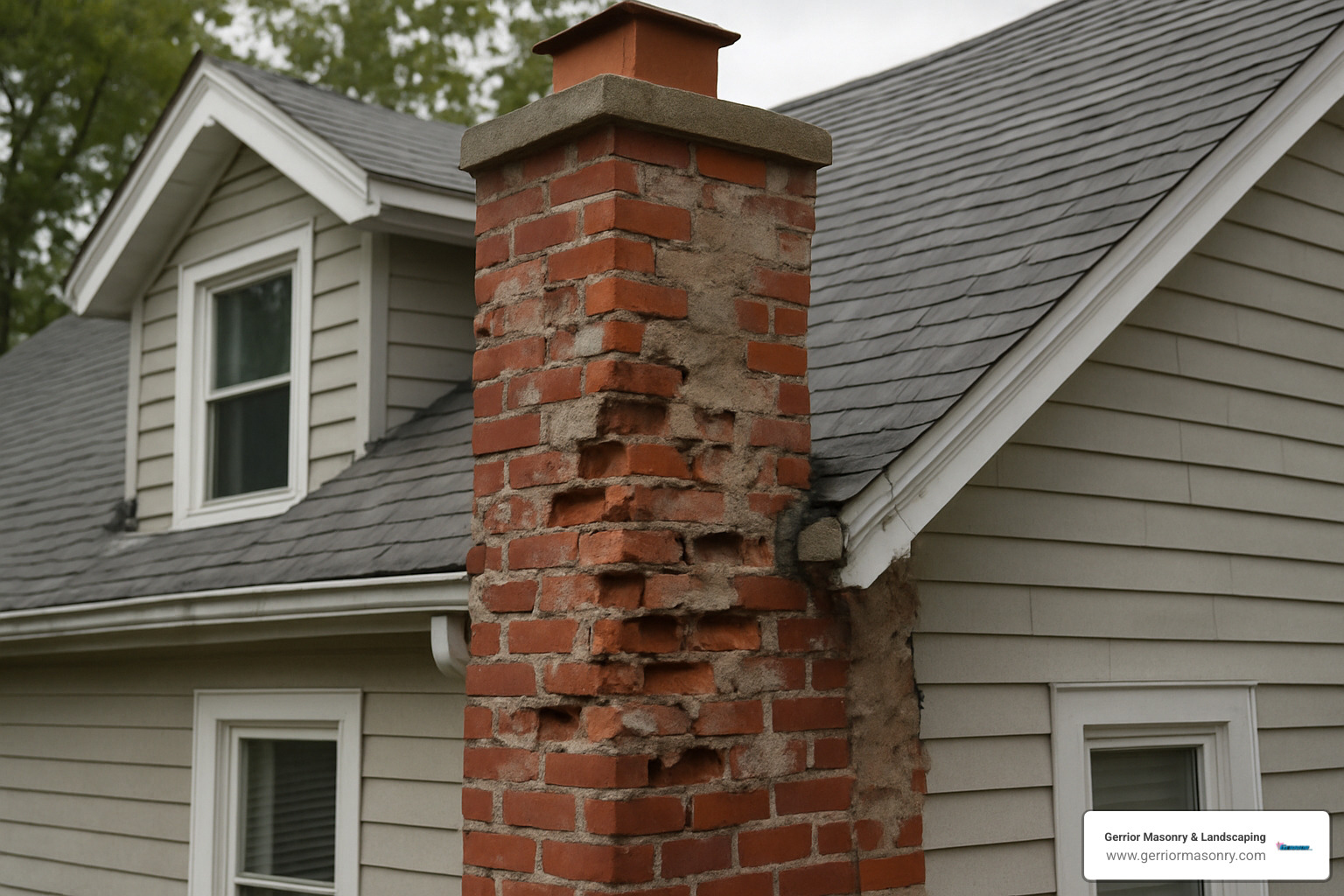
Your chimney rarely fails overnight—it usually whispers warnings first. Learning to spot those whispers is key to proactive maintenance. By addressing issues early, you can call a chimney repair contractor for a minor fix before it evolves into a major, costly reconstruction project.
More info about Chimney Masonry
Common Chimney Problems and Their Causes
| Problem | Why It Happens |
|---|---|
| Creosote buildup | Incomplete wood combustion leaves a flammable, tar-like residue. It can build up in stages, from a light soot to a thick, glazed coating that is extremely difficult to remove and poses a serious fire hazard. |
| Water damage | Rain and melting snow are a chimney’s worst enemy. Water enters through cracked crowns, failed flashing at the roofline, or porous mortar, leading to decay from the inside out. |
| Flue blockages | Debris such as leaves, twigs, and animal nests (especially from birds and squirrels) can clog the flue, restricting airflow. This prevents smoke from exiting and can trap deadly carbon monoxide (CO) in your home. |
| Age-related mortar & brick decay | The constant exposure to freeze–thaw cycles in New England, combined with decades of heat and acidic flue gases, inevitably weakens masonry. Mortar erodes and bricks can begin to flake or crack. |
| Foundation settlement | If the ground beneath your home shifts, the heavy chimney structure can crack, separate from the house, or begin to lean. This is a serious structural problem that requires immediate professional assessment. |
For liner issues see Chimney Flue Replacement.
Telltale Signs Your Chimney Needs Repair
- Missing or crumbling mortar between bricks: These gaps are entry points for water and can compromise the chimney’s stability.
- Spalling (flaking) bricks: This indicates that moisture has penetrated the brick itself, and the surface is popping off during freeze-thaw cycles.
- Cracked chimney crown or damaged cap: The crown is the cement slab on top of your chimney. Cracks here allow water to pour directly into the chimney structure.
- Rust on the damper or in the firebox: Rust is a definitive sign of excess moisture getting into the chimney system, often from above.
- White, chalky efflorescence on the exterior: These salt deposits are left behind as water evaporates from the brick, signaling a moisture intrusion problem.
- Water stains on nearby walls or ceiling: This is a late-stage warning that a leak has progressed from the chimney into your home’s structure.
- Leaning chimney structure: Any noticeable tilt is a major structural red flag that needs immediate attention from a qualified mason.
- Smoke or strong odors inside the room: A poor draft could be caused by creosote buildup, a blockage, or an improperly sized flue, all of which are safety hazards.
Notice any of these? Our Chimney Mortar Repair team can help before problems escalate.
The Professional Process: Inspections, Estimates, and Costs
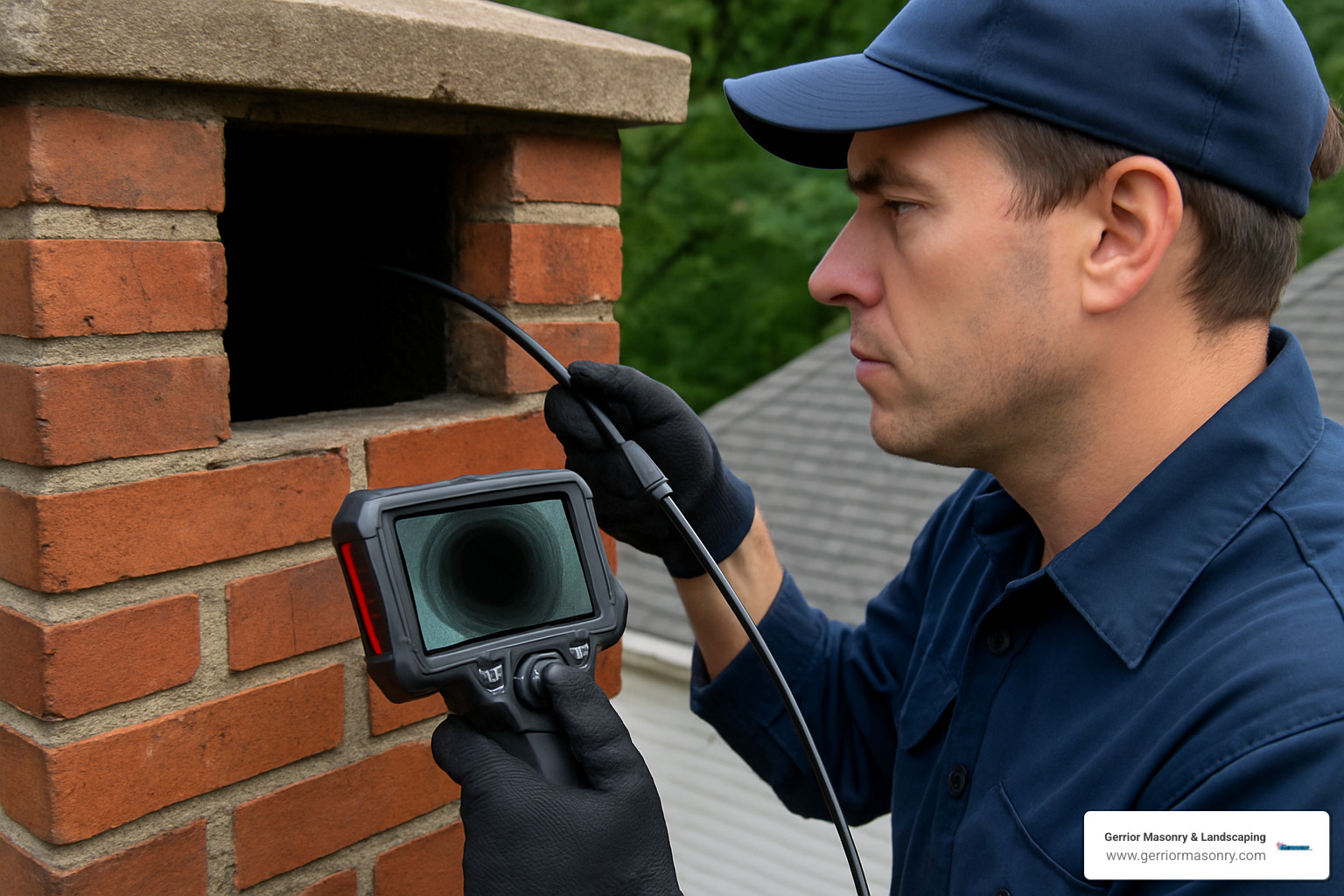
Guesswork has no place in chimney safety. Modern chimney repair contractors use a combination of advanced diagnostic tools, like internal video cameras and moisture meters, and decades of hands-on knowledge to accurately assess your chimney’s condition.
Chimney Cleaning And Inspection Near Me
What to Expect During a Chimney Inspection
The Chimney Safety Institute of America (CSIA) defines three levels of inspection:
- Level 1 – This is the standard annual inspection. A professional will perform a visual check of the readily accessible areas of your chimney’s interior and exterior, ensuring the basic system is sound and free of blockages.
- Level 2 – This more in-depth inspection is required when you buy or sell a home, change your heating appliance, or after a malfunction like a chimney fire. It includes a video scan of the entire flue interior, plus a review of the chimney in the attic, crawlspace, or basement.
- Level 3 – This is the most intensive level, reserved for when a Level 1 or 2 inspection suggests a hidden hazard that can’t be seen without intrusive measures. It may involve targeted demolition of parts of the chimney or surrounding walls to expose and investigate the problem.
Each inspection level will always include a thorough check of the crown, cap, flashing, mortar joints, firebox, smoke chamber, and overall structural stability.
Decoding Your Chimney Repair Estimate
A trustworthy, professional estimate is your roadmap for the project. It should be provided in writing and clearly list:
- A detailed description of the work to be performed and why it’s necessary.
- A clear breakdown of labor and material costs.
- The type and quality of materials to be used (e.g., specific mortar type, stainless steel liner gauge).
- A projected timeline with start and completion dates.
- Details on any required permits and who is responsible for obtaining them.
- Written warranties covering both workmanship and materials.
Understanding Chimney Repair Costs
These are average internet figures for general guidance, not official Gerrior Masonry pricing.
| Scope | Typical Range |
|---|---|
| Minor fixes (new cap, small crack repair, flashing patch) | $200–$900+ |
| Major masonry or crown work (repointing, partial rebuild) | $1,000–$5,000+ |
| Full chimney rebuild/replacement | $4,000–$15,000+ |
Prices are influenced by factors like chimney height and accessibility (requiring scaffolding), the complexity of the roofline, the specific choice of brick or stone, and local permit fees in your Massachusetts town. See Chimney Repair Cost Near Me for regional insights.
Core Services of a Qualified Chimney Repair Contractor
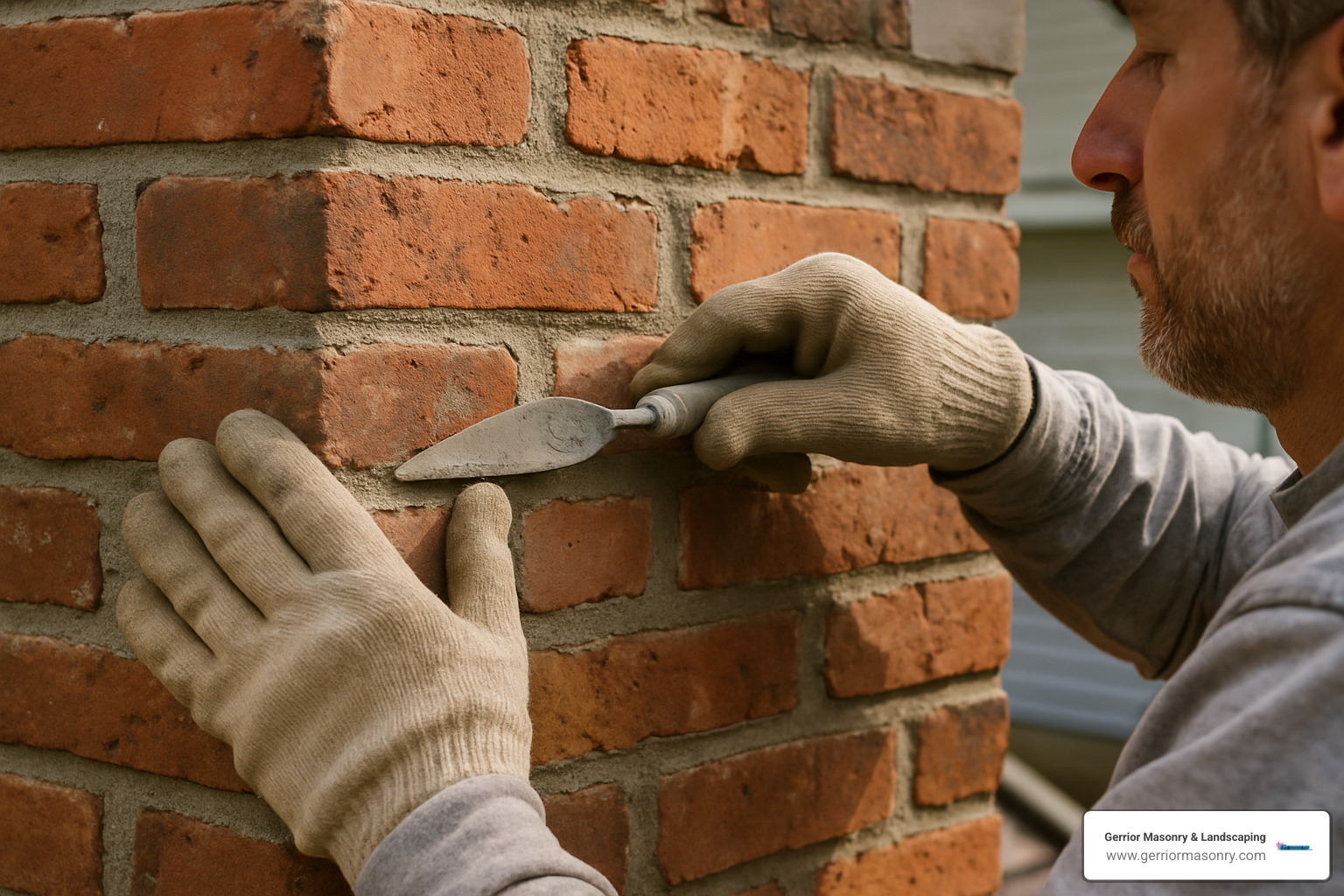
A full-service chimney contractor offers a wide range of solutions, from routine upkeep to complete structural overhauls. Understanding these services helps you know what to ask for.
Common Repair and Maintenance Services
- Chimney sweeping – The foundational service. This annual task removes flammable creosote and any debris blocking the flue, ensuring a safe and efficient draft.
- Tuckpointing & repointing – These terms involve repairing mortar joints. Repointing replaces decayed mortar, while tuckpointing is a more refined method to create clean, crisp lines. Using the correct mortar that matches the hardness of the original brick is crucial to prevent damage.
- Crown repair/replacement – The chimney crown is the first line of defense against water. Sealing cracks or completely recasting a new, properly angled crown stops water from getting inside the masonry.
- Flashing repair – The metal sheets that seal the roof–chimney junction are a common leak source. Proper repair or replacement is critical to prevent roof and attic damage.
- Waterproofing – After repairs are made, a professional-grade, vapor-permeable sealer can be applied. This blocks water from soaking into the bricks but allows the chimney to breathe out any internal moisture, preventing freeze–thaw damage.
- Chimney cap installation – A simple but vital device that keeps out rain, snow, debris, and animals, while also acting as a spark arrestor.
Major Restorations: When to Repair vs. Rebuild
Deciding between a major repair and a full rebuild depends on the extent of the damage. A skilled mason will help you make the most cost-effective and safe decision.
| Situation | Repair | Rebuild |
|---|---|---|
| Minor mortar loss | ✓ | |
| A few spalled bricks | ✓ | |
| Leaning stack | ✓ | |
| Extensive cracking/spalling | ✓ | |
| Foundation issues | ✓ |
As a general rule, if the structural integrity is compromised (leaning, severe cracking) or if the cost of extensive repairs exceeds about 50% of the rebuild cost, a full rebuild is the smarter, safer long-term investment. See our Chimney Rebuild page for examples.
Liner and Flue Services
The flue liner is the hidden workhorse of your chimney system.
- Video liner inspections to find hidden cracks, gaps, or deterioration in clay tile liners.
- Spot-repair of minor clay-tile damage when feasible.
- Installation of stainless-steel liners, the modern standard for safety and durability. They are often required when installing a new furnace or fireplace insert and typically come with a lifetime warranty. (Internet average $900–$3,800, not Gerrior pricing)
- Smoke-chamber resurfacing to create a smooth, insulated surface for better draft and improved safety.
Hiring the Right Pro: Vetting Your Chimney Repair Contractor
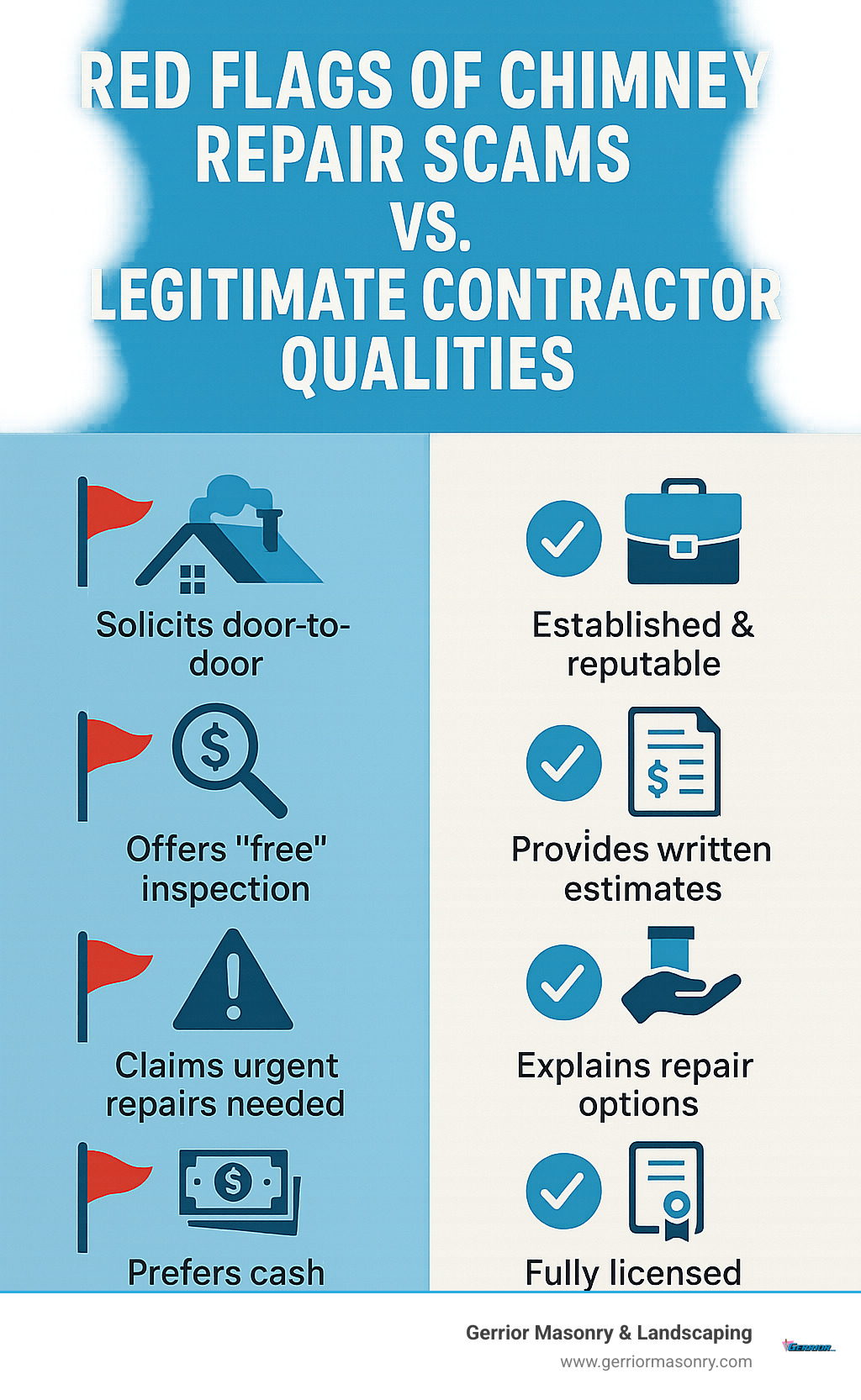
Choosing your contractor is as important as the repair itself. A qualified professional ensures the job is done right, while a poor choice can lead to bigger problems and wasted money.
Benefits of Going Pro
- Code-compliant, safe workmanship: Professionals are up-to-date on national and local building codes, ensuring your chimney is not just functional but truly safe.
- Specialized tools and materials: Pros have access to commercial-grade materials and equipment, from video scanners to specialized scaffolding, for a superior and safer job.
- Proper insurance & liability coverage: This protects you and your property. If an accident happens, their insurance covers it, not your homeowner’s policy.
- Written warranties and owner oversight: Reputable companies stand by their work. At Gerrior Masonry, every project benefits from owner supervision, a hallmark of our commitment to quality.
Spotting Chimney Scams
Be wary of these common red flags:
- Door-to-door solicitations: Unsolicited offers from someone who just “happened to be in the neighborhood and saw damage” are a classic scam tactic.
- High-pressure, “today only” pricing: A legitimate contractor will provide a detailed quote and give you time to consider it. Scare tactics and pressure to sign immediately are unprofessional.
- Huge upfront cash demands: While a deposit for materials is standard, demanding a large percentage of the job cost in cash upfront is a major warning sign.
- Vague or missing credentials: If a contractor can’t provide a physical business address, proof of insurance, or a license number, walk away.
Always take your time, verify credentials, and get more than one quote for any major project.
Key Questions to Ask
- Are you licensed and insured in Massachusetts? Can I see the documentation?
- How many years of dedicated chimney repair experience do you have?
- Can I see a portfolio of recent Chimney Projects and speak with local references?
- What written warranty do you provide on both materials and labor?
- Who supervises the crew on-site? Will the owner be involved?
- How will you protect my roof, gutters, and landscaping during the work?
Frequently Asked Questions about Chimney Repairs
Here are answers to some common questions homeowners have about chimney maintenance and repair.
Do chimney repairs require a permit?
It depends on the scope of work. Minor upkeep like applying a water repellent or replacing a chimney cap seldom requires a permit. However, structural work—such as a partial or full rebuild, major masonry repairs, or installing a new flue liner—almost always requires a permit from your local building department. A reputable contractor will be knowledgeable about local requirements and handle the entire permitting process for you.
Are chimney repairs covered by homeowner’s insurance?
Coverage varies by policy, but generally, insurance covers sudden and accidental damage. For example, if your chimney is struck by lightning or damaged in a severe storm or a documented chimney fire, it is often covered. However, damage that occurs gradually over time due to neglect or lack of maintenance (like crumbling mortar from age) is typically not covered. Always document any damage with photos and check your specific policy before authorizing work.
How often should I have my chimney inspected?
The National Fire Protection Association (NFPA) recommends annual inspections for every chimney and vent system in use. This routine check can catch small problems before they become large, expensive hazards. You should also schedule an inspection after any unusual event, like a chimney fire or severe weather, or before purchasing a new home.
What is the difference between tuckpointing and repointing?
Though often used interchangeably, they are slightly different. Repointing is the process of grinding out and replacing old, deteriorated mortar from the joints of a masonry wall. Tuckpointing is a more specialized, two-step process that involves filling the joints with mortar that matches the brick color, then applying a thin line of a contrasting color (the “tuck”) to create the appearance of fine, perfect joints. Both restore the integrity of the chimney, but repointing is the more common structural repair.
Can I use my fireplace if the chimney is damaged?
It is strongly advised not to. Using a fireplace with a damaged chimney is a serious safety risk. Cracks in the flue liner can allow intense heat to reach the combustible framework of your house, potentially starting a fire. Blockages or structural issues can also cause smoke and deadly carbon monoxide to vent back into your home. Always have the chimney professionally inspected and repaired before using it.
Conclusion: Protect Your Home with Expert Chimney Care
Your chimney is a critical component of your home’s safety system. A small crack or minor leak today can quickly escalate into a costly rebuild—or worse, a devastating safety hazard like a house fire or carbon monoxide leak—tomorrow. The key to preventing this is proactive care: conducting annual inspections, learning to recognize the early warning signs of decay, and partnering with a trustworthy, skilled chimney repair contractor for all maintenance and repairs.
Gerrior Masonry & Landscape Construction has delivered owner-supervised, high-quality chimney work across Massachusetts for more than 30 years. We understand the unique challenges that New England weather poses to masonry structures. From routine sweeps and minor repointing to complex, full-scale rebuilds, we bring the specialized skill, modern tools, and unwavering integrity your home deserves.
Gerrior Masonry & Landscape Construction is based in Woburn, MA, and proudly serves homeowners throughout Middlesex and Essex County, Massachusetts.
