
Concrete paver driveway estimate: Top 5 Powerful Cost Facts 2025
Understanding Your Concrete Paver Driveway Investment
Concrete paver driveway estimate costs typically range from $10 to $30 per square foot installed, with most homeowners spending between $6,000 and $18,000 for a standard two-car driveway. Here’s what you can expect:
- Small driveway (200-300 sq ft): $2,000 – $9,000
- Standard two-car (480 sq ft): $4,800 – $14,400
- Large driveway (800+ sq ft): $8,000 – $24,000+
- Installation timeline: 3-7 days for most projects
- Lifespan: 30-50 years with proper maintenance
Note: These are average costs based on internet data and not actual costs for Gerrior Masonry services.
When planning a concrete paver driveway, the wide price range can feel overwhelming. The difference between a $6,000 project and an $18,000 project often comes down to site preparation needs, paver quality, design complexity, and regional labor rates.
Unlike asphalt that typically lasts 15-20 years, concrete pavers offer exceptional durability and the ability to replace individual units if damaged. This makes them a smart long-term investment for Massachusetts homeowners dealing with freeze-thaw cycles.
I’m Joe Gerrior, owner of Gerrior Masonry & Landscape Construction Corp., and I’ve been helping homeowners steer concrete paver driveway estimate decisions for over 34 years in the Massachusetts market. My team has installed hundreds of paver driveways, and I’ll share the real costs and considerations you need to budget for your project.
What Goes Into a Concrete Paver Driveway Estimate
Getting a concrete paver driveway estimate can feel like looking at a foreign language if you don’t know what those line items mean. After three decades in the business, I’ve learned that homeowners appreciate understanding exactly what they’re paying for—and what might catch them off guard.
Every professional estimate should break down your project into clear categories. The main buckets are materials, base preparation, and labor, but there are always a few “extras” that can sneak up on you.
Materials, Base & Labor: The Core Line Items
Concrete pavers themselves are just one piece of the puzzle, typically running $2 to $8 per square foot depending on what you choose. Basic gray pavers cost less, while tumbled pavers with rich colors and textures can push your material costs higher. The thickness matters too—standard pavers work fine for most driveways, but heavy truck traffic calls for thicker units.
Note: These are average costs based on internet data and not actual costs for Gerrior Masonry services.
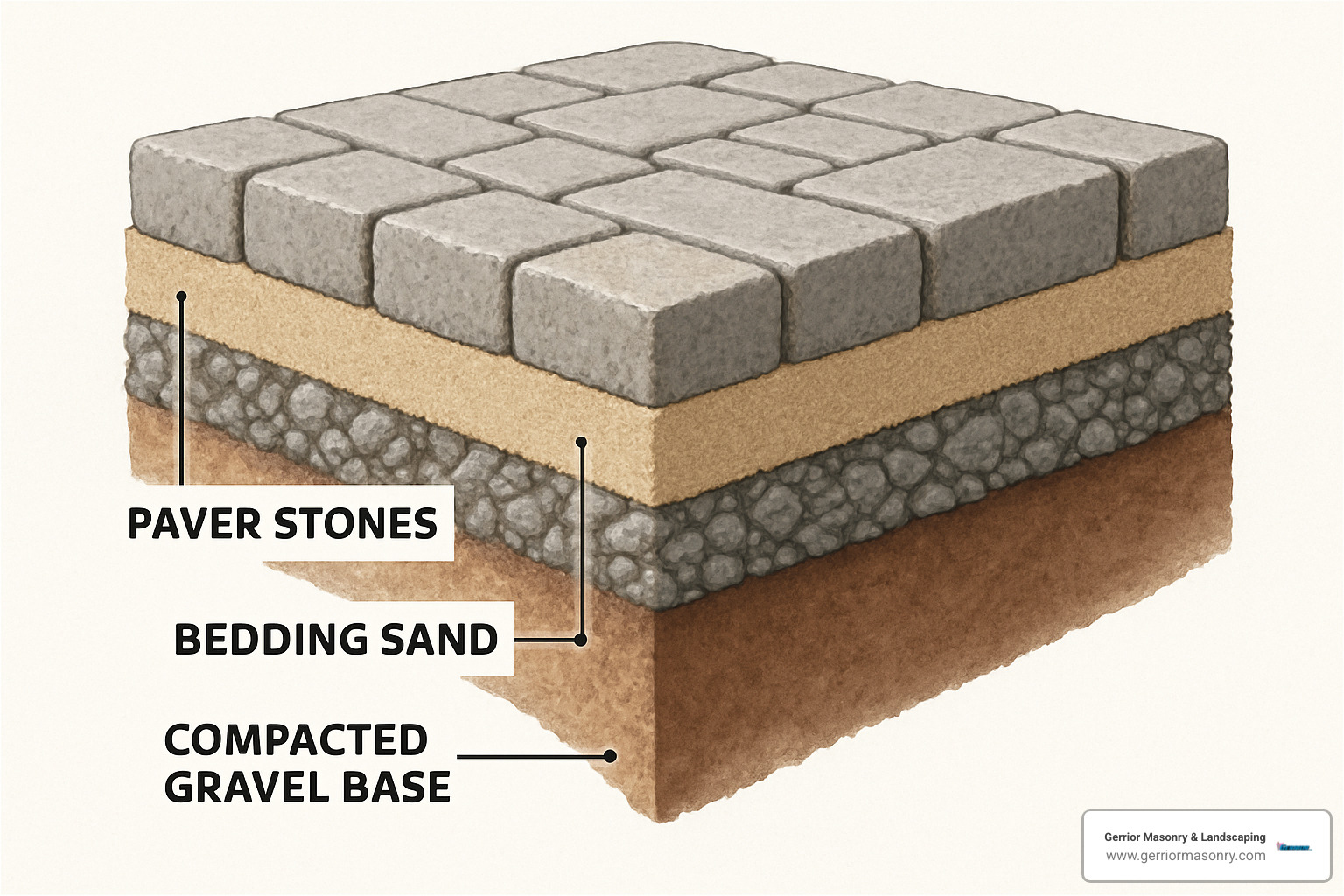
Base preparation is where the magic happens, and it’s absolutely critical here in Massachusetts. Our freeze-thaw cycles will destroy a poorly built base faster than you can say “pothole.” We typically install 4 to 6 inches of crushed stone as the foundation, followed by 1 inch of bedding sand for the pavers to sit on. This base work usually adds $2 to $5 per square foot to your project, but it’s what keeps your driveway looking great for decades.
Skilled labor accounts for the largest portion of most estimates, typically $5 to $15 per square foot. This covers everything from excavation and base preparation to the actual paver installation and final cleanup. An experienced crew can lay about 100 square feet per day on straightforward projects, but intricate patterns or lots of cutting can slow things down considerably.
Hidden Expenses You Should Budget For
Permits are one of those “fun” expenses that many homeowners forget about. Most Massachusetts communities require permits for new driveways, and fees typically range from $50 to $300 depending on your town. Some areas get picky about drainage too, which might require additional engineering reviews.
Disposal fees can be a real budget-buster if you’re replacing an existing driveway. Hauling away old concrete or asphalt typically costs $2 to $8 per square foot, though sometimes we can crush old concrete and reuse it as base material to save you money.
Equipment rentals are built into professional estimates, but they’re worth understanding. Plate compactors, excavators, and specialized cutting tools aren’t exactly sitting in most homeowners’ garages. DIY projects need to budget several hundred dollars for equipment rentals alone.
Drainage upgrades are the wild card expense that can make or break your project budget. Poor drainage will destroy even the best paver installation, so if your site needs French drains or other water management solutions, you might be looking at an additional $1,000 to $5,000 depending on the complexity.
2024-2025 Cost Breakdown by Square Foot & Driveway Size
When homeowners ask me for a concrete paver driveway estimate, I always start by explaining that the numbers you’ll find online can vary wildly. The national average sits between $10 to $25 per square foot, but I’ve seen quotes as low as $7 per square foot for basic installations and as high as $50 per square foot for premium materials with intricate designs.
These are average costs based on internet data and not actual costs for Gerrior Masonry services.
The truth is, your final cost depends on dozens of factors that online calculators simply can’t account for. That soggy corner of your yard? The massive oak tree roots we’ll need to work around? The steep slope that requires extra base material? These real-world conditions make every project unique.
Average Cost Per Square Foot (Concrete paver driveway estimate)
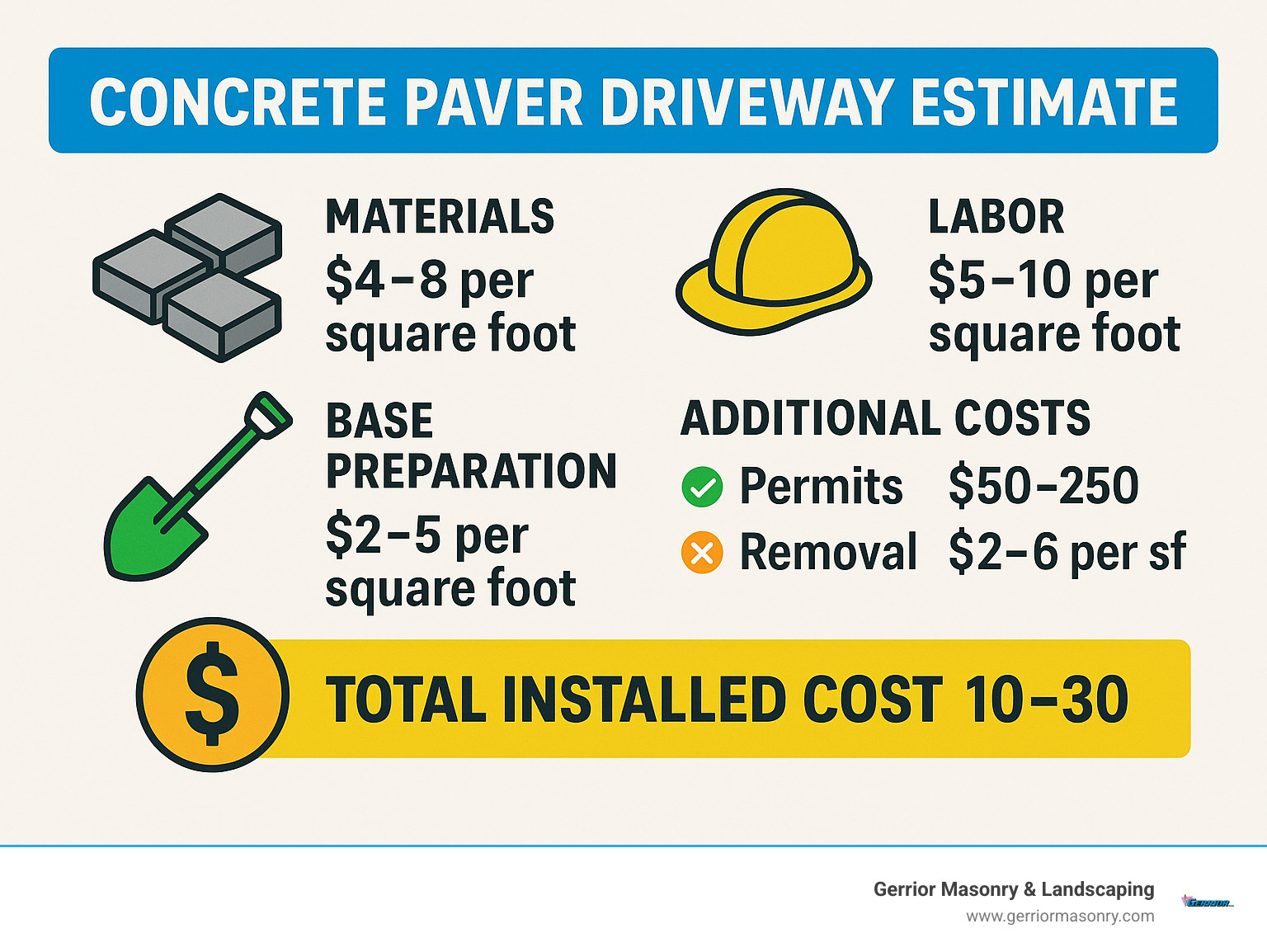
Here in Massachusetts, I typically see costs running higher than national averages, and there are good reasons for that. Materials alone run $4 to $8 per square foot, while skilled labor adds another $5 to $10 per square foot. Base preparation – which is absolutely critical for our freeze-thaw cycles – adds $2 to $5 per square foot.
That brings your total installed cost to $10 to $30 per square foot for most projects, though premium installations can push well beyond that range.
Why do we see higher costs in the Northeast? Higher labor costs are just the beginning. Our stricter building codes require deeper excavation for frost protection. Many of our neighborhoods have complex site conditions – narrow access, mature landscaping to protect, and utilities that seem to run everywhere except where you’d expect them.
Plus, we use premium materials specifically chosen to handle our harsh winters. Cheaper pavers might work fine in Georgia, but they’ll crack and shift after a few Massachusetts winters.
Sample Estimates for Popular Sizes
Let me break down what real homeowners typically spend on common driveway sizes. A single-car driveway covering 200 to 300 square feet usually runs $2,000 to $6,000 for basic concrete pavers, or $3,000 to $9,000 if you want premium pavers with decorative borders.
Most of my clients choose a standard two-car driveway around 480 square feet. Basic installation typically costs $4,800 to $12,000, while premium options with decorative patterns can run $7,200 to $14,400.
For those lucky enough to have large estate driveways over 1,000 square feet, basic concrete pavers start around $10,000 to $25,000. Premium cobblestone-look pavers with complex patterns? You’re looking at $15,000 to $50,000 or more.
These are average costs based on internet data and not actual costs for Gerrior Masonry services.
The difference between the low and high ends isn’t just about showing off. A simple rectangular driveway with standard pavers costs significantly less than a curved design with multiple colors, decorative borders, and intricate cutting around landscape features. Both can look fantastic – it just depends on your budget and vision for your home.
Key Factors That Raise or Lower Your Concrete Paver Driveway Estimate
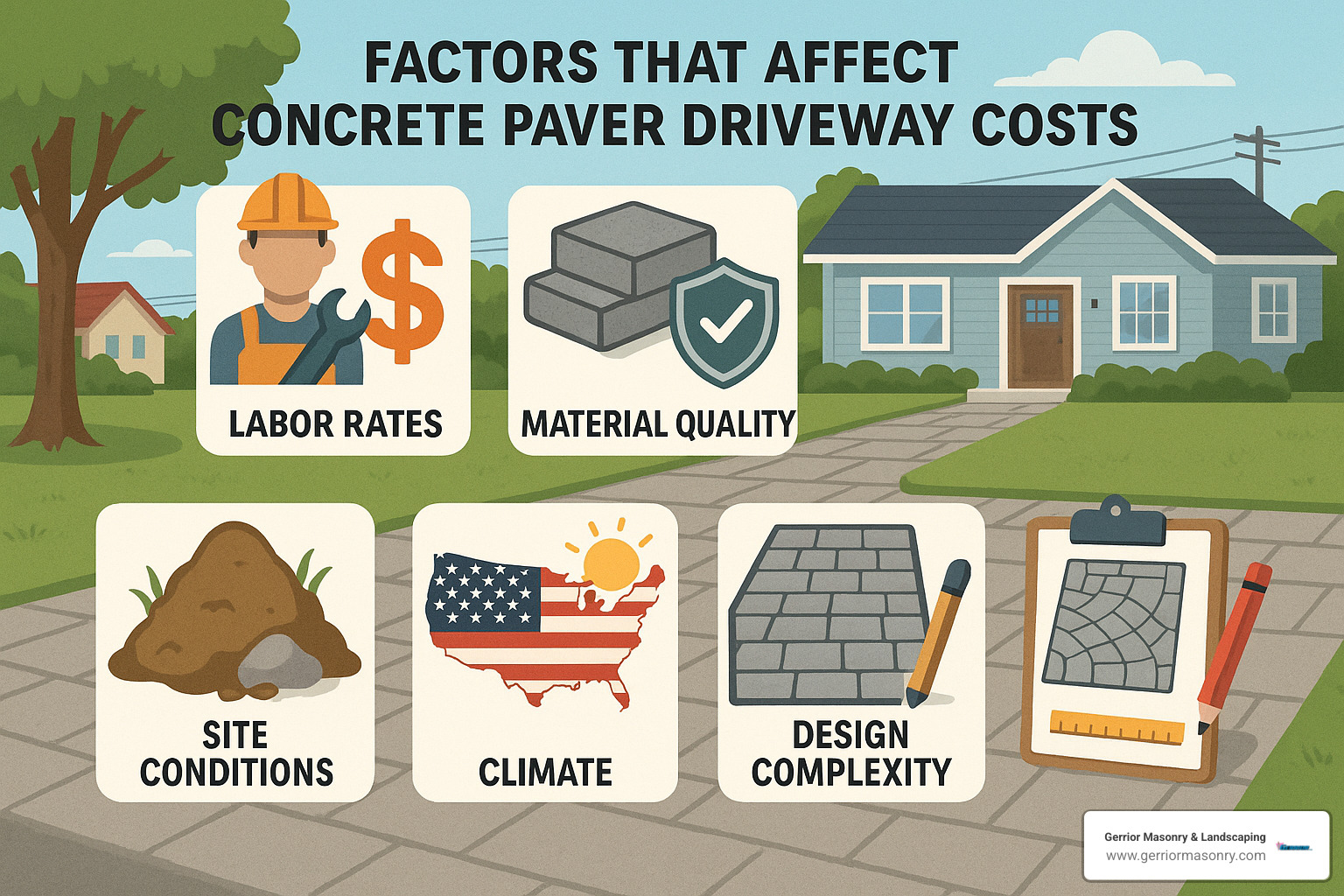
Your concrete paver driveway estimate can swing wildly based on factors you might not expect. I’ve seen similar-sized driveways vary by $10,000 or more, and it usually comes down to a handful of key decisions and site conditions.
Soil conditions make a huge difference in your final cost. If we hit ledge or find soft, poorly draining soil, the excavation and base prep work can double. Clay soils that don’t drain well require deeper excavation and more stone base, while sandy soils are a contractor’s dream.
Design complexity is where costs can really climb. A simple rectangular driveway goes in fast, but throw in curves, multiple levels, or intricate cutting around existing landscaping, and your labor hours multiply quickly.
Paver thickness matters more than most homeowners realize. Standard 60mm pavers work fine for most residential driveways, but if you’ve got delivery trucks or heavy equipment accessing your property, stepping up to 80mm pavers adds about $2-4 per square foot but prevents cracking down the road.
For more detailed cost information, check out our comprehensive guide on driveway pavers cost.
Climate & Regional Labor Rates
Living in Massachusetts means dealing with Northeast premium pricing. Our skilled masons earn good wages – typically $50-100 per hour according to Bureau of Labor Statistics data – because they know how to build driveways that survive our brutal freeze-thaw cycles.
Seasonal timing can save you serious money. Most homeowners want their driveways done in spring and summer, which drives prices up during peak season. If you’re flexible and can schedule your project between November and March, you might save 10-20% on labor costs. Just know that winter installations come with their own challenges – frozen ground, shorter days, and weather delays.
Off-season discounts are real, but material costs stay pretty consistent year-round. The savings come from contractors having more availability and being willing to negotiate when work is slower.
Pattern, Color & Edging Upgrades
This is where your concrete paver driveway estimate can get interesting – or expensive, depending on how you look at it.
Simple patterns like running bond or basket weave look great and don’t add much to your costs. They’re classic for a reason and go in quickly. Herringbone patterns are gorgeous but can bump your labor costs up 25-50% because of all the cutting and fitting required.
Color choices affect your budget too. Basic gray pavers are the most affordable option, while earth tones, reds, and specialty colors typically add $1-3 per square foot. Sometimes the premium colors are worth it – they can make your whole property look more expensive.
Decorative edging is one of my favorite upgrades to recommend. Driveway edging pavers create clean lines and can really make a driveway pop. Expect to pay $5-15 per linear foot for contrasting borders or soldier courses, but the visual impact is usually worth every penny.
Permeable systems are becoming more popular, especially with Massachusetts stormwater regulations getting stricter. Permeable pavers cost 20-30% more upfront, but they handle drainage beautifully and some communities offer rebates that help offset the extra cost.
Cost Comparison: Concrete Paver Driveways vs. Asphalt, Gravel & More
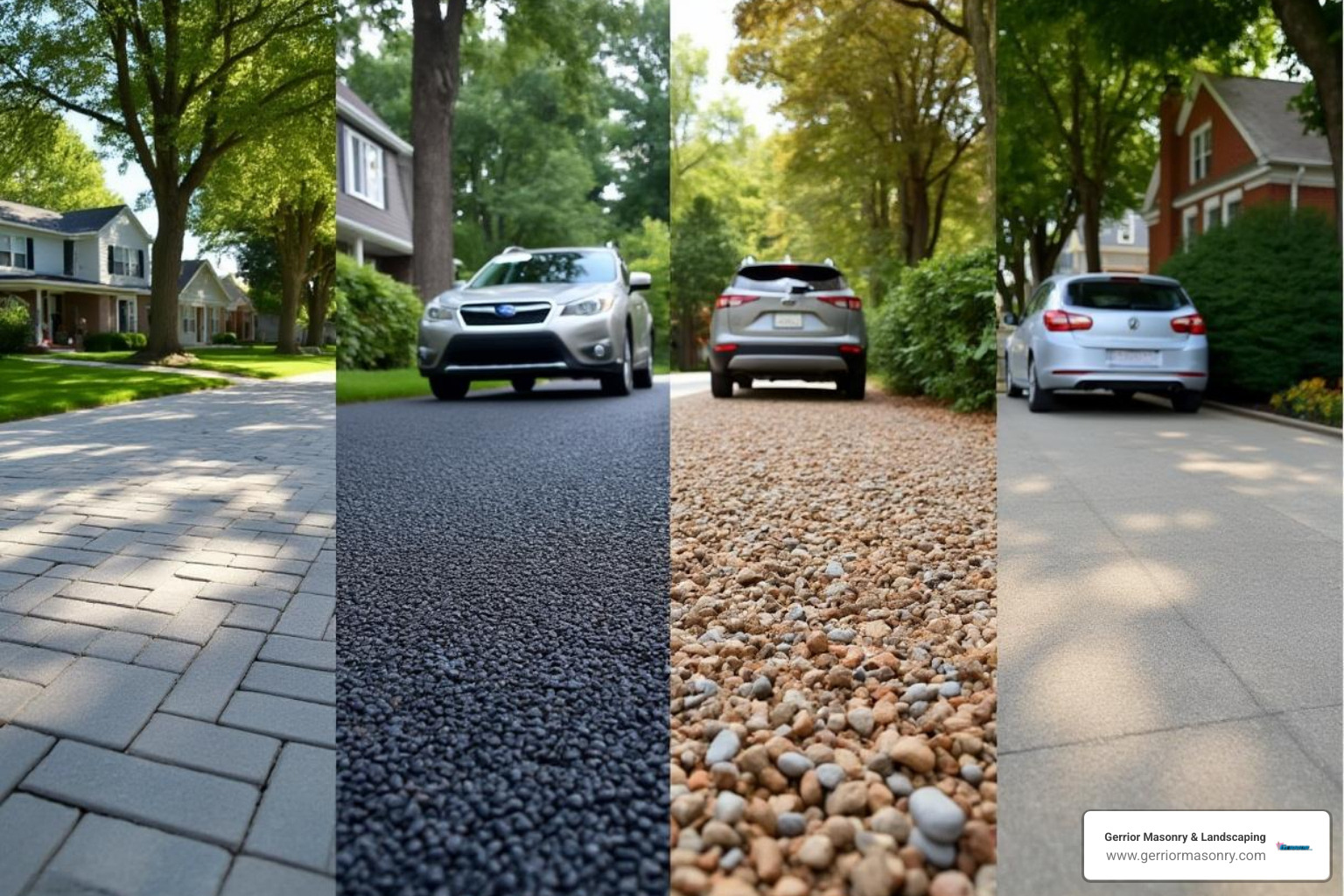
When homeowners ask me about their concrete paver driveway estimate, they often wonder if they should just go with cheaper asphalt or gravel instead. I get it – sticker shock is real when you see paver prices. But here’s what I’ve learned after 34 years in this business: the cheapest option upfront isn’t always the smartest choice for your wallet.
Let me walk you through what each material actually costs when you factor in the whole picture, not just the initial installation.
Upfront Price vs. 30-Year Ownership
Gravel driveways seem like a bargain at $1 to $6 per square foot initially. But they need fresh stone every few years, annual grading, and constant maintenance to look decent. Over 30 years, you’re looking at $3,000 to $15,000 for that same 480 square foot driveway – and it never really looks finished.
Asphalt comes in around $4 to $12 per square foot to install, which feels reasonable. The catch? It needs seal coating every 3-5 years at $0.50 to $2 per square foot, plus eventual resurfacing. In Massachusetts, our freeze-thaw cycles are brutal on asphalt. Most asphalt driveways need major work or replacement after 15-20 years. Your 30-year cost ends up being $8,000 to $25,000.
Poured concrete sits in the middle at $6 to $18 per square foot initially. It handles our New England weather better than asphalt, lasting 20-30 years with good care. But when it cracks – and it will crack – you’re looking at expensive repairs or full replacement. Thirty-year ownership costs typically run $4,000 to $20,000.
Now, concrete pavers do cost more upfront at $10 to $30 per square foot for your initial concrete paver driveway estimate. But here’s where they shine: they last 30-50 years, handle freeze-thaw cycles like champs, and when one paver gets damaged, you just pop it out and replace it. No jackhammering, no matching concrete that never quite looks right.
These are average costs based on internet data and not actual costs for Gerrior Masonry services.
Over 30 years, pavers typically cost $5,000 to $18,000 total – competitive with other materials but with way less hassle. Plus, they add more value to your home when it’s time to sell. I’ve seen 20-year-old paver driveways that still look fantastic, while asphalt driveways from the same era are cracked and faded.
The real kicker? Resale value. A well-installed paver driveway can add 5-10% to your home’s curb appeal value, while gravel actually hurts resale in most neighborhoods.
Saving Money & Choosing Between DIY and Professional Installation
The decision between DIY and professional installation can cut your concrete paver driveway estimate in half—or double it if things go wrong. After three decades in the business, I’ve seen both amazing DIY successes and costly disasters that required complete do-overs.
The truth is, paver installation looks deceptively simple. You’re essentially building a puzzle on top of a foundation. But that foundation work? That’s where most DIY projects run into trouble.
When DIY Makes Sense for a Concrete Paver Driveway Estimate
Small, simple projects are where DIY really shines. If you’re tackling a single-car driveway under 300 square feet with a basic rectangular design, you might save thousands doing it yourself.
Your DIY costs typically break down to $6-12 per square foot total, including materials at $4-8 per square foot and tool rentals around $200-500 for the entire project. Compare that to professional installation, and you’re looking at potential savings of $2,000-4,000 on a small driveway.
These are average costs based on internet data and not actual costs for Gerrior Masonry services.
But here’s what you need to succeed: accurate excavation skills, understanding of proper drainage, and the physical stamina to move dozens of 40-50 pound pavers. You’ll also need 2-4 full days and patience for the precise leveling work that makes the difference between a professional-looking result and a wavy mess.
Simple patterns like running bond work best for DIY projects. Skip the herringbone dreams—they require extensive cutting and fitting that can turn a weekend project into a month-long ordeal.
How to Cut Costs Without Cutting Corners
Smart homeowners find ways to reduce their concrete paver driveway estimate without sacrificing quality. Here’s how to do it right.
Winter scheduling can save you 10-20% on labor costs. Yes, it’s cold, but experienced contractors can work in winter conditions, and you’ll have first pick of spring installation dates.
Standard colors and simple patterns keep costs reasonable. Those premium earth tones and intricate herringbone patterns look gorgeous, but they can add $2-5 per square foot to your project.
Buying in bulk reduces per-unit costs and ensures color consistency. Nothing’s worse than running short and finding your “charcoal” pavers from the second batch don’t quite match the first.
Phased installation works well if budget is tight. Complete the main traffic areas first, then add decorative borders or extended sections later. Just make sure your contractor plans for this approach from the beginning.
For detailed guidance on professional paver installation, warranty coverage and insurance protection often justify the extra cost. When a DIY project fails, you’re starting over from scratch—and usually paying more the second time around.
Maintenance, Lifespan & Environmental Benefits
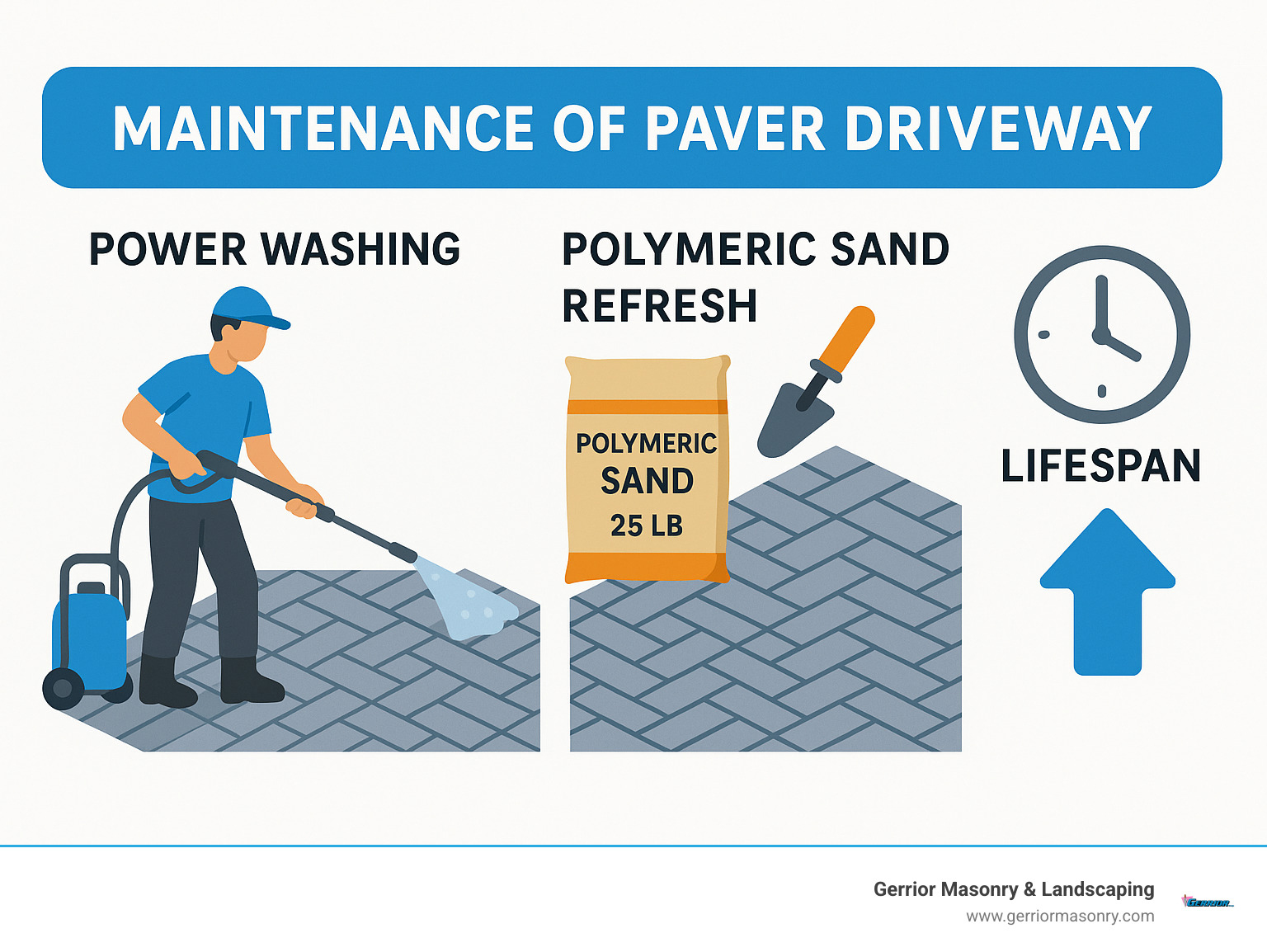
One of the best parts about getting a concrete paver driveway estimate is finding how little maintenance these surfaces actually need. After 34 years in the business, I can tell you that properly installed paver driveways are remarkably low-maintenance compared to other driveway materials.
Annual power washing is really all most driveways need to stay looking great. This simple cleaning costs about $0.25 to $0.50 per square foot and removes moss, leaves, and everyday grime that can make any driveway look tired. Many homeowners handle this themselves with a pressure washer, making it essentially free maintenance.
Every few years, you might need to refresh the polymeric sand between the joints. This isn’t a big deal—it typically runs $100 to $300 for an average driveway and takes just a few hours. The sand helps lock the pavers together and keeps weeds from growing between them.
Sealing is optional but can help prevent stains and keep colors vibrant longer. If you choose to seal your pavers every 5-7 years, budget about $1 to $2 per square foot. Many of our customers skip sealing entirely and still have beautiful driveways decades later.
Here’s where pavers really shine: individual paver replacement. If a tree root pushes up a section or heavy equipment damages a few pavers, you can replace just those units for $5 to $15 each including labor. Try doing that with a concrete slab!
Typical Annual Maintenance Budget
For a standard 480 square foot driveway, most homeowners spend $200 to $400 annually on maintenance. That breaks down to about $120 to $240 for annual cleaning, roughly $30 to $75 per year if you average out the sand refresh costs, and maybe $50 to $100 for occasional small repairs.
These are average costs based on internet data and not actual costs for Gerrior Masonry services.
Compare that to asphalt driveways that need seal coating every few years at significant cost, or concrete that requires expensive full-section replacement when it cracks.
The environmental benefits of permeable pavers are becoming increasingly important in Massachusetts. These systems reduce stormwater runoff by 30 to 50% compared to solid surfaces, which helps prevent flooding and protects our local waterways. Some Massachusetts communities even offer rebates for permeable installations—something worth checking with your local building department.
When you look at lifespan, concrete pavers typically last 30 to 50 years with minimal maintenance. That’s nearly double the life of asphalt driveways and significantly longer than most other options. After three decades of installing driveways, I’ve seen pavers that still look fantastic after 40+ years, while asphalt driveways from the same era have been replaced twice.
Frequently Asked Questions About Concrete Paver Driveway Estimates
When homeowners start planning their paver driveway project, they always have questions about timing, costs, and logistics. After 34 years in the business, I’ve heard these same concerns hundreds of times. Let me address the most common questions that come up during concrete paver driveway estimate discussions.
How long does installation take?
Most residential paver driveways take 3 to 7 days to complete from start to finish. The exact timeline depends on your driveway size, design complexity, and Massachusetts weather conditions. I always tell my clients to expect potential delays during our unpredictable New England seasons.
Here’s what typically happens each day: Day one involves excavation and site preparation, which can be the messiest part of the process. Days two and three focus on installing and compacting the crushed stone base – this foundation work is crucial for long-term durability. Days four and five are when you’ll see the magic happen as we lay and cut the pavers to fit your design. Days six and seven involve filling joints with polymeric sand, final compaction, and cleanup.
Weather delays are common, especially during winter months when frozen ground or snow can halt progress. Summer thunderstorms can also push schedules back a day or two.
Are paver driveways cheaper than poured concrete long-term?
This is probably the most important question for your budget planning. While concrete pavers cost more upfront – typically $10 to $25 per square foot versus $6 to $12 per square foot for poured concrete – they often prove more economical over 30+ years.
These are average costs based on internet data and not actual costs for Gerrior Masonry services.
The math works in pavers’ favor because of their 30 to 50-year lifespan compared to concrete’s 20 to 30 years. More importantly, when individual pavers crack or stain, you can replace just those units for $5 to $15 each. With poured concrete, you’re looking at removing and replacing entire sections, which gets expensive quickly.
Massachusetts freeze-thaw cycles are particularly hard on solid concrete surfaces. Pavers handle this seasonal movement much better because the joints allow for natural expansion and contraction.
Do I need a permit for a new paver driveway?
Yes, most Massachusetts communities require permits for new driveways or major modifications to existing ones. Permit costs typically range from $50 to $250, which seems reasonable until you factor in the paperwork and waiting time.
Your local building department may require site plan drawings showing the driveway layout and dimensions. Some towns also want drainage calculations to ensure your new driveway won’t create runoff problems for neighbors. Setback compliance verification ensures your driveway meets distance requirements from property lines and streets.
In environmentally sensitive areas, you might need environmental impact assessments, especially if you’re near wetlands or water sources. This is where permeable pavers can actually help your permit application by demonstrating environmental responsibility.
I always recommend checking with your local building department before starting any work. Some homeowners try to skip this step, but getting caught without permits can mean tearing out completed work and starting over – definitely not worth the risk.
Conclusion
Getting a solid concrete paver driveway estimate comes down to understanding the factors that move your price up or downthen deciding what level of quality and design makes sense for your home. The $10$30 per square foot figures you see online are broad internet averages and not actual Gerrior Masonry pricing. Your real cost will reflect your site conditions, design choices, and Massachusetts labor rates.
Wellbuilt paver driveways arent just parking spots; they add curb appeal, handle freezethaw cycles, and can last 3050 years with minimal maintenance. Saving a little up front only to redo the project later costs far more in the long run.
The smartest move is working with seasoned professionals who know local soils, drainage, and permittingand who stand behind their work. If youre ready to see how pavers can transform your property, reach out for a personalized quote custom to your goals and budget.
Gerrior Masonry & Landscape Construction is based in Woburn, MA, and proudly serves homeowners throughout Middlesex and Essex County, Massachusetts.
