
Decorative Stone Garden Edging: 3 Beautiful Options 2025
The Neat Border: Enhancing Your Garden’s Beauty
Decorative stone garden edging creates defined boundaries between different areas of your landscape while adding visual appeal to your outdoor space. If you’re looking to lift your garden’s appearance and functionality, here are the key benefits:
- Clean Separation: Creates distinct borders between lawns, flower beds, and walkways
- Improved Aesthetics: Adds a finished, professional look to your landscape
- Practical Function: Prevents grass invasion and contains mulch
- Durability: Withstands weather conditions far better than plastic or wood alternatives
- Low Maintenance: Requires minimal upkeep once properly installed
Stone edging comes in various materials including granite, limestone, and sandstone, with prices ranging from $5-25 per linear foot depending on material choice and complexity.
Creating beautiful, functional borders is about more than just aesthetics—it’s about defining your outdoor spaces in a way that improves their usability and reduces maintenance. Whether you’re looking to outline a flower bed with neat granite cobblestones or create a rustic pathway with natural limestone, the right stone edging can transform your landscape.
As the owner of Gerrior Masonry & Landscape Construction Corp., I’ve installed countless decorative stone garden edging projects throughout Massachusetts, bringing over 34 years of experience in selecting the perfect stone materials to complement each unique property and design vision.
The Benefits of Decorative Stone Garden Edging
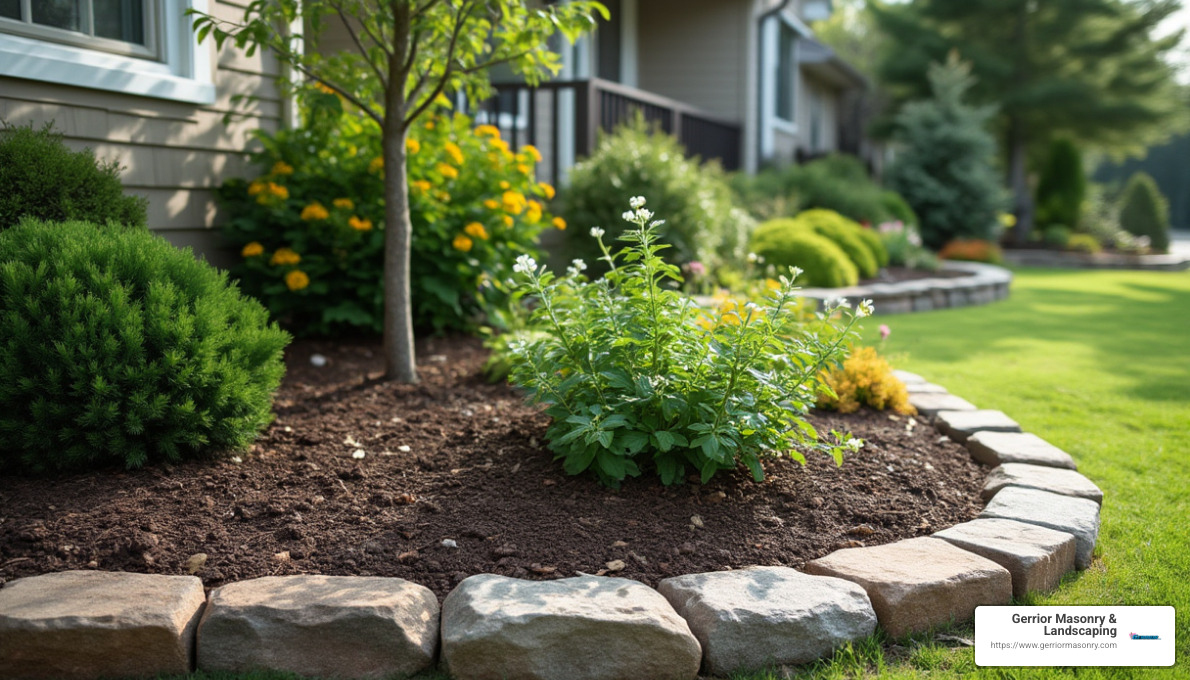
There’s something magical about the change that happens when you add decorative stone garden edging to your landscape. I’ve seen countless “before and after” moments with our clients, where their reaction says it all – that wonderful mix of surprise and delight when they see how such a seemingly simple addition can completely lift their outdoor space.
Aesthetic Appeal That Lasts
One of the most striking benefits of stone edging is its timeless beauty. While plastic edging fades and wooden borders eventually rot, natural stone maintains its character and charm for generations. The varied textures and rich, natural colors of stone complement virtually any garden style you can imagine – from formal English gardens to relaxed cottage landscapes or clean, contemporary designs.
“Natural stone edgers are an ideal choice for defining borders along walkways, patios, and planting beds, providing both beauty and functionality,” notes a recent landscape design publication. Having installed countless stone borders throughout Massachusetts, I couldn’t agree more. There’s something about the permanent elegance of stone that manufactured materials simply can’t replicate.
Creating Clear Garden Boundaries
When your garden lacks definition, it can feel a bit chaotic and unfinished. That’s where decorative stone garden edging really shines – it creates visual order by establishing clear boundaries between different areas of your landscape.
Here in New England, where we experience the full range of seasons, these defined borders serve practical purposes too. They prevent grass from creeping into your flower beds (saving you hours of weeding), keep mulch from washing away during heavy spring rains, and create natural stopping points for lawn mowers, reducing the need for trimming. Many of our clients in Middlesex and Essex Counties tell us how much easier their garden maintenance has become after we’ve installed proper stone edging.
Durability Through New England Seasons
If you’ve lived through a Massachusetts winter, you know how tough our weather can be on outdoor elements. From summer heat waves to deep winter freezes, our landscapes take a beating. Stone edging stands up to these challenges remarkably well, often becoming even more beautiful as it ages and weathers naturally.
When we install granite or limestone edging for our clients, we’re confident it will be there for decades, not seasons. This exceptional durability makes stone edging not just a beautiful choice, but a smart investment that pays dividends year after year.
Low Maintenance Requirements
Let’s be honest – most of us want our gardens to look beautiful without endless maintenance. Once properly installed, decorative stone garden edging is wonderfully low-maintenance. Unlike wooden edging that needs regular sealing or staining, or plastic edging that becomes brittle and cracks, stone simply exists, doing its job quietly and beautifully.
There’s no painting, no treating, and no replacing warped sections. At most, you might need to reposition a stone occasionally if significant ground movement occurs, but with proper installation techniques (which we always use at Gerrior Masonry), even this is rare. Our clients particularly appreciate that stone edging stands up to string trimmers and mowers without damage – a small detail that makes regular landscape maintenance much less stressful.
Material Versatility for Any Design
The variety of stone options available means there’s a perfect match for any landscape design or architectural style. Whether you prefer the formal look of cut granite, the rustic charm of fieldstone, or the warm tones of sandstone, stone edging can be customized to reflect your personal style and complement your home.
Each stone type brings its own character to your garden, allowing for truly personalized designs that improve your property’s unique features. From sleek, modern lines to rustic, natural arrangements, the possibilities are as varied as the stones themselves.
Gerrior Masonry & Landscape Construction is based in Woburn, MA, and services Middlesex and Essex County, Massachusetts.
Types of Decorative Stone Garden Edging
When I talk with homeowners about decorative stone garden edging, I often see their eyes light up when we discuss the variety of stone options available. Each type of stone brings its own character to your landscape, and choosing the right one is about balancing aesthetics, durability, and budget.
| Stone Type | Appearance | Durability | Average Cost Range* | Best Applications |
|---|---|---|---|---|
| Granite | Formal, clean lines | Excellent | $12-36 per linear ft | Formal gardens, high-traffic areas |
| Limestone | Natural, soft look | Very good | $9-27 per linear ft | Traditional gardens, curved borders |
| Sandstone | Warm colors, rustic | Good | $8-24 per linear ft | Cottage gardens, natural landscapes |
*Note: These are average costs based on internet data and not actual costs for Gerrior Masonry services. Prices can vary significantly based on stone quality, size, finish, and installation complexity.
Granite Decorative Stone Garden Edging
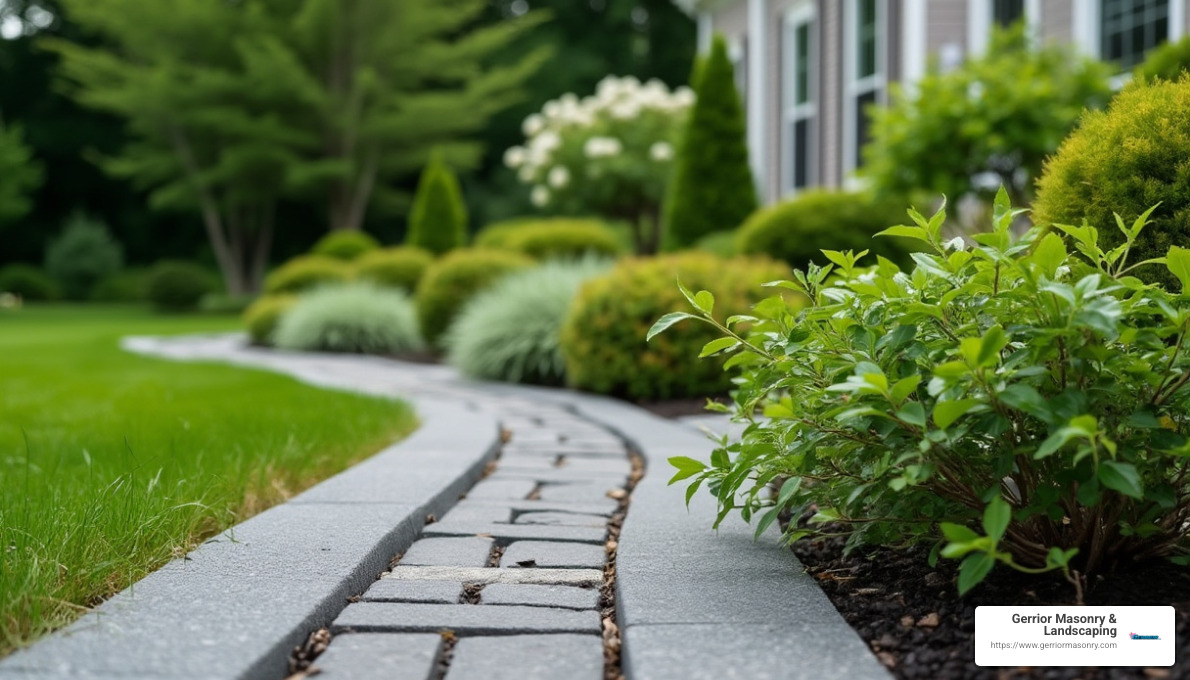
If you’re looking for something that will truly stand the test of time, granite is your best friend. I’ve installed granite edging that looks as crisp and beautiful today as it did 20 years ago when we first put it in. There’s something satisfying about setting that final piece of granite in place, knowing it will likely outlast everything else in the garden.
Granite’s clean, precise appearance creates sophisticated borders that particularly shine in more formal garden designs. The stone’s natural crystalline structure gives it incredible strength against our harsh New England freeze-thaw cycles, which is why you’ll see so many historic granite features throughout Massachusetts that have weathered centuries.
Many of my clients in Lexington and Winchester have chosen cobblestone granite edgers – these hand-cut pieces typically measure around 4″ x 4″ or 8″ x 4″ and create that authentic, old-world charm that complements our region’s historic architecture.
Yes, granite represents a higher initial investment, with some premium options reaching $30-36 per linear foot for larger pieces. But when you consider that your children (and possibly their children) will enjoy the same edging, the value becomes clear. I’ve never had a client regret choosing granite.
Limestone Decorative Stone Garden Edging
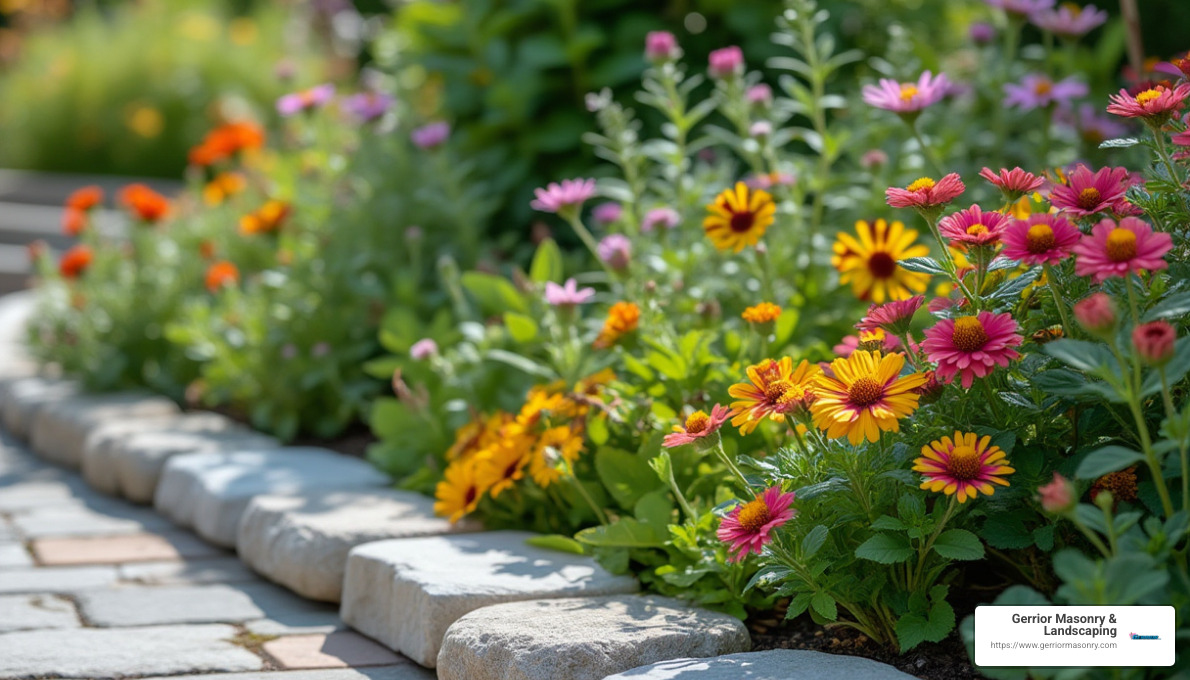
Limestone offers a softer, more natural appearance that works beautifully in almost any garden style. When I’m working with curved garden beds or winding pathways, limestone is often my go-to recommendation because of how well it handles those flowing lines.
The warm, neutral tones of limestone – typically creams, buffs, and soft grays – blend seamlessly with plant material. What I find particularly charming about limestone is how it ages. Unlike some materials that simply deteriorate, limestone develops a beautiful patina over time, often looking even better after a few years in the garden.
For most of my clients in Burlington and Bedford, limestone represents that sweet spot between quality and affordability. Industry sources suggest limestone garden edging in 8″x8″ dimensions typically ranges from $9-27 per linear foot, depending on the specific type and finish.
What I love about working with limestone is its versatility. It feels equally at home in a traditional colonial garden setting or a more contemporary landscape design. The natural variations in each piece add subtle interest without becoming the focal point of your garden.
Sandstone Decorative Stone Garden Edging
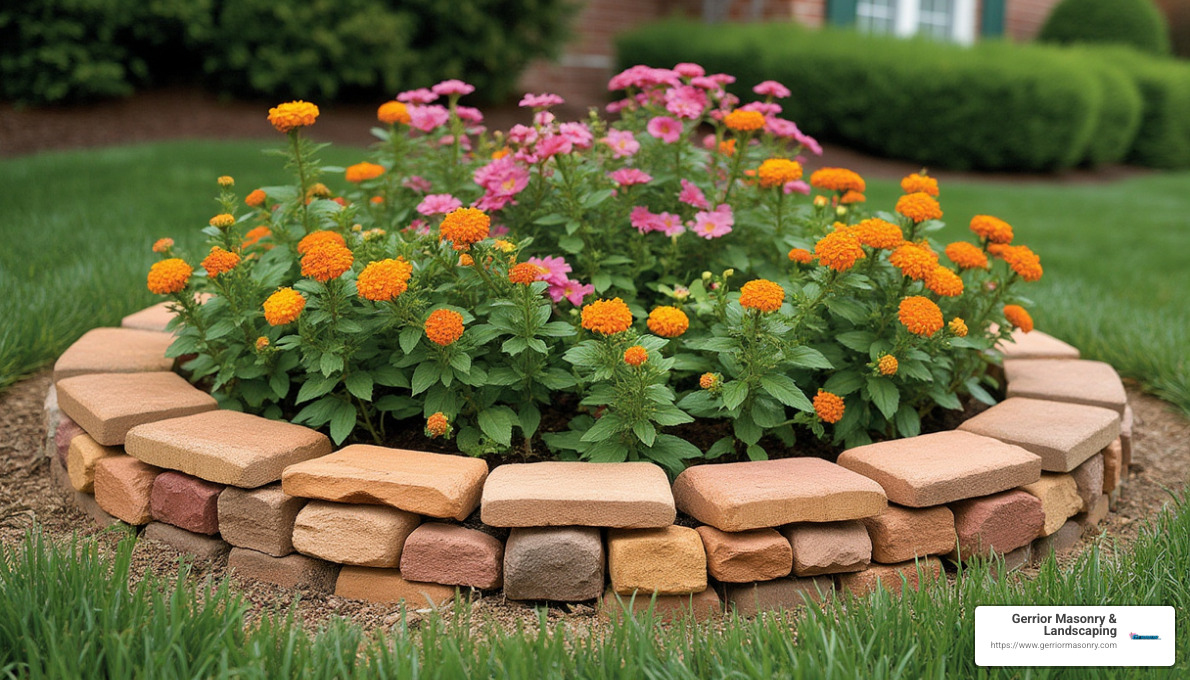
If you’re looking to add warmth and character to your landscape, sandstone deserves serious consideration. The rich color palette – ranging from golden tans and chocolate browns to rusty reds and pinkish hues – offers design possibilities that other stones simply can’t match.
I’ve installed sandstone edging for many clients in Andover and North Reading, where it beautifully complements traditional New England architecture. There’s something about the earthy quality of sandstone that creates a natural bridge between the built environment and the landscape.
Sandstone’s rustic texture adds visual interest to garden borders. Each piece tells its own geological story through subtle bands of color and natural variations. While not quite as hard as granite, quality sandstone still holds up remarkably well to our Northeast weather conditions when properly installed.
Price-wise, sandstone typically falls in the middle range, with costs between $8-24 per linear foot based on industry averages. The variation reflects differences in color, cut precision, and finish quality. For gardens with a more relaxed, cottage-style aesthetic, sandstone creates borders that feel as though they’ve always been there.
At Gerrior Masonry & Landscape Construction, we help clients throughout Middlesex and Essex County, Massachusetts select the perfect stone to complement their landscape vision. Each property has its own character, and matching the right stone to your specific garden is part of the art of creating truly beautiful outdoor spaces.
How to Install Decorative Stone Garden Edging
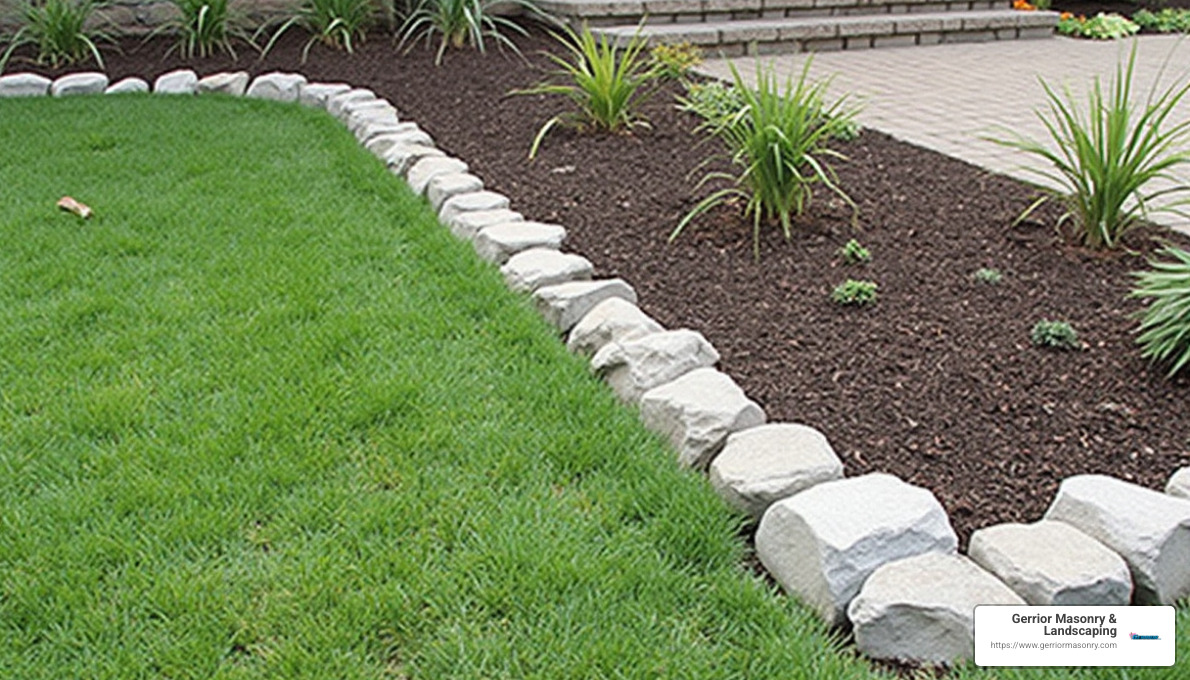
While I’ve installed hundreds of decorative stone garden edging projects over my three decades in the business, I understand that some homeowners enjoy tackling these projects themselves. That said, understanding what goes into a proper installation helps you appreciate why professional results tend to last longer and look better.
Planning and Preparation
The secret to a beautiful stone edge starts long before the first stone is placed. Begin by marking your desired border using a garden hose or marking paint. Take your time here—I’ve seen many DIYers rush this step only to regret it later. Gentle curves and clean lines make all the difference in the final appearance.
Once you’re happy with your layout, measure the total linear footage needed. Here’s a pro tip: add an extra 10% to your measurements to account for cutting and waste. Nothing’s worse than running short of materials halfway through your project!
Before you dig the first shovel of dirt, gather your essential tools: a sturdy shovel, level, rubber mallet, string line, and measuring tape. For larger projects, consider renting a plate compactor to ensure your base is properly settled.
Installation Steps
Creating a proper trench is your foundation for success. I recommend digging approximately 2-3 inches deeper than half the height of your chosen stones. This extra depth allows room for a gravel base while ensuring your stones remain firmly anchored through seasonal changes.
Next, add 2-3 inches of crushed stone or gravel to the trench and compact it thoroughly. This drainage layer is crucial in our New England climate, where freeze-thaw cycles can wreak havoc on poorly prepared installations.
When placing your stones, ensure they fit snugly against each other. For straight sections, a taut string line serves as an excellent guide. For curves, place each stone individually, adjusting as needed to maintain a smooth flow. Smaller stones generally work better for tight curves, while larger pieces create more dramatic, formal edges.
After placement, check that each stone sits level with its neighbors using a standard carpenter’s level. In most installations, I aim to have approximately half the stone visible above ground—this provides the perfect balance between stability and visual impact.
Backfilling properly around your stones is crucial for longevity. Use soil or a soil/sand mixture, gently compacting as you go to eliminate air pockets that could lead to settling or shifting later. Work the soil in gradually around the stones rather than dumping it all at once.
Finally, add your mulch or plants as desired, being careful not to bury your beautiful new edging too deeply. The stones should remain a visible, defining element in your landscape.
Professional Tips from Our Experience
After installing countless decorative stone garden edging projects throughout Middlesex and Essex Counties, I’ve developed some specialized techniques that make a real difference.
When working with curved sections, I select smaller stones that naturally follow the contours without awkward gaps. For garden beds on slopes where soil retention is a concern, we often set stones in cement mortar for extra stability—something most DIY guides won’t mention.
Drainage considerations are particularly important in New England. In areas where water management matters, we deliberately leave small gaps between certain stones, creating natural drainage channels into garden beds rather than forcing runoff onto lawns or pathways.
The freeze-thaw cycles we experience in Massachusetts demand extra attention to base preparation. My crews typically dig deeper trenches and use more substantial gravel bases than might be necessary in milder climates. This extra effort pays dividends through years of stability.
“Having the bottom half of the stone underground provides optimal stability,” notes one landscaping expert, and this principle guides every installation we complete. It’s amazing how many DIY installations I see where stones are simply placed on the surface, only to shift dramatically after the first winter.
Tip: Add an extra 10% to your measured linear footage to account for cutting and waste. For more updated information on best practices, check out the latest tips on installing garden edging.
For more detailed information about our professional landscape installation techniques, visit our Landscape Design Installation page.
Frequently Asked Questions about Decorative Stone Garden Edging
How does decorative stone garden edging improve the aesthetic appeal of a garden?
When we install decorative stone garden edging for our Massachusetts clients, the change is often remarkable. Even without changing any plants, the garden suddenly looks more intentional and polished.
Stone edging creates visual structure that frames your garden spaces, much like a picture frame improves artwork. The clean lines define where lawn ends and garden begins, bringing a sense of order that’s pleasing to the eye.
The natural texture of stone also adds dimension to your landscape that simply can’t be achieved with plastic alternatives. Whether it’s the crisp lines of granite or the warm tones of sandstone, this textural contrast makes plants pop and creates visual interest.
One of my favorite benefits to point out to homeowners in Middlesex County is how stone edging maintains its beauty year-round. When winter comes and your perennials disappear, those beautiful stone borders continue defining your garden spaces with their quiet elegance.
A client in Winchester put it perfectly after we installed limestone edging around her perennial beds: “The limestone edging completely transformed our garden from looking somewhat wild and unkempt to having a purposeful, designed appearance—all without changing a single plant!”
What are the installation steps for decorative stone garden edging?
While I covered the basic professional installation process earlier, let me share some additional insights that might help you understand what goes into creating these beautiful borders.
For DIY enthusiasts brave enough to tackle this project, I always recommend starting with a small, straight section. This lets you get comfortable with the technique before attempting curves or slopes. Renting a plate compactor is worth every penny for larger projects—proper base preparation makes all the difference in how long your edging lasts.
When my team at Gerrior Masonry installs decorative stone garden edging, we bring specialized equipment that ensures precise trench depth and perfect alignment. For larger stones, proper lifting techniques and equipment aren’t just about efficiency—they’re about safety and preventing damage to the materials.
The complexity varies tremendously based on your specific project. Installing small granite cobblestones along a winding garden path requires different techniques than setting large limestone blocks for a raised bed edge. That’s why having experienced installers can make such a difference in the final result.
One often-overlooked aspect of professional installation is how we integrate drainage solutions where needed. In many Essex County properties, managing water runoff is crucial to preventing erosion and landscape damage—something we consider carefully when designing and installing stone edging.
How does the durability of decorative stone garden edging compare to other types of edging?
After more than three decades of installing various edging materials throughout New England, I’ve seen how they hold up over time. The durability difference is striking.
Natural stone stands as the clear champion, typically lasting 25+ years with proper installation. I have clients in Lexington whose granite edging looks virtually the same as the day we installed it over 20 years ago. By comparison, concrete edging might last 15-20 years but often develops cracks during our harsh freeze-thaw cycles.
Metal edging like steel or aluminum generally gives you 10-15 years before rusting or bending becomes noticeable. Plastic or composite options may seem budget-friendly initially, but they typically need replacement within 5-10 years as they become brittle from sun exposure. And wood borders? In our New England climate, you’ll be replacing those every 3-7 years as they succumb to rot.
The exceptional longevity of decorative stone garden edging comes from its natural resistance to everything Mother Nature throws at it. Granite, in particular, shrugs off freeze-thaw cycles that crack other materials. Unlike wood or plastic, stone doesn’t degrade from UV exposure, and it stands up to accidental impacts from lawnmowers or foot traffic without damage.
A landscape architect colleague of mine puts it well: “Stonework is highly resistant to erosion compared to soil, needing huge volumes of water to be displaced.” This natural resilience explains why stone has been used in landscaping for thousands of years—and why it remains the premium choice for discerning homeowners today.
When you consider the lifetime value rather than just the initial investment, stone edging is actually the most economical choice in the long run. You install it once and enjoy it for decades, rather than repeating the installation process every few years with less durable materials.
Gerrior Masonry & Landscape Construction is based in Woburn, MA, and services Middlesex and Essex County, Massachusetts.
Conclusion
Decorative stone garden edging isn’t just a border—it’s a change for your entire landscape. When homeowners ask me what single improvement will make the biggest difference in their garden’s appearance, stone edging is often my answer. The clean lines and natural beauty instantly lift any outdoor space from ordinary to extraordinary.
Throughout my years working with Massachusetts homeowners, I’ve seen how the right stone border can bring together all the elements of a garden design. The structure it provides creates a framework that makes everything else—your carefully chosen plants, your manicured lawn, your statement trees—look more intentional and professionally designed.
What makes stone edging such a wise investment is its remarkable durability. While wood rots, plastic cracks, and metal bends, stone stands strong through decades of New England weather. The granite edging we installed for a Winchester family fifteen years ago looks virtually identical today as it did when we first placed it—a testament to stone’s timeless quality.
Beyond aesthetics and durability, there’s something deeply satisfying about working with materials that connect us to centuries of landscape tradition. The granite, limestone, and sandstone we use today are the same materials that have defined garden spaces for generations, creating a sense of permanence and connection to the land.
For homeowners concerned about long-term value, stone edging offers exceptional returns. Not only does it improve curb appeal, but it also reduces ongoing maintenance needs—no more constantly replacing deteriorated edging or struggling to keep grass from invading flower beds. The clean separation stone provides simplifies garden care for years to come.
At Gerrior Masonry & Landscape Construction, we take pride in helping you select the perfect stone type and design for your unique property. Whether you’re looking for the formal precision of granite, the warm versatility of limestone, or the rustic charm of sandstone, we’ll guide you through options that complement your home’s architecture and your personal style.
For more information about our stone garden edging services and to see examples of our work, visit our Stone Garden Edging page.
Gerrior Masonry & Landscape Construction is based in Woburn, MA, and services Middlesex and Essex County, Massachusetts. With over three decades of experience changing outdoor spaces, we bring a craftsman’s eye and a gardener’s heart to every project we undertake. Your garden borders won’t just be beautiful—they’ll be borderline perfect.
