
Designing an Outdoor Kitchen: 5 Amazing Benefits 2025
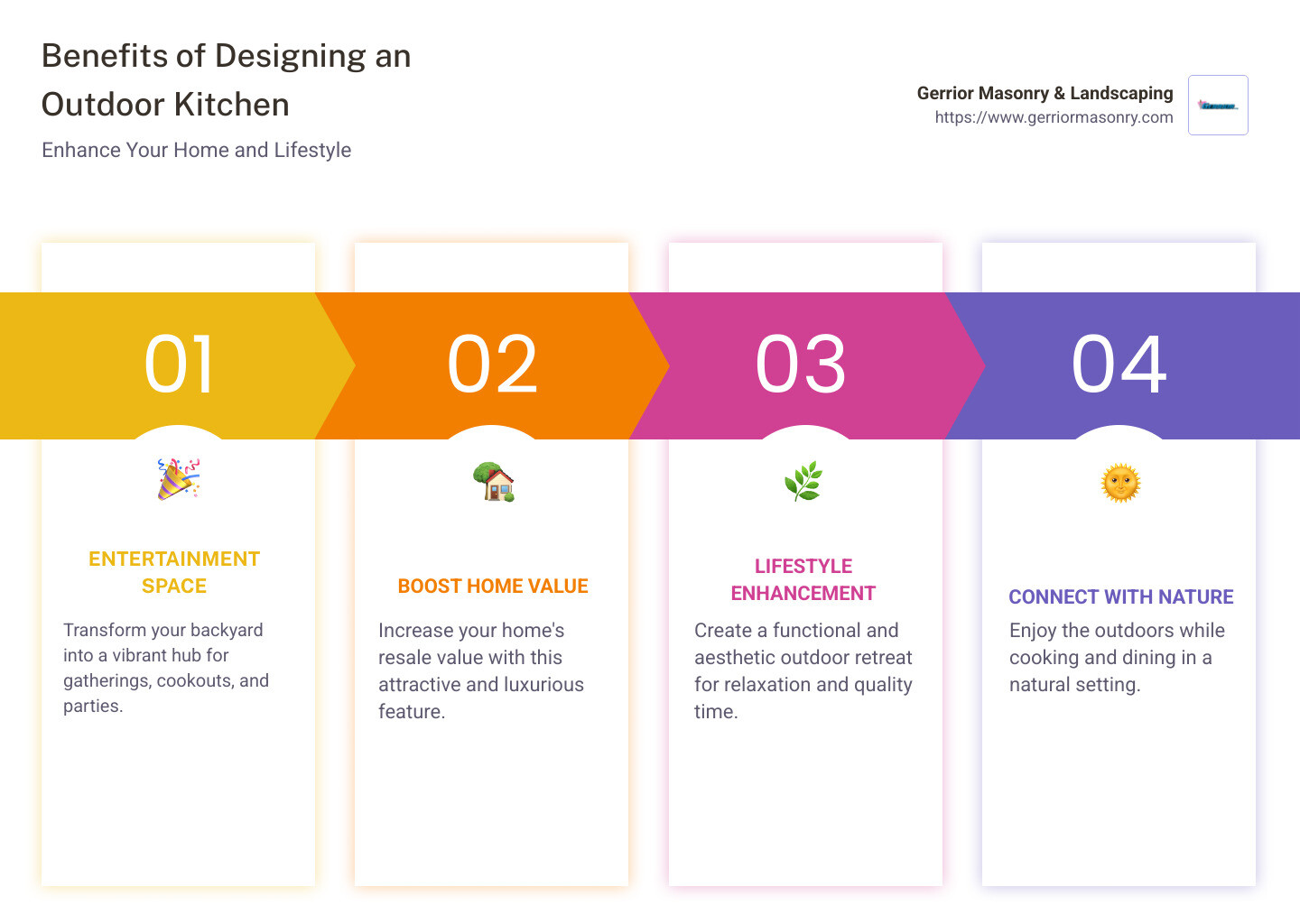
Designing an outdoor kitchen is a rewarding way to improve your home, offering numerous benefits that go beyond just having an extra place to cook. This neat addition not only expands your living space for entertainment but also boosts your property’s value, making it a sought-after investment.
- Entertainment Space: Turn your backyard into a vibrant hub where you can host seamless gatherings, cookouts, and parties. An enticing outdoor kitchen makes socializing and dining with family and friends a delightful experience.
- Home Value: Investing in an outdoor kitchen can substantially improve your home’s worth. Homebuyers often find these features attractive, seeing them as a symbol of luxury and lifestyle, increasing the property’s resale value.
- Lifestyle Benefits: It transforms your outdoor area into a functional and aesthetic retreat, encouraging a lifestyle that accepts nature, relaxation, and quality time outdoors.
I’m Joe Gerrior, the owner of Gerrior Masonry & Landscaping, and I’ve spent over 34 years helping homeowners like you turn outdoor kitchen dreams into reality. Our expertise in designing an outdoor kitchen ensures your project is handled with intricate attention to detail and craftsmanship, creating beautiful and functional solutions that match your vision seamlessly.
Simple designing an outdoor kitchen word guide:
– custom outdoor kitchen
– outdoor kitchen patio
– outdoor kitchen installers near me
Planning Your Outdoor Kitchen
Designing an outdoor kitchen begins with meticulous planning, ensuring every detail aligns with your vision and needs. Let’s explore two critical aspects: budgeting and location selection.
Budgeting for Your Outdoor Kitchen
Creating a budget is the first step. It’s easy to get carried away, so set a clear budget and stick to it. Here’s a breakdown of what to consider:
- Material Quality: High-quality materials might cost more upfront, but they save money in the long run by lasting longer. Materials like granite and stainless steel are durable and weather-resistant.
- Utilities: Adding electricity, gas, and water to your outdoor kitchen increases functionality but also costs. Plan for these expenses, including any permits or inspections required.
- Technology: If you want to add WiFi or a sound system, factor in these additional costs. These features can improve your outdoor cooking and entertainment experience.
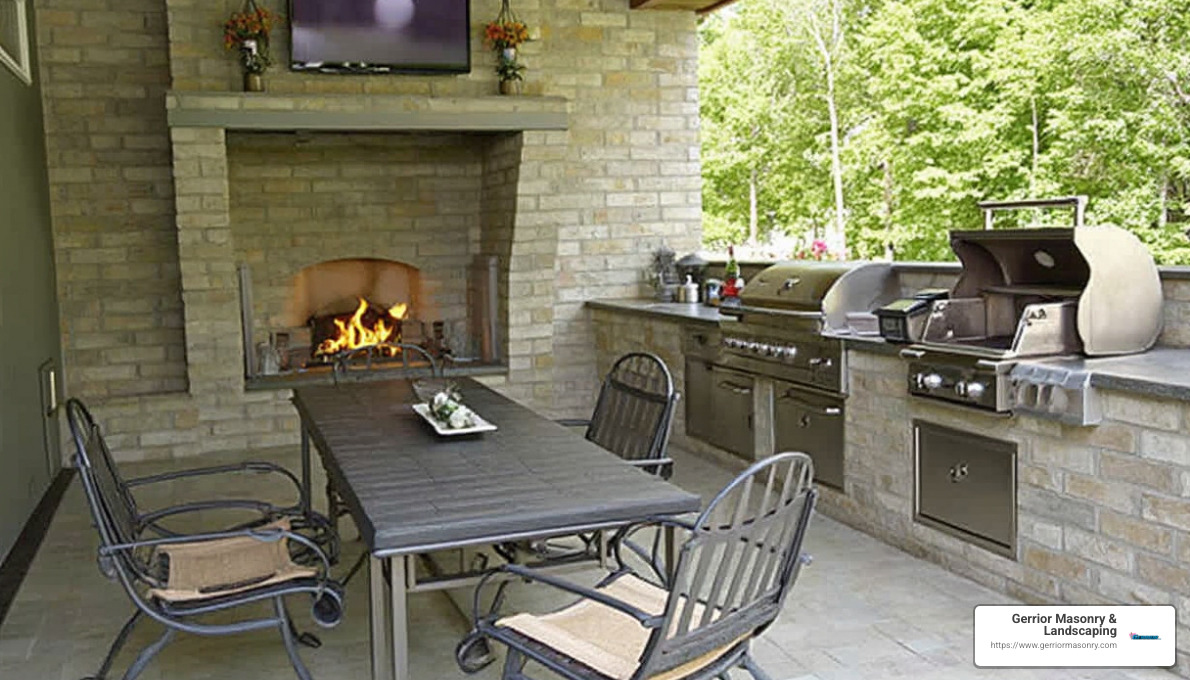
Choosing the Right Location
Selecting the perfect location for your outdoor kitchen is crucial. Consider these factors to ensure your kitchen is both functional and sustainable:
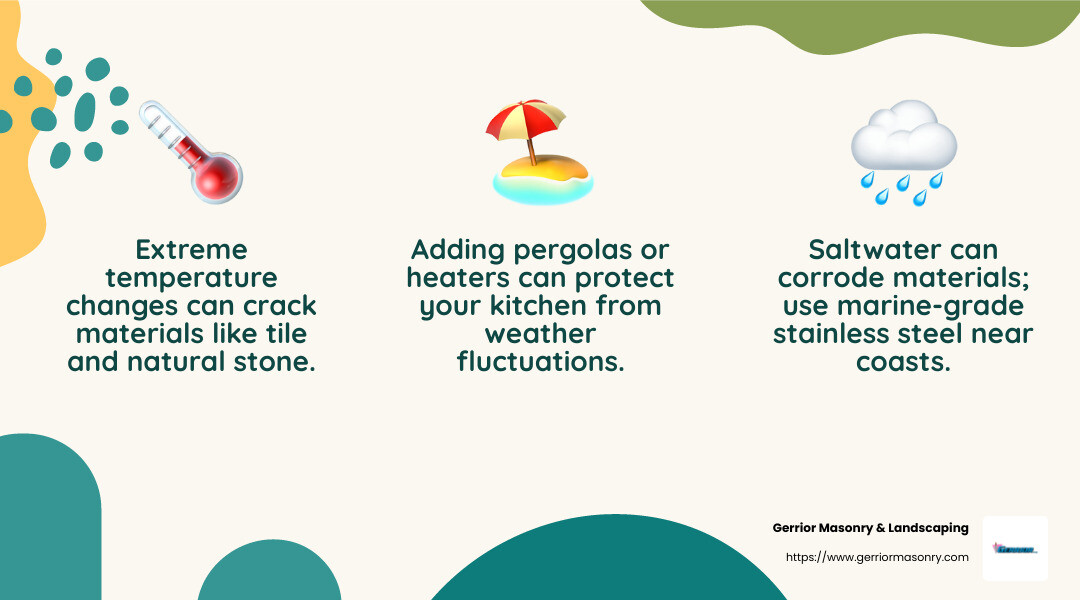
- Climate Challenges: Different climates present unique challenges. For example, areas with extreme temperature changes should avoid using materials like tile and natural stone, which can crack.
- Weather Fluctuations: Protect your kitchen from the elements by adding features like pergolas or outdoor heaters. These additions can extend the usability of your outdoor space.
- Coastal Considerations: If you’re near the coast, saltwater can be harsh on certain materials. Opt for marine-grade stainless steel to prevent corrosion.
By carefully planning your budget and location, you set the foundation for a successful outdoor kitchen project. Next, we’ll explore the exciting part: designing the layout and functionality zones.
Designing an Outdoor Kitchen
Designing an outdoor kitchen is all about making smart choices with layout options, functionality zones, and design styles. These choices will shape how you use your space and enjoy your outdoor cooking experience.
Popular Layouts
There are several popular layouts to consider when designing an outdoor kitchen. Each has its own benefits and can be custom to fit different spaces:
- L-Shaped Design: This is the most common and versatile layout. It offers plenty of counter space and separates the cooking area from the prep and serving zones. The L-shape allows for easy movement and interaction with guests, making it ideal for entertaining.
- Galley Style: Perfect for narrow spaces, the galley layout features two parallel countertops. One side can be dedicated to cooking, while the other is for prep and serving. This setup is efficient for one or two cooks working together.
- Space Utilization: Regardless of the layout, maximizing space is key. Consider adding a kitchen island for more prep space and seating. An island can also house additional appliances like a sink or a small fridge.
Functionality Zones
To create a functional outdoor kitchen, divide the space into four main zones. This ensures everything you need is within reach:
- Cold Zone: This area is for refrigeration and ice makers. Keep drinks cool and ingredients fresh. It’s crucial for entertaining and food safety.
- Hot Zone: The heart of the kitchen, this is where the grill, pizza oven, or smoker resides. Ensure there’s enough ventilation and safe spacing from other zones to prevent accidents.
- Wet Zone: This is where you’ll find the sink and possibly a bartending station. Having water access makes cleanup easier and helps with food prep.
- Dry Zone: Use this space for meal prep and extra counter space. It’s also ideal for storing utensils, cutting boards, and other essentials.
By thoughtfully designing your outdoor kitchen with these layouts and zones in mind, you can create a space that is both beautiful and functional. This careful planning allows for seamless cooking and entertaining, turning your backyard into a culinary haven.
Next, we’ll dive into selecting the essential components that will make your outdoor kitchen truly shine.
Essential Components of an Outdoor Kitchen
When designing an outdoor kitchen, the right components can make all the difference. Let’s explore two key elements: selecting the right grill and choosing the best countertop and storage options.
Selecting the Right Grill
The grill is the heart of any outdoor kitchen. Choosing the right one involves considering fuel types, size, and additional features.
- Fuel Types: Grills come in various fuel options. Gas grills are popular for their convenience and quick heating. Charcoal grills offer a smoky flavor that many love, but they take longer to heat up. Pellet grills combine the ease of gas with the flavor of charcoal, using wood pellets for fuel. Each has its pros and cons, so choose based on your cooking style.
- Size Considerations: Think about how much cooking space you need. A smaller grill might suffice for family dinners, while larger models are better for entertaining guests. Measure your available space and consider how much room you’ll need for other appliances.
- Additional Features: Look for features like side burners, rotisserie attachments, or built-in thermometers. These can improve your cooking experience and make your grill more versatile.
Countertop and Storage Options
Selecting the right countertops and storage solutions is crucial for durability and organization.
- Durable Materials: Countertop materials need to withstand the elements. Granite, concrete, and stainless steel are popular choices for their durability and weather resistance. According to Gerrior Masonry, these materials can handle exposure to rain, sun, and snow.
- Weather Resistance: Consider your local climate. In areas with temperature fluctuations, avoid materials like tile or natural stone that might crack. Instead, opt for Dekton® by Cosentino®, a man-made option designed for outdoor use.
- Organization: Storage is key to keeping your outdoor kitchen tidy. Install cabinets with shelving to store utensils, dishes, and other essentials. Marine-grade stainless steel is recommended for coastal areas due to its corrosion resistance.
By focusing on these essential components, you can create an outdoor kitchen that is both functional and beautiful. Next, we’ll explore the pros and cons of building your kitchen yourself versus hiring a professional.
Building and Installation: DIY vs. Professional
When it comes to designing an outdoor kitchen, deciding whether to go the DIY route or hire professionals is a big decision. Each option has its pros and cons, so let’s break it down.
DIY Installation Tips
DIY Benefits:
Building your outdoor kitchen yourself can be a rewarding experience. You get to customize every detail to your liking and save money on labor costs. According to Angi, DIY projects can save you an average of 20%–40% on labor fees, which could mean saving between $1,500 and $6,000 on a project that might otherwise cost $20,000 with professional help.
Cost Savings:
Tackling the project on your own can significantly reduce overall costs, especially if you’re skilled in construction tasks like mortaring, stonework, and basic kitchen framework. However, it’s wise to hire professionals for complex tasks like plumbing and electrical work to ensure safety and compliance with local codes.
Customization:
DIY allows for complete control over the design and materials. You can choose every element, from the type of stone for your countertops to the style of your cabinetry. This level of customization can be particularly satisfying for those with a clear vision.
Skill Requirements:
While DIY can be cost-effective, it demands a certain level of skill and experience. You’ll need to be comfortable with using various tools and have a basic understanding of construction principles. If you’re not confident in your abilities, the DIY route might be more challenging than rewarding.
Professional Installation Insights
Workmanship Quality:
Hiring professionals ensures high-quality workmanship. Experienced contractors have the expertise to handle complex installations and are familiar with local building codes and regulations. This can save you from potential headaches down the line.
Local Codes:
Professionals are well-versed in local requirements and can ensure your outdoor kitchen complies with all necessary permits and regulations. According to Angi, permits can add an average of $250–$2,000 to your project cost, depending on the scope and location of your kitchen.
Time Efficiency:
A professional team can complete the project more quickly than a DIY effort. They have the tools, experience, and manpower to efficiently tackle each stage of the build, from site preparation to final touches.
Choosing between DIY and professional installation depends on your budget, skills, and how much time you’re willing to invest. Whether you opt for the satisfaction of a DIY project or the peace of mind that comes with professional installation, the goal is to create an outdoor kitchen that improves your home and lifestyle. Next, let’s dig into some frequently asked questions about outdoor kitchens to address common concerns and curiosities.
Frequently Asked Questions about Outdoor Kitchens
Is it cheaper to build your own outdoor kitchen?
Building your own outdoor kitchen can save you money, but it comes with trade-offs. Prefab vs. Custom-Build is a big decision. Prefab kits are ready-made and can be easier to install, typically costing between $2,000 and $10,000. Custom-builds, on the other hand, offer flexibility in design but can range from $10,000 to over $30,000, especially if you’re hiring professionals.
Cost per Linear Foot is another factor to consider. A prefab outdoor kitchen can cost around $300–$500 per linear foot, while a custom-built one can go upwards of $1,000 per linear foot. So, if you’re handy and enjoy DIY projects, building your own might be the way to go for budget-conscious homeowners.
What is the most common shape for an outdoor kitchen?
The L-shaped layout is the most popular choice for outdoor kitchens. This design offers excellent design flexibility by providing separate zones for cooking, prepping, and socializing. An L-shape fits well into corners of patios or decks, making efficient use of space while allowing the cook to interact with guests. It also accommodates various appliances and features, such as a grill, sink, and storage, without feeling cramped.
What is the best base for an outdoor kitchen?
Choosing the right base is crucial for durability and aesthetics. Concrete is a top choice due to its strength and ability to withstand weather changes. It’s versatile and can be stamped or colored to mimic more expensive materials. Brick pavers are another popular option, offering a classic look that’s easy to maintain and repair. For a more natural appearance, natural stone provides an neat finish, though it can be pricier and may require more upkeep.
Each material has its pros and cons, so consider your budget, climate, and the overall style of your home when making a decision.
Conclusion
Designing an outdoor kitchen is a rewarding venture, and choosing the right partner can make all the difference. At Gerrior Masonry & Landscaping, we bring over 30 years of experience to every project, ensuring high-quality results that stand the test of time. Our expertise in masonry and hardscaping allows us to create beautiful and functional outdoor spaces custom to your needs.
Our team takes pride in project oversight, with skilled professionals and owner involvement from start to finish. This commitment to quality craftsmanship ensures that every detail is executed to perfection. Whether you’re looking for a simple grill station or a full-scale outdoor kitchen with all the bells and whistles, we have the skills and experience to bring your vision to life.
By focusing on durable materials and thoughtful design, we create outdoor kitchens that not only improve your outdoor living space but also increase your home’s value. We understand the importance of integrating functionality zones—cold, hot, wet, and dry—to maximize usability and comfort.
If you’re ready to transform your backyard into a stunning culinary haven, we invite you to explore our creative ideas for outdoor kitchen layouts and designs. Let us help you bring your dream outdoor kitchen to life with our best expertise and dedication to excellence.
