
Why Every Homeowner Needs to Understand Their Drainage System
A domestic drainage system is the network of pipes and drains managing water in and around your home. It has two parts: the foul water system for wastewater from toilets and sinks, and the surface water system for rainwater from roofs and driveways. Understanding this network is key to preventing water damage, protecting your foundation, and keeping your property safe.
Key components include gutters, downspouts, French drains, catch basins, and foundation drains, all working to direct water away from your home. Indoors, P-traps and vent stacks safely remove wastewater and prevent sewer gas from entering.
When water has nowhere to go, it exerts immense pressure on your foundation, a phenomenon known as hydrostatic pressure. This can lead to cracks in foundation walls, basement flooding, and costly structural damage that compromises the integrity of your entire home. The resulting dampness creates a perfect breeding ground for toxic mold and mildew, which can cause serious respiratory health issues. Furthermore, stagnant water in your yard can damage landscaping, create breeding grounds for mosquitoes and other pests, and pose a dangerous slip hazard, especially when it freezes in winter.
I’m Joe Gerrior, owner of Gerrior Masonry & Landscape Construction Corp. For over 34 years, my team has helped Massachusetts homeowners install effective drainage systems, preventing thousands in water damage and foundation repairs.
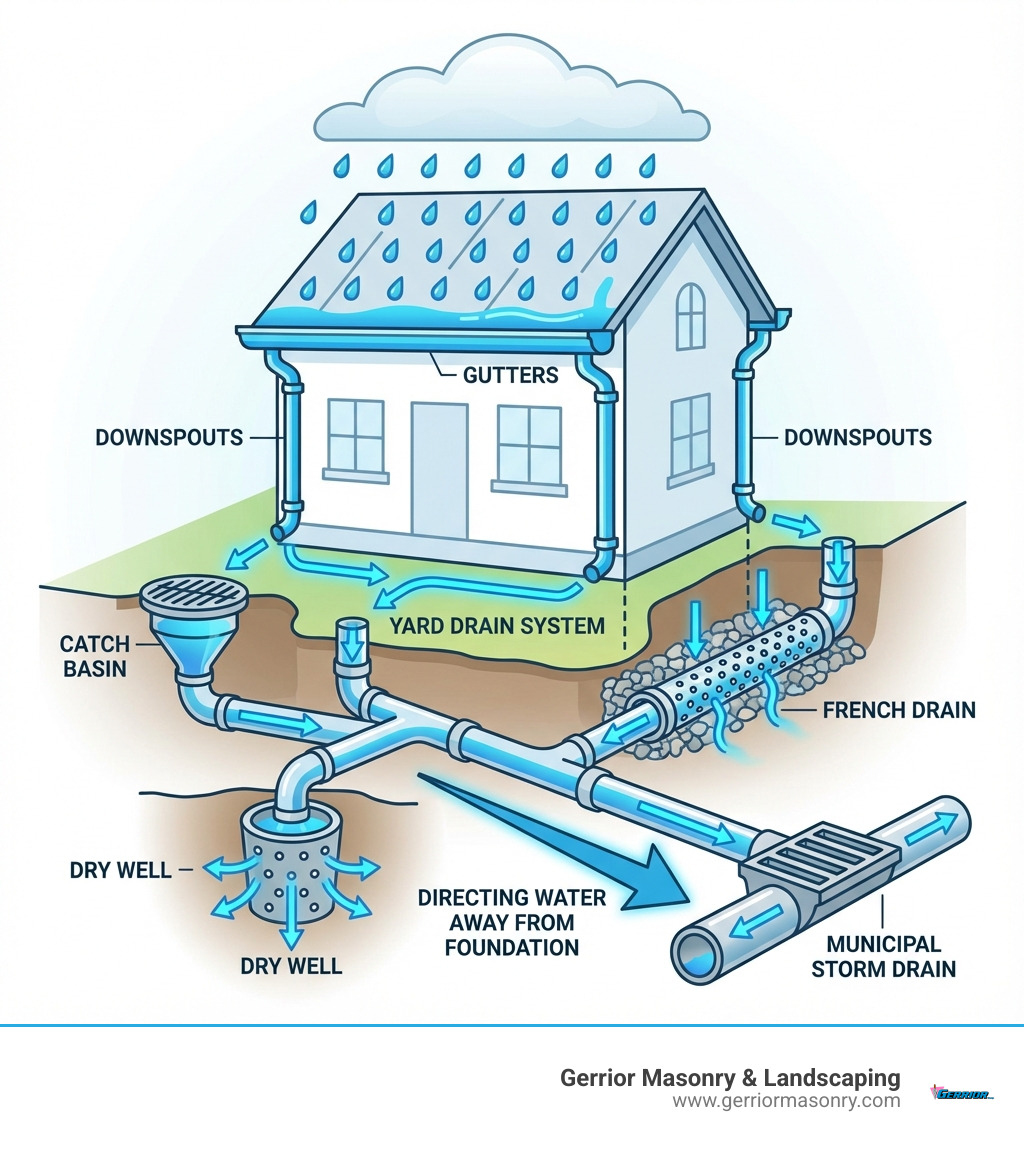
Understanding Your Complete Domestic Drainage System
Your domestic drainage system is designed to manage water flow from inside and outside your home, protecting it from damage and maintaining its structural integrity.
Foul Water vs. Surface Water: The Two Main Systems
Your home’s drainage handles two types of water: foul water and surface water. Keeping them separate is crucial for health and efficiency.
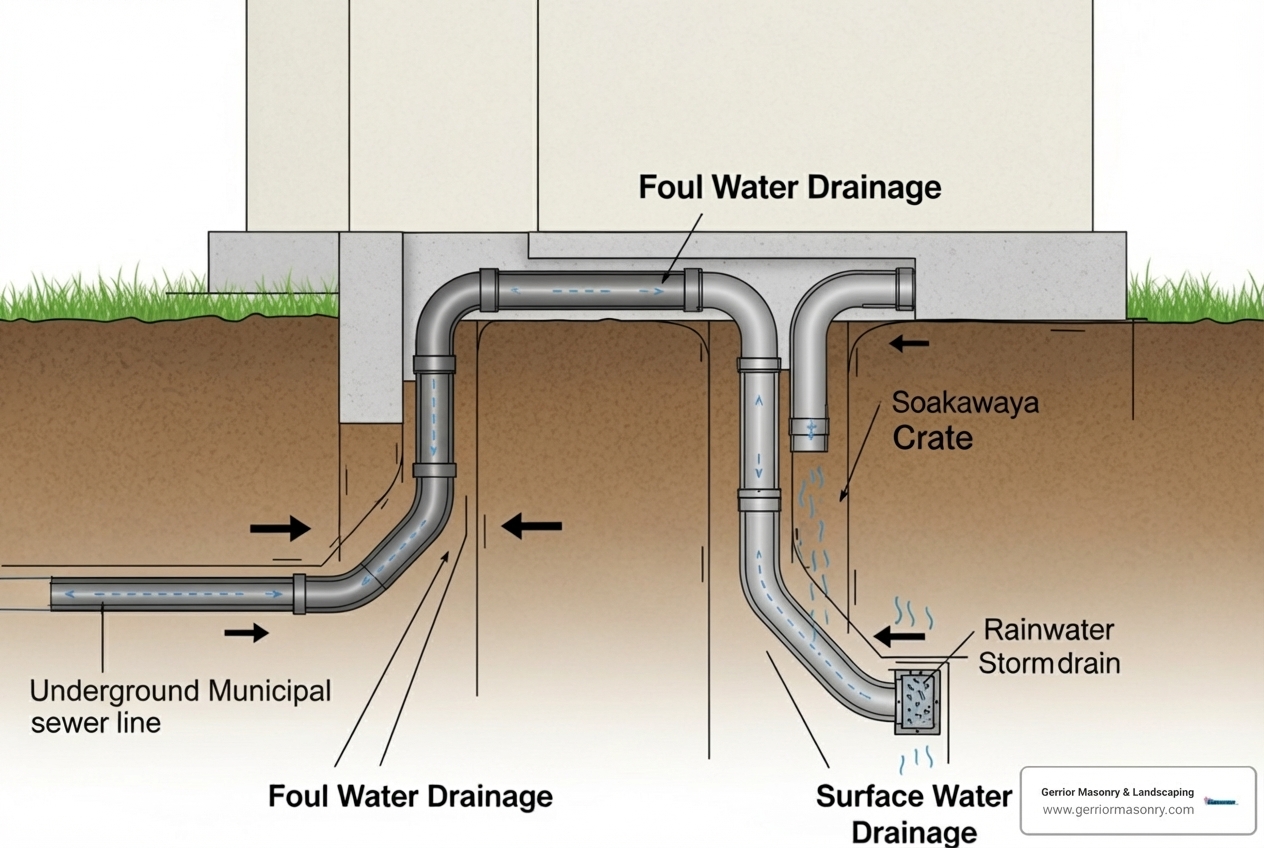
Foul Water Drainage
Foul water (wastewater) comes from toilets, sinks, showers, and appliances. This contaminated water must be sent to a treatment plant or septic system to protect public health.
Surface Water Drainage
Surface water is rainwater from roofs, patios, and driveways. It’s generally clean and is diverted to soakaways or storm drains to prevent pooling and erosion.
Why the Separation Matters
Mixing these systems is not only inefficient but also illegal in many areas due to the significant environmental and health risks. If foul water contaminates a surface drain, it introduces harmful bacteria and pollutants directly into rivers and streams. Conversely, if a surge of rainwater from a storm overwhelms a foul water system, it can exceed the capacity of municipal treatment plants, leading to overflows of untreated sewage into the environment or, even worse, backing up into your home. Modern building codes strictly mandate separate systems to protect public health and our natural waterways. For more details, see this guide: Understanding Home Drainage Systems: Foul Water and Surface Water Drainage.
Exterior Drainage: Protecting Your Foundation and Yard
Your exterior domestic drainage system is the first line of defense against water damage.
Gutters and Downspouts
Gutters and downspouts channel roof runoff away from your foundation. If clogged with debris, they can overflow, saturating the ground and potentially causing foundation damage or basement flooding. Regular cleaning is essential.
Surface Drainage and Catch Basins
Surface drainage systems, including proper yard grading and catch basins, manage water across your property. Catch basins are grated boxes set in low spots to collect runoff and direct it into underground pipes, preventing pooling. A Dry Well Catch Basin can be an effective part of this system.
Foundation Drains
Foundation drains are a critical, non-negotiable component for any home with a basement or crawl space. They are installed around the perimeter of your foundation footing to intercept and channel away groundwater before it can accumulate. This system’s primary job is to relieve hydrostatic pressure—the immense force of water-saturated soil pushing against your foundation walls. Without this relief, water can force its way through microscopic cracks, leading to persistent dampness, mold growth, and eventually, significant structural cracks and bowing walls. Investing in a proper Drainage Around House Foundation system is one of the most important measures you can take to preserve your home’s value and structural health.
Subsurface Solutions: A Closer Look at French Drains
When surface drainage isn’t enough, a French drain offers an effective subsurface solution for groundwater issues.
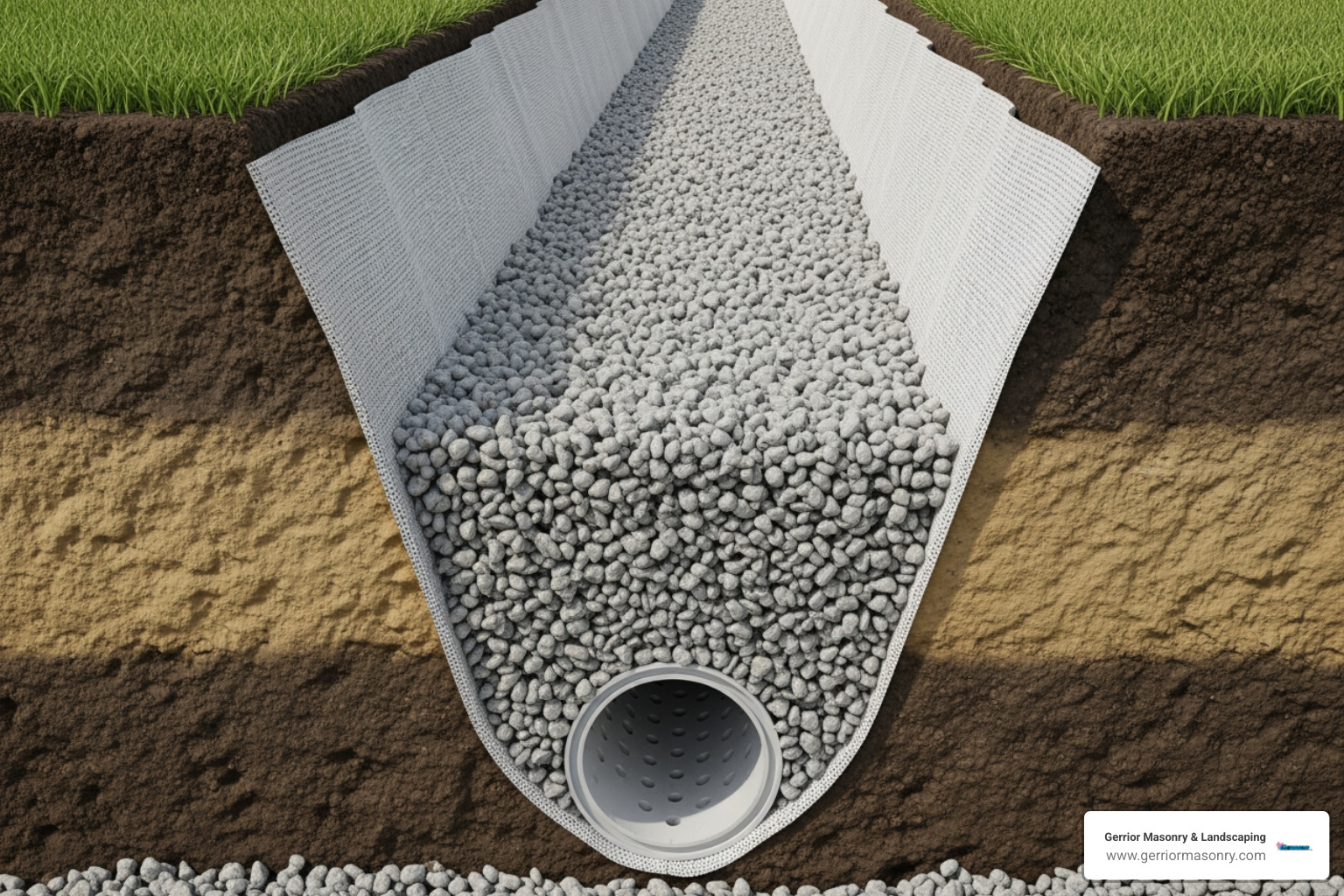
How French Drains Work
A French drain is a gravel-filled trench containing a perforated pipe. It intercepts groundwater, which filters through the gravel into the pipe and is then channeled away to a storm drain or dry well. This prevents soil saturation and protects foundations. A Dry Well for Lawn Drainage often complements a French drain system.
| Feature | Advantages | Disadvantages |
|---|---|---|
| Effectiveness | Highly effective at intercepting groundwater. | Can be difficult to maintain if clogged. |
| Visibility | Nearly invisible once installed. | Installation is labor-intensive and disruptive. |
| Protection | Prevents waterlogging and foundation dampness. | May require a pump for efficient water flow in certain conditions. |
While installation is a significant project, the long-term benefit of a dry, stable property is well worth the effort.
Inside Your Home: The Indoor Plumbing Domestic Drainage System
Your indoor plumbing, or Drain-Waste-Vent (DWV) system, relies on gravity to remove wastewater safely. Pipes are installed at a slight downward angle to ensure flow.
Key Components of the Indoor System:
- Fixture Drains & P-Traps: Wastewater enters through fixture drains (sinks, tubs). A P-trap, the curved pipe below, holds water to block sewer gases from entering your home. Toilets have a similar built-in trap.
- Branch Drains & Soil Stack: Wastewater flows from traps into branch drain lines, which connect to a large vertical pipe called a soil stack (or soil pipe).
- Vent System: Often overlooked, the vent system is as crucial as the drain pipes themselves. The soil stack extends through the roof, creating a vent that serves two purposes. First, it allows sewer gases to safely escape outside, preventing them from building up in your pipes and entering your home. Second, it allows air to enter the system as water flows out. Without this air, a vacuum would form behind the flowing water, siphoning the water out of the P-traps. An empty P-trap provides an open invitation for foul-smelling and potentially harmful sewer gases to enter your living space. Gurgling drains and slow drainage are often symptoms of a blocked vent.
- Main Drain Line: All wastewater collects in the main drain line, a large buried pipe that carries it to the municipal sewer or a private septic system. A sewer line clean-out provides access for clearing major clogs.
Common Problems, Maintenance, and Choosing the Right Solution
Even a well-designed domestic drainage system can face problems without proper maintenance. Recognizing issues early is key to avoiding costly repairs.
Identifying and Solving Common Drainage Problems
Here are common issues we see in Middlesex and Essex County homes:
- Pooling Water in the Yard: A sign of poor surface drainage. Solutions include improving yard grading or installing French drains or a drain for pooling water in yard.
- Basement Moisture or Flooding: Often caused by water penetrating the foundation due to poor exterior drainage. A basement sump pump is often a necessary solution, and our basement waterproofing company can provide a full assessment.
- Slow Drains or Gurgling Noises: These indicate a blockage or a venting issue in your indoor plumbing. Regular cleaning can help, but persistent problems may require professional service.
- Foul Smells: Usually caused by dry P-traps, which can be fixed by running water. If the odor persists, it could signal a more serious vent or sewer line problem.
- Overflowing Gutters: Caused by debris buildup. Regular cleaning is crucial to prevent water from damaging your foundation and walls.
For large paved areas like driveways, high-capacity trench drains are an effective solution. We offer comprehensive residential drainage solutions for these and other complex issues.
Maintenance and Key Considerations for Your Domestic Drainage System
Ongoing maintenance is vital for the longevity of your domestic drainage system.
Maintenance Requirements
- Gutters & Downspouts: Clean at least twice a year to remove debris.
- Catch Basins & Outdoor Drains: Keep grates clear of debris and periodically clean out sediment.
- Indoor Drains: Use strainers to catch hair and food. Avoid pouring grease down drains.
- Sewer Line Clean-Out: Know its location for emergency access.
Septic Systems
If you’re not on a municipal sewer, your septic system treats wastewater on-site. It consists of a tank and a drain field. The tank separates solids from liquid, which then flows to the drain field for natural treatment. Have your tank pumped every 2-3 years. We can assist with Dry Well Septic System needs.
Choosing the Best Drainage System
Several key considerations come into play when selecting or upgrading your home’s domestic drainage system:
- Soil Type: Clay soils drain poorly and require more robust solutions than sandy soils.
- Property Slope: The land’s natural grade dictates water flow.
- Local Climate: Areas with heavy rain or snow need higher-capacity systems.
- Building Codes: All work must comply with local regulations.
- Basement Presence: Homes with basements need strong foundation drainage and often a sump pump.
Choosing the right domestic drainage system requires a careful assessment of your property. For expert assessment and installation of the right drainage solution for your property, trust a team with decades of experience. Gerrior Masonry & Landscaping, based in Woburn, MA, provides expert residential drainage solutions throughout Middlesex and Essex County, Massachusetts.
