
Why Commercial Properties Need Stormwater Drainage Solutions
Stormwater drainage solutions are essential systems designed to manage rainwater and snowmelt runoff on commercial properties. In the unique climate of Massachusetts, where heavy spring rains follow significant winter snow accumulation, these systems are the first line of defense for your business infrastructure. Here are the most effective options for your business:
- Catch Basins & Trench Drains – Collect surface water from parking lots and walkways.
- Permeable Pavement Systems – Allow water to filter through surfaces into underground storage.
- Bioretention Basins & Rain Gardens – Use native plants and soil to naturally filter stormwater.
- Dry Wells & Underground Infiltration – Store water underground for gradual absorption.
- French Drains – Redirect water away from foundations and structures.
- Green Infrastructure – Combine multiple natural systems for comprehensive management.
Without proper stormwater management, commercial properties face serious risks. Runoff carrying oils, chemicals, and debris from impervious surfaces like parking lots can cause flooding, foundation damage, and eroded landscapes. In urban and suburban environments, the sheer volume of water generated by a single storm can overwhelm local municipal systems if not managed on-site. Stormwater is a leading source of pollution for local estuaries and rivers, making proper drainage both an environmental responsibility and a regulatory requirement for modern businesses.
The primary goals of commercial stormwater drainage systems include:
- Preventing flooding of buildings and parking areas: Ensuring that customers and employees have safe access to your facility regardless of weather conditions.
- Protecting infrastructure from water damage: Preventing the costly degradation of asphalt, concrete, and building foundations caused by standing water and freeze-thaw cycles.
- Managing runoff volume and velocity: Slowing down water to prevent soil erosion and downstream flooding.
- Filtering pollutants before water reaches natural waterways: Removing hydrocarbons, heavy metals, and sediment through natural or mechanical filtration.
- Complying with local and EPA stormwater regulations: Avoiding fines and legal complications by adhering to the Clean Water Act and local Massachusetts bylaws.
- Reducing liability from slip hazards: Eliminating ice patches in winter and deep puddles in summer that can lead to accidents.
I’m Joe Gerrior, owner of Gerrior Masonry & Landscape Construction Corp. Over our 34 years serving Massachusetts commercial properties, I’ve seen how proper stormwater drainage solutions protect investments. From simple catch basin installations to complex bioretention systems, choosing the right approach requires understanding your property’s unique challenges, including soil composition and topography.
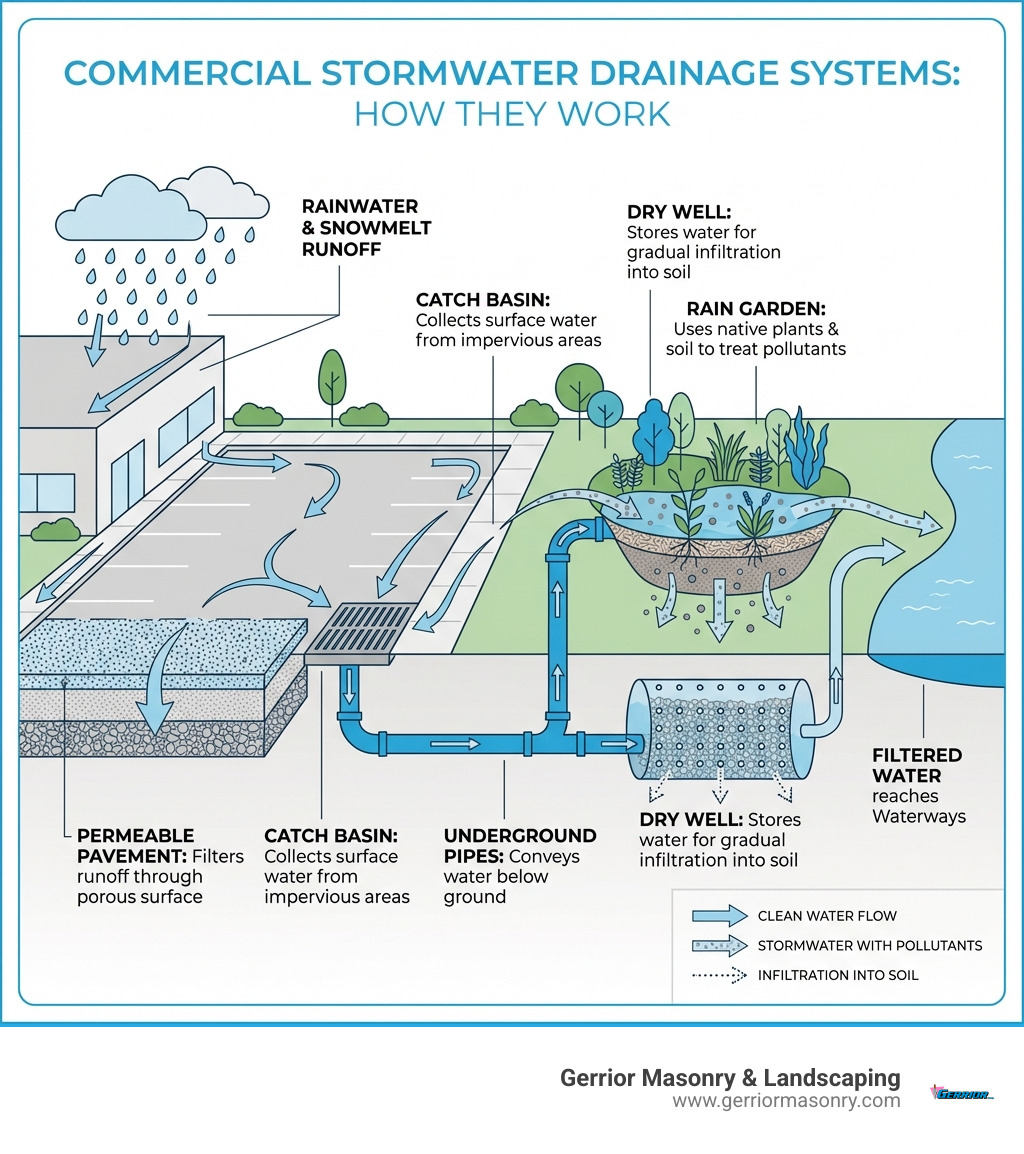
Important Stormwater drainage solutions terms:
Top Commercial Stormwater Drainage Solutions for Modern Properties
Effective stormwater management is critical for commercial properties in Middlesex and Essex County, Massachusetts. The goal is to manage water responsibly to prevent flooding and protect infrastructure through a combination of “gray” and “green” infrastructure. Gray infrastructure refers to engineered systems like pipes and concrete channels, while green infrastructure (GI) mimics natural processes using vegetation and permeable surfaces to capture and filter stormwater. This dual approach protects properties from heavy rainfall and snowmelt, which are increasingly common in the Northeast. These systems are vital for preventing the flooding of streets and parking lots, which can otherwise disrupt business operations and cause significant property damage.
The “Lifecycle of a Raindrop” approach involves four critical stages: Capture, Convey, Store, and Treat.
- Capture: This is the initial collection of water from roofs, parking lots, and sidewalks.
- Convey: Moving the water safely through pipes or swales to a management area.
- Store: Holding the water temporarily in basins or underground tanks to prevent overwhelming the system.
- Treat: Removing pollutants through filtration or biological processes before the water is released.
This holistic view ensures stormwater is managed for both quality and quantity. For more information, you can explore options for treating stormwater.
Efficient Catch Basins and Trench Drain Stormwater Drainage Solutions
Traditional gray infrastructure like catch basins and trench drains remains highly effective for managing surface runoff. These systems are the workhorses of commercial drainage, specifically designed to collect water from large impervious areas like parking lots, loading docks, and driveways.
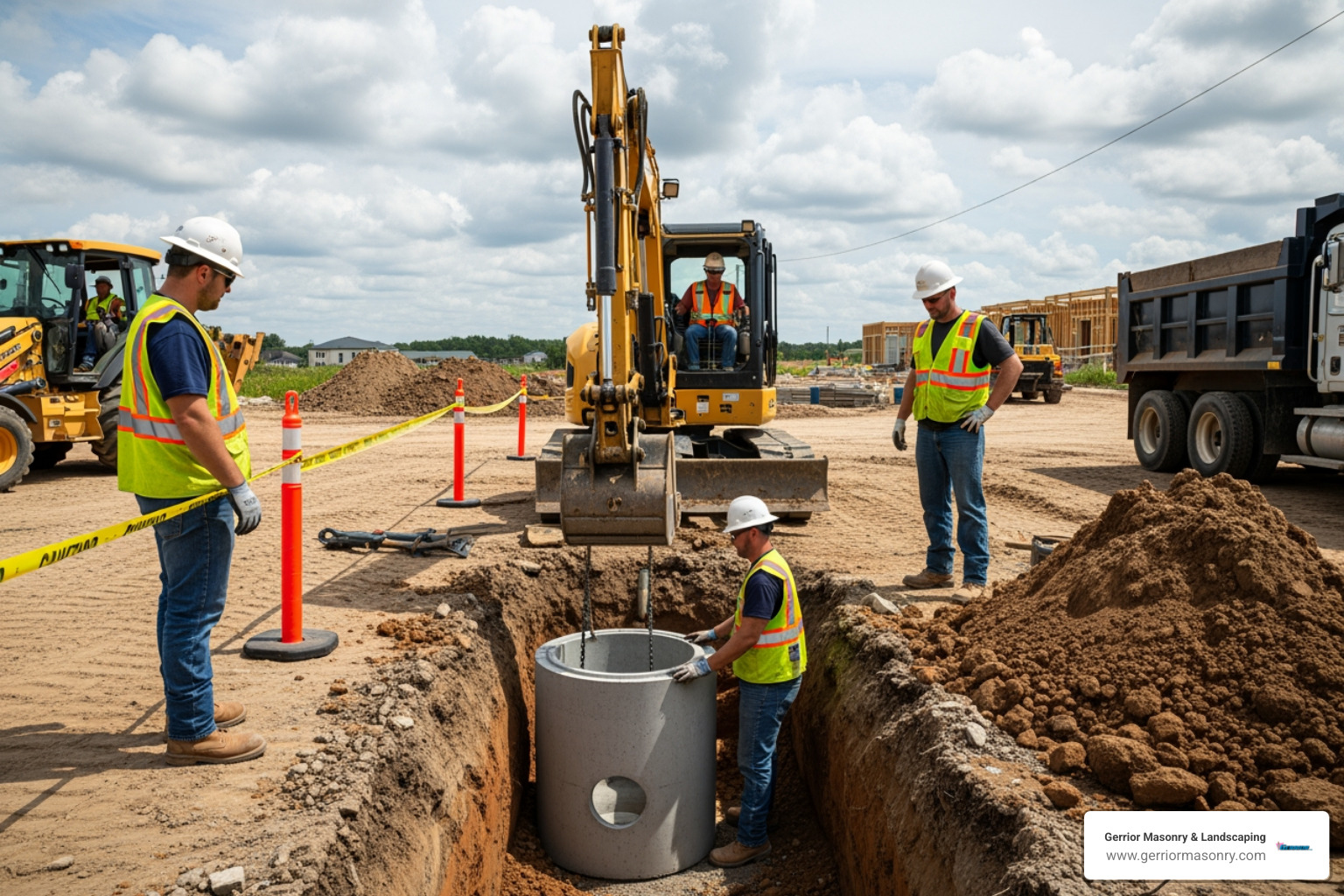
A catch basin is a grated opening that directs surface water into underground pipes. The grates block large debris like leaves, branches, and trash from clogging the system. Below the grate, a sump area allows sediment to settle before the water flows to a designated outlet. We provide various drainage systems for commercial needs. Trench drains, or channel drains, are linear systems used in large paved areas or along building foundations to intercept sheet flow. By capturing water across a wide path, they are exceptionally effective at reducing slip hazards and preventing erosion on sloped landscapes.
These systems require regular maintenance to remain functional. Accumulated debris can block inlets, leading to localized flooding. We recommend regular clearing of grates and periodic vacuuming of the sumps. For stubborn blockages within the piping, a high-pressure washer is an effective tool. Keeping these elements free of obstructions is a key best practice for commercial property managers looking to avoid emergency repairs.
Permeable Pavement and Green Infrastructure Stormwater Drainage Solutions
Green infrastructure offers environmentally friendly solutions like permeable pavement and bioretention systems. Unlike traditional asphalt, permeable pavement allows water to pass through its surface into an underlying stone reservoir. From there, it is slowly absorbed into the ground, which recharges groundwater and filters out pollutants naturally. We offer various hardscaping services including grass pavers, porous concrete, and open-joint bricks that provide structural integrity while maintaining permeability.
Rain gardens and bioswales are functional green components that add aesthetic value to a property. Rain gardens are shallow depressions planted with native vegetation that capture and filter runoff from roofs or small paved areas. Bioswales are larger, linear vegetated channels often integrated into parking lot islands or along roadways. You can find more details on planted stormwater management practices. These practices improve air quality, increase biodiversity, and enhance property aesthetics while managing runoff volume effectively.
Dry Wells and Subsurface Infiltration Systems
Dry wells and subsurface infiltration systems work underground to manage excess water, making them ideal for sites with limited surface space. A dry well is essentially an underground chamber that collects and slowly releases stormwater into the surrounding soil. We are experts in installing dry wells to handle standing water issues in areas where surface basins are not feasible.
Larger underground systems, often consisting of perforated pipes or modular plastic crates, can be engineered beneath parking lots to store massive volumes of water. However, these systems must comply with strict regulations, such as the EPA’s Class V injection well guidelines. Challenges include ensuring proper groundwater separation and maintaining access for periodic inspections. When properly designed and installed, these systems provide significant runoff reduction and contribute to long-term groundwater sustainability.
Implementing and Maintaining Your Stormwater Strategy
Developing effective stormwater drainage solutions in Massachusetts requires site-specific planning and strict adherence to state and local regulations. Proper design considers soil type (determined through perc tests), slopes, and the total impervious surface area to handle both current weather patterns and future extreme weather events. In Massachusetts, the Department of Environmental Protection (DEP) provides a Stormwater Handbook that serves as the gold standard for these installations.
Maintenance is essential for system longevity and performance. Requirements vary significantly by system type:
| Feature | Permeable Pavement | Traditional Pavement (with Drains) |
|---|---|---|
| Water Management | Infiltrates water into ground | Directs water to drains |
| Pollutant Treatment | Filters through soil layers | Minimal treatment |
| Maintenance | Regular vacuuming/sweeping | Debris removal from grates |
| Environmental Impact | Positive, supports ecosystems | Can contribute to pollution |
- Ditches and Swales: Require regular mowing to maintain flow and debris removal to prevent blockages.
- Catch Basins and Trench Drains: Need regular clearing of inlets; pressure washing for clogs and vacuuming of sumps every 1-2 years.
- Rain Gardens: Involve weeding, mulching, and plant care, similar to traditional landscaping but with a focus on sediment removal.
- Permeable Pavements: Should be vacuumed 1-2 times annually with a regenerative air sweeper to prevent fine sediments from clogging the pores.
Compliance with local ordinances and the EPA’s National Pollutant Discharge Elimination System (NPDES) permits is mandatory for many commercial sites. Frameworks like the Unified Stormwater Rule (USWR) provide guidelines that mirror many Massachusetts requirements regarding runoff rates and water quality. Our approach ensures all solutions meet or exceed these environmental standards, protecting you from potential litigation or municipal fines.
Design Best Practices and Cost Considerations
Effective design requires a thorough site assessment by experienced professionals. Bioretention systems need specific engineered soil mixes to ensure proper drainage and plant health, while infiltration systems require flat bottoms to ensure uniform absorption into the subsoil. Consulting with professionals prevents unintended consequences like flooded basements, overwhelmed public systems, or “piping” where water carves dangerous channels underground.
Costs vary based on complexity, scale, and the specific needs of the site. Based on industry data, the average cost for commercial stormwater drainage solutions is approximately $12,000. However, prices can range widely from $4,000 for simple catch basin repairs or small French drain installations to upwards of $45,000 for large-scale green infrastructure projects involving extensive excavation and specialized materials. Please note these are average industry costs and not actual quotes for Gerrior Masonry services. We provide customized, detailed quotes after a comprehensive site evaluation.
Professional Installation and Maintenance Services
Professional installation ensures your system performs as intended for decades. At Gerrior Masonry & Landscaping, we have over 30 years of experience handling the unique commercial drainage challenges found in Middlesex and Essex County. Our team manages everything from precise grading for trench drains to the complex layering of permeable pavements. We provide owner oversight on every project to ensure the highest quality of workmanship.
Proper installation prevents standing water and foundation damage, which are the leading causes of commercial property depreciation. For example, a French drain must be installed at the correct depth and slope with the right aggregate to be effective over the long term. You can learn more about our drainage systems services. We also offer maintenance and commercial snow removal to ensure melting snow does not overwhelm your systems during the volatile New England winters. We only provide commercial snow services and do not offer residential snow removal.
Partnering with experienced professionals is an investment in your property’s future and its environmental footprint. Gerrior Masonry & Landscape Construction is based in Woburn, MA, and proudly services Middlesex and Essex County, Massachusetts.
