
Drain for pooling water in yard: 2025 Ultimate Fix
Why Standing Water is Ruining Your Beautiful Yard
A drain for pooling water in yard situations can transform your soggy, unusable outdoor space into the beautiful, functional landscape you’ve always envisioned. But what exactly are the risks of ignoring those persistent puddles? Standing water is more than just an inconvenience; it’s a direct threat to your property’s health and value. It suffocates the root systems of your lawn, leading to yellow, dying patches of grass and creating an environment where fungal diseases thrive. Your beloved garden plants are also at risk, as waterlogged soil prevents oxygen from reaching their roots, causing irreversible rot.
Beyond the damage to your landscape, these stagnant pools become prime breeding grounds for mosquitoes, which can carry diseases like West Nile virus. Perhaps the most significant danger lies in the water that pools near your home. This moisture can saturate the soil around your foundation, leading to immense hydrostatic pressure. Over time, this pressure can cause cracks in foundation walls, leading to basement leaks, crawl space moisture, mold growth, and potentially catastrophic structural damage.
Quick Answer: Best Drain Options for Pooling Water
- French Drains: Best for ongoing water issues and slopes (captures subsurface water)
- Dry Wells: Perfect for collecting roof runoff and large water volumes
- Catch Basins: Ideal for low spots where water naturally collects
- Yard Drains: Simple solution for specific problem areas
- Rain Gardens: Natural approach that filters water while adding beauty
If your yard has low spots where water pools after rain, you’re not alone. Research shows that 60 percent of homeowners have some type of water problem in their yard. The good news is that most wet yards can be drained effectively with the right solution, protecting your investment and reclaiming your outdoor space.
I’m Joe Gerrior, owner of Gerrior Masonry & Landscape Construction Corp., and I’ve been solving drain for pooling water in yard challenges for Massachusetts homeowners for over 34 years. I’ve seen how the right solution can completely transform an unusable yard into a beautiful, functional outdoor space.
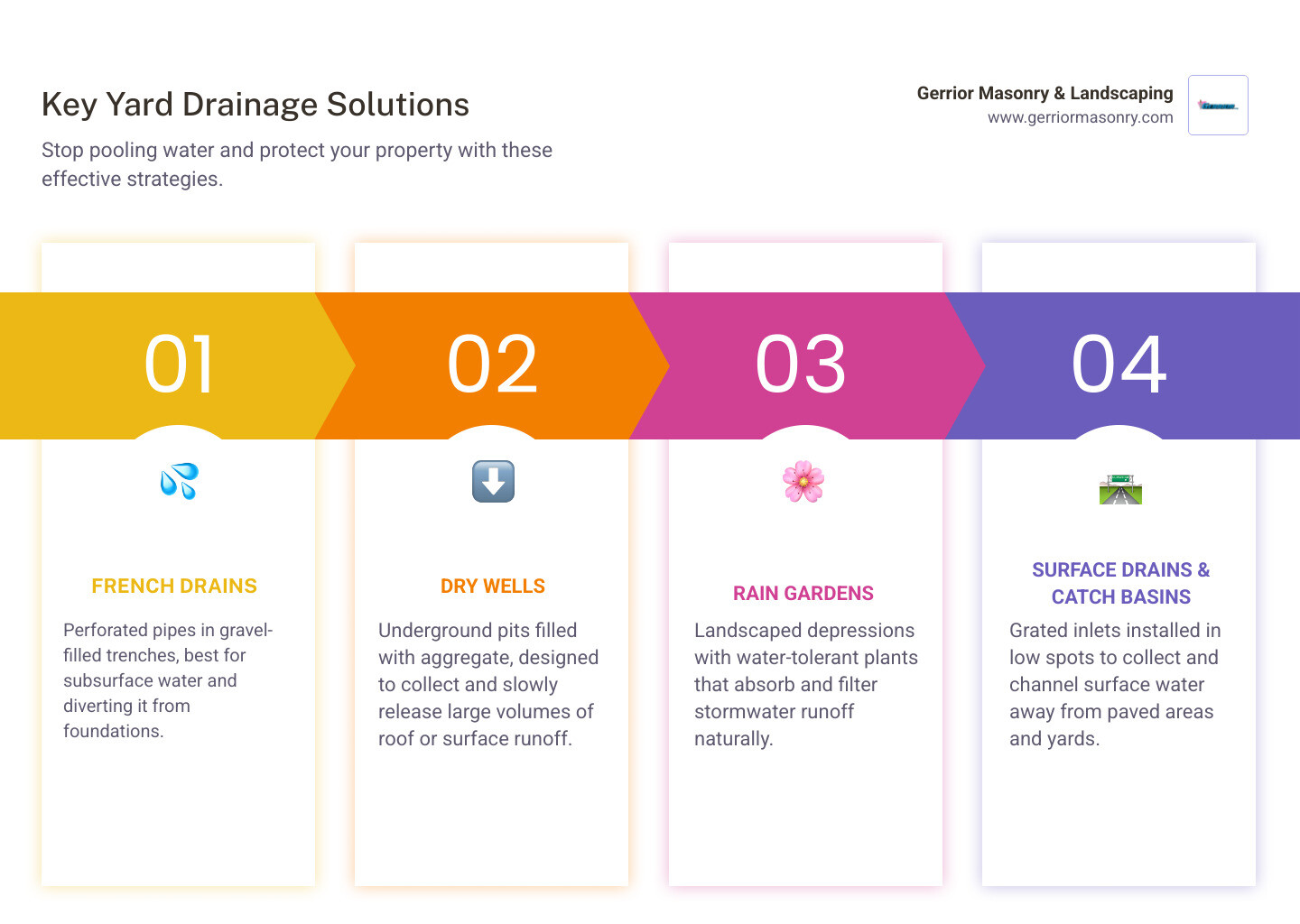
Drain for pooling water in yard vocab explained:
Why Your Yard is a Swamp & Simpler Solutions
Understanding what’s causing your drain for pooling water in yard problems is the first step toward fixing them. Common culprits include:
- Poor soil composition: Heavy clay soil, common in many areas, consists of tiny particles that pack together tightly. This leaves very little space for water to penetrate, causing it to pool on the surface instead of soaking into the ground where plants need it.
- Compacted soil: Over years of foot traffic, mowing, and outdoor activities, the soil can become heavily compacted. This squeezes out the natural air pockets that water uses to travel, creating a hard, almost impermeable layer just below the grass.
- Improper grading: Your yard should ideally slope gently away from your home’s foundation. If your property is flat or, worse, slopes inward, it will act like a bowl, collecting rainwater and directing it toward the area where it can do the most damage.
- Other factors: A thick layer of thatch (dead grass) can act like a sponge, holding moisture at the surface. Runoff from hardscapes like driveways, patios, and roofs can also overwhelm your lawn’s ability to absorb water, concentrating it in low spots.
The dangers of standing water go beyond muddy shoes. It creates breeding grounds for mosquitoes carrying diseases like West Nile virus, harbors harmful bacteria, and can lead to foundation damage. It also causes plant root rot by depriving roots of oxygen.
First-Step Fixes: Improving Surface Drainage
Fortunately, you can often improve drainage with simple fixes that don’t require heavy machinery.
- Lawn aeration: Creating small holes in your lawn with a core aerator helps water and air penetrate compacted soil. This process pulls out small plugs of earth, breaking up the dense surface and creating channels for water to seep deep into the root zone. For heavy clay soil, this should be an annual task.
- Filling low spots: Use a mix of quality topsoil and compost to level out persistent puddles. Compost also improves soil structure.
- Downspout extensions: Your roof sheds a massive amount of water during a storm. If your downspouts release this water right next to your foundation, you’re asking for trouble. Use simple, flexible extensions to direct that water at least 5-10 feet away from your foundation to a part of the yard that can handle the moisture.
- Rain barrels: Collect roof runoff in barrels to use for watering your garden, reducing the amount of water flooding your yard.
- Permeable surfaces: Replace concrete patios or walkways with permeable pavers, gravel, or porous surfaces that allow water to soak through.
Working with Nature: Rain Gardens and Water-Tolerant Plants
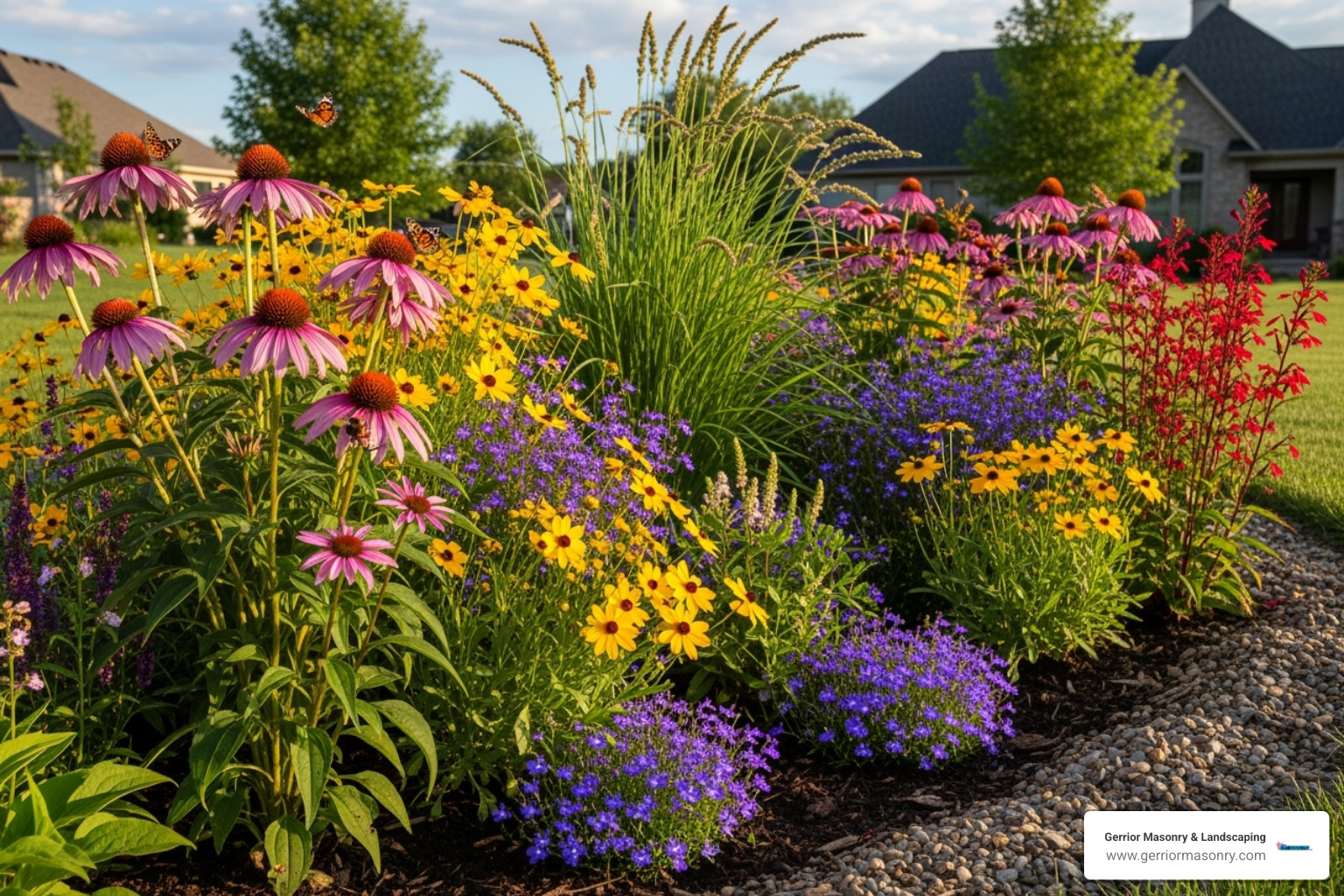
Working with nature can be a beautiful and effective solution. A rain garden is a shallow, planted basin designed to collect and filter stormwater runoff, turning a problem area into an asset.
As water flows into the garden, it slows down, and the plants and soil act as a natural filter before it soaks into the ground. This recharges groundwater and keeps polluted runoff out of storm drains. You can find more info about rain gardens to help you design your own.
Instead of fighting to grow grass in wet spots, choose plants that thrive in those conditions. Native plants are best as they are adapted to the local climate. Good options include:
- Cardinal Flower
- Siberian Iris
- Daylilies
- Ferns (Lady Fern, Cinnamon Fern)
- Sedge grasses
- Red Twig Dogwood
- Blue Flag Iris
- Swamp Milkweed
Heavy-Duty Drainage: Choosing the Right Drain for Pooling Water in Your Yard
When simple fixes aren’t enough for a chronically soggy yard, it’s time for heavy-duty drainage systems. These advanced solutions require careful planning and professional installation to solve serious water problems effectively. At Gerrior Masonry & Landscape Construction, we specialize in comprehensive yard drainage solutions that get to the root of the problem.
Two of the most proven solutions are French drains and dry wells. Sometimes, combining them creates the perfect system.
| Drainage Solution | Average Cost (Internet Data) | Complexity | Best Use Case |
|---|---|---|---|
| French Drain | $10 – $50 per linear foot ($2,000 – $15,000 total) | Medium to High | Redirecting subsurface water, preventing basement leaks, drying out large soggy areas, intercepting water from slopes. |
| Dry Well | $1,500 – $5,000 ($500 – $10,000+) | Medium | Collecting roof runoff, managing overflow from other drainage systems, absorbing large volumes of water into the ground. |
Please note: The costs listed above are average costs based on internet data and are not actual costs for Gerrior Masonry & Landscape Construction services. Prices can vary significantly based on location, project scope, materials, and specific site conditions.
Subsurface Systems: The Best Drain for Pooling Water in Yard
When water problems are underground, you need a subsurface solution. Systems like French drains and dry wells are often the best drain for pooling water in yard situations that persist.
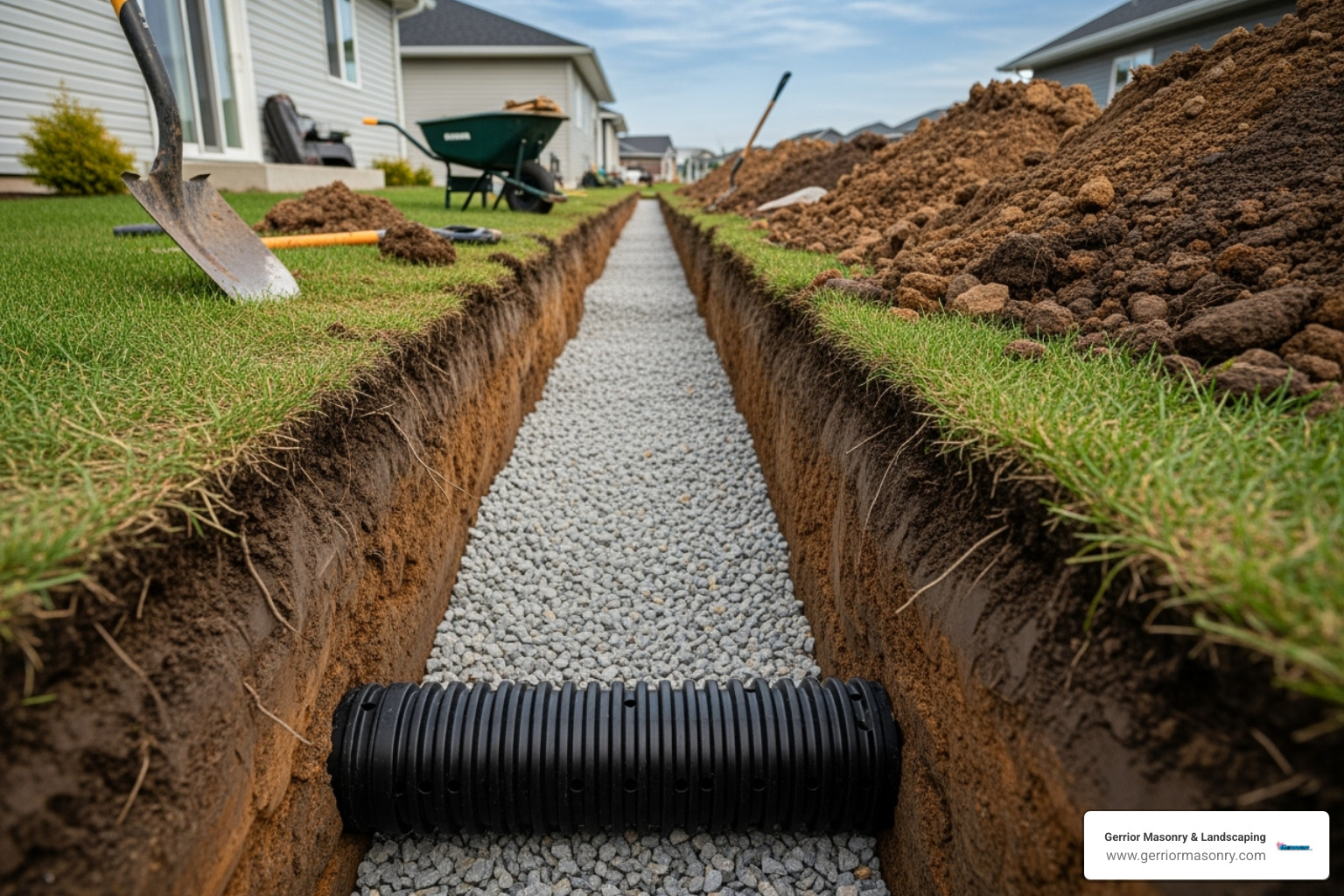
French drains are essentially underground channels designed to intercept and redirect water. A gravel-filled trench containing a perforated pipe is installed at a precise slope (at least a 1% grade is crucial for flow). This system captures both surface water that seeps down and subsurface groundwater that rises up, channeling it away to a safe discharge point. A professional installation includes lining the trench with filter fabric to prevent silt from clogging the pipe, which is a common reason DIY systems fail over time. Many DIY installations also fail due to an improper slope, causing water to sit in the pipe instead of draining away.
Dry wells are large, buried, hollow structures that act as underground reservoirs. They collect a large volume of water quickly—often from downspouts or the end of a French drain—and allow it to slowly percolate into the surrounding soil. This prevents a sudden deluge of water from flooding your yard or overwhelming municipal storm drains. We always install them at least 12 feet from any foundation to ensure the water disperses safely away from your home. You can learn more about how these systems work in our article on French Drains Explained.
Installation is a serious job that requires careful planning, calling 811 to mark utilities, and using the right equipment. The process involves digging trenches to a specific depth and slope, lining them with filter fabric, and layering gravel, pipe, and more gravel before backfilling.
Reshaping Your Landscape for Better Flow
Sometimes, the best solution is to change how water moves across your property. Regrading and strategic landscape features can permanently solve drainage issues.
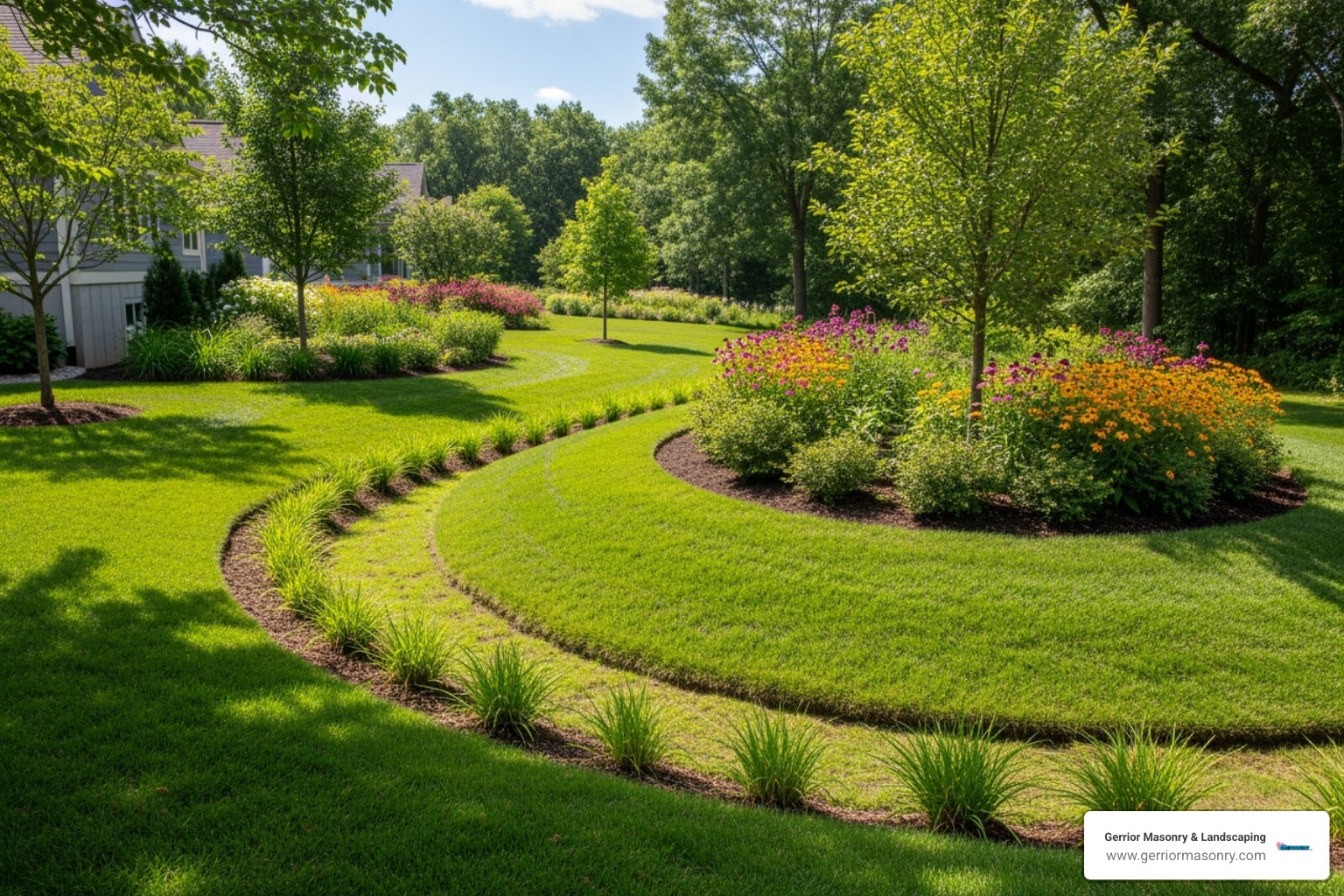
- Regrading: This involves changing your yard’s slope to direct water away from your house and other problem areas.
- Swales: These are broad, shallow, vegetated ditches that look like natural depressions. They gently channel water, allowing it to soak into the ground along the way.
- Dry Stream Beds: Using gravel, rocks, and boulders, we create attractive channels that guide water during storms and serve as beautiful landscape features when dry.
- Berms: These raised mounds of soil act as barriers to redirect runoff. They can also create liftd planting areas for plants that prefer drier soil.
These landscaping solutions solve drainage problems while improving your property’s beauty. Learn more about how we integrate these with our hardscaping services.
Your Next Steps and Professional Advice
Solving a drain for pooling water in yard problem means implementing it correctly and legally.
It’s crucial to direct runoff safely to an appropriate discharge point, like a dry well or a municipal storm drain, without creating a problem for your neighbors. Always check with your local building department, as many municipalities have rules about stormwater management and may require permits.
While some minor fixes are DIY-friendly, complex drainage issues benefit from professional assessment and installation. An expert can accurately diagnose the root cause of your water problem and design a system that provides a long-term solution. Proper installation prevents common failures like clogged drains or increased erosion. You can read more about when to call a professional for yard drainage.
For over 30 years, Gerrior Masonry & Landscape Construction has provided expert drainage solutions in Woburn, MA, and throughout Middlesex and Essex County, Massachusetts.
