
Why a Soggy Yard is a Serious Problem
Fixing pooling water in your yard is crucial for protecting your home and outdoor space. If you have standing water after rain, here are the main solutions:
Quick Fixes:
- Aerate compacted soil and add compost
- Clean gutters and extend downspouts 4+ feet from house
- Fill low spots with topsoil and re-seed
Landscaping Solutions:
- Install rain gardens with water-loving plants
- Create French drains with perforated pipe and gravel
- Build dry wells for underground water collection
Professional Help Needed When:
- Water pools near your foundation
- Large swampy areas persist
- Basement shows signs of dampness
Standing water isn’t just unsightly—it creates serious problems. It becomes a breeding ground for mosquitoes carrying diseases like Zika and West Nile, threatens your home’s foundation, causes plant root rot, and creates slip hazards.
Beyond health and safety, pooling water damages property value. Clay soil, poor grading, and clogged drainage systems all contribute to soggy conditions that persist for days after rain.
I’m Joe Gerrior, owner of Gerrior Masonry & Landscape Construction Corp. For over 34 years, my team and I have been fixing pooling water in yard situations throughout Massachusetts, solving everything from simple gutter issues to complex French drain installations that protect homes from foundation damage.
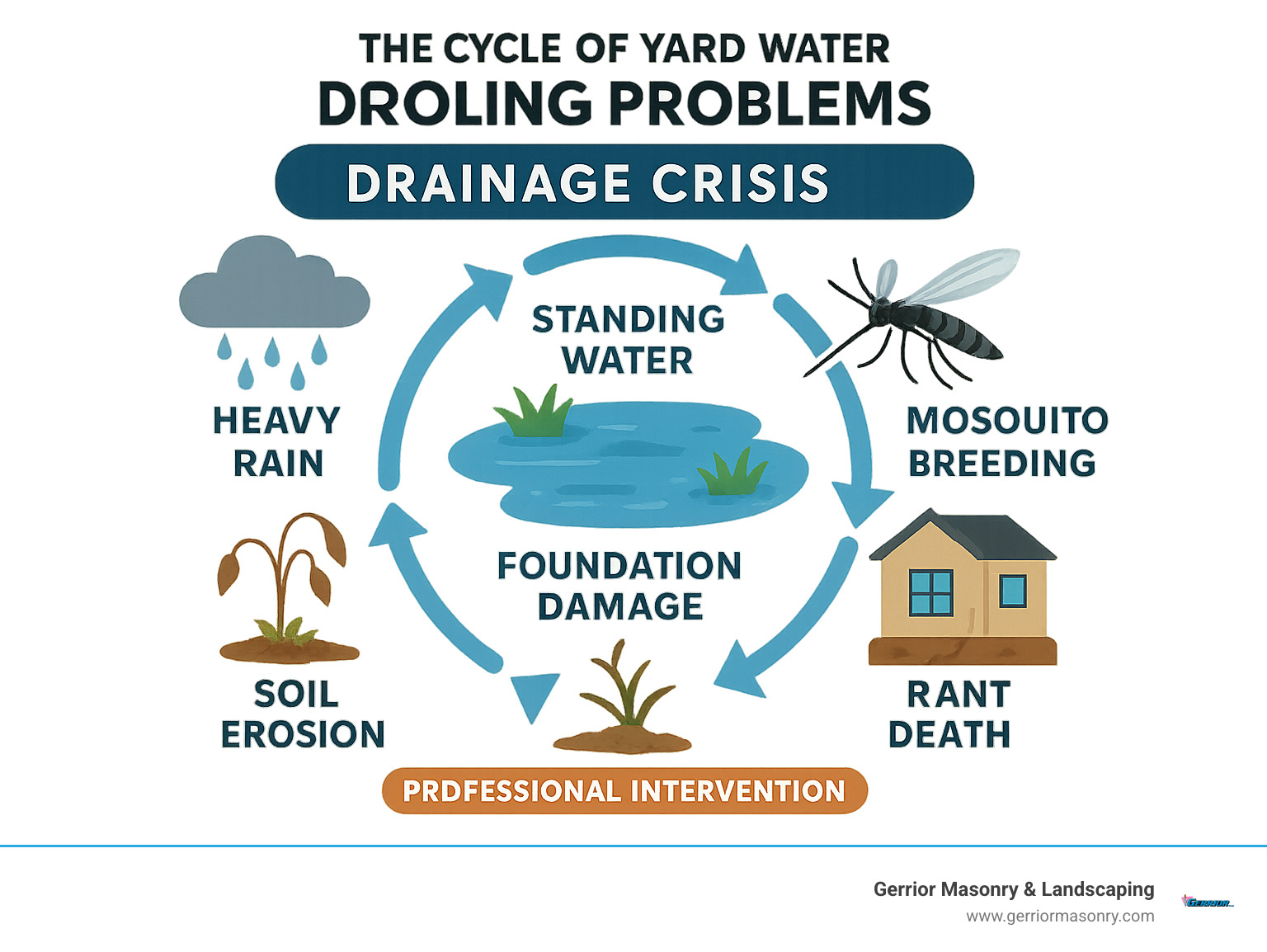
Key terms for fixing pooling water in yard:
- Residential drainage solutions
- drainage around foundation
- drainage system around the house
Your Action Plan for Fixing Pooling Water in Your Yard
The good news is that fixing pooling water in your yard is doable once you find the cause. Think of it like being a detective—we need to find the culprit to solve the case.
With over 30 years of experience helping Massachusetts homeowners, I’ve found most drainage problems have a few common causes. Let’s walk through identifying and tackling the issue in your yard.
Step 1: Identify the Root Cause
Your yard’s drainage problem has a cause. Sometimes it’s an obvious low spot where puddles form; other times, water appears mysteriously after a storm.
Soil problems are often the hidden villains. Compacted soil acts like concrete, preventing water penetration. It can be caused by heavy construction equipment or years of foot traffic. I’ve seen new homes flood because crews compressed the soil.
Clay soil also presents challenges. Its tiny particles pack together, creating a dense barrier that water struggles to penetrate.
Even trickier is hardpan, a rock-hard layer of compressed soil. Water hits this underground wall and backs up. Thatch buildup can also block water, often combined with other issues.
Grading problems are easier to spot. After a rainstorm, walk your yard and note where water collects. These low spots act like bathtubs. More concerning is a negative slope—when your yard slopes toward your house, sending water straight to your foundation.
Don’t overlook water runoff issues from your roof and hardscaping. Clogged gutters and short downspouts dump massive amounts of water next to your foundation. Large impermeable patios and driveways shed water instead of absorbing it, overwhelming nearby soil.
Sometimes the problem runs deeper. A high water table means groundwater sits close to the surface, saturating the soil. Broken water lines can also create mysterious soggy spots that persist even in dry weather.
Step 2: DIY Fixes for Minor Water Pooling in Your Yard
Once you’ve identified the cause, many minor pooling problems can be tackled with a weekend DIY effort, often preventing bigger issues later.
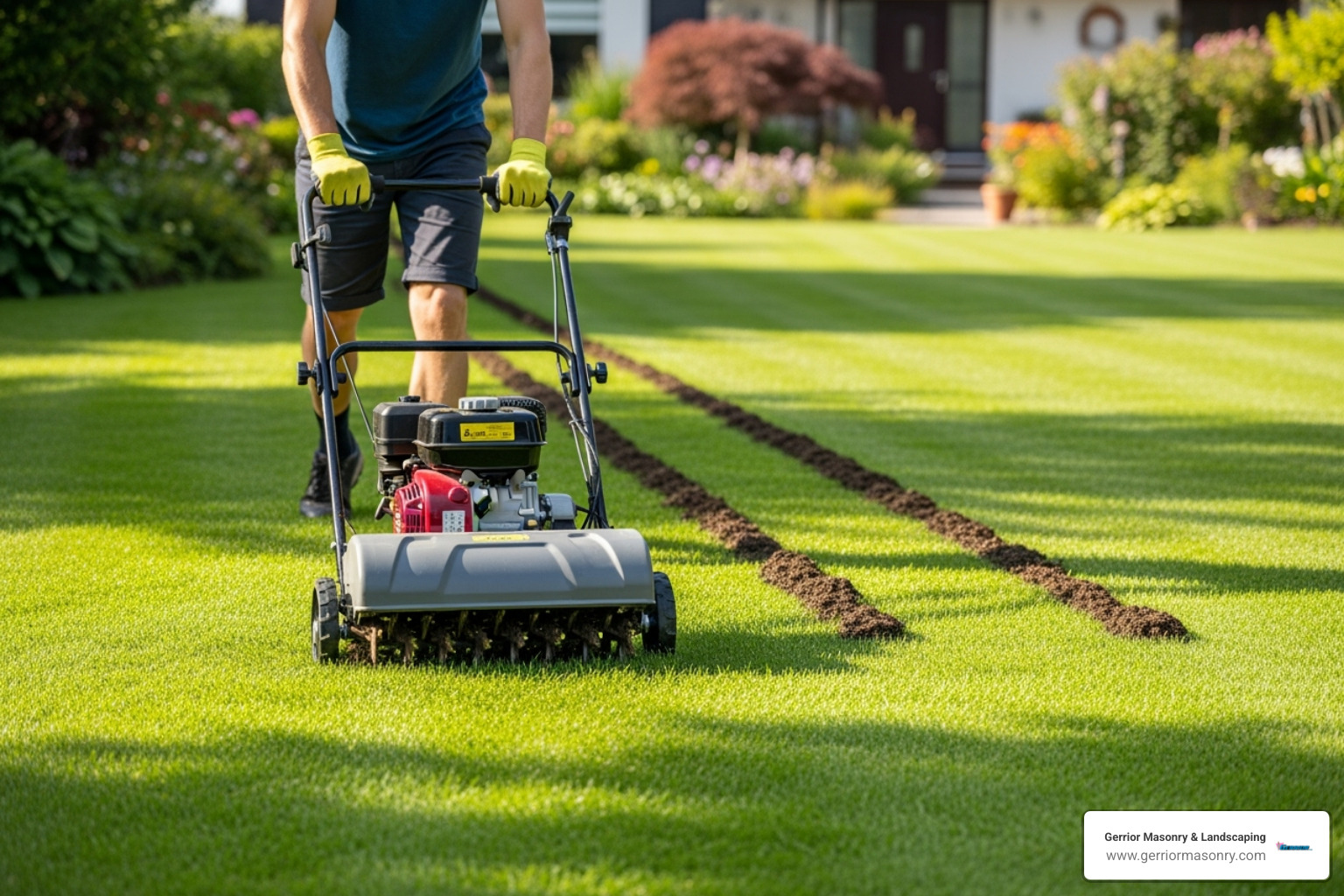
Improving soil health is an effective first step. Core aeration helps compacted soil by allowing water, air, and nutrients to penetrate. You can rent an aerator or hire a lawn service; I recommend annual aeration for clay soil.
After aeration, top dressing with compost adds organic matter. Compost helps soil absorb and hold water while improving drainage. For small low spots, mixing compost with topsoil creates an excellent fill.
Managing roof runoff provides immediate relief. Clean your gutters twice yearly to prevent hundreds of gallons from dumping next to your foundation.
Extending your downspouts at least four feet from your house prevents this concentrated water dump. Simple extensions are inexpensive and can solve many pooling problems.
Optimizing your watering schedule can also help. Overwatering contributes to drainage issues. Try the sprinkler’s water output test; most lawns only need about an inch of water weekly. Deep, infrequent watering encourages stronger roots that help with drainage.
If you’re feeling overwhelmed, our Landscaping for Drainage services can help you implement these solutions effectively.
Step 3: Use Landscaping to Manage Excess Water
Sometimes the best solution is working with the water. Strategic landscaping can transform a soggy area into a beautiful, functional feature that manages excess water.
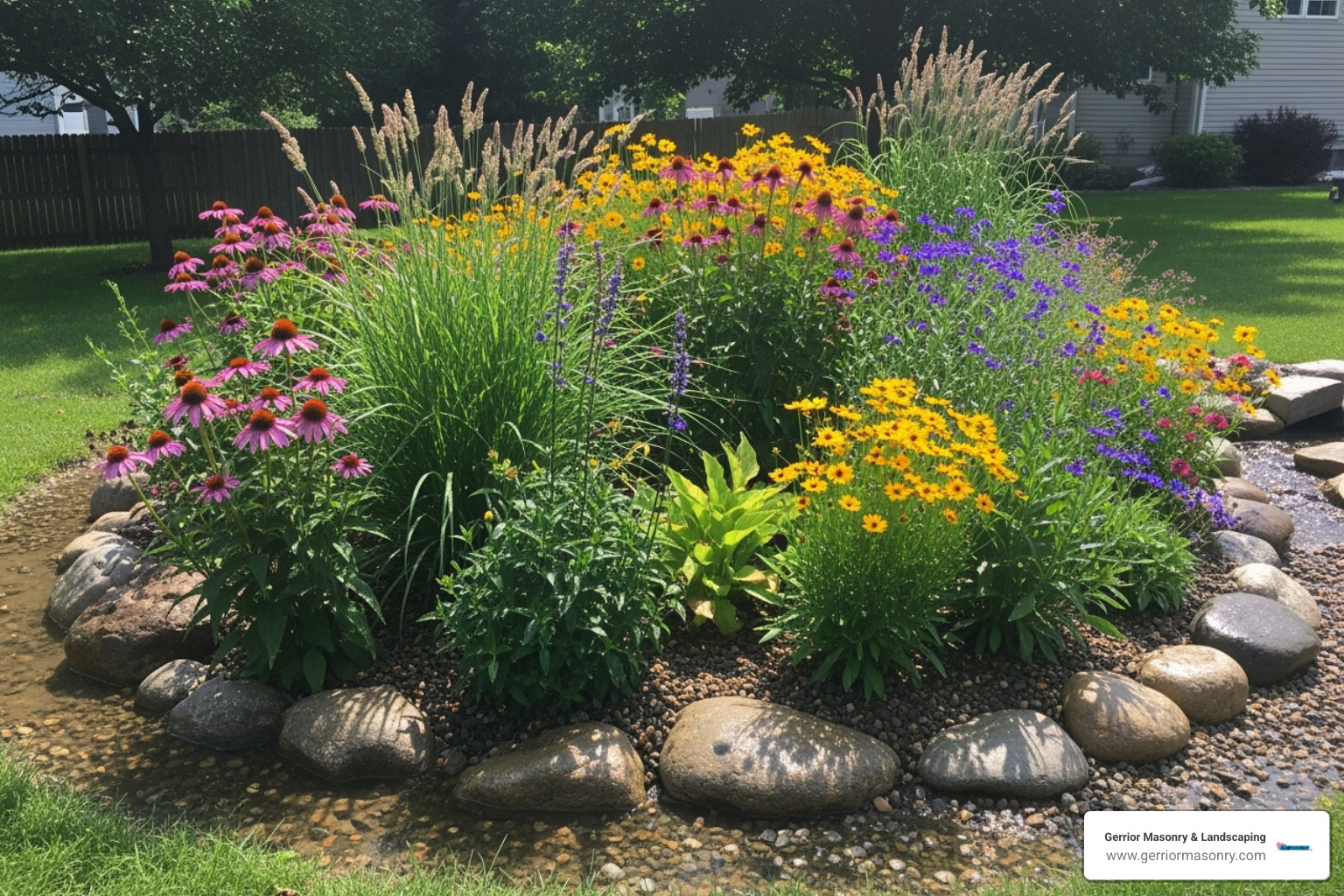
Installing a rain garden turns a drainage problem into an attractive feature. These shallow depressions collect runoff from your roof and driveway, allowing it to slowly soak into the ground. How to build a rain garden can be a rewarding DIY project. Bio-swales work on the same principle but are designed as natural drainage channels.
Choosing water-tolerant plants for wet areas makes more sense than replanting grass that keeps dying. Daylilies, primrose, and violets add beautiful color to damp spots. These plants are tolerant of wet sites and will thrive where lawn grass struggles.
Installing permeable hardscapes addresses the root cause of runoff from solid surfaces. Permeable pavement options like porous pavers and gravel walkways allow water to soak through. These materials can look as attractive as traditional hardscaping while solving water problems.
For complex hardscaping solutions that integrate drainage with beautiful outdoor living spaces, see how our hardscaping services can transform problematic areas into functional, attractive features.
When Professional Drainage Solutions Are Necessary
Some yard water problems are too big for a DIY approach. Trying to fix major drainage issues yourself can make things worse. Knowing when to call a professional saves you from costly mistakes and protects your foundation.
Warning Signs That You Need an Expert
After 30 years of fixing pooling water in yard problems, I know the red flags that mean it’s time to call for help.
Water pooling near your foundation is the biggest warning sign. Water against your foundation risks cracks, basement flooding, and costly structural damage. This isn’t a future problem—it’s happening with every rain.
Basement dampness or flooding indicates your exterior drainage has failed. A musty smell, damp walls, or water in your basement means water is getting where it shouldn’t. We offer more info about basement waterproofing for these issues.
Persistent puddles and large swampy areas that last for days after rain show your soil can’t handle the water load. I’ve walked yards that are still soggy a week after rain—that’s not normal and won’t fix itself.
Significant soil erosion creates channels and gullies that worsen with every storm. Erosion accelerates quickly, undermining hardscaping, plants, and even structures.
Suspected broken pipes can be tricky. Unexplained soggy spots or a spike in your water bill could mean a broken underground pipe that needs professional diagnosis.
An Overview of Advanced Drainage Systems
When DIY solutions fail, we use proven drainage systems to handle serious water volumes and redirect them permanently.
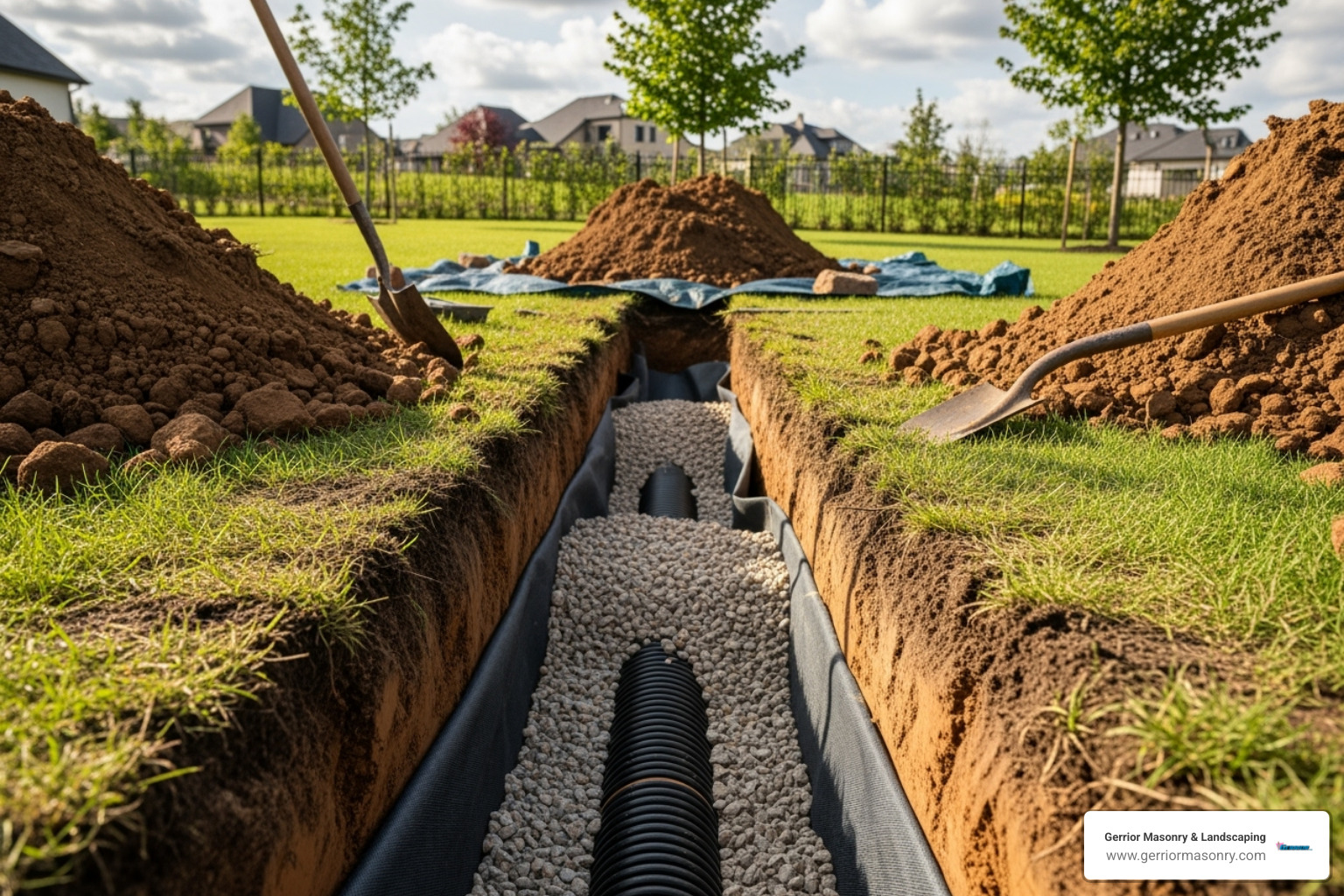
French drains are the workhorses of drainage. It’s an underground highway for water. We dig a sloped trench, line it with fabric, fill it with gravel, and install a perforated pipe. This system collects and carries water away from problem areas to a safe discharge point, intercepting water before it becomes a problem. Learn more in our French Drains Explained guide.
Dry wells act like underground reservoirs. It gives water a place to go instead of flooding your yard. We build them as gravel-filled pits or install chambers to hold runoff from downspouts or French drains until the ground can absorb it.
Cost considerations are important. Based on industry averages (not our pricing), French drain installations can run $2,800 to $6,500, with complex projects costing more. Dry well costs generally range from $1,165 to $4,420. These are average costs based on internet data and not actual costs for Gerrior Masonry services; we provide custom quotes.
The Ultimate Solution: Professional Help for Fixing Pooling Water in Your Yard
For persistent drainage problems, professional help is the most effective, permanent solution. We bring specialized equipment, decades of experience, and a deep understanding of how water moves through Massachusetts landscapes.
Yard regrading addresses improper slope. Your yard should direct water away from your house. According to Turf Magazine, proper grading means at least a 2% slope away from your foundation (a 6-inch drop over 10 feet). This sometimes requires swale construction to guide water flow naturally.
For major regrading, costs typically range from $0.08 to $2.00 per square foot, though complex jobs can reach $6.00+ per square foot. Again, these are average costs based on internet data and not actual costs for Gerrior Masonry services.
Why choose Gerrior Masonry & Landscaping? After 30+ years of fixing pooling water in yard issues in Massachusetts, we understand our region’s unique soil and weather. Our commitment to quality sets us apart—I personally oversee every project from assessment to final grading.
Our team knows effective drainage is about more than moving water—it’s about protecting your foundation, preserving your landscape, and giving you a yard you can enjoy. We solve the underlying problem, not just the symptom, so you won’t face the same soggy mess again.
Whether you need a French drain or complete yard regrading, we have the experience to reclaim your yard and protect your home’s value. Contact us for a custom drainage solution for your property and budget.
Gerrior Masonry & Landscape Construction Corp. is based in Woburn, MA, and we proudly serve homeowners throughout Middlesex and Essex County, Massachusetts. For more on our drainage solutions, visit our drainage systems and dry wells page.
Conclusion
Your soggy yard doesn’t have to stay that way. Fixing pooling water in your yard is about more than eliminating puddles—it’s about protecting your foundation, getting rid of mosquito breeding grounds, and reclaiming your outdoor space.
This guide provided a complete action plan, from identifying compacted soil or poor grading to implementing solutions like French drains and rain gardens. The key is a correct diagnosis and choosing the right approach for your situation.
Many homeowners can tackle minor pooling with DIY fixes like aeration, cleaning gutters, and extending downspouts. But for persistent puddles, water near your foundation, or large swampy areas, it’s time to call the professionals.
At Gerrior Masonry & Landscape Construction Corp., we’ve spent over 30 years helping Massachusetts homeowners transform soggy yards into beautiful, functional spaces. Whether you need yard regrading, a full drainage system, or other water management features, our expertise ensures the job is done right.
Don’t let standing water damage your property value or limit your yard’s use. The problem can get worse—and more expensive to fix—the longer you wait.
Ready to say goodbye to puddles for good? Contact us for a custom drainage solution for your property’s unique challenges. For more details on our professional drainage solutions, visit our drainage systems page.
Gerrior Masonry & Landscape Construction Corp. is based in Woburn, MA, and proudly services Middlesex County and Essex County, Massachusetts.
