
Foundation crack repair: Your 1 Essential Guide
Why Foundation Crack Repair Can’t Wait
Foundation crack repair is essential for protecting your home’s structural integrity and value. Here’s a quick guide to understanding the urgency.
Quick Answer: What to Do About Foundation Cracks
- Hairline vertical cracks (< 1/8″): Often non-structural. May be a DIY fix with epoxy kits ($100-$400).
- Horizontal or diagonal cracks: Signal serious structural issues. Require professional repair ($1,200-$50,000+).
- Active leaking cracks: Need immediate professional attention, often with polyurethane injection.
- Cracks wider than 1/4″: Always contact a foundation specialist for an assessment.
- Professional repairs: Include warranties and a proper diagnosis of the underlying cause.
The sight of a crack in your foundation is unsettling for a good reason. These aren’t just cosmetic flaws; they are warnings that, if ignored, can lead to thousands of dollars in damage. While most foundation cracks are fixable, knowing which ones need an expert is key. Repair costs can range from a few hundred dollars to over $50,000 for major structural work.
The financial stakes are high. Homes with foundation problems often sell for 10-20% less than their market value. This is a significant loss on your largest investment.
I’m Joe Gerrior, owner of Gerrior Masonry & Landscape Construction Corp. For over 34 years, I’ve helped Massachusetts homeowners solve foundation crack repair challenges. In this guide, I’ll share what you need to know to protect your home and make informed decisions.
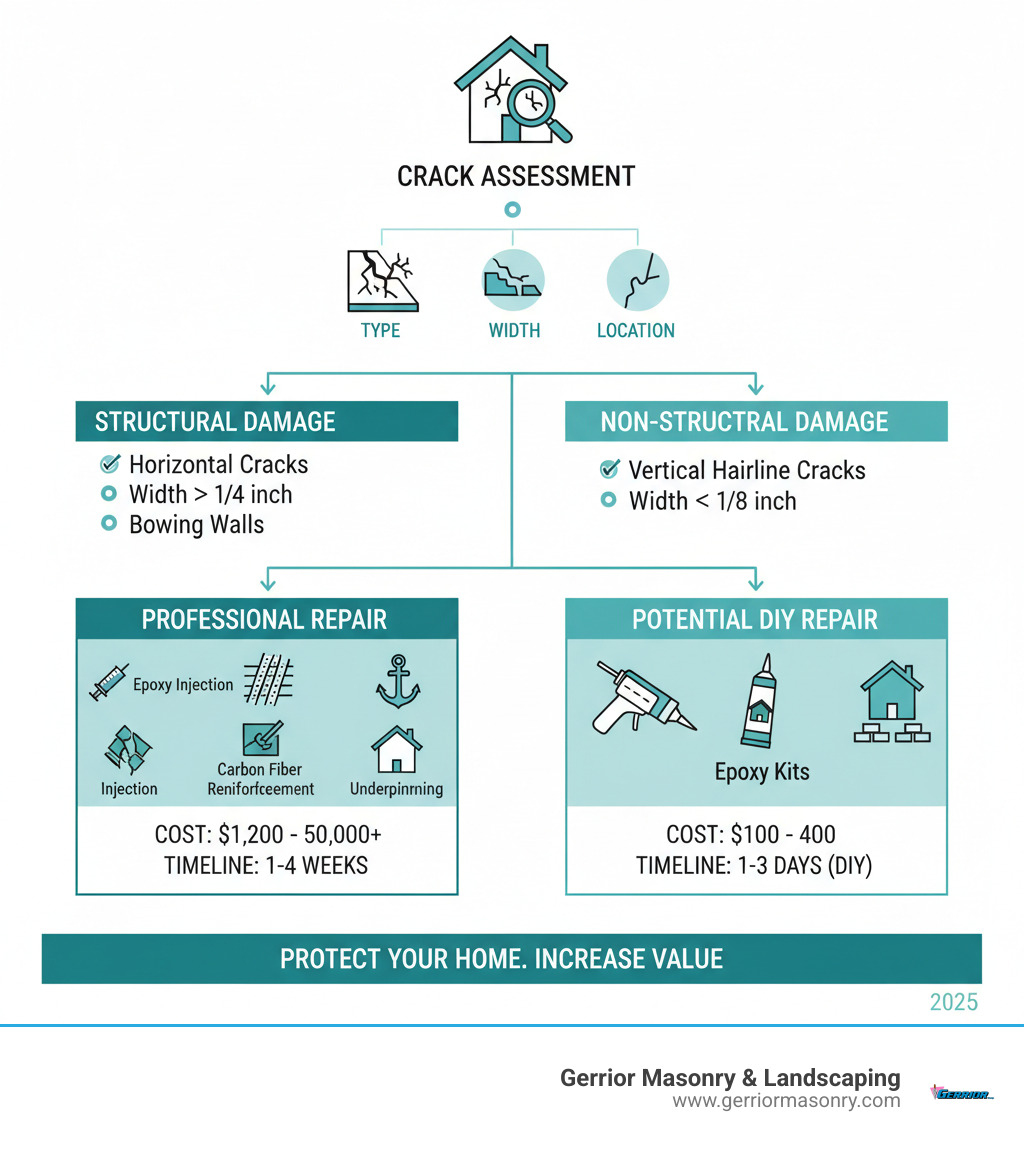
Foundation crack repair terms at a glance:
Understanding the Signs and Causes of Foundation Damage
Your foundation communicates through cracks. Learning to interpret them can save you thousands. Some are harmless, but others require immediate attention.
How to Identify Different Types of Foundation Cracks
Every crack tells a story. Here’s how to read them:
- Vertical cracks: The most common type. Usually, hairline cracks (less than 1/8″ wide) from concrete curing are not a major concern. However, if they widen or leak, they need a closer look.
- Horizontal cracks: These are a red flag. A crack running parallel to the floor indicates intense external pressure from soil or water, which can cause walls to bow. As Realtor.com notes, these are the most serious cracks and require a professional.
- Diagonal cracks: These cracks, running at a 30- to 75-degree angle, often point to uneven foundation settlement. A wide or growing diagonal crack is a sign of a significant problem.
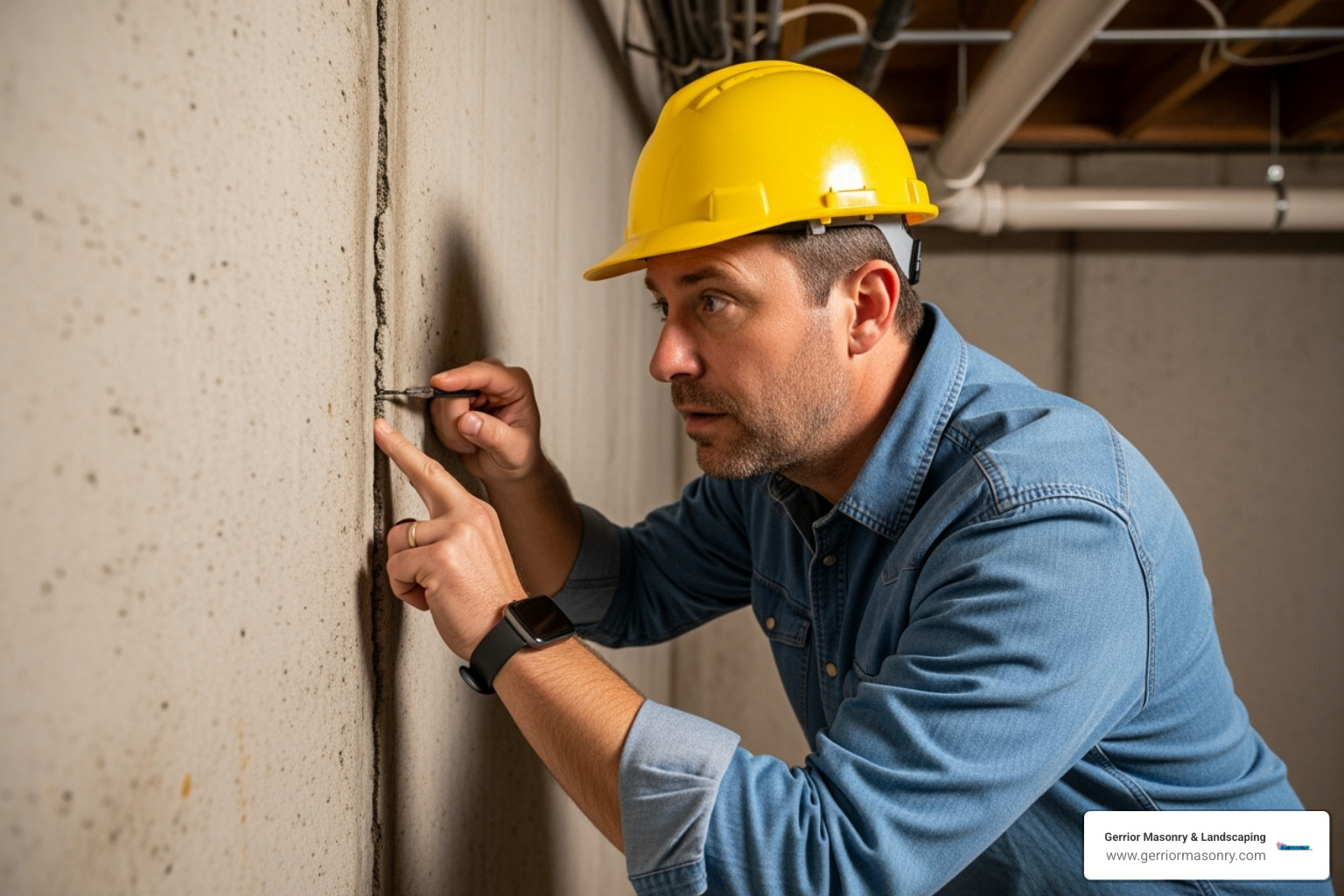
- Stair-step cracks: Found in block or brick foundations, these follow the mortar lines and almost always indicate differential settlement. Pay close attention to these in a cinder block foundation or stone foundation.
Crack width is a critical factor. Any crack wider than 1/4 inch needs a professional inspection. If water is seeping through any crack, regardless of size, call for help immediately to prevent mold and further damage.
Other warning signs include sticking doors and windows, sloping floors, cracks in drywall, and bowing basement walls. Water pooling near your foundation after rain is also a major red flag.
What’s Causing Your Foundation to Crack?
Fixing a crack without addressing its cause is a temporary solution. Most issues stem from soil and water.
- Foundation Settlement: The soil beneath your home can shift or compress, especially if it wasn’t properly compacted or if moisture levels change (like during a drought). This causes the foundation to settle unevenly, leading to cracks.
- Expansive Soil & Hydrostatic Pressure: Clay soils expand when wet and shrink when dry, exerting immense pressure on foundation walls. Similarly, water accumulating in the soil creates hydrostatic pressure, pushing against your basement and forcing its way through any weak point. This is why proper drainage around foundations is non-negotiable.
- Other Causes: Some minor hairline cracks form as concrete cures. In New England, the constant freeze-thaw cycle of winter also puts stress on foundations. Even tree roots planted too close can draw moisture from the soil or grow into existing cracks.
Identifying the root cause is the first step in any effective foundation crack repair strategy.
Gerrior Masonry & Landscape Construction Corp. is based in Woburn, MA, and proudly serves homeowners throughout Middlesex and Essex County, Massachusetts.
A Homeowner’s Guide to Foundation Crack Repair Solutions
Once you’ve identified a crack, the next step is finding the right solution. There’s a repair method for nearly every issue, from simple patches to comprehensive structural interventions. For an overview, see our Foundation Repair page or learn What is Foundation Repair.
Common Methods for Foundation Crack Repair
The right method depends on the crack’s type, severity, and cause.
- Epoxy Injection: Ideal for dry, non-structural cracks. Epoxy bonds the concrete, creating a seal that’s stronger than the original material. While DIY kits exist, professional application ensures a superior, lasting bond.
- Polyurethane Foam Injection: The go-to for actively leaking cracks. Polyurethane reacts with water and expands to create a flexible, watertight seal that can move with the foundation’s natural shifts.
- Carbon Fiber Reinforcement: Used for structural issues like horizontal cracks or bowing walls. Strong carbon fiber straps are applied across the crack to stabilize the wall and prevent further movement.
- Underpinning or Piering: A heavy-duty solution for significant foundation settlement. This process extends the foundation down to more stable soil using steel piers, effectively correcting the settlement.
- Wall Anchors: These are used to correct bowing or bulging walls by anchoring the wall to stable soil away from the foundation, gradually pulling it back into place.
- Hydraulic Cement: A quick-setting material for patching minor, non-structural leaks. It’s a temporary fix and not suitable for moving or structural cracks.
- Repointing: For masonry foundations, this involves replacing deteriorated mortar in the joints to restore the wall’s integrity. We specialize in Foundation Repointing.
Analyzing the Costs of Foundation Crack Repair
Foundation crack repair costs vary widely. Disclaimer: The prices below are average estimates based on internet data and industry standards, not a quote for our services. We provide a detailed quote after a thorough assessment.
- DIY Repair Kits: Epoxy or polyurethane kits range from $75 to $400. Hydraulic cement is about $15-$20. These are for minor, non-structural issues only.
- Professional Non-Structural Repair: For interior injections, costs typically range from $500 to $2,700+.
- Professional Structural Repair: Methods like carbon fiber, wall anchors, or underpinning are more involved. Costs can range from $1,200 to $50,000+, with severe cases costing more.
- Exterior Foundation Repair: This requires excavation and is the most intensive option, often starting at $5,000 and exceeding $15,000+.
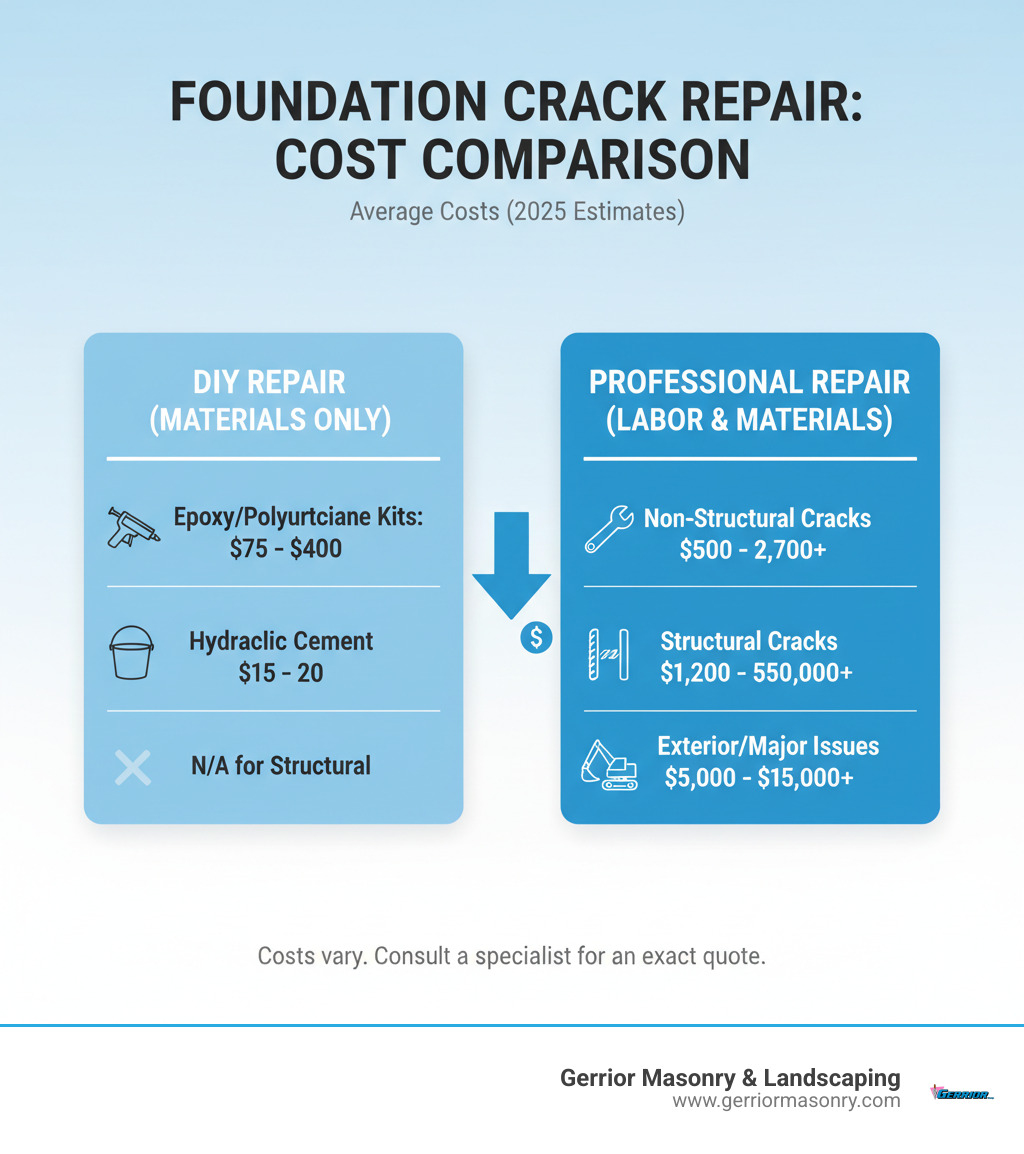
| Repair Type | DIY Average Cost | Professional Average Cost |
|---|---|---|
| Epoxy/Polyurethane Kits | $75 – $400 | N/A |
| Non-Structural Crack | N/A | $500 – $2,700+ |
| Structural Crack | N/A | $1,200 – $50,000+ |
| Exterior Crack Repair | N/A | $5,000 – $15,000+ |
| Foundation Inspection | Free (visual) | Free – $300 |
Remember: These are average costs based on internet data and not actual costs for Gerrior Masonry & Landscape Construction services. Your actual costs will depend on your foundation’s specific conditions.
The Risks of DIY vs. The Benefits of Professional Service
While DIY can seem tempting, your home’s foundation isn’t the place to experiment. The risks often outweigh the savings.
DIY Risks:
- Misdiagnosis: Mistaking a structural crack for a cosmetic one can lead to disaster.
- Improper Application: An incomplete seal will fail, allowing water intrusion to continue.
- No Warranty: If the repair fails, you’re back at square one, often with a bigger problem.
Professional Benefits:
- Expert Diagnosis: We identify the crack and its root cause to provide a permanent solution.
- Pro-Grade Materials: We use materials engineered for long-term durability.
- Warranties: Our work is backed by a comprehensive, often transferable warranty, protecting your investment.
- Comprehensive Solutions: We can address related issues like drainage through our full Masonry Service.
- Peace of Mind: Knowing your home is structurally sound is invaluable.
Protect Your Investment: When to Call the Pros
Now for the most important question: when is it time to call a professional? When it comes to your foundation, it’s always better to be safe than sorry. A small issue today can become a catastrophe tomorrow.
Is It a Structural Crack? Signs You Need an Expert Now
Don’t gamble with your home’s stability. Call a professional immediately if you see any of these signs:
- Horizontal cracks of any size.
- Any crack wider than 1/4 inch.
- Bowing or bulging foundation walls.
- Stair-step cracks in a block or brick foundation.
- Multiple cracks appearing in different areas.
- Cracks that are actively growing in length or width.
- Water seeping through any crack.
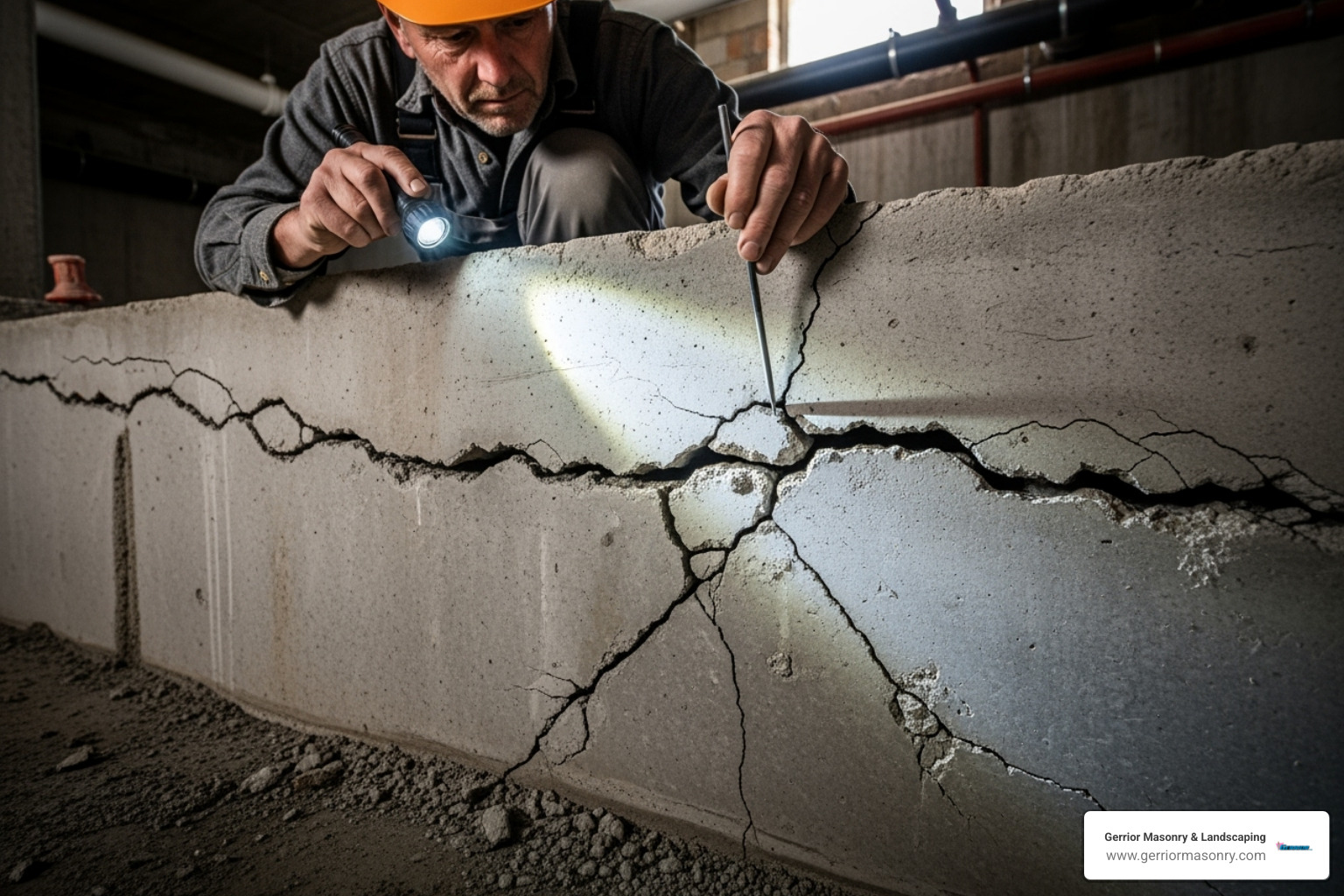
As a Realtor.com article states, horizontal and jagged cracks are the most serious. Also, pay attention to indirect signs like sticking doors, uneven floors, or new cracks in drywall. If water is getting in, you need both foundation crack repair and a Waterproof Foundation solution.
My advice after 34 years: if you’re unsure, get a professional inspection. It’s a small step that can prevent a financial disaster.
How Foundation Repair Protects Your Home’s Value
Your home’s value rests on its foundation. Ignoring problems is like letting money drain away. A crack that costs $800 to fix today could become a $15,000 problem if left alone.
Professional foundation crack repair stops this domino effect. It prevents further damage and addresses the root cause, protecting your entire home structure.
Consider this: homes with known foundation issues often need a 10-20% price reduction to sell. On a $400,000 home, that’s a potential loss of $40,000 to $80,000.
A professionally repaired foundation with a transferable warranty changes everything. When selling your home, you must disclose known issues. Disclosing an unrepaired crack can kill a deal. Disclosing a professionally repaired crack with a warranty is a sign of a well-maintained home.
Restoring your foundation’s integrity makes your home safe for your family and protects its future value. At Gerrior Masonry & Landscape Construction, our Foundation Repair services provide lasting solutions that protect your investment.
When choosing a contractor, look for experience, proven methods, and strong warranties. Get multiple proposals and verify their credentials. You can learn more on our Masonry Contractors Near Me page.
Gerrior Masonry & Landscape Construction is based in Woburn, MA, and services Middlesex and Essex County, Massachusetts.
