
French Drain Channel: Expert 2025 Protection
Why Understanding French Drain Channels Can Save Your Property
When homeowners search for french drain channel solutions, they’re often dealing with water pooling around their foundation, soggy lawns, or flooding driveways. Understanding the key differences between drainage systems can prevent costly water damage and protect your property investment.
Quick Answer: French Drain vs. Channel Drain Systems
- French Drains: Underground perforated pipes surrounded by gravel that collect subsurface groundwater
- Channel/Trench Drains: Surface-level linear drains with grates that collect surface water runoff
- Best for French Drains: Saturated soil, foundation protection, lawn drainage
- Best for Channel Drains: Driveways, patios, pool decks, paved surfaces
The confusion often stems from terminology. As one drainage expert noted: “French drains are essentially a trench drain that is not supported by a channel drain system or covered by a grating.” The core difference is simple: French drains handle water under the ground, while channel drains handle water on top of surfaces. Choosing the wrong one can lead to expensive repairs.
I’m Joe Gerrior, owner of Gerrior Masonry & Landscape Construction, and over 34 years I’ve installed hundreds of french drain channel systems throughout Massachusetts. My team has seen how proper drainage system selection prevents foundation damage and protects property values.
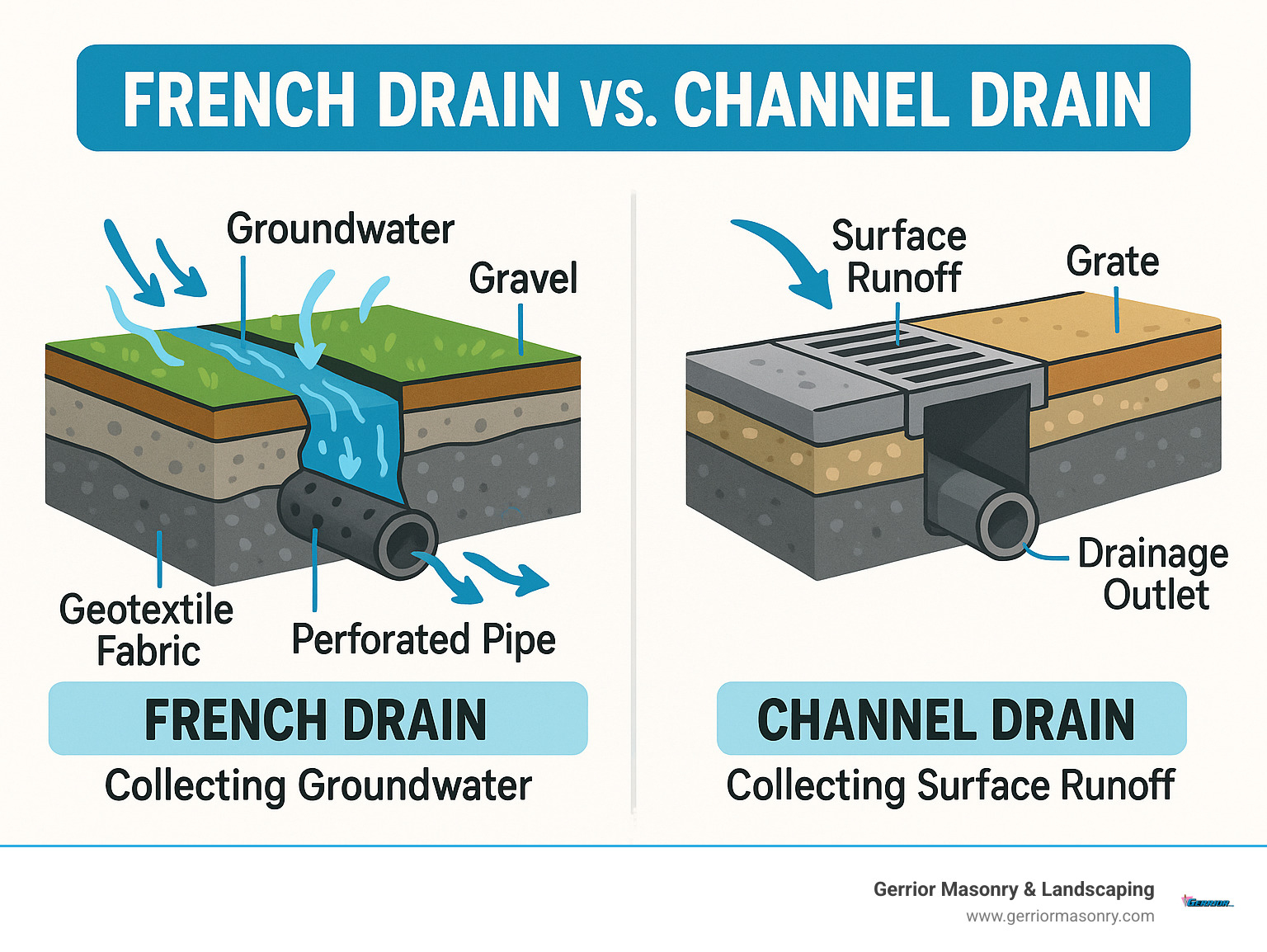
Quick french drain channel definitions:
Choosing Your Solution: French Drain vs. Trench (Channel) Drain
When faced with water problems, the first step is identifying the source. Is water pooling on paved surfaces, or is your lawn always soggy? The answer determines whether a French drain or a trench drain is the right solution.
What’s the Difference? Core Functions and Applications
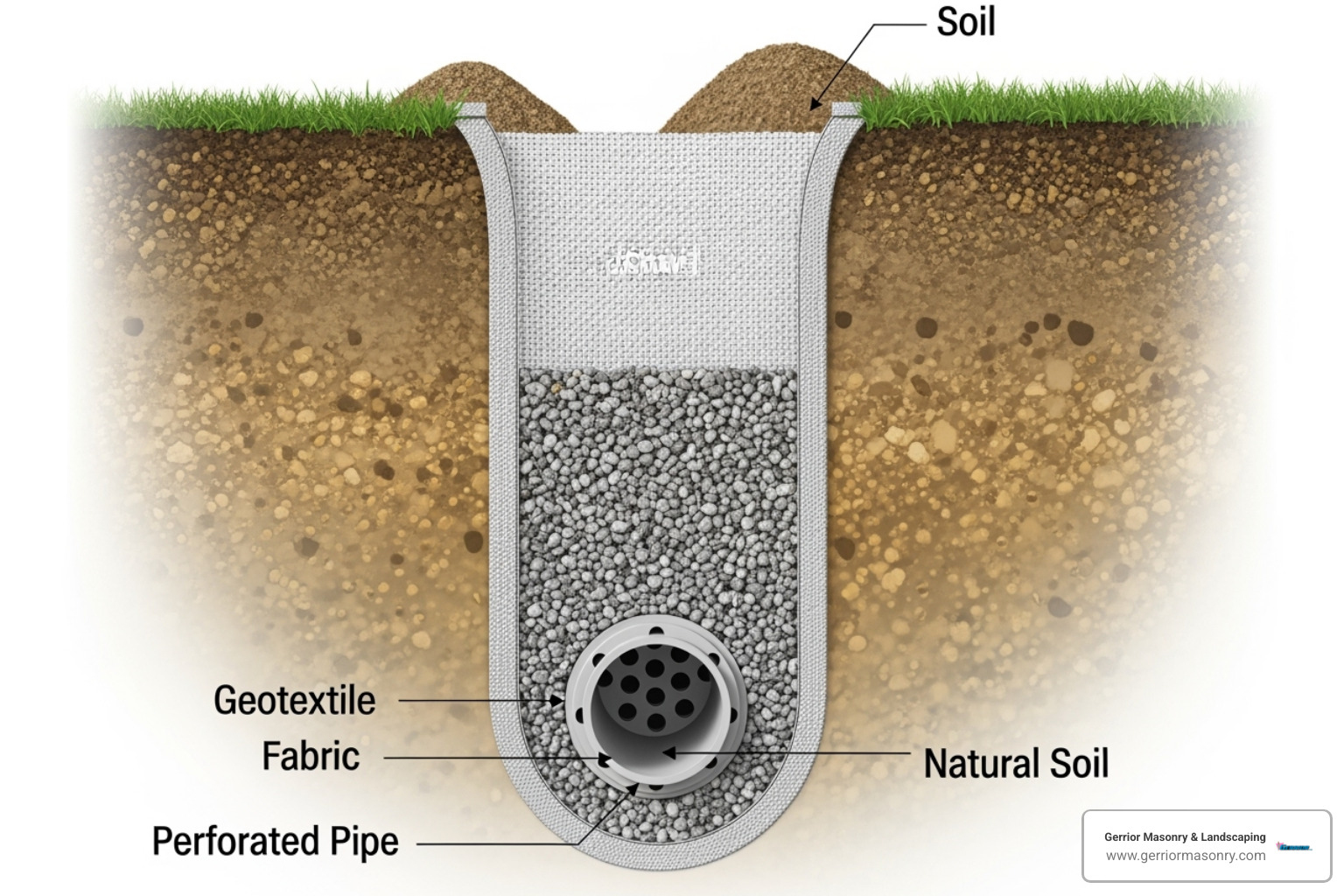
The primary distinction lies in their purpose. A French drain manages subsurface groundwater. It’s an underground system with a perforated pipe and gravel that collects water from saturated soil, directing it away from foundations to prevent soggy lawns and basement moisture. Its main components are a trench, a perforated pipe, and gravel, often wrapped in landscape fabric to prevent clogging.
A trench drain (or channel drain) tackles surface water runoff. It’s a grated channel installed on hardscapes like driveways, patios, and pool decks to quickly capture and divert flowing water, preventing pooling, erosion, and slip hazards. For more information, visit our drainage system services page or read the scientific research on French Drains.
Installation and Materials: What to Expect
French drain installation involves digging a trench, lining it with geotextile fabric, laying a perforated pipe, and backfilling with gravel. The system is then covered with soil, making it invisible. Trench drain installation involves setting pre-formed channels into a shallow trench—often encased in concrete for stability—and topping them with a removable grate.
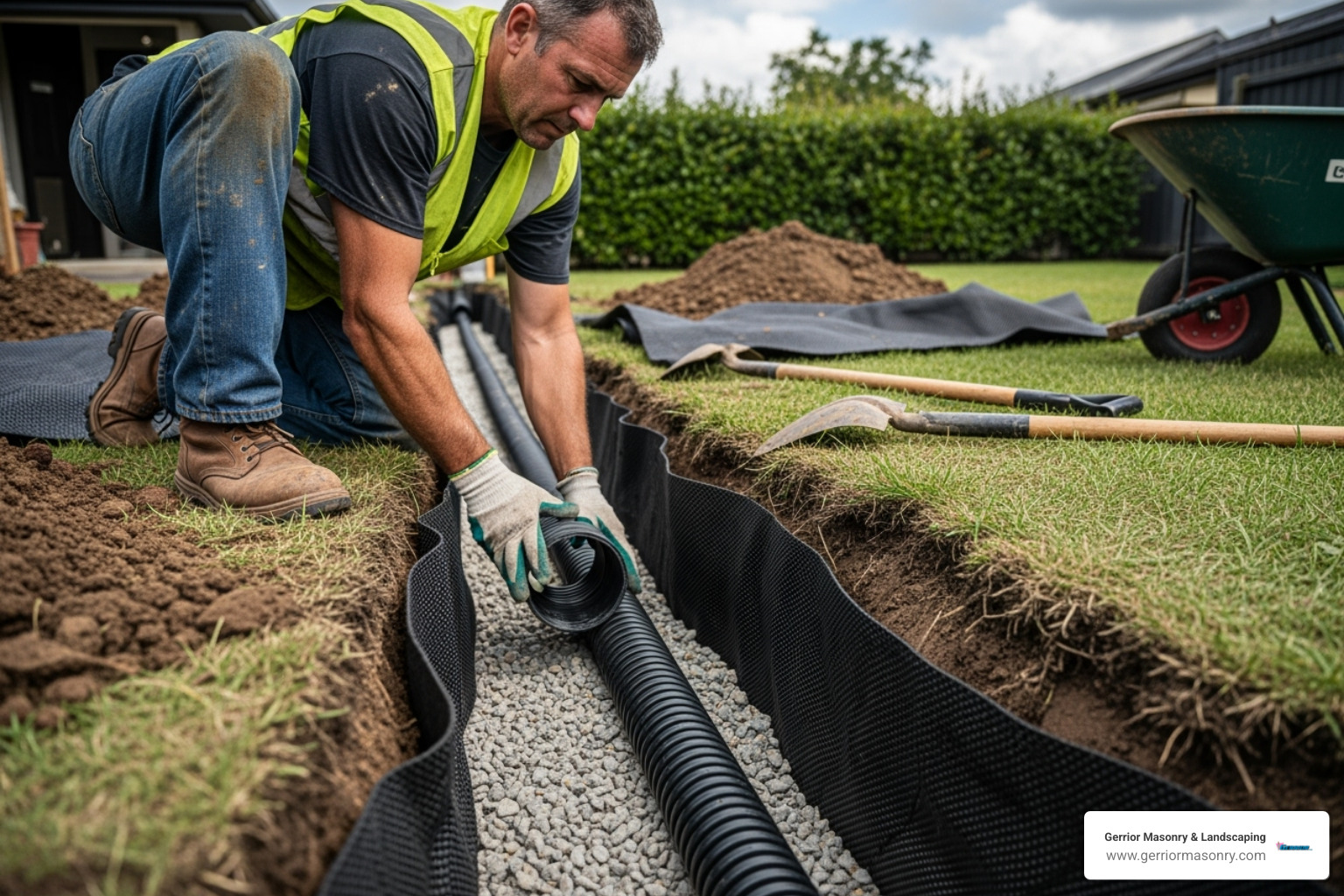
Materials for French drains include perforated pipe, gravel, and geotextile fabric. Trench drains use more robust materials like PVC or polymer channels and grates made of plastic, steel, or cast iron, chosen for durability and load-bearing needs. Our hardscaping services seamlessly integrate these solutions into your landscape.
Pros, Cons, and Common Failure Points
Each system has its strengths and weaknesses.
| Feature | French Drain | Trench (Channel) Drain |
|---|---|---|
| Primary Function | Collects subsurface groundwater | Collects surface water runoff |
| Visibility | Mostly invisible once installed (underground) | Visible, with a grate on the surface |
| Aesthetic Impact | Minimal, can be covered with landscaping | Can be decorative, but is a prominent feature |
| Installation Depth | Typically deeper (18-36 inches) | Shallower, often just below surface level |
| Maintenance Access | Difficult to access for repairs or deep cleaning | Easy to access by removing grates |
| Clogging Risk | High if fabric/sock is not used or fails; roots | Lower, but debris can accumulate if not cleaned |
| Best for | Soggy lawns, foundation protection, high water table | Driveways, patios, pool decks, high-traffic areas |
| Water Volume | Manages steady groundwater seepage | Handles high volumes of rapid surface runoff |
French drains are excellent for discreetly protecting foundations but are difficult to access and can clog with silt or roots if not installed properly. Trench drains are durable, handle high water volume, and are easy to clean, but they are a visible element on your hardscape.
Common failure points for both systems include clogging from debris or silt, an improper slope that impedes water flow, and inadequate capacity for the water volume. Professional installation is key to avoiding these issues, which can compromise your foundation. Learn more about our foundation repair services.
Making the Right Choice for Your Property
Deciding between systems requires a site assessment.
A French drain is suitable for:
- Soggy lawns or gardens with poor soil drainage.
- Protecting foundations from groundwater seepage.
- Preventing basement or crawl space flooding.
A trench drain is suitable for:
- Driveways, especially those sloping toward a garage.
- Patios, pool decks, and walkways to keep them dry and safe.
- High-traffic areas needing rapid water removal.
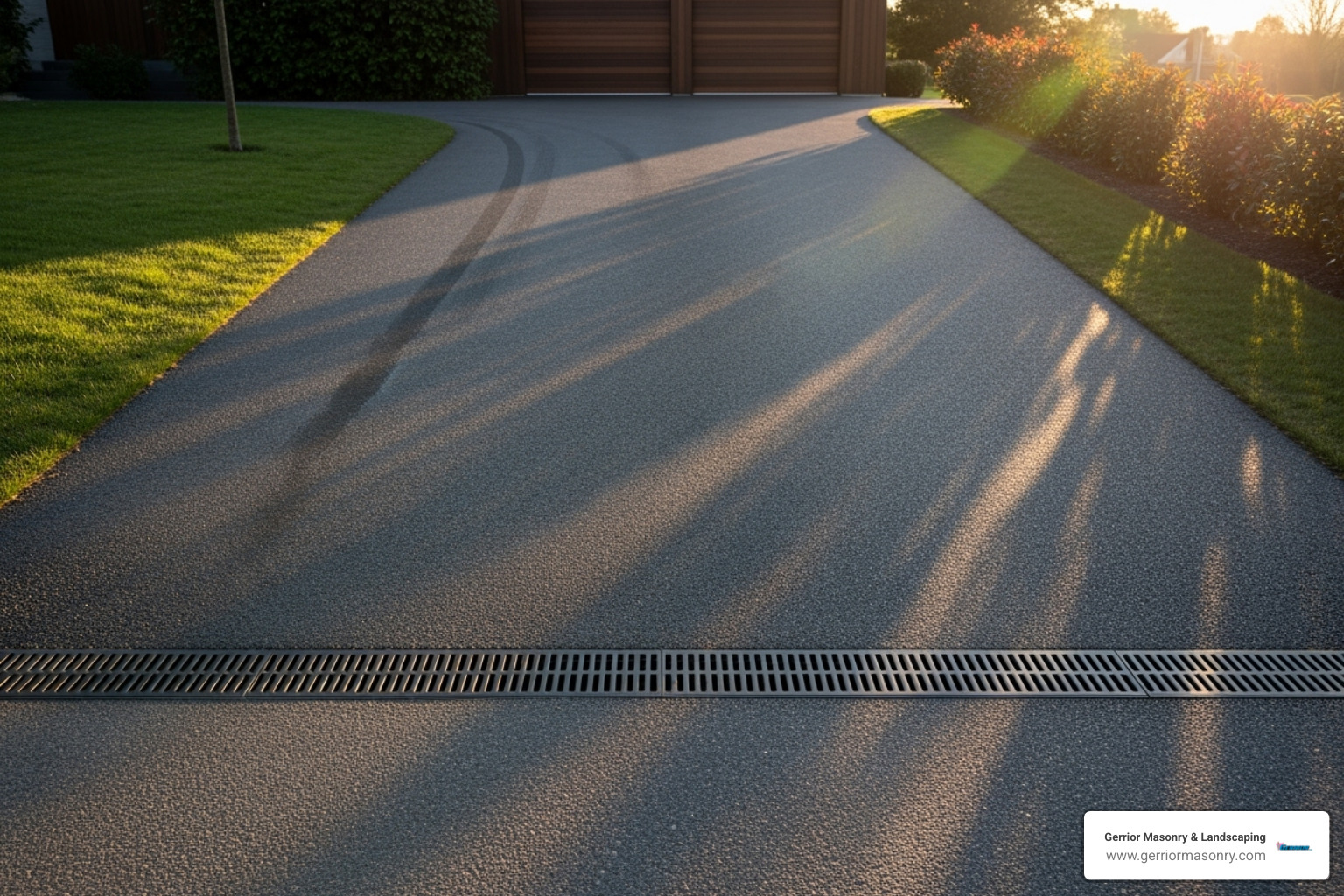
Factors like property slope, soil type, and expected water volume are critical. High-volume surface runoff points to a trench drain, while consistently saturated soil suggests a French drain. We can help integrate these into your patio design and installation.
Sizing, Customization, and Load Class for Your Trench Drain Channel
Proper sizing and customization are key for trench drains.
- Sizing: Channel width and depth are chosen based on the anticipated flow rate to prevent overflows.
- Customization: Systems are modular and can be cut to any length. Radius drains are available for curved applications like pools and walkways.
- Load Classes: The grate’s load class must match the traffic it will bear. Class A is for pedestrians, Class B for cars (driveways), and Class C and higher for heavy commercial vehicles. Choosing the correct class is vital for safety and durability on your walkways and stairs.
Long-Term Care for Your French Drain Channel System
Proper maintenance ensures longevity.
- Trench Drains: Clean them at least twice a year by removing the grates and sweeping out debris. This prevents clogs and ensures water flows freely.
- French Drains: These are lower maintenance, but their outlet should be checked regularly for clear flow. Reduced flow may indicate an internal clog that requires professional flushing.
Both systems protect your property. French drains prevent long-term foundation damage from groundwater, while trench drains stop immediate surface flooding on hardscapes. This proactive approach is part of our commitment to property protection, which includes services like foundation repointing.
Protect Your Property with the Right Drainage System
After reviewing both systems, the choice is simple: a French drain is your underground solution for soggy lawns and foundation protection, while a trench drain is your surface-level savior for pooled water on driveways and patios. Both are highly effective when correctly matched to the problem.
We can’t stress this enough: professional installation makes all the difference. We’ve seen many DIY drainage projects fail due to incorrect slope, poor design, or choosing the wrong system, leading to costlier repairs. Even some general contractors miss the nuances of proper drainage.
That’s where our experience shows. With owner oversight on every project and a skilled team that’s tackled hundreds of drainage challenges throughout Massachusetts, we know how to diagnose your specific water problem and implement a solution that will last for decades.
Investing in proper drainage isn’t just about fixing a puddle—it’s about protecting your property’s value for years to come by avoiding the high cost of water damage. Whether it’s a French drain to safeguard your foundation or a trench drain for your patio, we ensure your water flows in the right direction.
Ready to solve your drainage challenges once and for all? Contact us for expert drainage solutions and let’s create the perfect plan for your property.
Gerrior Masonry & Landscape Construction is based in Woburn, MA, and services Middlesex and Essex County, Massachusetts.
