
Front Yard Hardscaping: 10 Powerful Curb Appeal Ideas 2025
Transform Your Home’s First Impression
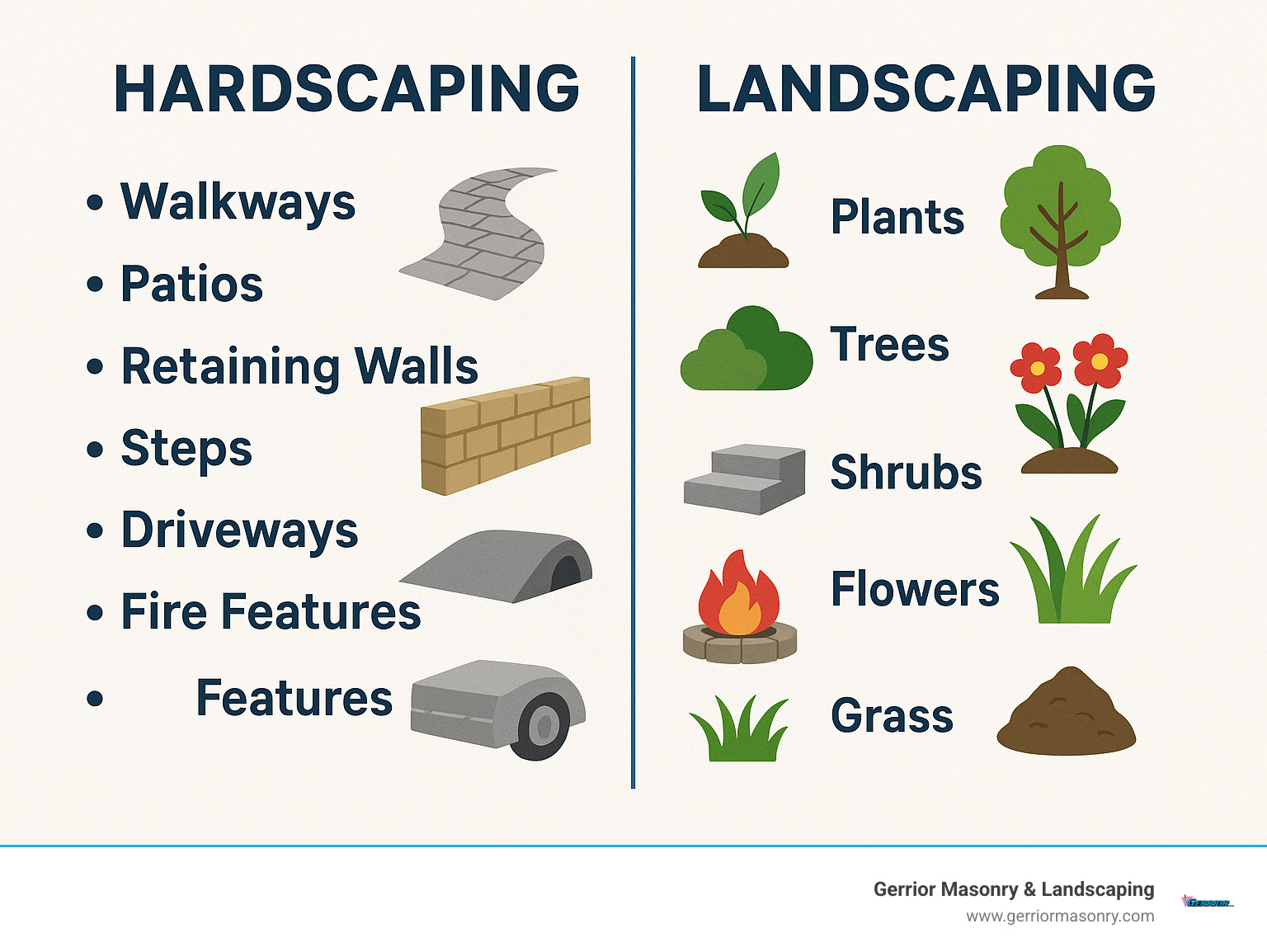
Front yard hardscaping refers to the use of non-living elements like stone, pavers, concrete, and wood to create structure and visual appeal in the area between your home and the street. If you’re looking to improve your curb appeal, here’s what you need to know:
- Definition: Hardscaping includes all non-plant elements (walkways, patios, walls, steps)
- Benefits: Increases property value by up to 20%, reduces water usage by 50%, and minimizes maintenance
- Popular elements: Paver walkways, stone walls, decorative borders, and water features
- Cost range: Typically $6,000-$22,000 depending on materials and complexity
Front yard hardscaping creates the “bones” of your outdoor space, providing structure and function while complementing your home’s architecture. Unlike plants that require constant care, hardscape elements offer year-round appeal with minimal maintenance.
I’m Joe Gerrior, owner of Gerrior Masonry & Landscape Construction, where I’ve been changing front yards with expert hardscaping solutions throughout Massachusetts for over 34 years. My team specializes in creating custom front yard hardscaping designs that balance beauty, function, and durability in our challenging New England climate.
Glossary for front yard hardscaping:
– hardscaping ideas
– what is hardscaping
Hardscaping 101: The Backbone of a Beautiful Yard
When most people imagine their dream front yard, they picture colorful flower beds and lush green lawns. But what truly makes these living elements shine? The answer lies in front yard hardscaping – the foundation that gives your outdoor space both structure and personality.
Hardscaping encompasses all the non-living elements that create definition and function in your yard. These permanent features – walkways that guide visitors to your door, patios where you gather with neighbors, retaining walls that tame sloping terrain, and drainage systems that protect your property – form the essential framework of your landscape.
While plants provide seasonal beauty, hardscape elements deliver year-round performance. Think of hardscaping as your yard’s architecture – it establishes traffic patterns, manages water flow, and creates usable outdoor living spaces that your family will enjoy for decades.
The relationship between hardscaping and landscaping (or softscaping) is symbiotic. Your stone walkway becomes more inviting when bordered by ornamental grasses. A retaining wall creates the perfect backdrop for flowering perennials. When these elements work in harmony, the result is a front yard that feels both thoughtfully designed and naturally beautiful.
Why Front Yard Hardscaping Matters
Your front yard creates the crucial first impression of your home. It’s the space that welcomes guests, catches the eye of neighbors, and can significantly impact your property’s value. Here’s why investing in quality front yard hardscaping makes such a meaningful difference:
The financial benefits are substantial – well-executed hardscaping can boost your property value by up to 20%, providing an impressive return on investment. Homes with thoughtful hardscaping typically sell faster too, sometimes up to 10% quicker than comparable properties with basic landscaping alone.
Beyond the financial benefits, front yard hardscaping dramatically reduces maintenance requirements. By replacing portions of your lawn with attractive hardscape elements, you’ll spend less time mowing, watering, and fertilizing. This translates to water savings as well – up to 50% less water usage compared to traditional lawns.
The practical benefits include increased functionality. A thoughtfully designed front yard can include intimate seating areas, decorative water features, or pathways that transform previously unused spaces into your family’s favorite gathering spots. Proper hardscaping also addresses site challenges like poor drainage, erosion concerns, and challenging slopes.
For New Englanders, quality front yard hardscaping delivers year-round curb appeal. While plants go dormant through harsh winters, beautiful stonework, neat walkways, and well-crafted walls continue to make your home stand out in every season.
Planning & Design: Turning Vision into a Buildable Plan
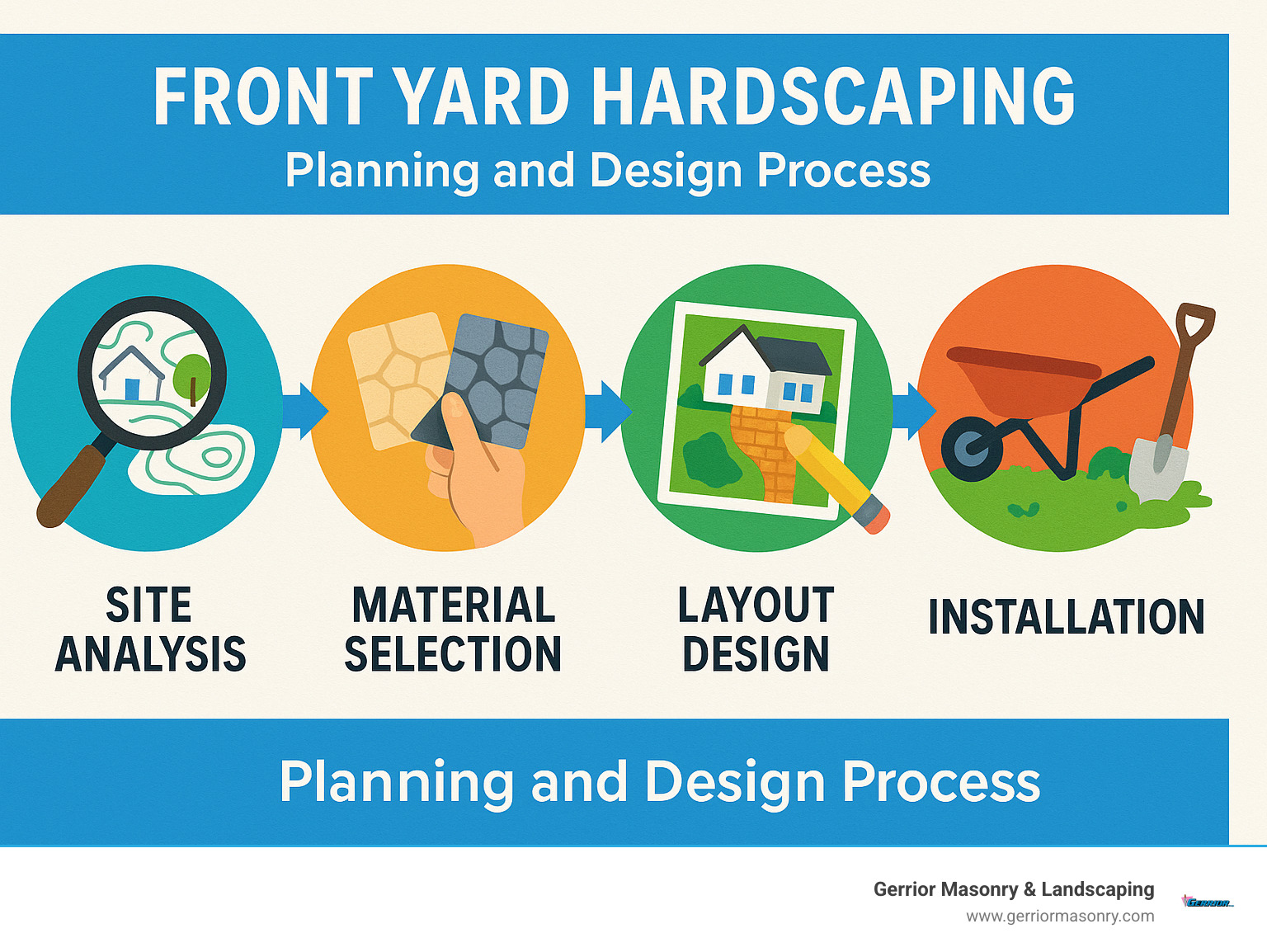
Before breaking ground on your front yard hardscaping project, careful planning is essential. The most successful designs begin with thorough site analysis and thoughtful consideration of how the space will function.
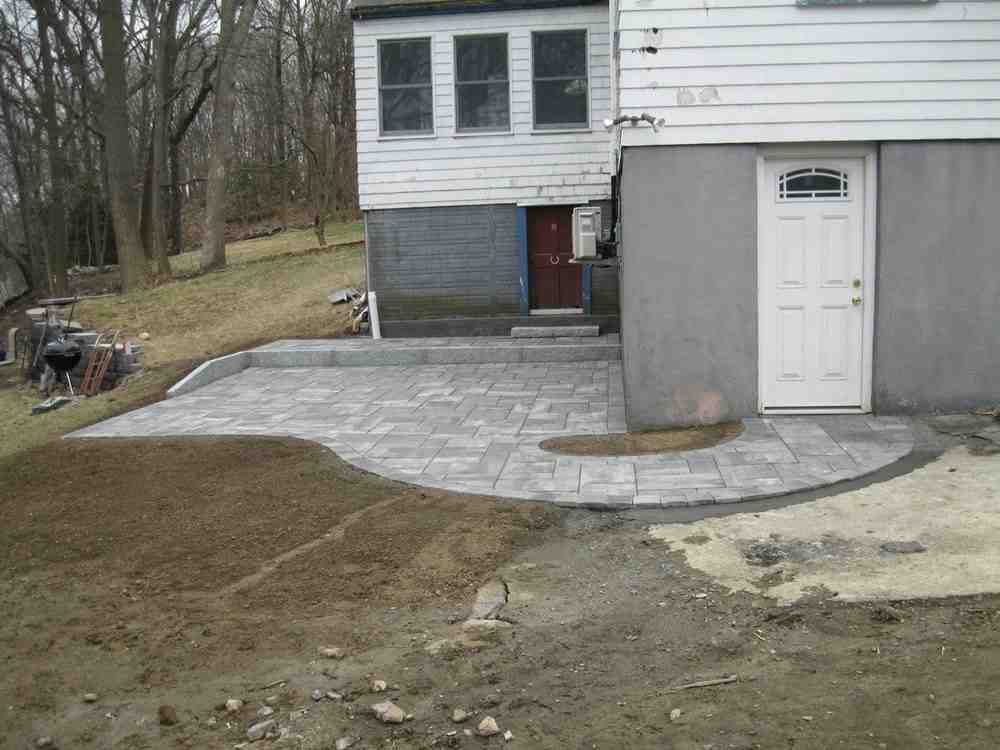
Start by walking your yard with a critical eye. Notice slopes where water naturally flows, soil composition, underground utility lines, existing trees, and how sunlight moves across your property. Pay attention to how people naturally move to and from your front door and identify views you want to highlight or screen.
Once you understand your site’s characteristics, sketch out a plan. A simple scale drawing helps visualize how different elements will work together and ensures proper proportions.
When developing your plan, consider these key principles:
- Scale and proportion: Ensure elements match your home’s size and style
- Flow and connectivity: Guide visitors naturally from street to door
- Balance: Aim for harmony between hardscape and softscape elements
- Focal point: Create visual interest that complements your home
- Unity: Use consistent materials and styles for a cohesive look
Before finalizing your plan, check for regulatory issues like HOA guidelines, local building codes, and utility considerations.
How to Choose the Right Hardscaping Materials for Your Project
Material Matchmaking for New England Weather
New England’s climate demands materials that can withstand freezing winters, hot summers, spring thaws, and autumn rains.
Natural stone is often the gold standard. Local granite is practically indestructible, perfect for steps, wall caps, and accent pieces. Bluestone offers that classic New England look that develops a beautiful patina over time. Fieldstone creates walls and features with instant character.
For walkways and patios, manufactured pavers offer excellent versatility. Concrete pavers come in countless styles and handle freeze-thaw cycles beautifully. Permeable pavers allow water to filter through rather than run off, reducing puddles and ice patches. Clay brick provides a traditional look with slightly more maintenance.
When selecting materials for Massachusetts conditions, prioritize freeze-thaw resilience, snow removal compatibility, proper drainage capability, salt resistance for coastal areas, and good color retention despite UV exposure.
Front Yard Hardscaping Layout Checklist
Creating an effective layout balances aesthetics with practicality:
- Entry focus: Create a clear, welcoming pathway at least 4 feet wide with appropriate lighting
- Driveway integration: Use complementary materials and ensure proper drainage
- Grade management: Incorporate retaining walls and comfortable steps where needed
- Water management: Integrate drainage solutions that look intentional
- Aesthetic elements: Include focal points, lighting, and complementary plant pockets
- Practical considerations: Ensure maintenance access, designate snow storage areas, and consider mail/package delivery
Inspiring Front Yard Hardscaping Ideas & Elements
Now let’s explore specific front yard hardscaping elements that can transform your property from bland to grand, with options for every budget and style.
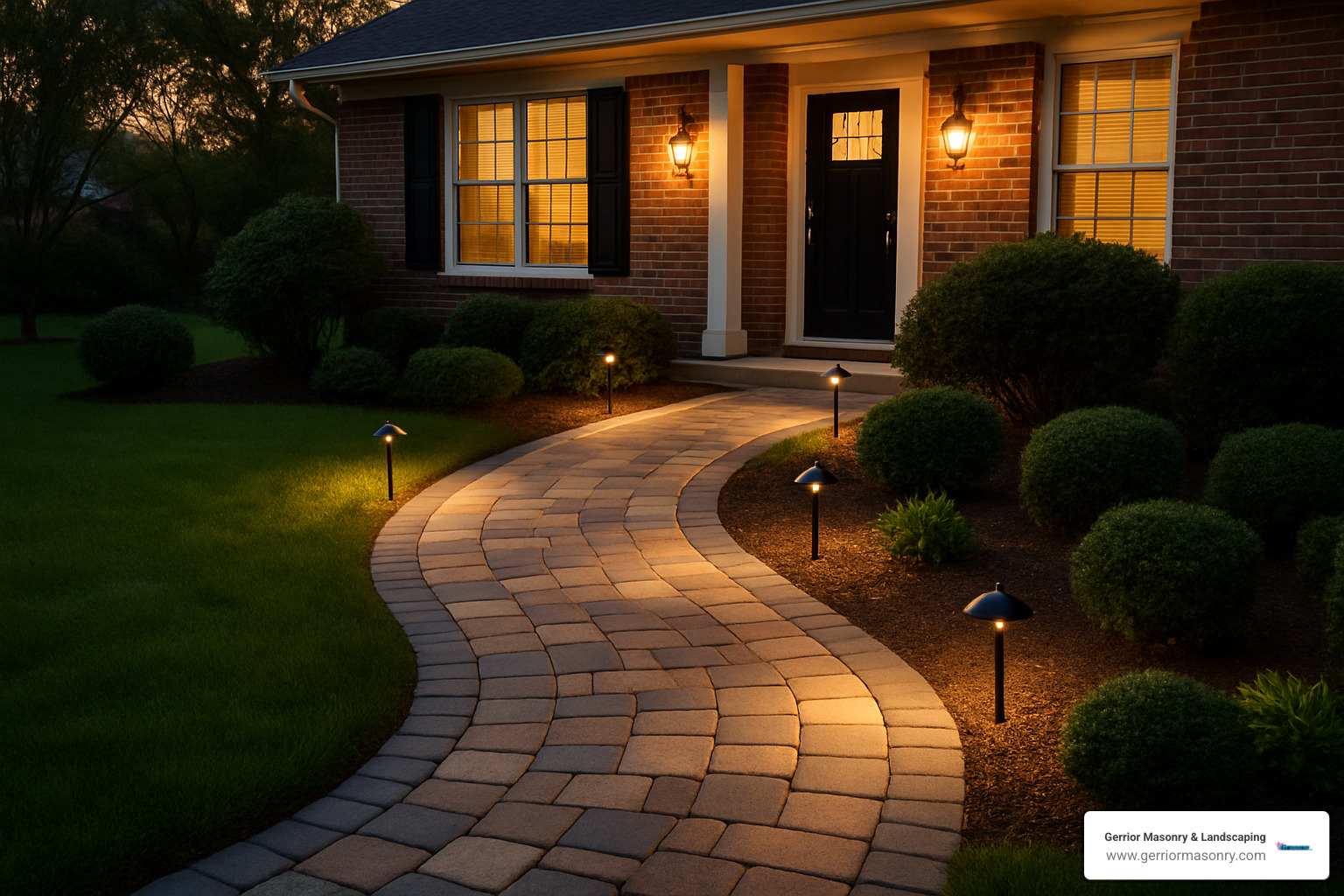
The front walkway often serves as the first impression of your home. Consider adding personality with curved pathways that create visual interest or mixed materials that complement your home’s architecture. Try incorporating widened areas along your walkway to create small gathering spots, integrated lighting for safety and ambiance, and special step treatments to highlight level changes.
Walls and borders do more than just define space – they solve grade issues and add architectural interest. Low seating walls (18-24″ high) provide casual seating and spatial division. Retaining structures transform challenging slopes into usable terraced spaces. Decorative borders define planting beds and pathways, while entry columns frame your walkway. Raised planters add dimension while keeping plantings contained.
Water features bring life, sound, and movement to your front yard. Bubbling boulders require minimal water while creating a tranquil focal point. Small fountains add soothing sound without taking up much space. Pondless waterfalls provide sensory experience without an open pool to maintain. Reflection pools create mirror-like surfaces, while wall fountains provide vertical interest in a compact footprint.
More homeowners are creating usable living spaces in their front yards. A small conversation patio encourages neighborhood interaction. Dining nooks offer intimate spaces for morning coffee. Reading gardens with comfortable seating create peaceful retreats. Families might appreciate integrated play areas that blend with the overall design.
Strategic lighting extends the usefulness of your hardscape. Path lighting improves safety, uplighting highlights trees or architectural features, step lights prevent accidents, and illuminated address markers welcome guests and aid deliveries.
Small-Space Front Yard Hardscaping Hacks
Working with a compact front yard requires thoughtful design. Think vertically with slender water features or decorative screens. Choose elements that serve multiple purposes, like retaining walls that double as seating. Create the illusion of more space using diagonal patterns or incorporating mirrors in vertical elements.
Permeable grid systems like Grasscrete provide both hardscape function and green space in limited areas. Custom-built benches and tables save space compared to movable furniture. Incorporate built-in planters to bring greenery into hardscape areas without separate planting beds.
Medium Yards: Balanced Softscape + Hardscape
Medium-sized front yards (typically 30-50 feet deep) offer the perfect canvas for balanced designs. Aim for the 50-50 rule – roughly equal visual weight between hardscape elements and plantings. Gentle curved paths create interest while allowing for varied planting pockets. A modest focal water feature creates a centerpiece that draws the eye.
Raised planters built with materials that match your walkway or walls create cohesion between hardscape and softscape elements. Clear transitions between different zones help define the space without making it feel chopped up.
Large Yards: Grand Statements & Multiple Zones
Expansive front yards present opportunities for dramatic hardscape elements and distinct functional zones. Consider a motor court with decorative paving and a central feature. Entry courtyards create a transition between public and private areas. Tiered terraces connected by grand staircases add dimension to flat properties. Architectural elements like pergolas and arbors create vertical interest and frame views.
Larger properties can accommodate substantial water features like multi-tier fountains. In some layouts, front yard entertaining areas with cooking facilities make perfect sense, especially when the backyard lacks space or suitable orientation.
Gerrior Masonry & Landscape Construction is based in Woburn, MA, and services Middlesex and Essex County, Massachusetts.
Budget, ROI & Maintenance Made Easy
Let’s talk money, value, and keeping things beautiful for the long haul. Understanding the financial side of front yard hardscaping helps you make smart choices and get the most bang for your buck.
When budgeting for your front yard change, most Massachusetts homeowners invest between $6,000 for simpler projects up to $22,000 for more comprehensive designs. These are just averages based on internet data, not actual costs for Gerrior Masonry services.
A basic but beautiful walkway might run $2,500-$7,500 depending on materials and length. A welcoming front entry patio typically costs $3,000-$12,000 based on size and materials. Retaining walls generally cost between $35-$150 per square face foot, while water features range from $1,500 for something simple to $15,000 for statement pieces.
Material Comparison
Different materials offer different benefits, aesthetics, and price points:
| Material | Pros | Cons | Lifespan | Maintenance | Average Cost |
|---|---|---|---|---|---|
| Concrete | Affordable, versatile | Can crack, less aesthetic appeal | 25-50 years | Sealing every 2-3 years | $6-18/sq ft |
| Pavers | Flexible, repairable, many styles | Higher initial cost, potential weed growth | 50+ years | Joint sand refreshing, occasional cleaning | $15-30/sq ft |
| Natural Stone | Timeless beauty, unique character | Highest cost, specialized installation | 100+ years | Minimal, occasional sealing for some types | $20-40/sq ft |
| Gravel | Inexpensive, permeable | Requires edging, can scatter | 5-10 years before refreshing | Regular raking, periodic topping off | $3-10/sq ft |
When choosing materials, consider not just the upfront cost but also longevity, maintenance needs, and how they’ll look with your home.
Return on Investment
The good news? Front yard hardscaping consistently ranks among home improvements with the highest returns. A well-designed hardscape project can return 100-150% of its cost when you sell your home. Properties with professional hardscaping typically sell up to 10% faster than similar homes without it.
For maximum ROI, focus on a high-quality entry walkway, proper lighting, clearly defined borders, and elements that complement your home’s architectural style.
Maintenance Made Simple
One of the greatest benefits of front yard hardscaping is reduced maintenance compared to lawns. Different materials have different seasonal care needs:
- Spring: Inspect for winter damage, clean surfaces, refresh joint sand if needed
- Summer: Remove occasional weeds and rinse surfaces
- Fall: Clear leaves and debris, check drainage systems
- Winter: Use proper snow removal techniques and appropriate deicers
With proper installation and basic maintenance, quality front yard hardscaping can maintain its beauty and function for decades—far outlasting most landscaping elements.
The Benefits of Adding Hardscaping to Your Outdoor Space
Gerrior Masonry & Landscape Construction is based in Woburn, MA, and proudly serves homeowners throughout Middlesex and Essex County, Massachusetts.
DIY or Hire a Pro? Installation Steps & Common Pitfalls
The age-old question for many homeowners tackling front yard hardscaping projects is whether to roll up their sleeves or call in the experts.

DIY-Friendly Projects
Not every hardscaping project requires professional help. If you’re handy and patient, you might successfully tackle:
- Simple stepping stone paths with proper spacing and stable placement
- Gravel walkways where minor imperfections add rustic charm
- Basic landscape edging to define spaces without complex structural knowledge
- Small paver patios if you’re willing to invest time in learning proper techniques
- Self-contained water features like bubbling rocks or small fountains
- Low-voltage lighting systems with plug-in transformers
For any DIY hardscaping project, these steps are non-negotiable:
- Start with meticulous planning and measuring
- Remove ALL vegetation and organic material from the installation area
- Install and properly compact 4-6″ of crushed stone base in layers
- Use appropriate edge restraints to prevent spreading or shifting
- Maintain a minimum 1/4″ per foot slope away from your home
- Take your time with cutting and fitting for a professional look
Common DIY Pitfalls
Even enthusiastic DIYers often stumble into these common traps:
- Skimping on base preparation – the number one reason DIY hardscaping fails
- Poor drainage planning leading to erosion, settling, and foundation issues
- Material quantity miscalculations – always order 10-15% extra
- Neglecting proper edge restraints causing pavers to migrate over time
- Underestimating frost considerations in New England’s freeze-thaw cycles
- Overlooking permit requirements for walls or drainage alterations
When to Call the Experts
Some front yard hardscaping projects simply demand professional expertise:
- Retaining walls over 2 feet tall require structural knowledge for safety
- Properties with significant slopes or drainage challenges need expert assessment
- Large paver installations benefit from professional equipment for proper compaction
- Natural stone work involves materials that require specialized cutting and fitting
- Projects requiring heavy machinery need skilled operators
- Integrated drainage systems require precise installation to function properly
Professional installation brings substantial benefits beyond saving your back: warranty protection on materials and workmanship, time efficiency, access to premium materials, code compliance, and all the proper equipment to do the job right the first time.
Paver Walkway Installer
Retaining Wall Builders Near Me
Frequently Asked Questions about Front Yard Hardscaping
How much does a simple front walk cost?
Your front path is the handshake of your home—it’s the first impression that sets expectations for everything else.
In Massachusetts, a basic front walkway typically ranges between $2,500 and $7,500 based on internet data (not actual costs for Gerrior Masonry services). Several factors influence where your project might fall in this range:
The length and width make an obvious difference—a standard 4-foot wide path costs more than a narrower one. Your choice of materials significantly impacts cost, with concrete being most budget-friendly while natural stone represents the premium end. Design complexity plays a major role as well, with curved pathways and intricate patterns costing more than straight, simple designs. Site conditions like slopes or poor drainage require more preparation work.
For the best balance of beauty, durability, and value, concrete pavers offer countless style options while withstanding our harsh New England winters.
Can hardscaping be eco-friendly and permeable?
Absolutely! Modern front yard hardscaping has become increasingly environmentally responsible.
Permeable pavers allow rainwater to filter through joints into a prepared base below, reducing runoff by up to 90%. This helps replenish groundwater while preventing erosion and flooding—particularly valuable during New England spring thaws.
Properly installed gravel systems with stabilization grids provide excellent permeability while remaining solid underfoot. Grass pavers—concrete or plastic grid systems—support traffic while allowing grass to grow through the openings.
For sustainability, consider recycled material pavers containing recycled glass, plastic, or concrete. Using locally sourced stone reduces transportation impacts while supporting our regional economy.
Integrating hardscapes with rain gardens not only solves drainage problems but creates habitat for birds and beneficial insects. Many Massachusetts communities now offer incentives for installing permeable surfaces that reduce the burden on municipal stormwater systems.
Do I need permits for walls or patios in Massachusetts?
Permitting requirements vary by municipality, but here are some general guidelines:
Walkways and patios typically don’t require permits unless they significantly alter drainage patterns or are located within wetland buffer zones.
Retaining walls under 4 feet in height usually don’t require permits unless they’re supporting a surcharge (like a driveway). For walls over 4 feet tall, most towns require engineered plans and formal permits.
If your front yard hardscaping includes a new driveway or major changes to an existing one, you’ll likely need permits regarding the connection to public roads.
Water features generally don’t require permits unless they’re quite large or involve significant electrical work.
The most complex permitting situations arise when properties are near wetlands, streams, or in flood zones. In these cases, your local Conservation Commission has oversight.
At Gerrior Masonry & Landscaping, we handle permitting as part of our comprehensive service for larger projects. When in doubt, always check with your local building department before starting any significant hardscape project.
Conclusion
When it comes to making a lasting impression, front yard hardscaping stands as one of the most powerful changes you can make to your property. More than just a visual upgrade, thoughtfully designed hardscaping solves practical challenges while creating spaces that improve your daily life. Whether you’re planning to sell your home or simply want to smile every time you pull into your driveway, the right hardscape elements deliver value that compounds year after year.
The magic of successful front yard hardscaping happens at the intersection of beauty and function. The most impressive projects solve drainage issues, reduce maintenance headaches, create clear pathways, and withstand our challenging New England seasons. By selecting materials specifically suited to Massachusetts weather and ensuring proper installation techniques, your hardscape investment becomes a permanent asset that will continue enhancing your property for decades.
Here at Gerrior Masonry & Landscaping, we’ve spent over 30 years perfecting the art and science of hardscaping in Massachusetts. Our approach is refreshingly personal—we listen carefully to understand your vision, assess your property’s unique characteristics, and then bring our expertise to create solutions that exceed expectations. What sets us apart is our owner’s direct involvement in every project, ensuring the quality craftsmanship that has built our reputation throughout the region.
Ready to reimagine your front yard? I’d love to meet with you for a no-pressure consultation to explore how we can help you achieve the perfect balance of beauty, function, and durability with custom front yard hardscaping designed specifically for your property.
More info about our hardscaping services
Gerrior Masonry & Landscape Construction is based in Woburn, MA, and proudly serves homeowners throughout Middlesex and Essex County, Massachusetts.
