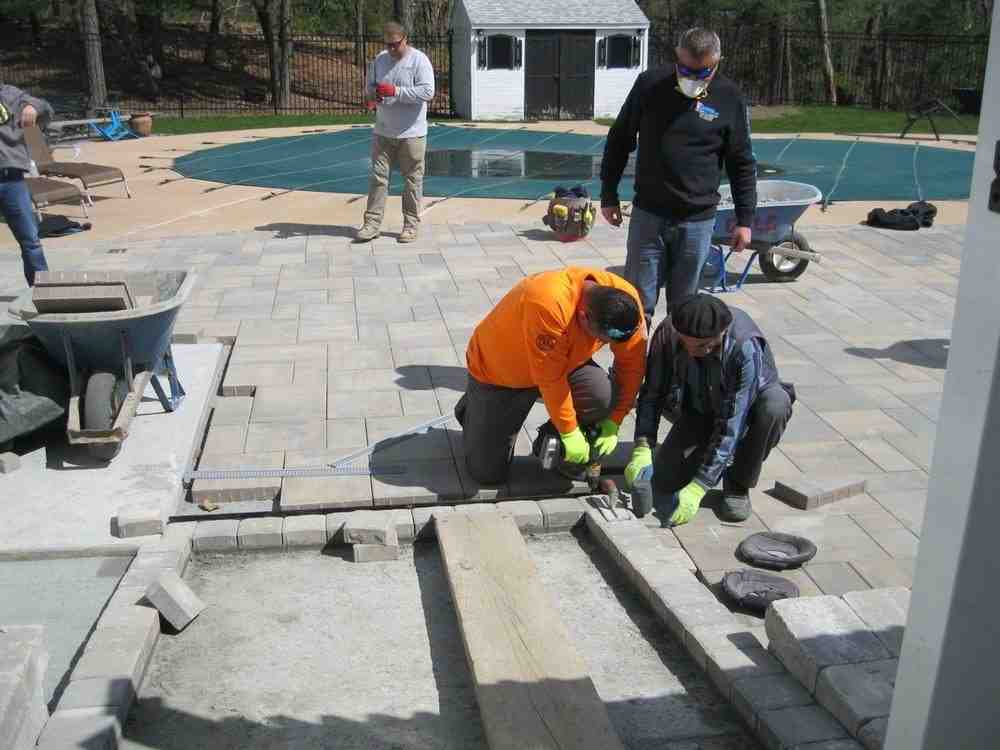
Hardscaping Ideas: 15 Inspiring Ways for Stunning Yards 2025
The Transformative Power of Hardscaping
Hardscaping ideas are permanent landscape features that use non-plant materials to create functional and beautiful outdoor spaces. Looking for quick inspiration? Here are the top hardscaping ideas homeowners are implementing in 2023:
- Stone patios and outdoor living rooms
- Fire pits and outdoor fireplaces
- Retaining walls that double as seating
- Water features (fountains, ponds, streams)
- Outdoor kitchens and dining areas
- Pergolas and pavilions for shade
- Natural stone walkways and stepping stones
- Decorative gravel and xeriscaping
According to the National Association of Realtors, well-designed hardscaping can deliver an impressive return on investment of up to 80% when selling your home. A 2023 Houzz Landscaping Survey found that 56% of homeowners who renovated their outdoor spaces included hardscape features such as patios, walkways, or retaining walls.
When you think about your outdoor space, do you see untapped potential? The right hardscaping transforms underused yards into functional extensions of your home, creating outdoor rooms that are both beautiful and practical—without the constant maintenance of traditional lawns.
Hardscaping defines space, solves problems, and adds value. Whether you’re dealing with slopes, drainage issues, or simply want to create dedicated areas for relaxation and entertainment, thoughtfully designed hard elements provide structure and purpose to your landscape.
I’m Joe Gerrior, owner of Gerrior Masonry & Landscape Construction Corp., with over 34 years of experience bringing hardscaping ideas to life for homeowners throughout Massachusetts. My team and I specialize in turning outdoor challenges into beautiful, functional spaces that stand the test of time.
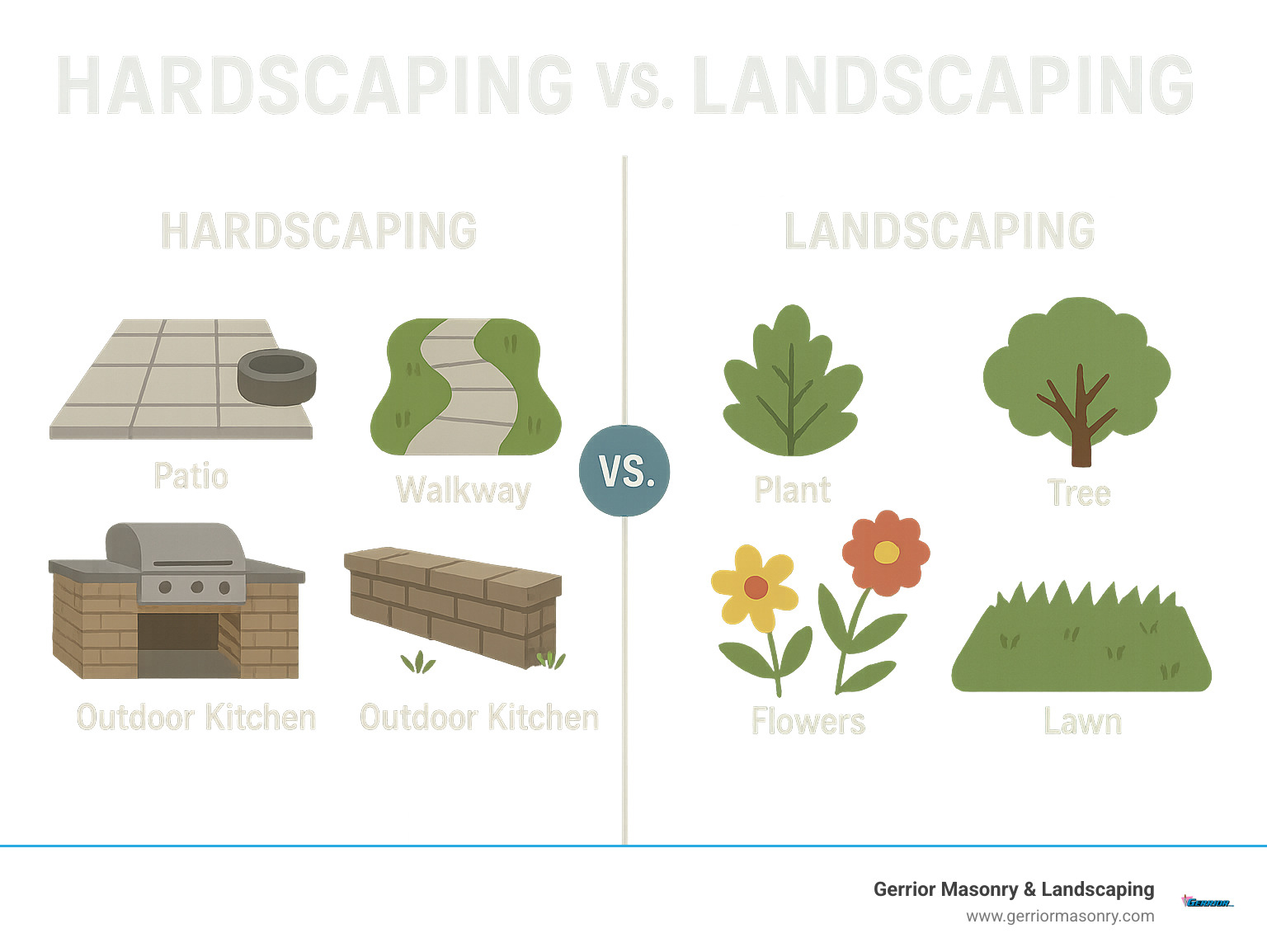
Hardscaping 101—What, Why & How It Differs From Landscaping
Ever wondered what makes a backyard truly functional? That’s where hardscaping comes in. While your flowers and shrubs provide beauty, it’s the patios, walkways, retaining walls, and outdoor kitchens that create the framework that makes your outdoor space actually usable.
Think of hardscaping as the bones of your landscape—the permanent, non-living elements that provide structure and purpose. Here at Gerrior Masonry, we’ve transformed countless challenging yards into beautiful, functional spaces through thoughtful hardscaping that delivers an impressive 80% return on investment for many homeowners.
Unlike the constant care your lawn demands, hardscaping solves practical problems. Need better drainage? Struggling with a sloped yard? Want to create defined spaces for entertaining? Hardscaping ideas address these challenges while adding both functionality and aesthetic appeal to your property.
The growing popularity of hardscaping isn’t just a passing trend. The U.S. hardscape market is projected to reach $18.5 billion by 2027, growing steadily at 5.6% annually—clear evidence that homeowners increasingly value well-designed outdoor living spaces.
Want to learn more about our specific hardscaping offerings? Check out our detailed services page or explore the differences between hardscape vs landscape approaches.
Benefits That Pay Off Year-Round
When you invest in quality hardscaping, you’re creating value that extends far beyond simple curb appeal:
Property value improvement isn’t just theoretical—adding features like a well-designed fire pit can increase your home’s perceived value by up to $5,000, according to industry experts.
Durability that saves money over time. Unlike plants that require constant replacement, properly installed stone patios and walkways can last decades with minimal upkeep.
Water conservation becomes effortless when you replace thirsty lawns with thoughtful hardscaping—particularly important as water restrictions become more common.
Mud-free zones mean no more tracking dirt into your home after rain. Your hardscaped areas remain clean and usable regardless of weather.
Extended living space effectively adds usable square footage to your home without the cost of a traditional addition.
Hardscape Features vs. Softscape Plants
The magic happens when hardscape and softscape elements work together harmoniously:
Your garden’s structure comes from the hardscaping—the patios, walls, and pathways that define spaces and guide movement through your yard. While plants change dramatically with the seasons, these elements maintain their presence year-round.
The permanence of hardscaping provides consistent visual appeal throughout the year. When winter strips away foliage, your stone walls, brick pathways, and concrete patios continue to define your outdoor space with their textures and forms.
Seasonal interest doesn’t disappear with hardscaping. Even in January, when your garden beds lie dormant, the warm glow of your stone fire pit still invites family gatherings, and your carefully crafted walkways still guide visitors through your property.
The real art lies in balancing these elements. A beautifully crafted bluestone patio surrounded by lush plantings creates a more inviting space than either component would alone. At Gerrior Masonry, we specialize in finding that perfect balance—creating hardscaped areas that complement your existing landscape while solving practical problems.
15 Inspiring Hardscaping Ideas to Transform Your Yard
Looking at your backyard and feeling uninspired? You’re not alone. Many homeowners see untapped potential in their outdoor spaces but aren’t quite sure how to bring their vision to life. That’s where hardscaping ideas come in – they’re the secret to creating outdoor spaces that are both beautiful and functional, without the constant maintenance that traditional lawns demand.
Whether you’re dreaming of weekend gatherings around a fire pit or peaceful mornings with coffee on your patio, these ideas can transform even the most challenging yards into your favorite “room” of the house.
Patio Power: Hardscaping Ideas for Outdoor Rooms
The patio is truly the heart of outdoor living – it’s where memories are made, meals are shared, and relaxation happens naturally. Think of it as the foundation for your outdoor lifestyle.
Have you considered large-format pavers for a clean, contemporary look? With fewer joint lines, these oversized concrete pavers create a sleek surface that feels expansive and welcoming. Belgard’s Catalina Grana® pavers are particularly popular among our clients for their crisp edges that complement both traditional New England homes and more modern designs.
For a more organic feel, natural stone patios offer best character. I love how each piece tells its own story through variations in color and texture – there’s simply nothing like the authentic beauty of stone that improves with age.
Breaking away from the standard rectangle can completely transform your space. Circular designs naturally create gathering spaces where conversation flows more easily – there’s something about a curved patio that draws people in and encourages connection.
One of my favorite recommendations for clients is incorporating built-in seating around the patio perimeter. These low walls not only define your space beautifully but double as casual seating, eliminating the need for bulky furniture and creating a seamless, integrated look that’s both practical and visually appealing.
Fire & Water: Hardscaping Ideas with Wow Factor
Some hardscape elements go beyond practical – they create truly magical outdoor experiences that leave lasting impressions.
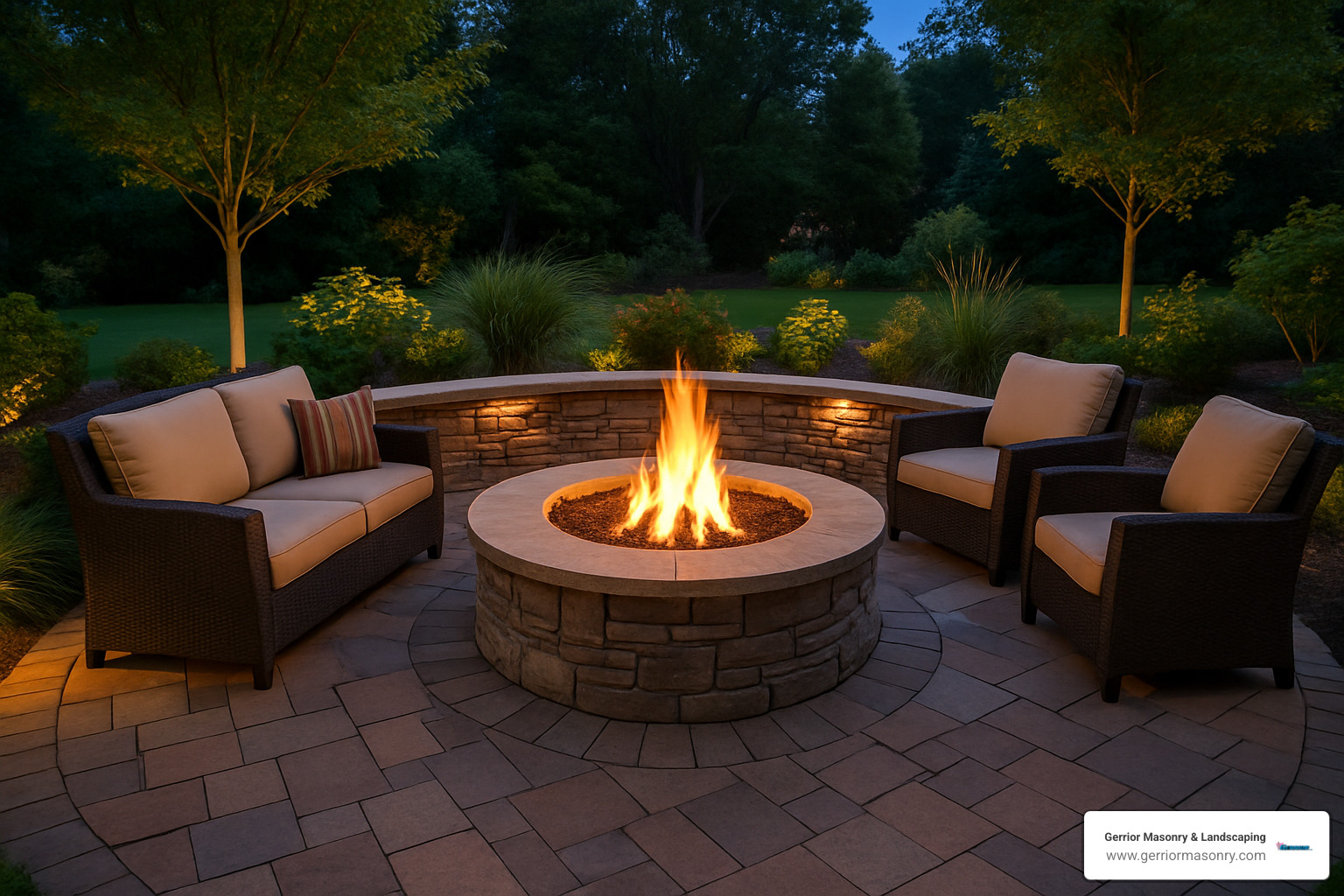
A sunken fire pit area creates an instant sense of intimacy. By designing this feature slightly below the surrounding grade with built-in seating around the perimeter, you create a natural conversation pit that draws people in and keeps them lingering long after sunset. There’s something primal about gathering around fire that never gets old.
For smaller spaces, water walls make a dramatic statement while taking up minimal room. Beyond their visual appeal, the gentle sound of flowing water adds a sensory dimension that masks neighborhood noise and improves relaxation – nature’s white noise machine.
For properties with elevation changes, consider the dramatic impact of infinity edge water features. These tiered designs create the stunning illusion of water extending to the horizon, visually connecting your property to the surrounding landscape. It’s an effect that turns a challenging slope into your yard’s most distinctive feature.
Want something truly show-stopping? Combination fire and water features play with the contrast of these opposing elements to create dramatic visual interest. Imagine fire bowls rising from a reflecting pool or a fire table positioned adjacent to a cascading water wall – these unexpected pairings create unforgettable focal points.
For more inspiration on incorporating water into your design, check out How to Incorporate Water Features into Your Hardscaping Design.
Outdoor Cooking Central
The outdoor kitchen has evolved dramatically from the simple grill station of yesteryear. Today’s outdoor cooking spaces rival their indoor counterparts in both function and style.
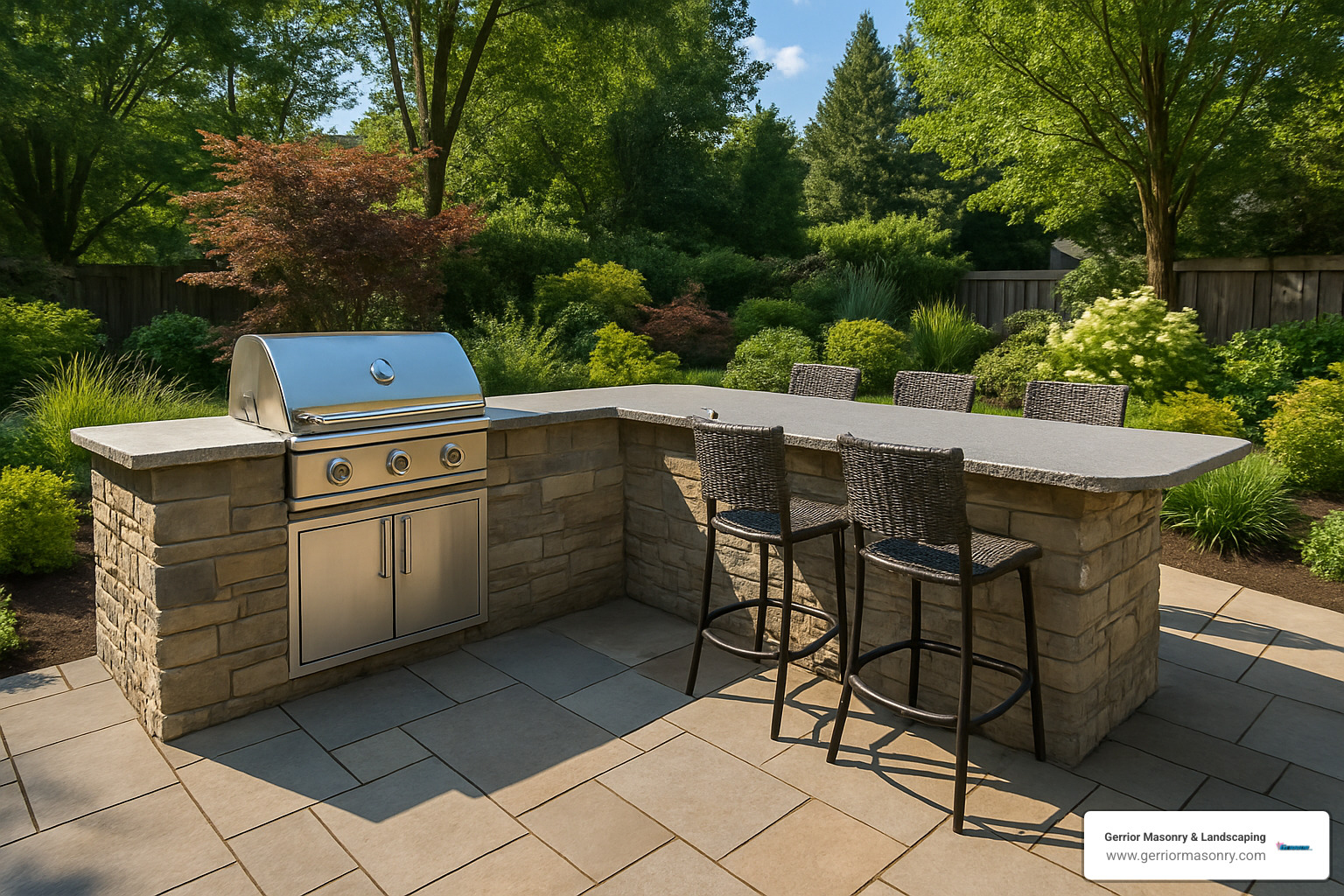
Built-in grilling stations lift both the cooking experience and your yard’s aesthetics. By creating a permanent home for your grill, surrounded by weather-resistant countertops and storage, you’ll never want to cook indoors again. The convenience of having everything at your fingertips transforms cooking from a chore into a pleasure.
Nothing draws a crowd quite like a wood-fired pizza oven. These statement pieces become the centerpiece of outdoor entertaining while producing results that put delivery to shame. There’s something magical about watching flames dance inside a brick oven while the aroma of baking pizza fills the air.
To keep the cook connected with guests, consider adding a bar counter with seating. This creates a natural gathering spot where friends can chat with the chef while enjoying drinks before dinner. It’s the outdoor equivalent of the kitchen island where everyone inevitably congregates.
Complete your outdoor kitchen with weather-proof cabinetry designed specifically to withstand the elements. These storage solutions keep cooking tools and supplies close at hand while protecting them from New England’s sometimes unpredictable weather.
For more outdoor kitchen inspiration, check out the Belgard gallery examples that showcase how these spaces can be custom to fit your specific needs and style.
Multi-Level Magic—Retaining Walls, Steps & Terraces
If your property has slopes or elevation changes, don’t view them as limitations – they’re opportunities to create dynamic, multi-dimensional spaces with character and visual interest.
Tiered retaining walls can transform a challenging slope into your yard’s most distinctive feature. By creating a series of walls at varying heights, you establish level planting beds or seating areas while adding architectural interest. The vertical dimension adds depth to your landscape that flat yards simply can’t achieve.
For dramatic transitions between levels, consider floating steps that appear to hover above the landscape. When illuminated with LED lighting underneath, they create a stunning nighttime effect that’s both practical and magical – like walking on air.
Garden terraces supported by retaining walls not only make planting and maintenance easier but add dimensional interest to your landscape. Each level becomes its own distinct garden room with a unique character and purpose.
For larger properties, curved retaining walls can form natural amphitheater seating – perfect for outdoor gatherings, impromptu concerts, or simply enjoying your yard’s best views. It’s a design approach that transforms necessary structural elements into social spaces.
Learn more about how these features can improve your outdoor living at The Benefits of Adding Hardscaping to Your Outdoor Space.
Compact Yard Hacks: Budget-Friendly Hardscaping Ideas
Limited space or budget doesn’t mean limited possibilities – some of our most creative solutions have come from working within constraints.
Gravel patios offer a simple, affordable alternative to stone or concrete while providing excellent drainage. Many homeowners are surprised by how much they enjoy the distinctive crunching sound underfoot – it adds a sensory element that pavers simply don’t provide.
Create visual interest and direct traffic flow with stepping stone pathways set in gravel or groundcover. These pathways not only serve a practical purpose but add rhythm and movement to your landscape design.
When ground space is limited, think vertically. Vertical gardens integrated into hardscape elements maximize growing space while creating living art. A wall of greenery can transform a small patio from cramped to cozy.
Address drainage concerns while creating usable surface area with permeable pavers that allow water to filter through rather than run off. These environmentally friendly options reduce puddles and help replenish groundwater – a win-win for both your yard and the environment.
For truly unique character, consider repurposed materials like salvaged brick, reclaimed wood, or even shipping pallet planters. These elements add distinctive charm while keeping costs down and giving materials a second life – sustainability and style working hand in hand.
With these hardscaping ideas as inspiration, your outdoor space can become so much more than just a yard – it can be an extension of your home that reflects your personality and meets your needs. Whether you’re working with an expansive property or a compact urban lot, the right hardscaping transforms challenges into opportunities.
Gerrior Masonry & Landscape Construction is based in Woburn, MA, and services Middlesex and Essex County, Massachusetts. We’d love to help bring your hardscaping vision to life.
Choosing Materials & Planning for New England Climate
When it comes to hardscaping in New England, Mother Nature doesn’t pull any punches. Our beautiful four seasons come with challenges that can make or break your outdoor investment. At Gerrior Masonry, we’ve spent over three decades learning exactly how different materials stand up to our unique climate conditions.
Freeze-thaw cycles can be particularly brutal on hardscape materials. One day it’s 40°F and raining, the next it’s 20°F with everything frozen solid. This constant expansion and contraction puts enormous stress on patios, walkways, and walls. Road salt—a winter necessity—can also wreak havoc on certain materials, causing pitting, flaking, and discoloration over time.
“I’ve seen beautiful patios turn into crumbling messes after just a few winters because the wrong materials were used,” says Joe Gerrior. “It’s heartbreaking for homeowners who’ve invested thousands, only to watch their dream outdoor space deteriorate.”
When we recommend materials for your hardscaping ideas, we’re thinking about the long game—how will this hold up not just next year, but in 10 or 20 years? How to Choose the Right Hardscaping Materials for Your Project offers our detailed guidance, but here’s a quick comparison of how common materials perform in our Massachusetts climate:
| Material | Cost Range* | Durability in NE Climate | Maintenance Needs |
|---|---|---|---|
| Natural Stone | $15-$50/sq.ft. | Excellent (properly installed) | Low; occasional joint repointing |
| Concrete Pavers | $8-$25/sq.ft. | Very Good | Moderate; may need releveling after severe winters |
| Poured Concrete | $6-$18/sq.ft. | Good (with proper reinforcement) | Moderate; requires sealing to prevent salt damage |
| Composite Decking | $20-$60/sq.ft. | Good | Low; no staining required |
| Wood | $15-$45/sq.ft. | Fair to Good (depends on species) | High; regular sealing/staining |
*Cost ranges based on internet data, not actual costs for Gerrior Masonry services. Prices can vary significantly based on project complexity, site conditions, and material selection.
Natural stone remains our top recommendation for most New England applications. While it sits at the higher end of the price spectrum, its longevity and minimal maintenance requirements often make it the most economical choice over time. Granite, bluestone, and fieldstone have been gracing New England landscapes for centuries—there’s a reason these materials have stood the test of time in our challenging climate.
Sustainable & Permeable Solutions
Water management is becoming increasingly important as extreme weather events become more common. Traditional hardscaping can create runoff problems, but modern hardscaping ideas offer solutions that are both beautiful and environmentally responsible.
Permeable paving systems have revolutionized how we approach driveways and patios. These clever systems allow rainwater to filter through the surface and into the ground below, reducing runoff and helping replenish groundwater supplies. Belgard’s Aqualine™ series offers particularly attractive options that don’t sacrifice style for function.
“One of my favorite projects last year incorporated a permeable paver driveway that eliminated the standing water issues the homeowners had battled for years,” shares Joe. “Not only did it solve their practical problems, but it looks fantastic too.”
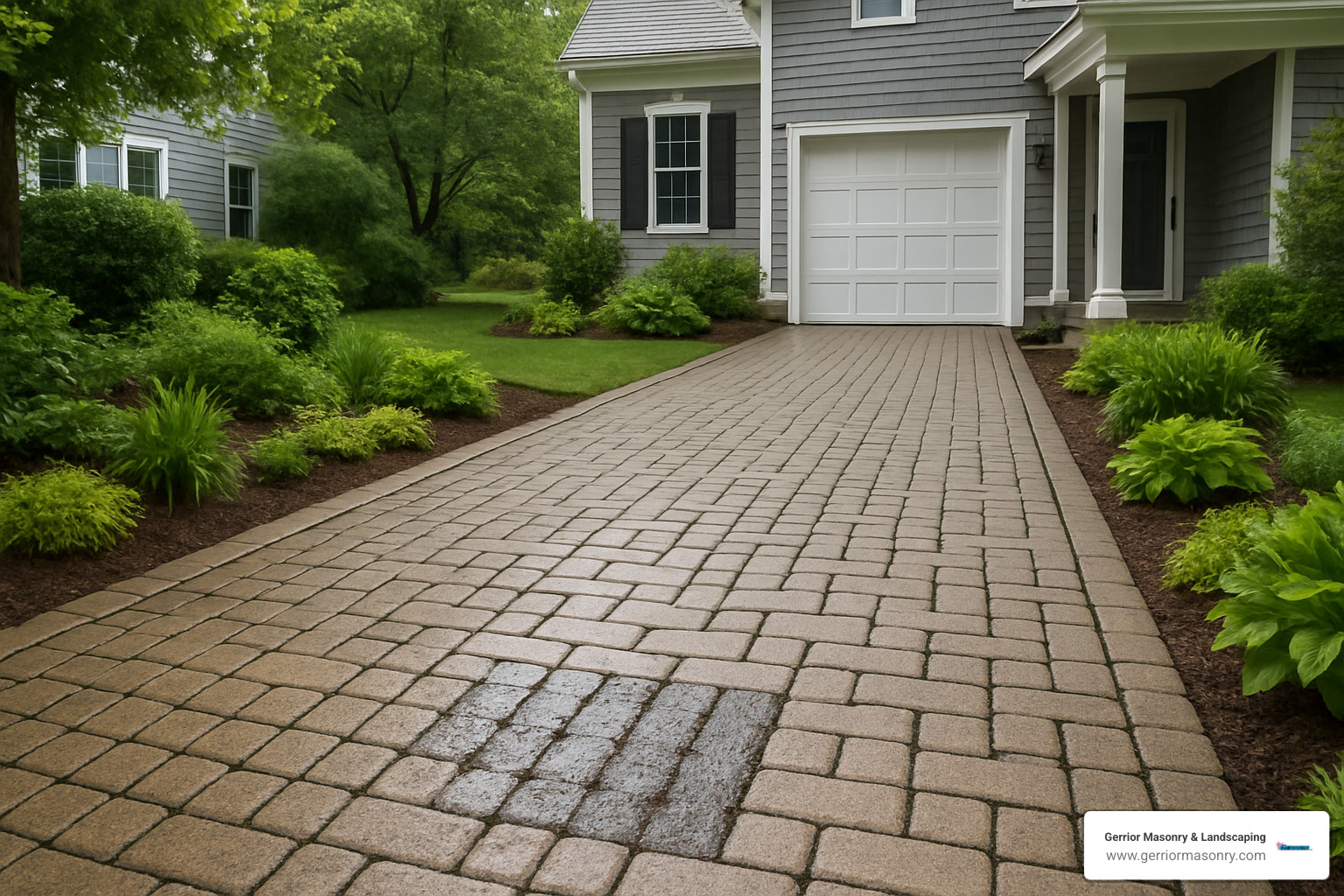
Rain gardens paired with hardscaping create a beautiful synergy. By strategically designing depressions filled with water-loving native plants near hardscaped areas, we can capture runoff, filter pollutants, and create habitat for beneficial insects and birds. It’s a win-win approach that adds both beauty and function.
The concept of xeriscaping (water-wise landscaping) works beautifully with hardscaping in New England. Despite our relatively humid climate, we still experience periodic droughts, and reducing irrigation needs just makes good sense. By balancing permeable hardscape elements with drought-tolerant plants, we can create stunning landscapes that require minimal watering.
For clients interested in maximizing the environmental benefits of their hardscape projects, we recommend checking out our article on Sustainable Hardscaping: The Future is Green with Gerrior Masonry. We’re committed to helping homeowners create outdoor spaces that are not only beautiful and functional but also kind to our New England environment.
Budget, Maintenance & Longevity Tips
Let’s talk dollars and sense when it comes to hardscaping ideas. While these outdoor improvements represent a significant investment, they’re also among the most lasting additions you can make to your property. With proper planning and care, your hardscape features can provide decades of enjoyment and boost your home’s value.
Understanding typical costs helps set realistic expectations as you begin planning. Based on internet data, here’s what homeowners might expect to invest in common hardscape projects:
A new patio typically ranges from $3,000 for a simple design to $15,000+ for larger, more elaborate spaces. Retaining walls generally fall between $2,000 and $10,000, with height and length being the primary cost factors. Outdoor kitchens represent the widest range—from basic $5,000 grill stations to $50,000 full-featured outdoor cooking and dining spaces. Fire pits can be relatively affordable at $800 for simple models, while custom built-in versions might reach $5,000. Stone walkways typically cost between $1,500 and $8,000 depending on length, width, and materials.
Note: These figures reflect average internet data, not actual costs for Gerrior Masonry services. Your actual costs may vary significantly based on materials, site conditions, and design complexity.
The DIY versus professional installation decision significantly impacts both your initial investment and long-term enjoyment. While that YouTube tutorial might make laying pavers look easy, proper base preparation, compaction, and drainage—the invisible elements of hardscaping—make all the difference in how your project performs over time. As Joe Gerrior often tells clients, “It’s what you don’t see that determines how long you’ll love what you do see.”
Maintenance Needs by Material
Different hardscape materials have their own maintenance personalities, and understanding these can help you choose what works best for your lifestyle:
Concrete pavers generally require occasional releveling of individual pieces, particularly after harsh New England winters. That slight unevenness you notice in spring? It’s usually the result of freeze-thaw cycles working beneath the surface. Joint sand may need replenishment every few years, and a fresh polymeric sand application can dramatically refresh the appearance of older installations.
Natural stone earns its reputation as low-maintenance, though the mortar joints between stones may need attention over time. A gentle pressure washing every few years keeps surfaces looking fresh without damaging the material. The natural variations that make stone beautiful also help it hide dirt and wear better than manufactured materials.
Poured concrete requires more consistent care, with sealing recommended every 2-3 years to prevent staining and salt damage. This is especially important for exposed aggregate finishes. Small cracks should be addressed promptly—what starts as a hairline fracture can expand dramatically after just one freeze-thaw cycle.
Wood and composite decking represent opposite ends of the maintenance spectrum. Traditional wood needs regular cleaning and staining/sealing to prevent rot and maintain appearance, while composite materials need only occasional cleaning but can be more susceptible to scratching and fading over time.
Gravel surfaces offer easy installation but require periodic raking and occasional topping up as material inevitably migrates or settles. The characteristic crunch underfoot that many find charming also signals that stones are moving and may need attention.
When to Splurge, When to Save
After three decades in the business, we’ve developed a good sense of where budget-conscious homeowners should prioritize their spending:
Worth every penny is a professional design plan that ensures proper space planning and material selection. Similarly, quality base materials like properly graded crushed stone and geotextile fabric prevent costly settling and drainage issues down the road. The craftsmanship at transition points—steps, wall caps, and edging—deserves investment because these details are most visible and most vulnerable to wear. Finally, your main entertaining areas that see the most use should receive the highest quality materials and installation.
Smart places to economize include secondary pathways, where gravel can replace more expensive pavers without sacrificing function. Consider mixing high-end and budget materials strategically—perhaps premium stone for focal points with standard materials elsewhere. Many of our clients successfully phase their projects over time rather than compromising on quality, completing the patio this year and adding the outdoor kitchen next season. And don’t overlook the potential of reusing existing materials—that old brick walkway might find new life as an accent border in your new design.
Maintenance isn’t just about preserving appearance—it’s about protecting your investment. Simple steps like seasonal cleaning, prompt repairs, and appropriate winter care can dramatically extend the life of your hardscape features while keeping them looking their best year after year.
Gerrior Masonry & Landscape Construction is based in Woburn, MA, and services Middlesex and Essex County, Massachusetts.
Installation Essentials—Drainage, Lighting & Safety
When it comes to hardscaping that truly stands the test of time, especially in our challenging New England climate, proper installation isn’t just important—it’s everything. After 30+ years of creating outdoor spaces throughout Massachusetts, we’ve learned that three elements deserve special attention if you want your investment to last.
Drainage is the unsung hero of successful hardscaping. Even the most beautiful patio can become a liability without proper water management. All hardscaped areas need a gentle slope (typically 1/4″ per foot) away from your home and structures to prevent moisture damage. For patios and walkways, this means careful grading during the initial base preparation—something we never rush at Gerrior Masonry.
For walls and vertical elements, proper drainage involves systems that might not be visible in the finished project but make all the difference in longevity. French drains installed behind retaining walls, strategically placed weep holes that allow water to escape, and permeable base materials all work together to manage water flow and prevent pressure buildup that could damage your structures over time.
“I’ve seen too many DIY retaining walls fail after just a few seasons because drainage was an afterthought,” says Joe Gerrior. “Water is relentless—you either control it with good design or it eventually controls your hardscape.”
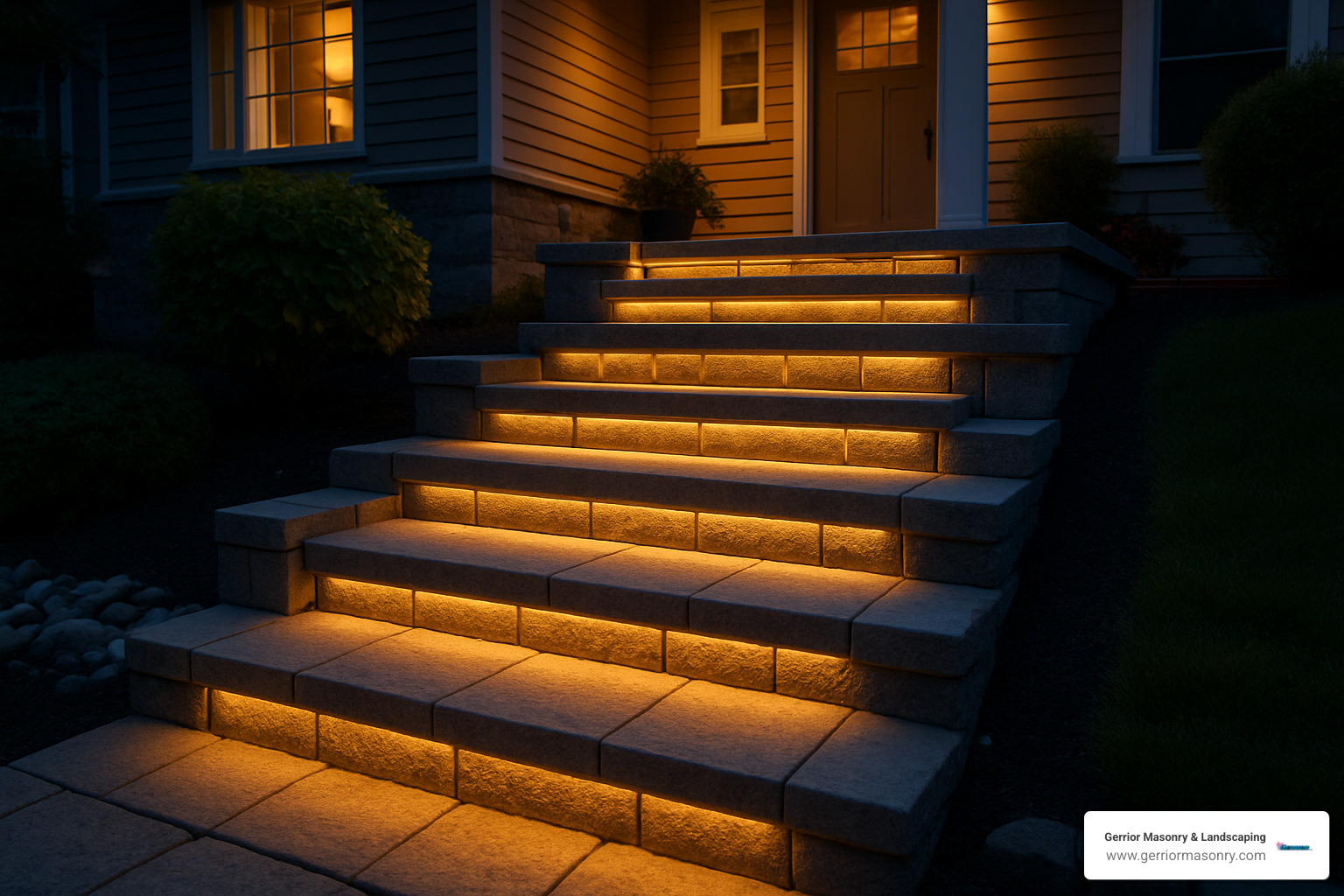
Lighting transforms your outdoor space from merely functional to truly magical. Beyond the obvious safety benefits, thoughtful illumination extends your enjoyment well into the evening hours and throughout more months of the year.
Recessed step lights prevent trips and falls while creating dramatic effects that highlight craftsmanship. Path lighting gently guides movement through your landscape after dark without harsh spotlights. Uplighting on walls and trees adds dimension and depth, making even modest spaces feel more expansive and inviting. And for environmentally conscious homeowners, solar options now provide reliable, energy-efficient illumination without complex wiring needs.
Safety considerations must be woven throughout your hardscape design. Steps should maintain consistent riser heights (typically 6-7″) to prevent tripping. Handrails aren’t just a convenience—they’re required by code for stairs with multiple risers. Retaining walls over 4 feet typically require engineering approval and permits, something our team handles seamlessly.
Non-slip surfaces for pool decks and areas that get wet prevent accidents, while proper clearance around fire features (typically 10-15 feet from structures) protects your home. At Gerrior Masonry, these safety elements are integrated so naturally into our designs that they improve rather than detract from the beauty of your space.
DIY vs. Hiring a Pro
Let’s be honest—some hardscaping ideas are more DIY-friendly than others. While we respect the ambition of homeowners who want to tackle projects themselves, understanding where to draw the line can save you significant headaches (and potentially money) in the long run.
Consider DIY if your project is small and straightforward, like a simple gravel path or small patio on level ground. Success also depends on having experience with proper base preparation techniques, owning or being able to rent specialized equipment like plate compactors and wet saws, understanding local building codes, and having both the physical ability and time to complete the work properly.
Hiring a professional makes sense when your project involves significant grade changes or structural elements that affect the integrity of your property. Precise cutting of materials, modifications that affect drainage patterns, or installations that impact property boundaries all benefit from professional expertise. Many homeowners also value the peace of mind that comes with warranty protection on both materials and workmanship.
What sets Gerrior Masonry apart is our owner oversight on every project. Joe personally ensures quality control that DIY efforts simply can’t match. After three decades in business, we’ve encountered and solved virtually every hardscaping challenge New England properties can present.
Lighting & Ambiance Upgrades
The right lighting can lift your hardscape from merely functional to truly breathtaking. It’s often the finishing touch that clients tell us made the biggest difference in how they use and enjoy their outdoor spaces.
Integrated step lighting using recessed LED strips creates both safety and dramatic effect. These lights illuminate pathways while creating a floating effect that adds sophistication to your landscape. Cap lights mounted discreetly on wall tops and pillars provide gentle illumination without the harsh glare of traditional floodlights.
Uplighting strategically placed at ground level can highlight the beautiful texture of stone walls or architectural features, creating dramatic shadows and depth. For a more casual, festive atmosphere, café-style string lights suspended over patios instantly transform your space into an inviting outdoor room.
Many of our clients are now opting for smart lighting systems that allow programming for different occasions or times of day. These systems maximize both energy efficiency and visual impact, giving you complete control over your outdoor ambiance from your smartphone.
“Lighting is the jewelry of your hardscape,” Joe often tells clients. “It doesn’t have to be expensive to make a significant impact on how your space feels after sunset.”
For more information on how proper drainage affects the longevity of your hardscape investment, visit our detailed guide on The Importance of Proper Drainage in Hardscaping and Masonry Projects.
Frequently Asked Questions About Hardscaping Ideas
What hardscape materials are best for cold climates?
Living in New England means our outdoor spaces face some tough weather challenges. After three decades of installing hardscapes that stand the test of time, we’ve learned which materials truly perform in our freeze-thaw cycles:
Natural stone is my personal favorite for cold climates—especially granite and bluestone. These materials have naturally low water absorption rates and incredible strength, making them resistant to cracking and spalling even after years of harsh winters. There’s something timeless about stone that synthetic materials just can’t match.
High-quality concrete pavers have come a long way in recent years. Look for products specifically engineered for freeze-thaw conditions with low water absorption rates (under 5%) and high compressive strength. Many of our clients are surprised by how well modern pavers mimic the look of natural stone while offering more consistent installation.
Properly installed poured concrete can also perform exceptionally well when done right. The key is proper reinforcement, strategically placed control joints, and air entrainment in the mix—all details a professional hardscaper won’t overlook.
Just as important as your material choice is what goes underneath. In our Massachusetts climate, we typically install 8-12″ of compacted crushed stone base—something DIYers often skimp on, only to regret it after the first winter.
How much does a backyard hardscape project cost on average?*
I’m often asked this question during initial consultations, and my answer is always the same: it depends on your vision and your space. Complete backyard hardscaping projects typically range from $15,000 for simpler designs to $75,000 or more for comprehensive outdoor living spaces.
Several factors influence where your project falls in this range:
Size matters – A 300 sq. ft. patio naturally costs less than a 1,000 sq. ft. multi-level outdoor living space.
Material selection significantly impacts budget – natural stone generally costs more than concrete pavers, but the character and longevity it brings often justifies the investment.
Site challenges like steep slopes, limited access, or drainage problems require additional work and materials to address properly.
Design complexity affects labor costs – straight lines and simple patterns require less cutting and fitting than elaborate designs with curves and inlays.
Additional features like built-in lighting, irrigation systems, fire features, or outdoor kitchens add functionality but also increase cost.
*Based on internet data for average costs; not actual Gerrior Masonry pricing. Your project may vary significantly based on specific requirements and site conditions.
Can I integrate plants without adding lawn?
This is one of my favorite questions! Hardscaping ideas work beautifully with plants, and you absolutely don’t need traditional lawn to create a lush, vibrant outdoor space.
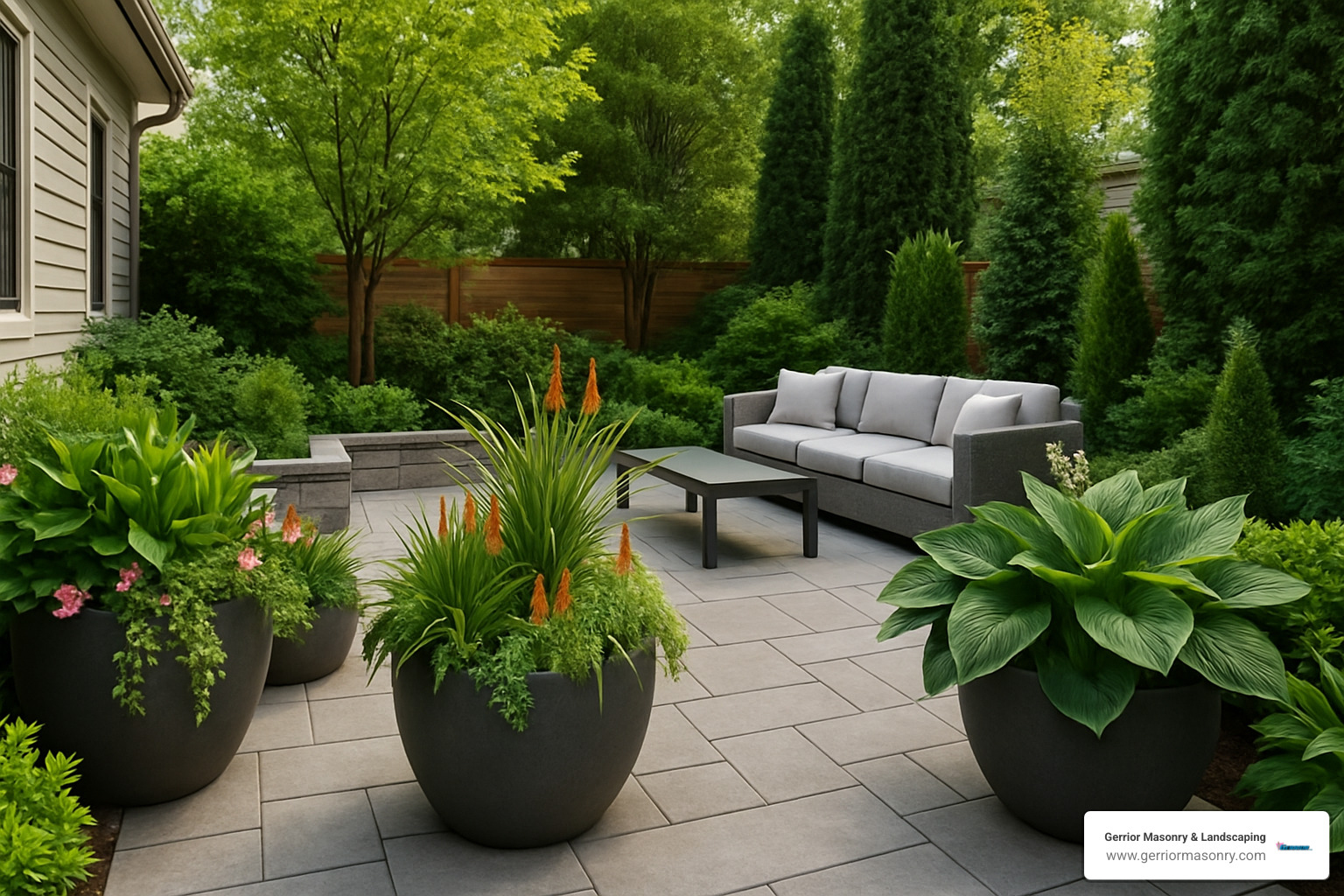
Container gardens offer incredible flexibility. We often integrate large planters directly into patio designs, using materials that complement the hardscaping. This approach lets you add seasonal color exactly where you want it, and you can change plantings as your taste evolves.
Planting pockets are small areas we strategically leave between hardscape elements. These work wonderfully for drought-tolerant plants, herbs, or even small ornamental grasses that add movement and texture without demanding much water or care.
Living walls have become increasingly popular, especially for smaller properties. These vertical gardens maximize your green space without sacrificing valuable ground area for entertaining. They’re conversation starters too!
Gravel gardens pair beautifully with hardscaping. Drought-tolerant plants set in decorative gravel create interesting textural contrasts while requiring minimal maintenance. No mowing, ever!
Raised beds built from matching hardscape materials create a cohesive look while giving you dedicated space for vegetables, flowers, or shrubs. The liftd height makes gardening easier on your back, too.
Many of our clients are actually looking to reduce or eliminate their lawns entirely. With thoughtful hardscaping ideas and strategic plantings, you can create an outdoor space that’s more beautiful, more useful, and far less work than a traditional lawn could ever be.
Conclusion
The beauty of hardscaping ideas lies in their ability to transform ordinary yards into extraordinary living spaces—without the endless cycle of mowing, weeding, and watering. When thoughtfully designed and professionally installed, hardscape elements create an outdoor extension of your home that improves both your lifestyle and property value.
Finding the right balance between form and function is what makes hardscaping truly successful. The best outdoor spaces solve practical problems like drainage and sloping terrain while creating visually stunning environments that draw you outdoors. Whether it’s a simple paver patio or a comprehensive outdoor living area with cooking, dining, and relaxation zones, hardscaping provides the framework that brings your outdoor vision to life.
At Gerrior Masonry & Landscape Construction, we’ve spent over three decades perfecting our craft in the unique New England environment. Our experienced team understands the specific challenges our Massachusetts climate presents—from freeze-thaw cycles to salt exposure—and we design solutions built to withstand these conditions year after year.
What sets our approach apart is our unwavering commitment to quality. With owner oversight on every project, we ensure meticulous attention to detail from the initial design consultation through the final installation. This hands-on approach has earned us the trust of homeowners throughout Middlesex and Essex counties who value craftsmanship that stands the test of time.
Our comprehensive hardscaping services include everything you need to create your ideal outdoor space: patios and walkways that define areas and direct movement, retaining walls that tame challenging slopes, outdoor kitchens that become the heart of summer entertaining, and water features that add tranquility to your landscape.
Ready to explore how hardscaping ideas can transform your property? The experts at Gerrior Masonry & Landscape Construction are here to help turn your outdoor dreams into reality. We proudly serve Middlesex and Essex County, Massachusetts, from our home base in Woburn, MA—bringing professional hardscaping solutions to your neighborhood with the personal touch that only a local, family-owned business can provide.