
Why Gabion Walls are a Smart Choice for Your Landscape
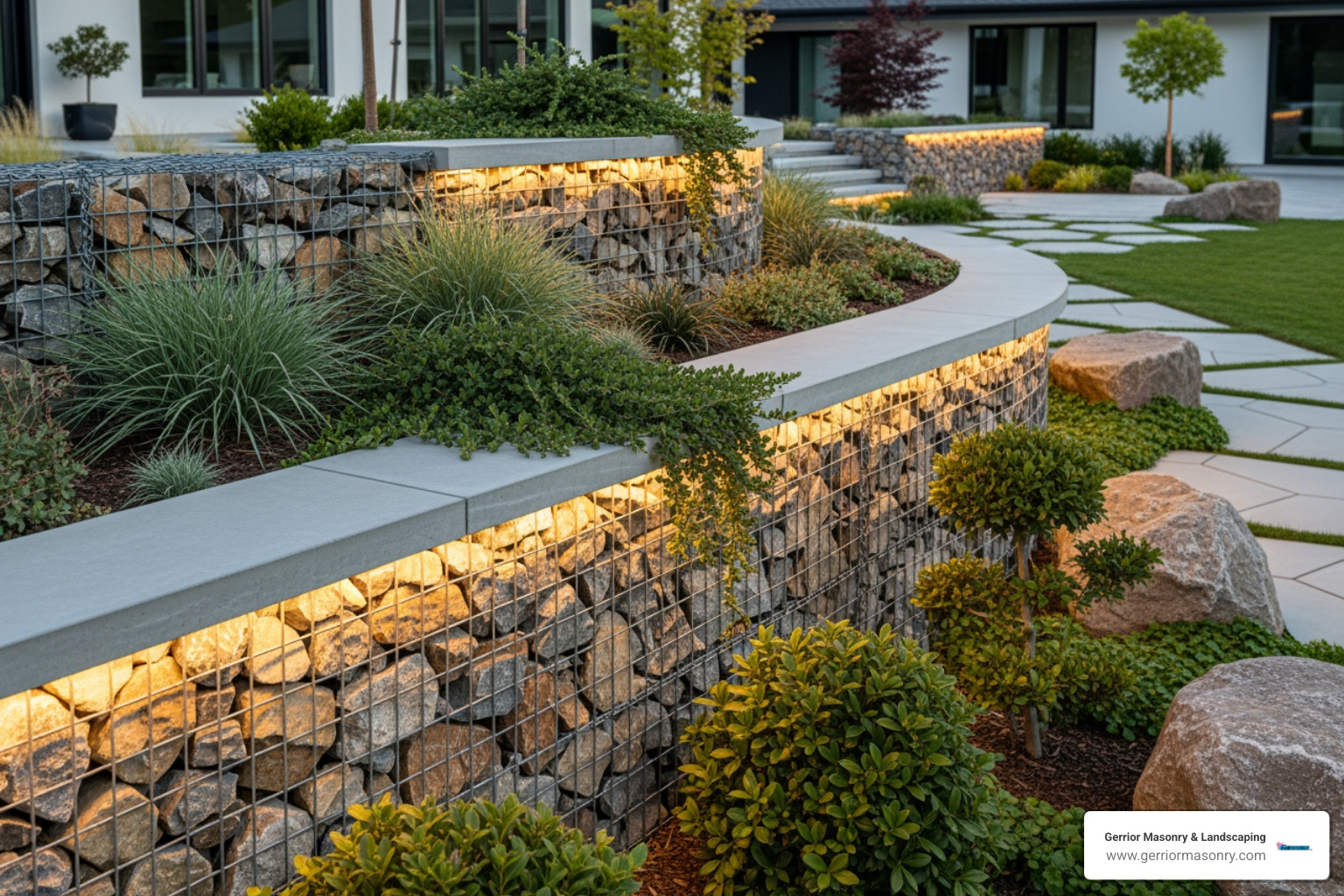
Installing a gabion retaining wall means filling wire mesh baskets with rock to create a durable, attractive structure. The basic process is:
- Excavate 20-50cm below ground and add 20cm of compacted gravel.
- Assemble wire mesh baskets with spiral connectors.
- Fill baskets with 4-8 inch angular rocks in layers.
- Install bracing wires (4 per square meter) to prevent bulging.
- Stack additional rows, connecting each layer securely.
- Backfill behind the wall with drainage materials.
Gabion walls have compelling advantages. They are permeable, allowing water to pass through, which prevents the pressure buildup that can damage solid walls. Their flexibility lets them adapt to ground movement without cracking. For DIYers, they require no mortar or heavy machinery, just basic hand tools.
Gabions are also cost-effective. DIY material costs typically range from $50-200 per linear foot, less than poured concrete. Using local stone can further reduce costs and environmental impact. These structures are remarkably durable, lasting for decades with minimal maintenance.
I’m Joe Gerrior, owner of Gerrior Masonry & Landscape Construction Corp. Our team has built retaining walls across Massachusetts for over 34 years, including many gabion installations. Installing a gabion retaining wall requires careful foundation prep, bracing, and filling techniques, which we’ll cover in this guide.
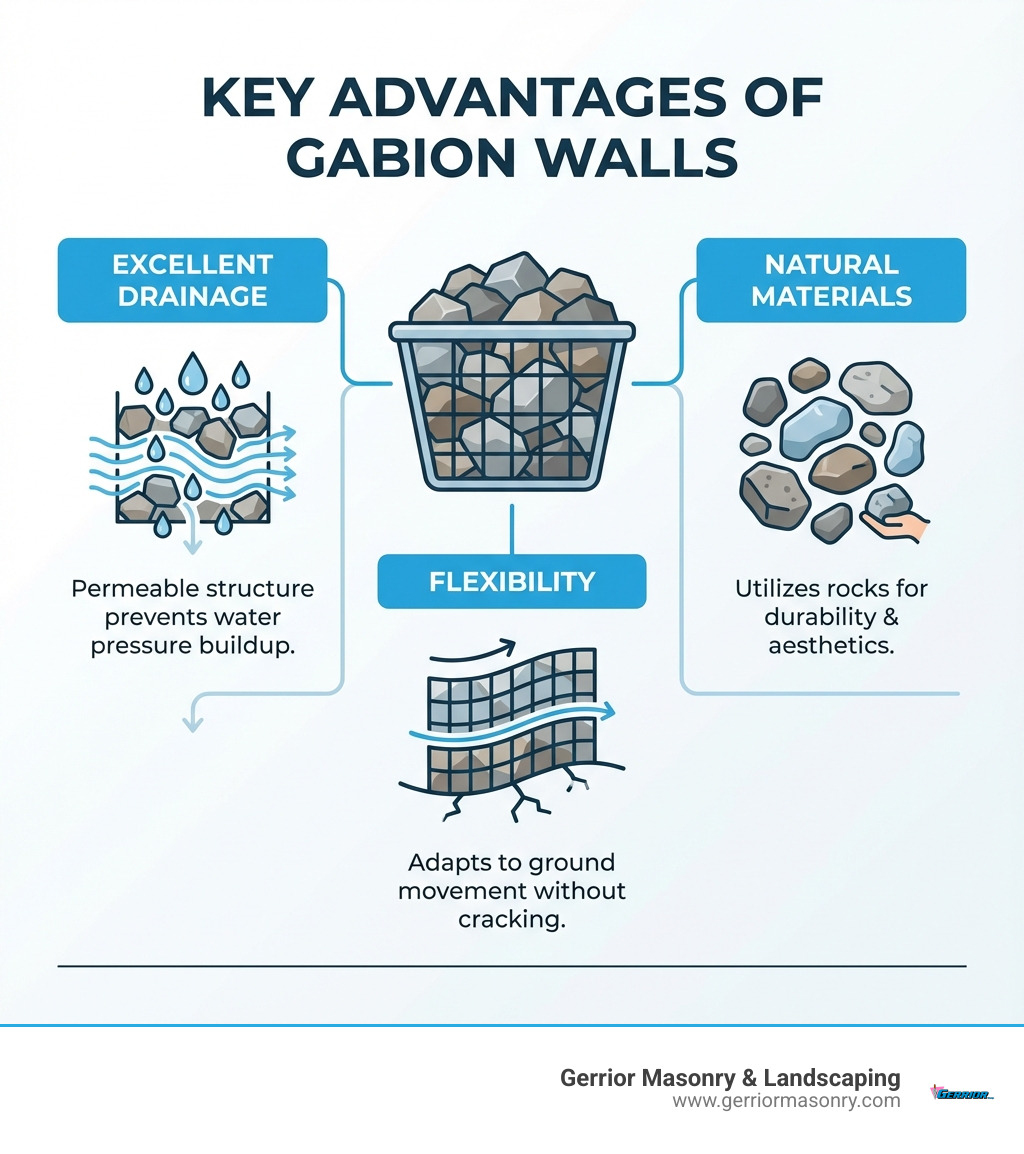
Basic installing a gabion retaining wall terms:
The Step-by-Step Process for Installing a Gabion Retaining Wall
This section breaks down the project into manageable steps, from initial planning to the final rock placement, ensuring a professional result for your hardscape retaining walls.
Step 1: Planning, Tools, and Materials
Meticulous planning is key. Before starting, understand the project scope, check local regulations for permits, and gather all necessary tools and materials.
Here’s what you’ll need for installing a gabion retaining wall:
- Essential Tools:
- Flat and spade shovels
- Rake and pick
- Wheelbarrow
- Tape measure
- 4-foot level and string line with stakes
- Pliers with wire cutters or hog ring pliers
- Heavy hammer or mallet
- Plate compactor (for foundation preparation)
- Post hole digger (for narrow walls needing internal posts)
- Safety glasses and heavy-duty leather work gloves
- Essential Materials:
- Gabion Baskets: Choose between rigid welded mesh (decorative) or flexible woven mesh (engineering). For maximum durability, we recommend a Galfan coating, which outlasts standard galvanized wire. Purchase 5% extra to avoid shortages.
- Rock Fill: Use dense, hard, and durable rocks that can resist weathering. A rock density of 2400 kg/m³ (150 lbs/ft³) or higher is ideal. Angular rocks are preferred as they interlock for better stability.
- Geotextile Fabric: This non-woven fabric acts as a filter, preventing soil from clogging the gabions while allowing water to drain.
- Perforated Drainage Pipe: An 80mm (3-inch) pipe is crucial for drainage behind taller walls.
- Basecourse Gravel: A stable bed for your gabions. MOT Type 1 (crushed granite, limestone, etc.) is an excellent choice.
- Lacing Wire, Spiral Wire, or Ring Fasteners: These connect the basket panels securely.
When it comes to rock fill, size matters. The rocks should always be slightly larger than the mesh openings of your gabion baskets to prevent them from slipping out. Here’s a quick guide:
| Mesh Opening Size | Recommended Rock Size Range | Minimum Rock Size | Maximum Rock Size |
|---|---|---|---|
| 3×3 inches | 4-8 inches | 4 inches | 8 inches |
| 6×8 type mesh | 3-10 inches (approx.) | 75mm (3 inches) | 250mm (10 inches) |
| 8×10 type mesh | 4-10 inches | 100mm (4 inches) | 250mm (10 inches) |
Step 2: Site Prep and Foundation for Installing a Gabion Retaining Wall
A gabion wall is only as strong as its foundation, so this step is critical.
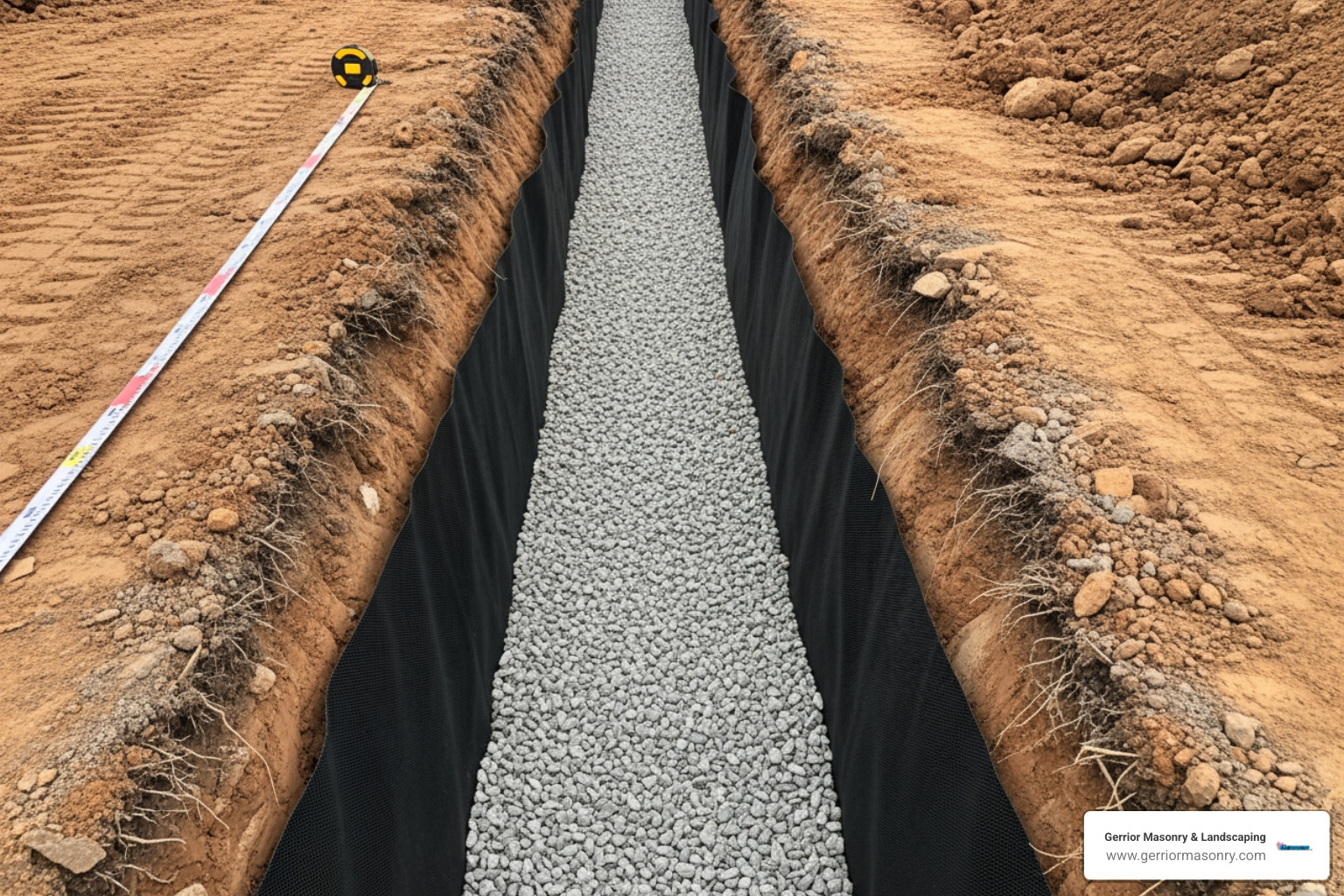
Begin with site preparation. Call 811 a few days before digging to locate utility lines for safety. Then, mark the wall’s location with spray paint or string lines.
For excavation, retaining walls should typically start 20-50cm (8-20 inches) below ground on a solid substrate. Ensure the excavated area is smooth, level, and free of debris.
Next, add the basecourse requirements. This stable platform’s thickness depends on wall height:
- 1-meter (3.3 ft) high wall: 10cm (4-inch) basecourse.
- 2-meter (6.6 ft) high wall: 20cm (8-inch) basecourse.
- 3-meter (10 ft) or taller wall: 30cm (12-inch) basecourse.
Spread the basecourse material (e.g., MOT Type 1 gravel) evenly and use a plate compactor to create a dense, stable base. A loose foundation will cause the wall to settle. Keep heavy compaction equipment at least 1 meter (3.3 feet) away from placed baskets.
Proper drainage is essential. Install geotextile fabric behind the wall to act as a filter, preventing soil from clogging the baskets while letting water pass. For taller walls or areas with high runoff, install an 80mm (3-inch) perforated drainage pipe at the base, wrapped in geotextile and covered with 300-400mm (12-16 inches) of drainage gravel.
If you must build around existing utilities, design the gabions to accommodate them. For pipes under 400mm (16 inches), the mesh can be cut and bent to fit, with the opening sealed for structural integrity.
Step 3: Assembling, Connecting, and Stacking Baskets
Assembling the baskets is a straightforward process.
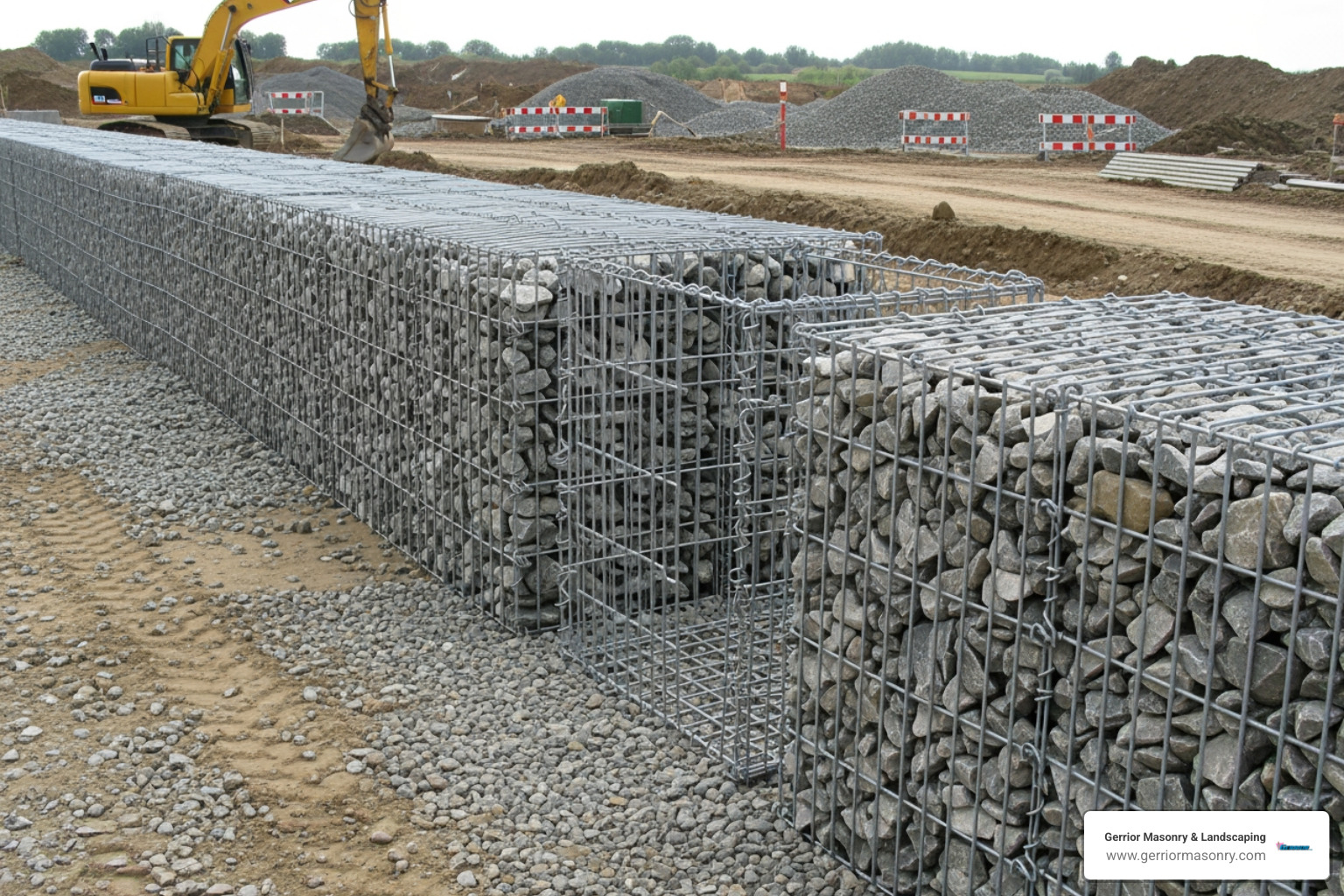
Gabion baskets arrive flat-packed. Unfold each unit, then lift the front, back, and end panels to form a box. Connect the panels using the provided lacing wire, spiral wire, or steel ring fasteners, threading them through adjacent mesh edges and securing the ends. For long walls, you can use shared end panels between baskets.
Longer baskets (6 feet or more) require a middle dividing panel (diaphragm) to prevent bulging. Secure these vertically inside the basket. Aim for a maximum connector spacing of 200mm (8 inches) for a robust structure.
Place assembled baskets on the prepared foundation. Lace adjacent units together along all touching edges to create a single, strong unit.
When building a taller wall, stack subsequent rows on top of the first. Staggering the vertical seams of the upper baskets improves overall stability. Connect the stacked layers along all contact edges with lacing wire or spirals.
Bracing wires are crucial for preventing the front face from bulging. Install a minimum of four bracing wires per square meter of the gabion’s front face, with a maximum spacing of 350mm (14 inches). For 1-meter deep gabions, fix wires at 1/3 and 2/3 of the depth. This keeps the wall’s face straight and uniform. A gabion construction frame can also help maintain alignment during filling.
Step 4: The Art of Filling Baskets and Creating Curves
Filling the baskets combines structural integrity with aesthetic appeal.
For a professional finish, hand-place the most attractive, angular stones against the visible face of the gabion, packing them tightly for a uniform look. The interior of the basket can be filled with smaller rocks or cheaper rubble to reduce costs without compromising strength.
To prevent bulging, fill each gabion in 1/3 increments, keeping adjacent cells within 0.3 meters (1 foot) of each other. This staged filling, along with bracing wires, distributes pressure evenly. Periodically compact the rocks with a mallet to eliminate large voids. Overfill the basket by 25-50mm (1-2 inches) to account for natural settlement. Finally, fold the lid down and lace it securely to all top edges, turning in any sharp wire ends for safety.
Gabions can also form curves and corners. They naturally conform to gentle bends (18-21 meter radius). For tighter curves, cut and fold the mesh or use shorter baskets. For sharp 90-degree corners, use L-shaped configurations or overlap baskets for strength.
Integrating the wall with your landscaping design is easy. The natural stone blends with any aesthetic. You can even create “green gabions” by placing live branches between the rocks that extend into the backfill soil, allowing the wall to become a living part of your landscape.
Finalizing Your Project: Costs, Regulations, and Long-Term Care
This final stage covers the details that ensure your wall is compliant, within budget, and built to last.
Advanced Considerations for Installing a Gabion Retaining Wall
Common installation issues include bulging, settlement, and poor drainage. Prevent bulging by using bracing wires (four per square meter), filling in 1/3 increments, and using interlocking angular rocks. Prevent settlement with a thoroughly compacted basecourse and proper drainage. Inadequate drainage is a primary cause of retaining wall failure.
For stability, the wall’s height should not exceed double its base width (a 2:1 ratio). Building the wall with a slight 5-6 degree backward lean also significantly improves stability.
Consider hiring a professional engineer for complex projects. DIY walls are generally best kept under 1 meter (3.3 feet). Walls over 2 meters (6.6 feet) almost always require professional design, especially on sites with poor soil, high water tables, or complex drainage. An engineer can test soil strength and determine if a concrete foundation is needed for extremely weak soils.
For comprehensive guidance on advanced techniques, check out this detailed guide on building with gabions.
Understanding Costs, Permits, and Maintenance
Permit requirements for installing a gabion retaining wall vary. In Massachusetts, walls under 1 meter (3.3 feet) often don’t need a permit, but taller walls usually do. Always check with your local building department in Middlesex or Essex County before starting.
Please note that the following cost ranges are average estimates based on internet data and are not actual costs for Gerrior Masonry & Landscape Construction services. For a precise quote, please contact us directly.
- Estimated Material Costs (DIY):
- Gabion Baskets: $15-50 per linear foot
- Rock Fill: $30-100 per ton
- Geotextile Fabric: $1-3 per square foot
- Drainage Materials: $20-40 per linear foot
- Total DIY Material Costs: $50-200 per linear foot. A 50-foot, 3-foot-high wall could cost $2,500 to $10,000 in materials.
- Estimated Professional Installation Costs:
- Labor: $25-75 per square foot
- Total Installed Cost: $75-300 per linear foot. A 50-foot, 3-foot-high wall could range from $11,250 to $45,000.
- Complex Projects: Can range from $200-900 per linear foot, depending on height, site access, and engineering needs.
Long-term maintenance for gabion walls is minimal. Periodically check for damage or deformation, especially after the first year or heavy rains. Keep drainage outlets clear of debris. Addressing any damage from impacts promptly will ensure the wall’s longevity.
For a professionally built structure that stands the test of time, explore our custom retaining walls services. With over 30 years of experience and owner oversight on every project, our team at Gerrior Masonry & Landscape Construction ensures high-quality results.
Gerrior Masonry & Landscaping is based in Woburn, MA, and proudly serves communities throughout Middlesex and Essex County, Massachusetts.
