
Landscape Retaining Wall: 5 Stunning Ideas for 2025

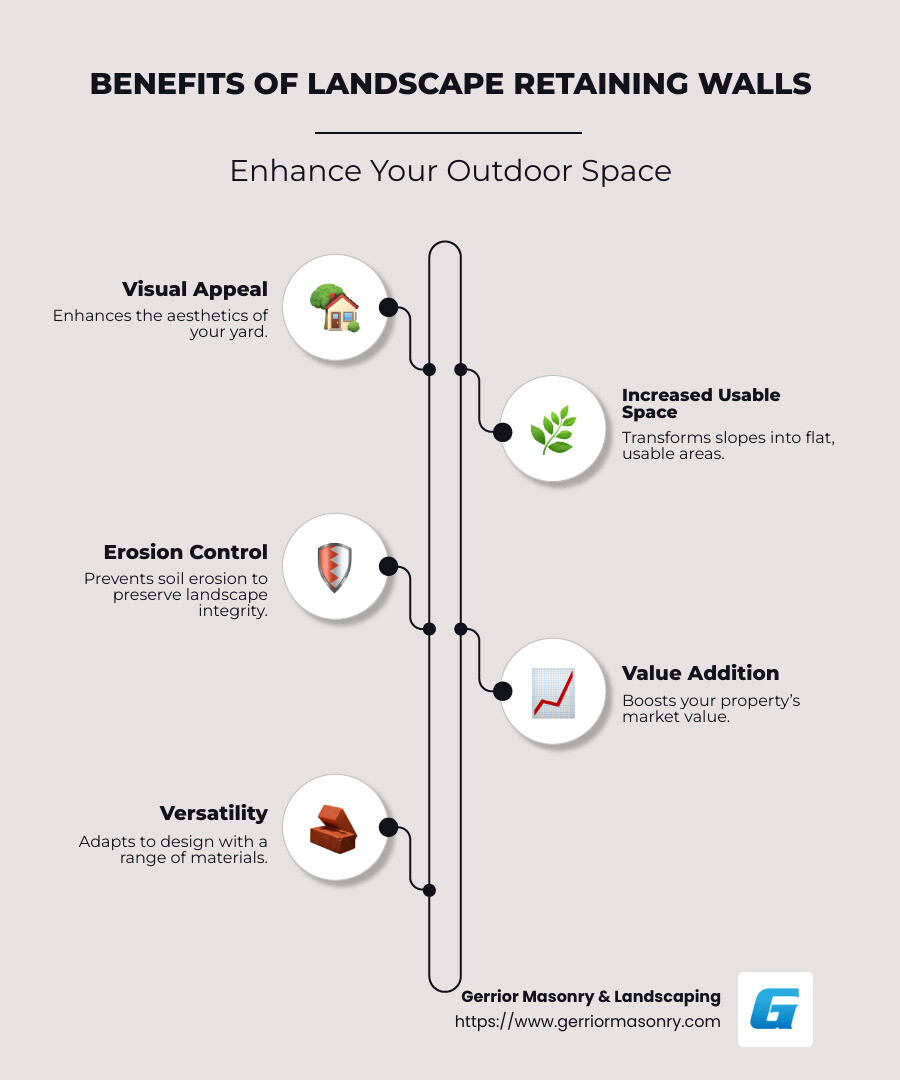
Landscape retaining wall structures are more than just functional necessities for your property; they are transformative design elements that improve the beauty and functionality of your outdoor space. Whether you’re looking to prevent soil erosion or create additional usable land, these walls bring significant benefits to any landscape project:
- Visual Appeal: Lift the aesthetics of your yard with well-crafted retaining walls that complement your home’s style.
- Increased Usable Space: Transform slopes into flat, usable areas for patios, gardens, or play zones.
- Erosion Control: Prevent soil erosion, preserving the integrity of your landscape.
- Value Addition: Boost your property’s market value through smart landscape improvements.
- Versatility: Use a range of materials, from natural stone to concrete, to adapt to the design of your space.
As a seasoned professional in the field, I’m Joe Gerrior, and I’ve dedicated over 34 years at Gerrior Masonry & Landscape Construction Corp. to crafting exceptional landscape retaining wall solutions. Serving Massachusetts, our team’s expertise ensures your landscape visions become a functional reality. Let’s dive deeper into how these walls can revolutionize your outdoor living area.
Essential Landscape retaining wall terms:
– Garden wall installation
– Stone wall design ideas
– Stone wall restoration
Understanding Landscape Retaining Walls
Landscape retaining walls are essential for both functional and aesthetic purposes. They come in various types, each serving a unique role in changing your outdoor space. Let’s explore the different types and their benefits:
Types of Retaining Walls
- Gravity Walls: These rely on their weight to hold back soil. Built from heavy materials like concrete or stone, they are ideal for smaller projects and add a sturdy, classic look.
- Cantilever Walls: Made from reinforced concrete, these walls use a slab foundation to leverage the weight of the earth above. They’re perfect for supporting larger loads and are commonly used in commercial projects.
- Embedded Walls: Also known as sheet pile walls, these are used in tight spaces. Steel, vinyl, or wood planks are driven into the ground, making them suitable for areas with soft soil.
- Reinforced Soil Walls: These integrate geogrids or geotextiles with the soil to improve stability. They are flexible and can be designed to blend seamlessly with the landscape.
Soil Erosion Prevention
Soil erosion is a common issue, especially on sloped properties. Landscape retaining walls play a crucial role in controlling erosion by holding soil in place. By preventing soil movement, these walls protect your landscape from damage and maintain its structural integrity.
Landscape Improvement
Beyond their practical benefits, retaining walls significantly improve the visual appeal of your property. They create defined spaces, allowing for tiered gardens, seating areas, and pathways. The use of various materials such as natural stone or timber can complement your home’s architecture and add texture and interest to your garden.
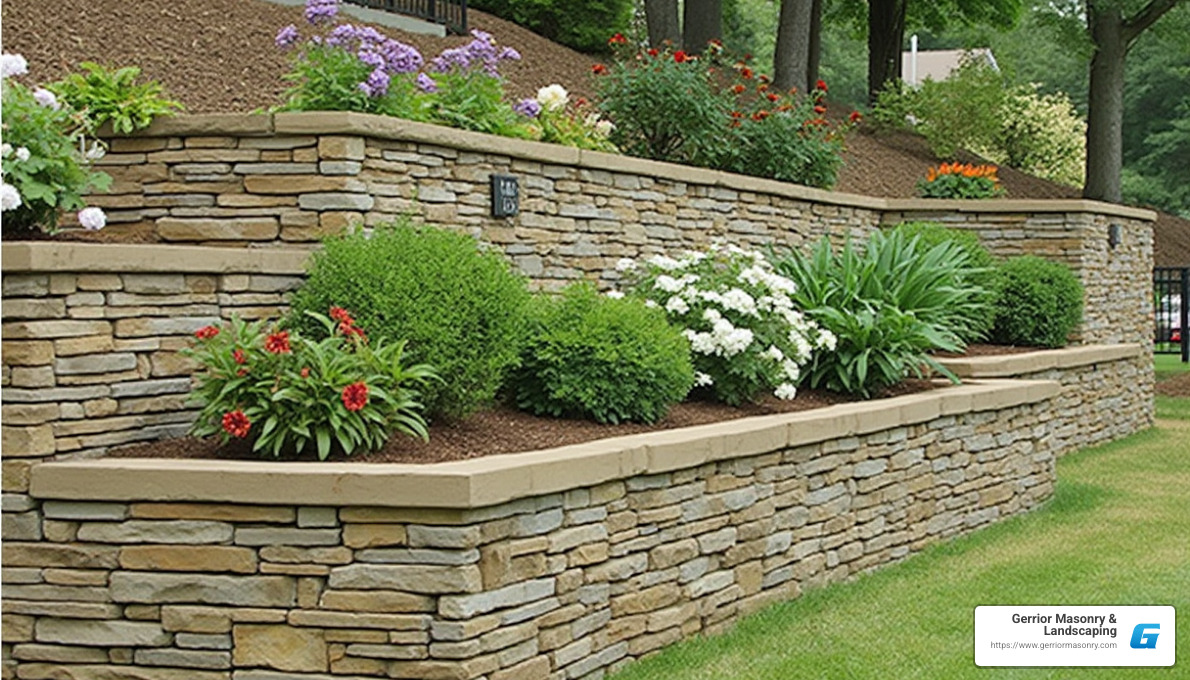
As Joe Raboine from Belgard Residential Hardscapes explains, retaining walls can transform a challenging slope into a beautiful and functional part of your landscape. Whether you’re aiming for a rustic look with natural stones or a modern aesthetic with sleek concrete, the possibilities are endless.
By choosing the right type of retaining wall, you can effectively manage soil erosion and lift the overall design of your outdoor space. With careful planning and expert installation, these walls not only protect your property but also significantly improve its value and usability.
How to Choose the Right Retaining Wall Material
Choosing the right material for your landscape retaining wall is crucial for both aesthetics and functionality. Let’s break down the options:
Concrete
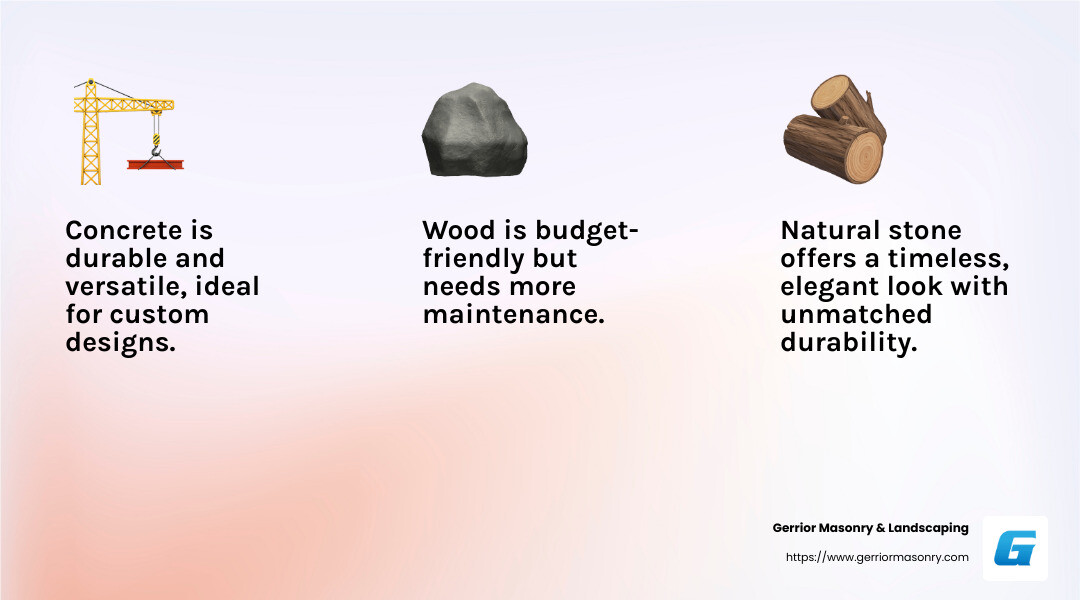
Concrete is a popular choice for retaining walls due to its durability and versatility. It can be molded into various shapes and sizes, making it ideal for custom designs. Poured concrete walls are sleek and modern, offering a clean look that can be improved with wood accents for a softer appeal. While initially more expensive, concrete’s long lifespan makes it a cost-effective option over time.
Natural Stone
Natural stone offers a timeless, neat look that blends seamlessly with the environment. Each stone is unique, providing a rich variety of patterns and textures. Stone walls are highly durable, often outlasting other materials. They are perfect for creating a rustic or traditional aesthetic. However, natural stone can be pricier and may require professional installation due to its weight and complexity.
Wood
Wood is an affordable and common choice for retaining walls, especially for smaller projects. It provides a warm, organic feel and can be treated to extend its lifespan. Pressure-treated wood is recommended to resist decay, but be cautious with nearby plantings, as chemicals in the wood can harm greenery. Wood walls offer a natural look but will need more maintenance and may not last as long as stone or concrete.
Cost Considerations
- Concrete: Higher upfront cost but low maintenance and long lifespan.
- Natural Stone: Expensive but offers best durability and aesthetic appeal.
- Wood: Budget-friendly with a natural look but requires ongoing maintenance.
When selecting a material, consider your budget, desired aesthetic, and the specific needs of your landscape. Consulting with experts like Gerrior Masonry & Landscaping can help you make the best choice for your project. They offer guidance on material selection to ensure your retaining wall not only meets your design goals but also stands the test of time.
By carefully considering these factors, you can select a material that complements your home’s style and improves your outdoor space’s functionality and beauty.
DIY vs Professional Installation
When it comes to installing a landscape retaining wall, deciding between a DIY approach and hiring professionals can be a tough choice. Let’s explore the challenges of DIY, the benefits of professional installation, and essential safety considerations.
DIY Challenges
Building a retaining wall yourself might seem appealing, especially if you enjoy hands-on projects. However, it comes with significant challenges:
- Complexity: Retaining walls require precise engineering to ensure stability. Missteps in calculations or construction can lead to structural failure.
- Labor-Intensive: The process involves heavy lifting, digging, and precise placement of materials. This can be overwhelming without the right equipment or help.
- Material Selection: Choosing the wrong materials can result in a wall that doesn’t last. Each material has specific installation requirements that must be met to ensure durability.
Professional Benefits
Hiring experts like Gerrior Masonry & Landscaping offers numerous advantages:
- Expertise: Professionals understand the nuances of soil types, drainage, and weight distribution, ensuring your wall is both functional and aesthetically pleasing.
- Quality Assurance: With trained professionals, you get high-quality craftsmanship that stands the test of time.
- Time Efficiency: A skilled team can complete the project faster and more efficiently than a DIY attempt, minimizing disruption to your landscape.
Safety Considerations
Safety is paramount in retaining wall construction:
- Structural Integrity: A poorly built wall can collapse, causing injury or property damage. Professionals ensure the wall is built to withstand pressure and environmental factors.
- Proper Drainage: Incorrect drainage can lead to water buildup and wall failure. Experts design drainage solutions that prevent these issues.
- Permits and Regulations: Professionals are familiar with local codes and regulations, ensuring your project complies with all legal requirements.
Choosing between DIY and professional installation depends on your skills, time, and budget. While DIY might save money upfront, the potential risks and challenges often make professional installation a wiser choice. This ensures your landscape retaining wall not only looks great but also performs its essential function safely and effectively.
Top 5 Retaining Wall Ideas to Lift Your Landscape
Changing your outdoor space with a landscape retaining wall is not just about function—it’s about style and creativity too. Here are five innovative ideas to consider:
1. Concrete Retaining Walls with Flower Beds
Imagine a sleek concrete wall with built-in flower beds. This design not only retains soil but also offers a splash of color with vibrant flowers. The contrast between the industrial look of concrete and the lushness of plants creates a stunning visual. Mauricio Lobeira, an architect and designer, notes that adding ornamental plants to a finished wall helps it blend seamlessly with its natural surroundings.
2. Rocky Retaining Walls
For a rustic, natural look, consider using rocks and boulders. A rocky wall can blend beautifully with a woodsy yard, making it feel like a natural extension of the landscape. This approach is perfect if you have access to natural materials and want your wall to blend into the environment effortlessly.
3. Timber Retaining Walls
Timber walls offer a cost-effective solution with a warm, organic feel. While wood may not last as long as stone, using pressure-treated timber can extend its lifespan. Joe Raboine, a director at an outdoor hardscapes company, suggests that timber is an inexpensive and common choice, but recommends keeping plants at a safe distance to prevent chemical damage.
4. Steps Integration
Incorporating steps into your retaining wall design can turn a sloped yard into a multi-level masterpiece. Steps provide easy access between different levels and add a functional element to your landscape. Using materials like flagstone or bluestone for steps can improve the aesthetic appeal and durability of the design.
5. Firepit Inclusion
Why not add a cozy firepit to your retaining wall? This idea transforms your outdoor space into a year-round entertainment area. Patricia Benner, a landscape architect, highlights the organic flow of a stone wall that doubles as seating around a firepit, creating a welcoming and functional outdoor living space.
These ideas not only solve practical issues like soil erosion but also improve the beauty and usability of your landscape. Whether you prefer the sleek look of concrete or the rustic charm of rocks, there’s a retaining wall design to suit every taste and need.
Frequently Asked Questions about Landscape Retaining Walls
What is the cheapest option for a retaining wall?
If you’re looking for budget-friendly options, poured concrete and pressure-treated pine are two cost-effective choices.
- Poured Concrete: This option offers a clean, modern look and is relatively inexpensive compared to other materials. Concrete walls are durable and can be customized with colors or textures for added appeal.
- Pressure-Treated Pine: Using wood, especially pressure-treated pine, is another affordable choice. While wood may not last as long as stone or concrete, treating it helps extend its lifespan. Be mindful of plant placement, as chemicals from treated wood can affect nearby greenery.
How to landscape a retaining wall?
Landscaping your retaining wall involves thoughtful plant placement and ensuring the right shrub distance.
- Plant Placement: Integrate flower beds directly into the wall design for a splash of color. Choose plants that thrive in your climate and complement the wall’s material.
- Shrub Distance: Keep shrubs and other greenery at a safe distance from timber walls to prevent chemical damage from treated wood. This ensures the longevity of both the plants and the wall.
What are the four types of retaining walls?
Understanding the different types of retaining walls can help you choose the right one for your project. Here are the four main types:
- Gravity Walls: These rely on their mass to hold back soil. They are often made from heavy materials like stone or concrete.
- Cantilever Walls: These have a more complex design with a base slab and a thin stem. They use less material than gravity walls and are suitable for taller structures.
- Embedded Walls: Also known as pile walls, these are driven deep into the ground for support. They are ideal for areas with limited space or poor soil conditions.
- Reinforced Soil Walls: These use layers of soil reinforced with materials like geogrids. This type is flexible and can be used in various landscapes.
Choosing the right type and material for your landscape retaining wall can greatly improve the functionality and aesthetics of your outdoor space.
Conclusion
At Gerrior Masonry & Landscaping, we understand that a well-crafted landscape retaining wall can transform your outdoor space into a stunning and functional area. With over 30 years of experience, our expert team is dedicated to delivering quality and precision in every project.
Our skilled professionals oversee every step, ensuring that your retaining wall not only meets but exceeds your expectations. Whether you’re dreaming of a modern concrete wall with built-in flower beds or a rustic timber design that blends seamlessly with nature, we have the expertise to bring your vision to life.
Choosing the right materials and design for your retaining wall is crucial, and our team is here to guide you through the process. From selecting durable materials that suit your budget to ensuring the wall’s design complements your landscape, we take pride in our attention to detail and commitment to excellence.
Our dedication to expert craftsmanship and thorough project oversight means you can trust us to handle your landscaping needs with care and professionalism. We serve various locations across Massachusetts, including Woburn, Andover, and Lexington, making it convenient for you to access our services.
Ready to improve your outdoor space? Contact us to start your landscape change today. Let Gerrior Masonry & Landscaping help you create a beautiful, lasting impression with a retaining wall that reflects your style and needs.
