
Lawn Driveway Pavers: The 2025 Truth
Why Lawn Driveway Pavers Are Growing in Popularity
Lawn driveway pavers are a unique solution combining the strength of concrete or plastic pavers with natural grass growing through open cells. Here’s a quick overview to help you evaluate them:
Key Benefits:
- Allow natural drainage and reduce stormwater runoff
- Support over 97,000 lbs per square foot when properly installed
- Cost $4-$6 per square foot (vs $3-$4 for asphalt/concrete)
- Help with erosion control and soil stabilization
- Provide eco-friendly alternative to solid paving
Main Drawbacks:
- Last only 10-15 years (vs 20-30 for concrete/asphalt)
- Require regular lawn maintenance (mowing, watering)
- Not suitable for patios or entertaining areas
- Can cost twice as much as traditional paving upfront
Best Applications:
- Residential driveways with light to moderate traffic
- Slopes requiring erosion control
- Areas where stormwater management is important
- Properties seeking LEED certification credits
As Joni Mitchell sang, you don’t have to “pave paradise” – grass driveways are growing in popularity for good reason. They offer increased drainage and erosion control while maintaining a low environmental impact.
I’m Joe Gerrior, owner of Gerrior Masonry & Landscape Construction Corp. With over 34 years of experience installing paving solutions in Massachusetts, including lawn driveway pavers, we have unique insight into when these systems make sense for homeowners.
Glossary for lawn driveway pavers:
A Comprehensive Guide to Lawn Driveway Pavers
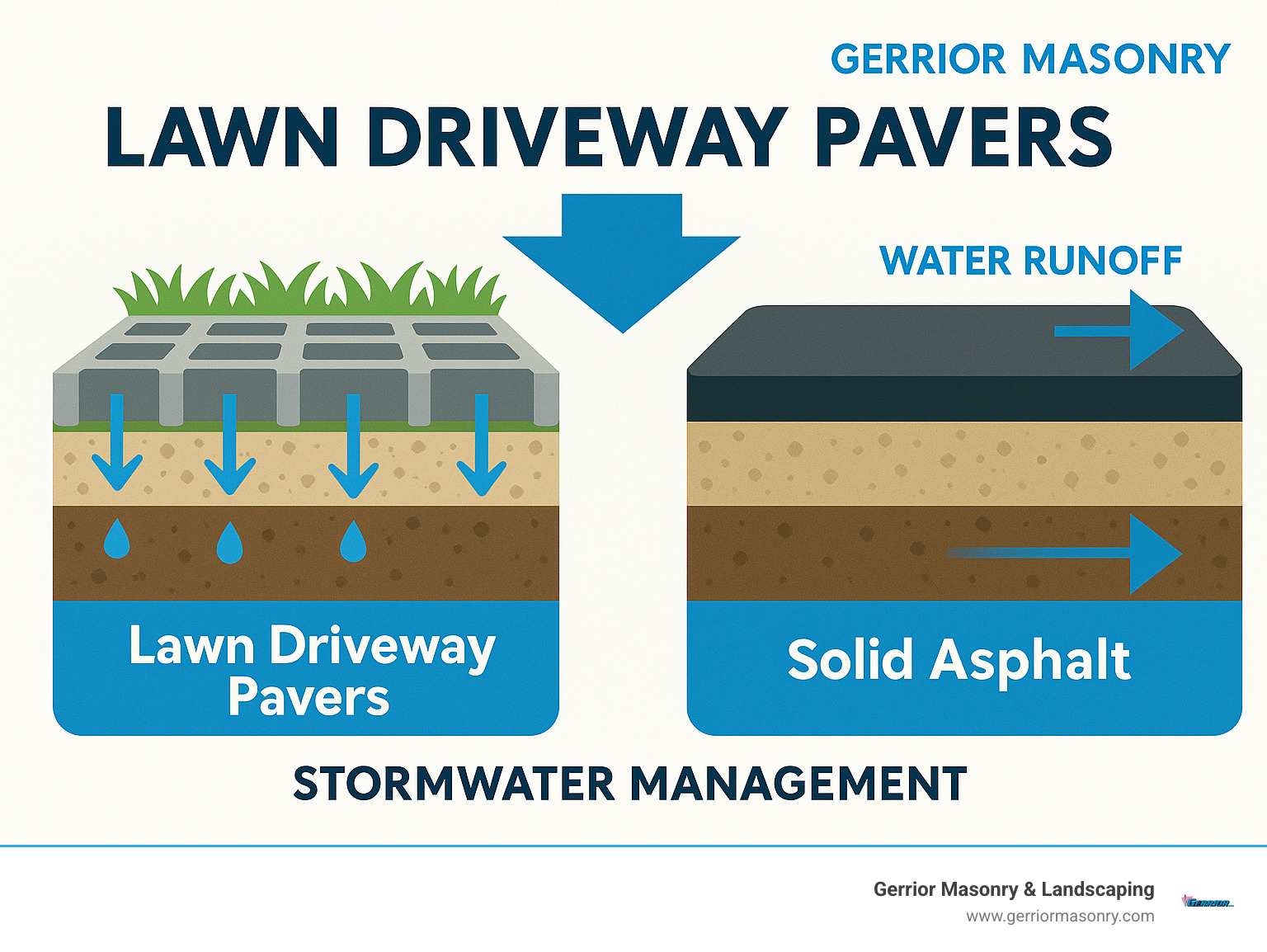
Lawn driveway pavers brilliantly merge engineering and nature. Instead of stark concrete or asphalt, you can have a driveway that looks like a manicured lawn but is strong enough to support any vehicle. These systems use open-celled grids of concrete or recycled plastic to create a stable, load-bearing surface where grass can grow. It’s permeable pavement that doubles as a lawn.
The structural grid beneath the surface is key. It supports your vehicle while also acting as a stormwater management system. Rain passes through into the ground, supporting natural groundwater recharge instead of creating runoff. With over 30 years of experience, we’ve seen how these solutions transform a property’s environmental impact. Understanding the general Benefits of Pavers helps highlight the unique advantages of grass pavers.
The Environmental and Functional Benefits
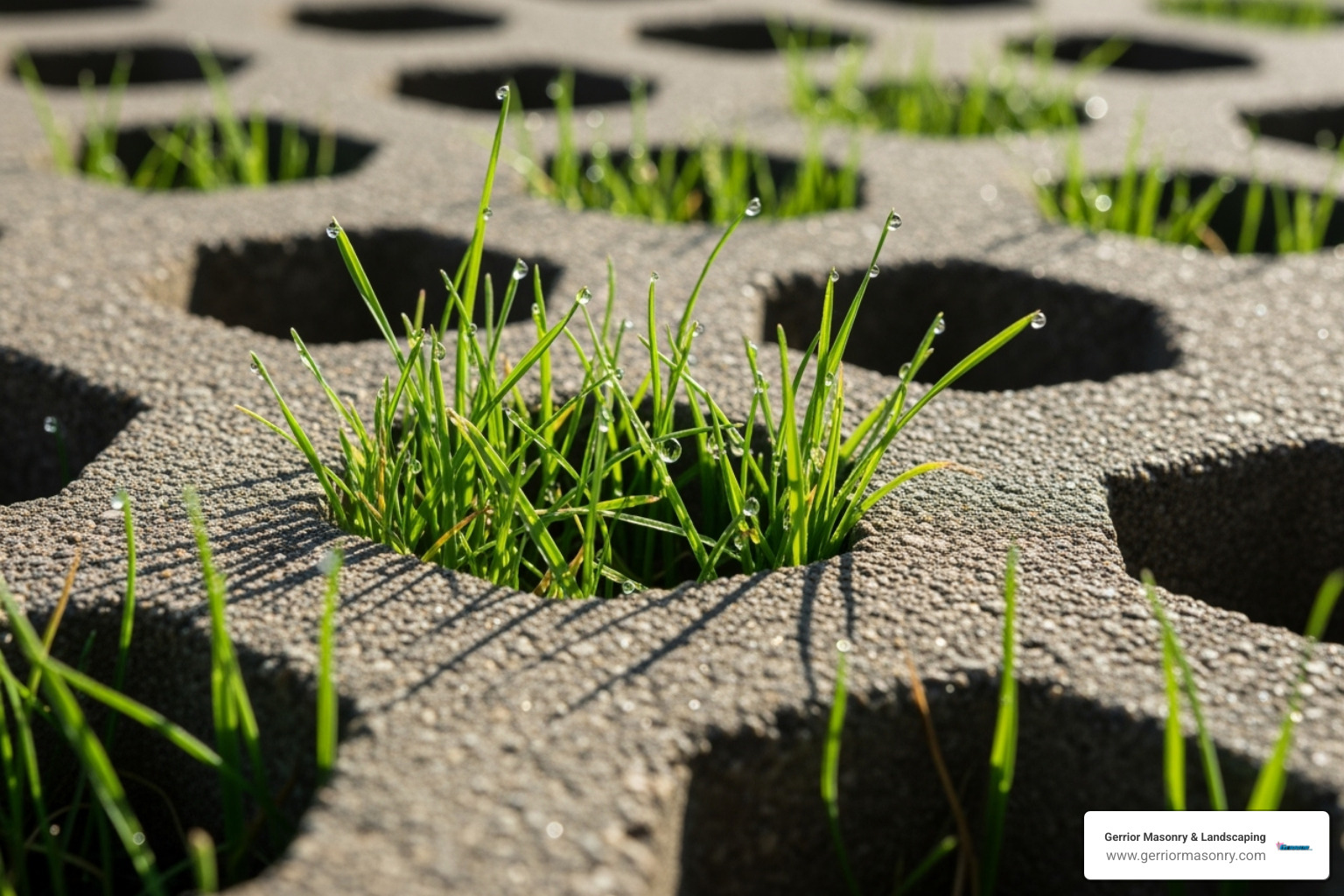
The superior drainage of lawn driveway pavers addresses a major environmental challenge. Unlike solid surfaces that create polluted runoff, grass pavers allow rainwater to soak directly into the ground, mimicking a natural field. This reduced stormwater runoff is not just eco-friendly; it can prevent flooding issues common with traditional driveways.
This process of on-site infiltration is a cornerstone of modern sustainable landscape design, often referred to as Low Impact Development (LID). By managing rainwater where it falls, you actively contribute to recharging local aquifers, which is vital for maintaining healthy stream flows and local water supplies. Furthermore, it significantly lessens the strain on municipal storm sewer systems, which can become overwhelmed during heavy rainfall, leading to combined sewer overflows that pollute local waterways. A grass paver driveway effectively turns a traditionally problematic impervious surface into a functional part of the local ecosystem.
On sloped properties, they provide excellent erosion control. The paver structure and grass roots anchor the soil, preventing erosion during heavy rain, making them a practical solution for steep driveways. Natural water filtration also occurs as rainwater passes through the soil, removing pollutants before they reach the groundwater.
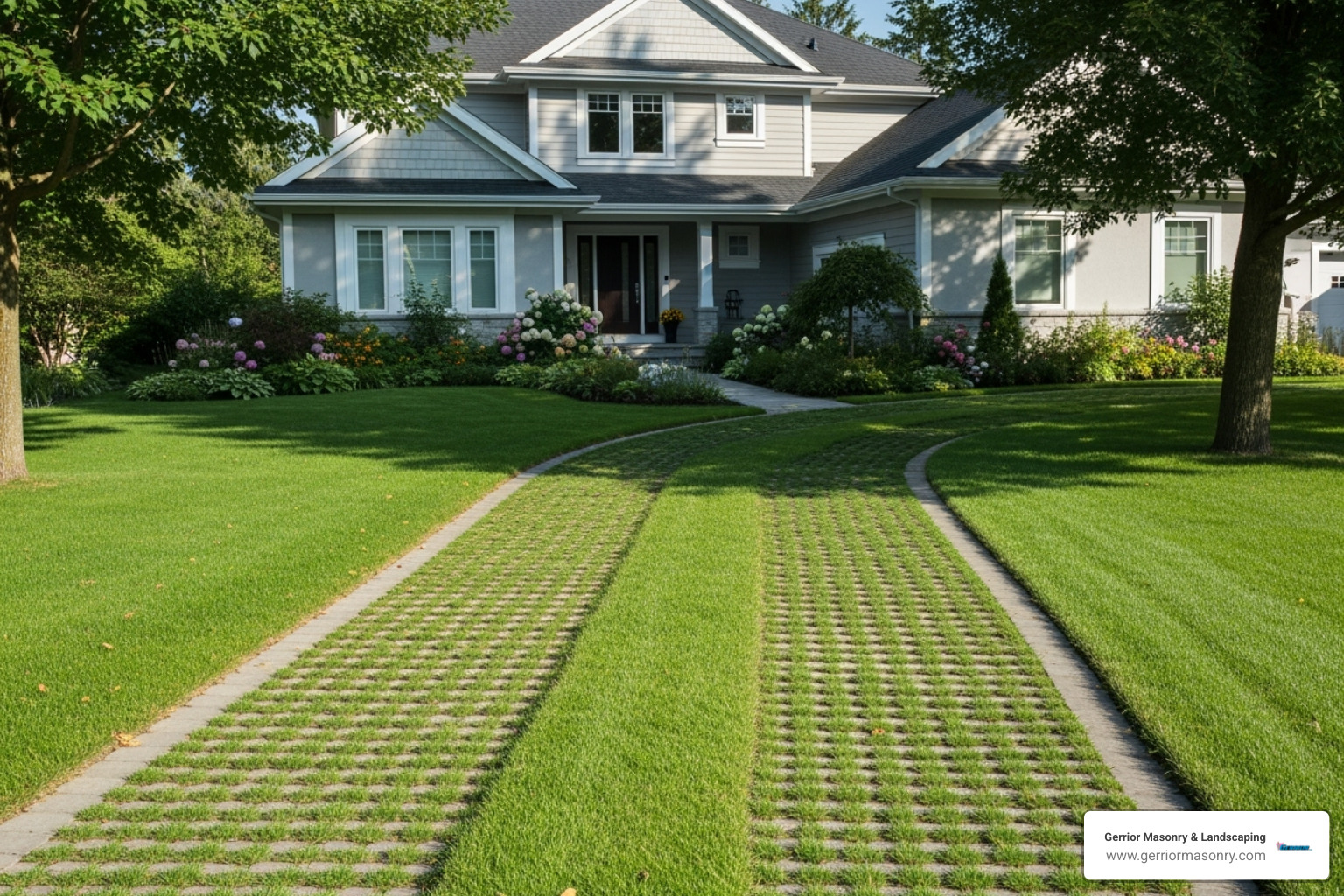
Grass pavers also create a reduced heat island effect. Unlike dark pavement that absorbs and radiates heat, a grass driveway helps cool your property through natural transpiration. The aesthetic integration is remarkable, creating a seamless transition from lawn to driveway and increasing your overall green space. For more details, Everything You Need to Know About Grass Block Pavers offers excellent perspective on their environmental benefits.
Potential Drawbacks and Maintenance for Lawn Driveway Pavers
Lawn driveway pavers are a fantastic solution, but they require maintenance. You are essentially committing to mowing your driveway along with the rest of your lawn. Regular maintenance includes mowing, watering, and weeding. The grass in the paver cells needs the same care as your lawn to avoid a patchy, unattractive appearance.
To ensure the longevity of the grass, it’s best to mow at a slightly higher setting than the rest of your lawn to prevent scalping the crowns of the grass plants against the paver edges. Fertilization might be required once or twice a year, but use a slow-release formula to prevent excessive growth that requires more frequent mowing. It’s also wise to periodically aerate the soil within the cells to combat compaction from vehicle traffic, which can inhibit root growth and water penetration. In high-traffic areas, you may notice some thinning, which can be addressed by overseeding in the spring or fall.
The surface texture has limitations. The uneven surface is unsuitable for high heels, patio furniture, or outdoor entertaining. For those uses, traditional smooth pavers are a better choice. In terms of durability, grass pavers typically last 10-15 years, while concrete or asphalt can last 20-30 years. They don’t fall apart but may need refreshing sooner due to wear in the grass.
Choosing the right grass variety is critical. Fescue handles traffic and varying conditions well. Zoysia creates a dense, drought-resistant carpet. Bermuda grass thrives in full sun and high-traffic areas, while Buffalo grass is a low-maintenance option for drier regions. In warmer areas, St. Augustine grass provides a lush look. Matching the grass to your climate is key. We recommend using quality loam and watering well until the roots are established. Our Paver Maintenance guide offers more tips.
Comparing Materials: Concrete Lawn Driveway Pavers and Design Options
When choosing lawn driveway pavers, you’ll find two main options: concrete and plastic. Each has unique strengths.
Concrete pavers (like Turfstone) are heavy-duty champions, supporting over 97,000 pounds per square foot when installed correctly. Their weight provides excellent stability, making them a popular choice for main driveways.
Plastic lawn driveway pavers, often made from recycled HDPE, are lighter and easier to handle. They typically come in interlocking grids and are well-suited for overflow parking or driveways with lighter traffic.
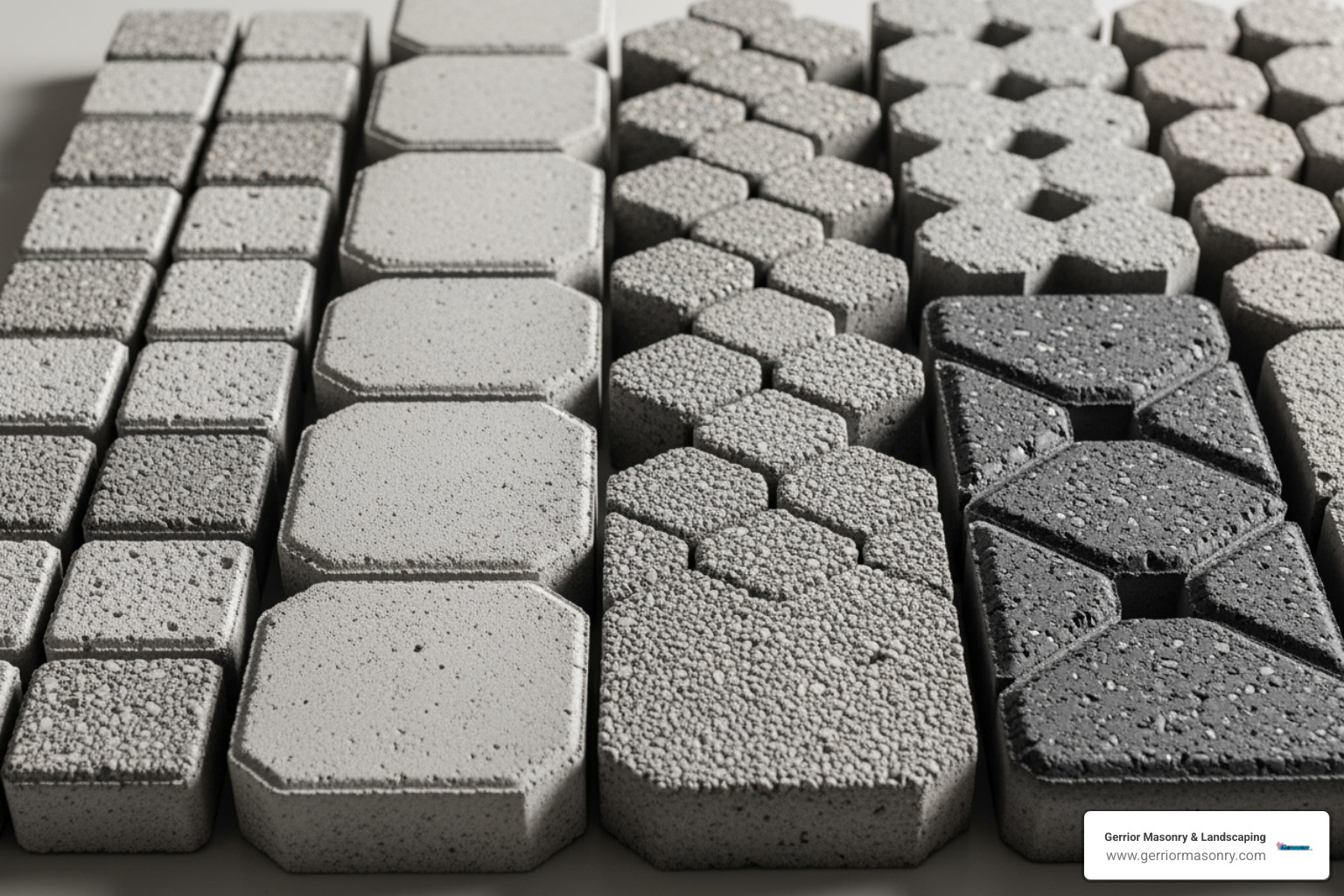
Design flexibility differs. Concrete pavers come in standard sizes and can be arranged in various patterns, usually in earth tones. Plastic grids are designed to disappear as grass grows in, creating a seamless lawn look. A quality system’s 40% open design allows for healthy grass growth while ensuring structural integrity.
The aesthetic difference is dramatic. Grass pavers provide a soft, natural integration with your landscape, avoiding the hard look of traditional paving. Application suitability is key. Concrete is often better for high-traffic main driveways, while plastic systems are great for secondary access or overflow parking. Understanding all Types of Pavers helps place these options in context.
Key Installation Steps and Cost Comparison
Properly installing lawn driveway pavers requires attention to detail. We recommend professional installation for driveways, as the stakes are too high for DIY errors when vehicles are involved.
- Site preparation is crucial. This involves outlining the area, calling utility location services, and excavating to the proper depth (usually 6+ inches).
- Base Preparation: After excavation, the subsoil is compacted. A critical base material layer of 3-6 inches of compacted, crushed stone is added. This foundation is vital for stability and drainage.
- Paver Installation: Concrete or plastic units are placed on the base and interlocked to form a stable surface.
- Filling & Seeding: Filling voids with a quality loam and sand mixture is essential for healthy grass growth. Seeding with a climate-appropriate grass type and establishing a consistent watering routine completes the installation.
Now for the reality check on costs. Based on internet data (not actual Gerrior Masonry pricing), lawn driveway pavers typically run $10 to $35 per square foot for materials and installation. This wide range reflects differences in material quality, site conditions, and project complexity. Compare this to asphalt or concrete at $3-$4 per square foot; grass pavers can cost significantly more upfront.
| Material Type | Cost per Sq Ft | Expected Lifespan | Maintenance Needs |
|---|---|---|---|
| Lawn Driveway Pavers | $10 – $35 | 10-15 years | Regular mowing, watering, occasional repairs |
| Asphalt | $3 – $4 | 20-30 years | Sealing every few years, crack patching |
| Concrete | $3 – $4 | 20-30 years | Periodic sealing, crack repair |
These are average costs based on internet data and not actual costs for Gerrior Masonry services. Your actual project costs may vary significantly based on specific conditions and requirements.
Lifespan factors include material quality, installation precision, traffic, and maintenance. A well-installed and cared-for system will last longer. For more guidance, see our page on Paver Installation. While the upfront investment is higher, the environmental benefits, unique aesthetic, and stormwater management capabilities offer a compelling value proposition.
Are Grass Pavers the Right Choice for Your Driveway?
Deciding if lawn driveway pavers are right for you depends on your priorities. With over 30 years of experience, we know the best driveway is one that fits your lifestyle, not just your budget.
Project suitability is key. If you face drainage or erosion issues, or want a lower environmental impact and a seamless green aesthetic, these pavers are a game-changer. They can contribute to your landscape design rather than interrupting it. The long-term value can justify the higher upfront cost. You’re investing in a system that manages stormwater, reduces your environmental footprint, and offers unique curb appeal that standard paving can’t match.
Realistically, these pavers are not a hands-off solution. They require regular lawn care, including mowing, watering, and weeding. The uneven texture is also a consideration, as it’s not ideal for patio furniture or high heels. We always discuss how you use your outdoor space before making a recommendation.
Professional installation is critical. Proper drainage layers, compaction, and grading are essential for long-term success and avoiding the failure common in DIY projects. At Gerrior Masonry & Landscaping, we bring over 30 years of hardscaping services experience to every project. Our owner oversight ensures your installation meets the highest standards, perfected for New England’s climate and soil.
The choice is yours. If you value aesthetics and environmental benefits and don’t mind the maintenance, grass pavers could be perfect. If not, we can explore other great options with you.
Ready to explore whether this innovative paving solution fits your vision? Contact us for your driveway project and let’s have an honest conversation about what will work best for your specific situation and goals.
Gerrior Masonry & Landscape Construction is based in Woburn, MA, and proudly services Middlesex and Essex County, Massachusetts.
