Why Massachusetts Homeowners Are Investing in Covered Patios
Working with covered patio builders is one of the smartest upgrades a Massachusetts homeowner can make — especially when New England weather can go from sunny to stormy in a matter of hours.
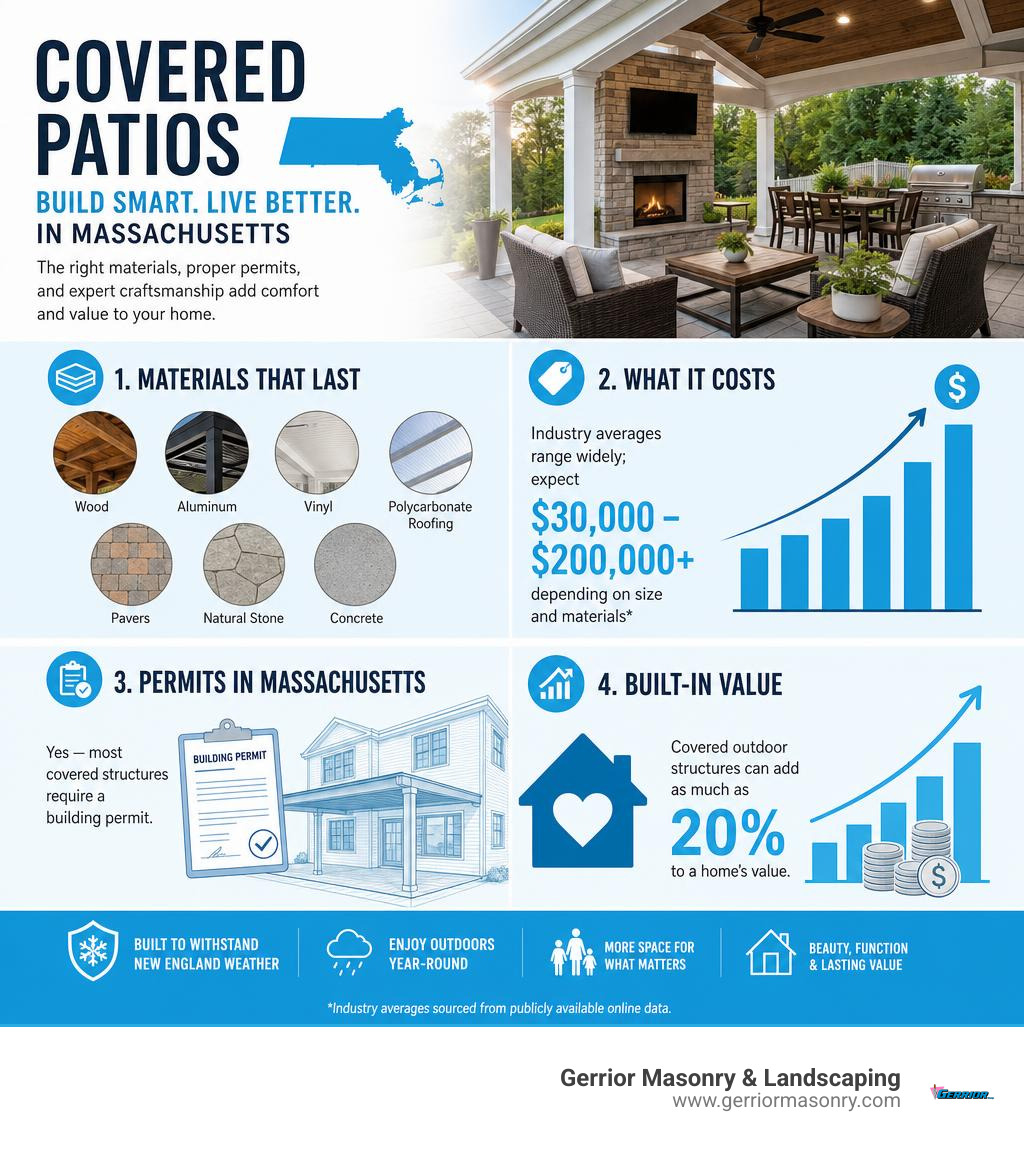
Quick Answer: What to Know About Covered Patio Builders
Question
Quick Answer
What do covered patio builders do?
Design and build outdoor structures like pergolas, covered patios, screened porches, and pavilions
What materials are used?
Wood, aluminum, vinyl, polycarbonate roofing, pavers, natural stone, and concrete
Do I need a permit in MA?
Yes — most covered structures require a building permit
How much does it cost?
Industry averages range widely; expect $30,000–$200,000+ depending on size and materials*
How long does it take?
Typically 2–8 weeks from design to completion
*These are industry averages sourced from publicly available online data and do not reflect actual Gerrior Corp rates or guarantees.
A covered patio does more than keep the rain off. It extends your usable living space, adds measurable value to your home, and makes outdoor time enjoyable year-round — even during a blustery Woburn fall or a humid Lexington summer.
Understanding the Massachusetts Climate Challenge
In Massachusetts, our outdoor spaces face a unique set of challenges. From the heavy snow loads of late winter to the intense humidity of July and August, any outdoor structure must be built to endure. A standard open deck or patio limits your outdoor enjoyment to only the most perfect days. By working with professional covered patio builders, you can shield your family from sudden summer downpours, block harsh afternoon UV rays, and even keep your outdoor furniture protected from the elements year-round. This added protection means less maintenance for your outdoor setup and more opportunities to host gatherings, cook outdoors, or simply relax with a morning coffee.
Covered outdoor structures can add as much as 20% to a home’s value, making them one of the most return-rich investments in residential outdoor improvement.
But not all patios are built the same. The materials you choose — for both the roof structure and the ground surface — directly affect how well your patio holds up against Massachusetts winters, spring rains, and summer heat.
That’s exactly what this guide is designed to help you figure out: which materials perform best, what the building process looks like, and how to choose the right team for the job.
I’m Joe Gerrior, owner of Gerrior Masonry & Landscaping, a family-owned business based in Woburn, MA, with over 34 years of experience in masonry, hardscaping, and outdoor construction — including working alongside covered patio builders on projects across the region. That hands-on background gives me a ground-level view of what materials last, what fails, and what Massachusetts homeowners actually need.
Choosing the Right Materials with Covered Patio Builders
When planning an outdoor oasis, selecting the right combination of structural and surface materials is the most critical decision you will make. In Massachusetts, our outdoor spaces must endure intense weather swings—from freezing winter blizzards to scorching summer afternoons.
A successful covered patio project requires a harmonious design between the overhead roof and the ground base. If either element is constructed with subpar materials, the longevity of your entire investment is compromised. Experienced covered patio builders will always emphasize selecting weather-resistant, durable materials engineered specifically for the New England climate.
Comparing Roof Materials with Covered Patio Builders
The roof of your covered patio is your primary shield against the elements. Different framing and roofing materials offer distinct balances of aesthetics, durability, maintenance requirements, and cost.
Wood (Cedar & Timber): Wood remains the classic choice for a rustic, high-end look. It is highly customizable and provides excellent structural strength. However, natural wood requires regular staining and sealing to prevent rot, warping, and insect damage in humid Massachusetts summers.
Aluminum: Modern powder-coated aluminum is incredibly durable and virtually maintenance-free. It won’t rust, rot, or warp. High-quality aluminum covers can even be engineered with wood-grain textures (like Alumawood) to offer the beauty of wood without the upkeep.
Vinyl: A budget-friendly, low-maintenance option that resists moisture and pests. While easy to clean, vinyl has less structural strength than wood or aluminum and may crack under extreme New England temperature drops.
Polycarbonate Panels: Often used for pergolas or translucent patio covers, these lightweight panels allow natural light to filter through while blocking harmful UV rays and shedding rainwater.
When choosing a roof system, consulting with a trusted Patio Contractor in Woburn, MA ensures your structure is engineered to handle local snow loads.
Roof Material
Durability
Maintenance Level
Relative Cost
Best Suited For
Natural Wood
High (if maintained)
High (staining/sealing)
High
Traditional & rustic custom designs
Aluminum
Excellent (15-20+ years)
Very Low
Moderate to High
Modern, low-maintenance structures
Vinyl
Moderate
Low
Low
Budget-conscious, simple overhangs
Polycarbonate
High
Low
Moderate
Light-filtering, contemporary covers
Selecting the Best Patio Base Materials
What lies beneath your feet is just as important as the roof overhead. The base material must handle heavy foot traffic, support outdoor furniture, and withstand the natural shifting of the ground during winter freeze-thaw cycles.
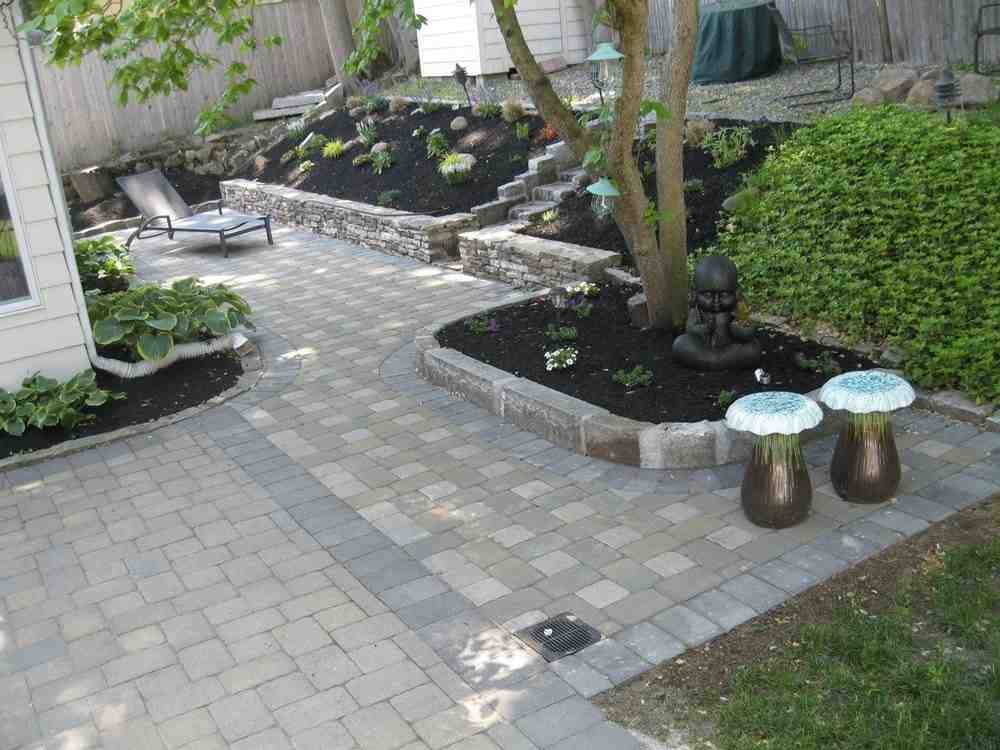
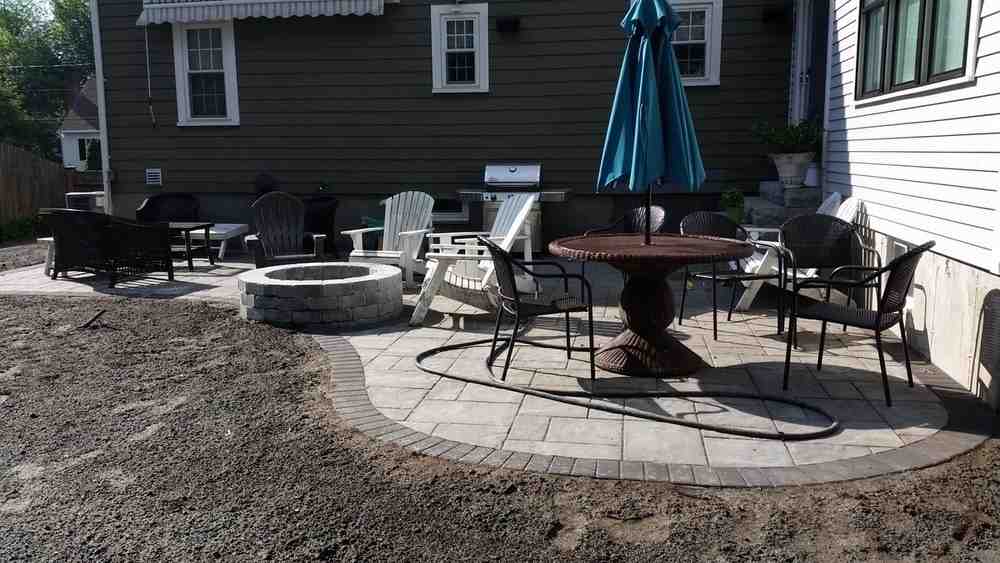
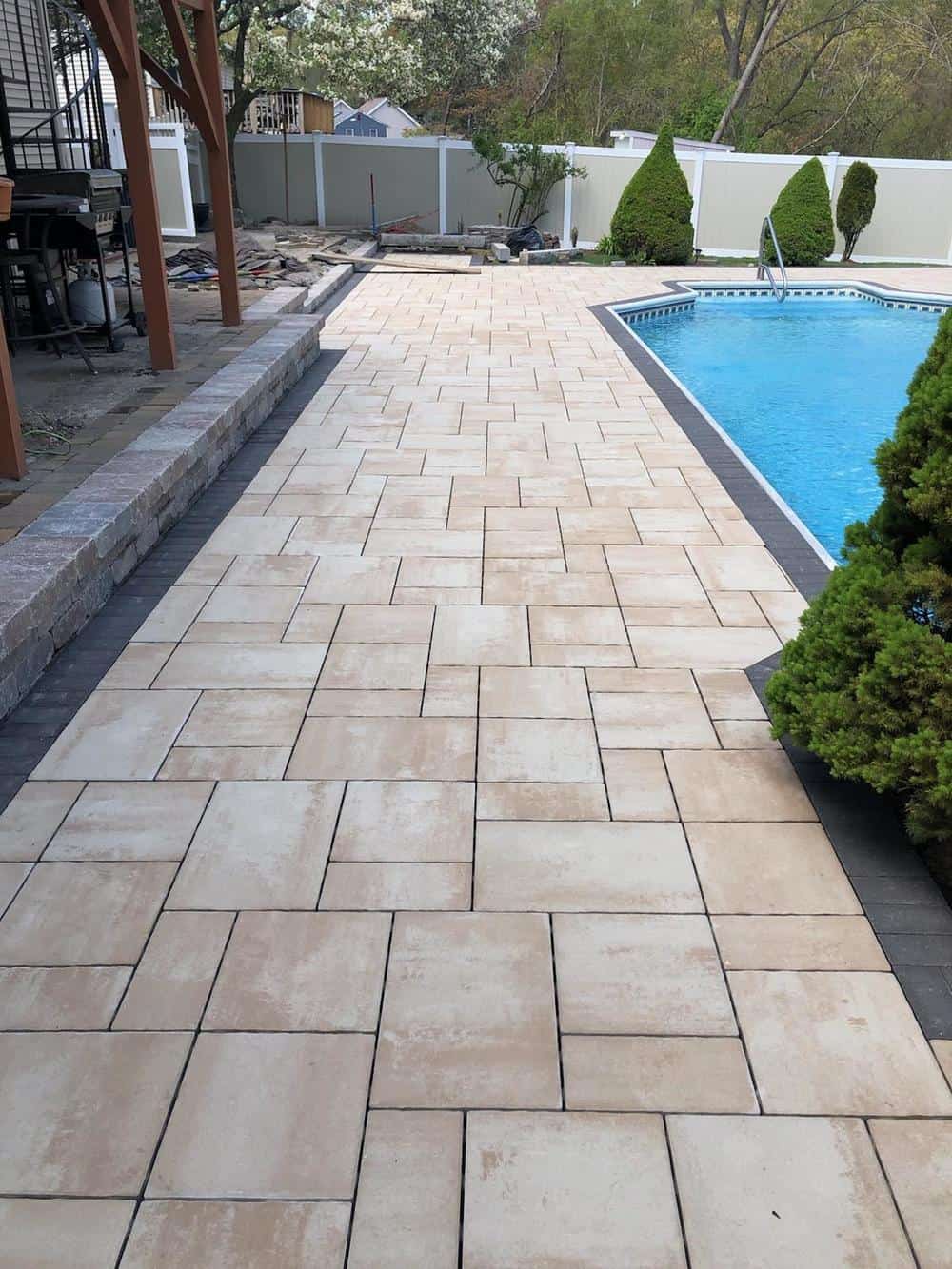
Concrete Pavers: Pavers are highly recommended by any professional Patio Contractor. Because they are individual interlocking units, they can flex slightly with ground movement, preventing the unsightly cracking common with poured concrete. Learn more about your options by reviewing our guide on Patio Paver Installation.
Natural Stone (Flagstone, Bluestone, Granite): For unmatched elegance and durability, natural stone is the premier choice. It offers a timeless look that blends seamlessly with New England landscapes. From historic homes in Winchester to modern properties in Lexington, natural stone stands the test of time.
Poured Concrete: While a cost-effective option initially, standard poured concrete is highly susceptible to cracking in Massachusetts due to extreme temperature swings.
The Importance of Proper Footings and the MA Frost Line
One of the most critical technical aspects that professional covered patio builders must address in Massachusetts is the local frost line. Because our winters bring freezing temperatures that penetrate deep into the soil, any load-bearing structure must be anchored by footings that extend below the frost line—typically 48 inches deep in most Massachusetts municipalities.
If footings are poured too shallow, the ground’s natural freeze-thaw cycle will cause “frost heaving.” This upward movement of the soil can shift the support posts, warping the roof structure, cracking the patio base, and potentially causing catastrophic structural failure. Experienced builders ensure that every post is anchored securely with code-compliant concrete footings, protecting your investment for the long haul.
Why Hire Professional Covered Patio Builders in Massachusetts?
Building an outdoor structure with a roof is vastly different from laying a simple ground-level walkway. A covered patio is a load-bearing structure that must be engineered to withstand heavy snow accumulation and high winds.
Attempting a DIY installation or hiring an unlicensed contractor can lead to catastrophic structural failures. Professional covered patio builders understand the physics of roof pitches, post-to-beam connections, and the footings required to keep your structure safe.
According to online industry data, the average cost to design and construct a custom covered patio in the Massachusetts area ranges from $30,000 to $200,000+ depending on size, materials, and integrated features (such as outdoor fireplaces or custom masonry).
Please note: These figures represent wide industry averages compiled from online data and do not reflect actual Gerrior Corp rates or guarantees.
Before a single shovel touches the dirt on your property in Lexington, Burlington, or Winchester, you must secure the proper building permits.
Because a covered patio features a permanent roof structure, local municipal building codes treat it as an addition or structural modification. Local zoning laws dictate specific setback requirements—the minimum distance your structure must be from property lines. Furthermore, if you live in a neighborhood governed by a Homeowners Association (HOA), you will need to submit your architectural drawings for design approval, which typically takes around 30 days.
In towns like Lexington, Winchester, and Burlington, building departments are highly diligent about structural safety and zoning compliance. When you apply for a permit for a covered patio, you must submit detailed architectural plans that specify the lumber grade, fastener types, roof pitch, and load-bearing capacities. Additionally, zoning bylaws regulate “impervious surface limits”—the percentage of your lot that can be covered by structures that do not absorb rainwater. Professional builders handle these calculations and represent you at town hall, ensuring a smooth approval process without costly delays.
Explore our Patio Installation Services to see how we manage your project from initial design to final municipal sign-off.
Conclusion
A custom covered patio is an investment in your home’s value, functionality, and daily enjoyment. By choosing durable materials engineered for our unique New England climate and partnering with experienced professionals, you can create a beautiful, weather-resistant sanctuary that your family will enjoy for decades.
At Gerrior Masonry & Landscaping, we bring over 30 years of hands-on hardscaping, masonry, and landscaping services to homeowners in Woburn, Winchester, Lexington, and surrounding Massachusetts communities. Under direct owner oversight, our highly skilled team ensures every stone is laid perfectly and every structure is built to last.
Ready to transform your backyard and stop letting the rain ruin your outdoor plans? Let’s design your dream space together.
Outdoor Wall Construction 101: From Trench to Topper
Why Your Retaining Wall Foundation Determines Everything
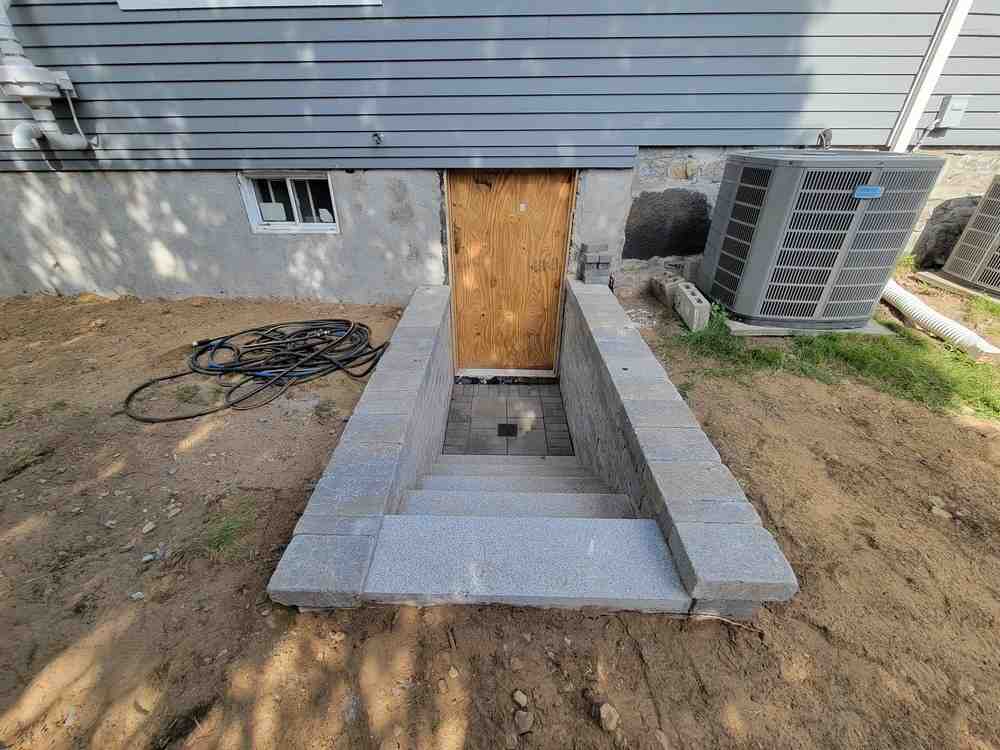
A retaining wall foundation is the buried base layer that supports your entire wall — and getting it right is the single most important step in the whole project.
Here’s what you need to know at a glance:
Wall Height
Trench Width
Trench Depth
Embedment Depth
0–2 ft
12 in
4 in
4 in
2–4 ft
18 in
4 in
6 in
4–6 ft
24 in
6 in
8 in
Over 4 ft
Engineer required
Engineer required
Engineer required
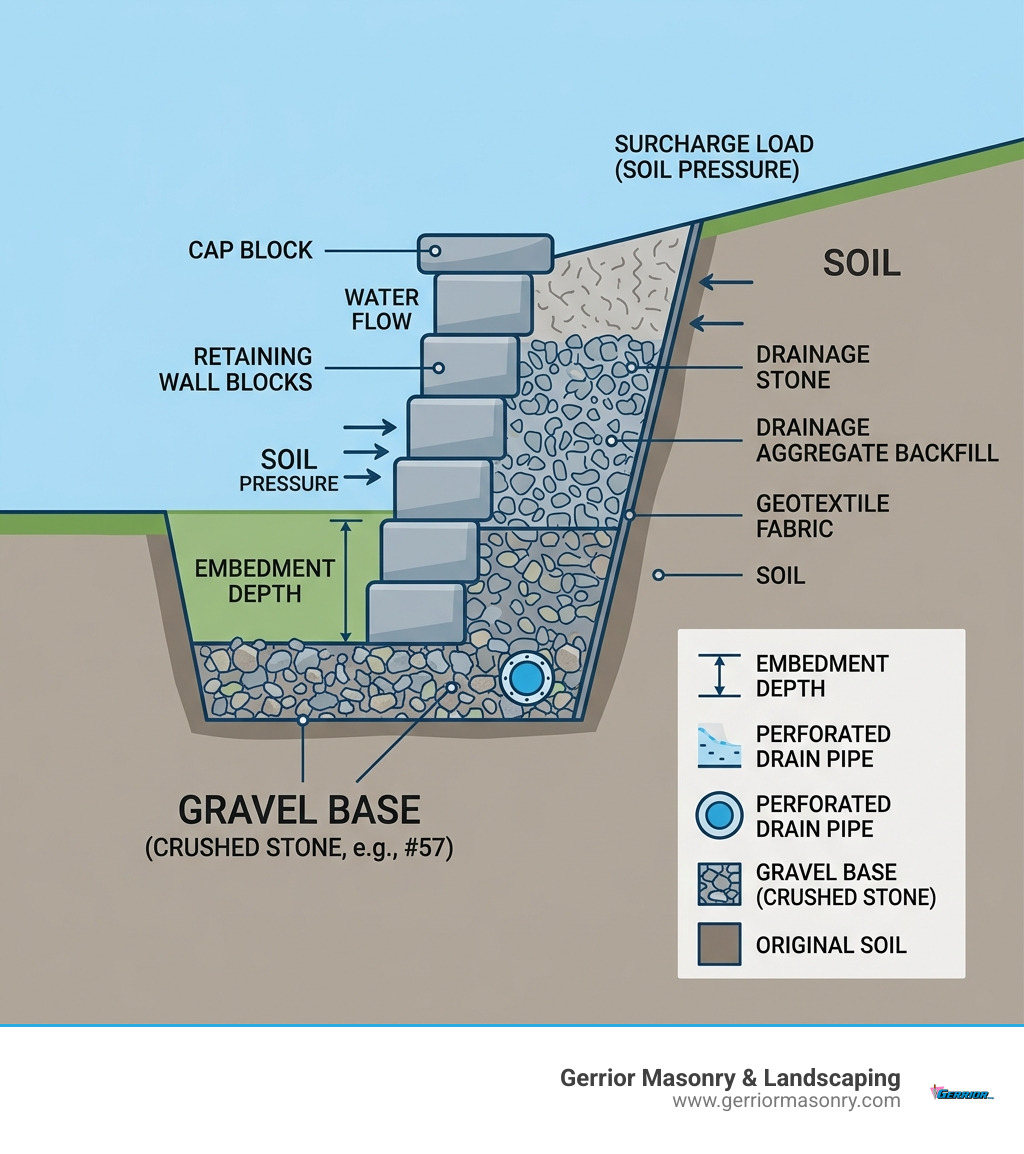
Base material: Use crushed stone, #57 stone, or paver base — never pea gravel or river rock
Compaction: Always compact in layers; don’t skip this step
Drainage: A perforated drain pipe is required for walls over 4 ft or on poor-draining sites
Permits: Most Massachusetts towns require a building permit for walls taller than 4 ft
A wall built on a weak or poorly prepared foundation will lean, settle, or collapse — often within just a few years. The soil pressure pushing against a retaining wall is enormous, and only a properly engineered base can resist it over the long term.
I’m Joe Gerrior, owner of Gerrior Masonry & Landscape Construction Corp., and after 34 years of building and repairing retaining wall foundations across Massachusetts, I’ve seen what separates walls that last decades from those that fail after a single winter. In this guide, I’ll walk you through everything you need to build a retaining wall foundation that holds — from trench dimensions to drainage to knowing when to call an engineer.
Engineering a Rock-Solid Retaining Wall Foundation
When we talk about a retaining wall foundation, we aren’t just talking about the dirt at the bottom of a hole. We are talking about a carefully engineered system of excavated soil, compacted aggregates, and buried structural units. Unlike a house foundation, which is braced at the top by floor joists and a roof, a freestanding retaining wall is often “unbraced.” This means it has to stand entirely on its own against the lateral pressure of the earth behind it.
The first step in any retaining wall installation is understanding the site. In places like Andover, MA, or Winchester, MA, we often deal with heavy clay or rocky “glacial till.” These soils behave differently when wet, which is why the base for retaining wall must be prepared to handle both weight and water.
Determining Depth and Width for Your Retaining Wall Foundation
The dimensions of your trench are dictated by the height of the wall and the weight of the material you are using. A common mistake we see in DIY projects in Arlington and Medford is a trench that is too narrow. If the trench isn’t wide enough, the pressure from the backfill can actually “kick” the bottom of the wall forward because there isn’t enough friction at the base.
The Rule of Thumb for Width:
Your retaining wall foundation trench should generally be twice as wide as the block or stone you are using. For a standard 6-inch or 8-inch block, an 18-inch width is a safe minimum for walls under 4 feet. As the wall gets taller, we increase that width to 24 inches or more to provide a larger “footprint” to distribute the weight.
The Rule of Thumb for Depth:
Depth is a two-part calculation: the thickness of your base material (the leveling pad) plus the “embedment.”
The Base Pad: Usually 4 to 6 inches of compacted crushed stone.
Embedment: This is the portion of the wall that stays buried underground. For a standard gravity wall, we typically bury 1 inch of block for every 1 foot of wall height. So, a 3-foot wall needs at least 3 inches of block underground, while a 6-foot engineered wall might require 8 inches or more.
According to Scientific research on SRW best practices, the depth of the trench should be at least 6 inches plus an additional 1 inch for each foot of wall height to account for the buried block. This embedment is what prevents the wall from sliding forward under the pressure of the soil.
Essential Materials for a Stable Retaining Wall Foundation
The materials you choose for your foundation pad are just as important as the depth of your trench. We always tell our clients in Woburn and Burlington that “round is wrong.” If you use pea gravel or river rock for your base, the stones will act like ball bearings, allowing the wall to shift.
You need angular, crushed stone that “locks” together when compacted. Recommended materials include:
#57 Stone: A clean, 3/4-inch crushed stone.
Crushed Stone Screenings: Often called “dense grade,” this contains a mix of small stones and stone dust that packs down like concrete.
Paver Base: A reliable choice for smaller garden walls.
Once the material is in the trench, it must be compacted in “lifts.” This means you don’t dump 6 inches of stone and run the compactor once. You add 2 inches, compact it until it’s rock-hard, add another 2 inches, and repeat. This ensures there are no air pockets that could lead to settling later.
If you ask any masonry expert in Massachusetts what the #1 cause of retaining wall failure is, they won’t say “bad blocks” or “thin stone.” They will say water.
When soil behind a wall becomes saturated, it creates “hydrostatic pressure.” Water is incredibly heavy (about 62.4 pounds per cubic foot), and when it gets trapped behind a wall with a poor foundation, it can easily push a wall over or cause the foundation to wash out.
To prevent this, every retaining wall foundation over 4 feet tall (or any wall built in heavy clay soil) needs a drainage system. This usually involves:
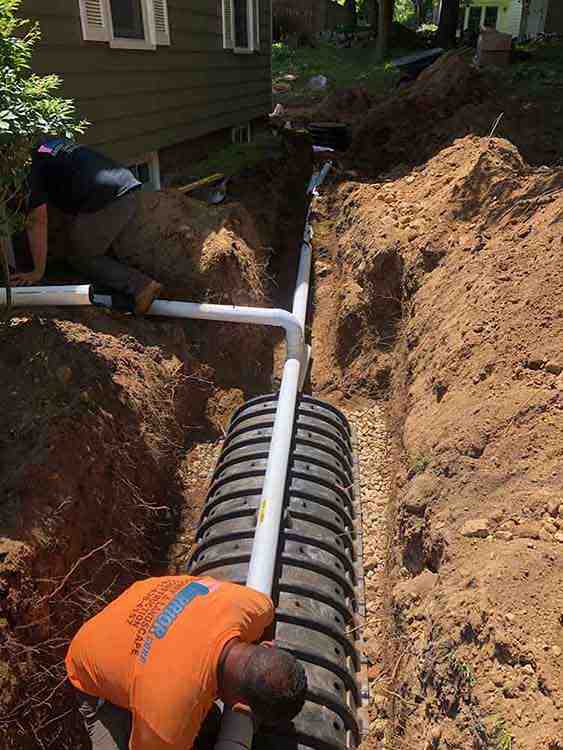
Perforated Drain Pipe: A 4-inch pipe placed at the lowest point of the foundation, behind the first course of blocks.
Drainage Stone: A chimney of clean, crushed stone (at least 12 inches wide) that runs from the foundation all the way up to the top of the wall.
Filter Fabric: This keeps the fine dirt from the yard from clogging up your drainage stone and pipe.
Properly venting this pipe to “daylight” (an area where the water can safely run away from the wall) is crucial. Without this, your foundation will eventually sit in a pool of mud, losing its bearing capacity. You can find more details on how we handle these complex water issues on our drainage systems services page. For a deeper dive into how these systems interact with building structures, see the Scientific research on structural relationships.
Professional Standards and Common Pitfalls
In the masonry world of 2026, we follow strict standards to ensure safety. One of the most important rules is the 4-foot rule. In almost every municipality we service — from Concord to Salem — any wall that is 4 feet or taller (measured from the bottom of the footing to the top of the wall) is legally required to have a building permit and engineered drawings.
This isn’t just red tape. A 4-foot wall is holding back thousands of pounds of earth. If you are building a wall that will have a “surcharge” — like a driveway, a swimming pool, or a house foundation — within a distance equal to twice the wall’s height, the engineering becomes even more critical.
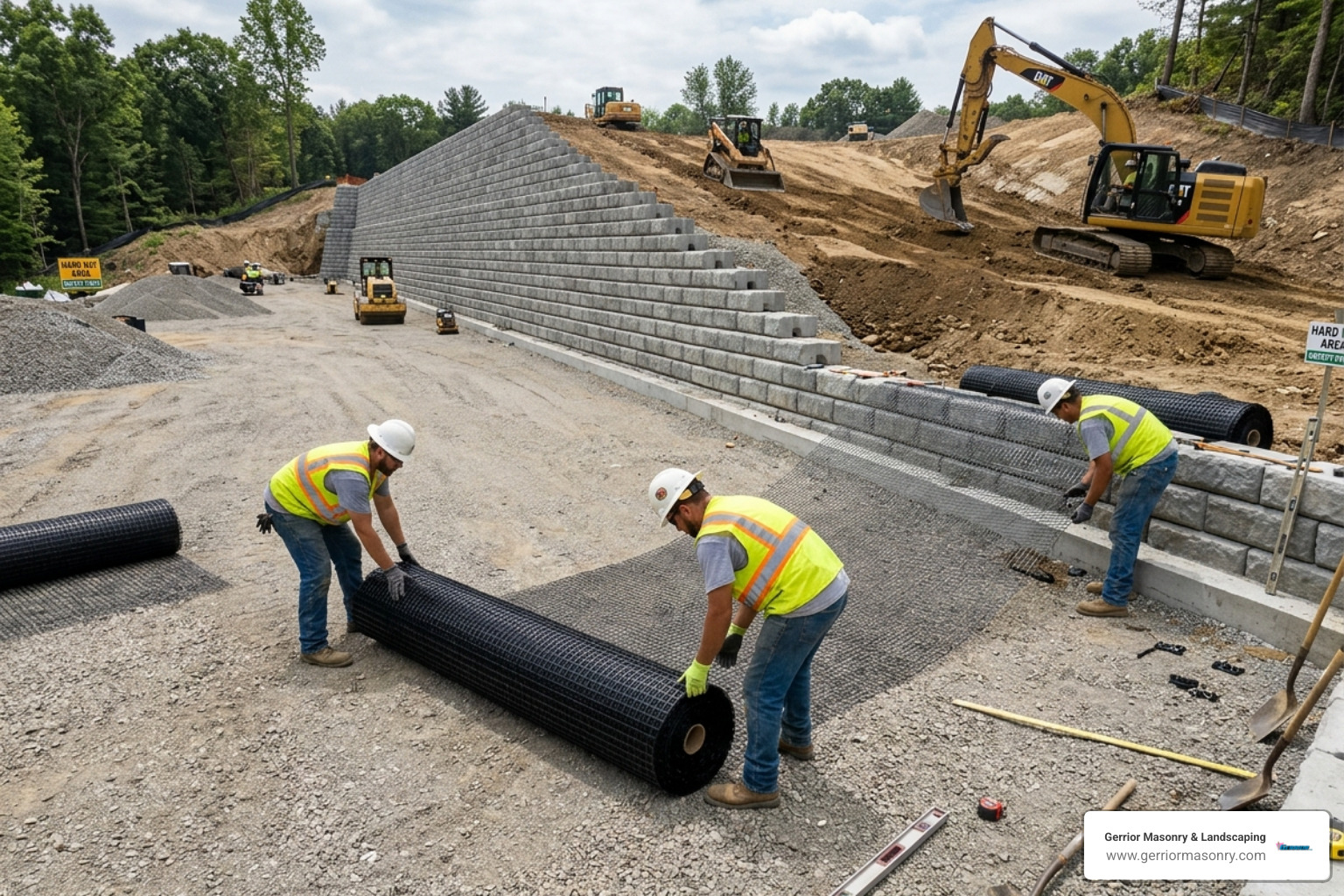
When we build taller walls, we often use geogrid. This is a high-strength synthetic mesh that is laid between the courses of block and extended back into the soil. It turns the soil itself into a reinforced mass, taking the pressure off the face of the wall. This geogrid must be tied into the retaining wall foundation plan to ensure the entire structure moves (or stays still) as one unit.
While a 2-foot garden bed is a great weekend project, some scenarios are simply too dangerous for a DIY approach. You should always consult a professional if:
The Wall is Over 4 Feet: As mentioned, this is the legal and safety threshold.
The Ground Slopes Downward in Front of the Wall: This is called a “toe slope.” If the ground drops away in front of your wall, there is nothing to “push back” against the base. We often have to bury the wall much deeper in these cases — sometimes several feet — to find stable ground.
The Ground Slopes Upward Behind the Wall: A “surcharge slope” significantly increases the pressure on the wall.
You Are Building Near a Property Line: You don’t want your wall foundation to accidentally undermine your neighbor’s fence or shed.
Our team of retaining wall landscapers works closely with structural engineers to ensure these factors are accounted for. This is especially true for traditional Massachusetts styles like fieldstone wall construction, where the irregular shapes of the stones require a perfectly level and stable base to prevent shifting.
Avoiding Costly Foundation Mistakes
We spend a significant amount of our time performing foundation repair on walls that were built incorrectly. Here are the most common “wall killers” we see:
Building on Organic Soil: You cannot build a wall on top of topsoil, mulch, or sod. Organic material rots and compresses over time. If your foundation sits on organic soil, the wall will sink. You must dig down until you hit firm, inorganic subsoil.
Skipping the Plate Compactor: Using a hand tamper is fine for a tiny border wall, but for anything structural, you need the thousands of pounds of force provided by a mechanical plate compactor.
Leveling with Dirt: Never use loose soil to level your blocks. Always use your crushed stone base or a very thin layer (less than 1/2 inch) of coarse sand. Soil will wash away; stone will stay.
Ignoring the “Active Zone”: If you dig a trench for a new wall too close to an existing cinder block foundation, you could cause the house foundation to settle. This is why professional oversight is so important.
Conclusion: Building for the Future with Gerrior Masonry
Building a retaining wall foundation is about more than just moving dirt; it’s about creating a permanent structure that enhances your property and protects your landscape. At Gerrior Masonry & Landscaping, we bring over 30 years of experience to every project. Whether we are working in Lexington, Newton, or our home base of Woburn, MA, our skilled team ensures that every wall is built to last.
One of our unique advantages is owner oversight. Joe Gerrior is personally involved in ensuring the quality of our work, from the first scoop of the excavator to the final capstone. Beyond masonry, we also provide landscape walls and essential commercial snow removal services to keep Massachusetts businesses safe during our tough winters.
What does a retaining wall cost in Massachusetts?
While every site is unique, internet data suggests that average costs for a professionally installed retaining wall in the Massachusetts area range from $40 to $150 per square foot. Depending on the height, material (like natural fieldstone vs. interlocking block), and drainage needs, total project costs typically fall between $5,000 and $45,000+. Factors like difficult access, steep slopes, or the need for an engineer can push prices toward the higher end of that range.
If you are ready to transform your yard with a wall that stands the test of time, reach out to us. We’ve built our reputation one stone at a time, ensuring that every retaining wall foundation we lay is a rock-solid investment in your home’s future.
Gerrior Masonry & Landscape Construction is based in Woburn, MA, and services Middlesex and Essex County, Massachusetts.
Outdoor Firepit Builder: 7 Powerful Tips for Stunning Results 2025
The Art and Function of Outdoor Fire Features
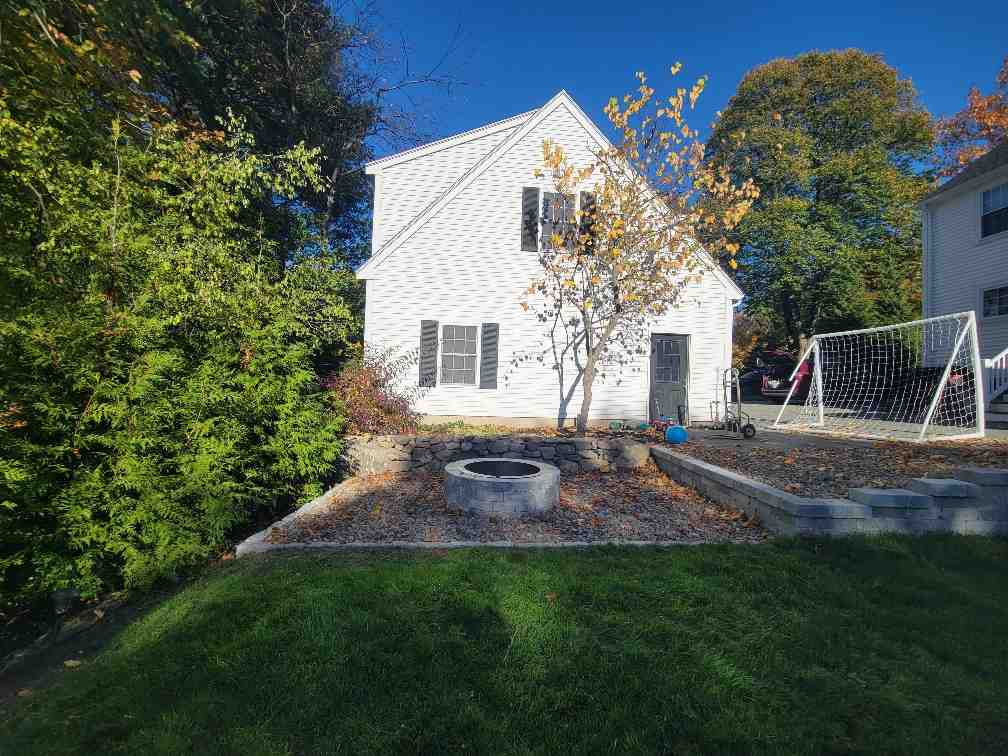
If you’re looking for an Outdoor Firepit Builder, here’s what you need to know:
Professional builders typically charge $1,500-$9,000+ depending on materials and complexity
DIY kits range from $300-$3,000 but require installation skills
Key considerations: fuel type (wood, gas, propane), material durability, local codes/permits
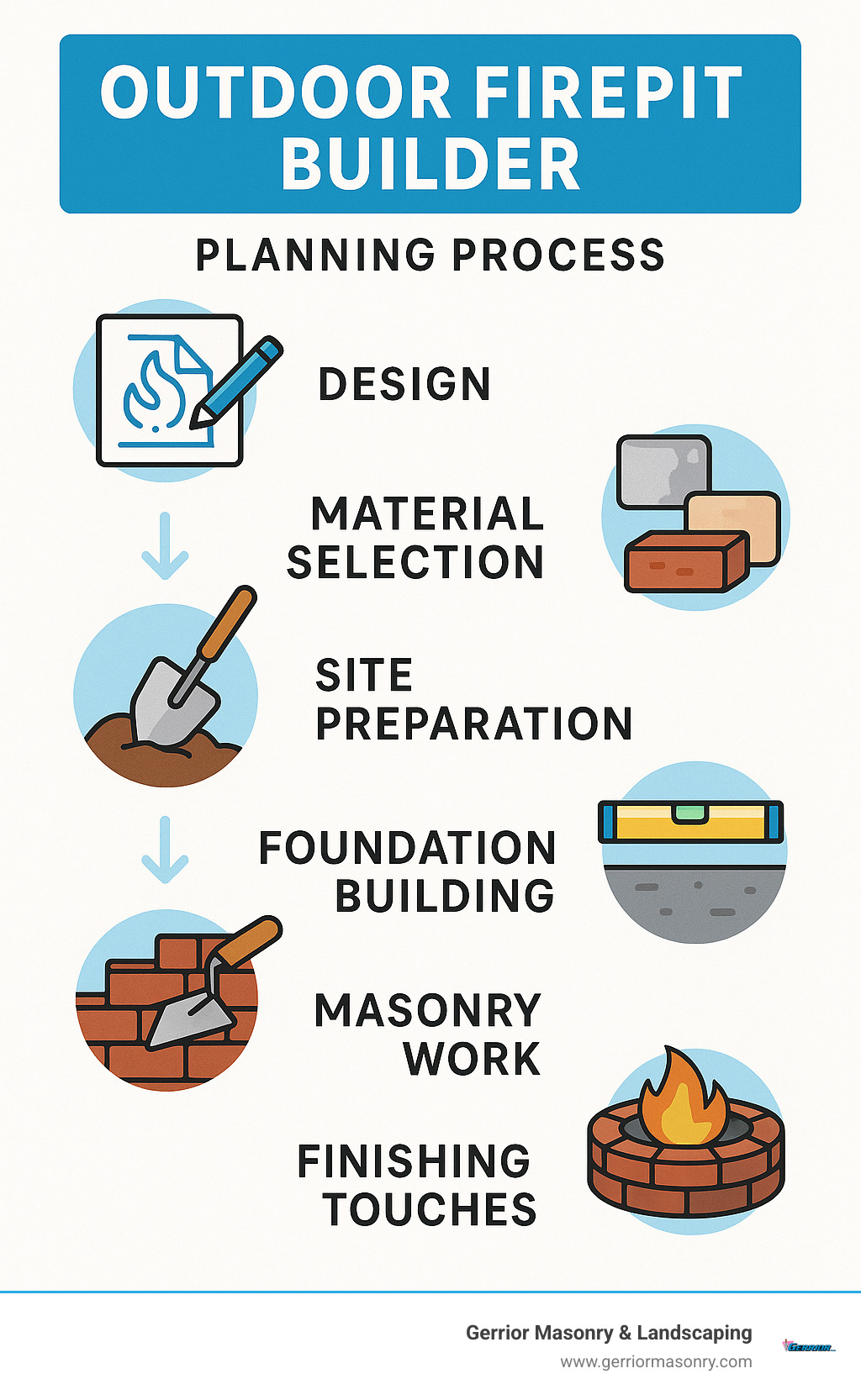
Timeline: 2-8 weeks from concept to completion with a professional builder
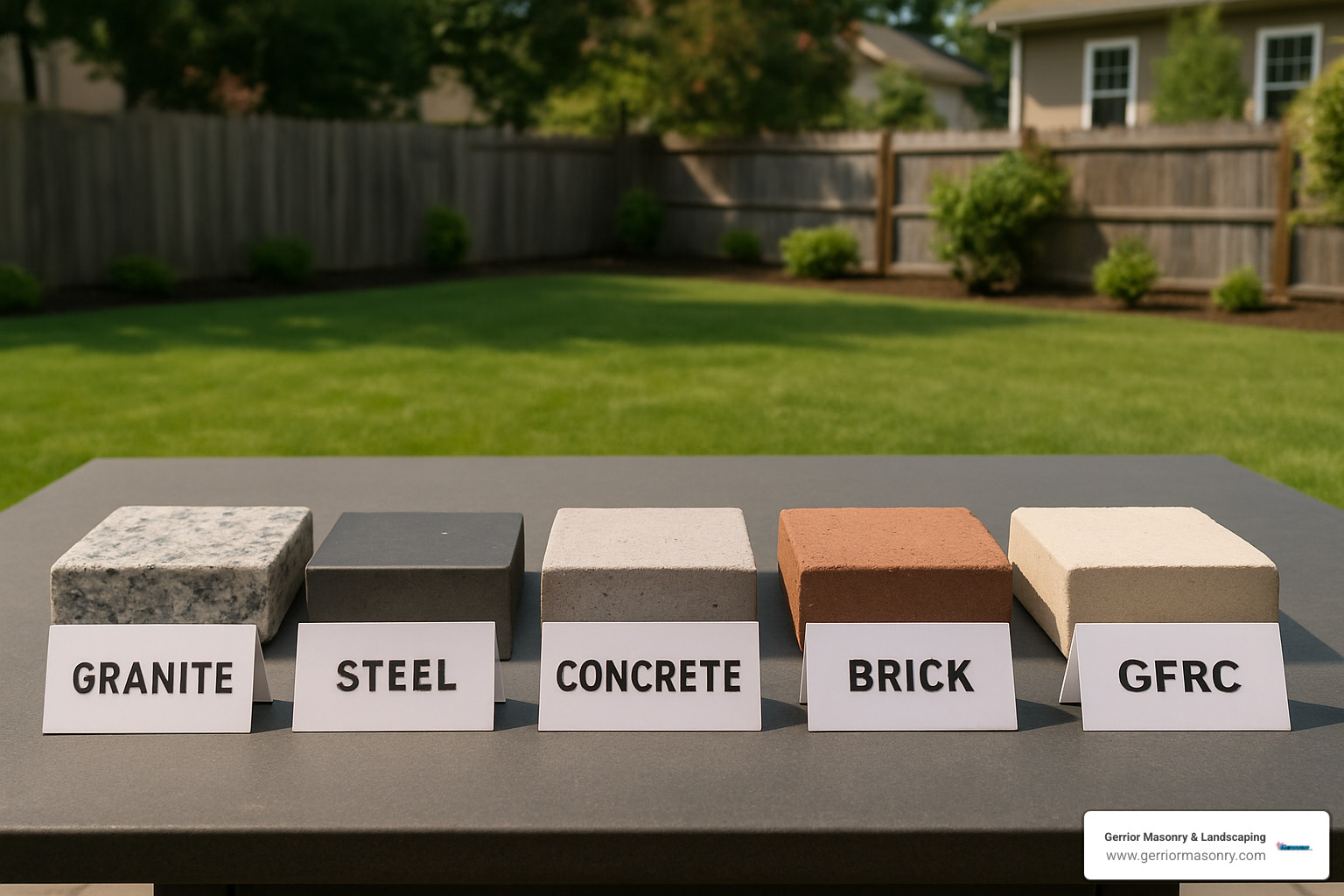
Best materials: granite (virtually maintenance-free), GFRC, stainless steel, or natural stone
An Outdoor Firepit Builder is a specialized contractor who designs and constructs custom fire features for residential and commercial properties. The right builder transforms your outdoor space into a gathering spot that extends your living area and creates memorable experiences year-round. Whether you’re looking to install a simple wood-burning pit or an elaborate gas fire feature with seating, selecting the right professional makes all the difference in both functionality and aesthetics.
“If you’re looking to truly take your outdoor space to the next level, an outdoor fire feature will do just that,” notes industry experts who’ve seen the dramatic change these installations can create. Fire features don’t just provide warmth—they become focal points that improve property value and create natural gathering spaces.
I’m Joe Gerrior, owner of Gerrior Masonry & Landscape Construction Corp., with over 34 years of experience as an Outdoor Firepit Builder creating custom fire features throughout Massachusetts. My team specializes in designing and constructing fire pits that seamlessly integrate with your existing landscape while meeting all safety requirements and local building codes.
Clarify Your Vision: Fuel Types, Uses & Space Requirements
Before reaching out to an Outdoor Firepit Builder, take some time to think about what you really want from your outdoor fire feature. Are you dreaming of a cozy nook where you can share stories under the stars? Perhaps you’re envisioning a cooking station for delicious outdoor meals? Or maybe you want a stunning focal point that lifts your entire landscape design?
“The first thing we ask clients is how they plan to use their fire pit,” says Joe Gerrior. “Someone who wants to roast marshmallows with grandkids needs a different design than someone hosting sophisticated evening gatherings.”
Understanding your goals helps us create a fire pit that fits perfectly into your lifestyle and space. Let’s explore the key considerations that will shape your project.
Match Fuel to Lifestyle
Your fuel choice dramatically impacts both the experience you’ll have and how much maintenance you’ll need to do:
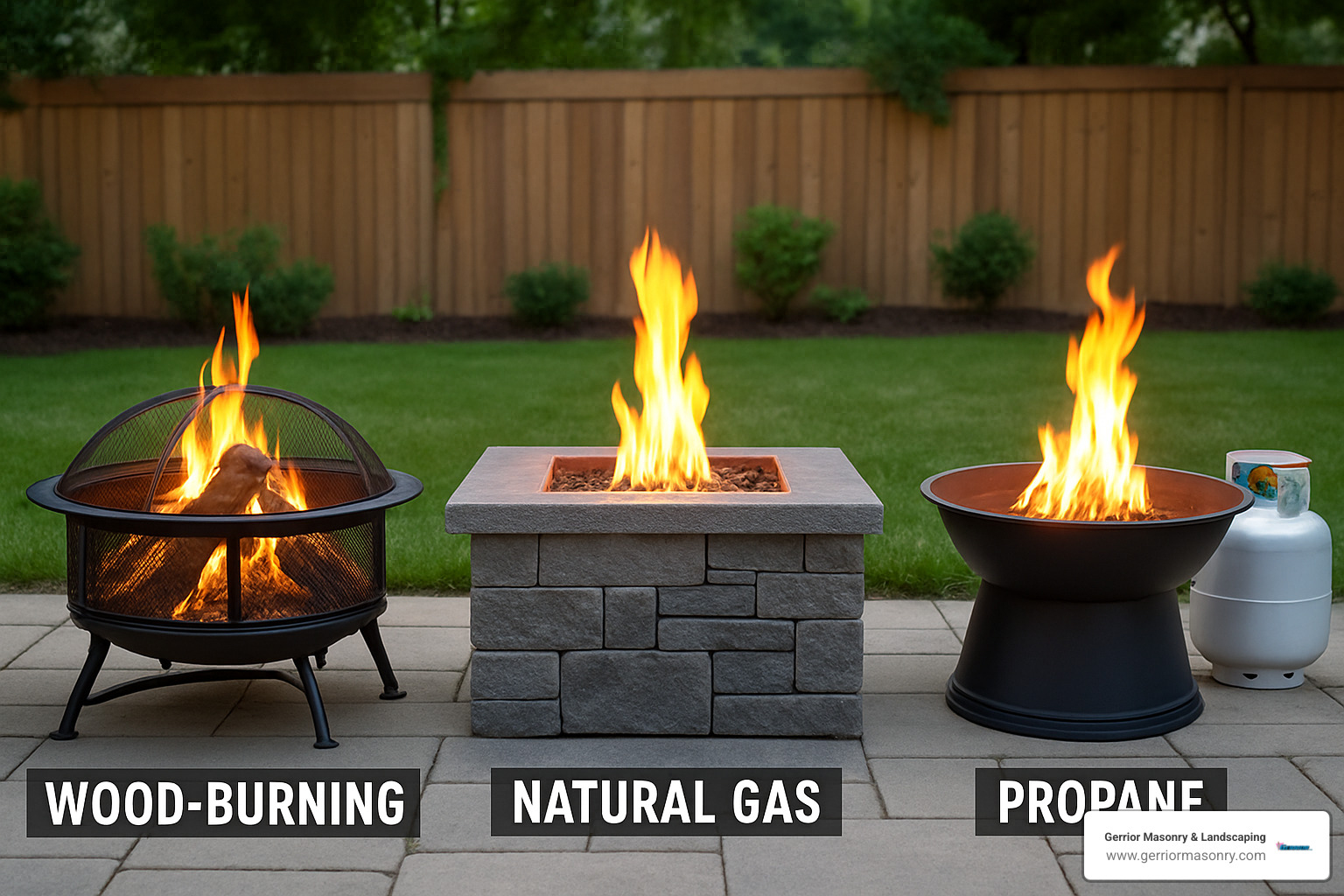
Wood-Burning Fire Pits bring that authentic campfire feel with crackling sounds and that wonderful woodsy aroma. They produce higher heat output and generally cost less to install. The downside? You’ll need space to store wood, deal with smoke and ash, and clean it regularly. They’re also subject to more restrictions in many areas.
Natural Gas Fire Pits offer convenience with instant on/off functionality and a consistent, clean-burning flame. There’s no smoke to dodge when the wind shifts, and maintenance is minimal. The trade-off is a higher initial cost and the need for a permanent gas line installation. The good news? Operating costs are surprisingly affordable at just $0.25-$0.75 per hour on average.
Propane Fire Pits give you flexibility with portable options that don’t require permanent gas lines. Like natural gas, they burn clean without smoke or ash. The main drawback is dealing with tank replacements and finding a way to hide those bulky propane tanks. Here’s a pro tip: For longer gatherings, consider a dual 20 lb tank setup to prevent propane “freeze-up” that can happen after about 45 minutes of continuous use.
Size & Location Checklist
Getting the dimensions right makes all the difference between a fire pit that draws people together and one that feels awkward or unsafe. Industry standards suggest these key measurements:
An interior diameter of 3 to 4.5 feet creates the perfect balance—enough space for a robust fire while keeping everyone close enough for conversation. For depth, about 1 foot is considered optimal, allowing guests to see both the flames and each other across the pit.
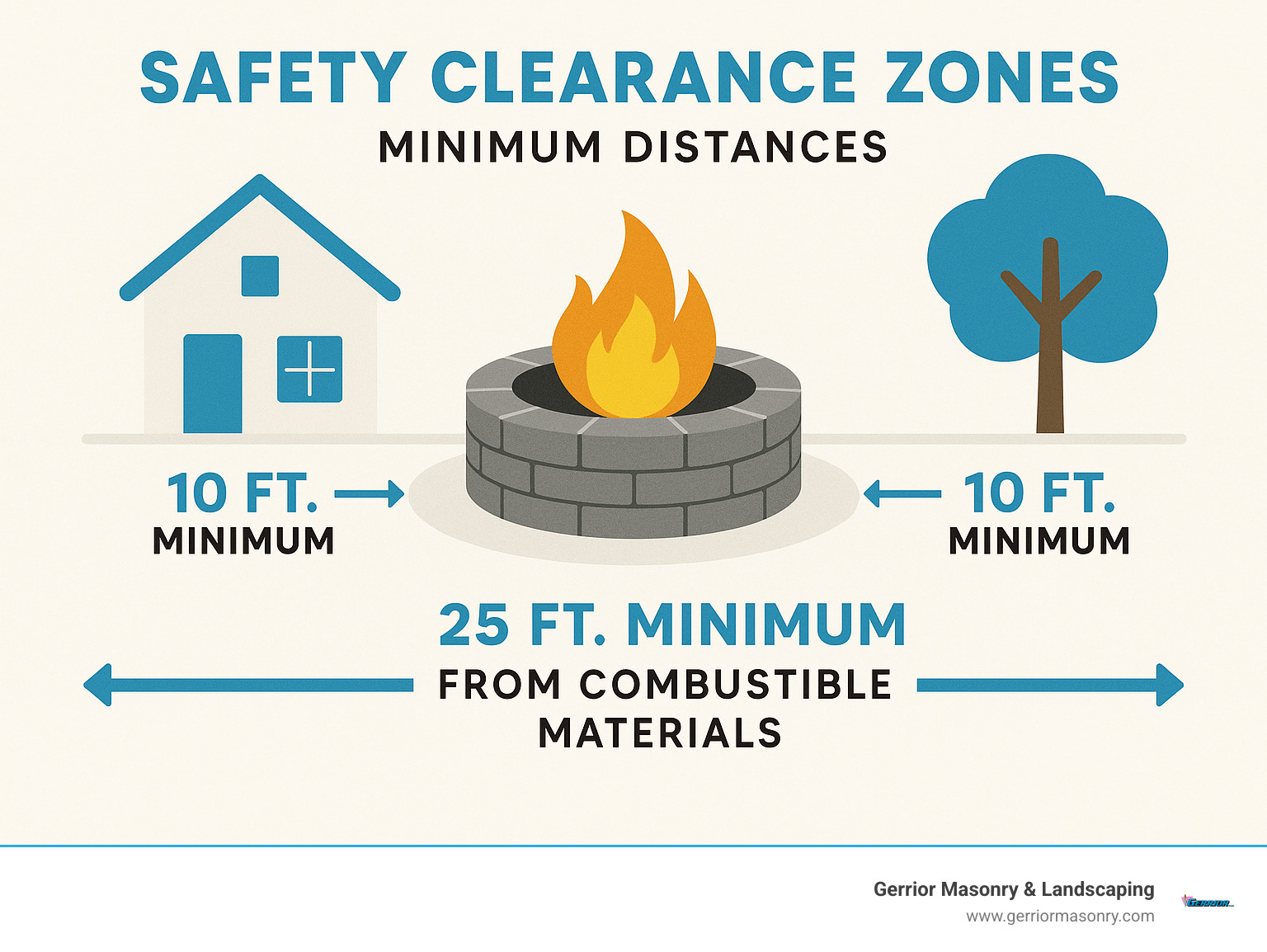
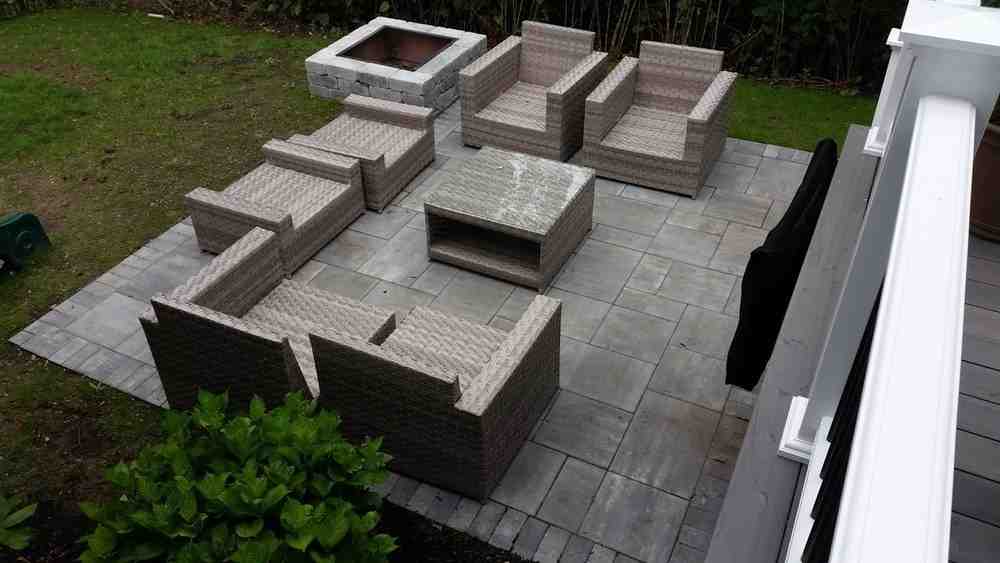
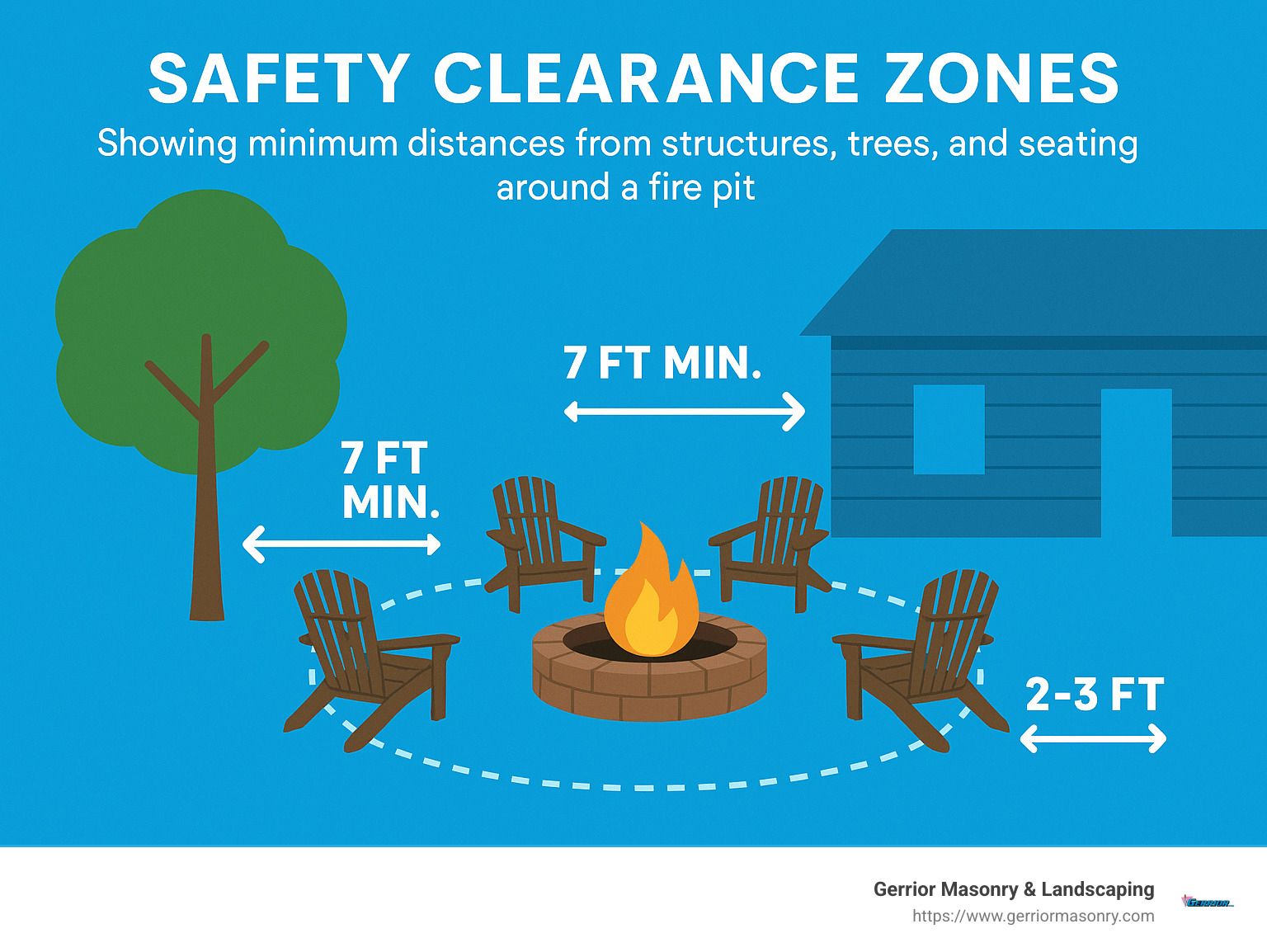
For comfortable seating, position furniture 6-7 feet from the edge of the pit. This provides enough heat without being uncomfortably hot. Safety clearances are crucial too—maintain at least 10 feet from structures (25 feet is even better) and ensure there are no tree branches, awnings, or structures within 15 feet above the pit.
When choosing your location, don’t forget these practical considerations:
– Always call 811 before digging to mark utility lines
– Think about prevailing wind direction to keep smoke away from seating areas
– Ensure proper drainage to prevent water accumulation in your pit
– Check for level ground or plan for necessary grading work
– Consider proximity to your home for convenience while maintaining safety distances
“A properly sized and positioned fire pit creates a natural gathering space that draws people in,” notes Joe Gerrior. “We often recommend placing it where it can be enjoyed from inside the home as well, creating a visual focal point even when not in use.”
Want to explore more options? Check out our detailed guide on Fire Pit Design for inspiration and expert advice on creating the perfect outdoor fire feature for your space.
Compare Durable Materials for Long-Lasting Beauty
The materials you select for your fire pit do much more than just look pretty—they determine how long your investment will last, how much maintenance you’ll need to do, and how well the feature blends with your outdoor space. As Joe Gerrior often tells clients, “Your fire pit should still look beautiful in 10 years, not just 10 months.” A skilled Outdoor Firepit Builder can help you steer these choices based on your local climate, how you’ll use the pit, and your aesthetic preferences.
Pros & Cons at a Glance
Granite is nature’s gift to fire pit enthusiasts. Having been exposed to the elements for millions of years, granite brings both beauty and incredible strength to your outdoor space. It’s virtually maintenance-free, won’t absorb water (goodbye, freeze-thaw damage), and stubbornly resists cracking even when subjected to extreme heat. The downside? It comes with a higher price tag, offers fewer color options, and definitely requires professional installation. But as many of our clients say, “You install it once, and enjoy it for decades.”
Steel fire pits (especially Corten or weathering steel) bring a distinctly modern flair to your backyard. What makes steel special is how it develops a unique patina over time—no two steel fire pits age exactly the same way. They can be crafted into virtually any shape your heart desires. Just be aware that some types may eventually rust, and steel can become extremely hot to the touch—something to consider if you have young children around.
Concrete and GFRC (glass fiber reinforced concrete) offer tremendous design flexibility at a more wallet-friendly price point. Concrete can be formed into endless shapes and even colored to match your existing hardscape. Traditional concrete can crack during freeze-thaw cycles if not properly constructed, so proper installation is crucial. GFRC offers a lightweight alternative that maintains concrete’s look while reducing weight and improving crack resistance.
Brick fire pits bring a classic, timeless charm that complements traditional architecture beautifully. They stand up well to heat and create a warm, inviting atmosphere even when not lit. The trade-off comes in maintenance—those mortar joints will need occasional attention, and your design options are somewhat more limited than with other materials. Using fire bricks for the interior walls is absolutely essential for heat resistance and longevity.
Natural Stone creates perhaps the most organic, timeless appearance of all materials. Each stone has its own character, creating a truly one-of-a-kind fire feature. While more expensive and heavier than alternatives, natural stone creates a seamless transition when matching existing stone features in your landscape. It’s particularly effective when you want your fire pit to look like it’s always been part of your property.
Custom Touches With Stone & Metal Finishes
Working with an experienced Outdoor Firepit Builder opens up customization possibilities that simply aren’t available with off-the-shelf kits. The coping (top edge) of your fire pit can feature neat bullnose curves, clean square edges, or sophisticated chamfered angles. You might consider combining materials—perhaps a natural stone base with a sleek metal insert, or decorative metal screens that cast dancing shadows.
“When we design a custom fire pit, we’re not just building something functional—we’re creating a piece of outdoor art that complements your home’s architecture,” explains Joe Gerrior. “The details matter, from the pattern of the stonework to how the coping transitions to your patio.”
Color coordination is another area where custom work shines. Your fire pit should either match or thoughtfully complement your home’s exterior and existing hardscaping. We can integrate built-in features like wood storage, comfortable seating walls, or subtle lighting that highlights your fire feature even when it’s not in use. Even the height of your pit can be customized for the most comfortable viewing while seated in your favorite outdoor chairs.
For more inspiration on how different materials can transform your outdoor space, check out our detailed guide to Custom Outdoor Fire Pits where you’ll find examples of our past projects. You can also learn more about various stone types from the Natural Stone Institute.
Planning, Permits & Safety Codes You Can’t Ignore
Let’s face it – fire is beautiful, but it demands respect. Even the most stunning fire pit design must comply with local regulations and safety standards. As your Outdoor Firepit Builder, we steer these requirements daily, ensuring your installation is both legal and safe.
“One of the most valuable services we provide is handling the permitting process,” says Joe Gerrior. “We know what the inspectors are looking for and ensure every installation meets or exceeds code requirements.”
When planning your fire feature, regulations aren’t just bureaucratic red tape – they’re designed to protect your family and property. Most municipalities have specific requirements about placement, size, and fuel type. If you live in an HOA community, you’ll need to check their rules too, as many have additional restrictions.
Seasonal burn bans are common in many areas, particularly during dry summer months. This might influence your decision between wood and gas. Speaking of gas, natural gas installations require proper line sizing and professional connection – this isn’t a DIY job! Reputable Outdoor Firepit Builders follow the ANSI Z21.97/CSA 2.41 standard for outdoor decorative gas appliances, ensuring your feature is built to last safely.
Essential Safety Accessories
Safety isn’t just about meeting code requirements – it’s about creating peace of mind so you can truly enjoy your investment. A well-designed fire pit includes several important safety features that blend seamlessly with the aesthetics.
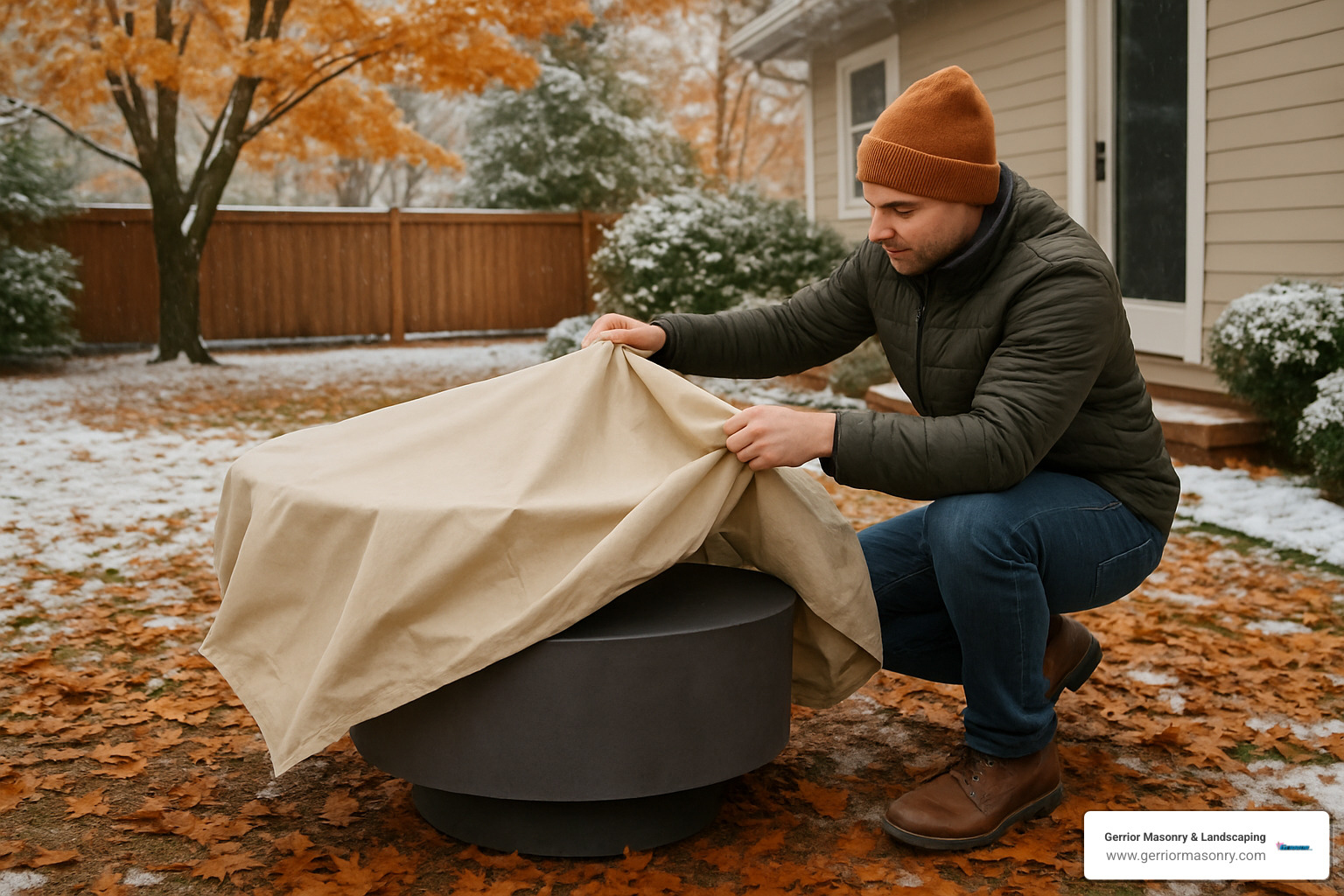
Covers do more than just protect your fire pit from rain and snow – they prevent debris accumulation that could create fire hazards. For wood-burning pits, spark screens (available up to an impressive 72″ high) keep embers contained while still allowing the warmth and ambiance to shine through. Some screens feature a center-pivot design that doubles as a snuffer, making it easy to extinguish flames safely.
Gas fire features require their own safety components, including key valve shut-offs that allow for emergency gas shutoff and flame adjustment. Proper venting is non-negotiable – typically opposing vents that create a cross-breeze to prevent gas buildup. And don’t forget about the materials themselves – fire bricks are specially designed to withstand high temperatures, protecting the structure of masonry pits.
“When we design a fire feature, we’re thinking about how your family will enjoy it for years to come,” Joe emphasizes. “That means proper clearances from structures, appropriate materials that won’t degrade with heat, and quality components that stand the test of time. Safety and beauty can absolutely coexist.”
A professional Outdoor Firepit Builder doesn’t just build a pretty feature – they build one that gives you confidence every time you light it up. After all, the best gatherings happen when everyone feels secure and comfortable around the flames.
Deciding between a DIY kit and hiring a professional Outdoor Firepit Builder is one of the first crossroads you’ll face in your fire pit journey. Both paths can lead to enjoyable evenings around the flame, but they offer distinctly different experiences, results, and investments.
Aspect
DIY Kit
Professional Builder
Cost
$300-$3,000
$1,500-$9,000+
Timeline
1-2 days
2-8 weeks (including design and permits)
Customization
Limited to kit options
Fully customizable
Warranty
Components only (typically)
Often includes labor and materials
Skill Required
Moderate to high
None (they handle everything)
Fuel Options
Limited by kit
Wood, gas, propane with custom features
Integration
Standalone unit
Can integrate with landscape design
When a Kit Makes Sense
There’s something satisfying about building something with your own hands, and for some homeowners, a DIY fire pit kit hits the sweet spot of achievement and affordability.
“Some DIY kits claim you can convert anything into a gas fire feature in 15 minutes or less,” notes Joe Gerrior with a smile. “While this might be true for basic installations, there’s usually a noticeable difference between a quick assembly and a thoughtfully designed custom feature.”
DIY kits shine brightest when you’re working with a modest budget but still want to enjoy fires sooner rather than later. If you’re comfortable with basic construction tasks and actually enjoy weekend projects, these kits offer a straightforward path to outdoor enjoyment.
Quality kits do offer some compelling advantages. Many include lifetime warranties on stainless steel burners and components, they’re pre-engineered to meet safety standards, and they can sometimes be incorporated into more custom surrounds later. For temporary solutions or situations where flexibility matters, a kit’s lower initial investment makes a lot of sense.
Benefits of Hiring an Outdoor Firepit Builder
When Joe pulls up to a client’s home to discuss their fire pit dreams, he brings more than three decades of experience with him. That expertise represents the fundamental difference between DIY and professional installation.
“When clients compare a professionally built fire pit to a DIY version side by side, the difference is immediately apparent,” Joe explains. “It’s not just about appearance—it’s about how the feature functions, integrates with the space, and stands up to years of use.”
A professional Outdoor Firepit Builder handles all the headaches: navigating permits, ensuring code compliance, and coordinating with other trades like gas fitters or electricians. They bring material expertise that’s crucial in New England’s challenging climate, recommending stones that won’t crack during freeze-thaw cycles and finishes that maintain their beauty for years.
The design approach is fundamentally different too. Rather than a standalone unit, professionals create integrated features that complement your overall landscape design. The fire pit becomes a natural extension of your patio, with matching materials and thoughtful transitions. Proper foundations, drainage solutions, and technical details like gas line sizing ensure your investment lasts.
At Gerrior Masonry, Joe personally supervises installations, bringing owner oversight that DIY projects simply can’t match. His experienced crews specialize in creating fire features that become the heart of outdoor living spaces—places where memories are made for years to come.
For homeowners who value craftsmanship, proper integration with their landscape, and peace of mind, the professional route offers compelling advantages that extend far beyond the initial price difference.
Gerrior Masonry & Landscape Construction is based in Woburn, MA, and services Middlesex and Essex County, Massachusetts.
How to Vet an Outdoor Firepit Builder
Finding the right Outdoor Firepit Builder is like choosing a partner for your outdoor vision. You want someone who listens, understands your needs, and brings expertise to the table. Let me walk you through how to separate the true professionals from those who might leave you with regrets.
When I meet with homeowners considering a fire feature, I always encourage them to shop around. Why? Because a confident professional has nothing to hide, and the comparison will often highlight the value we bring.
Essential Qualifications
The best Outdoor Firepit Builder will have a track record you can verify. Look beyond flashy websites and dig into their actual experience with fire features specifically. A great landscape company might build beautiful patios but still struggle with the technical aspects of a gas-powered fire pit.
“At Gerrior Masonry, we encourage clients to check our references and review our portfolio,” I often tell potential clients. “We believe our work speaks for itself, and hearing from past clients provides valuable peace of mind.”
Make sure your builder has proper licensing for your state and carries both liability insurance and worker’s compensation. Without these protections, any accidents could become your financial responsibility. A professional should readily provide proof of these credentials without hesitation.
The design process is equally important. Can they show you what you’re getting through 3D renderings or detailed drawings? This visualization step helps prevent misunderstandings and ensures you’re both working toward the same vision.
Questions to Ask Your Outdoor Firepit Builder
Your initial conversation with a potential builder reveals a lot about their expertise and approach. Here are the questions that separate the professionals from the amateurs:
“How many fire features have you installed recently?” This gives you insight into their specialized experience, not just general construction knowledge.
“What materials do you recommend for our climate and why?” Their answer should demonstrate understanding of how different materials perform in your specific environment.
“What type of burner system do you use?” For gas installations, this question often reveals the quality of components they install. Premium builders typically use high-quality brands like Warming Trends® Crossfire burners.
Don’t forget to ask about their permitting process, foundation requirements, and how they’ll integrate the feature with your existing landscape. A thorough professional will have thoughtful, specific answers rather than vague assurances.
The warranty conversation is particularly revealing. What’s covered? For how long? And most importantly, what’s their process if something goes wrong after installation? The best builders stand behind their work with clear, written guarantees.
Red Flags When Selecting an Outdoor Firepit Builder
Trust your instincts when interviewing potential builders. Be wary if they suggest skipping permits or can’t clearly explain local code requirements. This shortcut might save time initially but could create serious headaches later, especially if your insurance company finds an unpermitted installation after an incident.
Another warning sign is vague pricing without detailed quotes. Professional Outdoor Firepit Builders break down costs by materials, labor, and any additional features or services. If the price seems unusually low, ask what corners they’re cutting.
Technical knowledge matters tremendously with fire features. If your builder can’t discuss BTU ratings, proper gas line sizing, or appropriate venting requirements, they may lack the specialized knowledge needed for a safe installation.
“The relationship with your Outdoor Firepit Builder should be built on trust and communication,” I always emphasize. “If something doesn’t feel right during the consultation process, it’s unlikely to improve during construction.”
Watch out for unusually short timelines that seem too good to be true—they usually are. Quality masonry and proper installation take time, especially when custom work is involved. Similarly, be cautious of anyone requesting full payment upfront rather than a reasonable deposit followed by progress payments.
By taking the time to properly vet your Outdoor Firepit Builder, you’re protecting your investment and ensuring years of enjoyment from your new outdoor feature. The right professional partnership makes all the difference between a disappointing compromise and an outdoor masterpiece you’ll love for decades.
Lift the Experience: Accessories & Design Improvements
The difference between a basic fire pit and a truly memorable outdoor fire feature often comes down to those special touches that make it uniquely yours. As your Outdoor Firepit Builder, we’ve seen how the right accessories can transform an ordinary gathering spot into the highlight of your outdoor living space.
Game-Changing Accessories:
When clients ask us what really lifts their fire pit experience, we often point to several key additions that make all the difference. The Crossfire Brass Burners are at the top of our recommendation list—these remarkable burners produce at least twice the flame height and heat output compared to standard stainless steel options, all while using the same amount of fuel. It’s like upgrading from economy to first class with one simple change.
“I tell my clients that the burner is truly the heart of any gas fire system,” Joe Gerrior often explains while showing samples. “That’s why we typically recommend the Crossfire Brass Burner System with its lifetime warranty and superior performance.”
Protecting your investment becomes a design opportunity with custom covers available in copper, stainless steel, or powder-coated finishes that complement your home’s exterior. For gas fire features, fire glass creates stunning visual effects with its reflective properties and range of colors—from cobalt blue to amber—that transform flames into mesmerizing displays.
Many of our clients also appreciate functional additions like cooking grates that let them toast marshmallows or grill steaks right over their fire pit. Wind guards made of tempered glass protect the flame on breezy evenings while maintaining visibility, and integrated LED lighting around the perimeter creates a magical ambiance after sunset.
“One of my favorite accessories is actually the simplest—built-in seating walls,” shares Joe. “They define the space around your fire feature while providing permanent seating that never blows away in the wind like patio furniture sometimes can.”
Outdoor Kitchen & Fire Feature Combos
For homeowners who love to entertain, combining fire features with outdoor cooking capabilities creates the ultimate backyard experience. We’re noticing more clients requesting comprehensive outdoor living spaces rather than standalone fire pits.
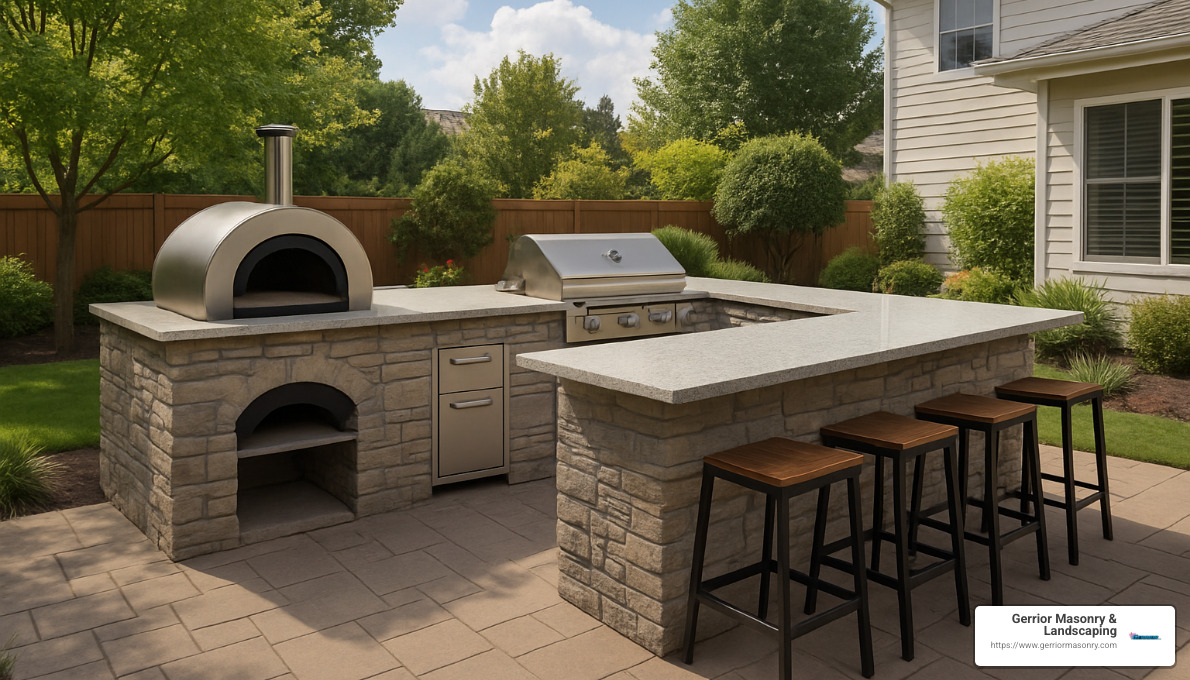
These integrated designs might include grill islands with built-in storage and counter space positioned near your fire pit to create a natural flow between cooking and relaxation areas. For the culinary enthusiast, adding a wood-fired pizza oven complements your fire pit with similar materials while expanding your outdoor cooking options.
Beverage bars with refrigeration and ice makers keep refreshments close at hand, eliminating trips back to the house while hosting. For sports fans, weather-resistant TV mounts near the fire feature mean you’ll never miss the big game while enjoying the warmth of your fire pit.
“What we’re really creating is an outdoor room, not just a fire pit,” Joe Gerrior explains. “These multi-functional spaces become the heart of family life during good weather—a place where memories are made.”
By working with an experienced Outdoor Firepit Builder like Gerrior Masonry, you can create a cohesive outdoor space that seamlessly blends cooking, dining, and relaxation areas with your fire feature as the centerpiece. The result is an outdoor living area that feels like a natural extension of your home, designed specifically for your family’s lifestyle and entertainment needs.
For more information about high-quality fire pit accessories, visit Warming Trends to explore their Crossfire Brass Burner systems that we frequently recommend to our clients.
Budget & Timeline: What to Expect
Planning your dream fire feature means understanding both the investment required and how long the process takes. While everyone wants their outdoor oasis ready for the weekend, a quality installation requires proper planning and execution.
Budget Considerations:
When it comes to fire pit projects, the price range is as varied as the designs themselves. Based on industry averages (not specific to Gerrior Masonry services), here’s what you might expect to invest:
Basic wood-burning fire pits typically range from $1,000-$5,000, offering simple functionality with traditional charm. These provide the classic campfire experience without complex components.
Mid-range gas fire pits generally fall between $3,500-$10,000, balancing convenience with custom design elements. The push-button ignition and consistent flame make these increasingly popular options.
Premium custom fire features can range from $8,000-$25,000+, delivering showpiece installations with integrated seating, specialty materials, and sophisticated burning systems.
“I always tell clients that internet pricing can be misleading,” says Joe Gerrior. “Those $500 fire pit articles rarely account for proper foundations, drainage, or quality materials that won’t crack after the first freeze-thaw cycle.”
What drives these cost variations? Material selection plays a huge role—granite and natural stone command premium prices but offer best durability. Size matters too, as larger features require more materials and labor. Gas installations need proper burners, lines, and safety features that wood-burning pits don’t require.
Site conditions can significantly impact your budget as well. A sloped yard needing extensive grading or a remote location with difficult access might require additional work before the actual fire pit construction begins.
“We provide detailed, itemized quotes so clients understand exactly what they’re investing in,” explains Joe. “This transparency helps avoid surprises and ensures the final product meets expectations.”
Typical Project Timeline:
Rome wasn’t built in a day, and neither is a quality fire feature. Here’s what the timeline typically looks like when working with a professional Outdoor Firepit Builder:
The journey begins with an initial consultation (1-2 hours) where we discuss your vision, space, and needs. This leads to the design development phase (1-2 weeks) where concepts are created and refined.
Once you’ve approved a design, we prepare a detailed proposal and contract (1 week) outlining specifications and costs. The permitting process follows, taking anywhere from 1-4 weeks depending on your municipality’s requirements and backlog.
With approvals in hand, we move to material selection and ordering (1-3 weeks), followed by site preparation (1-2 days) to establish proper drainage and foundation.
The actual construction timeline varies based on complexity:
– Simple fire pits can be completed in 2-3 days
– Complex custom masonry features might require 2-4 weeks of skilled craftwork
For gas installations, we coordinate with certified professionals for the gas connection (typically 1 day), followed by a thorough final inspection and walkthrough to ensure everything meets our standards.
“Seasonal demand definitely affects scheduling,” notes Joe. “We typically book several weeks in advance during our busy season from spring through fall, so planning ahead is always recommended.”
For the best value and timing, consider scheduling your project during the off-season (late fall or winter) when demand is lower. Combining your fire pit with other hardscaping projects can also create efficiencies in both cost and timeline.
Rushing a masonry project rarely leads to optimal results. Quality work takes time, but the decades of enjoyment you’ll get from a properly built fire feature make the wait worthwhile.
Gerrior Masonry & Landscape Construction is based in Woburn, MA, and services Middlesex and Essex County, Massachusetts.
Care & Maintenance for Decades of Safe Fires
Your beautiful fire pit isn’t just a one-season wonder—with proper care, it should be the backdrop for countless gatherings and memories for decades to come. As Joe Gerrior often tells clients, “The fire features we build are designed to become family heirlooms, but like any treasured possession, they need a little TLC.”
Wood-Burning Fire Pit Maintenance:
That crackling wood fire comes with some simple maintenance needs. After each use (and once completely cool), remove ash to prevent moisture accumulation that can damage your pit’s interior. This simple step prevents the biggest enemy of masonry: water damage.
“Many homeowners don’t realize that leaving ash in their fire pit creates a sponge-like material that holds moisture against the masonry,” Joe explains. “It’s like leaving wet socks on—eventually, you’ll have problems.”
Make it a habit to inspect your fire pit annually, looking for any cracked mortar or damaged stone. In New England’s freeze-thaw climate, small issues can quickly become bigger problems if ignored. Pay special attention to drainage holes, keeping them clear to prevent water pooling.
Natural stone benefits from resealing every 2-3 years with an appropriate masonry sealer. This simple step maintains its beauty and prevents water penetration. And when your fire pit isn’t being the star of the show? A quality cover is its best friend, preventing debris accumulation and weather damage.
Gas Fire Pit Maintenance:
Gas fire features offer convenience but need their own care routine. Seasonal inspections of burners and ignition systems prevent unexpected issues during your next gathering. Use compressed air to gently clear burner ports of any debris—spiders are notorious for building webs in these small openings during periods of non-use.
Gas connection safety should never be overlooked. At least once a year, check all connections for leaks using a simple soapy water solution (bubbles indicate a leak). This five-minute check can prevent dangerous situations.
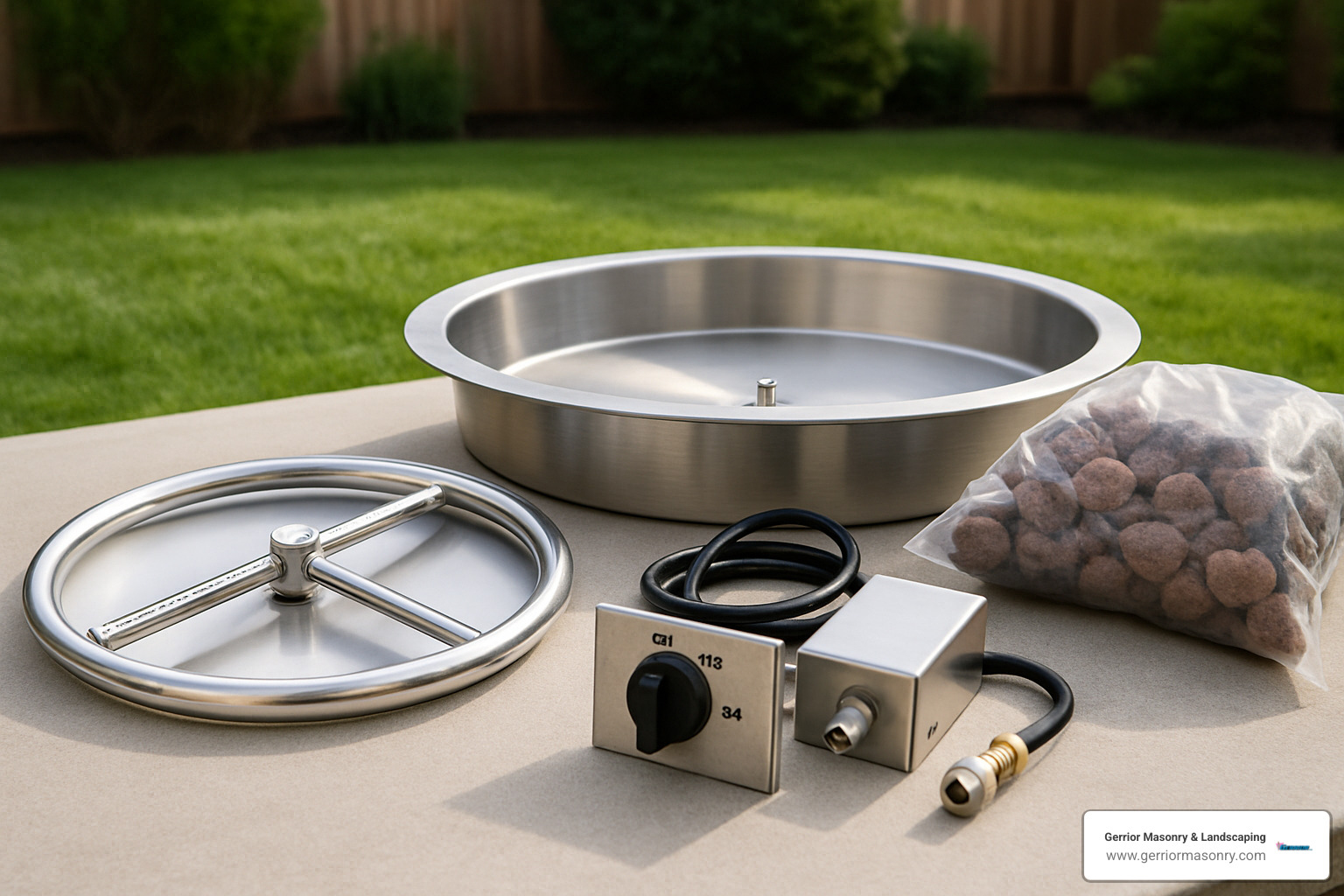
Most gas fire pits use decorative media like fire glass or lava rock that should be refreshed every 1-2 years as needed. This isn’t just for looks—worn media can affect flame pattern and performance.
“The number one maintenance issue we see is water damage,” says Joe Gerrior. “A quality cover is one of the best investments you can make to protect your fire feature.”
For New England homeowners, winter care requires special attention. Shut off gas supply at the source for extended periods of non-use, and ensure proper drainage to prevent freeze-thaw damage. If possible, remove and store electronic ignition components indoors. Many of our clients invest in custom winter covers that provide complete protection during the harsh winter months.
Every 2-3 years, it’s worth having a professional Outdoor Firepit Builder inspect your gas components. This preventive maintenance often catches small issues before they become costly problems.
“With proper care, the fire features we build will last for generations,” notes Joe Gerrior. “We design with maintenance in mind, making seasonal care as simple as possible.”
A well-maintained fire pit isn’t just about longevity—it’s about safety too. Regular maintenance ensures your fire feature operates as intended, protecting your family and property while providing that perfect ambiance year after year.
Frequently Asked Questions about Outdoor Firepit Projects
What is the ideal size and depth for a residential fire pit?
The ideal interior diameter for a residential fire pit is 3 to 4.5 feet. This sweet spot creates enough room for a beautiful fire while keeping everyone close enough for those memorable fireside conversations. About 1 foot deep is just right – this allows everyone to see both the dancing flames and each other’s faces across the pit.
“I always tell my clients that proportion matters,” says Joe Gerrior. “A massive fire pit in a tiny patio feels like putting a grand piano in a closet, while a small pit in a sprawling space just disappears visually. We help find that perfect balance for your specific outdoor area.”
When planning your fire pit, the surrounding space needs consideration too. You’ll want comfortable seating positioned about 6-7 feet from the edge – close enough to feel the warmth but not so close that guests feel like they’re being roasted!
How much does it cost to run a natural-gas fire pit per hour?
One of the pleasant surprises for many homeowners is just how affordable natural gas fire pits are to operate. You’re typically looking at just $0.25-$0.75 per hour depending on your local gas rates and your burner’s BTU rating. Compare that to propane models that can run $2-$5 per hour, and the savings become clear over time.
“When clients do the math, they’re often shocked at how economical natural gas is,” Joe Gerrior notes with a smile. “Modern burners like the Crossfire system are incredibly efficient – you get more dramatic flame and better heat output while using less fuel. It’s why we recommend them to folks who want both beauty and value.”
This efficiency makes natural gas fire features practical for regular use rather than just special occasions. Many of our clients end up using their fire pits several times a week because the operating cost is so reasonable.
Can I convert my existing wood pit to gas later?
Yes! We perform these conversions regularly for homeowners who love their existing masonry fire pit but want the flip-of-a-switch convenience that gas provides. The conversion process typically involves:
Installing an appropriately sized burner system for your existing pit
Adding proper venting if it’s not already present
Running a gas line to the location
Sometimes modifying the interior structure to accommodate the burner and fire media
“These conversions are some of my favorite projects,” shares Joe Gerrior. “There’s something satisfying about taking a beautiful fire pit that someone’s already attached to, and making it even more enjoyable by eliminating the smoke, ash, and startup hassle.”
The typical conversion takes just 1-2 days and costs between $1,500-$3,500 depending on complexity and whether you already have a gas line nearby. Many homeowners find this upgrade well worth it for the convenience and cleaner burning experience.
Another common question we hear is about permits for these conversions. Yes, you’ll likely need one, but don’t worry – an experienced Outdoor Firepit Builder can handle the paperwork and ensure everything meets local codes.
Gerrior Masonry & Landscape Construction is based in Woburn, MA, and services Middlesex and Essex County, Massachusetts. We’re happy to discuss whether a wood-to-gas conversion makes sense for your specific situation.
Conclusion
Bringing warmth and ambiance to your outdoor space isn’t just about installing a fire feature—it’s about creating a gathering place where memories will be made for years to come. Selecting the right Outdoor Firepit Builder transforms what could be a simple backyard addition into the heart of your outdoor living experience.
Throughout this guide, we’ve explored the elements that make a fire pit project successful—from fuel types and materials to safety considerations and design options. The journey from concept to completion involves numerous decisions, but with the right guidance, the process becomes both manageable and exciting.
“What I love most about building custom fire features is seeing how they become the center of family life outdoors,” says Joe Gerrior. “Clients tell me about the conversations around the fire, the s’mores with grandkids, and the quiet evenings with a glass of wine. That’s when I know we’ve created something truly special.”
A well-designed fire pit does more than provide warmth—it creates a natural focal point that draws people together. It extends your living space beyond the walls of your home and into the natural beauty of your landscape. And with proper planning and construction, it becomes an investment that improves both your lifestyle and your property value.
Whether you choose a simple wood-burning design or an elaborate gas feature integrated with an outdoor kitchen, prioritizing quality and safety ensures your fire pit will serve you well for decades. Working with an experienced Outdoor Firepit Builder who understands local codes, proper construction techniques, and material selection makes all the difference in the final result.
Your outdoor space should reflect your personal style and meet your specific needs. The most successful fire pit projects begin with a clear vision and end with a feature that seamlessly blends with your existing landscape while providing the functionality you desire.
Gerrior Masonry & Landscape Construction is based in Woburn, MA, and services Middlesex and Essex County, Massachusetts. With over three decades of experience creating custom outdoor living spaces, we bring expertise and craftsmanship to every fire feature we build. Contact us to discuss how we can help bring warmth and ambiance to your outdoor space.
Customizable Outdoor Kitchen: 5 Powerful Benefits in 2025
Changing Backyard Living with Custom Outdoor Kitchens
Picture this: warm summer evenings spent cooking and laughing with friends, the sizzle of steaks on the grill, and cold drinks within arm’s reach—all in the comfort of your own backyard. This dream becomes reality with a customizable outdoor kitchen, your personal culinary oasis designed specifically for your lifestyle and space.
Unlike those one-size-fits-all prefabricated units you might find at big box stores, a customizable outdoor kitchen truly reflects your personality and needs. Think of it as the difference between buying a suit off the rack versus having one custom just for you. The custom option simply fits better in every way.
What makes these outdoor culinary spaces so special? For starters, you have complete design control—from the layout that works with your entertaining style to the finishes that complement your home’s aesthetic. Whether you have a cozy patio or sprawling backyard, your kitchen can be perfectly proportioned to make the most of your available space.
The freedom to select materials is another significant advantage. In Massachusetts, where we experience everything from summer heat to winter snow, choosing the right weather-resistant materials makes all the difference in longevity and performance. Your customizable outdoor kitchen can feature durable stone, sleek stainless steel, or warm wood elements—whatever suits your taste and climate needs.
When it comes to cooking, you’re not limited to a standard grill. Want a pizza oven? Add it. Prefer a flat-top griddle for Sunday breakfast? No problem. Your appliance flexibility means you can create a cooking space that matches exactly how you like to prepare meals outdoors.
Perhaps most impressive is the return on investment these kitchens provide. Industry data suggests a well-designed outdoor kitchen can increase your home’s resale value by up to 130% of what you invest. That’s not just a beautiful addition—it’s a smart financial move.
The outdoor kitchen market continues to boom, with projections reaching $11.5 billion by 2027. This growth reflects how homeowners increasingly view their yards as extensions of their living space—outdoor rooms that deserve the same attention to detail as any interior space.
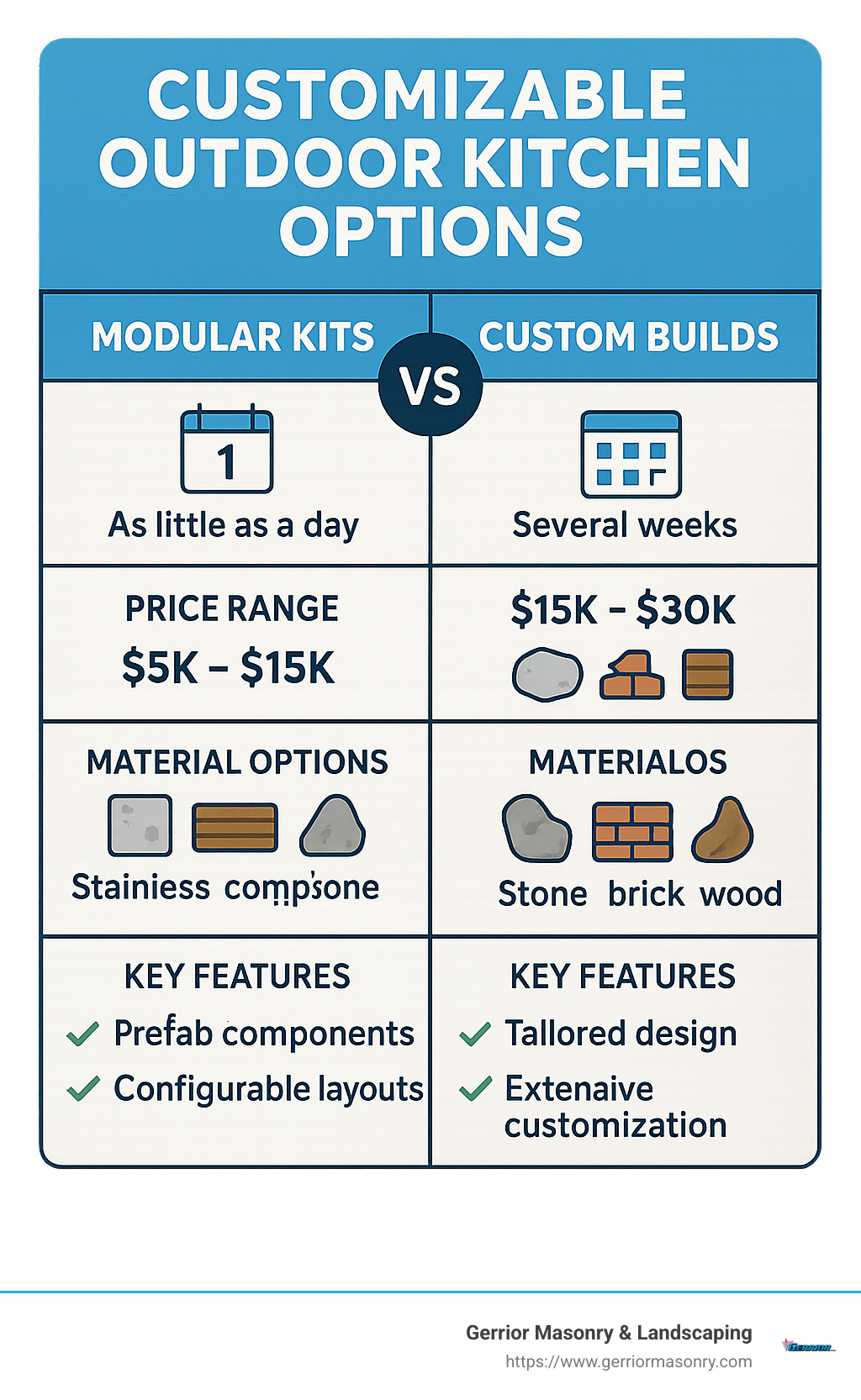
The journey to your perfect outdoor kitchen typically follows a straightforward path: consultation to understand your needs, thoughtful design work, careful selection of materials and appliances, and finally, installation. Depending on your choices, the process can be surprisingly quick. Many modular systems can transform your backyard in just a day, while fully custom builds might take several weeks to perfect every detail.
I’m Joe Gerrior, and for over three decades, my team at Gerrior Masonry & Landscape Construction Corp. has been creating stunning customizable outdoor kitchens for homeowners throughout Middlesex and Essex County. We understand Massachusetts’ unique climate challenges and design spaces that not only look beautiful but stand the test of time and weather.
Our expertise lies in seamlessly integrating your new kitchen with your existing landscape, ensuring the finished result feels like it was always meant to be there. We specialize in selecting materials that combine durability with eye-catching aesthetics, creating spaces where memories will be made for years to come.
Gerrior Masonry & Landscape Construction is based in Woburn, MA, and proudly serves homeowners throughout Middlesex and Essex County, Massachusetts.
Customizable Outdoor Kitchen Fundamentals
When I talk with homeowners about a customizable outdoor kitchen, I explain that we’re not just discussing a grill on a patio. We’re talking about creating your personal culinary oasis—a fully functional cooking and entertaining space designed specifically for your lifestyle, preferences, and available space.
The outdoor kitchen market continues to grow, with projections showing it will reach over $11.5 billion by 2027. This growth reflects how these spaces have transformed from luxury items to essential lifestyle improvements for many homeowners.
How a “customizable outdoor kitchen” differs from a prefab island
The journey to outdoor cooking bliss typically follows one of two paths: pre-fabricated islands or fully customizable solutions. Understanding these differences helps you make the right choice for your home and budget.
Pre-fabricated islands arrive essentially ready to use, offering convenience but limited flexibility. They come with fixed dimensions, predetermined appliance cutouts, and fewer material options. While they’re typically less expensive upfront and can be installed quickly (often in just a day), they rarely blend seamlessly with your existing landscape.
In contrast, a customizable outdoor kitchen gives you complete design freedom. You can create a space with dimensions perfectly suited to your yard, select exactly the appliances you want, and choose from an extensive range of materials and finishes. Most importantly, a custom kitchen integrates beautifully with your existing landscape and can be built in phases as your budget allows.
“Many homeowners actually find the sweet spot somewhere in the middle,” I often tell clients. “They start with quality modular components but personalize the countertops, finishes, and surrounding hardscape to create something that feels custom-made for their space.”
The modular approach can reduce installation time significantly—sometimes to just a single day—making it appealing for DIY enthusiasts and those working with tighter timelines. But for the ultimate in personalization and seamless integration with existing features, fully custom designs remain best.
Top 5 benefits of owning a customizable outdoor kitchen
Improved social experiences top the list of benefits. A thoughtfully designed outdoor kitchen creates a natural gathering spot where you, as the cook, remain fully engaged with family and friends instead of being isolated indoors. Over 60% of homeowners who install outdoor kitchens prioritize features like built-in grills, refrigerators, and bar seating specifically to improve their entertaining capabilities.
Workflow that actually makes sense is another major advantage. Custom designs allow for ergonomic placement of cooking, prep, and storage areas based on how you actually use the space. This isn’t just convenient—it fundamentally transforms your outdoor cooking experience from awkward to effortless.
Materials matched to our New England climate provide lasting value. Here in Massachusetts, outdoor kitchens must withstand freezing winters, humid summers, and everything in between. Customization allows you to select weather-resistant components like marine-grade stainless steel and specialized stone that will endure our challenging conditions year after year.
Future-proof flexibility means your investment grows with you. “I always recommend designing with expansion in mind,” I tell clients. “You might start with just a grill and countertop but want to add a pizza oven or smoker next season. With proper planning, these additions become seamless rather than afterthoughts.”
Impressive return on investment makes custom outdoor kitchens financially smart. They can increase a home’s resale value by up to 130% of the initial investment, especially when built with high-quality, weather-resistant materials. While the average cost for a customizable outdoor kitchen ranges from $8,000 for basic setups to $60,000+ for comprehensive luxury installations, the value added to both your lifestyle and property makes this one of the smartest home improvements you can make.
Design & Planning Workflow
Creating your dream customizable outdoor kitchen isn’t just about picking appliances and materials—it’s a journey that transforms your backyard into a culinary haven. At Gerrior Masonry & Landscape Construction, we’ve perfected this process over three decades to make it as enjoyable as the finished product.
From vision board to install day: 6 key milestones
1. Initial Consultation and Site Assessment
Every great outdoor kitchen begins with a conversation. We’ll sit down to understand how you cook, entertain, and envision using your space. During this first step, we’ll walk your property together, noting sun patterns, existing landscaping, and utility access points.
“The most successful outdoor kitchens begin with thorough planning,” says Joe Gerrior. “We take time to understand not just what you want, but how you’ll actually use the space day-to-day.”
2. Conceptual Design Development
With your vision and our expertise combined, we’ll sketch preliminary layouts that maximize your available space. You’ll see how different arrangements might work in your yard, along with suggestions for materials that complement your home’s architecture. This is where your dream starts taking shape on paper.
3. Detailed CAD Drawings and 3D Rendering
Once you’re excited about a concept, we bring it to life digitally. Our detailed computer renderings let you virtually “walk through” your future customizable outdoor kitchen. These realistic images help you visualize everything from how shadows will fall across your countertops to how guests will flow through the space during parties.
4. Material and Appliance Selection
This is where the fun really begins! We’ll guide you through selecting the perfect materials and appliances for your lifestyle and Massachusetts climate. Whether you’re drawn to the warmth of natural stone or the sleek durability of powder-coated aluminum, we’ll help you balance aesthetics, functionality, and weather resistance.
5. Final Quote and Project Timeline
With selections finalized, we provide a comprehensive breakdown of costs and timelines. We’ll walk you through the permitting process (if needed) and coordinate all necessary utility work. No surprises—just clear communication about what to expect.
6. Fabrication and Installation
The exciting change begins! We’ll prepare your site, install utilities, and bring in your custom components. “While modular kitchens can be installed in as little as one day, fully customized outdoor kitchens typically take 2-4 weeks from start to finish, depending on complexity and material lead times,” notes Joe Gerrior.
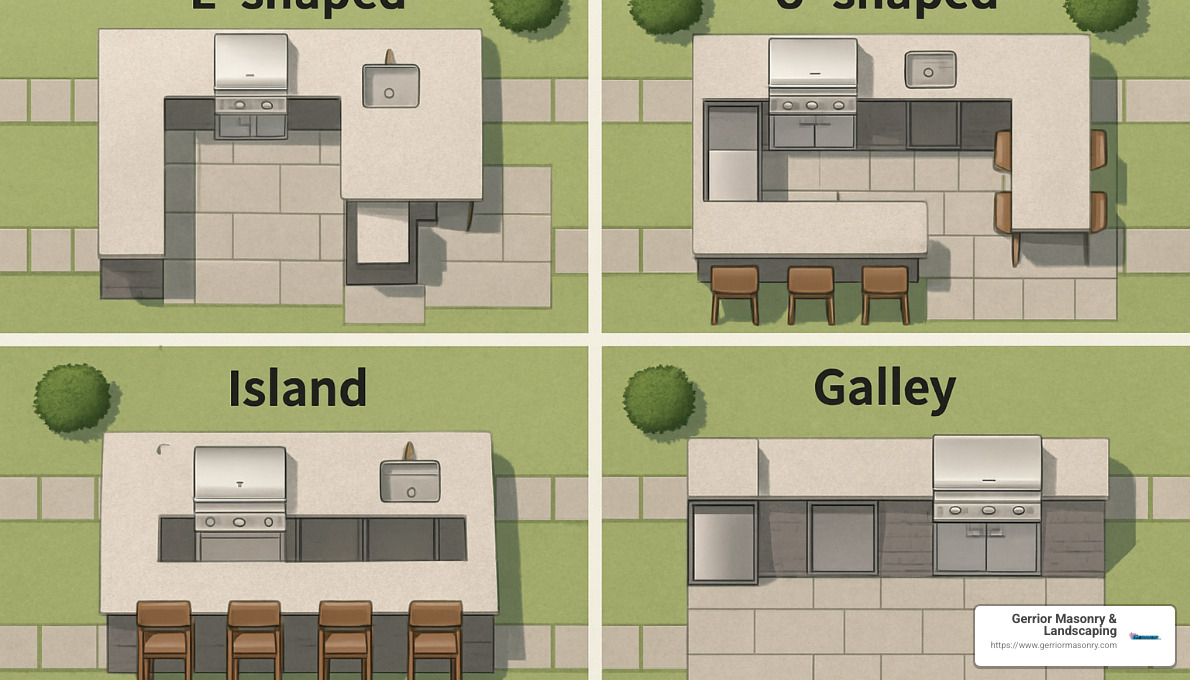
“Customizable outdoor kitchen” layouts for any footprint
Your outdoor space is unique, and your kitchen should be too. Here’s how we adapt designs to fit any area:
Compact Straight-Line Layouts (6-10 feet)
Small spaces can still deliver big functionality. For Middlesex County townhomes and condos, we often design streamlined kitchens featuring a built-in grill flanked by prep space and compact storage. Even in just 8 feet, we can create a complete cooking station that transforms a modest patio into an entertainment zone.
L-Shaped Designs (10-16 feet total)
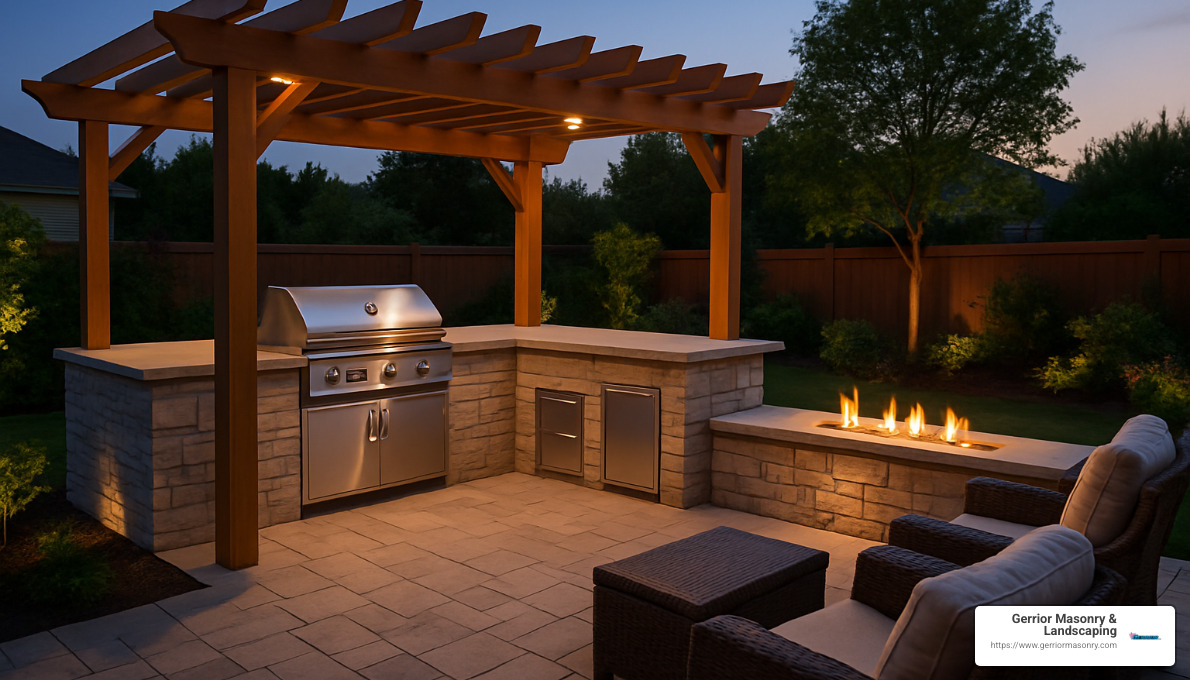
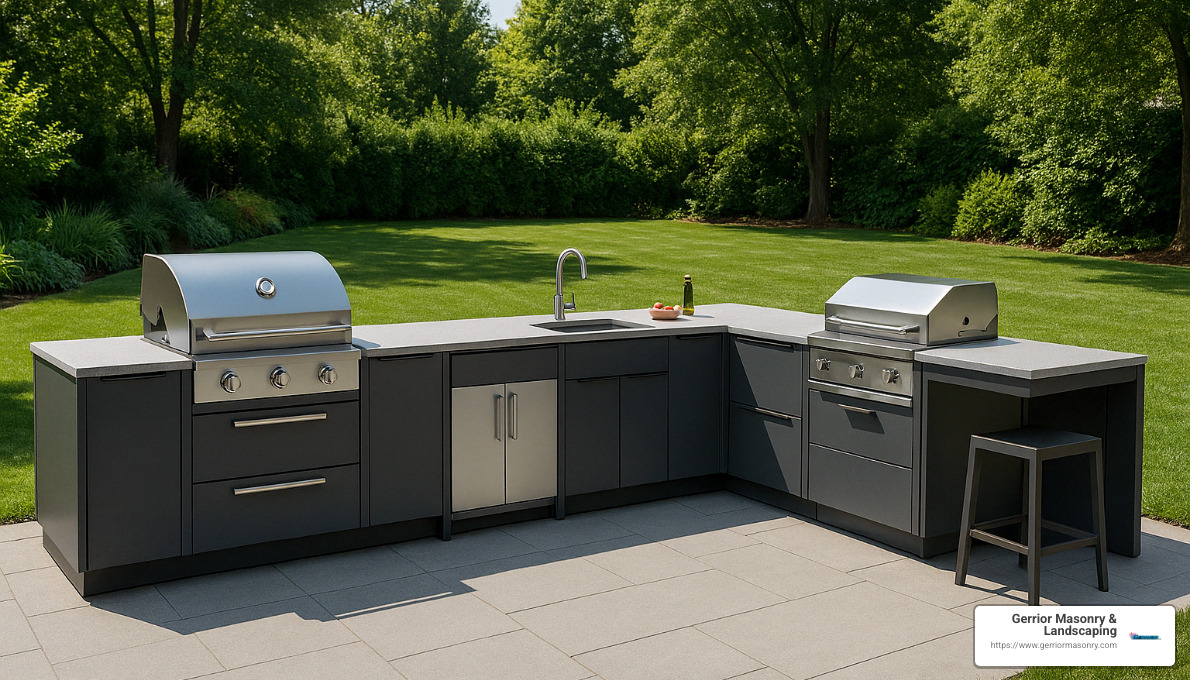
The perfect balance of space efficiency and functionality, L-shaped kitchens create a natural workflow from prep to cooking to serving. “For homes in Woburn and surrounding areas, we often recommend L-shaped designs that provide wind protection while maximizing usable counter space,” explains Joe Gerrior. The corner configuration naturally creates a social hub where guests can gather while you cook.
U-Shaped Layouts (16+ feet total)
For serious outdoor chefs, nothing beats the workflow of a U-shaped kitchen. With dedicated zones for prepping, cooking, and serving, these spacious layouts accommodate multiple cooks and various cooking methods. Many of our Essex County clients incorporate both grills and pizza ovens in these comprehensive designs.
Island Configurations
An island layout makes a bold statement as the centerpiece of larger patios. With 360-degree access, these freestanding kitchens allow the chef to remain at the heart of the gathering. Bar seating around the perimeter transforms the cooking experience into interactive entertainment.
Galley Layouts
Perfect for connecting different outdoor zones, galley layouts feature parallel counters that create an efficient workspace. Many Massachusetts homeowners pair these with pergolas to define the space and provide shade during summer cooking sessions.
For more inspiration and detailed information on designing your perfect outdoor cooking space, visit our outdoor kitchen design page.
Gerrior Masonry & Landscape Construction is based in Woburn, MA, and proudly serves homeowners throughout Middlesex and Essex County, Massachusetts.
Materials, Finishes & Appliance Selection
When creating your customizable outdoor kitchen, the materials you choose will determine not just how it looks, but how it performs through the years. Here in Massachusetts, where we experience everything from scorching summer days to frigid winters, selecting durable, weather-resistant materials isn’t just a preference—it’s a necessity.
Finish & color customization options
Gone are the days when outdoor kitchens looked purely functional. Today’s customizable outdoor kitchen can be as stylish as its indoor counterpart, with finishes that reflect your personal taste while standing up to the elements.
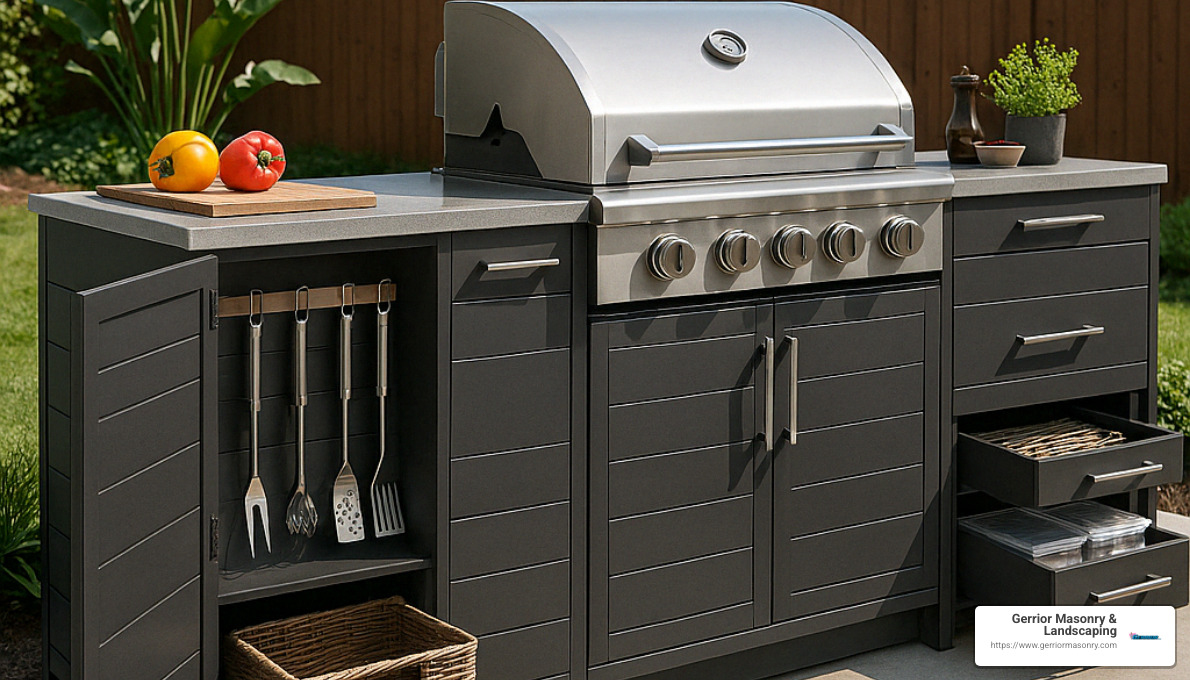
Powder-Coated Aluminum Cabinetry has become our top recommendation for Massachusetts homeowners. As Joe Gerrior often tells clients, “This material gives you the best of all worlds—it won’t rust, fade, or warp through our harsh New England seasons.” These cabinets come in more than 15 standard colors, with options ranging from subtle earth tones to bold statement hues. The powder-coating process creates a finish that’s far more durable than traditional paint, with textured and metallic options for those seeking something special.
Stainless Steel Finishes remain a classic choice for good reason. The 304-grade stainless we typically use offers exceptional corrosion resistance, especially important near the coast where salt air can damage lesser materials. While the traditional brushed finish is popular, many homeowners are now opting for powder-coated stainless that combines durability with custom color options. According to research published in the Journal of Materials Science & Technology, proper grade selection of stainless steel can significantly extend the lifespan of outdoor installations in coastal environments.
For those seeking warmth and natural character, Natural Stone Veneers transform a functional cooking space into a backyard showpiece. New England fieldstone creates an authentic regional look that ties your kitchen to the landscape, while ledger stone provides dramatic texture that catches the light beautifully as evening falls.
When it comes to Countertop Materials, granite continues to reign supreme for outdoor installations. Its natural density and hardness stand up to weather extremes, and new sealing technologies have made it more maintenance-friendly than ever. For a more contemporary look, outdoor-rated porcelain offers exceptional stain resistance with minimal upkeep—perfect for busy families.
“The most interesting projects we’re seeing in Middlesex County blend materials thoughtfully,” notes Joe Gerrior. “A stone base with stainless steel upper components creates visual interest while maximizing durability where it matters most.” This mixed-media approach—perhaps with a wooden pergola overhead or decorative tile accents—creates kitchens that feel curated rather than mass-produced.
Must-have appliances & trending tech for a customizable outdoor kitchen
The appliances you select transform your customizable outdoor kitchen from a simple grilling station to a complete cooking environment. Today’s options let you prepare virtually any meal outdoors, from morning omelets to evening pizzas.
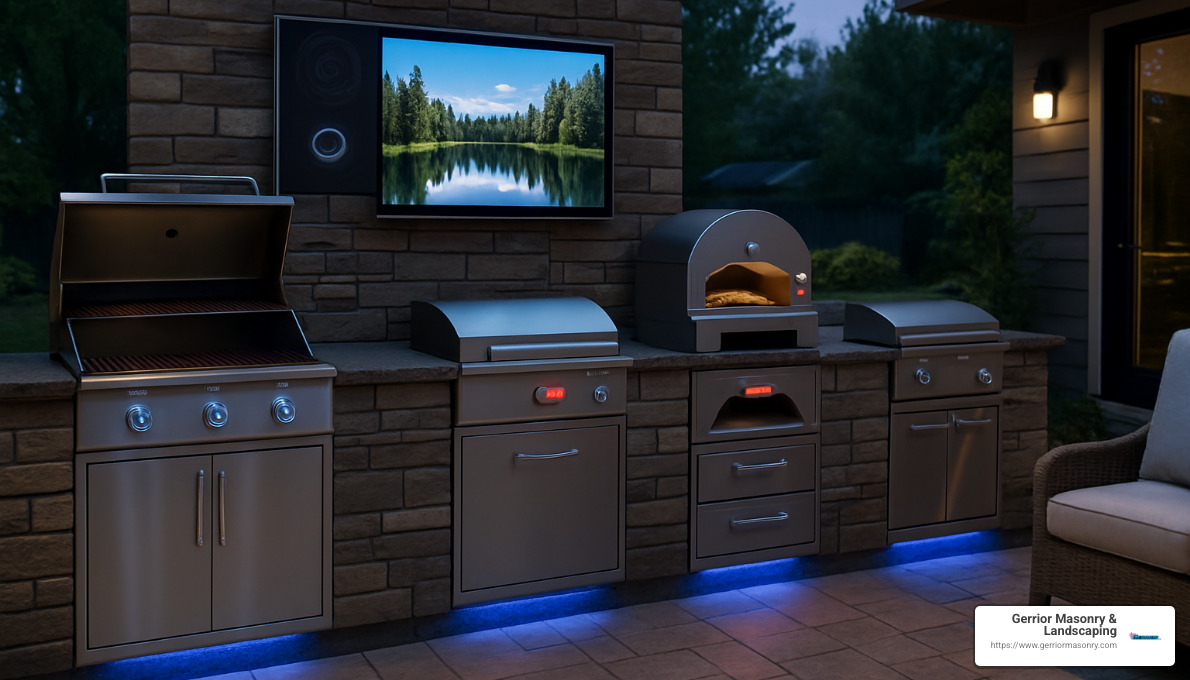
Built-in grills remain the centerpiece of most outdoor kitchens, but the variety available today is remarkable. Beyond choosing between gas, charcoal, or hybrid models, you’ll find options from compact 24-inch units perfect for smaller spaces to impressive 54-inch behemoths with integrated smoker boxes, rotisserie attachments, and infrared searing stations.
Pizza ovens have become the must-have addition in recent years. “There’s something magical about gathering around a wood-fired oven,” Joe Gerrior observes. “It becomes an experience, not just cooking.” Options range from countertop models that offer convenience and portability to built-in masonry ovens that become stunning focal points.
Side burners and power burners extend your cooking capabilities significantly. A dedicated power burner makes New England clambakes possible right in your backyard, while standard side burners let you simmer sauces or sauté vegetables while monitoring your grill.
Refrigeration transforms how you use your outdoor space, eliminating constant trips to the house for cold ingredients or beverages. Outdoor-rated refrigerators are specifically designed to function in ambient temperatures, with insulation and compressors built for our Massachusetts climate swings. For serious entertainers, dedicated beverage centers, wine coolers, and even ice makers keep the party flowing smoothly.
Water features like stainless steel sinks with hot/cold water make cleanup convenient and help with food preparation. For locations without easy access to hot water lines, on-demand water heaters can be installed discretely within cabinetry.
The latest customizable outdoor kitchen trend is smart technology integration. Weather-resistant televisions let you catch the game while grilling, while built-in Bluetooth speakers provide the soundtrack for your gatherings. LED lighting systems with app control create ambiance after sunset, and some grills now offer temperature monitoring through smartphone apps—perfect for those long, slow-cooked barbecue sessions.
When selecting appliances, think not just about what you cook today, but what culinary trips might interest you in the future. A thoughtfully designed customizable outdoor kitchen leaves room for growth in both skills and equipment, becoming more valuable with each passing year.
Budget, Timeline & Aftercare
Let’s talk dollars and sense when it comes to your customizable outdoor kitchen project. Understanding the investment range and timeline will help you plan with confidence and avoid surprises along the way.
Creating your outdoor culinary oasis is a significant investment, but one that adds both lifestyle value and potential property value to your home. Based on industry data (not Gerrior Masonry pricing), here’s what Massachusetts homeowners typically invest:
The entry point for a quality customizable outdoor kitchen starts around $8,000, which might get you a straightforward design with a built-in grill, modest countertop space, and basic finishes. This is perfect for homeowners who want functionality without all the bells and whistles.
Mid-range projects, where most of our clients land, typically run between $15,000-$30,000. At this level, you’re looking at expanded layouts with multiple cooking surfaces, quality stone or granite countertops, and weather-resistant cabinetry with thoughtful storage solutions.
For those dreaming of a showpiece outdoor entertainment space, high-end customizable outdoor kitchens can range from $30,000 to $100,000+. These luxury installations feature premium appliance packages, exotic materials, extensive ambient lighting, sound systems, and sometimes even climate control features like overhead heaters or cooling systems.
“What I love about custom outdoor kitchens is their scalability,” says Joe Gerrior. “We can design your space with future expansions in mind, allowing you to start with the essentials and add features over time as your budget allows. It’s like building your dream in chapters.”
Several factors will influence your project’s final cost:
– Site conditions and necessary prep work
– Utility requirements (running gas, water, or electrical lines)
– The quality and quantity of cooking appliances
– Your choice of countertop and cabinet materials
– Special features like pizza ovens, refrigeration, or lighting
From initial design to firing up the grill for the first time, expect a timeline of 4-12 weeks for your customizable outdoor kitchen. The design phase typically takes 1-3 weeks as we refine your vision, followed by 1-2 weeks for material selection and ordering. Custom elements might require 2-4 weeks for fabrication, while the actual installation ranges from a single day for modular systems to about a week for fully custom builds.
FAQs on pricing, warranties, and upkeep
How does Massachusetts weather affect my outdoor kitchen costs?
Our New England climate demands materials that can withstand freeze-thaw cycles, which sometimes means investing in higher-quality components. Based on industry averages (not Gerrior Masonry pricing), Massachusetts homeowners typically invest between $12,000 and $75,000 for custom outdoor kitchens that stand up to our challenging weather patterns.
What kind of warranties should I expect?
Quality outdoor kitchen components typically come with solid manufacturer warranties. Stainless steel cabinets often carry 10+ year structural warranties, while appliances range from 1-10 years depending on the brand and specific component. Countertop warranties vary widely—granite might come with a limited lifetime warranty while other materials offer 1-5 years of coverage. The powder-coated finishes that work so well in our climate usually carry 5-10 year guarantees against peeling or fading.
How will I need to maintain my outdoor kitchen?
Your maintenance routine will depend on your material choices, but here’s what most Massachusetts homeowners can expect: Stainless steel requires regular cleaning with appropriate products to prevent corrosion from salt air or road salt. Granite countertops benefit from annual sealing to maintain their stain resistance. The powder-coated aluminum that’s becoming increasingly popular requires just simple soap and water cleaning. Your appliances will need seasonal attention according to manufacturer guidelines.
What about winterizing in Massachusetts?
Living in New England means taking winter seriously. Before freezing temperatures arrive, you’ll need to shut off and drain water lines, thoroughly clean and cover your cooking appliances, and consider storing removable components indoors. Many of our clients invest in custom winter covers for their entire kitchen setup. We also recommend scheduling a professional spring inspection to ensure everything survived the winter intact and is ready for grilling season.
Can I use my outdoor kitchen year-round in Massachusetts?
With thoughtful design, absolutely! We often incorporate windbreaks, overhead structures like pergolas, and heating elements to extend your outdoor cooking season. Many of our clients enjoy their customizable outdoor kitchens from early spring well into late fall, with the most dedicated outdoor chefs even firing up the grill for the occasional winter cookout.
For more comprehensive information about outdoor kitchen options and what might work best for your property, visit our outdoor kitchen page.
Gerrior Masonry & Landscape Construction—based in Woburn, MA—proudly serves Middlesex and Essex County homeowners with expert outdoor kitchen and hardscape solutions that stand up to our unique New England climate while providing years of enjoyment.
Bringing It All Together: Integration & Inspiration
A truly successful customizable outdoor kitchen doesn’t exist in isolation—it becomes an integral part of your overall outdoor living space. The magic happens when your cooking area seamlessly blends with the rest of your backyard, creating a cohesive outdoor living experience.
Hardscape Coordination
Your outdoor kitchen should feel like it was always meant to be there, not an afterthought. When we design these spaces for our Massachusetts clients, we focus on creating visual harmony by using complementary paving materials that match or improve your existing patio. The color palette, textures, and design language should flow naturally throughout the space, with thoughtful transitions guiding guests between cooking, dining, and lounging areas.
“The most successful outdoor kitchens we’ve built in Middlesex County are those that feel like a natural extension of both the home and the landscape,” notes Joe Gerrior. “It’s about creating a seamless indoor-outdoor experience.”
Think about how different functional zones will interact. Your cooking area needs adequate clearance around all appliances for safety, while dining areas should be close enough for conversation but positioned away from smoke and heat. Bar seating creates a perfect casual interaction spot where friends can chat with the chef, and dedicated lounge spaces invite everyone to relax after the meal.
Incorporating Complementary Features
Improve your customizable outdoor kitchen with elements that extend its usefulness beyond just cooking. Many of our Woburn area clients opt for pergolas or pavilions that provide shade and weather protection, turning their kitchen into a three-season space. Fire features like built-in fireplaces or fire tables create evening ambiance and extend the usable hours of your outdoor space well into the cooler months.
Water elements add both visual appeal and a soothing acoustic backdrop to outdoor meals, while thoughtful landscape lighting transforms your kitchen from a daytime cooking space to an enchanting evening entertainment venue. Don’t forget the softening touch of strategic plantings—they provide color, texture, and sometimes even aromatic herbs right at your fingertips while cooking.
For inspiration on integrating your kitchen with a patio design, visit our outdoor kitchen patio page.
Customizable outdoor kitchen success stories
Case Study 1: Urban Terrace Change
A Winchester homeowner came to us with what seemed like an impossible challenge: create a complete outdoor cooking solution on their modest 10’x12′ terrace. Rather than seeing limitations, we saw opportunity. We designed a space-efficient L-shaped layout that maximized the corner with a 30″ built-in grill and side burner. Vertical storage solutions and compact refrigerator drawers preserved precious floor space, while a light-colored granite countertop visually expanded the area.
“I never thought we could fit a real kitchen out here,” the homeowner told us after completion. “Now it’s where we spend every weekend evening from spring through fall.” This customizable outdoor kitchen transformed an underused urban terrace into this family’s favorite spot for intimate gatherings.
Case Study 2: Suburban Entertainer’s Dream
The Johnson family in Lexington had a reputation for hosting the neighborhood’s best gatherings, but their indoor kitchen couldn’t handle the crowd. Their new U-shaped outdoor kitchen became the perfect solution, centered around a 42″ gas grill with a dedicated pizza oven station that became the star of their parties.
We incorporated a full-size refrigerator and ice maker, with extensive counter space designed specifically for buffet-style serving. Bar seating for six along the outer edge created a natural gathering spot, while the overhead pergola with retractable shade and integrated lighting extended the kitchen’s usability into evening hours.
“This kitchen became the hub for neighborhood gatherings,” shares Joe Gerrior. “The homeowners tell us they use it at least three times a week from April through October.”
Case Study 3: Poolside Resort Layout
A Bedford family wanted their backyard to feel like their favorite vacation resort. Their new linear customizable outdoor kitchen runs parallel to their pool edge, featuring a 36″ built-in grill paired with a smoker for versatile cooking options. The dedicated beverage center with refrigerator and ice maker keeps refreshments close at hand, while a clever pass-through window serves the pool area directly.
We integrated entertainment features including a weather-resistant television and sound system, with LED lighting that creates resort-like ambiance after sunset. The stone finish perfectly complements their pool coping, creating visual harmony throughout the space.
“We canceled our summer vacation plans,” the homeowners told us. “Why travel when we have this in our backyard?” Their outdoor kitchen created a staycation destination that the family enjoys throughout the summer, significantly reducing their travel as they prefer entertaining at home.
These real-life success stories demonstrate the versatility of customizable outdoor kitchens and how they can be custom to specific spaces, needs, and lifestyles across Middlesex and Essex Counties.
Conclusion & Next Steps
Your customizable outdoor kitchen isn’t just another home improvement project—it’s a complete change of how you live, entertain, and connect with loved ones outdoors. We’ve come a long way from the lonely backyard grill to creating true outdoor living rooms where culinary experiences take center stage.
As you envision your own outdoor cooking space, keep these essential points in mind:
Personalization makes all the difference. The beauty of customization is getting exactly what works for your unique space, cooking preferences, and entertainment style. Whether you’re a pizza aficionado or a grill master, your outdoor kitchen should reflect how you actually cook and entertain.
Quality materials are non-negotiable in Massachusetts. Our New England weather demands thoughtful material choices that can withstand freezing winters and humid summers. The investment in weather-resistant components pays dividends in longevity and reduced maintenance.
Think holistically about your outdoor space. The most successful kitchens we’ve built seamlessly blend cooking areas with dining spaces, comfortable seating, and thoughtful landscaping. This integration creates a natural flow that makes your entire yard more functional and inviting.
Design with our regional climate in mind. Adding features like windbreaks, overhead structures, or even heating elements can extend your outdoor cooking season well into spring and fall, maximizing your enjoyment and investment.
Consider the financial upside. Beyond the lifestyle benefits, a well-designed outdoor kitchen typically returns up to 130% of its cost when you sell your home. It’s one of the few home improvements that often pays for itself while providing years of enjoyment.
Ready to explore how a customizable outdoor kitchen could transform your backyard? The next step is sitting down with our design team to discuss your vision, space constraints, and budget. We’ll help translate your ideas into a practical concept that maximizes your outdoor cooking potential while complementing your home’s architecture.
Gerrior Masonry & Landscape Construction—based in Woburn, MA—proudly serves Middlesex and Essex County homeowners with expert outdoor kitchen and hardscape solutions. With over three decades of experience crafting outdoor living spaces that stand the test of time, we’re ready to help bring your culinary vision to life in a way that makes sense for your home, lifestyle, and budget.
Contact us today to schedule your consultation and take the first step toward outdoor cooking perfection that you’ll enjoy for years to come.
Fire Pit for Backyard: Top 10 Best Picks 2025 (Amazing Value)
Transform Your Outdoor Space with a Fire Pit
Looking for a fire pit for backyard gatherings that’ll make your neighbors jealous? There’s something magical about flames dancing under the stars that brings people together. I’ve seen how a simple addition like this can completely transform an ordinary yard into everyone’s favorite hangout spot.
When you’re considering options, the variety might surprise you:
Type
Cost Range
Best For
Fuel
Wood-burning
$50-$800
Authentic experience, cooking
Firewood
Propane
$150-$2,000
Convenience, smoke-free
Propane tank
Natural gas
$400-$5,000
Permanent installation
Gas line
Fire tables
$300-$4,000
Entertainment, dual-purpose
Propane/Natural gas
Smokeless
$200-$1,200
Low smoke, efficiency
Wood
A fire pit for backyard spaces isn’t just a pretty feature—it’s an investment in your lifestyle. Think about those chilly New England evenings when you’d normally head inside. Now imagine extending your outdoor season by months, creating a cozy gathering spot where stories flow as freely as the warmth. The National Association of Realtors even suggests that a well-designed gas fire pit can boost your home’s value by up to $4,000—not bad for something that brings so much joy!
The perfect fire pit strikes a balance between what catches your eye, what fits your lifestyle, and what works with your budget. Before falling in love with a particular style, take a moment to consider your available space, how much heat you’ll need (measured in BTUs), what fuel makes the most sense for you, and—importantly—what your local regulations allow.
I’m Joe Gerrior, owner of Gerrior Masonry & Landscape Construction. Over my 34 years creating outdoor spaces throughout Massachusetts, I’ve watched countless families transform their ordinary backyards into magical evening retreats. There’s nothing quite like seeing a family gather around a custom fire pit for backyard enjoyment for the first time—it’s like they suddenly find a whole new room in their home, except this one has stars for a ceiling.
Gerrior Masonry & Landscape Construction is based in Woburn, MA, and proudly serves homeowners throughout Middlesex and Essex County, Massachusetts.
Product Roundup: Best Fire Pits for Every Budget
As masonry experts serving Massachusetts homeowners for over three decades, we’ve seen fire pit trends come and go. What remains constant is the joy a well-chosen fire pit for backyard brings to families. Let’s explore the best options across different price points to help you find the perfect match for your outdoor space.
“Sitting around an outdoor fire pit with loved ones, gazing at the warm flames under the starry night sky, life is just blissful and magical!” This sentiment from one of our recent clients perfectly captures why backyard fire pits have become so popular in Massachusetts.
Fire pits generally fall into three main fuel categories:
Wood-burning fire pits offer that authentic campfire experience with crackling sounds, wood scent, and higher heat output. They’re typically more affordable upfront but require firewood storage and ash cleanup.
Propane fire pits provide instant on/off convenience and produce no smoke or ash. They require a propane tank (usually 20 pounds) that needs occasional refilling.
Natural gas fire pits connect to your home’s gas line for unlimited fuel without refills. They cost more to install initially but offer the ultimate convenience and can be more economical long-term.
Under $150: Fire Pit for Backyard Bargain Hunters
If you’re just testing the waters or working with a tight budget, there are excellent options under $150 that provide both function and style.
Best Budget Steel Bowl: Hampton Bay Piedmont 30″ Fire Pit ($79-99)
This popular steel bowl design includes a mesh spark screen and poker tool. With its classic round shape and rubbed bronze finish, it offers excellent value while complementing most backyard aesthetics. The wide bowl design allows for a decent-sized fire, making it perfect for occasional s’mores nights.
Best Portable Option: Inno Stage Smokeless Fire Pit ($100-130)
For those who want flexibility, this portable stainless steel option weighs just 16 pounds and includes a carrying case. Perfect for taking to the beach or camping, then bringing back to use in your backyard. Though smaller than permanent installations, it’s designed to reduce smoke through improved airflow.
DIY Stone Fire Pit Kit: Basic Ring Kit ($120-150)
For the hands-on homeowner, basic stone fire pit kits include concrete blocks designed to stack into a circle without mortar. As Larry Campbell, a fire pit expert, notes: “Safety is always first — you need to be sure the area you plan to use the fire pit is a fireproof-type surface.” These kits typically create a pit about 36″ in diameter and can be installed in an afternoon.
Most fire pits in this price range offer heat outputs around 25,000-30,000 BTUs, which provides enough warmth for 4-6 people sitting nearby. While they may not last as many seasons as higher-end models, they’re a great entry point for backyard enjoyment.
$150 – $500: Crowd-Pleaser Picks
The mid-range category offers significantly better durability, design options, and features that improve the user experience.
Best Smokeless Wood-Burning: Solo Stove Bonfire 2.0 ($240-300)
This wildly popular stainless steel fire pit has revolutionized the market with its innovative smokeless design. While no wood-burning fire pit is truly 100% smokeless, the Solo Stove’s double-wall construction creates a remarkable secondary combustion that dramatically reduces smoke. As one reviewer noted, “Once you’ve experienced the minimal smoke from a Solo Stove, it’s hard to go back to a traditional fire pit.”
Best Fire Table Under $500: Outland Living Mega Fire Table ($350-450)
With approximately 58,000 BTUs of heat output, this propane fire table offers both warmth and functionality. The rectangular design includes a ledge for drinks and plates, while the hidden tank enclosure creates a sleek appearance. The included lava rocks can be upgraded to colored fire glass for a more personalized look.
Best Traditional Stone Look: Hampton Bay Crossridge 50,000 BTU Fire Pit ($300-400)
This propane-powered pit combines the traditional look of stone with modern convenience. With electronic ignition and a substantial heat output, it creates an inviting centerpiece for your patio. The included lid allows it to convert to a table when not in use as a fire feature.
Fire pits in this range typically offer between 40,000-60,000 BTUs, suitable for heating areas with 6-8 people comfortably. The materials and construction quality generally ensure 5+ years of regular use with proper maintenance.
Premium Fire Pit for Backyard Entertainers ($500+)
For those seeking a statement piece or maximum performance, premium fire pits offer exceptional craftsmanship, higher heat output, and distinctive designs.
Best High-End Smokeless: Breeo X Series 24 ($579-650)
This American-made smokeless fire pit features heavy-gauge corten steel that develops a beautiful patina over time. Its innovative design includes a sear plate ring for cooking and exceptional durability even in harsh weather conditions. With proper care, this pit can last decades.
Best Premium Gas Fire Table: Elementi Granville ($1,200-1,800)
For the ultimate in outdoor elegance, this concrete fire table delivers 60,000 BTUs of heat while serving as a stunning focal point. Available in multiple finishes, it includes high-quality fire glass and a protective cover. The clean-burning propane system means no smoke, no ash, and no cleanup.
Best Custom Stone: Professional Masonry Installation ($2,000-5,000)
For a truly personalized fire pit for backyard installation, nothing compares to a custom-built stone fire pit designed to complement your specific landscape. These can be built for wood burning or fitted with gas burners ranging from 60,000 to 110,000 BTUs. The natural stone construction integrates seamlessly with your outdoor space and adds significant value to your property.
Premium fire pits typically offer heat outputs from 60,000 to over 100,000 BTUs, capable of warming larger gatherings of 8-12 people even on cooler evenings. The exceptional materials and craftsmanship ensure these will be enjoyed for many years, often becoming family heirlooms.
How to Choose the Perfect Fire Pit for Backyard Spaces
Selecting the ideal fire pit for backyard enjoyment isn’t just about finding something pretty—it’s about finding the right match for your space, lifestyle, and Massachusetts weather. After installing hundreds of fire pits throughout the region, I’ve learned that a thoughtful approach saves both headaches and dollars down the road.
Size and Space Requirements
Before falling in love with any particular fire pit, grab that measuring tape! Your available space determines what size will look and function best:
For cozy patios under 100 square feet, a smaller fire pit (30″ diameter or less) creates intimacy without overwhelming the space. Medium spaces between 100-300 square feet can comfortably accommodate a 30-36″ diameter pit, while larger yards over 300 square feet benefit from the visual impact of a 36-48″ diameter statement piece.
Safety clearance is non-negotiable—maintain at least 7 feet between your fire pit and any structures, trees, or overhangs. You’ll also want 2-3 feet of clear space around the entire circumference so people can comfortably access the warmth without feeling cramped or risking accidents.
Heat Output Needs
Those BTU numbers actually matter here in Massachusetts, where even summer evenings can get chilly:
30,000 BTUs provides a cozy experience for a couple or small family when temperatures are mild. 50,000 BTUs hits the sweet spot for most Massachusetts homeowners, comfortably warming 4-6 people even as temperatures dip into the 50s. For those planning larger gatherings or extended use into fall, 70,000+ BTUs ensures everyone stays toasty even when there’s a nip in the air.
Wood-burning pits typically produce more heat than similarly-sized gas models, but without the convenience of instant temperature control.
Fuel Type Considerations
Each fuel option comes with its own personality and practicalities:
Wood burning fire pits deliver that magical crackling sound and authentic campfire smell that many of my clients absolutely love. They’re generally less expensive upfront and provide superior heat, but they require more work—wood gathering, storage, fire tending, and ash cleanup afterward. Plus, many Massachusetts towns have restrictions on wood burning during certain months.
Propane options offer wonderful convenience—just turn the knob and enjoy instant flames with no smoke or cleanup. They’re perfect for deck installations where wood burning might not be allowed. The downside? You’ll need to refill or exchange those 20-pound tanks periodically, and they generally produce less heat than wood fires.
Natural gas fire pits represent the ultimate in convenience for those willing to make the upfront investment. Once professionally installed and connected to your home’s gas line, you’ll never worry about fuel again. The consistent performance and lower long-term operating costs make these increasingly popular among my Massachusetts clients who use their outdoor spaces frequently.
Finding the ideal fire pit for backyard decks & patios
Putting a fire pit on a deck requires extra caution—after all, we’re intentionally creating fire above a wooden structure!
For deck installations, start by checking your deck’s weight capacity. Some stone fire pits can weigh hundreds of pounds, potentially exceeding what your deck was designed to support. Always use a protective deck mat specifically designed for fire pits—these heat shields prevent thermal transfer that could damage or even ignite your decking.
“Are fire pit tables safe on a wood deck?” This question comes up in almost every consultation. The answer is yes—with proper precautions. Choose models specifically rated for deck use, maintain manufacturer-recommended clearances (usually 24″ minimum from railings or furniture), and verify your local fire codes allow them. In many Massachusetts communities, propane fire tables are permitted on decks while wood-burning pits are prohibited.
For patio installations, ensure your surface is completely level before placing any fire pit. Some materials, particularly certain types of concrete pavers, can actually crack under extreme heat, so check compatibility with your existing materials. Think about drainage too—your fire pit should be positioned where water won’t pool around it after rain, potentially causing damage to the unit or its components.
Don’t forget to consider prevailing wind patterns—position your fire pit where smoke won’t consistently blow toward your seating area or into open windows of your home. This small detail makes a huge difference in enjoyment!
For more detailed guidance specific to your property, check out our comprehensive Backyard Firepit resource page.
Matching style & material to your landscape
Your fire pit will likely become the focal point of your outdoor space, so choosing materials that complement your existing landscape creates visual harmony.
Steel fire pits offer clean lines and modern appeal at accessible price points. While lightweight and often portable, they require proper maintenance to prevent rust, especially in our New England climate with its freeze-thaw cycles.
Cast iron brings traditional charm and exceptional heat retention, though its heavyweight nature means it’s staying wherever you place it! The material develops a beautiful seasoned finish over time that many homeowners cherish.
Copper fire pits start out gleaming but develop a stunning verdigris patina over the years. They’re naturally resistant to corrosion, making them excellent choices for coastal Massachusetts properties exposed to salt air.
Stone and concrete options deliver permanence and natural beauty. They integrate seamlessly with landscape designs and withstand decades of New England weather extremes. While more expensive initially, their durability makes them cost-effective long-term investments.
Corten steel (weathering steel) has become increasingly popular for its distinctive appearance—it develops a controlled rust patina that actually protects the metal beneath. This contemporary material pairs beautifully with both modern and rustic landscape designs.
Your existing outdoor aesthetic should guide your style choice. Modern landscapes with clean architectural lines pair beautifully with geometric metal fire pits, while traditional settings feel complete with natural stone materials. Coastal properties often benefit from lighter-colored concrete or stone with nautical influences, and rustic environments call for rugged materials with organic shapes.
The best fire pit for backyard enjoyment is one that feels like a natural extension of your home’s style while meeting your practical needs for warmth and gathering.
Gerrior Masonry & Landscape Construction is based in Woburn, MA, and proudly serves homeowners throughout Middlesex and Essex County, Massachusetts.
Safety, Maintenance & Local Codes
When it comes to enjoying your fire pit for backyard gatherings, safety isn’t just a suggestion—it’s essential. After installing hundreds of fire features across Massachusetts over the years, I’ve seen how proper setup and maintenance make all the difference between countless memorable evenings and potential hazards.
Essential Safety Guidelines
Picture this: it’s a perfect autumn evening in New England, the air is crisp, and your fire pit is crackling away. That perfect scene requires some thoughtful planning. Always maintain at least 10-15 feet of clearance from your home, wooden fences, and those beautiful maple trees in your yard. This isn’t just good advice—it could prevent a dangerous situation.
Your fire pit should rest on non-combustible surfaces only. Concrete, stone patios, or specially designed fire pit pads work beautifully. That wooden deck? You’ll need proper protection underneath. And please, never position your fire pit under a covered porch or low-hanging branches—I’ve had too many concerned calls from homeowners who learned this lesson the hard way.
Always keep safety equipment nearby—a fire extinguisher, garden hose, or even a bucket of sand works well. And as tempting as it might be to start dinner prep while the fire burns, never leave it unattended, especially with curious children or pets around. Those mesmerizing flames need respect and attention.
For wood-burning pits, a spark screen is worth every penny, containing those wandering embers that might otherwise land where they shouldn’t. And when you’re done enjoying your evening, patience is key—wait until ashes are completely cool before disposal.
Weather plays a huge role in fire pit safety too. Those blustery New England days? Not ideal for fire pit use. During our occasional drought conditions or burn bans, it’s best to find alternative entertainment. And investing in a quality cover protects your fire pit from our unpredictable Massachusetts weather when not in use.
Research from health experts at Amazon Science has shown that wood smoke contains particulate matter that can affect air quality, which is another good reason to follow proper clearance guidelines and consider smokeless options if you have nearby neighbors.
Regulations for a fire pit for backyard in Massachusetts
Living in Massachusetts means navigating some specific regulations about outdoor fire features. These vary by town, but here’s what typically applies:
At the state level, open burning of yard waste is strictly regulated, usually permitted only from January 15 to May 1, and requires a permit. The good news? Fire pits used primarily for cooking or warmth are generally exempt from these seasonal restrictions. However, all outdoor fires must be attended at all times—no exceptions.
In most Massachusetts communities, you’ll need at least 10 feet of clearance from any structures. Some towns require permits for permanent installations, and local fire departments often have specific guidelines about acceptable fuels. If you live in a planned community, your homeowners association might have additional restrictions.
Before we install any fire pit for backyard enjoyment, I always recommend three simple steps: contact your local fire department for guidelines specific to your address, check with your homeowners association if applicable, and review your property insurance policy for any relevant restrictions or coverage implications.
For our clients in Middlesex and Essex counties, we handle the permitting process as part of our installation services. This takes the headache out of compliance and ensures your beautiful new fire feature meets all local requirements.
Year-Round Care Tips
Massachusetts weather demands thoughtful fire pit maintenance throughout our distinct seasons. With proper care, your investment will provide enjoyment for many years.
For wood-burning fire pits, ash removal is crucial. Wait until ashes are completely cool—usually the day after use—then remove them to prevent acidic residue from damaging the interior. Store ashes in a metal container with a lid, never in plastic or paper containers that could ignite from hidden embers.
Cleaning stone or masonry fire pits is straightforward—brush away debris and occasionally scrub with a mild detergent solution. For stubborn residue on stone, a solution of water and muriatic acid (9:1 ratio) can work wonders, but please use with caution and proper protection. As a mason, I’ve seen beautiful stone work damaged by improper cleaning methods.
After our harsh Massachusetts winters, always inspect your fire pit for cracks or damage before the first use of the season. Freeze-thaw cycles can be brutal on masonry.
Gas fire pit owners have a different maintenance routine. Keep those burner ports clear of debris for proper flame patterns—compressed air works wonderfully for this. Regularly check gas connections for leaks using soapy water (bubbles indicate problems), and inspect ignition systems and controls at the start of each season.
For seasonal protection, portable units should be stored in a dry place during winter. All fire pits benefit from a quality, breathable, waterproof cover when not in use. For in-ground installations, proper drainage around the pit prevents water accumulation and that dreaded freeze-thaw damage that’s so common in our climate.
For more in-depth information about outdoor fireplaces, which share many maintenance requirements with fire pits, visit our guide to Outdoor Fireplaces.
Proper maintenance isn’t just about protecting your investment—it ensures your fire pit for backyard enjoyment remains a safe gathering spot for family and friends season after season.
Gerrior Masonry & Landscape Construction—based in Woburn, MA—proudly serves Middlesex & Essex County homeowners with custom fire pit installations designed for our unique New England climate and lifestyle.
Frequently Asked Questions about Fire Pit for Backyard
What fuel type is best for my needs?
When clients ask me about the best fuel type for their fire pit for backyard, I always start by asking about their lifestyle and priorities. There’s no one-size-fits-all answer, but these guidelines usually help:
Choose wood-burning if you’re after that authentic campfire magic—the crackling sounds, dancing flames, and unmistakable aroma of burning wood. Wood pits typically provide the highest heat output and create that primal gathering experience that humans have enjoyed for thousands of years. They’re also generally more affordable upfront, which is nice if you’re budget-conscious. Just remember, you’ll need a place to store firewood and be prepared for some cleanup afterward.
Choose propane if convenience ranks high on your wish list. With propane, you simply turn a knob and—voilà!—instant flames without the wait. There’s no smoke to sting your eyes or drift toward your neighbor’s yard, no sparks to worry about, and no messy ash to clean up the next day. Many of our Massachusetts clients love propane models because they can enjoy a quick evening fire without committing to a whole night of fire tending.
Choose natural gas if you want the ultimate in fire pit convenience and plan to use your pit frequently. While installation costs more initially (you’ll need a professional to run a gas line), the long-term operating costs are lower than propane, and you’ll never run out of fuel mid-gathering. As one client told me after we installed her natural gas fire pit: “It’s like having an outdoor fireplace that’s always ready when I am.”
I often tell homeowners that while manufacturers market “smokeless” wood fire pits, the reality is that any wood fire produces some smoke. As fire pit designer Tom Takach explains: “Once wood is involved, smoke is inevitable; truly smokeless fire pits are usually gas type.” That said, modern smokeless wood-burning designs do significantly reduce smoke through clever airflow engineering and secondary combustion.
How much does a quality fire pit cost on average?
The price range for fire pit for backyard options spans from budget-friendly to luxury investment pieces. Here’s what you can generally expect:
For basic wood-burning options, portable steel fire bowls typically run $50-$200, while DIY stone fire pit kits range from $100-$500. If you’re interested in those popular smokeless designs that reduce smoke output, plan to invest $250-$800 for a quality model that will last.
Propane fire pits offer great middle-ground options. Cute tabletop models start around $100-$300, while standard propane fire tables that serve as both table and fire feature range from $300-$1,000. For statement pieces with designer appeal, premium models can run $1,000-$3,000 or more.
Natural gas fire pits represent more of an investment but offer long-term convenience. Basic burner kits (not including professional installation) start at $200-$600, while mid-range fire tables and pits typically cost $800-$2,000. For custom installations with premium materials and features, expect to invest $2,000-$5,000+.
When considering a professionally built stone fire pit or gas line installation, you’ll need to factor in labor costs. These typically range from $500 for simple installations to $5,000+ for elaborate custom designs with premium materials, complex site preparation, or challenging access.
These are average costs based on internet data and not actual costs for Gerrior Masonry services. Our custom installations are priced based on your specific design, materials, and site requirements.
Can I safely cook or roast food on my fire pit?
Yes! Cooking over a fire pit for backyard gatherings adds another dimension to outdoor entertaining. Who doesn’t love a freshly roasted marshmallow or hot dog cooked over an open flame?
For wood-burning fire pits, you’ve got the most cooking flexibility. They’re perfect for the classic marshmallow roast, but many of our clients get creative with foil packet meals, skewered vegetables, or even cast iron cooking. For best results, let the initial flames die down to hot coals—this provides more even heat and less chance of charring. Always use untreated, cooking-safe firewood, as pressure-treated lumber or painted wood release toxic compounds when burned.
Gas fire pits offer clean, controllable heat that’s great for simple roasting. They work beautifully for marshmallows and hot dogs on skewers, though you’ll want to be careful not to drip food onto your burners or decorative fire glass. These drippings can smoke, create residue, and be difficult to clean. Before cooking, check your manufacturer’s guidelines—some decorative models aren’t rated for cooking.
I recently installed a custom fire pit for backyard cooking enthusiasts in Andover that featured what we call a “cooking bar” design. It’s a stone fire pit with an adjustable grill grate that swings into position when they want to cook and out of the way when they just want to enjoy the flames. The family loves that they can switch from relaxation mode to cooking mode in seconds.
For those who love outdoor cooking, consider these helpful accessories:
– Swing-away grill grates that install over wood-burning pits
– Extended roasting sticks designed specifically for fire pit use
– Heat-resistant cooking stones that can be placed near (not in) the flames
Whatever you cook over your fire pit will taste better simply because you’re outdoors. There’s something about fresh air and flickering flames that makes even the simplest foods taste extraordinary.
Gerrior Masonry & Landscape Construction is based in Woburn, MA, and proudly serves homeowners throughout Middlesex and Essex County, Massachusetts.
Conclusion
A fire pit for backyard enjoyment represents one of the best investments you can make in your outdoor living space. Beyond the obvious warmth and light, it creates a natural gathering place that brings family and friends together for memorable evenings under the stars.
Whether you choose a simple portable fire bowl, a convenient propane fire table, or a custom-built stone masterpiece, the right fire pit transforms your backyard into a year-round retreat. According to our clients, there’s something almost magical about gathering around a fire that encourages conversation, relaxation, and connection.
When selecting your ideal fire pit, remember to balance your aesthetic preferences with practical considerations like fuel type, heat output, and maintenance requirements. Always prioritize safety by following proper clearance guidelines and checking local regulations before installation.
Quality craftsmanship makes all the difference in how your fire pit performs and how long it lasts. The most beautiful designs combine form and function – looking stunning in your landscape while providing the perfect amount of heat and ambiance for your gatherings. We’ve seen how a thoughtfully designed fire feature becomes the heart of outdoor living spaces throughout Massachusetts.
For those in Massachusetts considering a custom stone fire pit or professional installation, we invite you to explore our Outdoor Fire Pits services. With over three decades of experience creating outdoor living spaces throughout Middlesex and Essex counties, we understand the unique challenges and opportunities of New England outdoor entertaining.
The average cost ranges mentioned in this article are only estimates based on industry data and not actual quotes for custom work. Every project is unique, and we’re happy to provide personalized guidance for your specific needs.
Gerrior Masonry & Landscape Construction—based in Woburn, MA—proudly serves Middlesex & Essex County homeowners with expert masonry and hardscaping services, including custom fire pit design and installation that will improve your property for years to come.
An outdoor bbq design blends functionality with aesthetics to create a personalized backyard cooking and entertaining area. If you’re looking for quick style inspiration, here are five popular ideas to jumpstart your project:
Brick BBQ Pit: Traditional, durable, and timeless appeal.
Modular Kitchen: Customizable and flexible outdoor cooking space.
Pergola with Grill: Provides shade, comfort, and style.
DIY BBQ Table: Creative, multifunctional, and budget-friendly.
Energy-Efficient Setup: Environmentally-conscious appliances and materials.
As a homeowner, you recognize that a well-designed BBQ area does much more than cook food—it improves your outdoor living space and boosts your home’s value. With thoughtful planning, your backyard can transform into everyone’s favorite gathering place.
I’m Joe Gerrior, owner of Gerrior Masonry & Landscape Construction Corp. For over 34 years, my team and I have specialized in custom masonry and landscape projects, including countless outdoor bbq design installations across Massachusetts. Let’s explore some top outdoor BBQ design trends together:
There’s just something about a classic brick barbecue pit that brings back memories of family gatherings, neighborhood cookouts, and warm summer nights. These built-in barbecue pits aren’t just cooking fixtures—they’re timeless outdoor centerpieces that add charm and character to your backyard.
Brick BBQ pits have been popular for decades, and for a good reason: they’re built to last. With proper care, a well-constructed brick pit can easily serve your family for generations. Unlike portable grills that can rust or wear out, brick barbecue pits offer best durability. They also do a fantastic job of retaining heat. The thick masonry walls help maintain steady cooking temperatures, meaning you’ll use less fuel and enjoy evenly cooked meals every time.
Interestingly, the classic brick pit design has deep roots. In fact, it dates back to at least 1936, when the U.S. Forest Service published a guide called “Camp Stoves and Fireplaces.” It’s pretty amazing how this straightforward design has stood the test of time, from rustic campsites to modern backyards across America.
At Gerrior Masonry, we’ve built countless custom brick barbecue pits for homeowners throughout Middlesex and Essex Counties. Our clients love their classic, inviting look as much as their functionality. A simple three-sided brick grill—around 24 inches wide by 24 inches deep and 30 inches high, built atop a sturdy concrete pad—typically runs about $500 in materials alone. But of course, this can vary widely depending on the size, materials used, and how fancy you get with custom features. According to various sources, materials alone for brick BBQ pits can range anywhere from $500 to $5,000 or even higher if you opt for premium materials and specialized designs. (Keep in mind: these are average figures based on data from the internet, not actual quotes from Gerrior Masonry.)
Tips for Building Brick BBQ Pits
If you’re considering going with this classic style for your outdoor bbq design, there are a few important tips to keep in mind. First, always use firebricks for the firebox itself. Regular bricks won’t handle high temperatures well, but firebricks can safely withstand heat up to nearly 3,000°F. That’s important because regular bricks tend to weaken, crack, or crumble if they’re exposed to direct flames regularly.
Next, when building your brick pit, be sure to apply refractory cement rather than standard mortar. Normal mortar can’t stand up to the intense heat and will quickly deteriorate. Refractory cement or fire-clay mortar applied in thin layers (around 1/8 inch thick) is designed specifically for high-heat environments.
It’s also essential to build your BBQ on a solid foundation. Usually, a sturdy 3- to 4-inch pad of fiber-reinforced concrete placed over a compacted base of crushed stone works best. This provides stability, prevents shifting, and ensures your pit stays level for years.
When you’re doing masonry work, always account for thermal expansion. Metal grates, doors, and other components will expand and contract as they heat and cool, so allow enough space to avoid cracking or damage. And don’t forget safety: your brick pit should be at least 10 feet away from your house, deck rails, or any other flammable materials.
One of our recent projects in Burlington featured a custom brick BBQ pit with an adjustable grate system. The homeowner was amazed at how much easier it was to control cooking temperatures. After their first summer using it, they told us, “I never knew how much difference proper heat control could make!”
Are you thinking about adding a brick barbecue pit to your outdoor space? Learn more about these built-in barbecue pits here.
And remember, at Gerrior Masonry & Landscape Construction, we’re always here to help bring your vision to life. We’re based in Woburn, MA, and are proud to serve Middlesex and Essex County, Massachusetts.
2. Modern Modular Outdoor Kitchens
The world of outdoor bbq design has evolved dramatically in recent years. Gone are the days when a simple grill on wheels was considered impressive. Today’s homeowners want full-featured cooking spaces that bring all the conveniences of indoor kitchens to their backyard oasis.
Modular outdoor kitchens represent the perfect marriage of flexibility and functionality. Unlike permanent built-in structures, these systems can grow with your needs, change with your tastes, and even move with you to a new home if necessary.
“Designing a customized outdoor kitchen doesn’t require extensive digging, demolition, or professional designers,” notes one industry expert. This approach makes creating your dream outdoor cooking space more accessible than ever before.
What I love about modular systems is how they can transform almost any outdoor space. Whether you have a sprawling suburban yard or a compact urban patio, there’s a configuration that can work for you. Many of my clients are surprised to find just how many features they can incorporate into relatively modest spaces.
The heart of any modular kitchen is typically a high-quality built-in grill, but today’s systems go far beyond basic cooking. Modern setups often include dedicated food prep areas, refrigeration to keep beverages cold, storage cabinets for utensils and supplies, and even specialized cooking stations like pizza ovens or side burners. Some of my clients have even incorporated sinks with running water and comfortable bar seating to create true outdoor entertainment hubs.
I’ve found that weather-resistant materials are absolutely essential for New England’s challenging climate. High-quality modular systems typically use 304-grade stainless steel or powder-coated aluminum that can withstand everything from summer thunderstorms to winter snow. Many manufacturers also offer energy-saving appliances specifically designed for outdoor use, helping you keep utility costs reasonable even while expanding your living space.
For those interested in exploring options, IKEA’s outdoor kitchen & accessories collection offers some affordable entry points into modular outdoor cooking.
Benefits of Modular Designs in Outdoor BBQ Design
The appeal of modular outdoor kitchens goes beyond their good looks. Easy installation is a major advantage – many systems can be set up in just a day or two without the extensive construction process required for built-in options. This means less disruption to your yard and faster enjoyment of your new cooking space.
Adaptability is another key benefit I’ve seen clients appreciate. As cooking trends change or family needs evolve, modular components can be rearranged or upgraded without starting from scratch. One family in Winchester started with a basic grill station, then added refrigeration the following year and a pizza oven two years later as their outdoor entertaining style developed.
The style options available today are truly impressive. From sleek contemporary stainless steel to warm rustic stone veneers, there’s a finish to complement any home’s architectural style. I particularly enjoy helping clients select materials that create a cohesive look between their home’s interior and their outdoor living spaces.
Perhaps most practically, the movability of these systems means your investment isn’t permanently tied to your current property. When one of my clients relocated from Lexington to Andover last year, they were delighted to bring their beloved outdoor kitchen along to their new home.
A recent project we completed in Lexington featured a modular outdoor kitchen with a 39-inch grill, refrigerator, and storage cabinets. The homeowners were thrilled with how we customized the layout to fit their existing patio without requiring additional hardscaping work.
“Working with Gerrior Masonry on our outdoor kitchen was seamless,” they shared after their first summer of use. “They helped us select components that worked with our existing space and lifestyle, and the installation was quick and clean.”
Based on internet pricing data, modular outdoor kitchen systems typically range from $4,000 for basic setups to $30,000+ for comprehensive luxury installations. These figures represent industry averages and not specific pricing for Gerrior Masonry services.
Gerrior Masonry & Landscape Construction is based in Woburn, MA, and services Middlesex and Essex County, Massachusetts.
3. Grill Stations with Pergolas: Combining Shade and Style
One of today’s most popular outdoor bbq design trends is pairing grill stations with pergolas. Beyond just looking great, this combination makes your outdoor cooking area practical and comfortable for gatherings all year round.
Imagine flipping burgers on a hot summer afternoon without feeling like you’re grilling yourself. A pergola provides up to 50% more shade for a grilling area, keeping both you and your equipment protected from direct sunlight, heat, and even those unexpected summer drizzles.
But it’s not just about shade. Pergolas help create a defined outdoor space that feels cozy and inviting. Friends and family naturally gravitate toward these structures—making your BBQ station the heart of backyard gatherings.
Before you get started on your pergola and grill station combo, there are a few important design considerations to keep in mind. First, pay attention to height clearance. Typically, a pergola should sit around 8 to 9 feet high to ensure plenty of room for smoke to escape comfortably. Also, don’t forget about material compatibility—choose fire-resistant materials, especially for areas close to your grill.
Think about the wind direction too. No one wants smoke blowing into their guests’ eyes or back toward the house. Position your grill so prevailing winds carry smoke away from seating areas. To make the space functional even after sunset, incorporate weather-resistant lighting into your pergola structure. You’ll appreciate this detail when grilling dinner after dark.
For additional charm, consider training climbing vines along your pergola. Not only will they offer extra shade, but they’ll add a touch of natural beauty your guests will love.
Advantages of Adding a Pergola to Your Outdoor BBQ Design
When you pair a pergola with your grill station, you gain more than just stylish looks. A well-designed pergola provides real weather protection, shielding your grill and countertops from harsh elements like sun, wind, and rain. Keeping your BBQ area covered means your equipment will last longer, saving you money down the road.
Pergolas also boost the aesthetic appeal of any space. These structures add architectural interest and can be customized to match your home’s style—whether that’s rustic, traditional, or modern.
With a pergola, you won’t have to limit your grilling to perfect weather days. With additions such as patio heaters, fans, or retractable shades, your cooking area becomes usable almost year-round. In fact, adding a pergola and grill area can significantly increase your home’s value, with outdoor kitchens alone potentially raising home values up to 30%.
Most importantly, your grill station and pergola become a natural and welcoming entertainment zone. Guests will gather comfortably under the shade, enjoying delicious meals while creating lasting memories.
Here at Gerrior Masonry & Landscaping, we recently completed a project in Winchester, MA, featuring a stunning cedar pergola covering a stone grill station. This particular design included retractable shade canopies and built-in LED lighting. The homeowners love how it lets them grill comfortably into the evening or even during a light rain shower. And because the pergola eave overhang was thoughtfully designed at 24 inches with an 8-foot structure height, it provided optimal protection without trapping smoke.
If you’re considering a grill station with pergola for your backyard, we’d love to help. At Gerrior Masonry & Landscape Construction, we’re based in Woburn, MA, and proudly serve customers throughout Middlesex and Essex County, Massachusetts. Let’s create your dream outdoor bbq design together.
4. DIY Outdoor BBQ Tables
If you’re handy with a toolbox—or just eager to save some money on your outdoor bbq design—creating your own DIY outdoor BBQ table can be a rewarding project. Not only will it add a unique, personalized touch to your backyard, but it can also be custom exactly to your space, style, and cooking preferences.
A DIY barbecue table doesn’t have to be complicated or costly. It can be as straightforward as a rustic wooden table with an integrated grill, or as elaborate as a sleek dining area combined with a built-in cooking station. We’ve seen some creative designs, including a spacious outdoor table measuring around 250cm by 120cm—plenty of room to comfortably seat 12 guests. This particular example combines a strong metallic frame made from sturdy 60mm x 60mm square tubes with fire-resistant insulation materials like cement board and Rockwool, ensuring safety and durability.
Creating a Custom Outdoor BBQ Design on a Budget
One of the greatest advantages of going DIY is the ability to create a stylish and functional BBQ area without breaking the bank. Many homeowners choose to use reclaimed materials such as old bricks, vintage wood planks, or repurposed metal components. This not only reduces costs but also adds character and a unique story to your outdoor bbq design. We’ve even seen a fantastic example online where someone crafted an entire outdoor cooking space using upcycled materials for around just $50!
If you’re feeling overwhelmed by budget and options, start small and prioritize the essentials. You can always expand your DIY project later as your needs change or as your budget allows. Consider incorporating dual-purpose features such as benches with hidden storage or tables with built-in coolers or compartments. This way, you maximize functionality without extra costs.
Another clever approach is to integrate portable grills or cooktops into your design. This provides flexibility—allowing you to store equipment safely indoors during off-season months, extending its lifespan and saving you money in the long run. And for those worried about the costs of heat-resistant materials, strategically applying these only where absolutely necessary is an easy way to keep your overall costs down.
A perfect example of a budget-friendly compromise came from one of our clients in Andover, MA. They wanted the look and function of a built-in BBQ area without the high price tag. Together, we designed and installed a beautiful stone base with countertops, allowing them to insert their existing high-end portable grill. The result was a stunning, custom-looking outdoor cooking space—at a fraction of the usual cost. “With Gerrior Masonry’s guidance,” they shared, “we were able to create something that looked like it cost thousands more!”
For more DIY inspiration and detailed plans, check out this helpful tutorial on building a DIY Barbecue Table.
Whether you’re fully DIY or prefer a hybrid approach, building your own outdoor BBQ table is a fun and rewarding project that improves your backyard and fits your budget perfectly.
At Gerrior Masonry & Landscape Construction, we’re always happy to offer guidance or combine your DIY efforts with our professional masonry and hardscaping services. We’re based in Woburn, MA, and serve Middlesex and Essex County, Massachusetts.
5. Mid-Century Modern Outdoor BBQ Designs
Mid-century modern style isn’t just a trend for living rooms and sofas—it’s making a big comeback in outdoor bbq design, too. This retro-inspired aesthetic emphasizes simplicity, clean lines, and a harmonious connection between indoor and outdoor spaces. If you appreciate minimalism with a dash of nostalgic charm, this style might just be your backyard’s perfect match.
“Mid-century modern design is all about living in your garden, not just looking at it,” notes one design expert. And we couldn’t agree more. Picture large sliding glass doors that effortlessly connect your indoor kitchen or dining area to your outdoor BBQ zone. You’ll feel the flow between inside and outside, making entertaining—and life itself—just a little bit easier (and more stylish, too).
When designing a mid-century modern outdoor cooking area, keep an eye on geometric layouts and clean, uncluttered lines. Instead of elaborate curves and ornate details, opt for clear shapes such as squares, rectangles, and simple patterns that echo the sleekness of mid-century architecture. Minimal ornamentation is key—save the fancy flourishes for grandma’s china cabinet!
Don’t forget about landscaping. Linear shrubs, drought-tolerant grasses, and plants arranged in tidy rows help reinforce this structured aesthetic. Choose plants that look great year-round with minimal maintenance. After all, part of mid-century modern’s appeal is its streamlined simplicity.
As for color, less is usually more. Neutral palettes like soft grays, sandy beiges, and natural wood tones form the ideal backdrop. But if you’re craving a little more pop, add small accents of primary colors—bright reds, blues, or yellows—to spice things up without overwhelming your space.
Furniture and materials also play a huge role in completing your mid-century outdoor bbq design. Consider sleek concrete countertops, minimalist built-in seating, and subtle post-and-beam constructions that pay homage to classic mid-century homes. The idea is to create an outdoor area that feels as comfortable, functional, and effortlessly chic as your favorite room indoors.
At Gerrior Masonry & Landscape Construction, we recently had the pleasure of working on a mid-century modern inspired outdoor BBQ design for homeowners in Lexington, MA. The backyard featured a clean, geometric layout with a sleek concrete cooking island, integrated bench seating, and minimalistic landscaping. Our clients loved how the finished design honored their home’s mid-century style while meeting their modern-day entertaining needs.
If you’re feeling inspired to transform your backyard into a mid-century modern masterpiece, Gerrior Masonry & Landscape Construction is here to help. Based in Woburn, MA, our team offers custom masonry and landscape design services throughout Middlesex and Essex County, Massachusetts. Together, we can create an outdoor BBQ area that’s uniquely yours—retro flair included.
As we become more aware of our environmental impact, many homeowners in Massachusetts are looking for ways to accept sustainability, even in their backyards. An outdoor bbq design that’s energy-efficient doesn’t just help the environment—it also saves you money and can even become a great conversation starter at your next cookout.
Modern technology has come a long way, allowing you to design outdoor cooking spaces that significantly reduce resource consumption without sacrificing grilling performance. Picture flipping burgers and grilling veggies with the pride of knowing you’re being eco-friendly—it’s truly a win-win!
One key feature in energy-efficient outdoor BBQ setups is high-efficiency grills. These grills use significantly less fuel, whether it’s propane, natural gas, or charcoal. Because they burn more efficiently, you’ll find your grilling sessions last longer with less fuel—perfect for slow-cooking methods like smoking or roasting.
Additionally, incorporating LED lighting into your outdoor kitchen area can dramatically lower your electricity use. LEDs use up to 75% less energy and last around 25 times longer compared to traditional incandescent bulbs. You’ll not only enjoy brighter, clearer lighting for evening gatherings but also fewer bulb replacements over time.
Solar power is another fantastic option to consider. Solar-powered lighting, refrigerators, or smaller appliances like blenders can further reduce your energy footprint. On sunny days, your outdoor kitchen could even become entirely off-grid! We worked on a recent project in Concord, MA, where the homeowners installed a small solar array powering their refrigeration unit and LED outdoor lighting. They loved telling their guests about their eco-conscious setup and appreciated the added security of having outdoor refrigeration during power outages.
Water-saving fixtures, such as low-flow faucets and sinks, are another thoughtful addition. They help reduce water waste, ensuring your outdoor cooking area is as sustainable as possible. Alongside these appliances, choosing sustainable materials like reclaimed wood, recycled countertops, or locally sourced stone can further boost the environmental credentials of your outdoor space.
Benefits of Energy-Efficient Outdoor BBQ Design
An energy-efficient outdoor bbq design offers some powerful benefits to homeowners:
Lower costs: Less fuel and electricity consumption means significant savings on monthly energy bills.
Smaller eco-footprint: You’re doing your part to conserve resources and reduce your carbon footprint, making your backyard truly “green.”
Advanced technology: Energy-efficient appliances often come with the latest features, enhancing your grilling experience.
Longer cook times, less fuel: Efficient grills give you longer-lasting performance with fewer refills, ideal for those epic backyard cookouts.
Less waste: Thoughtful design choices help you minimize food, fuel, and water waste, creating a more responsible cooking environment.
Ready to accept energy efficiency in your backyard? Gerrior Masonry & Landscape Construction is based in Woburn, MA, and proudly services Middlesex and Essex County, Massachusetts. Our team is always happy to help you create a beautiful, high-performing, and sustainable outdoor bbq design that’s just right for your home.
7. Creative Storage Solutions in Outdoor BBQ Design
When planning your outdoor bbq design, it’s easy to focus on the exciting elements like grills and countertops. But ask any seasoned outdoor chef, and they’ll tell you that well-designed storage might be the unsung hero of a functional cooking space. After all, there’s nothing that kills the joy of grilling faster than constantly running back to the house for forgotten items!
“The difference between an amateur outdoor kitchen and a professional one often comes down to the storage solutions,” I tell clients when we’re in the design phase. “Think about everything you use when cooking outdoors—utensils, spices, fuel, cleaning supplies—they all need a home.”
Today’s outdoor kitchens feature storage options that work seamlessly with your overall design while protecting your grilling gear from New England’s sometimes unpredictable weather. Weather-resistant cabinets shield your tools from moisture and dust, while dedicated fuel storage keeps propane tanks or wood safely contained. Many homeowners are now requesting pull-out trash and recycling bins (a game-changer during parties), specialized drawers for accessories, and even overhead storage that uses pergola beams for hanging items.
I recently worked with a family in Winchester who entertains frequently. “We never realized how much time we wasted running back and forth to the house until we added proper storage to our outdoor kitchen,” they told me after their first summer with the new setup. “Now everything we need is right at our fingertips.”
Innovative Ways to Incorporate Storage
The beauty of custom outdoor bbq design is that storage can be both functional and attractive. In fact, some of our most creative work happens when solving storage challenges!
Hidden cabinet storage offers a clean, uncluttered look by concealing contents behind doors that blend with your kitchen’s exterior. For a recent project in Melrose, we designed stone-faced cabinet doors that perfectly matched the veneer of the kitchen island—guests couldn’t even tell where the storage was until the homeowner opened them.
Multi-purpose elements maximize your investment by serving dual roles. Think bench seating with hinged tops that reveal storage underneath or side tables with built-in coolers. One particularly clever client in Reading requested a pull-out cutting board that, when flipped over, became a serving tray—talk about smart design!
For smaller spaces, vertical storage solutions work wonders. Wall-mounted magnetic strips for knives, pegboards for tools, or simple hooks for grilling utensils make use of otherwise wasted space. I’ve even designed outdoor kitchens with specialized racks for wood pizza oven fuel that double as decorative elements.
Pull-out and rotating systems bring organization to a new level. Just like in your indoor kitchen, these mechanisms make even the deepest corners accessible. One Andover client was thrilled with their rotating corner cabinet that eliminated the dreaded “black hole” where items disappear forever.
Perhaps most importantly, outdoor storage requires weatherproof building materials that can stand up to Massachusetts winters. We typically recommend marine-grade plywood, powder-coated stainless steel, or specialized outdoor cabinetry materials that resist moisture, UV damage, and temperature fluctuations.
A project I’m particularly proud of was for a family in Reading who loves to entertain. Their custom stone outdoor kitchen featured integrated storage including a dedicated cabinet for pizza oven accessories, pull-out drawers for grilling tools, and a specialized dry storage area for wood chips and charcoal. The stone veneer covering the storage elements created a cohesive look while hiding incredibly practical organization systems.
“Having everything I need right at hand has completely transformed my grilling experience,” the homeowner told me later. “No more running back and forth to the house for forgotten items—I can actually enjoy my guests while cooking.”
When designed thoughtfully, storage solutions lift your outdoor bbq design from merely functional to truly exceptional. After all, the joy of outdoor cooking isn’t just about the food—it’s about the experience. And nothing improves that experience like having everything you need exactly where you need it.
Gerrior Masonry & Landscape Construction is based in Woburn, MA, and services Middlesex and Essex County, Massachusetts. We specialize in creating custom outdoor living spaces, including outdoor kitchens with smart, weather-resistant storage solutions custom to your specific needs.
8. Weatherproof Materials for Durability
Here in New England, we know all too well that outdoor features have to hold up through hot summers, freezing winters, and everything in between. That’s why choosing the right weatherproof materials for your outdoor bbq design is a critical step to ensure your space stays beautiful (and usable!) for many years.
At Gerrior Masonry, we’ve spent decades building outdoor kitchens across Middlesex and Essex Counties, and we’ve learned which materials truly withstand our tough climate. Whether you’re considering a new countertop, cabinets, or structural elements, here’s a quick guide to help you choose wisely.
Choosing the Right Materials for Your Outdoor BBQ Design
Stainless steel is a favorite for outdoor kitchens, especially for appliances and cabinets. It’s sturdy, sleek, and highly resistant to rust—perfect for coastal areas or humid conditions. Aim for 304-grade stainless steel at minimum, or upgrade to 316-grade if you’re close to saltwater. Though stainless steel can initially seem pricey, ranging anywhere from around $1,000 to over $5,000 based on internet averages, its durability and low maintenance often make it worth the upfront investment.
If you’re leaning towards a natural look, stone is an excellent choice. Materials like granite, bluestone, or limestone bring both beauty and durability to your countertops and facades. Granite is heat-resistant and less prone to staining, while bluestone offers a distinctive look but may require sealing periodically. Stone typically ranges from about $1,500 to well over $5,000, depending on the size, quality, and complexity of design.
Concrete offers versatility along with strength. It can be colored, polished, or stamped to create unique countertops and structural elements. Concrete withstands weather well, but regular sealing is crucial to prevent moisture absorption and staining. Expect the average price range to hover between $800 to $3,500, but intricate designs can push budgets significantly higher.
For a classic, timeless vibe, you can’t go wrong with brick. It’s durable, low-maintenance, and suitable for structural accents or even entire BBQ setups. Just be sure to pick bricks rated for frost resistance to handle those pesky winter freeze-thaw cycles. Brick structures typically cost between $500 and $3,000, though larger projects with custom features can surpass these averages.
Porcelain tile is another durable and low-maintenance option for countertops and backsplashes. Tiles are resistant to moisture, heat, and fading, making them ideal for outdoor BBQ areas. Porcelain tile usually falls between $500 and $3,000 for typical installations, but prices can vary dramatically based on tile quality and design complexity.
For cabinetry or structural framing, marine-grade plywood and fiber-cement panels offer good balance between cost and performance. Marine-grade plywood is moisture-resistant and moderately priced (around $500 to $2,000), while fiber-cement panels are affordable, fire-resistant, and low-maintenance, typically costing around $200 to $1,500.
Here’s how these materials stack up in terms of durability, maintenance, and cost:
Material
Durability
Maintenance
Cost Range
Best For
Stainless Steel (304 grade)
Excellent
Low
$$$-$$$$
Appliances, cabinets
Natural Stone
Excellent
Medium
$$$-$$$$$
Countertops, facades
Concrete
Very Good
Medium
$$-$$$
Countertops, structures
Brick
Excellent
Low
$$-$$$
Structures, accents
Porcelain Tile
Excellent
Low
$$-$$$
Countertops, backsplashes
Marine-Grade Plywood
Good
Medium
$$-$$$
Cabinet construction
Fiber-Cement Panels
Very Good
Low
$-$$
Fire protection, structures
Please note: These price ranges are estimated averages based on internet data and not actual costs from Gerrior Masonry services. Your actual costs may vary significantly based on materials, complexity, and installation needs.
Whichever materials you choose, keep in mind that regular cleaning, proper sealing, and some seasonal TLC will ensure your outdoor bbq design stays at its best for years.
One of our recent projects in Winchester, MA, perfectly illustrates the importance of smart material choices. We constructed an outdoor kitchen featuring bluestone countertops, durable stainless steel appliances, and a beautiful natural stone veneer facade. After five years of hot summers, snowy winters, and heavy use by family and friends, the homeowners report that their outdoor cooking space “still looks brand new and performs beautifully no matter the weather.”
Ready to build your own durable outdoor BBQ setup? Gerrior Masonry & Landscape Construction, based in Woburn, MA, proudly designs and installs exceptional outdoor living spaces for families across Middlesex and Essex County, Massachusetts.
9. Outdoor BBQ Designs for All Seasons
In New England, our weather changes quickly and dramatically—from sweltering summer afternoons to chilly autumn evenings to snowy winter days. But why let unpredictable weather limit your outdoor fun? With thoughtful planning, your outdoor bbq design can be enjoyed comfortably year-round.
The key to crafting an all-season outdoor kitchen is addressing a few central considerations: weather protection, temperature control, adaptable lighting, wind control, and snow management. Let’s explore how you can make your outdoor cooking space comfortable and inviting, no matter what Mother Nature throws your way.
Making Your Outdoor BBQ Design Season-Proof
Imagine grilling steaks for friends in the crisp fall air or sipping hot chocolate by the fire after a winter barbecue. The secret is to plan ahead and integrate features that keep your outdoor BBQ comfortable all year round.
Heating elements are essential for extending your outdoor cooking season. Built-in fire pits, patio heaters, infrared heating units, or even outdoor fireplaces help maintain comfortable temperatures on cooler days. These features not only provide warmth but also create a cozy and inviting atmosphere that encourages guests to linger.
New England winters bring wind chill, but thoughtful placement of your outdoor kitchen can minimize its effects. Consider adding windbreaks, such as strategic landscaping, retractable screens, or even neat glass panels. These barriers can block harsh winds without obstructing your view or cutting you off from the rest of your yard.
To guard against sudden weather changes, invest in adaptable coverings. Retractable awnings or louvered pergola tops offer flexible protection from sun, rain, or snow. These elements let you easily adjust coverage to suit changing weather, keeping your cooking area dry and comfortable.
Proper drainage is another crucial part of seasonal planning. Surfaces and structures that effectively shed water and melted snow away from seating and cooking areas will reduce ice buildup and make your outdoor space safer and easier to manage.
Choosing durable, cold-tolerant appliances and materials is just as important as your layout. Look for outdoor-rated grills, refrigerators, and cabinetry specially designed to withstand cold temperatures. Similarly, opt for weatherproof materials like stainless steel, concrete, or stone that resist damage from freeze-thaw cycles.
One recent project we completed in Weston, MA, perfectly illustrates year-round enjoyment. The homeowners chose a louvered pergola roof, retractable glass windscreens, and a welcoming outdoor fireplace. They’ve hosted cookouts in every season—even an unforgettable grilling party amid gentle January snowfall!
“Our friends initially thought we were crazy for investing in an outdoor kitchen in Massachusetts,” the homeowners admitted with a smile. “Now they’re jealous that we get to grill and entertain outdoors all year while their BBQ gear stays tucked away half the year.”
Interested in creating your own year-round outdoor bbq design? Gerrior Masonry & Landscape Construction is based in Woburn, MA, proudly serving homeowners throughout Middlesex and Essex County, Massachusetts. Let our experienced team help you build an inviting outdoor space you’ll enjoy every season.
Let’s face it – not everyone has unlimited funds to create their dream cooking space. The good news? You can still build an impressive outdoor bbq design without emptying your bank account. With some creative thinking and smart planning, your backyard can transform into a functional cooking haven that friends and family will love.
I’ve seen countless homeowners surprised by what they can accomplish with a modest budget. While internet data suggests the average outdoor kitchen costs between $5,000 and $15,000, I’ve helped clients create simple yet effective setups starting around $1,000. Of course, if you’re dreaming of a chef’s paradise with all the bells and whistles, costs can exceed $50,000 for elaborate custom designs. (These figures are based on internet data and not actual costs for Gerrior Masonry services, which may vary based on specific project requirements.)
When planning your budget-friendly outdoor bbq design, several factors will impact your bottom line. Size matters – a straightforward grill station costs significantly less than a full kitchen with multiple appliances. Material choices make a huge difference too; natural stone commands premium prices compared to manufactured veneer or concrete options. Appliance selection is another major consideration, with basic grills starting around $500 while high-end built-in models can easily surpass $5,000.
Don’t forget about utilities! Running gas, water, and electrical lines adds considerable expense but might be worth it for the convenience. And of course, DIY versus professional installation dramatically affects your total investment. While doing it yourself saves labor costs, professional installation ensures proper construction and safety.
Tips for Outdoor BBQ Design on a Budget
Get creative with materials. Some of my favorite projects have incorporated upcycled and repurposed materials. One resourceful client in Andover transformed wooden pallets into a stunning outdoor kitchen framework, while another used reclaimed brick from an old chimney to create a charming grill surround. These approaches not only save money but add unique character and history to your space.
Focus on what matters most. If funds are limited, prioritize the essentials – typically a quality grill and adequate countertop space for food prep. These core elements deliver the most value for your cooking experience. You can always add the extras like refrigeration, specialty cookers, or elaborate storage later as your budget allows.
Build in phases rather than all at once. I often recommend clients take a staged approach to their outdoor kitchen dreams. Start with a well-designed grill station, then add complementary elements over time. This strategy lets you spread the cost while still enjoying your outdoor cooking space immediately. One family in Reading began with a simple stone counter and grill setup, adding a pergola the following year and built-in storage the year after that.
Consider a high-quality portable grill instead of a built-in model initially. Many excellent freestanding grills perform beautifully and can be incorporated into a thoughtfully designed surround. The structure can be built to accommodate a built-in model down the road if you choose to upgrade. This approach saved one Woburn family nearly $2,000 while still achieving a custom look.
Keep the design clean and simple. Complex layouts with curves, multiple levels, and elaborate details dramatically increase both material and labor costs. A straightforward L-shaped or straight-line design can be equally functional and attractive at a fraction of the price.
I recently worked with a young couple in Bedford who exemplifies smart budget planning. We created an L-shaped cooking area using concrete block as the base structure, faced with manufactured stone veneer that mimicked the look of natural stone at about half the cost. They incorporated their existing high-quality portable grill, and we designed the counter height and cutout to perfectly accommodate it. The structure was built with the future in mind, allowing them to upgrade to a built-in model when finances permit. Their project came in at approximately 60% less than a comparable fully custom design with built-in appliances.
“Joe and his team at Gerrior Masonry helped us prioritize where to spend our money,” they told me afterward. “We got the look and functionality we wanted without overextending financially. And now we’re saving up for phase two!”
An impressive outdoor bbq design doesn’t have to break the bank. With thoughtful planning and strategic choices, you can create an outdoor cooking space that improves your home and lifestyle while respecting your budget constraints. Check out Outdoor Barbeque Designs for additional inspiration on cost-effective options.
Gerrior Masonry & Landscape Construction is based in Woburn, MA, and services Middlesex and Essex County, Massachusetts. We’d be happy to help you create a budget-friendly outdoor BBQ design that meets your needs and fits your financial parameters.
Frequently Asked Questions about Outdoor BBQ Design
What are the essential components of an outdoor BBQ design?
When planning an outdoor bbq design, there are a handful of key ingredients every setup needs to blend functionality with style. First and foremost, you’ll want to invest in a quality grill—it’s essentially the heart of your outdoor kitchen. Whether you choose a built-in grill or a portable freestanding one, pick something reliable and sturdy.
Next, don’t underestimate the importance of adequate counter space. You’ll appreciate having at least a foot of countertop on each side of your grill. This makes food prep, plating, and serving a breeze—no more juggling plates while flipping burgers!
It’s also important to select heat-resistant surfaces near cooking areas. Countertops made from materials like granite, concrete, or porcelain tile can handle the heat without cracking or staining.
You’ll also want some form of storage, like cabinets or drawers designed specifically for outdoor use. This keeps grilling utensils, spices, and accessories neatly tucked away and safe from the elements.
Last but certainly not least, remember proper ventilation. Position grills so smoke naturally drifts away from seating areas and guests—unless you’re going for that authentic smoky cologne!
Beyond these basics, you might consider extras like refrigeration, sinks, bar seating, or even an overhead pergola for shade. These additions can lift your outdoor cooking area into a truly exceptional entertaining space.
How can I customize my outdoor BBQ design to fit my budget?
We get it—budgets matter. But don’t worry; an impressive outdoor bbq design is still achievable even if you’re working with financial constraints. The secret is smart planning and thoughtful choices.
First, identify your priorities. What are your must-have elements—like a good grill and prep space—and what features can you add later? Prioritizing helps you avoid overspending on less essential details.
Another great approach is phased implementation. Start by focusing your budget on the core setup first, but leave room and infrastructure for future upgrades. Want a sink or fridge? Plan now, and add them down the road.
You can also explore affordable alternative materials. For instance, manufactured stone veneer or concrete countertops can offer a similar appearance to pricier natural stone without breaking the bank.
Here’s another budget-friendly tip: mix high and low elements. Splurge on a durable, well-made grill, but find savings in less visible areas like cabinetry or storage solutions.
Lastly, don’t forget about incorporating existing elements. Building around your current patio or using existing walls and structures can significantly reduce costs. At Gerrior Masonry, we regularly help homeowners in Middlesex and Essex counties create custom outdoor bbq designs custom specifically to their budgets and tastes.
What materials are best for a durable outdoor BBQ setup?
When choosing materials for your New England outdoor bbq design, durability and resistance to our famously tough weather are critical. Here are a few of our go-to recommendations at Gerrior Masonry & Landscape Construction:
For appliances and cabinetry, you can’t beat 304 or 316 stainless steel. Opt for 316 stainless steel if you’re near the coast—it stands up better against salty sea air and moisture.
For countertops, we love natural stones like granite, bluestone, or soapstone. These materials resist heat exceptionally well and require minimal maintenance, with occasional sealing keeping them looking pristine.
Another excellent choice is concrete, which can be custom-colored, polished, or stamped to create stylish countertops or structural elements. Concrete holds up fabulously when properly sealed and maintained.
If your design incorporates a fireplace, pizza oven, or other high-heat area, choosing firebrick is a must. Regular bricks simply can’t handle the heat!
Finally, for countertops or backsplashes, consider porcelain tile. It’s resilient, easy to clean, and effortlessly withstands harsh weather conditions.
Whichever materials you choose, expert installation makes all the difference. Allowing for proper expansion, contraction, and drainage is essential to preventing future headaches. Rest assured, our seasoned team at Gerrior Masonry has over 30 years of experience creating beautiful, long-lasting outdoor spaces right here in Massachusetts.
Creating your ideal outdoor bbq design is about blending beauty, practicality, durability, and budget to match your home and lifestyle. Whether you’re drawn to the classic charm of a brick barbecue pit, the modern adaptability of modular outdoor kitchens, or the inviting comfort of a pergola-covered grilling station, your outdoor cooking area should reflect your tastes and improve your home’s overall appeal.
Beyond just cooking, a thoughtfully designed outdoor bbq area becomes a natural extension of your living space. It can increase your home’s property value by as much as 30%—giving you even more reason to fire up the grill! Plus, it sets the stage for countless memories, from casual family dinners to neighborhood gatherings and celebrations with friends.
At Gerrior Masonry & Landscape Construction, we’ve spent more than three decades crafting beautiful and functional outdoor spaces for homeowners across Middlesex and Essex County, Massachusetts. We understand the unique challenges our New England climate brings—like winter snow, spring rains, and summer heat—and we know how to select materials and designs that stand the test of time. With our team’s extensive expertise and hands-on owner oversight, every project gets the personal attention needed to ensure high-quality results.
From straightforward grill surrounds to elaborate setups featuring pizza ovens, refrigerators, custom cabinetry, and cozy seating areas beneath shaded structures, we’ve designed and built hundreds of custom outdoor cooking spaces. We merge traditional masonry skills with modern design elements, resulting in spaces that are both visually stunning and incredibly practical.
If you’re ready to transform your backyard into your favorite gathering spot, the experts at Gerrior Masonry & Landscape Construction are here to help. Located in Woburn, MA, and proudly serving homeowners throughout Middlesex and Essex County, we’re committed to turning your outdoor vision into reality.
To learn more about how we can help create your custom outdoor oasis, visit our Outdoor Kitchen Design page or contact us directly. Let’s get cooking!