
Patio Installers Near Me: Top 10 Expert Picks 2024

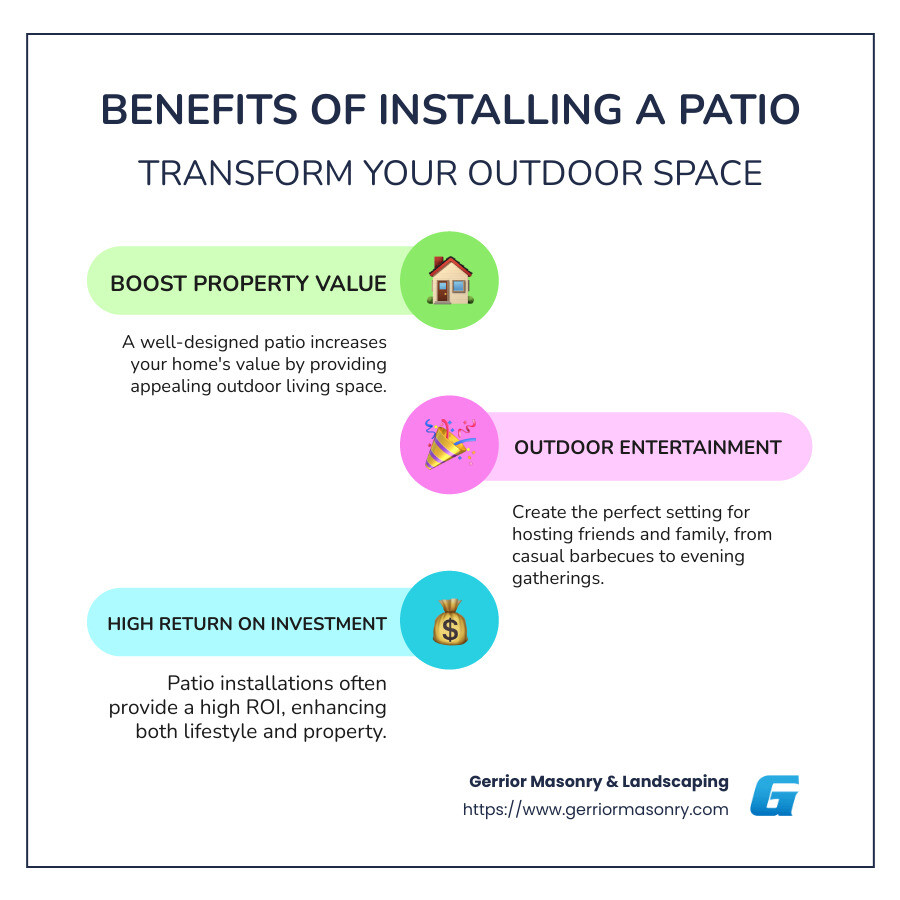
When you’re on the lookout for patio installers near me, the right choice can transform your backyard into a captivating outdoor haven. Patios improve both the beauty and functionality of your property, offering a space to relax, entertain, and enjoy the fresh air right at home. Here’s a quick guide to the benefits of installing a patio:
- Boost Property Value: A well-designed patio increases your home’s value by offering an appealing outdoor living space.
- Outdoor Entertainment: Patios create the perfect setting for hosting friends and family, from casual barbecues to evening gatherings.
- Return on Investment (ROI): A patio installation can provide a high ROI, making it a smart investment in both your lifestyle and your property.
I’m Joe Gerrior, and with 34 years of experience in landscaping and masonry, I’ve seen how the right patio can add both value and enjoyment to a home. At Gerrior Masonry & Landscaping, we specialize in providing reliable, high-quality patio installers near me, focused on creating beautiful and lasting outdoor spaces for our Massachusetts clients.
Simple patio installers near me word guide:
– patio contractor
– paver installation near me
– landscape pavers near me
Choosing the Right Patio Installer Near Me
When selecting patio installers near me, it’s crucial to consider several key factors to ensure you get the best results. Let’s explore what you should look for.
Importance of Local Expertise
Every region has its unique climate challenges. A local expert understands these conditions and can recommend the best materials and designs. For example, New England’s freeze-thaw cycles can wreak havoc on poorly constructed patios. A local contractor will know how to build to withstand these conditions.
Local Materials
Using locally sourced materials can save you money and ensure your patio blends naturally with the environment. Local installers often have established relationships with suppliers for materials like flagstone or brick, ensuring quality and availability.
Evaluating Past Work
Licensing and Insurance
Always verify that your contractor is licensed and insured. This not only protects you from liability but also ensures that the installer meets regional standards. In Massachusetts, for example, contractors must adhere to specific building codes that a licensed professional will be familiar with.
Professional Experience
Experience matters. Look for a contractor with a proven track record in patio installations. Experienced installers can steer unexpected challenges and deliver a polished final product.
Project Photos and Customer Testimonials
Reviewing past projects can provide insight into an installer’s capabilities and style. Ask for a portfolio of completed patios to see if their work aligns with your vision. Additionally, customer testimonials can offer valuable feedback on their reliability and quality of service.
“I hired Gerrior Masonry & Landscaping for my patio, and their attention to detail was impeccable. The team was professional, and the results exceeded my expectations.”

By focusing on these factors, you can confidently choose the right patio installer near me, ensuring a beautiful, durable outdoor space that you’ll enjoy for years to come.
Types of Patios and Materials
When designing your outdoor space, choosing the right type of patio and materials is crucial. Different materials offer unique benefits, and understanding these can help you make the best decision for your home.
Concrete Patios
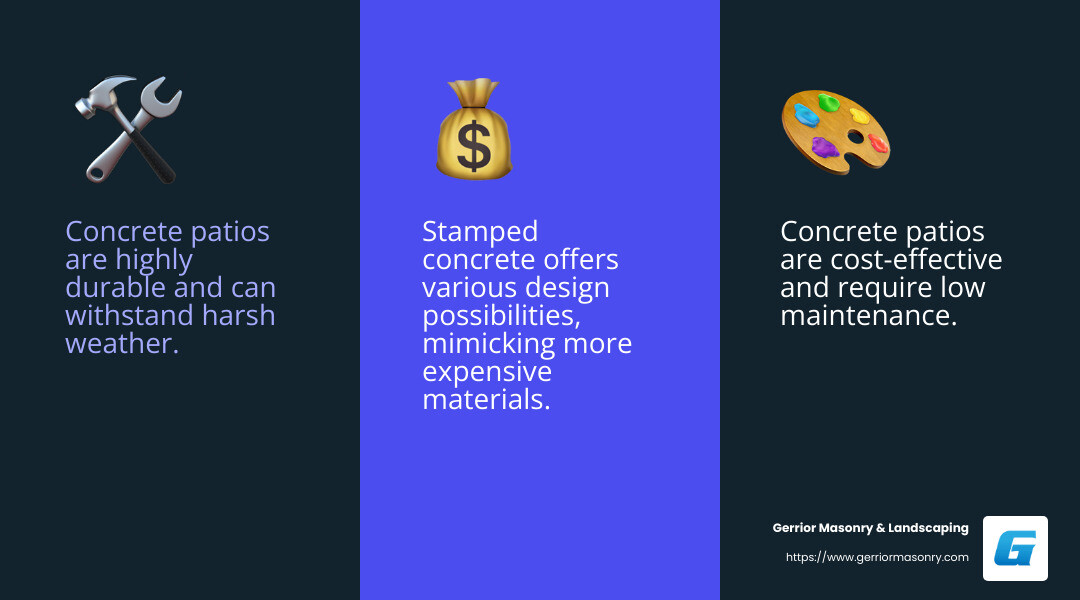
Concrete patios are a popular choice due to their durability and cost-effectiveness. They are robust and can withstand harsh weather conditions, making them an excellent option for those looking for a long-lasting addition to their home. While basic concrete is functional, you can also opt for stamped concrete. This allows for custom designs and a variety of colors, mimicking the look of more expensive materials like stone or brick.
- Benefits: Durable, low maintenance, cost-effective.
- Aesthetic Options: Stamped patterns and color choices.
Paver and Flagstone Patios
Paver and flagstone patios are admired for their aesthetic appeal and flexibility. Pavers, which come in various materials like granite and sandstone, can be arranged in unique patterns, adding a distinctive look to your outdoor space. Flagstone, with its natural, irregular shapes, offers a rustic charm that blends seamlessly with the landscape.
- Versatility: Pavers offer numerous design possibilities.
- Aesthetic Value: Flagstone adds a natural, neat look.
These materials not only improve the beauty of your patio but also offer easy repair options. If a stone gets damaged, it can be replaced without disturbing the entire patio structure.
Brick Patios
Brick patios provide a classic look that never goes out of style. They are known for their strength and ability to withstand varying weather conditions. Brick’s timeless elegance adds warmth and charm to any outdoor setting, making it a favorite among homeowners who appreciate traditional aesthetics.
- Durability: Resistant to wear and tear.
- Classic Aesthetic: Offers a warm, inviting look.
When selecting materials for your patio, consider factors like durability, aesthetics, and maintenance requirements. By understanding the benefits of each type, you can choose the right material that suits your lifestyle and improves your outdoor space.
Cost Factors for Patio Installation
When planning a patio, understanding the costs involved is crucial. Here are the key factors that can influence your budget:
Square Footage
The size of your patio is a major cost driver. Larger patios require more materials and labor, increasing the overall expense. When calculating costs, keep in mind that the price per square foot can vary based on the complexity of the design and the materials used.
Material Choice
Different materials come with different price tags. Concrete is generally more affordable, while natural stone or flagstone can be pricier due to their aesthetic appeal and durability. Pavers offer a middle ground, providing both flexibility and a range of design options at a moderate cost.
- Concrete: Cost-effective, durable
- Pavers: Versatile, mid-range pricing
- Natural Stone/Flagstone: High-end, unique aesthetics
Soil Quality
The condition of your soil can affect installation costs. Poor soil quality may require additional preparation, such as grading or adding a base layer to ensure stability. This can add to labor and material expenses.
Cost Estimates
It’s important to get detailed cost estimates from multiple patio installers near me. These estimates should include materials, labor, and any additional features you want, like built-in seating or lighting. Comparing estimates helps ensure you’re getting the best value for your investment.
Hidden Expenses
Be aware of potential hidden costs that may arise during the project. These can include permit fees, unexpected site preparation needs, or additional drainage solutions. Setting aside a contingency budget can help manage these surprises without derailing your project.
By considering these cost factors, you can create a realistic budget that aligns with your vision for your outdoor space. Planning carefully ensures that your patio not only fits your financial plan but also improves your home’s value and appeal.
Installation Process and What to Expect
When you’re ready to transform your outdoor space with a new patio, understanding the installation process is key. Here’s what you can expect:
Site Preparation
Site preparation is the foundation of a successful patio installation. It starts with clearing the area of any vegetation, rocks, or debris. This ensures a clean slate for your new patio.
Next, the ground must be properly leveled. Leveling is crucial because an uneven base can lead to water pooling and potential damage over time. A skilled installer will assess the natural slope of your yard to plan effective drainage.
Installation
Once the site is prepped, the installation begins. The process varies depending on the materials chosen, but generally includes:
- Laying a Base: A solid base is essential. Typically, this involves layers of crushed stone or gravel. This base supports the patio and facilitates drainage.
- Setting the Material: Whether you opt for concrete, pavers, or flagstone, each piece is carefully placed. For pavers or stones, precision is key to ensure even spacing and alignment.
- Joint Filling: For pavers and stones, the spaces between are filled with sand or fine gravel. This locks the pieces in place and allows water to seep through, preventing surface water accumulation.
Importance of Proper Drainage
Grading plays a vital role in water management. Proper grading ensures that water flows away from your home, protecting your foundation. Without it, water can pool on the surface, leading to damage.
Drainage Solutions: Depending on your landscape, additional drainage solutions like French drains or perforated pipes may be necessary. These systems channel water away efficiently, maintaining the integrity of your patio.
Cleanup
After installation, a thorough cleanup leaves your new patio looking pristine. This involves removing any leftover materials, smoothing out surrounding soil, and ensuring the site is tidy.
By understanding each step of the installation process, you can better anticipate what your project will involve. A well-planned installation not only improves your outdoor space but also ensures long-term durability and functionality.
Patio Maintenance and Upkeep
Once your beautiful patio is installed, keeping it in top shape requires regular maintenance. Here’s how you can ensure your patio remains a highlight of your home for years to come.
Cleaning Tips
Regular cleaning is key to maintaining your patio’s beauty and longevity. Here’s a simple routine:
- Weekly Sweeping: Dust, leaves, and debris can accumulate quickly. A quick sweep each week prevents buildup and keeps the surface looking fresh.
- Monthly Wash: Use a garden hose and a mild detergent to wash your patio monthly. For tougher stains, a mixture of vinegar and water or oxygen bleach can work wonders. Scrub with a stiff-bristle brush, then rinse thoroughly.
- Annual Deep Clean: Once a year, consider a deep clean. This might involve renting a power washer to remove stubborn grime and restore the patio’s original color.
Repair Strategies
Addressing minor issues early can prevent more significant problems down the line. Here are some strategies for common patio repairs:
- Crack Repair: Small cracks can appear over time due to weather changes. Fill these with a concrete patching compound or a sealant designed for your patio material. This prevents water from seeping in and causing further damage.
- Resealing: For concrete patios, applying a sealer every 2-3 years helps protect against moisture and stains. Sealers also improve the color and finish of the patio.
- Replacing Pavers: If a paver or stone becomes damaged, replace it promptly. Carefully remove the damaged piece, level the base, and fit a new one in its place. This keeps the surface even and prevents tripping hazards.
Seasonal Maintenance
Adjust your maintenance routine with the seasons to keep your patio in prime condition:
- Spring: Clear away any winter debris and check for damage. This is also a good time for that annual deep clean.
- Summer: Inspect for any wear or damage from increased use. Reseal if necessary and ensure furniture is in good condition.
- Fall: Remove fallen leaves promptly to prevent staining. Check for any drainage issues as fall rains begin.
- Winter: Store patio furniture and cover the surface if possible to protect against snow and ice. Avoid using salt or harsh chemicals for ice removal, as these can damage the patio.
By following these maintenance tips, you can extend the lifespan of your patio and keep it looking its best. Regular upkeep not only preserves the aesthetic appeal but also the structural integrity of your patio. This way, your outdoor space remains a welcoming haven for relaxation and entertainment.
Enhancing Your Patio Space
Once your patio is installed and maintained, it’s time to make it your own. Enhancing your patio space can turn it into a cozy retreat or an entertainment hub. Here are some ideas to inspire you.
Furniture Ideas
Choosing the right furniture is essential to making your patio comfortable and inviting. Consider these options:
- Weather-Resistant Materials: Opt for furniture made from materials like teak, aluminum, or resin wicker that can withstand the elements.
- Modular Seating: Sectional pieces allow you to reconfigure seating arrangements based on your needs, whether it’s a small family gathering or a larger party.
- Multi-Functional Pieces: Look for furniture that offers storage options, like benches with hidden compartments, to keep your patio tidy.
- Cushions and Throws: Add color and comfort with weather-proof cushions and throws. These can be changed seasonally for a fresh look.
Lighting
The right lighting can transform your patio into a magical space after dark. Here’s how to light up your outdoor area:
- String Lights: These add a whimsical touch and are perfect for creating a cozy ambiance. Drape them across the patio or around a pergola for a charming effect.
- Task Lighting: Install task lighting in areas like the outdoor kitchen or dining area to ensure functionality and safety.
- Solar-Powered Lights: Eco-friendly and cost-effective, solar lights are great for illuminating pathways or accentuating landscaping features.
- Dimmer Switches: Installing dimmer switches allows you to adjust the lighting to suit the occasion, be it a lively party or a quiet evening.
Landscaping
Integrating landscaping into your patio space can improve its beauty and create a seamless transition between your indoor and outdoor areas.
- Plant Borders: Use potted plants or flower beds to outline your patio. This adds color and can provide some privacy if needed.
- Vertical Gardens: If space is limited, consider a vertical garden. This can be a wall of greenery that adds a lush feel without taking up floor space.
- Water Features: A small fountain or pond can add a tranquil element to your patio, creating a soothing atmosphere with the sound of flowing water.
- Fire Pits: For cooler evenings, a fire pit can serve as a focal point, providing warmth and a place to gather.
By thoughtfully selecting furniture, lighting, and landscaping, you can improve your patio space and make it a true extension of your home. This way, your patio becomes not just an outdoor area, but a personalized haven for relaxation and entertainment.
Frequently Asked Questions about Patio Installation
What is the difference between a deck and a patio?
When considering outdoor spaces, people often wonder about the difference between a deck and a patio. Here’s a simple breakdown:
- Decks are typically liftd structures made of wood or composite materials. They require a framework and are often attached to a house. Because of their height, decks usually need railings for safety and may require permits due to their structural complexity.
- Patios, on the other hand, are ground-level surfaces made from materials like concrete, pavers, or stone. They blend seamlessly with the landscape and generally don’t require permits since they don’t have the same structural risks as decks.
In short, if you prefer a raised, wooden look, go for a deck. If you want a sturdy, low-maintenance surface that integrates with your yard, a patio is your best bet.
Do I need a permit for a patio installation?
The need for a permit largely depends on local regulations and the specifics of your project. Generally, patios don’t require permits because they are built directly on the ground and pose minimal risk. However, it’s always wise to check with your local zoning office or building authority to be sure. They can provide guidance based on your location and the details of your planned patio.
How long does it take to install a patio?
The time it takes to install a patio can vary based on several factors:
- Project Phases: Initial design consultations, site preparation, and actual construction all contribute to the timeline.
- Size and Complexity: Larger or more intricate designs will naturally take longer to complete.
- Weather: Outdoor projects are subject to weather conditions. Rain or extreme temperatures can delay progress.
- Contractor Availability: The schedule of your chosen contractor also plays a role. During peak seasons, contractors might be booked, affecting your start date.
Typically, a straightforward patio installation can take anywhere from a few days to a couple of weeks. Discussing timelines with your contractor will provide a clearer picture for your specific project.
Conclusion
Choosing the right patio installer can transform your outdoor space into a beautiful, functional area for relaxation and entertainment. At Gerrior Masonry & Landscaping, we pride ourselves on delivering top-quality patio installations that improve your home’s value and appeal. Our team, with over 30 years of experience, is committed to excellence and customer satisfaction.
We offer a satisfaction guarantee because we stand behind our work. Our skilled team ensures that every project meets our high standards and your expectations. From the initial consultation to the final touches, we’re with you every step of the way. If any issues arise post-installation, we’re just a call away — ready to resolve them promptly.
Our relationship with you doesn’t end once your patio is installed. We provide follow-up services to ensure your patio continues to look and function at its best. This includes seasonal maintenance checks, cleaning services, and any repair work needed. Our proactive approach helps extend the life of your patio and maintain its beauty through changing seasons.
If you’re ready to transform your outdoor space, contact us today. Visit our Patio Contractors page to learn more about how we can help bring your patio dreams to life.
For more information or to schedule a consultation, reach out to us at Gerrior Masonry & Landscaping. Let us help you create the perfect outdoor oasis custom to your needs.
