
Residential drainage solutions: Secure Your Home 2025
Beyond the Puddle – Protecting Your Home’s Future
Residential drainage solutions are systems designed to manage water flow around your property, preventing costly damage to your foundation, basement, and landscape. These solutions range from simple grading to complex underground systems like French drains.
Quick Guide to Common Drainage Solutions:
- French Drains – Underground perforated pipes that redirect groundwater away from foundations ($2,800-$9,000 average cost)
- Dry Wells – Underground chambers that collect and slowly release water ($1,000-$4,000+ average cost)
- Channel Drains – Surface trenches that capture water from driveways and patios ($30-$150+ per linear foot average cost)
- Catch Basins – Collection points that gather water and debris ($8-$30+ per linear foot average cost)
- Proper Grading – Reshaping land to direct water away from structures
- Rain Gardens – Planted depressions that naturally absorb runoff ($3-$10+ per square foot average cost)
Note: These are average costs based on internet data and not actual costs for Gerrior Masonry services.
Standing water is a warning sign that can lead to thousands in foundation repairs, basement flooding, and landscape damage. Poor drainage weakens your home’s structural integrity and can lower your property value.
I’m Joe Gerrior, owner of Gerrior Masonry & Landscape Construction Corp. For over 34 years, my team has specialized in integrating residential drainage solutions with beautiful landscaping and durable masonry, ensuring Massachusetts properties stay both functional and attractive.
Relevant articles related to Residential drainage solutions:
Why Your Yard’s Water Problems Are a Big Deal
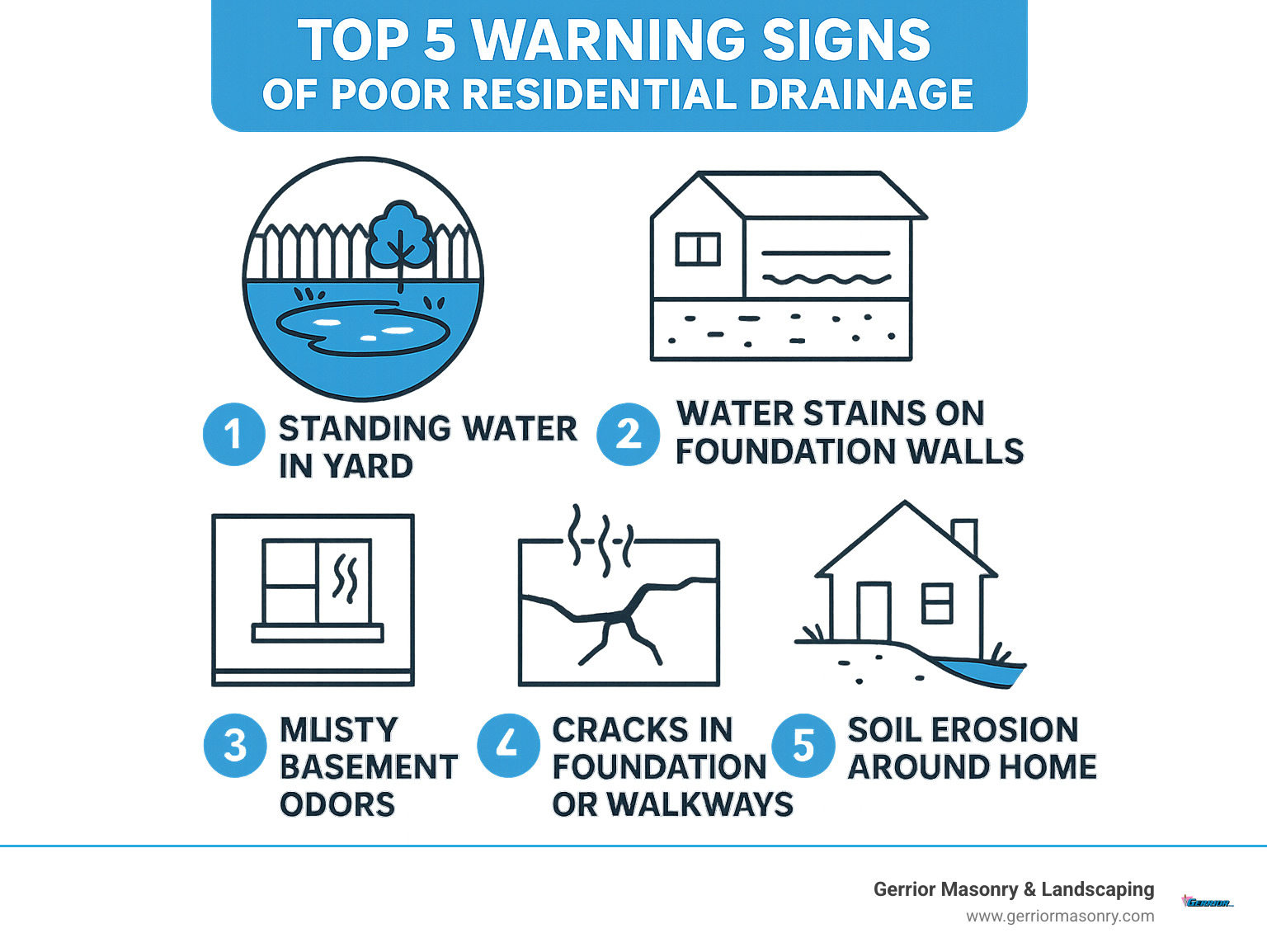
That pooling water in your yard or a persistently soggy lawn is more than an eyesore; it’s a sign of trouble. Unchecked water issues can lead to thousands of dollars in repairs and create serious health concerns.
Water damage often starts subtly. It might be a persistent musty smell in your basement, indicating moisture buildup. This moisture puts constant pressure on your home’s foundation, leading to foundation cracks that compromise your home’s structure. Keeping your foundation safe is critical to protecting your investment.
Beyond the foundation, poor drainage causes other problems:
- Soil Erosion: Water washes away valuable topsoil, leaving behind uneven ground, exposed tree roots, and ruining your lawn.
- Pest Infestations: Standing water is a breeding ground for mosquitoes and pests, making your yard unusable.
- Health Hazards: Damp basements and crawl spaces encourage mold and mildew growth, which can pose respiratory risks. Protecting residents from environmental hazards like mold is essential.
- Structural and Landscape Damage: Water infiltration can flood basements, ruin belongings, and destroy landscaping, all of which negatively impact your property value.
Proactive residential drainage solutions prevent these issues, saving you money, protecting your family’s health, and preserving the value of your home. Recognizing the warning signs early is key to avoiding a costly disaster.
Identifying the Culprit: Common Causes of Residential Drainage Issues
Understanding why you have drainage problems is the first step to fixing them. After more than 30 years of serving homeowners in Middlesex and Essex County, we’ve found that most issues stem from a few common culprits.
- Poor Property Grading: This is the most frequent cause. Ideally, your yard should slope away from your house. Over time, soil settles, and that slope can reverse, directing water straight toward your foundation.
- Compacted Soil: Heavy clay soil, common in Massachusetts, combined with foot traffic and equipment, can become as hard as concrete. Water can’t soak in, so it pools on the surface.
- Clogged or Improperly Placed Gutters: Clogged gutters and downspouts can dump a concentrated flow of water right next to your foundation. Downspouts that are too short or aimed at a patio can be just as damaging.
- Low Spots in the Yard: Natural depressions act like bowls, collecting water and creating soggy patches that can damage your lawn and attract pests.
- Non-Porous Surfaces: Concrete patios and driveways don’t absorb water. Without proper grading, all the runoff from these surfaces is directed to the lowest point, which is often your foundation.
- High Water Table or Natural Springs: Sometimes the issue is underground. A high water table or a natural spring can create persistent moisture that requires specialized residential drainage solutions.
Identifying which of these factors are at play on your property is key to developing an effective solution.
A Guide to Effective Residential Drainage Solutions
Effective residential drainage solutions often combine different approaches to manage both surface and subsurface water. While simple fixes like extending downspouts can be a DIY task, complex systems require professional installation to ensure they function correctly and don’t worsen the problem.
How French Drains Work
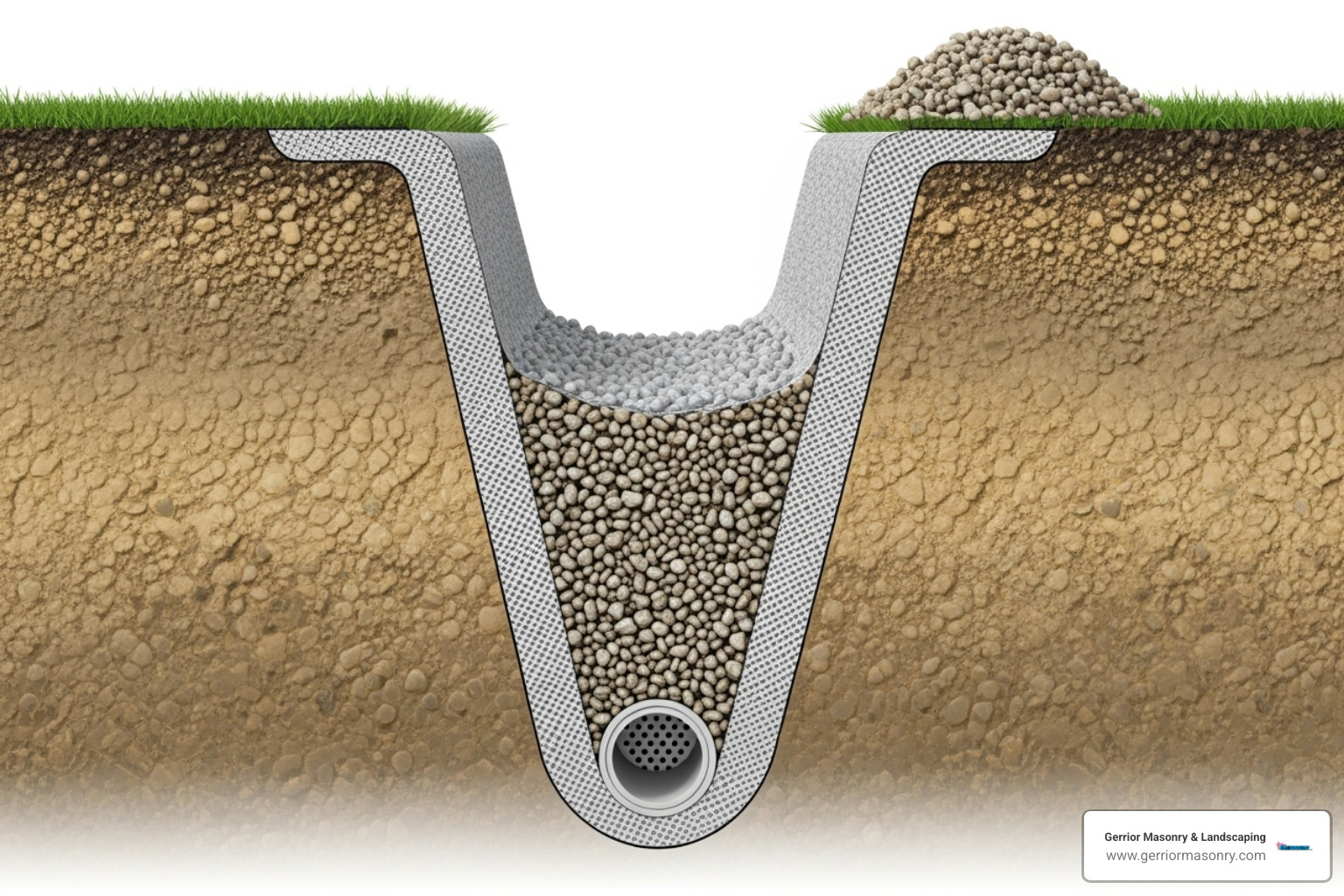
French drains are a reliable solution for soggy yards and basement dampness. We dig a trench, line it with geotextile fabric to block debris, and install a perforated pipe surrounded by gravel. Water flows into the gravel, enters the pipe, and is safely redirected away from your home. They are highly effective for protecting foundations from groundwater and are a key component of many basement waterproofing strategies.
Channel Drains for Hardscapes
For hard surfaces like driveways, patios, or pool decks, channel drains (or trench drains) are ideal. These are long trenches with a grate cover that collect surface water and carry it away through underground pipes. They are excellent for preventing water from entering your garage and eliminating puddles on flat surfaces.
The Role of Dry Wells
When you need to manage concentrated stormwater runoff from downspouts but have nowhere to direct it, a dry well is an excellent solution. A dry well is a buried, gravel-filled pit that holds water and allows it to slowly percolate back into the soil. This recharges groundwater and prevents surface flooding. Many homeowners connect their gutter downspouts directly to dry wells. Learn more on dry well systems.
Catch Basins and Sump Pumps
Catch basins are collection boxes with grates for debris installed at low points in your yard or driveway. They capture water and direct it into underground pipes, preventing debris from clogging the system. For basement water issues, sump pumps provide active water removal. Our sump pump systems are installed in the lowest part of your basement and automatically turn on to pump water out, especially during storms.
The Role of Landscaping in Your Residential Drainage Solutions
Smart landscaping works with nature to manage water, turning your yard into a functional and beautiful part of the solution. Strategic design can guide water where you want it to go, prevent erosion, and create attractive outdoor spaces.
Property Grading and Swales
Proper property grading is the foundation of good drainage. It involves creating a gentle, calculated slope to guide water away from your home. This requires the right soil types and precise calculations to be effective long-term, which is why our professional excavation and grading services are so valuable.
Swales are shallow, vegetated channels that collect and redirect surface runoff. They can be planted with grass, blending naturally into your landscape while filtering pollutants from the water.
Rain Gardens and Dry Creek Beds
Rain gardens are beautiful, functional, and eco-friendly. These shallow, planted depressions temporarily hold stormwater runoff, allowing it to be filtered and slowly absorbed into the ground. Filled with water-loving native plants, they can become a gorgeous focal point. Average costs for rain gardens range from $3 to $15+ per square foot, based on internet estimates, not our actual pricing.
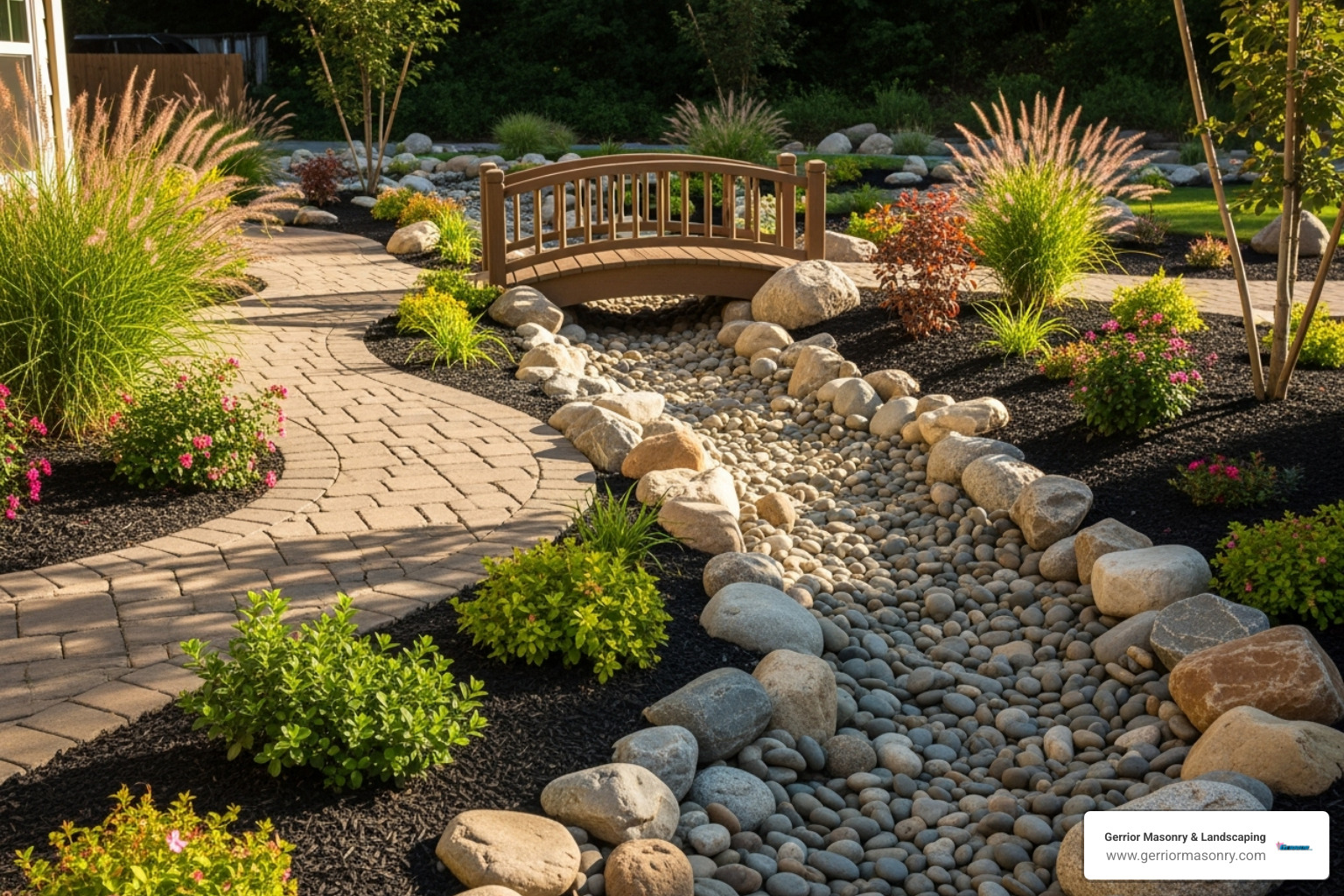
Dry creek beds are designed to channel heavy, concentrated runoff that could cause erosion. We use various sizes of stones and rocks to create a feature that looks like a natural creek bed. It’s an attractive landscape element that becomes a highly efficient waterway during storms. A 20-foot dry creek bed might cost between $600 and $1,800+, based on online averages.
Our landscape design and installation team can integrate these features seamlessly into your property.
Permeable Pavers and Hardscaping
Traditional concrete and asphalt are impervious, creating runoff problems. Permeable pavers are a smarter solution that allows water to seep through gaps into the ground below. This reduces runoff and recharges groundwater. They look just as beautiful as traditional pavers but are an active part of your drainage solution. Integrating them into your hardscaping services for a new patio or driveway is an environmentally responsible choice.
Choosing and Maintaining the Right System for Your Home
Selecting the right residential drainage solutions depends on a proper diagnosis of your water problem. Whether it’s surface water, groundwater, or a combination, the solution must match the cause. A professional assessment is crucial to identify the right approach for your property’s unique soil type, slope, and our challenging New England climate.
Here’s a comparison of common drainage solutions:
| Solution Type | Average Cost (National) | Maintenance | Best Use Cases |
|---|---|---|---|
| French Drain | $2,800 – $9,000+ | Minimal, but requires periodic flushing to prevent clogging. | Redirecting groundwater, preventing basement leaks, drying out soggy yards. |
| Channel Drain | $30 – $150+ per linear foot | Regular cleaning of grates to remove debris. | Collecting surface water from driveways, patios, garages, and pool decks. |
| Dry Well | $1,000 – $5,000+ | Inspection and occasional cleaning of sediment trap. | Managing stormwater runoff from downspouts or other drainage systems where discharge isn’t feasible. |
| Rain Garden | $3 – $15+ per square foot | Regular plant care (weeding, watering during dry spells). | Absorbing runoff from impervious surfaces, filtering pollutants, enhancing landscape aesthetics. |
| Property Grading | Varies widely based on scope, often part of larger project. | Minimal, ensuring no new depressions form. | Directing surface water away from foundations, essential for all properties. |
| Catch Basin | $8 – $30+ per linear foot | Regular clearing of debris from the basin. | Collecting localized surface water in low spots, preventing debris from entering pipes. |
| Sump Pump | $600 – $2,500+ (for installation/replacement) | Regular checks, battery backup maintenance. | Removing accumulated water from basements or crawl spaces, especially in flood-prone areas. |
| Downspout Extenders | $20 – $100+ (DIY) | Ensuring they remain extended and clear of debris. | Simple redirection of roof water further away from the foundation. |
| Dry Creek Bed | $600 – $2,000+ (for 20-foot section) | Occasional clearing of debris, ensuring rocks stay in place. | Channeling heavy surface runoff, preventing erosion, aesthetic landscape feature. |
| Permeable Pavers | $10 – $30+ per square foot | Regular sweeping, occasional joint refilling. | Reducing runoff from hardscaped areas like patios and driveways, allowing water infiltration. |
| Exterior Drain Tile | $6,000 – $18,000+ | Periodic inspection and flushing. | Protecting foundations from hydrostatic pressure, comprehensive basement waterproofing. |
Note: These cost ranges are national averages based on internet data and should be used as general estimates only. Actual costs for Gerrior Masonry services will vary based on project complexity, materials, and specific site conditions. We always provide detailed, transparent quotes after a thorough assessment.
Often, combining multiple solutions provides the best result. For example, proper grading might be paired with a French drain and a dry well to manage water from all sources.
Maintenance is key to longevity. Even the best system requires care. This includes regular gutter cleaning, drain inspection after storms, and debris removal from grates and catch basins. For systems like sump pumps, testing the unit and its battery backup is critical. Protecting your investment with the right drainage system provides decades of peace of mind.
Frequently Asked Questions about Residential Drainage
Homeowners often have questions when they notice drainage issues. Here are answers to some of the most common ones we’ve heard over our 34 years in the business.
How much do residential drainage solutions cost?
The cost of a drainage solution depends entirely on the project’s scope, materials, and complexity. A simple fix may cost under $100, while a comprehensive system can be a significant investment.
Here are some national average costs based on internet data (remember, these are not Gerrior Masonry prices; we provide custom quotes after a property assessment):
- French drain costs typically range from $2,800 to over $9,000.
- Dry well costs usually fall between $1,000 and over $5,000.
- Channel drain costs run about $30 to over $150 per linear foot.
The final price is affected by factors like soil type, excavation depth, and site accessibility. This is why a professional on-site quote is essential for accurate pricing.
Can I install a drainage system myself?
Simple tasks like cleaning gutters or adding downspout extenders are great DIY projects. However, complex systems requiring excavation are best left to professionals. Installing a French drain or regrading a yard involves precise calculations of slope and an understanding of soil mechanics. The risk of incorrect installation is high and can lead to bigger problems, such as directing water toward a neighbor’s property or damaging underground utilities. If your project involves significant digging or addresses persistent basement moisture, it’s time to call a professional.
How do I know which drainage solution is right for my property?
A professional assessment is the best way to determine the right solution. An expert can identify the true root cause of your issue, which may not be obvious. We analyze your property’s topography, soil type, and water flow patterns to design an effective system. Often, the best strategy involves combining multiple solutions, such as grading, a French drain, and a dry well, to create a comprehensive water management plan. Consulting an expert saves you time and money by ensuring the problem is solved correctly the first time.
Secure Your Foundation with Expert Drainage Solutions
Water problems are warning signs that, if addressed promptly, can save you thousands in repairs. Don’t wait for foundation cracks, basement flooding, or landscape erosion to become a reality. Proven residential drainage solutions exist to protect your home, from French drains and channel drains to strategic landscaping like rain gardens.
After more than 30 years of solving drainage problems across Massachusetts, we know that the best solutions are custom to each property. Your home’s unique soil, topography, and water challenges require a custom approach. At Gerrior Masonry & Landscape Construction, we provide that expertise, ensuring every project has owner oversight and is integrated seamlessly with your existing landscape and masonry.
We don’t just install a pipe; we design and build comprehensive systems that protect your investment and improve your property’s beauty. Our solutions are built to withstand New England’s challenging climate. Don’t let a puddle become a crisis.
For a comprehensive assessment and expert installation of residential drainage solutions, contact our team today. Gerrior Masonry & Landscape Construction is based in Woburn, MA, and proudly serves communities throughout Middlesex and Essex County, Massachusetts.
