
Stone edging for flower beds: 10 Stunning Ideas for 2025
Transform Your Garden with Defined Borders
Stone edging for flower beds is a simple yet powerful way to improve your garden’s appearance and functionality. If you’re looking to install stone edging around your flower beds, here’s what you need to know:
Quick Guide to Stone Edging for Flower Beds:
– Materials: Natural stone, concrete blocks, cobblestone, or granite ($500-$849 per ton)
– Installation Time: Typically 2-4 hours for a DIY project
– Tools Needed: Shovel, level, rubber mallet, string line, sand
– Basic Steps: Mark border, dig 2-3″ trench, add sand base, place stones, level, backfill
– Benefits: Defines garden spaces, contains mulch, reduces trimming, creates clean lawn separation
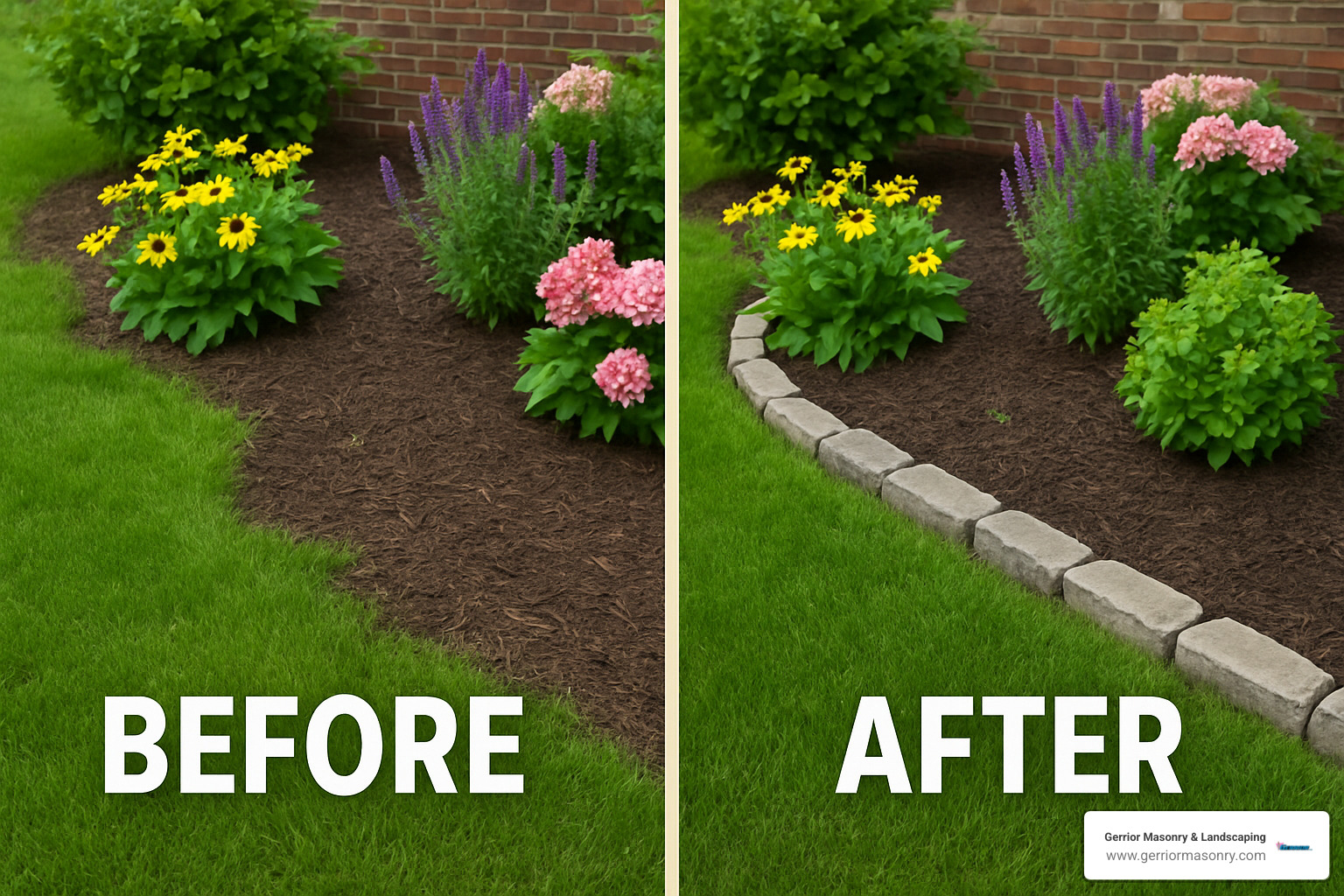
Stone edging creates a clean, professional border between your lawn and garden beds. This simple addition not only improves your landscape’s visual appeal but also serves practical purposes by containing mulch, preventing grass encroachment, and making lawn maintenance easier.
When properly installed, stone edging requires minimal maintenance while providing years of durability and structure to your outdoor spaces. Unlike plastic or metal alternatives, stone edging withstands the elements and complements virtually any garden style.
A well-designed stone edge transforms ordinary flower beds into standout landscape features. Whether you prefer the rustic charm of natural fieldstone, the formal look of cut granite, or the versatility of concrete pavers, stone edging offers endless design possibilities.
I’m Joe Gerrior, owner of Gerrior Masonry & Landscape Construction Corp., and I’ve been installing stone edging for flower beds throughout Massachusetts for over 34 years, creating distinctive borders that improve both residential and commercial properties.
Quick look at Stone edging for flower beds:
– Decorative stone garden edging
– Natural stone garden edging
Why Choose Stone Edging?
When it comes to defining your garden spaces, stone edging for flower beds offers benefits that extend well beyond simple aesthetics. Let’s explore why stone edging is worth the investment:
Visual Definition and Curb Appeal
Stone edging creates a clear visual boundary between your lawn and flower beds, instantly elevating your landscape’s appearance. As one Burlington homeowner told us, “The granite edging we installed last spring made our front yard look like it belonged in a magazine—it’s the first thing visitors compliment.”
The clean lines and natural textures of stone provide an architectural element that frames your plantings and creates visual interest even in winter when flowers aren’t blooming. This permanent structure gives your landscape a finished, professional appearance that significantly improves curb appeal.
Practical Benefits Beyond Beauty
Stone edging isn’t just about looks—it serves several practical functions too. Mulch containment is a major advantage, as one Lexington client explained: “Before we installed stone edging, every heavy rain would wash mulch onto our lawn. Now the stones keep everything exactly where it belongs.”
Stone edges also act as a natural weed barrier, preventing grass from creeping into your flower beds. They create a clean mowing strip, eliminating the need for string trimming along bed edges—a time-saver every homeowner can appreciate. And once installed, stone edging requires minimal maintenance compared to other materials that might rot, rust, or crack over time.
Long-Term Value
While the initial investment may be higher than temporary solutions, stone edging offers exceptional long-term value. Durability is perhaps its greatest strength—properly installed stone edges can last decades or even generations, making them a one-time investment rather than a recurring expense.
Stone also offers superior weather resistance, withstanding New England’s harsh freeze-thaw cycles better than other materials. This is especially important in our Massachusetts climate, where less durable materials might need replacement after just a few seasons.
Real estate professionals note that well-defined landscaping with quality materials like stone can increase property values by 5-12%. This makes stone edging not just a beautification project, but a smart financial decision for homeowners looking to boost their home’s resale value.
Comparing Edging Materials: Stone vs. Plastic, Metal & Wood
When planning your garden borders, the material you choose makes all the difference in both appearance and longevity. Let’s see how stone edging for flower beds compares to other common options:
| Feature | Stone | Plastic | Metal | Wood |
|---|---|---|---|---|
| Initial Cost | $5-$30+ per linear ft | $1-$5 per linear ft | $2-$15 per linear ft | $3-$10 per linear ft |
| Lifespan | 25+ years | 3-5 years | 7-15 years | 5-7 years (untreated) |
| Maintenance | Minimal | Replacement needed | Rust prevention | Regular sealing/replacement |
| Aesthetics | Natural, timeless | Limited styles | Modern, minimalist | Natural, rustic |
| Frost Resistance | Excellent | Poor-Fair | Good | Poor |
| Eco-Impact | Lowest | Highest | Moderate | Low (untreated) |
Durability Considerations
I’ve seen countless plastic edging installations crack and pop out of the ground after just a couple of harsh Massachusetts winters. Meanwhile, the granite edging we installed for a Winchester family back in 1992 still looks spectacular today. That’s the real difference when you choose stone.
“I was tired of replacing my plastic edging every few years,” shared one of our Wakefield clients. “Since installing limestone borders, I haven’t thought about my edging once—it just continues looking great year after year.”
This durability factor is particularly important in New England, where freeze-thaw cycles can destroy lesser materials in just a few seasons. While metal can bend or rust and wood inevitably rots, stone stands firm decade after decade with virtually no maintenance required.
Aesthetic Versatility
What I love about stone is how it complements literally any garden style. For a Colonial home in Lexington, we installed formal granite edging that perfectly matched the home’s historic character. For a modern property in Burlington, sleek bluestone created clean, contemporary lines.
Stone edging for flower beds offers best design flexibility:
“I wanted something that would look appropriate with my 1800s farmhouse,” explains a Wilmington homeowner. “The tumbled cobblestone edging Joe suggested looks like it’s been there since the house was built—exactly the authentic look I wanted.”
Unlike plastic edging with its limited color options and obvious artificial appearance, stone brings natural variations in color, texture and shape that add depth and interest to your landscape.
Environmental Impact
As someone who works with the earth every day, I’m always mindful of environmental impact. Stone represents one of the most eco-friendly edging choices available. Unlike plastic that breaks down into harmful microplastics or pressure-treated wood that leaches chemicals into your soil, stone is completely inert.
Many of our projects use locally quarried stone, reducing transportation emissions. And perhaps most importantly, stone is essentially permanent—it won’t end up in a landfill in a few years like plastic or metal alternatives often do.
When a Reading client wanted to replace their garden design, we were able to repurpose their existing stone edging into a beautiful dry stack wall elsewhere in their yard—something impossible with deteriorated plastic or rotted wood edging.
These are average costs based on internet data, not actual pricing for Gerrior Masonry services. Actual costs can vary significantly based on your specific project requirements.
Gerrior Masonry & Landscape Construction, based in Woburn MA, proudly services Middlesex and Essex County with expert stone edging and hardscape solutions.
Selecting the Perfect Stone for Your Garden Style
Finding the right stone for your garden edging is like choosing the perfect frame for a treasured photo—it should improve without overwhelming. Your choice will depend on your garden’s personality, existing elements, and what catches your eye. Let’s explore the options that could work beautifully in your landscape:
Types of Stone Edging Materials
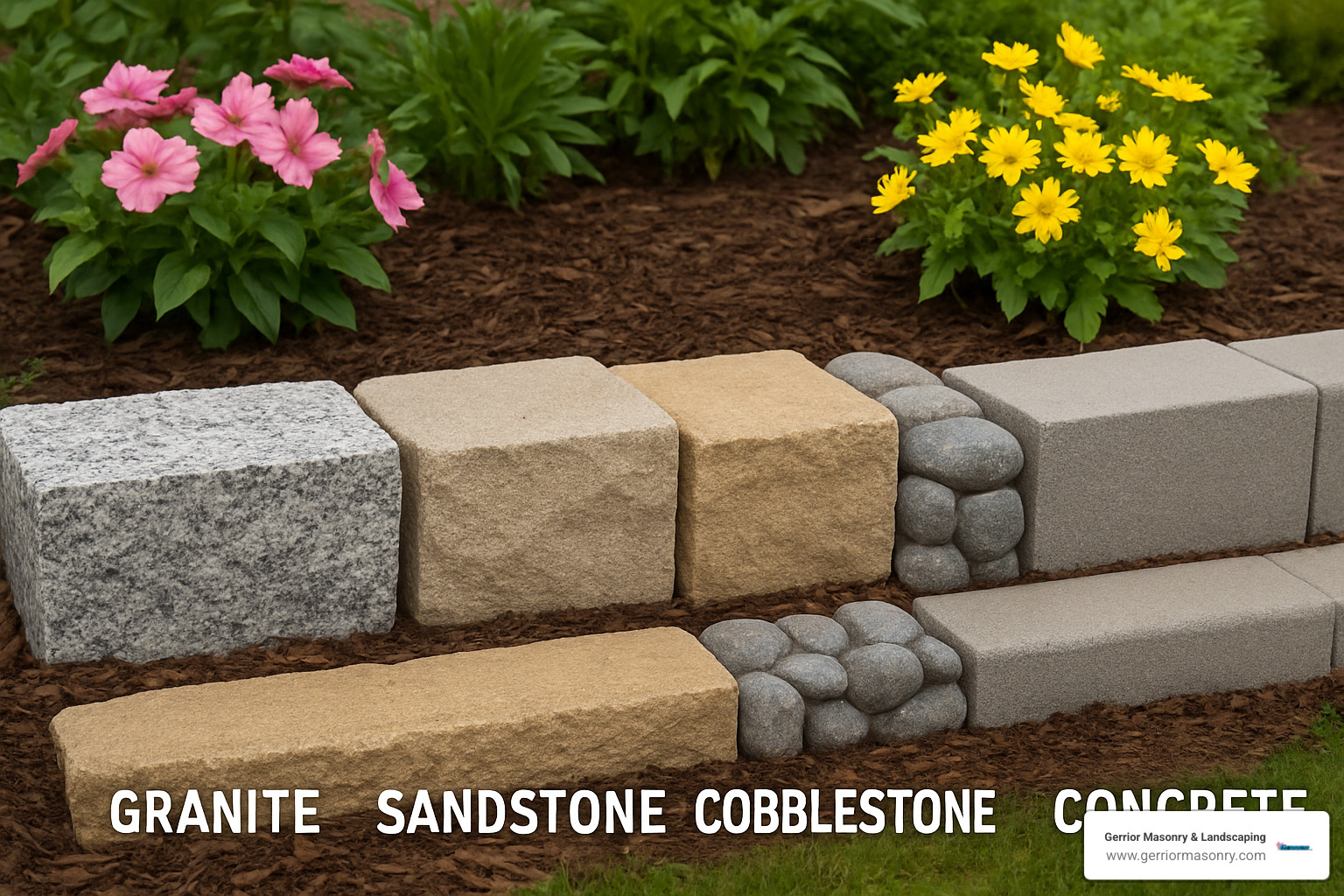
Granite brings a timeless elegance to any landscape with its clean lines and remarkable durability. Available in sophisticated grays, warm pinks, and subtle buff tones, granite edging stands up exceptionally well to our harsh New England winters. “I installed granite edging ten years ago,” shares a Winchester homeowner, “and it looks exactly the same as the day it went in—not a single stone has shifted.” While the investment is higher—typically $700-$900 per pallet covering 40-60 linear feet—granite’s multi-generational lifespan makes it worth considering.
Limestone offers a softer, more approachable elegance with its warm, neutral palette. Though not quite as hard as granite, quality limestone still delivers excellent durability and creates a welcoming border for traditional landscapes. The Indiana Limestone Tumbled Edger ($720 per ton) gives gardens a gently weathered, established feel that looks like it’s been part of your landscape for generations.
Sandstone brings warmth and rustic charm with its earthy tones and natural texture variations. Perfect for cottage gardens or naturalistic landscapes, options like the Weathered Sandstone Natural Edger ($500 per ton) create borders that feel organic rather than imposed. The subtle color variations within each stone add visual interest throughout the seasons.
Concrete Block edgers deliver consistency and practicality without sacrificing style. Their uniform sizes and predictable shapes make installation more straightforward, especially for DIYers. Available in countless colors and profiles, these manufactured options provide a cost-effective alternative while maintaining a similar appearance to natural stone.
Cobblestone edging creates charming, old-world charm that’s especially effective along curved garden beds. These small, rounded stones bring texture and character to any garden border. The Nantucket Pavers Cobblestone kits ($500-$600) provide approximately 33-83 linear feet per pallet, depending on stone size, and work beautifully in traditional and cottage-style landscapes.
Faux Stone options made from rubber or composite materials offer budget-friendly alternatives that mimic the look of natural stone. While they won’t last as long as the real thing, these lightweight options are easier to install and can be a practical solution for temporary landscapes or rental properties.
Matching Stone to Design Themes
The most successful garden edges complement your overall landscape style. Here’s how to match your stone to your garden’s personality:
Cottage Curves flourish with irregular fieldstone or tumbled cobbles that follow winding, informal bed lines. A Reading client notes, “We chose weathered fieldstone for our cottage garden borders because we wanted something that looked like it had always been there. The stones’ varied shapes follow our curved beds perfectly and look completely at home among our foxgloves and daisies.”
Modern Straight Lines call for clean-cut granite or concrete pavers with minimal texture. For contemporary landscapes, consider darker colors like charcoal or black to create dramatic contrast, or light gray for a more subtle boundary that lets your plantings take center stage. The geometric precision of cut stone beautifully complements modern architecture and minimalist plant selections.
Rustic Stacked Walls offer dimension and character, functioning as both edging and mini retaining walls. This approach works wonderfully for slightly raised beds or gentle slopes, adding both visual interest and practical seating opportunities during garden work or outdoor gatherings. Natural field stone or irregular flagstone creates the most authentic rustic look.
Formal Cobbles set in mortar deliver refined elegance perfect for traditional landscapes and historic homes. Though more labor-intensive to install, the results offer timeless sophistication that complements formal garden designs, boxwood hedges, and symmetrical plantings. For true period authenticity, reclaimed antique cobblestones bring best character.
Calculating Quantities & Budget (Average Costs)
Before heading to the stone yard, take time to accurately measure your garden’s perimeter. For straight edges, a simple tape measure works fine. For curved areas, lay a garden hose along the planned edge, then measure the hose length—a simple trick that saves headaches later.
Based on internet research, average material costs for stone edging for flower beds vary considerably:
– Basic concrete edgers: $5-$15 per linear foot
– Natural stone edgers: $10-$30 per linear foot
– Premium cut granite: $15-$45 per linear foot
For professional installation, expect to add $12-$45 per linear foot to these material costs, depending on project complexity and site conditions. These are average costs based on internet data and not actual costs for Gerrior Masonry services.
DIY installation can significantly reduce your project cost, but requires proper tools and the ability to handle heavy materials safely. A typical 50-foot garden border might cost $250-$750 in materials for DIY installation, while professional installation might range from $850-$3,750 total.
When budgeting, don’t forget to include base materials like crushed stone or sand, landscape fabric for weed suppression, and equipment rental if needed. The initial investment might seem substantial, but quality stone edging typically outlasts other landscape elements, making it a worthwhile long-term addition to your property.
More info about Landscape Planning
Tools & Materials Checklist
Getting ready for your stone edging for flower beds project starts with having the right equipment on hand. I’ve seen many weekend warriors struggle simply because they weren’t properly prepared—let’s make sure that doesn’t happen to you!
Essential Tools:
Think of your tools as trusted companions for this journey. A sturdy shovel will be your primary workhorse for digging the trench, while a specialized trenching spade creates those clean, crisp-sided channels that make installation so much easier. Don’t forget your hand tamper—this simple tool ensures your base is properly compacted, preventing future settling issues.
For straight runs, you’ll need string line and stakes to maintain that perfect edge. “I always tell homeowners that the extra 10 minutes spent getting your lines straight saves hours of frustration later,” says our foreman Mike. Complement this with a 2-4′ level to check both slope and alignment as you work.
Your rubber mallet becomes your gentle persuader, allowing you to tap stones into their perfect position without damaging them. A tape measure ensures accuracy throughout, while a garden hose or rope helps mark those beautiful curved sections that add character to your landscape.
Safety First
Never underestimate the importance of proper safety gear. Work gloves protect your hands from rough stone edges and prevent painful blisters. Safety glasses shield your eyes from flying debris when cutting or splitting stones. If you’re working with heavier materials like granite or large cobbles, steel-toed boots can save your toes from an unfortunate meeting with gravity.
And don’t forget your knees! Knee pads might seem optional until you’ve spent a few hours kneeling on hard ground. Your future self will thank you for this small investment.
Materials Breakdown
The star of your project will be the edging stones themselves. Whether you’ve chosen granite, limestone, or concrete pavers, make sure to order 5-10% extra to account for cuts, breakage, or the occasional stone that just doesn’t quite fit your vision.
A solid foundation prevents future problems, so invest in quality paver base (¾” minus crushed stone) that compacts well. Fine leveling sand allows for precise height adjustments that keep your edging looking professional.
Consider adding landscape fabric beneath and behind your edging as an extra defense against weeds. For certain edging types, an edge restraint system prevents shifting over time. And if you’re using stones with gaps between them, polymeric sand creates solid joints that resist erosion and ant colonies.
“Having the right tools makes all the difference,” explains Mike. “I’ve seen DIYers struggle for hours with the wrong equipment when the job could have been much easier.”
Before breaking ground, ensure all materials are delivered and staged strategically near your work area. This simple step minimizes carrying distances and back strain. For larger stones, I always recommend having them delivered as close to the installation site as possible—your back will thank you!
More info about Hardscape Design Services
Stone Edging for Flower Beds: Step-by-Step Installation
Installing stone edging for flower beds transforms your garden with a professional touch that’s within reach for most homeowners. With a weekend and some elbow grease, you can create borders that will beautify your landscape for years to come.
1. Plan & Mark the Layout
Before lifting a shovel, take time to visualize and plan your perfect edge:
“The biggest mistake I see is rushing the layout,” says our landscape designer. “When you carefully plan your lines, the finished project looks like it was always meant to be there.”
Always start by calling 811 at least 72 hours before your project. This free service marks underground utilities so you can dig safely. Next, grab a garden hose and use it to create your desired border shape. This flexible tool lets you experiment with different curves and lines until the design feels right. For straight sections, stretch a string between stakes to ensure perfect alignment.
Once you’re satisfied with the layout, press the hose into the soil to leave an impression or mark the line with landscape paint. Remember to consider access points for maintenance—you’ll need to reach those flower beds for weeding and planting!
2. Excavate & Prepare the Base
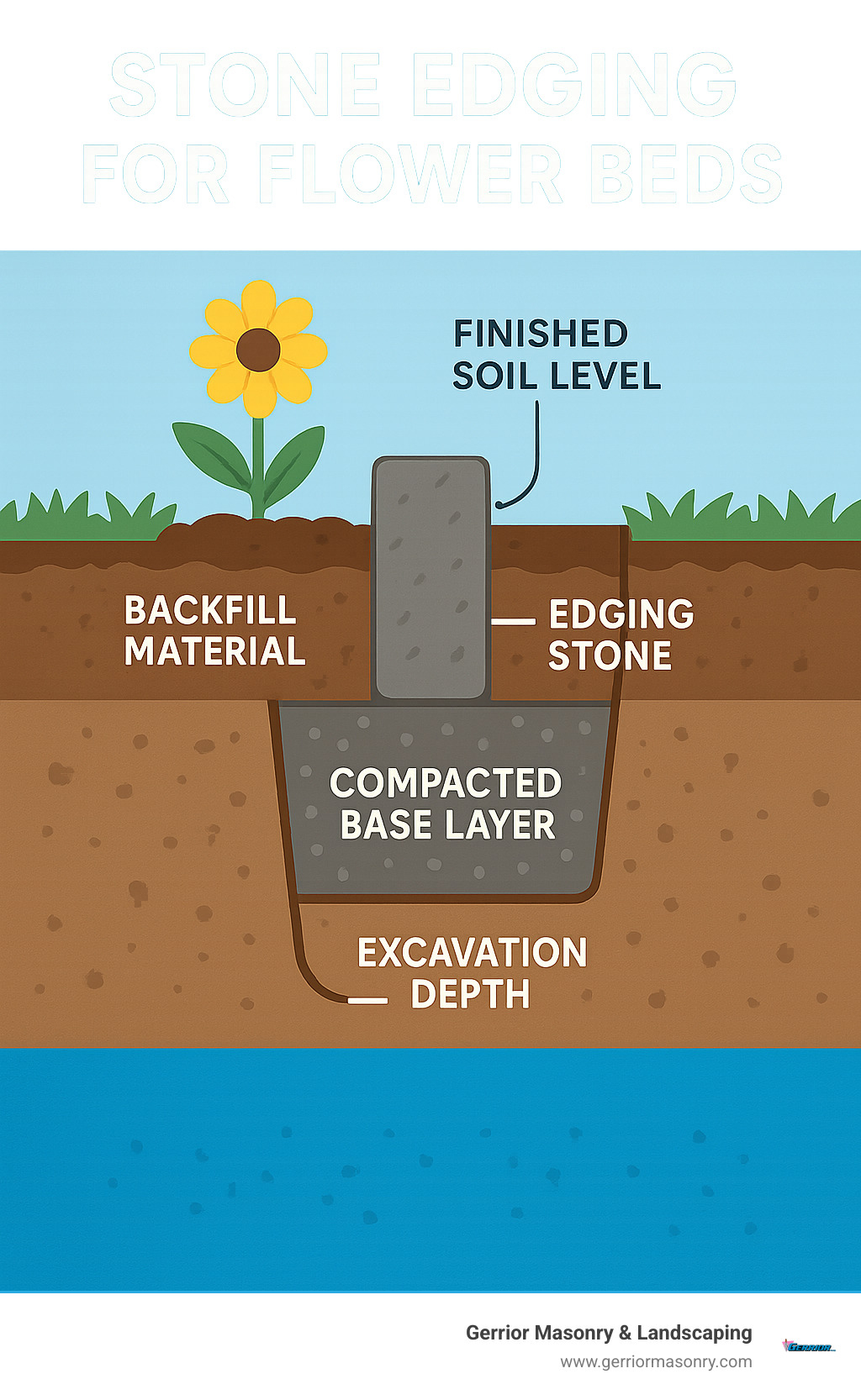
The secret to long-lasting stone edging for flower beds lies beneath the surface. A properly prepared base prevents settling and frost heave:
Dig a trench along your marked line about 6-8 inches wide. The depth depends on your stone height—aim to have roughly one-third of your stone below ground level, which typically means a 4-6 inch deep trench. The trench bottom should be level from side to side but can follow your yard’s natural grade for proper drainage.
“In my 34 years of installing stone edging, I’ve learned that skimping on base preparation leads to wobbly, uneven edges that need constant adjustment,” notes Joe Gerrior.
Pour a 2-3 inch layer of crushed stone (paver base) into the trench and compact it firmly with a hand tamper. This creates a stable foundation that resists frost movement. Next, add a 1-inch layer of coarse sand over the compacted base. This sand layer allows for fine adjustments when setting your stones, ensuring a perfectly level edge.
For properties with poor drainage or heavy clay soil, consider a deeper base layer or incorporate drainage solutions to prevent future problems.
3. Set, Level & Align Stones (Stone edging for flower beds)
Now comes the satisfying part where your border begins to take shape:
Start by creating a level sand surface using a straight piece of wood as a screed. Drag it across the top of the trench to create an even base. Begin placing stones at a corner or logical starting point, setting each firmly into the sand base.
Check the first stone carefully with your level—it should be level from front to back and side to side. This first stone sets the standard for your entire border. Continue placing stones snugly against one another, following your string line or hose outline as a guide.
“Each stone deserves individual attention,” our senior mason explains. “I tap each one into place with a rubber mallet and check it with a level. Taking time with this step gives you edging that looks professionally installed.”
Maintain consistent height along your edging unless you’re intentionally varying it for design purposes. For curved sections, you may need to adjust stone placement slightly to follow your desired line, as some stone types accommodate tighter curves than others.
4. Secure & Finish Different Stone Types
Each type of edging material requires specific techniques for best results:
For dry-stack natural stone, place pieces tightly together, using smaller stones to fill gaps if necessary. Backfill both sides with soil to help hold stones in place. For added stability, you can apply landscape adhesive between stones—especially helpful for taller pieces.
When working with mortar-set concrete or cut stone, prepare a mortar mix of 3 parts sand to 1 part cement. Apply mortar between stones for a permanent installation, but remember to clean excess mortar from stone faces immediately. Allow 24-48 hours for mortar to set before backfilling.
“Here in Massachusetts, we recommend leaving small gaps between mortared stones,” advises our masonry expert. “These expansion joints accommodate freeze-thaw cycles and prevent cracking or displacement over time.”
For spike-in faux stone or concrete edgers, simply drive the included metal spikes through designated holes using a hammer or mallet. Ensure spikes are fully seated for maximum stability.
Scientific research on frost-heave prevention
5. Backfill, Mulch & Clean Up
Properly finishing your stone edging for flower beds ensures both beauty and longevity:
Add soil along both sides of your stones, tamping gently to eliminate air pockets. On the garden side, the soil should reach about an inch below the top of the edging to accommodate mulch. On the lawn side, bring soil level with the surrounding grass to create a seamless transition and prevent a tripping hazard.
If desired, lay landscape fabric along the inside of the edging, extending it into the bed to prevent weeds from sprouting between your edging and plantings. This simple step saves hours of future maintenance.
“The finishing touches make all the difference,” says our landscape technician. “A fresh layer of mulch against clean stone edging creates that crisp, defined look that makes neighbors ask who did your landscaping.”
Apply 2-3 inches of mulch to the bed, keeping it slightly below the top of the edging for a professional appearance. Finally, brush off any soil or debris from the stones and dispose of excess materials to complete your change.
For the first few weeks after installation, check your edging regularly and adjust any stones that may have shifted during settling. This attentive care ensures your borders will remain beautiful for years to come.
More info about Hardscape Design Services
Design Ideas to Boost Curb Appeal
Stone edging for flower beds isn’t just functional—it’s an opportunity to showcase your creativity and improve your home’s curb appeal. Let’s explore some inspired design approaches that our Massachusetts clients have used to transform their garden borders from ordinary to extraordinary.
Contrasting Color Bands
One of the simplest yet most effective design strategies is choosing stone that creates visual contrast with your home or existing landscape elements. A client in Winchester selected deep charcoal granite edging to frame their cottage garden, creating a striking boundary against their cream-colored home.
“The dark stone makes the flowers pop and ties in beautifully with our black shutters,” they told us after the project was complete. “It’s like adding an neat picture frame around our garden.”
This contrast principle works in reverse too—light-colored limestone or sandstone edging can beautifully define gardens against darker home exteriors or heavily wooded properties.
Mixed Heights and Layered Looks
Why settle for flat when you can add dimension? Varying the height of your stone edging creates visual rhythm and practical planting advantages.
In Lexington, we designed a three-tier stone border that starts at 4 inches at the lawn edge and steps up to 12 inches at the back. This terraced approach created natural planting pockets for cascading flowers and trailing herbs while adding architectural interest to an otherwise flat yard.
“The layered stone edge completely transformed our basic garden bed,” the homeowner shared. “Now we have these lovely natural levels that showcase different plants at varying heights—it’s like having three gardens in one space.”
Integrated Landscape Lighting
Extend your garden’s beauty into the evening hours by incorporating subtle lighting into your stone edging. Recessed fixtures nestled between stones or small uplights positioned behind the edging can create magical nighttime effects.
A Woburn family we worked with added small LED lights at intervals along their curved granite edging. “Our illuminated stone border has extended our outdoor enjoyment well into the evening,” they explained. “The soft glow highlights the stone texture and creates this wonderful ambiance that makes even weeknight dinners feel special.”
Pollinator Pockets
Environmentally-conscious homeowners are increasingly designing their stone edging with intentional gaps or planting pockets to support beneficial insects. These strategic openings soften the edge while creating microhabitats.
“We incorporated small pockets between our granite blocks and filled them with creeping thyme and sweet alyssum,” shared a Bedford client. “Now our garden edge buzzes with bees and butterflies all summer long. It’s beautiful and makes us feel good about supporting local pollinators.”
These planned breaks in the stone line create a more natural transition between lawn and garden while contributing to biodiversity—a win-win approach to garden design.
Seat-Height Wall Edging
For larger properties or gardens on a slope, consider building your edging as a low seat wall (18-24 inches high). This multifunctional approach provides both garden definition and casual seating opportunities throughout your landscape.
“Our stone wall edge has become everyone’s favorite spot during garden parties,” a Burlington resident told us after we completed their project. “The kids perch there while playing, and it’s perfect for setting down a drink while chatting with neighbors.”
These seat walls work particularly well for front yards where you want to engage with the neighborhood or around patios where additional seating is always welcome.
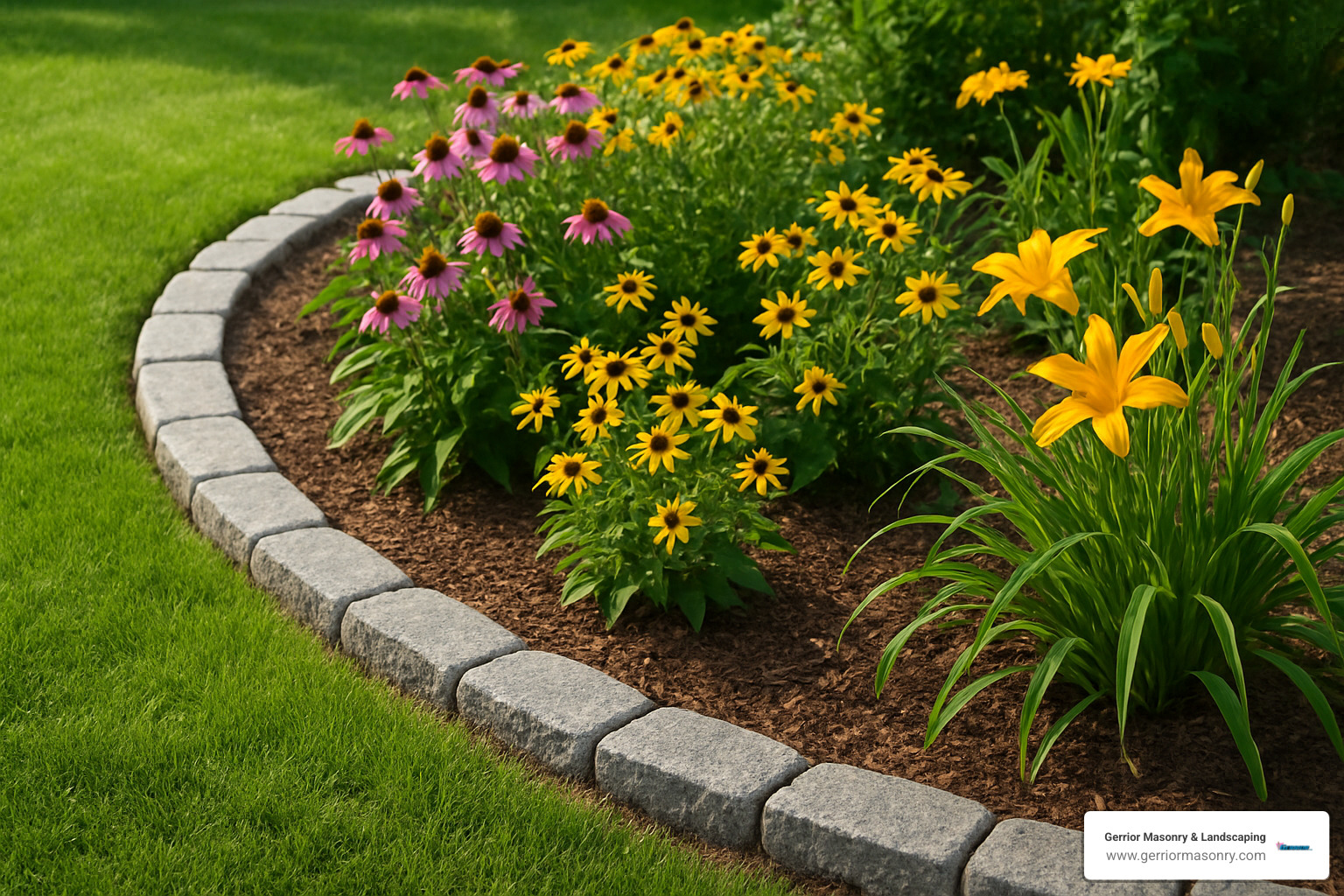
“The most successful edging designs consider both aesthetics and function,” explains our design specialist Maria. “We always begin by asking clients how they’ll use the space, not just how they want it to look. Beautiful stone edging should improve your lifestyle, not just your landscape.”
Whether you prefer classic and formal or natural and rustic, the right stone edging design can dramatically improve your property’s appearance while reflecting your personal style and meeting your practical needs.
Caring for Your New Edge
Once installed, stone edging for flower beds requires minimal maintenance compared to other landscaping elements. However, some periodic care will keep your edging looking its best for decades:
Seasonal Inspection and Maintenance
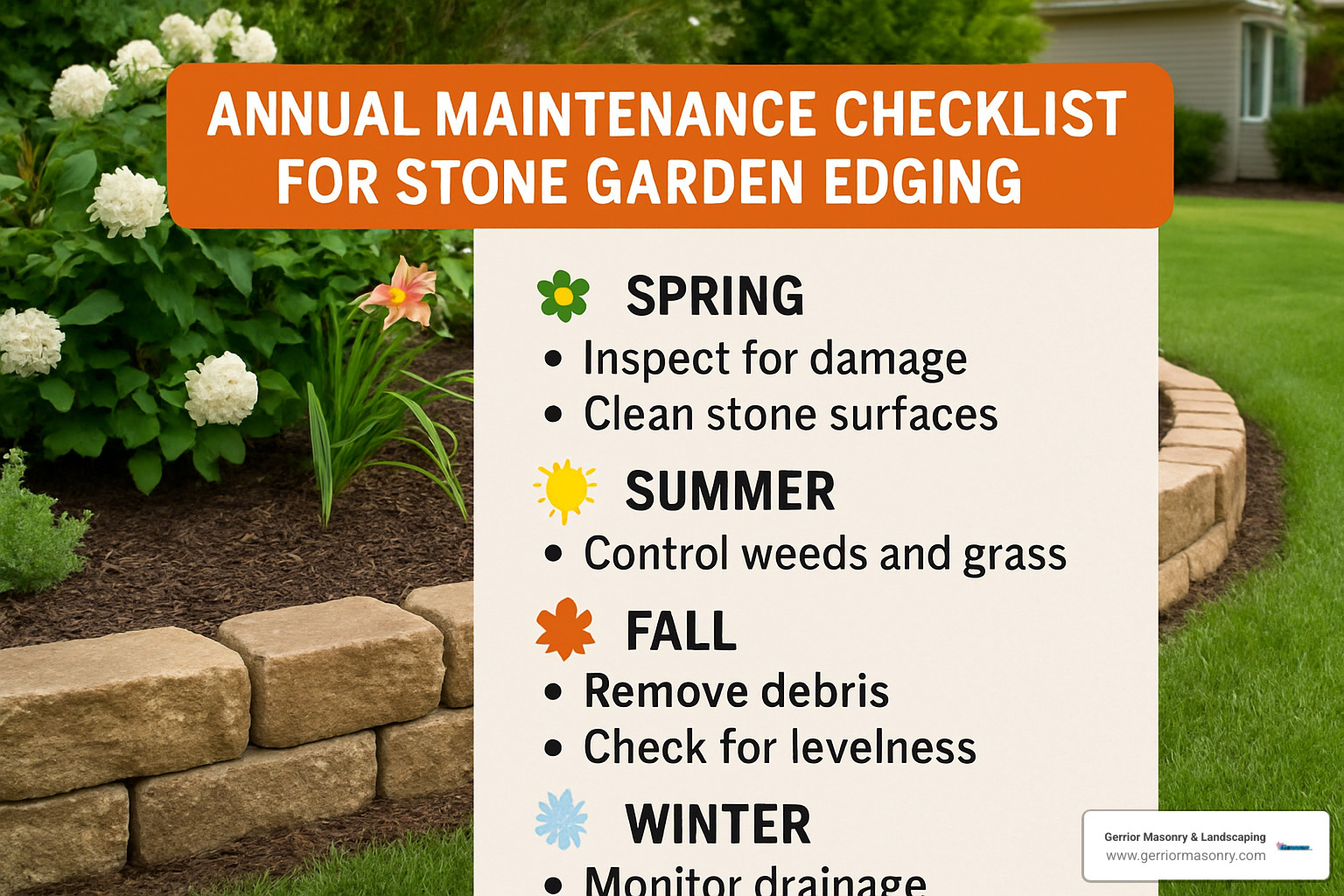
Spring brings the perfect opportunity to check your stone edging after winter’s harsh freeze-thaw cycles. Look carefully for any stones that may have shifted or heaved upward. This early inspection allows you to make adjustments before your perennials and annuals fill in and potentially complicate repairs.
“The first warm weekend in April is when I walk my property and give all my stone edges a good once-over,” shares a Winchester homeowner. “Fifteen minutes of attention then saves hours of frustration later in the season.”
During summer, your main maintenance task is simply keeping weeds at bay. Those persistent little invaders love to find homes between stones! A long-handled weeding tool can help you reach tight spaces without the backache. A quick pass every few weeks while you’re out enjoying your garden is usually sufficient.
When fall arrives, take time to clear fallen leaves from around your edging. Left in place, this organic debris can decompose between stones, creating perfect conditions for weed seeds. Fall is also an ideal time to check for any settling that may have occurred during the growing season when frequent watering can compact soil.
In winter, be mindful when clearing snow. Avoid piling snow directly against stone edging when shoveling or using a snowblower, as this can contribute to frost heave when melting and refreezing occurs.
Addressing Common Issues
Frost heave happens to even the best-installed stone edging in our New England climate. If you notice stones have lifted during winter, wait until spring when the ground has fully thawed, then carefully remove the affected stones. Adjust the base material by adding or removing sand as needed, and reset them level.
When stones shift sideways (displacement), the fix is straightforward. Remove surrounding soil to expose the sides of the stone, realign it with your original design, and firmly tamp soil back around it. This simple repair takes just minutes but keeps your edge looking professionally maintained.
Many gardeners actually appreciate the charming, established look of algae or moss growth on stone edging. If you’re not among them, a stiff brush and some elbow grease will usually do the trick. For stubborn growth, gentle pressure washing can restore your stones to their original appearance.
Natural staining typically adds character and patina to stone edging over time. However, if you notice unwanted stains from soil, plant material, or fertilizer, a mild solution of water and stone cleaner applied with a soft brush can refresh the appearance without damaging the stone.
“The beauty of stone edging is how little fussing it really needs,” notes our project manager with a smile. “Most issues can be prevented with proper installation in the first place, but even the best work sometimes needs a little touch-up after our Massachusetts winters do their worst.”
With just a bit of seasonal attention, your stone garden edging will continue defining and enhancing your landscape for decades to come, aging gracefully and developing the character that only natural materials can provide.
DIY or Hire a Pro?
Deciding whether to install stone edging for flower beds yourself or bring in the experts isn’t always straightforward. Let’s look at what might tip the scales either way:
Consider Your Skill Level
While stone edging doesn’t require specialized training, it does demand basic landscape knowledge and physical stamina. If you’ve successfully completed other outdoor projects like building a simple path or installing a small patio, you likely have the foundational skills needed.
“I’ve watched homeowners tackle stone edging with great results,” says our operations manager with a smile. “But I’ve also seen the same folks call us halfway through when they realized they bit off more than they could chew—especially with those heavy granite pieces!”
The technical aspects aren’t overly complex, but knowing how to properly prepare a base, maintain consistent levels, and account for drainage can make the difference between edging that lasts decades and edging that shifts after the first frost.
Time Commitment
Be realistic about your available time. What takes our professional crews 4-6 hours often becomes a full weekend project (or two) for homeowners.
A Winchester client recently told us, “I planned to knock out my front garden edging on Saturday, but by Sunday evening, I was only halfway done and completely exhausted. Taking Monday off work to finish wasn’t exactly what I had in mind!”
If your weekends are precious or you’re facing a time constraint like preparing for an upcoming event, professional installation might be worth the investment simply for the time saved.
Physical Demands
Don’t underestimate the physical requirements of stone edging installation. Each natural stone piece can weigh between 20-50 pounds—and you’ll be lifting dozens of them throughout the project.
“My husband and I thought installing our own edging would be a fun couple’s project,” shared a Lexington homeowner. “After an hour of digging and moving stones, we were both questioning our life choices! We called Gerrior the next morning.”
Beyond the lifting, you’ll spend hours bent over or kneeling to level and place stones precisely. If you have back issues or other physical limitations, this project might take a greater toll than expected.
Site Complexity
The complexity of your landscape significantly impacts DIY feasibility. Consider these factors:
Terrain challenges: Slopes, uneven ground, or existing hardscape elements can complicate installation tremendously. What looks simple can quickly become technical when you’re trying to maintain consistent heights across changing grades.
Drainage considerations: Proper water management is crucial for long-lasting edging. Properties with existing drainage issues benefit from professional assessment to prevent future problems.
Access limitations: Narrow passages or established gardens can make material transport challenging without proper equipment or enough helping hands.
When to Call the Professionals
Professional installation makes particular sense when:
Your project involves slopes greater than 15 degrees, as these require special techniques to prevent shifting. A Bedford client noted, “Our sloped front yard seemed like a simple project until we realized water would undermine any edging we installed ourselves.”
You need retaining capabilities over 12 inches in height, which may require structural considerations beyond simple edging techniques.
The site has existing drainage problems that could compromise your installation if not properly addressed.
You’re working with very heavy materials like large granite pieces that require specialized equipment to place safely and precisely.
Your design includes complex patterns, curves, or elevation changes that demand experienced execution.
You want a warranty on the installation for peace of mind and protection of your investment.
“What takes our crews a few hours might take a homeowner several weekends,” notes our estimator. “We bring specialized equipment, years of experience, and a team that works together efficiently. Plus, we’ve seen every possible issue that might arise and know how to solve it quickly.”
Landscape Design & Installation
Common Mistakes to Avoid
When installing stone edging for flower beds, even experienced DIYers can stumble into some common pitfalls. After three decades of installing stone borders throughout Massachusetts, I’ve seen the same mistakes appear time and again. Let’s explore these errors so your project can stand the test of time.
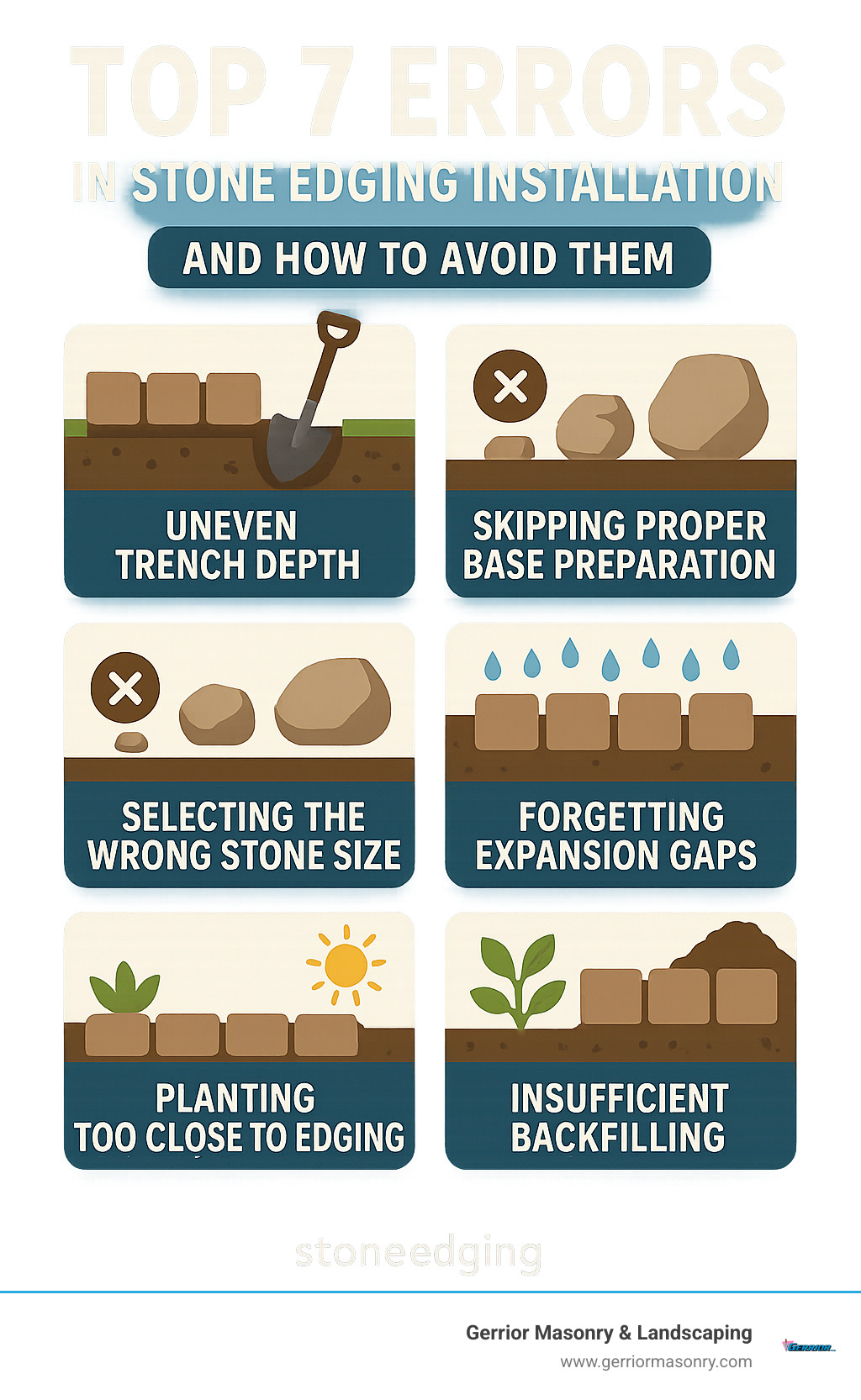
Uneven Trench Depth
Nothing undermines a beautiful stone border faster than wobbly, uneven stones. The culprit is almost always an inconsistent trench depth.
“I see this all the time,” says our foreman Mike. “Homeowners get tired of measuring and just eyeball it. Then they wonder why their stones look like a roller coaster.” Take the extra time to measure your trench depth every few feet. A consistent base creates that professional, clean line that makes stone edging so appealing.
Skipping Proper Base Preparation
Perhaps the most common—and costly—mistake is rushing through base preparation. That 2-3 inch layer of compacted crushed stone might seem unnecessary when you’re eager to see your finished border, but it’s absolutely essential.
“Without a properly compacted base, even the most beautiful stones will shift and settle unevenly over time,” warns our installation specialist. “That perfect edge you created in spring could be a jumbled mess by fall.” The few extra hours spent on proper base preparation can mean the difference between an edging that lasts decades and one that needs yearly repairs.
Selecting the Wrong Stone Size
Scale matters tremendously in landscape design. Choosing stones that are proportionally wrong for your space can make even expert installation look awkward.
A tiny urban garden can be visually overwhelmed by massive boulders, while small edgers might visually disappear in a sprawling suburban landscape. Consider your garden’s overall size when selecting edging materials. For average residential gardens, stones 4-8 inches in height typically provide the right visual balance.
Ignoring Drainage Needs
Water is both friend and foe to any garden. Failing to account for how rainfall will interact with your stone edging can lead to serious problems.
“Always maintain a slight slope away from your home’s foundation,” recommends our drainage expert. “And consider how water will flow across and through your edging.” Without proper planning, you might create unwanted pools in your garden beds or, worse, direct water toward your foundation.
Forgetting Expansion Gaps
Our New England winters can be brutal on hardscaping. The freeze-thaw cycles that define our climate can crack tightly mortared stones if you don’t plan for expansion.
“Leave small gaps between stones if using mortar,” suggests our masonry specialist. “Those tiny spaces provide room for seasonal movement and can prevent cracking.” This is particularly important for mortared installations, but even dry-laid stone benefits from slight spacing.
Planting Too Close to Edging
The excitement of a new garden border often leads to overeager planting. Placing perennials or shrubs too near your new edge can create problems as plants mature.
“Keep most plantings at least 6-12 inches away from the inside edge,” recommends our horticulturist. “This prevents root pressure from displacing stones and makes ongoing maintenance much easier.” That small buffer zone also creates a cleaner visual line between your plantings and the edging.
Insufficient Backfilling
After carefully placing your stones, proper backfilling on both sides is crucial for stability. Many DIYers backfill the garden side but neglect the lawn side, leaving stones vulnerable to shifting.
“Compact the soil gently but thoroughly on both sides of your edging,” advises our installation team leader. “This creates a supportive accept that holds everything in place.” Take time with this final step—it’s your insurance policy against shifting stones.
“The difference between a DIY job that lasts decades and one that needs yearly repairs often comes down to avoiding these common mistakes,” explains our quality control supervisor. “Taking the time to do it right the first time pays dividends for years.”
With proper planning and attention to these details, your stone edging for flower beds will provide lasting beauty and function for your landscape. The extra care during installation translates directly to reduced maintenance and greater enjoyment over time.
Frequently Asked Questions about Stone Edging for Flower Beds
What depth should stone edging sit in the ground?
Finding the right depth for your stone edging for flower beds is a bit like planting a tree – you need just the right amount underground to keep everything stable and looking great.
As a general rule, about one-third of your stone’s height should sit below ground level. So if you’re working with 6-inch tall stones, you’ll want roughly 2 inches nestled beneath the soil. This balance gives you enough stability without hiding too much of your beautiful stonework.
“I always tell homeowners to think of it as an iceberg,” says Mike, our installation team leader. “The part you don’t see is what keeps everything in place through the seasons. That buried portion creates stability, while the exposed part creates beauty.”
Here in Massachusetts, where winter can be particularly harsh, we sometimes recommend going a bit deeper – up to 40% of the stone’s height – to prevent frost heave from pushing your stones upward during freeze-thaw cycles. Better to have them slightly deeper than to find them popping up like daisies after the first winter!
How do I prevent stones from shifting over time?
There’s nothing more frustrating than perfectly placed stones that decide to wander out of position over time. The good news is that with a few key techniques, you can keep your stone edging for flower beds exactly where you put it.
Proper base preparation is absolutely crucial. Think of it as the foundation of your home – skimp here, and you’ll pay for it later. A well-compacted layer of crushed stone prevents the settling that leads to crooked edges.
A sand setting bed gives you the ability to make precise adjustments while helping lock stones in place. Think of it as the stone’s custom mattress – it provides just enough give for comfort while maintaining support.
Backfilling both sides of your edging creates the pressure that keeps everything in place. Be sure to firmly tamp the soil on both the garden and lawn sides of your edging.
For maximum stability, especially in problem areas, consider using landscape adhesive or mortar between stones. It’s like giving your stones a permanent handshake with their neighbors.
“Most shifting I see in DIY jobs comes from rushing through the base work,” explains Joe Gerrior. “I’ve been doing this for over three decades, and I can tell you – an extra hour spent on your base saves countless hours of repairs down the road.”
Can I install stone edging for flower beds on a slope?
Absolutely! Slopes actually offer exciting opportunities for dramatic stone edging designs, though they do require some special considerations.
For gentle slopes (less than 15 degrees), you can install stones perpendicular to the slope, stepping them down like a grand staircase. This creates a terraced effect that’s not only stable but visually interesting. Just be sure each stone sits level from front to back, even as the overall line follows the downward path.
When tackling steeper terrain, you might want to think beyond simple edging. Consider building a small retaining wall that serves double-duty as both edging and slope support. Use larger, heavier stones that won’t easily shift, and don’t forget about incorporating drainage solutions to prevent erosion around your beautiful stonework.
“Slopes are where stone edging really shines compared to plastic alternatives,” notes our landscape architect. “On a recent project in Winchester, we created a stepped granite edge down a front yard slope that transformed a problem area into the highlight of the property.”
Many homeowners find that a terraced approach not only secures the edging but adds dimension to the landscape. Those level changes create natural planting pockets for cascading flowers that soften the stone’s appearance.
Gerrior Masonry & Landscape Construction, based in Woburn MA, proudly services Middlesex and Essex County with expert stone edging and hardscape solutions.
Conclusion
Stone edging for flower beds doesn’t just transform gardens—it lifts them from ordinary to extraordinary. Whether you’ve tackled this as a weekend project or called in our professional team, quality stone edging is an investment that continues to pay off year after year.
I’ve seen countless homeowners smile with satisfaction when their freshly installed stone border brings their landscape together. As one of our Lexington clients shared, “Our stone edging was the best landscape investment we’ve made—it’s been perfect for 15 years while everything else has needed replacement.”
What makes stone edging so special is its remarkable combination of beauty and practicality. That clean line between lawn and garden beds isn’t just visually pleasing—it makes maintenance easier, keeps mulch where it belongs, and creates definition that improves your entire property. Even in the depths of a Massachusetts winter, when flowers are dormant, your stone edging provides structure and visual interest.
There’s also something deeply satisfying about the sustainability of stone. In our throwaway culture, it’s refreshing to install something that truly lasts. Unlike plastic alternatives that crack and fade within a few seasons, the granite edging we installed for clients in the 1990s still looks fantastic today. Many of the stone borders we create will likely outlive the homes they surround—a legacy in the landscape.
I encourage you to consider how stone edging might improve your own outdoor spaces. Whether you’re dreaming of a simple cobblestone border for your front walkway or an elaborate terraced edge for a sloping garden, the natural beauty of stone offers endless possibilities. And remember—the time and care you invest in proper installation will be rewarded with decades of enjoyment.
Ready to transform your garden beds with beautiful stone borders? We hope this guide has provided the inspiration and practical knowledge you need to create edges that will improve your landscape for years to come.
More info about stone garden edging services
Gerrior Masonry & Landscape Construction, based in Woburn MA, proudly services Middlesex and Essex County with expert stone edging and hardscape solutions.
