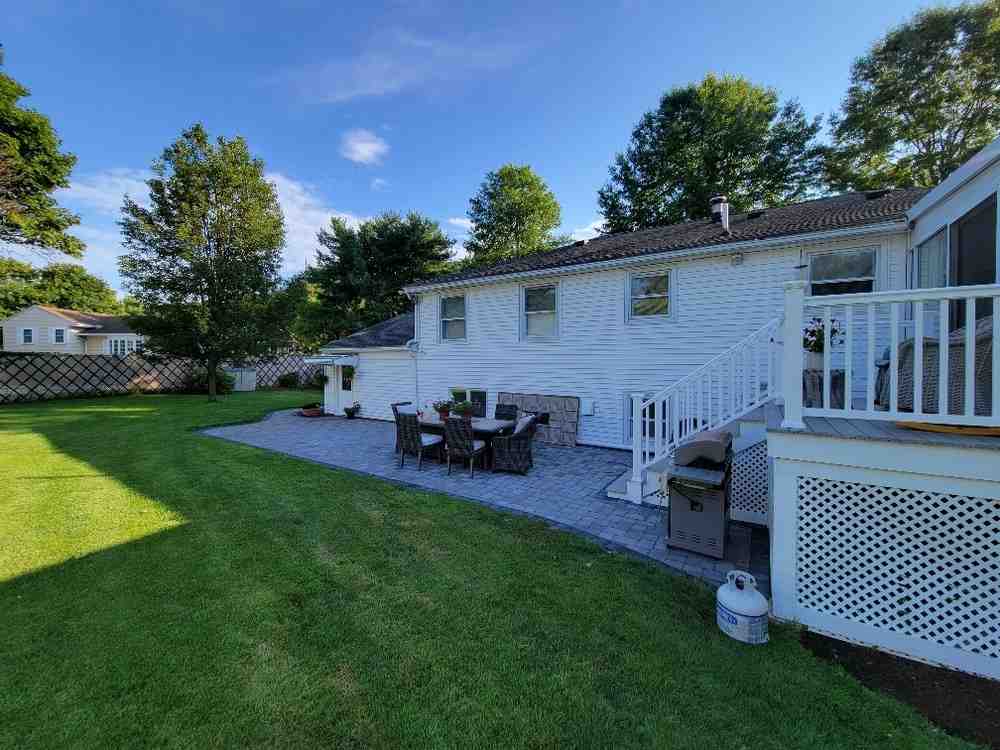
Why Natural Stone Patio Installation Is Worth Doing Right
Natural stone patio installation is one of the highest-value outdoor improvements a Massachusetts homeowner can make — but only when it’s done correctly, from the ground up.
Here’s what a successful natural stone patio installation involves:
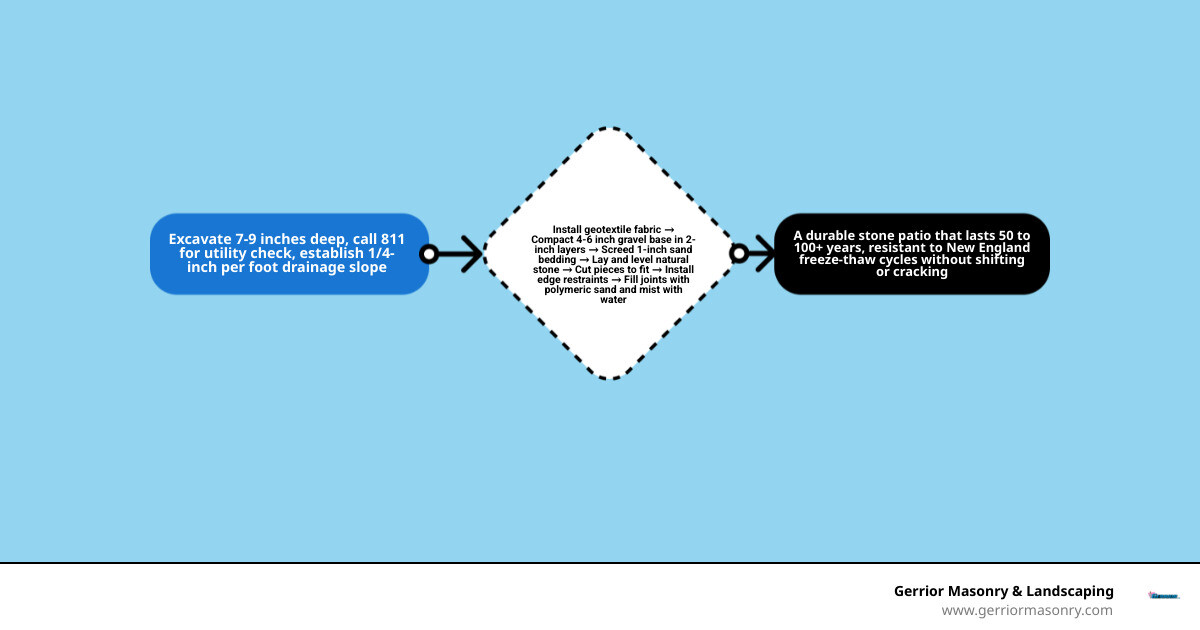
- Plan and mark the patio area, check for underground utilities (call 811), and establish proper drainage slope
- Excavate 7–9 inches below the desired finished height
- Install geotextile fabric to separate native soil from the base material
- Compact a 4–6 inch gravel base in 2-inch layers using a plate compactor
- Screed a 1-inch sand bedding layer over the compacted gravel
- Lay and level the natural stone, cutting pieces to fit as needed
- Install edge restraints to lock the perimeter in place
- Fill joints with polymeric sand and mist with water to activate and seal
Done right, a natural stone patio can last 50 to 100 years or more. Done wrong — with a weak base, poor drainage, or the wrong stone for a Massachusetts freeze-thaw climate — it can shift, crack, and fail within a few seasons. Homeowners in Woburn, Winchester, and Lexington know this after watching poorly installed patios heave through a single harsh Massachusetts winter.
The stone you see is only a fraction of the work. What’s underground determines whether it lasts.
I’m Joe Gerrior, owner of Gerrior Masonry & Landscaping, and I’ve spent over 34 years overseeing natural stone patio installation projects across Massachusetts for both residential and commercial clients. In this guide, I’ll walk you through exactly how a professional-grade stone patio gets built — and what separates a patio that lasts from one that doesn’t.
Easy natural stone patio installation word list:
The Value of Professional Natural Stone Patio Installation
When planning a new outdoor living space, many homeowners debate between natural stone and manufactured concrete pavers. While concrete pavers are highly uniform and easier to install, they simply cannot match the organic texture, timeless beauty, and incredible longevity of genuine stone.
Natural stone resists chipping, cracking, and fading far better than concrete. Over decades of exposure to Massachusetts’ harsh climate, concrete pavers can begin to show aggregate wear and lose their color. Natural stone, on the other hand, weathers beautifully, developing a rich patina that actually enhances your home’s curb appeal and long-term resale value.
| Feature | Natural Stone Patios | Concrete Pavers |
|---|---|---|
| Average Lifespan | 50 to 100+ Years | 15 to 25 Years |
| Aesthetic Appeal | Unique, organic, and elegant | Manufactured, repetitive patterns |
| Color Longevity | Permanent (will not fade) | Can fade over time from UV exposure |
| Value Addition | High long-term return on investment | Moderate property value increase |
| Slip Resistance | Excellent (natural cleft textures) | Varies by surface texture |
Whether you are looking for a rustic flagstone look or a clean, modern bluestone patio installation, choosing natural stone is a permanent investment in your property. When seamlessly integrated with professional hardscaping and landscaping, it transforms a simple backyard into a luxurious outdoor retreat.
Selecting the Right Stone for Massachusetts Climates
The extreme freeze-thaw cycles of Massachusetts require careful material selection. In towns like Burlington, MA and Reading, MA, winter temperatures plummet, causing water trapped in porous stones to freeze, expand, and crack the material from within.
To prevent this destructive process, we must look closely at a stone’s water absorption rate and Mohs hardness scale rating. As noted in this technical guide on Natural Stone Patios: Materials, Installation & Sealing – Dynamic Stone Tools, dense stones are vital for cold climates:
- Bluestone: A highly dense sandstone known for its exceptional durability. Its natural cleft finish provides excellent traction, and its low porosity makes it incredibly resilient against winter frost.
- Granite: Boasting an exceptionally low water absorption rate (typically under 0.5%), granite is virtually immune to frost damage and has a very high Mohs hardness rating.
- Quartzite: An exceptionally durable metamorphic rock with a Mohs hardness of 7+ and near-zero water absorption, making it highly resistant to freeze-thaw cycles.
- Limestone and Travertine: While beautiful, highly porous varieties of limestone or travertine should be avoided in cold climates unless extreme drainage precautions and specialty sealers are utilized.
Why Hire a Professional for Natural Stone Patio Installation
While a simple, small garden path can be a rewarding weekend project, a full-scale natural stone patio installation is a highly demanding engineering task. Natural stone is incredibly heavy, with individual slabs often weighing between 50 and 200 pounds. Moving, cutting, and placing these stones requires specialized heavy machinery, commercial-grade plate compactors, and wet-cutting diamond saws.
Furthermore, natural stone slabs have irregular thicknesses. Unlike concrete pavers, which are perfectly uniform, a mason must individually adjust the sand bedding under each stone slab to ensure the final surface is completely flush. Skipping proper compaction or failing to calculate the correct excavation depth will inevitably lead to a shifting, unstable surface.
According to average online industry data, a professional natural stone patio installation in the Massachusetts area typically ranges in cost from $8,000 to $60,000, depending on the stone variety, size, grading requirements, and site accessibility.
Disclaimer: Please note that these are estimated average costs sourced from publicly available internet data and do not reflect the actual rates or project guarantees of Gerrior Corp.
For homeowners in Woburn, MA and Winchester, MA, partnering with trusted stone patio contractors near me ensures that your investment is protected by expert craftsmanship and proper structural design.
Step-by-Step Guide to a Flawless Stone Patio

Achieving a flawless, long-lasting surface requires a meticulous approach to site preparation, base construction, and stone setting. For a complete look at the design process, see the complete guide to patio design and installation.
Essential Site Preparation and Drainage Engineering
Before a single shovel touches the dirt, safety and drainage must be addressed. In Massachusetts, you must call 811 at least three business days before digging to have underground utility lines marked.
Once utilities are cleared, we calculate the drainage slope. Standing water is the enemy of any hardscape. To ensure rainwater runs safely away from your home’s foundation, the patio must slope at a pitch of 1/4-inch per linear foot (or roughly a 2.5-inch drop across a 10-foot span).
In towns like Lexington, MA and Burlington, MA, where clay-heavy soils are common, we excavate 7 to 9 inches below the desired finished patio height. This deep trench is necessary to accommodate the structural base layers that prevent shifting.
Executing the Natural Stone Patio Installation Base
The secret to a patio that lasts for decades is a rock-solid, well-compacted base.
Once excavation is complete, we follow these steps:
- Geotextile Fabric: We lay down a high-quality geotextile landscape fabric across the excavated soil. This barrier prevents the clean gravel base from sinking into the soft native soil over time—a common cause of settled corners.
- Gravel Base: We add 3/4-inch clean, angular crushed stone (dense-grade aggregate) in 2-inch layers (lifts). We run a heavy plate compactor over each lift in perpendicular directions. Never dump the entire 4-to-6-inch gravel layer and attempt to compact it all at once; this leaves deep air pockets that will eventually settle.
- Bedding Sand: We place 1/2-inch steel pipes as screed guides and spread a flat, uniform 1-inch layer of coarse washed sand (or Mason sand). We pull a straight 2×4 board across the pipes to create a perfectly flat bed. As detailed in the How To Install-Natural Flagstone December (3) 2022 FINAL guide, keeping this bedding layer uniform is critical for preventing stone movement.
Precision Stone Laying, Finishing, and Maintenance
With the base prepared, we begin laying the stones.
Because natural stone varies in thickness, we lay the thickest stones first. For thinner pieces, we gently lift the stone and pack extra bedding sand underneath to bring it flush with the surrounding surface.
To fit stones tightly along borders, we cut them using a wet masonry saw equipped with a diamond blade. Because cutting stone releases hazardous crystalline silica dust, our crew always wears professional-grade respirators and safety gear.
Once the stones are laid, we complete the installation:
- Edge Restraints: We install heavy-duty aluminum or rigid plastic edge restraints along the outer perimeter, securing them with 10-inch steel spikes driven every 12 inches to prevent the stones from spreading outward.
- Polymeric Sand: We sweep polymeric sand into the joints. We use a leaf blower on a low setting to clear all sand residue from the stone surfaces before lightly misting the joints with water to activate the binding polymers. This locks the stones in place and prevents weed growth.
- Sealing: We highly recommend applying a breathable, water-based penetrating sealer 30 days after installation. This protects against oil stains and organic growth without creating an artificial, slippery plastic film.
For a deeper look at professional finishing, explore our full patio installation services and read this guide on how to build a Natural Stone Patio: How to Build a Long-Lasting One.
Partnering with Gerrior Masonry & Landscaping for Your Patio
For over 30 years, Gerrior Masonry & Landscaping has been the premier choice for high-quality masonry, landscaping, and hardscaping services near Woburn, MA. Our unique advantage is our highly skilled team and direct owner oversight on every single project, ensuring that your natural stone patio installation is executed to the highest professional standards.
Whether you are located in Winchester, MA, Reading, MA, or any of our other Massachusetts service locations, we are here to bring your outdoor vision to life.
Ready to transform your backyard? Contact us today to schedule your consultation.
- Phone: +781-713-1225
- Request an Estimate: Get a Free Quote Online
- Explore Our Portfolio: Gerrior Masonry Patio Installations