Why Proper Drainage for Garden Spaces Matters More Than You Think
Getting drainage for garden landscapes right is one of the most important — and most overlooked — parts of owning a home in Massachusetts.
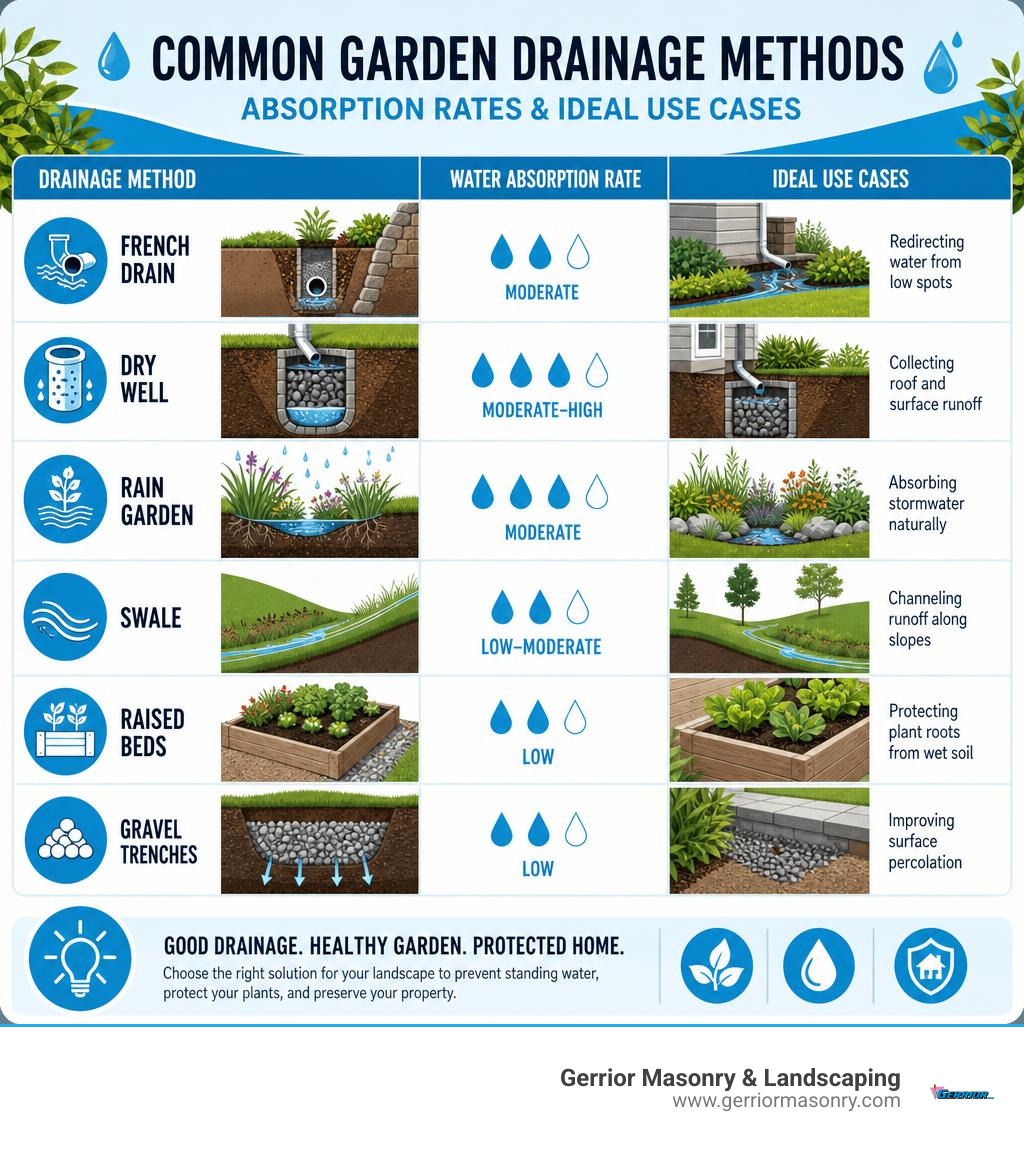
Here’s a quick look at the most common garden drainage options:
| Drainage Method | Best For | Complexity |
|---|---|---|
| French drain | Redirecting water from low spots | Moderate |
| Dry well | Collecting roof and surface runoff | Moderate–High |
| Rain garden | Absorbing stormwater naturally | Low–Moderate |
| Swale | Channeling runoff along slopes | Low–Moderate |
| Raised beds | Protecting plant roots from wet soil | Low |
| Gravel trenches | Improving surface percolation | Low |
Poor drainage doesn’t just kill your plants. It can cause:
- Root rot from waterlogged soil
- Soil compaction that blocks air and nutrients
- Erosion that strips topsoil away
- Foundation damage from water pooling near your home
The good news? There are proven solutions for every yard, soil type, and budget.
Massachusetts homeowners in towns like Woburn, Burlington, and Andover deal with heavy clay soils and wet spring seasons that make drainage a recurring challenge. Left unaddressed, standing water can damage your landscape investment and your home’s foundation.
A properly designed drainage system doesn’t just solve a problem — it protects your property value for decades.
I’m Joe Gerrior, owner of Gerrior Masonry & Landscaping, and over my 34+ years working on drainage for garden and landscape projects across Massachusetts, I’ve seen how the right system transforms a soggy, struggling yard into a healthy, beautiful outdoor space. In this guide, I’ll walk you through every major drainage option so you can make the smartest choice for your property. If you need professional assistance, you can reach our team at +781-713-1225.
Key drainage for garden vocabulary:
Essential Methods of Drainage for Garden Landscapes

When it comes to managing water, we have several highly effective tools at our disposal. The right choice depends on where the water is coming from and where we want it to go.
- French Drains: This classic solution relies on a sloped trench containing a perforated pipe surrounded by gravel. It intercepts water flowing through the soil and channels it safely away.
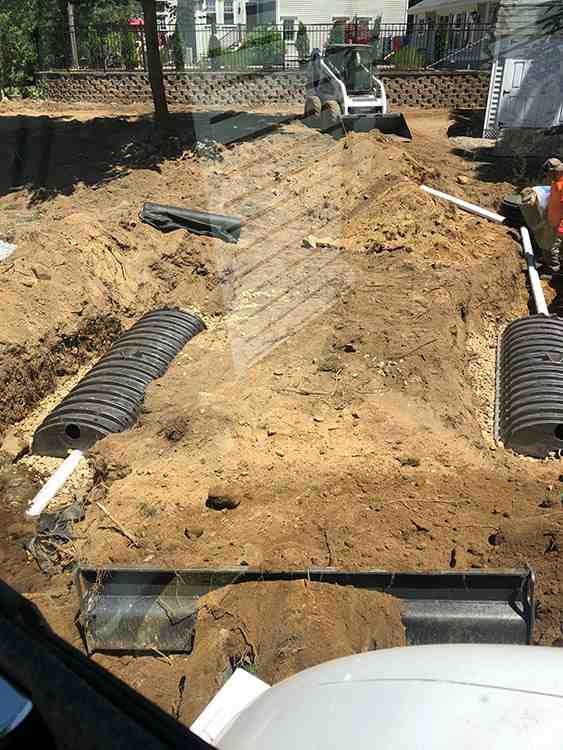
- Dry Wells: An underground basin that collects large volumes of runoff—like downspout water—and allows it to slowly filter back into the surrounding soil.
- Raised Beds: An elegant way to lift plant roots completely out of waterlogged soil. By constructing raised beds, we can fill them with a custom, fast-draining soil mix.
- Gravel Trenches and Stone Pathways: These serve a dual purpose. They act as beautiful hardscaping features while providing a highly permeable pathway for surface water to sink into the ground.
If you are dealing with heavy, compacted ground, you can read more about our specialized approach in Beyond the Bog: Top Drainage Solutions for Your Clay Soil. Proper water management is also critical when planning hardscapes; learn more about this connection in The Importance of Proper Drainage in Hardscaping and Masonry Projects.
For sloped landscapes where we want to slow down and disperse surface runoff naturally, we often design vegetated channels. You can explore the mechanics of this approach in the guide on Swales: Water Management in Gardens | RHS Advice.
Identifying Poor Drainage for Garden Health
Before choosing a solution, we must diagnose the problem. Poor drainage exhibits several clear warning signs:
- Persistent Pooling: Water that remains on the surface for more than 24 hours after a rainstorm.
- Spongy Turf: Lawn areas that feel squishy or muddy long after the rain has stopped.
- Dying Plants: Yellowing leaves, stunted growth, or plants lifting easily out of the ground due to decayed, rotted roots.
- Foundation Dampness: Musty smells in your basement or white, powdery mineral deposits (efflorescence) on your foundation walls.
To prevent structural issues, we always prioritize redirecting water away from your home. Discover our techniques for Fixing Pooling Water in Yard and ensuring proper Drainage Around House Foundation.
Testing Soil Drainage for Garden Planning
To plan your drainage system scientifically, we recommend performing a simple soil percolation test. This test measures how quickly your soil absorbs water.
- Dig a hole approximately 12 inches deep and 12 inches wide in the area you wish to test.
- Fill the hole with water and let it drain completely to saturate the surrounding soil.
- Fill the hole a second time and measure the water level.
- Check the hole hourly to see how many inches of water drain per hour.
An ideal soil drainage rate is 1 to 3 inches per hour. If your soil drains less than 1 inch per hour, you likely have heavy clay or severely compacted soil.
Fortunately, you do not have to settle for poor soil structure. Incorporating organic matter soil amendments, such as high-quality compost, can improve soil aggregation and increase water absorption by up to 60%, giving plant roots the oxygen they need to thrive.
Designing Rain Gardens and Swales
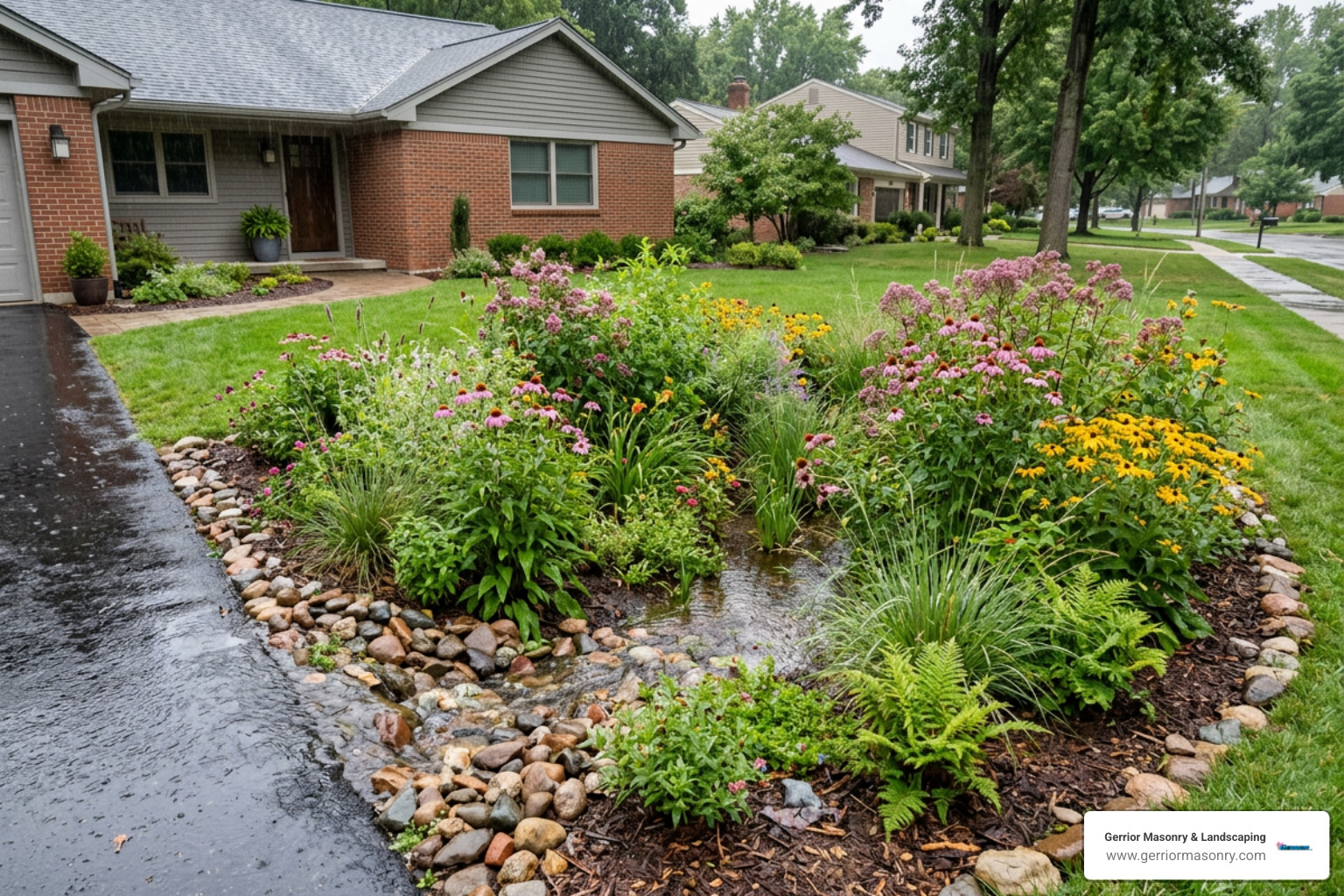
For homeowners looking for an eco-friendly and visually stunning solution, rain gardens and swales are excellent options. Unlike traditional drains that hide water underground, these features embrace stormwater as a design asset.
A rain garden is a shallow, saucer-shaped depression designed to capture, filter, and naturally infiltrate stormwater runoff from roofs, driveways, and lawns. Because they are engineered with permeable soil mixes and deep-rooted plants, rain gardens can absorb up to 30% more water than conventional lawns, preventing sediment and pollutants from entering local waterways.
When designing these features, we follow strict guidelines:
- Location: Position the rain garden at least 10 feet away from your home’s foundation to protect crawl spaces and basements.
- Sizing: Typically, a rain garden should be sized to about 10% to 20% of the impervious surface area (like your roof) draining into it.
- Slope: They work best on gentle slopes of less than 12%.
To learn more about sizing and planning, consult the comprehensive guide on Rain Gardens: Manage Water Runoff | RHS Advice or read the practical Rain Gardens – A how-to manual for homeowners.
Selecting the Best Plants for Wet Soil
The secret to a successful rain garden or wet-area landscape is choosing the right plants. We select native species that feature deep, robust root systems. These plants must be uniquely adapted to handle “wet feet” (temporary flooding) while also tolerating dry spells between rain events.
Excellent plant choices for Massachusetts rain gardens include:
- Perennials: Joe-Pye Weed, Swamp Milkweed, Blue Flag Iris, and Siberian Iris.
- Shrubs: Red Osier Dogwood, Winterberry, and Buttonbush.
- Grasses: Switchgrass and Little Bluestem.
For detailed design layouts and plant grouping strategies, refer to Stormwater Management Rain Garden Design for Homeowners.
Professional Installation and Cost Considerations
While minor grading or planting a small rain garden can sometimes be tackled by dedicated homeowners, major drainage systems require heavy machinery, precise transit levels, and deep structural expertise.
At Gerrior Masonry & Landscaping, we bring over 30 years of experience to homeowners in Woburn, Winchester, Burlington, Lexington, and Andover. We handle everything from complex excavation to seamless hardscape integration, ensuring your drainage system is built to last.
To help you plan, we have gathered average cost ranges based on public online data. Please note: these figures represent broad industry averages and do not reflect the actual pricing of Gerrior Corp, as every project is custom-designed based on site conditions.
- Professional Dry Well Installation: Typically ranges from $3,000 to $15,000 depending on the depth, excavation complexity, and catchment volume.
- French Drain Installation: Typically ranges from $20 to $500 per linear foot, influenced by trench depth, utility locations, and surface restoration (such as replacing lawns or rebuilding stone walkways).
- Rain Garden Materials: Typically ranges from $10 to $25 per square foot for professional-grade soils, stone borders, and native plantings.
To understand which system fits your property’s needs, read our detailed comparison in Solving Yard Flooding: The Ultimate Guide to Dry Well Systems and explore the mechanics of a Dry Well Installation.
Drainage System Comparison
| System Type | Average Lifespan | Primary Benefit | Maintenance Needs |
|---|---|---|---|
| French Drain | 20–30 Years | Prevents subsurface water logging | Annual flushing of cleanouts |
| Dry Well | 30–50 Years | Manages massive roof/gutter runoff | Clearing gutter debris filters |
| Rain Garden | Lifetime (with care) | Ecological beauty & surface absorption | Weeding, mulching, and watering |
| Swale | Lifetime | Redirects surface water along slopes | Mowing and removing leaf buildup |
When to Hire a Professional Drainage Contractor
Water behaves according to the laws of gravity and physics. If a trench is sloped incorrectly by even a fraction of an inch, water will back up, potentially worsening your flooding issues or directing water onto your neighbor’s property—which can violate Massachusetts building codes and municipal bylaws.
We highly recommend hiring a professional drainage contractor if your project requires:
- Digging near underground gas, water, or electric lines (always call 811 first!).
- Operating heavy excavation machinery that can compact and damage pristine lawn areas.
- Major regrading or altering the natural slope of your property.
- Cutting through existing asphalt driveways or stone patios to install channel drains.
If you live in Woburn, Winchester, Burlington, Lexington, or Andover and want to protect your property from water damage, we are here to help.
Find out more about our localized services by searching for a Yard Drainage Company Near Me or Explore our residential drainage solutions directly on our website.
Ready to dry out your yard and protect your landscape investment? Request a free estimate online to speak with our skilled team.